Category: BUSINESS

  • Union Budget 2026 proposes high-speed rail corridors from Hyderabad

    Union Budget 2026 proposes high-speed rail corridors from Hyderabad

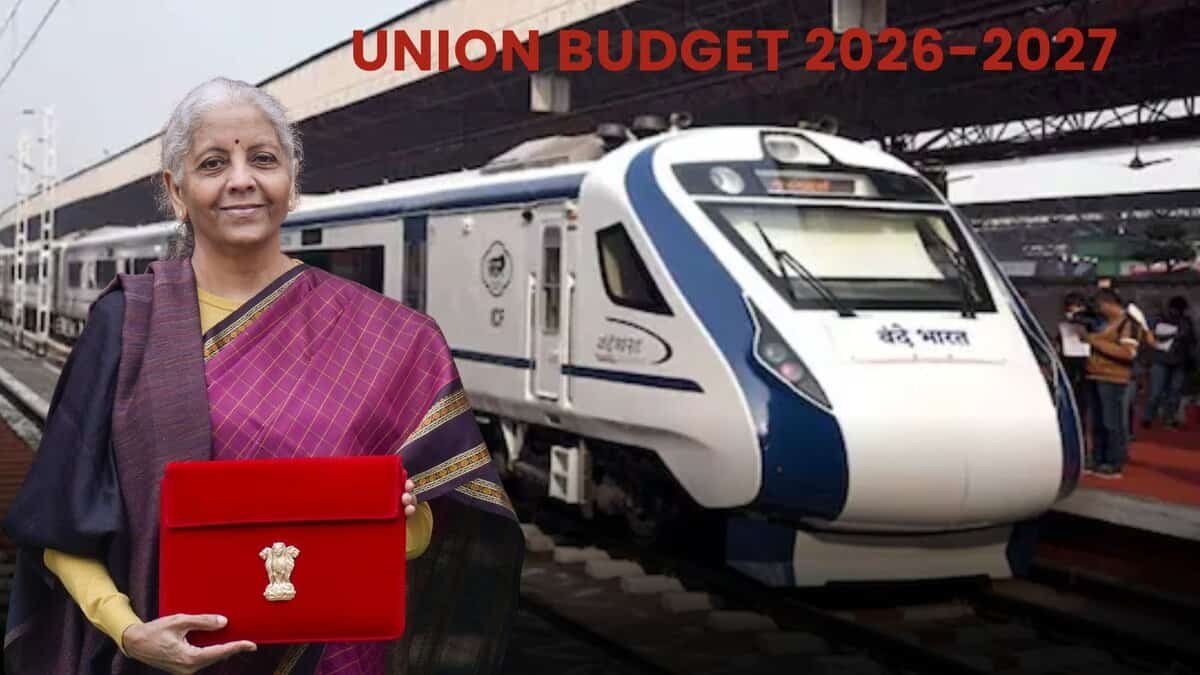
    Hyderabad: Union Finance Minister Nirmala Sitharaman on Sunday, February 1, proposed seven high-speed corridors among various cities, including Hyderabad, and a new dedicated freight corridor between Dankuni in West Bengal and Surat in Gujarat in the Union Budget for 2026-27.

    “In order to promote an environmentally-sustainable passenger system, we will develop seven high-speed rail corridors between cities as growth connectors,” she said, while presenting the 1 hour and 25 minutes Union Budget.

    High-speed corridors between Hyderabad, three cities

    According to the minister, these proposed corridors will be developed between Mumbai and Pune, Pune and Hyderabad, Hyderabad and Bengaluru, Hyderabad and Chennai, Chennai and Bengaluru, Delhi and Varanasi and Varanasi and Siliguri.

    Add as a preferred source on Google

    Sitharaman said that to promote environmentally-sustainable movement of cargo, she proposes to establish a new dedicated freight corridor connecting Dankuni in the east to Surat in the west.

    At present, work on one high-speed corridor between Ahmedabad and Mumbai is in progress. Similarly, two dedicated freight corridors – Eastern and Western – are in operation, covering several states and districts.

    Centre to set up 5 university townships

    Apart from high-speed corridors among various cities, including Hyderabad, the Centre will set up five university townships in the vicinity of major industrial logistics centres, the Union Finance Minister announced.

    MS Admissions 2026-27MS Admissions 2026-27

    Presenting the Union Budget for 2026-27 in the Lok Sabha, Sitharaman also announced the setting up of one girls’ hostel in every district of the country.

    There are over 700 districts in the country.

    The Finance Minister said the Budget proposes to support the Indian Institute of Creative Technologies, Mumbai, for setting up content labs in 15,000 secondary schools.

  • Electronic manufacturing stocks jump 6 pc

    Electronic manufacturing stocks jump 6 pc

    New Delhi: Shares of electronic manufacturing companies rose up to 6 per cent after Finance Minister Nirmala Sitharaman on Sunday, February 1, proposed to increase the outlay on electronics manufacturing to Rs 40,000 crore in 2026-27.

    The stock of Syrma SGS Technology jumped 5.95 per cent to Rs 806.35, Dixon Technologies (India) Ltd climbed 4.21 per cent to Rs 10,885, and Kaynes Technology India rose 3.82 per cent to Rs 3,608.90 apiece on BSE.

    In addition, PG Electroplast’s shares increased by 2.59 per cent to Rs 561.75 per piece, DCX Systems rose 2.06 per cent to Rs 180.95, and Cyient DLM’s by 1.04 per cent to Rs 379.70 apiece on the bourse.

    Add as a preferred source on Google

    Presenting the Union Budget for 2026-27, Finance Minister Nirmala Sitharaman said high-tech tool rooms will be established at two locations to give a push to capital goods manufacturing.

    The move comes amid a massive thrust by the government to increase electronics manufacturing in the country.

    The mobile manufacturing segment witnessed a nearly 30-fold increase in production value, rising from Rs 18,000 crore in FY15 to Rs 5.45 lakh crore in FY25.

    MS Admissions 2026-27MS Admissions 2026-27

    iPhone exports from India have reached Rs 2.03 lakh crore in 2025, almost double the Rs 1.1 lakh crore Apple exported in calendar year 2024.

    Mobile phone production in the country is expected to reach about Rs 6.76 lakh crore, comprising exports over USD 30 billion, or about Rs 2.7 lakh crore, by the end of the current fiscal year.

    As of August 2025, 10 semiconductor manufacturing and packaging projects have been approved in the country with a cumulative investment of around Rs 1.6 lakh crore in six states.

  • As Iran–US tensions soar, Strait of Hormuz caught in the middle

    As Iran–US tensions soar, Strait of Hormuz caught in the middle

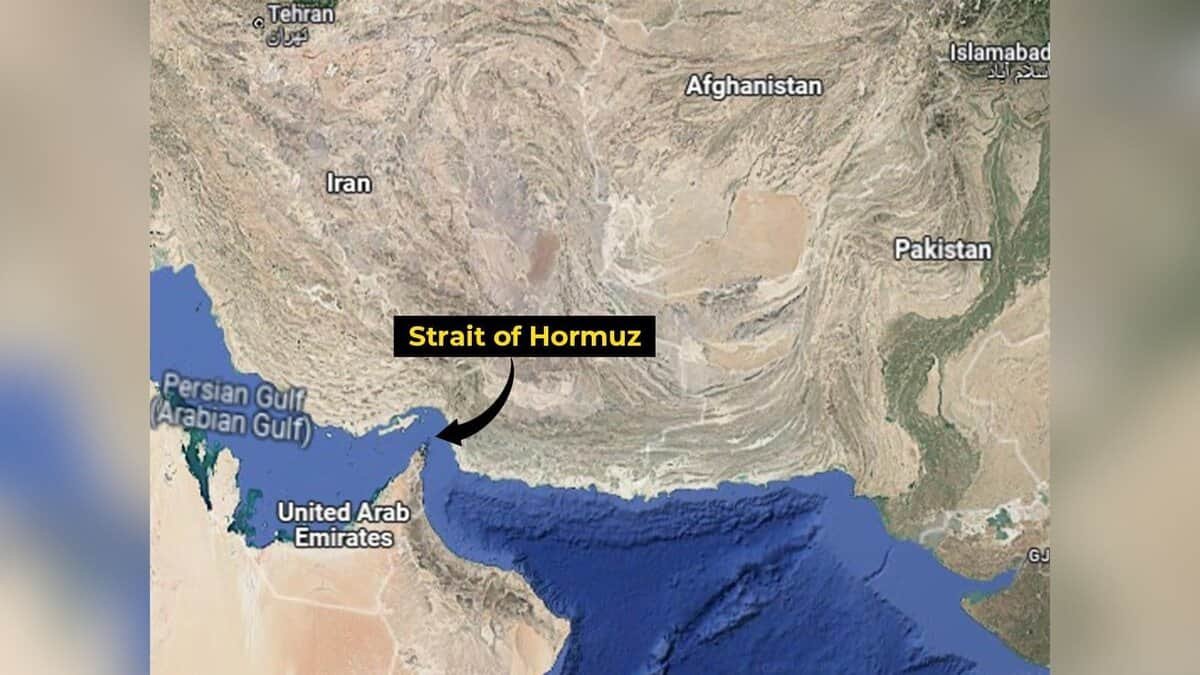
    Dubai: The Strait of Hormuz, the narrow mouth of the Persian Gulf, again has become a focus of tensions as Iran prepares to launch a military drill that could see fire into a lane crucial for global shipping.

    Iran has warned ships that it will conduct a live fire drill on Sunday and Monday in the strait, which sees a fifth of all oil traded pass through the tight corridor between the Islamic Republic and Oman.

    The United States military’s Central Command issued its own warning early Saturday, telling Tehran that any “unsafe and unprofessional behaviour near US forces, regional partners or commercial vessels increases risks of collision, escalation and destabilisation.”

    Add as a preferred source on Google

    Here’s what to know about the drill, the US warning, what caused the tensions and what might happen next in the Strait of Hormuz.

    A key waterway for global shipping

    The Strait of Hormuz resembles a bend looking down from space. Its narrowest point is just 33 kilometres (21 miles) wide. It flows from the Persian Gulf into the Gulf of Oman. From there, ships can then travel to the rest of the world. While Iran and Oman have their territorial waters in the strait, it’s viewed as an international waterway where all ships can ply. The United Arab Emirates (UAE), home to the skyscraper-studded city of Dubai, also sits near the waterway.

    The Strait of Long has been important for trade

    The Strait of Hormuz through history has been important for trade, with ceramics, ivory, silk and textiles moving from China through the region. In the modern era of supertankers, the narrow strait proved deep and wide enough to allow for oil to pass through it.

    MS Admissions 2026-27MS Admissions 2026-27

    While there are pipelines in Saudi Arabia and the UAE that can avoid the passage, the US Energy Information Administration says “most volumes that transit the strait have no alternative means of exiting the region.”

    The vast majority of the oil and gas moving through the strait goes to markets in Asia. Threats to the route have spiked global energy prices in the past, including during the 12-day war Israel launched against Iran in June.

    Iran plans a drill that could enter the trade route

    A notice to mariners sent Thursday by radio warned that Iran planned to conduct “naval shooting” in the Strait of Hormuz on Sunday and Monday.

    The coordinates provided by the message put the drill potentially going into what is known as the Traffic Separation Scheme — a 3.2-kilometre (2-mile) wide, two-lane system in which ships coming into the Persian Gulf go north and ships exiting onto the Gulf of Oman go south.

    That northern lane is within the coordinates of the drill. While Iran has provided no other public details about the drills, it will likely involve the country’s paramilitary Revolutionary Guard. The Guard operates a fleet of small fast-attack vessels in the strait that routinely have tense encounters with the US Navy.

    US issues warning over the Iranian drill

    Early Saturday, the US military’s Central Command issued a strongly worded warning to Iran and the Revolutionary Guard over the drill. While acknowledging Iran’s “right to operate professionally in international airspace and waters,” it warned against interfering with or threatening American warships or passing commercial vessels.

    The command, which oversees the US Navy’s Bahrain-based 5th Fleet, said it “will not tolerate unsafe (Guard) actions” that could include its aircraft or vessels getting too close to American warships or pointing weapons toward them. The command added that “the US military has the most highly trained and lethal force in the world.”

    Tensions high

    US President Donald Trump has threatened to launch a military strike against Iran after its bloody crackdown on nationwide protests. He has laid down two red lines — the killing of peaceful protesters and Iran launching a wave of mass executions of those held. In recent days, he’s also included the fate of Iran’s nuclear programme.

    The USS Abraham Lincoln aircraft carrier and supporting guided missile destroyers are now in the Arabian Sea, where they could launch an attack if Trump calls for it. Iran has warned it could launch its own preemptive strike or target American interests across the Middle East and Israel.

    While the 12-day war saw Iran fire off ballistic missiles and Israel target its stockpile, Tehran maintains an arsenal of short- and medium-range missiles that could hit surrounding Gulf Arab states.

  • Inside Arijit Singh’s first marriage and divorce

    Inside Arijit Singh’s first marriage and divorce

    Mumbai: Singer Arijit Singh has been in the news lately after announcing that he is stepping away from playback singing, a decision that left millions of fans shocked. As audiences try to understand the reason behind this move, attention has also shifted to his personal life, including his family and past relationships.

    Not many people know that Arijit Singh was married once before and that Koel Roy is his second wife.

    Arijit Singh’s first marriage and divorce

    Arijit is known for maintaining a simple lifestyle and has always kept his personal life away from the public eye. He rarely speaks about his first marriage and prefers to stay out of the spotlight when it comes to family matters.

    Add as a preferred source on Google

    Arijit Singh was first married to Ruprekha Banerjee, who was also a contestant on the reality show Fame Gurukul. The couple tied the knot in 2013, but the marriage reportedly did not last long and ended in a divorce later the same year.

    His second wedding

    Arijit later married Koel Roy in January 2014 in a private ceremony at the Tarapith Temple in West Bengal. Koel was his childhood friend and neighbour in Murshidabad. Both Arijit and Koel had been previously divorced before marrying each other. The couple is now raising three children, two sons together and Koel’s daughter from her previous marriage.

    Arijit Singh’s retirement post

    In his emotional message announcing his decision to step back from playback singing, Arijit wrote, “I want to thank everyone for the love you have given me over the years as a listener. I have decided not to take up any new assignments as a playback vocalist. It has been a wonderful journey.”

    MS Admissions 2026-27MS Admissions 2026-27

    Over the years, Arijit Singh has become one of the most influential voices in Indian cinema with popular songs such as Tum Hi Ho, Channa Mereya, Agar Tum Saath Ho, Gerua, Ae Dil Hai Mushkil, Kesariya, Khairiyat and Shayad. He has sung in several languages, including Hindi, Bengali, Marathi and Telugu.

  • Swiggy shares tumble over 5 pc post Q3 numbers

    Swiggy shares tumble over 5 pc post Q3 numbers

    New Delhi: Shares of food delivery and quick commerce major Swiggy, which owns Instamart, on Friday, January 30, tumbled over 5 per cent after the firm reported a widening of its losses for the third quarter ended December at Rs 1,065 crore.

    The stock declined 4.98 per cent to settle at Rs 311.10 on the BSE. During the day, it tanked 7.71 per cent to Rs 302.15.

    At the NSE, the stock edged lower by 5.46 per cent to end at Rs 309.75. Intra-day, it dropped 7.79 per cent to Rs 302.10.

    Add as a preferred source on Google

    Swiggy on Thursday reported a widening of its losses for the third quarter ended December at Rs 1,065 crore, as losses from the quick commerce segment continued and advertising and sales expenditure rose.

    The company reported a consolidated loss of Rs 799 crore for the corresponding October-December period of the previous financial year.

    Flagging “irrational competition”, Swiggy co-Founder and Group CEO Sriharsha Majety said its recent investments into lower consumer-side monetisation have not yielded the desired incremental order growth, especially at the bottom of the average order value (AOV)-pyramid, and are being reviewed.

    MS Admissions 2026-27MS Admissions 2026-27

    “We have consciously chosen not to participate in deep-discount-driven, purely-volume-focussed growth that sacrifices AOVs and margins,” Majety stated in a letter to shareholders.

    Overall, Swiggy’s quick-commerce business, Instamart, posted a loss of Rs 908 crore for the third quarter.

    Responding to the debate over gigworker delivery deadlines and earnings potential on hyperlocal platforms, Swiggy stated that the quick-delivery model works by reducing last-mile distances through strategic placement of stores.

    “We don’t push delivery partners for time-lines, nor penalise them. As our fulfilment-led business moves its point of supply closer to the point of delivery and customer demand densifies in hyperlocal zones, our last mile shrinks, and even batching becomes possible, allowing our delivery partners to service more orders within their available time.

    “As a result, earnings per hour for our delivery partners have consistently continued to increase, led by densification increasing the ability to fulfill more orders in the same available time, as well as a result of inflation (including competition-led, especially during high-demand periods like festivals or low-supply periods like rains),” Swiggy said in the letter to shareholders.

  • Stock markets snap 3-day rally on intense selling ahead of Budget

    Stock markets snap 3-day rally on intense selling ahead of Budget

    Mumbai: Equity benchmark indices Sensex and Nifty ended lower on Friday, January 30, snapping a three-day rally, due to heavy selling pressure in metal, IT and commodity stocks as investors booked profits at higher levels ahead of the Budget 2026-27.

    However, buying on select blue-chip counters restricted the sharp fall in domestic equities amid prolonged weakness in the rupee, traders said.

    As a bearish trend gripped the street, the 30-share BSE Sensex declined 296.59 points, or 0.36 per cent, to settle at 82,269.78. During the day, it tumbled 625.34 points or 0.75 per cent to 81,941.03.

    Add as a preferred source on Google

    A total of 2,424 stocks advanced while 1,783 declined and 160 remained unchanged on the BSE.

    The 50-share NSE Nifty dropped 98.25 points or 0.39 per cent to end at 25,320.65 in a volatile session.

    “Indian equity markets remained volatile ahead of the Union Budget, with benchmark indices dragged lower by weakness in IT and metal stocks. The IT sector lagged due to global growth concerns and higher US bond yields, while gold and silver declined amid a stronger dollar.

    MS Admissions 2026-27MS Admissions 2026-27

    “Persistent FII selling and continued rupee depreciation kept market sentiment cautious,” Vinod Nair, Head of Research, Geojit Investments Limited, said.

    With geopolitical risks and global tariff pressures rising, the Union Budget is keenly awaited for cues on growth support and fiscal discipline, he added.

    Among the Sensex firms, Tata Steel suffered the most, tanking by 4.57 per cent. ICICI Bank, Power Grid, HCL Tech, Tech Mahindra, Infosys and Kotak Mahindra Bank were also among the laggards.

    Mahindra & Mahindra, State Bank of India, ITC and Bharat Electronics were among the gainers.

    “Indian equity markets traded with a weak and cautious bias, retreating from recent highs amid aggressive selling in metal and IT stocks. Mixed cues from overseas markets, along with persistent weakness in the rupee, capped intra-day recovery attempts.

    “Overall, sentiment remained cautious, with market participants balancing pre-Budget positioning against external headwinds,” Ponmudi R, CEO of Enrich Money, an online trading and wealth tech firm, said.

    Among sectoral indices, metal tanked 5.12 per cent, commodities (2.56 per cent), oil & gas (0.88 per cent), energy (0.87 per cent), BSE Focused IT (0.86 per cent) and BSE Private Banks Index (0.63 per cent).

    Telecommunication jumped 2.17 per cent, FMCG (1.48 per cent), healthcare (1.05 per cent), capital goods (1 per cent), consumer discretionary (0.87 per cent) and consumer durables (0.85 per cent).

    Indian stock markets will hold a special session on Sunday for Budget 2026-27.

    India’s economy is projected to grow by 6.8-7.2 per cent in the fiscal year starting April, the government’s pre-Budget Economic Survey said on Thursday, reaffirming the country’s status as the world’s fastest-growing major economy despite trade risks and global volatility clouding the outlook.

    In Asian markets, South Korea’s Kospi settled higher, while Japan’s Nikkei 225 index, Shanghai’s SSE Composite index and Hong Kong’s Hang Seng index ended lower.

    Markets in Europe were quoting higher.

    US markets ended mostly lower on Thursday.

    Foreign institutional investors offloaded equities worth Rs 393.97 crore on Thursday after a day’s breather, according to exchange data. Domestic Institutional Investors (DIIs), however, bought stocks worth Rs 2,638.76 crore.

    Brent crude, the global oil benchmark, dropped 0.88 per cent to USD 70.09 per barrel.

    On Thursday, the Sensex climbed 221.69 points or 0.27 per cent to settle at 82,566.37. The Nifty edged higher by 76.15 points or 0.30 per cent to end at 25,418.90.

  • Economic Survey says govt on course to achieve 4.4 pc fiscal deficit target

    Economic Survey says govt on course to achieve 4.4 pc fiscal deficit target

    New Delhi: The government is well on track to meet the fiscal deficit target of 4.4 per cent of GDP estimated for the current financial year based on broad trends, the Economic Survey 2025-26 tabled in Parliament on Thursday, January 29, said.

    According to the survey prepared by Chief Economic Advisor V Anantha Nageswaran, the central government’s fiscal trajectory stands out for combining consolidation with sustained public investment, earning three sovereign rating upgrades this year.

    Between FY20 and FY25 (Provisional Actual), the share of capital spending in the total central government expenditure increased from about 12.5 per cent to 22.6 per cent, while effective capex as a share of GDP rose from roughly 2.6 per cent to 4 per cent, the survey said.

    Add as a preferred source on Google

    Even as states are overshooting their revenue deficit, the central government, through its Special Assistance to States for Capital Expenditure/Investment (SASCI), has successfully incentivised states to maintain capital expenditure at around 2.4 per cent of GDP, it said, adding the expansion of unconditional cash transfers across several states has contributed to rising revenue expenditure, with implications for fiscal space and public investment at the state level.

    As of November 2025, the Union government’s fiscal deficit stood at 62.3 per cent of the Budget Estimates, it said.

    It is to be noted that the government overachieved its fiscal deficit target of 4.8 per cent of GDP, against the 4.9 per cent of GDP pegged for FY25.

    MS Admissions 2026-27MS Admissions 2026-27

    The fiscal deficit declined from a high of 9.2 per cent of GDP in FY21 to 4.8 per cent in FY25 and is budgeted at 4.4 per cent in FY26.

    Over the same period, the survey said, the revenue deficit as a proportion of GDP has narrowed steadily, reaching its lowest level since FY09, thereby leaving a greater allocation for capex and reflecting a sustained improvement in the quality of expenditure.

    Ethanol-blended fuel is making farmers shift away from pulses and oilseeds

    The document, tabled in Parliament by Finance Minister Nirmala Sitharaman, mentioned that India’s ethanol-blended fuel programme has saved the country more than Rs 1.44 lakh crore in foreign exchange and replaced about 245 lakh metric tonnes of crude oil as of August 2025.

    But the rapid expansion is creating unintended consequences, it warned.

    Government pricing policies that favour maize-based ethanol are driving farmers to shift away from pulses and oilseeds, raising concerns about long-term food security and nutrition.

    The ethanol programme has expanded beyond traditional sugar-based feedstock to include food grains, particularly maize, as India works toward its E20 blending target — mixing 20 per cent ethanol with petrol.

    Survey calls for increase in urea’s retail prices

    The survey also called for a “modest increase” in the retail price of urea — unchanged since March 2018 at Rs 242 per 45-kg bag — while transferring an equivalent amount directly to cultivators on a per-acre basis.

    The proposed shift from input subsidy to income support aims to correct a three-decade-old imbalance in fertiliser use that is degrading soil quality and undermining crop yields, the document stated.

    The Survey flagged that the nitrogen-phosphorus-potassium (N:P:K) ratio used by Indian farmers has deteriorated sharply from 4:3.2:1 in 2009-10 to 10.9:4.1:1 in 2023-24, driven by excessive nitrogen application through subsidised urea. Agronomic benchmarks suggest a ratio closer to 4:2:1 for most crops and soil types.

    Under the survey’s proposed approach, farmers would receive the same overall purchasing power, but nitrogen’s relative price would move closer to its agronomic cost. Those applying nitrogen efficiently would gain by receiving the full transfer while spending less at retail counters. Over-users would face clear incentives to shift towards balanced fertilisation, soil testing, nano-urea and organic amendments.

    Gold and silver prices expected to remain at elevated levels

    Gold and silver prices are expected to remain at elevated levels amid persisting global uncertainties, unless a durable peace is established and trade wars are resolved, the survey said.

    It highlighted that both gold and silver touched lifetime highs during 2025, reflecting heightened global uncertainty and strong safe-haven demand.

    The rally was buoyed by a weakening US dollar, expectations of persistently negative real rates, and the market’s growing assessment of geopolitical and financial tail risks.

    40 pc of gig workers earn below Rs 15k per month

    Stating that about 40 per cent of gig workers in India earn below Rs 15,000 per month, the survey also called for significant policy interventions in the gig economy, suggesting the setting of “minimum per-hour or per-task earnings”, which includes compensation for waiting time, to ensure fair wages and reduce the cost disparity between regular and gig employment.

    Identifying limited access to productive assets as a major hurdle for upward mobility, the survey suggested that platforms and employers should be encouraged to “co-invest” in assets and training.

    It argued that such co-investment would help workers progress into more secure, higher-quality jobs.

    Implementation of labour codes key in boosting formal employment

    Effective implementation of Labour Codes will play a key role in boosting formal employment and enhancing security for women and gig workers, the Economic Survey stated.

    The four codes, notified on November 21, 2025, are expected to be in place in the next few months.

    While the Codes offer a unified framework, it is up to the private sector to integrate this framework into daily operations, it further suggested.

    The draft rules under the four codes — Code on Wages, 2019, Industrial Relations Code, 2020, Code on Social Security, 2020, and the Occupational Safety, Health and Working Conditions Code, 2020 — were pre-published on December 31, 2025, for stakeholder comments.

    India Inc can learn from pharma sector to overcome tariff regime

    The pharmaceutical sector, which had expanded under the process-patent regime of the 1970 Patent Act, faced a sudden change in its operating environment when the TRIPS-compliant product-patent regime took effect in 1995, the Economic Survey stated.

    However, the manner in which the sector responded offers a compelling template for industries currently confronting rising external trade barriers, especially tariff escalations in major markets, it added.

    The earliest and most important response to the TRIPS (Trade-Related Aspects of Intellectual Property Rights) shock was a clear shift toward developing internal capabilities, and the Indian pharmaceutical companies moved beyond simple process improvements, the survey said.

    “In the current situation of an unpredictable global tariff regime, India Inc can draw inspiration from the pharmaceutical sector to capitalise on this situation to its advantage.

    “India Inc must focus on capability building through strong R&D, Market diversification to reduce dependence on a single market and build resilience, and partnership-driven models such as co-development, licensing, and contract manufacturing to help reduce risk,” the Economic Survey stated.

    Rupee valuation does not accurately reflect India’s stellar economic fundamentals

    The survey also said that the value of the rupee, which has slipped to the 92 per dollar mark, does not accurately reflect India’s stellar economic fundamentals.

    “In other words, the rupee, therefore, is punching below its weight,” it said, adding investor reluctance to commit funds to India warrants examination at a time when inflation is under control and growth outlook is favourable.

    India depends on foreign capital flows to maintain a healthy balance of payments.

    “The Indian rupee underperformed in 2025. India runs a trade deficit in goods. Its net trade surplus in services and remittances is not enough to offset it… When they run drier, rupee stability becomes a casualty,” said the pre-Budget document tabled in Parliament by Finance Minister Nirmala Sitharaman.

    The rupee hit an all-time low of 92.00 against the American currency in early trade on Thursday, weighed down by steady dollar demand and a cautious global mood.

    The Survey observed that the growth is good; outlook remains favourable; inflation is contained; rainfall and agricultural prospects are supportive; external liabilities are low; banks are healthy; liquidity conditions are comfortable; credit growth is respectable; corporate balance sheets are strong; and the overall flow of funds to the commercial sector is robust.

    “Of course, it does not hurt to have an undervalued rupee in these times, as it offsets to some extent the impact of higher American tariffs on Indian goods, and there is no threat of higher inflation from higher-priced crude oil imports now.

    “However, it does cause investors to pause,” the survey said.

    The Rajya Sabha was adjourned for the day after tabling of the Economic Survey 2025-26. The Union Budget for 2026-27 will be presented by the Finance Minister on Sunday, February 1.

    (With inputs from PTI.)
  • Silver jumps to Rs 4L per kg, gold at Rs 1.8L per 10g

    Silver jumps to Rs 4L per kg, gold at Rs 1.8L per 10g

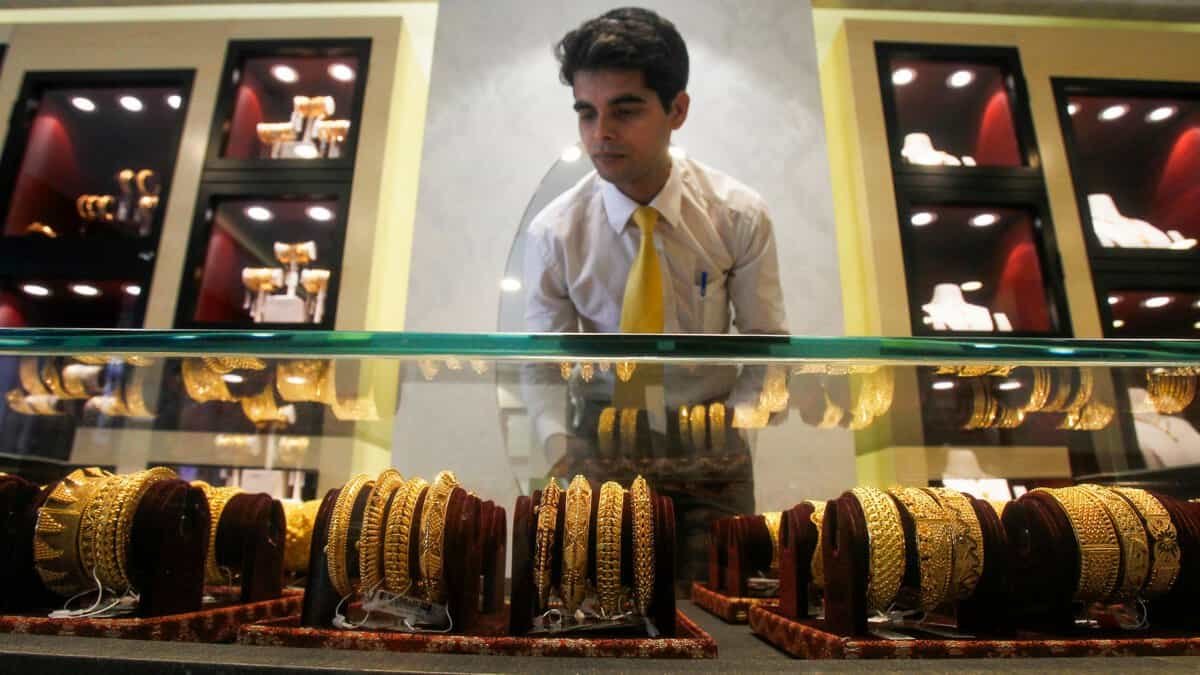
    New Delhi: Silver prices extended their blistering rally on Thursday, January 29, soaring 6 per cent to cross the Rs 4 lakh per kilogram-mark, while gold scaled a lifetime high of Rs 1.8 lakh per 10 grams, tracking record gains in the global markets amid escalating tensions in the Middle East.

    Extending the gains for the fifth straight day, silver futures for March delivery surged by Rs 24,434, or 6.34 per cent, to a new record of Rs 4,09,800 per kilogram.

    In the last five trading sessions, the white metal had surged Rs 91,308, or nearly 29 per cent, from Rs 3,18,492 per kg (closing price) recorded on January 21.

    Add as a preferred source on Google

    The rally in silver prices has been swift, with the white metal climbing from Rs 3 lakh to Rs 4 lakh within just eight trading days.

    This year, the white metal has delivered a staggering return of 74 per cent.

    All that glitters is gold

    Gold futures, too, joined the rally, with the February delivery appreciated by Rs 14,864, or nearly 9 per cent, to scale a record high of Rs 1,80,779 per 10 grams.

    MS Admissions 2026-27MS Admissions 2026-27

    The April contract for the yellow precious metal jumped Rs 15,943, or 9 per cent, to hit a fresh record of Rs 1,93,096 per 10 grams.

    “Gold’s surge beyond USD 5,600 (Rs 1,80,000 per 10 grams) and silver’s breakout above Rs 4,00,000 per kg reflect a deepening macro and geopolitical risk premium rather than short-term speculation,” Renisha Chainani, Head – Research at Augmont, said.

    In the international market, the upswing in bullion prices was even more striking, with gold futures on the Comex surpassing the crucial USD 5,600 per ounce-mark for the first time.

    In the intraday trade, the metal for April delivery gained USD 286.6, or 5.4 per cent, to scale a fresh peak of USD 5,626.8 per ounce.

    Silver futures on the Comex also crossed the USD 120 per ounce mark for the first time in overseas trade.

    The white metal for March delivery rose USD 7.03, or 6.2 per cent, to hit a record of USD 120.56 per ounce.

    “Silver extended its blistering rally and cracked USD 120 on strong momentum and tight supply conditions,” Manav Modi Commodities Analyst Motilal Oswal Financial Services Ltd, said.

    Meanwhile, US President Donald Trump urged Iran to return to negotiations on its nuclear programme, and warned that any future US military action would be far more severe.

    Later, Iran responded sharply and threatened retaliation against the US, Israel, and their allies, adding another layer of market anxiety.

    “This exchange has heightened fears of a broader regional escalation in the Middle East, reinforcing risk-off sentiment across global markets and strengthening safe-haven demand for assets such as gold and silver,” she said.

  • World faces copper shortage as AI data centres drive power demand: Survey

    World faces copper shortage as AI data centres drive power demand: Survey

    New Delhi: The world will soon face a copper shortage due to surging power demand from artificial intelligence data centres, the Economic Survey warned on Thursday, January 29, highlighting how critical minerals have become strategic choke-points in the global energy transition.

    “The global energy transition is no longer solely determined by technology; it is increasingly constrained by who controls critical minerals,” the survey said.

    Metals, including lithium, cobalt, nickel, copper and rare earth elements, have become strategic bottlenecks, shaping the low-carbon economy, influencing energy security, industrial competitiveness and geopolitical power, the survey said, noting that trade restrictions on critical mineral exports by source countries.

    Add as a preferred source on Google

    Copper price has become increasingly volatile due to mine outages in Indonesia, Congo and Chile, raising concerns about supply deficits in the medium to long term, given growing demand from the power sector and data centres worldwide, and trade protectionist measures, the survey said.

    Massive material requirements

    The survey illustrated the scale of investment required, citing that a 1 gigawatt wind turbine requires 2,866 tonne of copper, which would take 1,194 truckloads to transport.

    To produce that much copper from ore with a 0.6 per cent yield, miners must process approximately 167-200 tonne of ore per tonne of copper produced, the survey said.

    MS Admissions 2026-27MS Admissions 2026-27

    Using current estimates of 0.5-0.6 per cent yields at operating mines, with many large mines below 0.6 per cent and new projects around 0.4-0.5 per cent, the total material required would be 4,77,667 tonnes, or 1,194 truckloads of 400 tonne each, the survey calculated.

    Those figures assume only copper-bearing ore, excluding waste rock, overburden, rejected material and processing losses, it added.

    In real mines, total material moved is typically two to four times higher once waste rock stripping is factored in.

    “If fully accounted for, total material moved per GW of wind power would likely exceed 1-2 million tonnes, not 0.48 million,” the survey said.

    The figures illustrate the scale of investment India may need to make in renewable energy generation and the tremendous amount of energy required in the first place, the survey added.

  • India’s civil aviation sector on sustained growth trajectory, says Survey

    India’s civil aviation sector on sustained growth trajectory, says Survey

    New Delhi: India’s civil aviation sector is on a sustained growth trajectory, helped by a conducive policy environment, rising demand and steady infrastructure expansion, the Economic Survey said on Thursday, January 29.

    As the country aims to be a global hub for aviation activities, the Survey said Indian airports can aspire to become global aviation hubs by promoting layovers and enhancing the transit experience for international passengers.

    “While the sector remains sensitive to global economic cycles and the need for continuous capacity upgradation, the current passenger volumes represent only a fraction of India’s potential,” it said.

    Add as a preferred source on Google

    India is the world’s third-largest domestic aviation market and the number of airports increased to 164 last year from 74 in 2014.

    In FY25, Indian airports handled 412 million passengers, and the same is projected to increase to 665 million by FY31.

    However, the Survey said the country currently operates approximately 0.11 airports per million people, significantly lower than the US (47.35) and China (0.39), signalling substantial headroom for further growth.

    MS Admissions 2026-27MS Admissions 2026-27

    “Expansion in India’s airport and air navigation infrastructure and a growing ancillary ecosystem, including Maintenance, Repair, and Overhaul (MRO) and leasing, are strengthening the sector.

    “These developments, along with technology integration, positions civil aviation as a key driver of nationwide economic connectivity and integration,” the Survey said.

    On Wednesday, Prime Minister Narendra Modi highlighted the growth potential and policy stability as he wooed investors, saying that there are immense opportunities in aircraft manufacturing, pilot training, advanced air mobility and aircraft leasing areas in the country.

    Modi, in a special message at an aviation summit, had also said the government is working on all necessary regulatory reforms to make cargo movement faster and more efficient.

    Meanwhile, the Survey said that aviation services have continued to play a key role in sustaining passenger mobility and air cargo flows.

    In FY25, overall air passenger traffic increased by 9.4 per cent to 411.8 million passengers.

    “However, a softening of momentum was observed during April-November 2025, when overall passenger traffic increased by 3.5 per cent (YoY), reflecting flight disruptions and short-term demand adjustments in the domestic passenger segment,” it noted.

    According to the Survey, air cargo volume grew from 2.53 million metric tonnes (MMT) in FY15 to 3.72 MMT in FY25, and 2.95 MMT handled in FY26 (until December), driven by several key policy initiatives and reforms.