Category: BUSINESS

  • PMI, auto sales and global economic cues key triggers for next week

    PMI, auto sales and global economic cues key triggers for next week

    Mumbai: The market outlook for next week will be guided by the major domestic and global economic data such as India’s Current Account Q3, India Bank Loan Growth, HSBC Manufacturing PMI of India (Dec), India’s Infrastructure Output, US Fed Balance Sheet, US Initial Jobless Claims, and US ISM Manufacturing PMI.

    Last week, the market’s benchmark indices closed with gains. During this period, the Sensex closed at 78,699 with a gain of 657 points or 0.84 per cent, and the Nifty closed at 23,813 with a gain of 225 points or 0.96 per cent.

    Pharma and healthcare were the top gainers last week. The benchmark indices rose due to the rise in banking stocks.

    In the trading session from December 23 to December 27 (excluding the Christmas holiday on 25 December), foreign institutional investors (FIIs) have sold Rs 6,322 crore in the stock market. At the same time, domestic institutional investors (DIIs) have invested Rs 10,927 crore in the cash market.

    Santosh Meena, Head of Research, Swastika Investmart said, “On the currency front, the rupee faced significant weakness last week, drawing attention to upcoming developments. The current account deficit numbers, scheduled for release on December 31, could influence rupee movements.”

    “Monthly auto sales data will also be closely watched. The auto sector has been under a cloud of pessimism recently, and any positive surprise could bolster market sentiment,” He added.

    Puneet Singhania, Director at Master Trust Group said, “Nifty has been consistently taking support near the 23,650 level on the daily chart and ended the week with an inside candle on the weekly chart, following heavy selling in the previous week. The support is further reinforced by an ascending trendline on the weekly chart.”

    Singhania further said, “A breach below this support could intensify selling, potentially pushing the index towards the 23,200 level. On the upside, sustaining above 23,950 could trigger fresh buying towards 24,200.”


  • Aadhaar authentication must in exams for Group A, B in Haryana: Cabinet

    Aadhaar authentication must in exams for Group A, B in Haryana: Cabinet

    Chandigarh: The Haryana Cabinet, presided over by Chief Minister Nayab Singh Saini, on Saturday approved the use of Aadhaar authentication services for candidates appearing in examinations for Group A and B posts conducted by the Haryana Public Service Commission (HPSC).

    The authentication will be mandatory during the registration process for these posts on the HPSC portal, an official statement said.

    The introduction of Aadhaar authentication aims to streamline the application procedure, eliminate fraudulent candidates, and ensure the accuracy of candidate data through de-duplication.

    This move will enhance the credibility and reliability of the recruitment process, maintaining public confidence in the competitive exams, said the government.

    The Cabinet decided to increase the maximum limit on the death-cum-retirement gratuity for government employees by 25 per cent, raising it from Rs 20 lakh to Rs 25 lakh. This enhancement will take effect from January 1, 2024.

    Similarly, the Cabinet approved a 25 per cent increase in the maximum limit of death-cum-retirement gratuity for judicial officers, raising it from Rs 20 lakh to Rs 25 lakh. This enhancement will also be effective from January 1, 2024.

    These decisions are aimed at providing enhanced financial security to government employees and their families as well as judicial officers.

    It also approved the standing operating procedure (SOP) for the implementation of Mukhya Mantri Parivar Samridhi Yojana (MMPSY) for 2024-25.

    As per the SOP, instead of reimbursing the premium to the beneficiaries of PMJJBY, PMSBY, PMKMY, PMSYMY and PMLVMY under Mukhya Mantri Parivar Samridhi Yojana, Rs 1,000 per eligible family per year will be transferred to Deen Dayal Upadhyaya Antyodaya Parivar Suraksha Yojana (DAYALU) for payment of compensation under DAYALU having family income from all sources less than or equal to Rs 1.80 lakh per annum, and having a Parivar Pehchan Patra (PPP).

    The Mukhya Mantri Parivar Samridhi Yojana was notified on February 6, 2020, with an aim of providing financial assistance and social security, including life and accident insurance and pension benefits to eligible families belonging to economically weaker sections.

    The Cabinet approved the revision of the ex-gratia to the families of battle casualties of Central armed forces and Central Armed Police Forces (CAPF) personnel. The revised ex-gratia has been increased from Rs 50 lakh to Rs 1 crore.

  • 75 iconic lighthouses in India saw more than 10L visitors till September

    75 iconic lighthouses in India saw more than 10L visitors till September

    New Delhi: The 75 iconic lighthouses in the country saw more than 10 lakh visitors in FY25 (till September), the government said on Friday.

    These 75 iconic lighthouses have been developed with an investment of Rs 60 crore.

    According to Ministry of Ports, Shipping and Waterways, in the fiscal year 2023-24 alone, these 75 dedicated lighthouses attracted an impressive 16 lakh visitors, a rise of more than 400 per cent footfall of tourists from 4 lakhs in 2014.

    More than 500,000 tourists visited the lighthouses between April and June this year, validating the vision of transforming these iconic maritime structures into vibrant tourists hotspots as envisioned by Prime Minister Narendra Modi.

    These developments have also resulted in job creation, with 150 direct and 500 indirect employment opportunities emerging in nearby hotels, restaurants, tour operators, transportation services, and local shops and artisans.

    With a coastline spanning over 7,500 kilometres, India is home to 204 lighthouses that silently guard its rich maritime heritage.

    Traditionally serving as navigational aids for seafarers, these iconic structures are now being reimagined as tourism destinations under the government of India’s developmental vision.

    This initiative aims to preserve the historical and architectural significance of lighthouses and unlock their potential for economic growth and community empowerment.

    The central government is actively promoting lighthouse tourism as a part of its broader Maritime India Vision (MIV) 2030 and Amrit Kaal vision 2047 to enhance India’s cultural heritage and maritime legacy.

    By developing these sites, the government seeks to enhance India’s tourism offerings while creating employment opportunities and fostering local economic growth.

    Some lighthouses date back centuries and are near Unesco World Heritage Sites like Mahabalipuram in Tamil Nadu or other prominent cultural landmarks.

  • Markets trade higher in early trade on buying in bank stocks, rally in Asian peers

    Markets trade higher in early trade on buying in bank stocks, rally in Asian peers

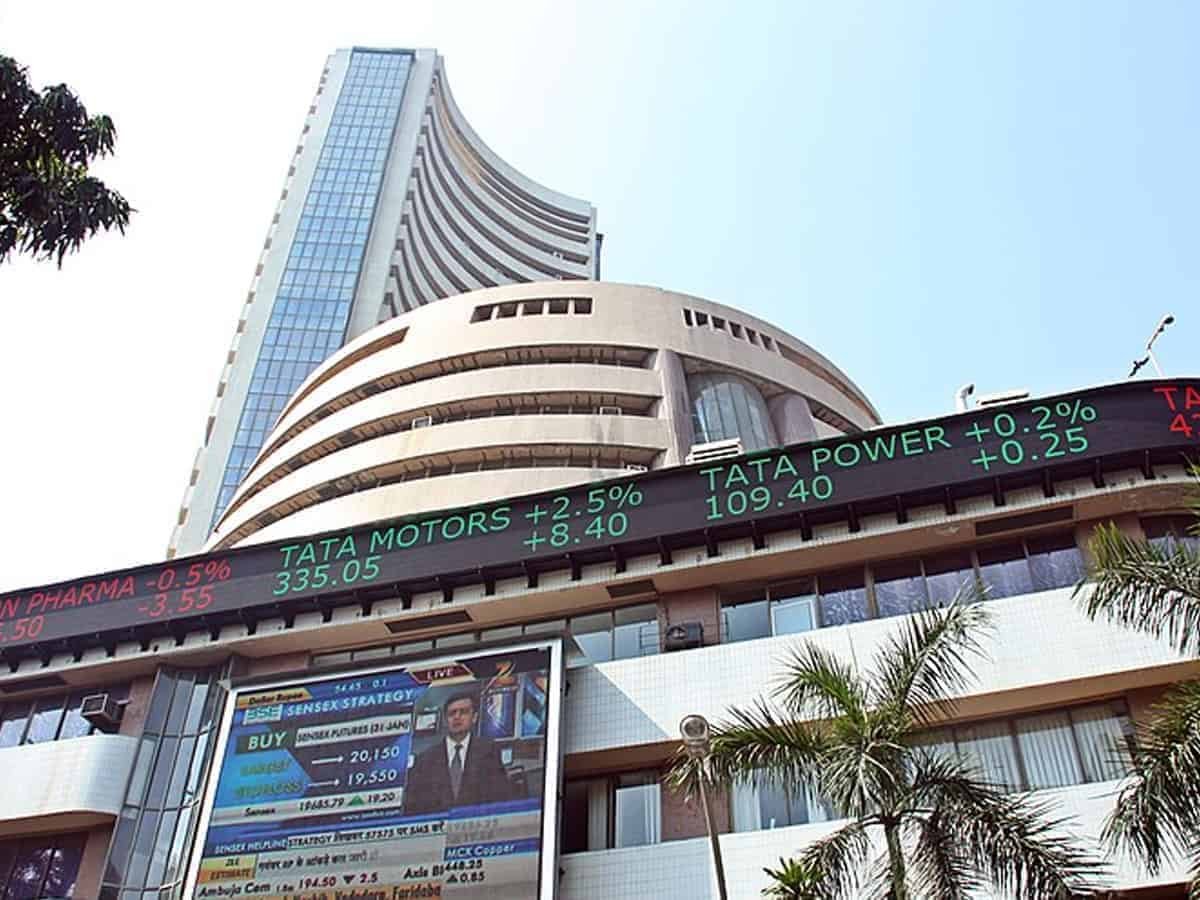
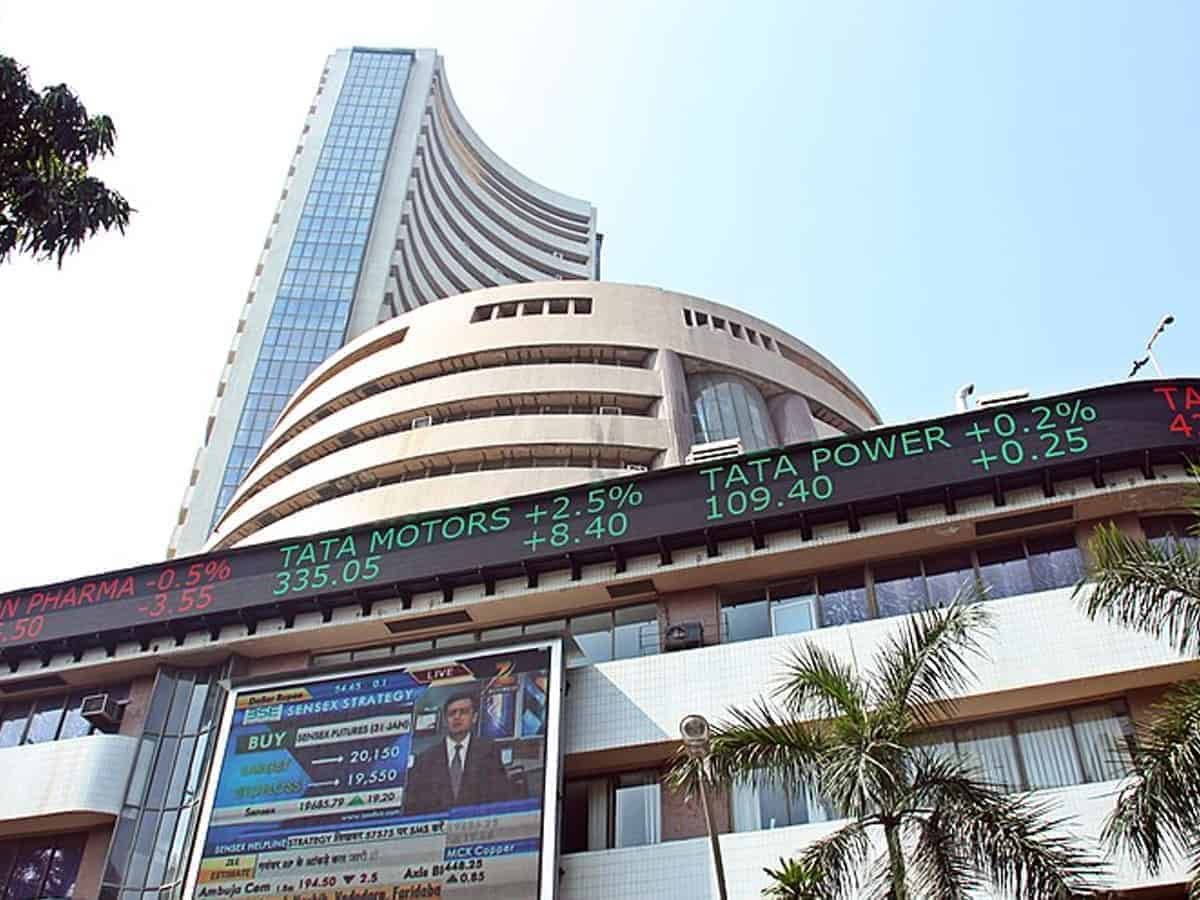
    Mumbai: Benchmark indices Sensex and Nifty climbed in early trade on Friday amid buying in bank stocks and a largely firm trend in the Asian markets.

    The 30-share BSE benchmark Sensex climbed 311.48 points to 78,783.96 in early trade. The NSE Nifty went up by 98.1 points to 23,848.30.

    From the 30 blue-chip pack, Tata Motors, Mahindra & Mahindra, IndusInd Bank, Bajaj Finance, NTPC, Bharti Airtel, Bajaj Finserv and ICICI Bank were among the biggest gainers.

    HCL Technologies, Adani Ports, Tata Consultancy Services and Larsen & Toubro were the laggards.

    In Asian markets, Tokyo, Shanghai and Hong Kong traded higher while Seoul quoted lower.

    US markets ended on a flat note on Thursday.

    Global oil benchmark Brent crude traded marginally up by 0.01 per cent to USD 73.27 a barrel.

    Foreign Institutional Investors (FIIs) offloaded equities worth Rs 2,376.67 crore on Thursday, according to exchange data.

    The BSE benchmark dipped 0.39 points to settle at 78,472.48 in a muted trade on Thursday. The Nifty eked out gains of 22.55 points or 0.1 per cent to 23,750.20.

  • Raghuram Rajan remembers Manmohan Singh as visionary economist with integrity

    Raghuram Rajan remembers Manmohan Singh as visionary economist with integrity

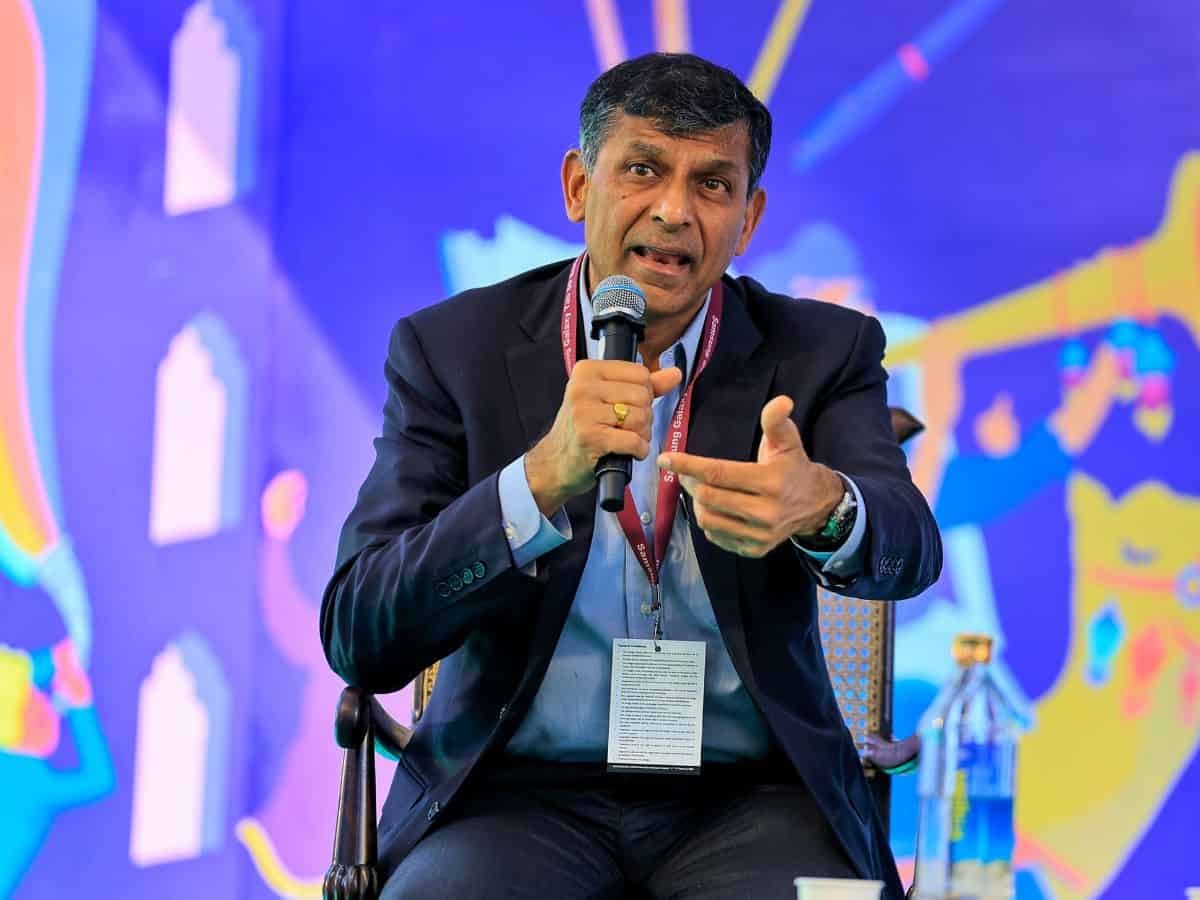
    New Delhi: Former Prime Minister Manmohan Singh was a brilliant economist with a visionary outlook on India’s potential, combined with a fine sense of political feasibility, former RBI Governor Raghuram Rajan said on Friday.

    Singh, the architect of India’s economic reforms, passed away here late on Thursday at the age of 92.

    Raghuram Rajan described Singh as understated and soft-spoken, qualities that enabled him to attract some of the brightest minds to his team, including Montek Singh Ahluwalia, Rangarajan, and Rakesh Mohan.

    “He was a brilliant economist with a great vision of what India could be, combined with a fine sense of what was possible politically… the liberalisation and reforms he undertook with the support of Prime Minister Narasimha Rao laid the foundations of the modern Indian economy,” he told PTI.

    Rajan, the 23rd Governor of the Reserve Bank of India between September 2013 and September 2016 recalled that Singh was always curious.

    “Most persons with his experience and achievements would hold forth their views. Instead, Dr. Singh heard others out and then tried to make use of what they conveyed, including criticism.

    “And he was a man of great integrity, never using any of his offices for personal gain,” Rajan noted.

    As RBI Governor, Rajan said he had regular meetings with the then Prime Minister Singh.

    “He was a great sounding board, but despite his prior experience as governor, he never sought to interfere. He had given me the job, and he would not tell me how to do it unless I asked for advice,” he said.

    According to Rajan, his meetings with Singh were some of the most enjoyable moments of his RBI tenure.

    Singh served as prime minister for two terms from 2004 to 2014.

  • Rupee falls to hit new record low against US dollar in early trade

    Rupee falls to hit new record low against US dollar in early trade

    Mumbai: The rupee slid for the fourth straight session, depreciating 8 paise to hit a new all-time low of 85.35 against the US dollar in early trade on Friday due to strengthening American currency and relentless outflow of foreign capital.

    According to analysts, the local unit was weighed down by the dollar‘s strength amid the greenback’s increased demand by importers for month-end and year-end payment obligations. However, easing crude oil prices globally and positive cues from domestic equity markets capped the fall in the Indian unit.

    At the interbank foreign exchange, the rupee opened weak at 85.31 and slipped further to hit its lifetime low of 85.35 against the greenback, registering a loss of 8 paise from its previous closing level.

    The rupee plunged 12 paise to its record low closing mark of 85.27 against the dollar on Thursday, after declining 13 paise in the previous two sessions.

    Meanwhile, the dollar index, which gauges the greenback’s strength against a basket of six currencies, was trading higher by 0.04 per cent at 107.93 amid soaring US Treasury yields with 10-year bond hovering around 4.50 per cent.

    Brent crude, the global oil benchmark, rose 0.07 per cent to USD 73.31 per barrel in futures trade.

    On the domestic equity market front, the 30-share benchmark index Sensex was trading higher by 207.16 points, or 0.26 per cent at 78,679.64 points. The Nifty was up 88.50 points, or 0.37 per cent, at 23,838.70 points.

    Foreign Institutional Investors (FIIs) were net sellers in the capital markets on Thursday, as they offloaded shares worth Rs 2,376.67 crore, according to exchange data.

  • Tata Group to create 5L manufacturing jobs over next half decade

    Tata Group to create 5L manufacturing jobs over next half decade

    Mumbai: The Tata Group plans to create 500,000 manufacturing jobs over the next half-decade in sectors like battery, semiconductors, electric vehicles and solar industries, Tata Sons Chairman N. Chandrasekaran said on Thursday.

    In his annual letter to group employees, Chandrasekaran said these jobs will come in part from facilities across India – factories and projects that will produce batteries, semiconductors, electric vehicles, solar equipment and other critical hardware destined to play a central role in the economy of tomorrow.

    “This is in addition to the many services jobs we expect to introduce across retail, tech services, airlines, and hospitality, among other sectors,” he wrote.

    In a recap of 2024 for the salt-to-software conglomerate, Chandrasekaran highlighted key milestones like groundbreaking ceremonies at over seven new manufacturing plants, including India’s first semiconductor fab at Dholera in Gujarat and an outsourced semiconductor assembly and test facility in Assam.

    Ground-breaking ceremonies and construction began at over seven new manufacturing plants in 2024, including India’s first semiconductor fab in Dholera, Gujarat and a brand new semiconductor OSAT plant in Assam.

    “There is the electronics assembly plant in Narasapura, Karnataka, an automotive plant in Panapakkam, Tamil Nadu and new MRO facilities in Bengaluru, Karnataka. We also have new battery cell manufacturing factories in Sanand, Gujarat, and in Somerset, UK. We inaugurated the C295 final assembly line (FAL) in Vadodara, Gujarat, and began solar module production in Tirunelveli, Tamil Nadu,” he said.

    This year, TCS and Tejas Networks delivered the first indigenous 4G mobile telecom stack for BSNL, and stand poised for 5G.

    “Our retail companies continue to scale up. Air India has brought together four airlines to create one integrated airline group to serve India and the world. And Indian Hotels’ Taj brand continues to be the world’s strongest hotel brand,” Chandrasekaran told the employees.

    Stressing that sustainability remains a focus of growth plans, he mentioned that in Bhutan, “we began our hydroelectric power initiative, with a commitment to developing five GW renewable capacity”.

    “With the UK government, we announced 1.25 billion pounds of investment in the transition to high-quality, low-CO2 steel production in South Wales,” the Tata Sons Chairman noted.

    While AI-led breakthroughs in healthcare and mobility can help the whole of humanity, manufacturing has the potential to transform our economy in India.

    “Global supply chains continue to shift in India’s favour as the world’s largest businesses strike a new balance between resilience and efficiency,” he said.

  • Architect of 1991 reforms and new economic era

    Architect of 1991 reforms and new economic era

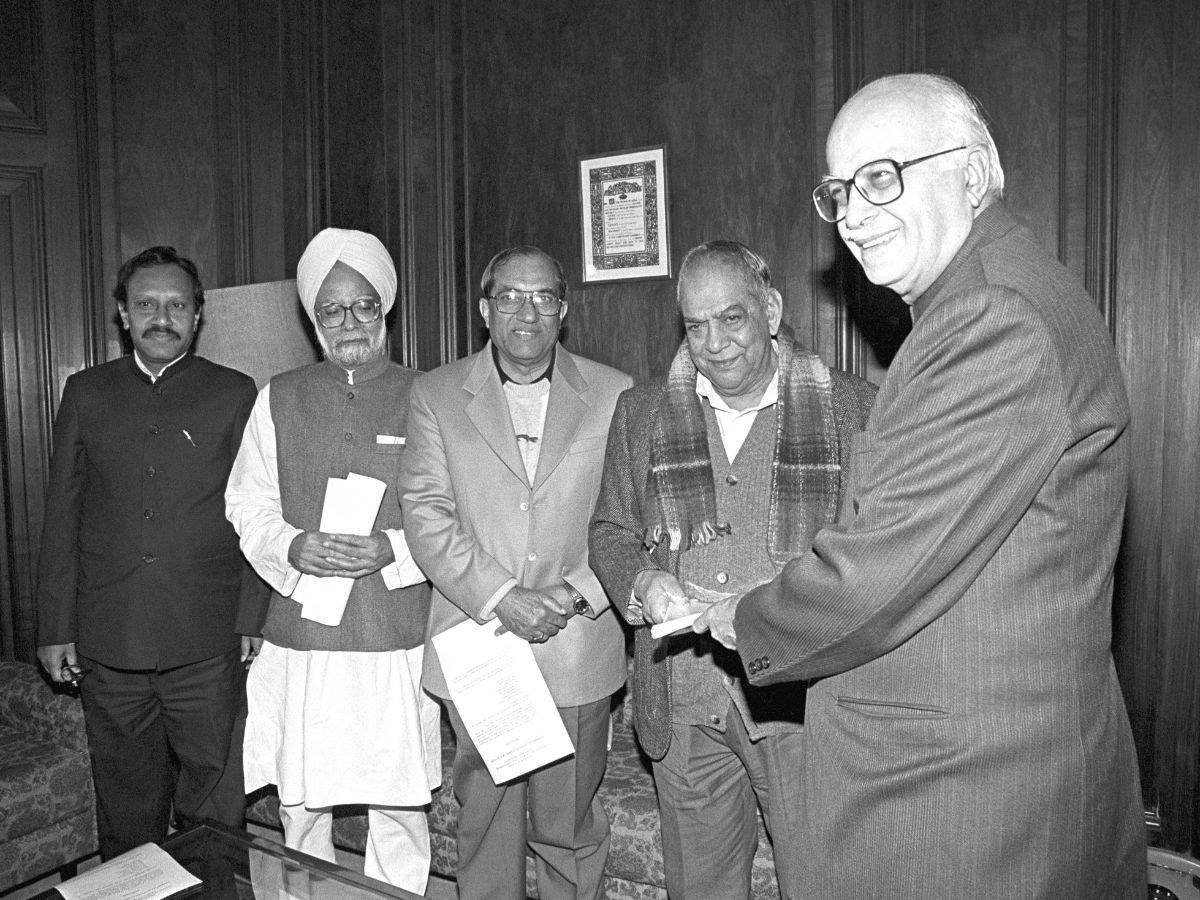
    New Delhi: Manmohan Singh, who is credited with successfully anchoring the sinking ship of the Indian economy by ushering in bold economic reforms under Prime Minister P V Narasimha Rao, died at the age of 92 on Thursday.

    When Singh took the reins of the Finance Ministry in 1991, India’s fiscal deficit was close to 8.5 per cent of the GDP, the balance of payments deficit was huge and the current account deficit was close to 3.5 per cent of GDP.

    To make things worse, foreign reserves were just enough to pay for two weeks of imports indicating that the Indian economy was in deep crisis.

    Against this backdrop, the new economic era was brought in through the Union Budget 1991-92 presented by Singh.

    It was a turning point in the economic history of independent India which witnessed bold economic reforms, abolition of licence raj and opening of many sectors to private players and foreign players so that capital could flow in.

    He is credited with putting India on the new economic policy path which allowed Foreign Direct Investment (FDI), rupee devaluation, moderation in taxes, and privatisation of public sector companies.

    His role in ushering in a comprehensive policy of economic reforms is now recognized worldwide.

    “I present to you the budget of 1991-92”, Singh had said when he stood to present the iconic union budget that took the Indian economy into the direction of liberalisation, globalisation and privatisation.

    The budget marked a significant shift towards a markets-focused economy. This paved the way for rapid economic growth in the decades that followed.

    “No power on Earth can stop an idea whose time has come,” Singh had said, as he concluded his Budget speech.

    Under his tenure, the regulations on import and export were relaxed, and significant changes were made to cater to the needs of businesses. The initiatives taken during his tenure resulted in monumental growth of the services sector especially IT and telecom.

    On the capital market side, the establishment of the National Stock Exchange (NSE) in 1992 was another highlight of his regime. He continued as the Finance Minister till 1996, when the Rao government was voted out.

    Singh got another chance in May 2004 to serve the country, this time as the Prime Minister of India. He replaced Atal Bihari Vajpayee as the 14th Prime Minister of the country.

    In the new avatar, Singh carried forward the ideas of economic liberalisation in 1991 as this path was now tried and tested.

    In 2007, India achieved its highest GDP growth rate of 9 per cent and became the second fastest-growing major economy in the world.

    During his tenure as Prime Minister, the Mahatma Gandhi National Employment Guarantee Act (MGNREGA) was enacted in 2005 to deal with rural distress and perk up income. Indirect tax reforms were introduced by ushering in the value added tax, replacing sales tax.

    Besides, a Rs 76,000 crore farm debt waiver and debt relief scheme was implemented across the country which benefited crores of farmers.

    He also steered the nation during the 2008 global financial meltdown and announced a huge stimulus package to deal with the situation.

    Aadhaar was introduced through the Unique Identification Authority of India during his tenure as prime minister for targetted subsidy transfer. Direct Benefit Transfers for many schemes were announced under his leadership.

    He also promoted financial inclusion in a big way and many bank branches were opened during his tenure as the Prime Minister. Other reforms like the Right to Food and the Right of Children to Free and Compulsory Education Act were enacted during his regime.

  • Indian share market opens in green, Nifty above 23,800

    Indian share market opens in green, Nifty above 23,800

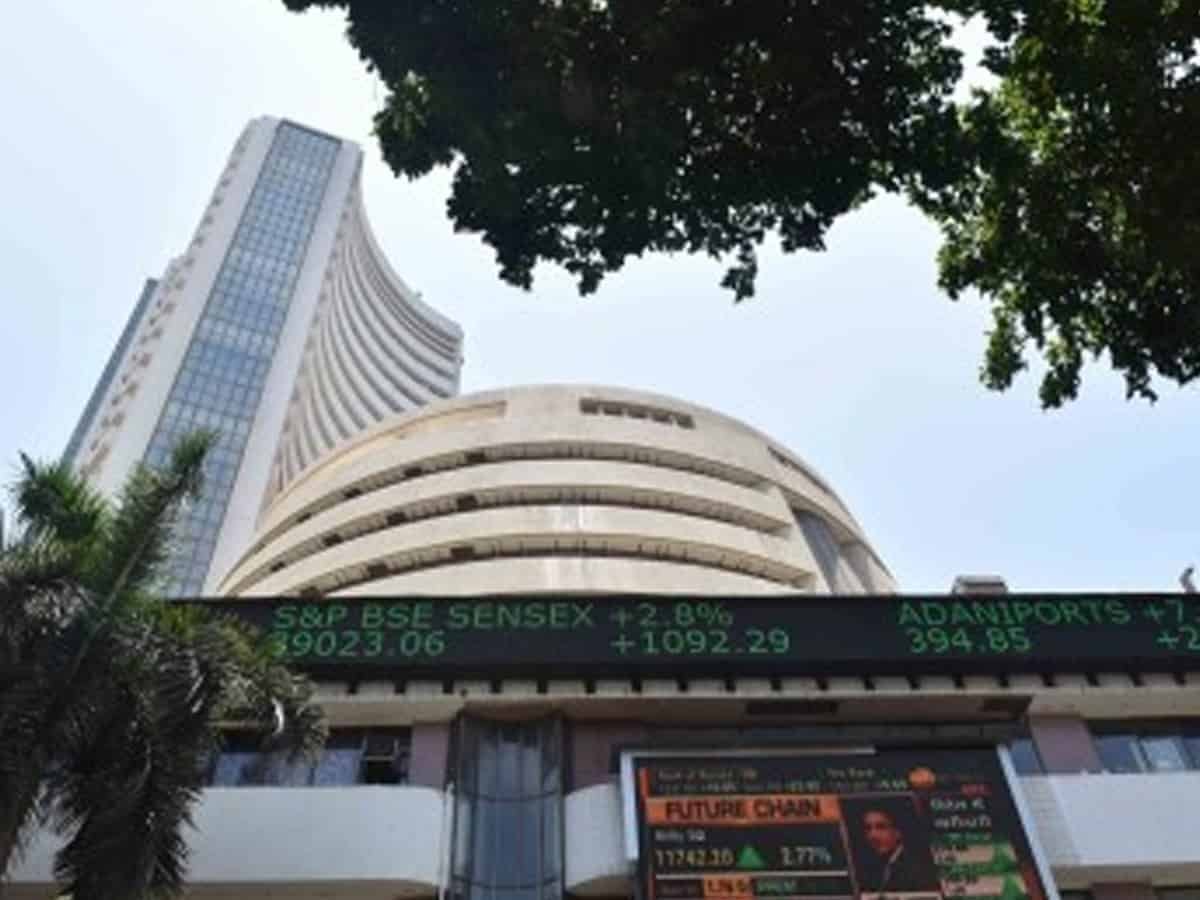
    Mumbai: The Indian stock market opened higher on Thursday as buying was seen in the PSU bank, auto, financial service and metal sectors on Nifty.

    At around 9:37 am, Sensex was trading at 78,744.55 after gaining 271.68 points or 0.35 per cent, while the Nifty was trading at 23,812.50 after gaining 84.85 points or 0.36 per cent.

    The market trend remained positive. On the National Stock Exchange (NSE), 1,142 stocks were trading in green, while 795 stocks were in red.

    According to experts, “the market will be expecting both fiscal and monetary stimulus. These expectations can keep the market in a consolidation phase in the near-term.”

    “The market reaction after the Budget and monetary policy will depend on the policy initiatives,” they added.

    Nifty Bank was up 400.60 points or 0.78 per cent at 51,633.60. Nifty Midcap 100 index was trading at 57,104.90 after rising 47 points or 0.08 per cent. Nifty Smallcap 100 index was at 18,765 after rising 32.35 points or 0.17 per cent.

    Akshay Chinchalkar of Axis Securities said, “The Nifty fell for the sixth day in seven, as early session gains failed to stick. Monday’s bullish harami formation wasn’t activated on Tuesday as prices failed to take out the prior day’s high.”

    “The first two trading days of the week have generated successive candles with long shadows showing indecision continues to prevail. Technically speaking, the 23,880-24,070 area offers resistance while support lies between 23,500 and 23,640,” he noted.

    On the sectoral front, selling was seen in the Realty, Pharma, FMCG, IT and Media sectors.

    In the Sensex pack, SBI, Kotak Mahindra Bank, ICICI Bank, Axis Bank, Maruti Suzuki, HDFC Bank, ITC, IndusInd Bank and Adani Ports were the top gainers. Asian Paints, TCS and Reliance were the top losers.

    Markets in the US were closed on Wednesday on account of Christmas. The S&P 500 added 1.10 per cent to 6,040 and the Nasdaq gained 1.35 per cent to close at 20,031.13 on Tuesday.

    In the Asian markets, except Jakarta, China, Bangkok, Seoul and Japan were trading in green.

    Foreign institutional investors (FIIs) sold equities worth Rs 2,454.21 crore on December 24, while domestic institutional investors bought equities worth Rs 2,819.25 crore on the same day.

  • HMDA sees increase in permissions given under TGbPass for real estate in 2024

    HMDA sees increase in permissions given under TGbPass for real estate in 2024

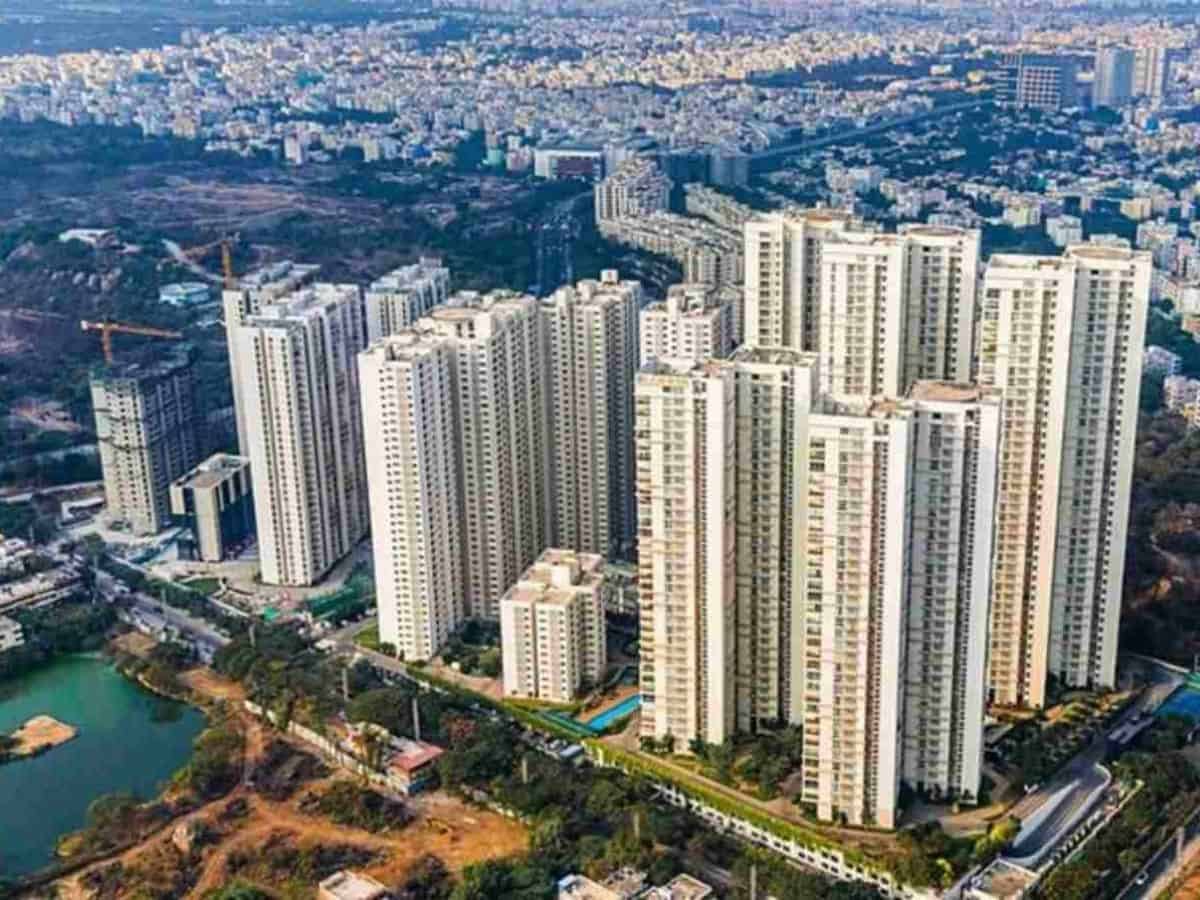
    Hyderabad: The Hyderabad Metropolitan Development Authority (HMDA) claims to have witnessed a significant increase in the new applications for all types of development and construction permissions given under the TGbPass this year.

    In contrast with the claims from the opposition parties that the real estate sector was on a declining trend, HMDA claims that the data showed the continuing trust of all the stakeholder in the real estate sector.

    According to HMDA, the number of new development permission applications received from July 2024
    to November 2024 has increased from 1,326 (in 2023) to 1,920 (in 2024), marking an increase by 45 %.

    The number of new building permission applications received from July to November in 2024 has increased from 756 (in 2023) to 1,061 (in 2024), marking an increase by 40 %.

    The number of new occupancy certificate applications received from July to November in 2024 has increased from 467 (in 2023) to 560 (in 2024), marking an increase by 20 %.

    The number of layouts with housing, layouts with open plots and final layout applications received from July 2024 to November in 2024 has increased from 103 (in 2023) to 299 (in 2024), marking an increase by 190 %.

    The disposal of all development permission applications in the period from July 2024 to November 2024 has increased from 2,065 (in 2023) to 2,563 (in 2024), marking an increase by 24 %.

    The disposal of building permission applications received from July 2024 to November 2024 has increased from 1,196 (in 2023) to 1,414 (in 2024), marking an increase by 18%.

    The disposal of occupancy certificate applications received from July 2024 to November 2024 has increased from 690 (in 2023) to 811 (in 2024), marking an increase by 18%.

    The disposal of layouts with housing, layouts with open plots and final layout applications received from July 2024 to November 2024 has increased from 179 to 335, marking an increase by 87 %.

    The receipt of new development permission applications has increased from 267 (in 2023) to 399 (in 2024), marking an increase by 49 %, and the disposal of development permissions applications has increased from 427 (in 2023) to 630 by November 2024, marking an increase of 48%.

    The receipt of new building permission applications in increased from 149 (in 2023) to 228 (by November 2024), marking an increase by 53 %, and the disposal of building permission applications increased from 259 (in 2023) to 367 (by November 2024), marking an increase by 42%.

    The receipt of new occupancy certificate applications in the month of November increased from 102 (in 2023) to 106 (in 2024), marking an increase of 4 %, and the disposal of development permission applications in November increased from 137 (in 2023) to 174 (in 2024), marking an increase by 27%.

    The receipt of new layouts with housing, layout with open plots and final layouts applications in the month of November has increased from 16 (in 2023) to 65 (in 2024), marking an increase by 306 %, and the disposal of development permission applications in the month of November has increased from 31 (in 2023) to 89 (in 2024), marking an increase by 187%.

    “With an increase in receipt and disposal being observed in the second half of 2024, coupled with high priority infrastructure projects like elevated corridors, HCITI flyovers, radial roads etc., we are confident that the city and its real estate sector will continue to shine and grow,” a statement released by HMDA on Wednesday claimed.