Category: BUSINESS

  • Govt aims to build 2 crore houses under PM’s scheme for rural poor

    Govt aims to build 2 crore houses under PM’s scheme for rural poor

    New Delhi: The Centre plans to construct additional two crore rural houses during FY2024-25 to FY 2028-29 under the Pradhan Mantri Awaas Yojana-Gramin (PMAY-G) flagship scheme that is being implemented to provide “housing for all” in the country, according to the year-end review of the Ministry of Rural Development released on Tuesday.

    As on December 30 this year, the cumulative target of 3.33 crore houses have been allotted to the states/UTs, out of which 3.22 crore houses have been sanctioned and 2.68 crore houses have been completed, according to the official statement.

    PM Narendra Modi released the first instalment to more than 10 lakh PMAY-G beneficiaries on September 17 through single click in a national event.

    An e-KYC app integrated with Aadhaar and equipped with AI-enabled face authentication technology is being used to conduct verification of PMAY-G beneficiaries and prevent fraud, according to the government.

    As per the Union Cabinet approval, the scheme has been extended to cover more people with the provisions regarding mechanised two wheelers, mechanised fishing boat, landline phone and refrigerator having been deleted as conditions that barred eligibility.

    Further, the income criteria have also been enhanced from Rs 10,000 per month to Rs 15,000, and the land-related criteria have been simplified to make the scheme more inclusive.

    The PMAY-G has introduced new technology-based solutions for effective and transparent management of the scheme. With the new phase being implemented the PMAY-G has introduced multiple features to maximise transparency and ensure sanctity in the process right from the identification to completion of the houses.

    The scheme is being implemented and monitored through an end-to-end e-governance solution, AwaasSoft and AwaasApp. AwaasSoft provides functionalities for data entry and monitoring of multiple statistics related to implementation aspects of the scheme to ensure transparency. These statistics include, physical progress, financial progress and status of convergence.

    ‘Awaas+ 2024’ is a unique app specially designed under PMAY-G, having features of assisted survey through pre-registered surveyors, housing technology selection, face authentication, Aadhaar-based e-KYC, data capture of household, conditions of existing house, time stamped, and geo tagged photo capture of existing house proposed site of construction. The app works in online as well as offline mode. “Self-Survey” facility is available for eligible households in Awaas+2024 app Survey for the next phase of PMAYG (2024-29).


  • India targets USD 1 billion banana exports

    India targets USD 1 billion banana exports

    New Delhi: India has witnessed a tenfold rise in exports of bananas in the past decade and is now targeting $1 billion in banana exports in the next five years after successful trial shipments to the Netherlands via the sea route, according to the Centre’s Agricultural and Processed Food Products Export Development Authority (APEDA).

    With the sea route opening up, Russia is expected to emerge as a major market for Indian banana exports.

    India is currently reliant on the air route which is a high-cost mode of transport and limits the quantity of the fruit that can be exported.

    In the fiscal year 2023-24, India exported bananas worth US$ 300 million, a significant increase from US$ 176 million in 2022-23. The country’s share in global banana exports has risen from just 0.21 per cent in 2013 to 1.74 per cent in 2023, highlighting its growing presence in the international market, according to figures compiled by the Ministry of Commerce and Industry.

    To enhance export volumes, the Agricultural and Processed Food Products Export Development Authority (APEDA) is developing sea protocols for fresh fruits and vegetables, including bananas, mangoes, pomegranates, and jackfruit. These protocols aim to facilitate ocean transport, making it more feasible for Indian farmers to reach international markets.

    The Indian government is actively supporting banana cultivation and export through various initiatives, including financial assistance for farmers, infrastructure improvements, and enhanced market access. As domestic farmers adopt modern agricultural practices, they are producing higher quantities of better-quality bananas, positioning India as a key player in the global banana industry.

    Meanwhile, among states, Uttar Pradesh has also emerged as a banana exporter. The state government has been proactive in promoting banana cultivation and has declared it as the One District One Product (ODOP) for Kushinagar.

    This spells substantial benefits for banana growers in the state as they are being provided subsidies as incentives to cultivate high-quality bananas that meet market demands.

    In Uttar Pradesh’s Purvanchal and Awadh regions, districts like Kushinagar, Deoria, Gorakhpur, Maharajganj, Basti, Sant Kabir Nagar, Ayodhya, Ambedkar Nagar, Amethi, and Barabanki are extensively engaged in banana farming, the state government said.

    Over the past decade and a half, the acreage under banana cultivation has increased. Additionally, adopting superior varieties and advanced farming techniques have improved the quality and yield of the crop, the statement added.

  • India’s out-of-home coffee market projected to reach up to USD 3.2 billion by 2028

    India’s out-of-home coffee market projected to reach up to USD 3.2 billion by 2028

    Bengaluru: As coffee emerges as a lifestyle choice for millions of urban consumers in a tea-loving nation, India’s out-of-home coffee market is projected to reach $2.6-$3.2 billion by 2028, with a compound annual growth rate (CAGR) of 15-20 per cent, according to a report on Tuesday.

    The premium coffee segment (above Rs 200), which represented 46 per cent of the market in 2023, is projected to grow to 55-60 per cent of the market at a CAGR of 20-25 per cent, underscoring its dominant role in shaping India’s outside coffee landscape, according to the report by Redseer Strategy Consultants.

    This segment targets affluent, discerning coffee enthusiasts with artisanal brewing and experiential consumption.

    The mass market (below Rs 100) had 50 per cent market share in 2023 which is projected to shrink to 30-35 per cent by 2028, growing at a CAGR of 8-10 per cent. While affordability remains its hallmark, the segment offers limited avenues for premium differentiation, the report mentioned.

    Meanwhile, the mid-price range (Rs 100-Rs 200) which constituted just 4 per cent of the market in 2023 is expected to grow to 8-10 per cent of the market by 2028 at an impressive CAGR of 35-40 per cent. This space offers immense potential for introducing specialty brews, making it a critical driver of industry expansion.

    “Coffee has moved beyond instant and traditional brews to premium experiences. It is now a lifestyle product for Indian customers, with the mid-priced segment emerging as a whitespace to meet the growing demand for affordable options, offering both quality and enhanced experience,” said Rohan Agarwal, Partner, Redseer Strategy Consultants.

    This market is ripe for brands to step in and deliver high-quality, accessible specialty coffee solutions, redefining India’s beverage landscape, he added.

    While India’s outside coffee market offers vast opportunities, businesses must overcome key challenges.

    “Supply chain complexities make it difficult to maintain quality and timely delivery across regions. Finding the right locations in high-traffic areas like malls and tech parks is crucial but highly competitive,” it added.

  • Indian share market opens lower, prepares to move into New Year with caution

    Indian share market opens lower, prepares to move into New Year with caution

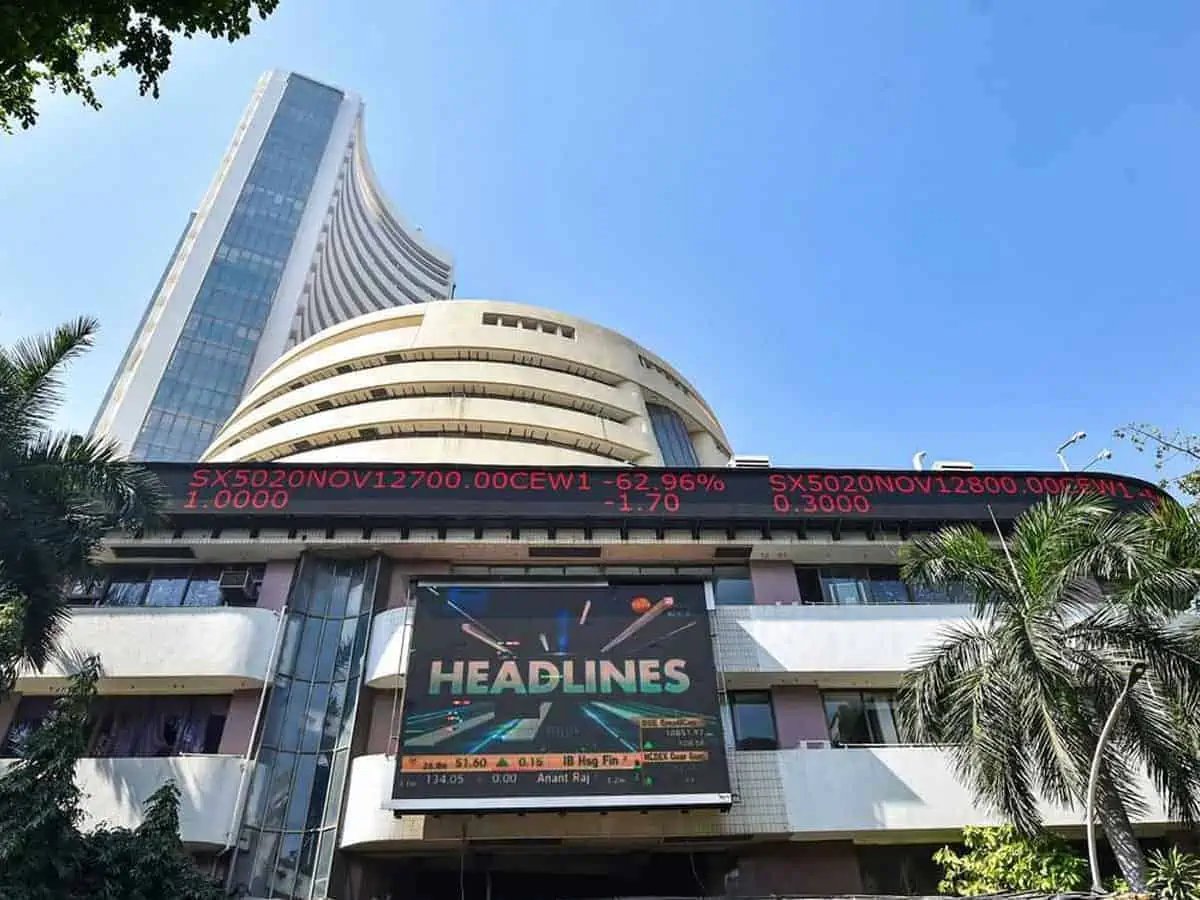
    Mumbai: The domestic benchmark indices opened lower on Tuesday as selling was seen in IT, realty, auto, financial service, FMCG, media and private bank sectors on Nifty.

    At around 9:25 am, Sensex was trading at 77,813.49 after declining 434.64 points or 0.56 per cent, while the Nifty was trading at 23,536 after declining 108.90 points or 0.46 per cent.

    The market trend remained mixed. On the National Stock Exchange (NSE), 1,096 stocks were trading in green, while 1,040 stocks were in red.

    According to market experts, “December has been weak for equity markets globally. S&P 500 is down by 2.34 per cent and Nifty is down by 2.6 per cent.”

    “Markets are preparing to move into the New Year with caution since uncertainty is high and valuations are stretched,” they noted.

    Nifty Bank was down 191.50 points or 0.38 per cent at 50,761.25. Nifty Midcap 100 index was trading at 56,944.80 after dropping 244.95 points or 0.43 per cent. Nifty Smallcap 100 index was at 18,618.95 after dropping 21 points or 0.11 per cent.

    On the sectoral front, buying was seen in the PSU Bank, Pharma, Metal, Energy, Commodities, PSE and Healthcare sector.

    In the Sensex pack, Tech Mahindra, HCL Tech, TCS, Infosys, Zomato and NTPC were the top losers. Whereas, Tata Motors, ITC, Tata Steel, SBI, Kotak Mahindra Bank and Nestle India were the top gainers.

    The Dow Jones declined 0.97 per cent to close at 42,573.73. The S&P 500 declined 1.07 per cent to 5,906.94 and the Nasdaq declined 1.19 per cent to close at 19,486.79 in the previous trading session.

    In the Asian markets, China was trading in red while Hong Kong was trading in green.

    “The high U.S. bond yield and strong dollar will ensure that FIIs will continue to sell on every rise. DII buying will not be strong enough to take the market much higher,” said experts.

    Foreign institutional investors (FIIs) sold equities worth Rs 1,893.16 crore on December 30, while domestic institutional investors bought equities worth Rs 2,173.86 crore on the same day.

  • Andhra Pradesh to attract Rs 1.82 lakh crore investment

    Andhra Pradesh to attract Rs 1.82 lakh crore investment

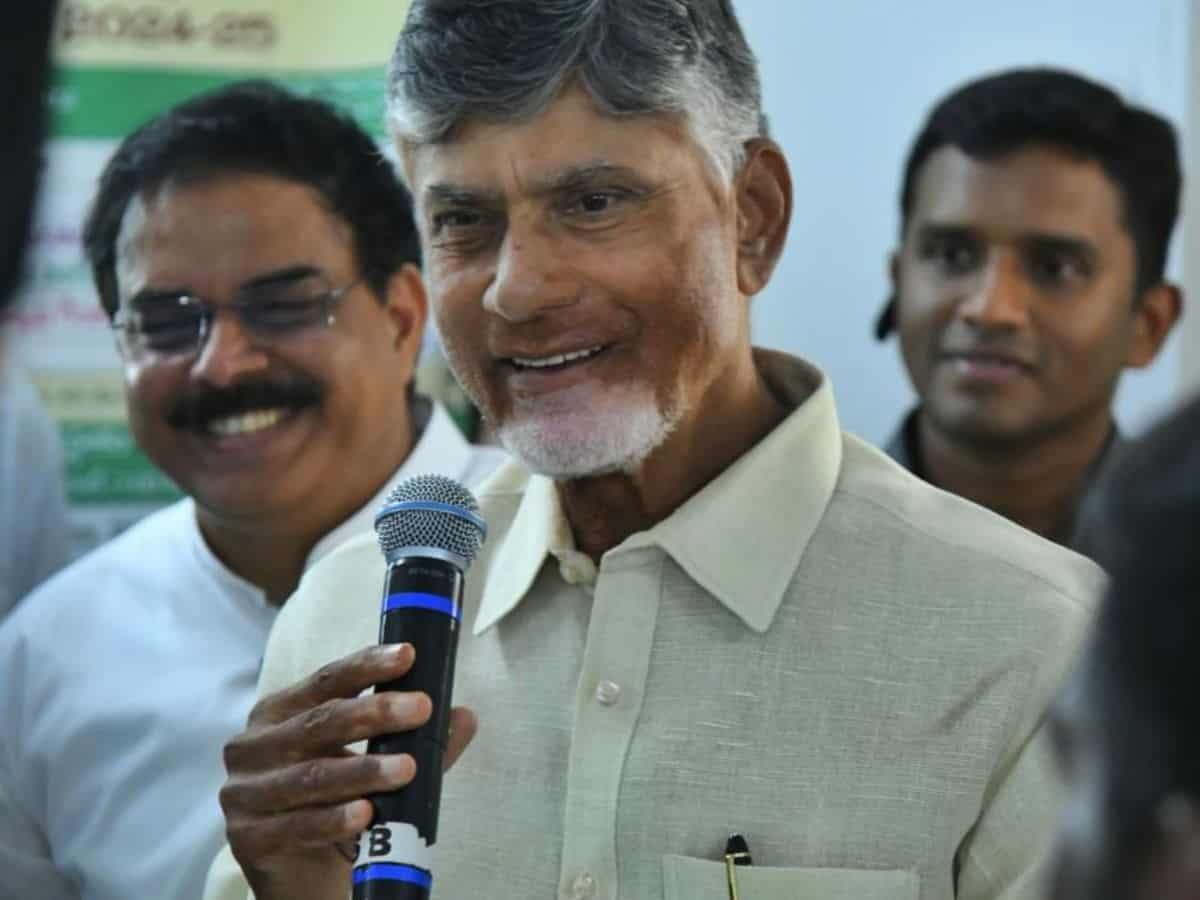
    Amaravati: Andhra Pradesh State Investment Promotion Board (SIPB) on Monday cleared nine projects to come up in the state with an investment of over Rs 1.82 lakh crore.

    The SIPB meeting chaired by Chief Minister N. Chandrababu Naidu gave its clearance for the projects which are expected to create 2.64 lakh jobs.

    CM Naidu on Monday directed the officials to see to it that all the necessary permissions, including allocation of land, are granted on time to those who are coming forward to invest in the State on a massive scale.

    Officials informed the Chief Minister that at least nine projects are being established in the State now with an investment of Rs 1,82,162 crore creating employment for 2,63,411 people. The Bharat Petroleum Corporation Limited (BPCL) is setting up a major refinery in an extent of 6,000 acres at Ramayapatnam in Nellore district with an investment of Rs 96,862 crore creating 2,400 jobs.

    The BPCL is planning a township with five blocks comprising a learning centre, refinery, petrochemical unit and an administrative block, the officials told the Chief Minister. The State will get Rs 88,747 crore in revenue through this project in the next 20 years, they said while the Chief Minister instructed the officials to take steps to complete the project before 2029.

    Tata Consultancy Services (TCS) is investing Rs 80 crore in the port city of Visakhapatnam providing employment to 2,000 youth. The Azad India Mobility Limited is setting up a green project to manufacture electric buses, three-wheelers and battery packs in an extent of 70.71 acres at Gudipalli in Satya Sai district in the coming six years providing employment to 2,381 persons.

    The Balaji Action Buildwell Pvt Ltd is setting up a plant on 106 acres at Rambilli in Anakapalli district with an investment of Rs 1,174 crore to create 1,500 jobs while several industrialists are ready to invest heavily in the State as they got attracted by the clean energy policy adopted recently by the State Government. This will create over two lakh jobs in the clean energy sector alone.

    Tata Power Renewable Energy Limited is establishing a solar power project to generate 400 megawatts of power at Hosur in the Kurnool district on an extent of 1,800 acres with an investment of Rs 2,000 crore creating 1,380 jobs. Also, several other power projects are coming up in the YSR district while Reliance Industries Limited is investing Rs 65,000 crore to provide employment to over two lakh people.

    The Chief Minister asked the officials about the progress in the projects which were cleared during the SIPB meeting held on November 19.

    He told officials to provide all the basic amenities to such industries on a war footing basis so that the projects can be completed as scheduled. He also directed the officials to attract more investments to the State through the incentives and subsidies being extended to the industries.

  • RBI directs banks to let remitters verify account name before RTGS, NEFT transfers

    RBI directs banks to let remitters verify account name before RTGS, NEFT transfers

    Mumbai: The Reserve Bank of India (RBI) on Monday directed all banks to put in place a facility to enable a remitter to verify the beneficiary bank account name before initiating a transaction using the RTGS or NEFT system.

    “All banks who are direct members or sub-members of RTGS and NEFT are advised to offer this facility no later than April 1, 2025,” the RBI circular states.

    With the introduction of this facility, remitters can input the account number and the branch IFSC code of the beneficiary, following which the name of the beneficiary will be displayed.

    This facility will increase customer confidence as it would reduce the possibility of wrong credits and frauds.

    The introduction of a beneficiary bank account name look-up facility for Real Time Gross Settlement (RTGS) and National Electronic Funds Transfer (NEFT) Systems was proposed in the RBI’s Statement on Developmental and Regulatory Policies dated October 9, 2024.

    Currently, the Unified Payments Interface (UPI) and Immediate Payments Service (IMPS) systems enable a remitter to verify the name of the beneficiary before initiating the transfer.

    It has been decided to put in place a similar facility that would enable a remitter to verify the beneficiary bank account name before initiating a transaction using RTGS or NEFT system. Accordingly, National Payments Corporation of India (NPCI) has been advised to develop the facility and onboard all banks, the RBI has stated in its circular to all banks.

    The RBI has directed that banks which are participants of RTGS and NEFT Systems, shall make this facility available to their customers through Internet banking and Mobile banking.

    The facility shall also be available to remitters visiting branches for making transactions. Detailed requirements for the same have been provided to the banks.

    The RBI has taken the decision as there have been requests to introduce such a facility for Real Time Gross Settlement System (RTGS) and National Electronic Funds Transfer (NEFT) systems on the same lines as payment systems like UPI and IMPS.

    Accordingly, to enable remitters in RTGS and NEFT to verify the name of the beneficiary account holder before initiating funds transfer, it is now proposed to introduce a ‘beneficiary account name look-up facility,” the RBI had stated in its statement in October.

    It had also said that an order to introduce the facility will be issued separately.

  • Indian insurance sector sees 62pc surge in female salespersons in FY24: Report

    Indian insurance sector sees 62pc surge in female salespersons in FY24: Report

    Mumbai: India’s insurance sector, traditionally dominated by men, has in FY24 witnessed a 62 per cent rise in active female Point of Salespersons (POSPs), compared to the previous year, according to a report on Monday.

    POSPs play a crucial role as intermediaries, simplifying insurance products for customers and guiding them in policy selection.

    The report by Probus, an InsurTech platform, showed that women are emerging as key players, promoting diversity and enhancing customer engagement. It noted that there has been an extraordinary rise of 120 per cent in the total number of women added in this role since FY22.

    This growth is powered by the inherent flexibility of the POSP profession, allowing women to manage their work schedules while balancing family commitments, said the report.

    The minimal entry barriers, coupled with increasing aspirations for financial independence and empowerment, have made the role an ideal choice for women seeking meaningful careers.

    “The increasing participation of women has introduced a fresh perspective to the insurance ecosystem, enhancing customer trust and engagement. Their contributions have also translated into measurable outcomes, with women POSPs driving a 15 per cent increase in premium revenues in FY24,” the report said.

    The remarkable rise of female POSPs also highlights the transformative potential of inclusivity, empowerment, and innovation in shaping India’s insurance sector.

    With their growing presence, women are not just changing the face of the workforce, but are also driving sustainable growth and redefining industry benchmarks.

    The insurance sector in India has grown significantly over the past few decades.

    According to the Insurance Regulatory and Development Authority of India (IRDAI), the insurance market in India is expected to reach $222 billion by 2026. In the next 10 years, the country is also expected to be the sixth-largest insurance market, leapfrogging Germany, Canada, Italy, and South Korea.

  • Gold rises Rs 150 to Rs 79,350 per 10 gms; silver rules flat

    Gold rises Rs 150 to Rs 79,350 per 10 gms; silver rules flat

    New Delhi: Gold prices rose Rs 150 to Rs 79,350 per 10 grams in the national capital on Monday, according to the All India Sarafa Association.

    Traders said the potential for upside appears to be limited for gold in the short term, as the market participants are primarily focused on Trump’s tariff measures and economic policy, which could determine the direction of the metal next year.

    The precious metal settled at Rs 79,200 per 10 grams in the previous trading session on Friday.

    However, silver traded flat at Rs 91,700 per kg on Monday.

    The price of gold of 99.5 per cent purity appreciated by Rs 150 to Rs 78,950 per 10 grams against the previous close of Rs 78,800 per 10 grams on Friday.

    Meanwhile, in futures trade on the Multi Commodity Exchange (MCX), gold contracts for February delivery slipped Rs 41 or 0.05 per cent to Rs 76,503 per 10 grams.

    “Gold trading within the range of Rs 76,400–76,750 in MCX. With global markets entering the holiday period for New Year celebrations, trading volumes were thin, and market activity was subdued.

    “The sideways movement is likely to persist in the short-term due to the limited participation during the festive season,” Jateen Trivedi, VP Research Analyst of Commodity and Currency at LKP Securities, said.

    However, silver contracts for March delivery rose Rs 60 or 0.07 per cent to Rs 88,947 per kg in futures trade on the commodities exchange.

    In international markets, Comex gold futures fell USD 5.70 per ounce or 0.22 per cent to USD 2,626.20 per ounce.

    “Gold prices are likely to see continued consolidation this week, amid lack of fresh triggers as major participants are still away due to new year holiday in the international market, while upside in the bullion limited due higher dollar that is trading near 108-levels,” Pranav Mer, Vice President, EBG – Commodity & Currency Research at JM Financial Services Ltd, said.

    Comex silver futures, however, traded flat at USD 29.96 per ounce in the Asian market hours.

    “On the macro front, except for manufacturing PMI data from Asia, the Eurozone, and the US, there is no major data schedule for this week. Investors anticipate calm markets with low trading volumes overall,” said Saumil Gandhi, Senior Analyst – Commodities at HDFC Securities.

  • Adani Enterprises Ltd’s share jumps over 7 per cent

    Adani Enterprises Ltd’s share jumps over 7 per cent

    Mumbai: The share of Adani Enterprises Limited (AEL) registered a sharp jump on Monday, closing 7.26 per cent up or Rs 175.05 at Rs 2,585 apiece.

    The company’s stock reached an intra-day high of Rs 2,610. AEL was also the top gainer on the Nifty 50 index.

    Share price of Adani Green Energy Ltd closed at Rs 1,072, up 1.71 per cent or Rs 18.

    The stock of Adani Power Limited also closed in the green. The share closed at 543.05 after gaining 7.16 per cent or Rs 36.30. The shares of Adani Energy Solutions Ltd closed at Rs 826.35, up Rs 20.40 or 2.53 per cent.

    Meanwhile, AEL announced that the company will exit Adani Wilmar Limited (AWL) by divesting its entire 44 per cent stake in the joint venture to raise more than $2 billion. Adani Enterprises will divest 13 per cent of its shares in Adani Wilmar to achieve compliance with minimum public shareholding requirements through the Offer for Sale.

    In addition, Wilmar International Ltd has agreed to acquire the 31 per cent stake held by Adani Flagship in the edible oil maker. Adani Wilmar’s market capitalisation was Rs 42,785 crore ($5.0 billion) as of December 27.

    Last week, leading brokerage firm Ventura Securities Ltd set a market price target of Rs 3,801 for Adani Enterprises shares over the next two years. The brokerage said in its latest note that in a bull case scenario, the target price could rise to Rs 5,748, an upside of 138.6 per cent from the current price.

    According to Ventura’s note, Adani Enterprises is on a strong growth trajectory. The company’s consolidated revenue will reach Rs 1.56 lakh crore at a CAGR of 17.5 per cent over the next three years from FY24 to FY27.

  • Adani-backed Dharavi Redevelopment Project changes name to Navbharat Mega Developers

    Adani-backed Dharavi Redevelopment Project changes name to Navbharat Mega Developers

    Mumbai: Dharavi Redevelopment Project Pvt Ltd (DRPPL), the Adani-backed company undertaking the ambitious plan of revamping Dharavi slums, is rebranding itself in line with the company’s “promise of building a modern, inclusive and vibrant community”, the firm said.

    DRPPL will now be called Navbharat Mega Developers Pvt Ltd (NMDPL) in response to the holistic value proposition and renewal of its corporate vision, it said in a statement.

    “The name Navbharat Mega Developers is rooted in the company’s commitment to growth, change and hope, and the rebranding exercise that has received the affirmation of its Board of Directors and the Ministry of Corporate Affairs,” it said.

    In Dharavi Redevelopment Project Pvt, Adani Group held an 80 per cent stake while the rest was with the state government. The shareholding in the rechristened firm will remain unchanged.

    Adani plans to turn 620 acres of prime land, about three-quarters of the size of New York’s Central Park, into a glitzy urban hub. About 1 million people live in rickety shanties with open sewers and shared toilets in the densely populated slums, close to Mumbai’s international airport.

    Eligible residents will be given flats free of up to 350 sq ft free of cost as part of the USD 3 billion redevelopment of rubbish-strewn Mumbai slum of Dharavi into a “world-class” district.

    The change, the statement said, reflects the company’s fresh outlook and obligation to create a broader and brighter future for everyone associated with or beneficiary of the gigantic and historic task of rehabilitating slums across the nation.

    “The name Navbharat, which means ‘New India’, reflects the massive potential this project holds in shaping a better tomorrow. Mega highlights the sheer scale and impact of the work being undertaken, while Developers points to the role the company intends to play in building a thriving community,” it said.

    NMDPL is a special purpose vehicle between the Government of Maharashtra — through the Dharavi Redevelopment Project (DRP)/Slum Rehabilitation Authority (SRA) — and the Adani Group.

    The change in name does not alter the government’s role or the core purpose of the project.

    “NMDPL remains steadfast in its commitment to executing the Dharavi redevelopment as envisioned, ensuring transparency, inclusivity and the welfare of all stakeholders,” the statement said.

    “The initiative is not just to change the name DRPPL but also to avoid being mistaken for the government authority in the same space, which is DRP (Dharavi Redevelopment Authority), the special planning authority of the Government of Maharashtra dealing with Dharavi’s redevelopment.”

    The role of the Maharashtra government remains unchanged and DRP continues to be the supervising authority for the ambitious project.

    “As India works towards its ambitious goal of becoming slum-free, Dharavi’s redevelopment is a crucial step in that direction. With this new name, NMDPL is reaffirming its pledge to the national cause,” the statement added.