Category: BUSINESS

  • Women-led startup funding in India increases to $930 million in 2024

    Women-led startup funding in India increases to $930 million in 2024

    New Delhi: The Indian startup ecosystem has seen major changes in the last few years and there has been an unprecedented rise in the participation of women entrepreneurs as the funding of female-led startups increased by over 90 per cent in 2024.

    Women entrepreneurs are not only becoming founders and co-founders, but a large number of investors are also investing in women-led startups.

    According to the Indian Startup Funding Report 2024 by Inc42, women-led startups raised around $930 million across 136 deals in 2024. This figure was $480 million across 118 deals in 2023, showing a growth of 93.75 per cent year-on-year.

    The fintech sector topped the funding received by women-led startups. It had a share of 28.7 per cent or $266.91 million in the total funding. It was followed by the e-commerce sector with a share of 22.8 per cent or $212 million and enterprise tech at third place with a share of 14 per cent or $130 million in total funding.

    The fintech sector has received this funding in only 17 deals. Meanwhile, E-commerce has received $212 million in funding in 53 deals.

    Apart from this, the share of health tech and cleantech in the total funding was 11 per cent ($ 102.3 million) and 14.1 per cent ($ 130.93 million) respectively.

    Additionally, in 2024, a total of 13 new-age companies launched their initial public offerings (IPOs), as startups cumulatively raised more than Rs 29,200 crore from the stock market.

    The 13 startups cumulatively raised Rs 29,247 crore from the cash market. Out of this, the fresh issue was nearly Rs 14,672 crore and Rs 14,574 crore Offer for Sale (OFS).

    Among these startup IPOs, 10 were mainboard and three were SME IPOs.

    The startup IPOs include TAC Security, Unicommerce, MobiKwik, TBO Tek, Ixigo, Trust Fintech, FirstCry, Menhood, Awfis, Swiggy, Digit Insurance, Blackbuck and Ola Electric.

  • Ethiopia earns over USD 216 million from horticulture exports

    Ethiopia earns over USD 216 million from horticulture exports

    Addis Ababa: Ethiopia has earned more than $216 million from exports of horticultural commodities during the first five months of the current fiscal year, the country’s Ministry of Trade and Regional Integration has disclosed.

    The East African country exported 39,225 tonnes of flowers to the international market, earning over $186 million during the first five months of the current Ethiopian 2024/2025 fiscal year, which started on July 8. Flower exports secured the largest share of the total revenue generated from the export of horticultural commodities during the reported period, the ministry disclosed in a statement issued on Friday.

    The country also exported 71,305 tonnes of fruits and vegetables to the international market, generating more than $30 million.

    The ministry said the Netherlands, Saudi Arabia, and the United Kingdom are the top three destinations for Ethiopia’s flower exports, while Somalia, Djibouti, and the Netherlands are the top three destinations for vegetable exports.

    According to recent data from the ministry, Ethiopia has generated some $2.63 billion in export revenue during the first five months of the current fiscal year amid strong performance in major agricultural export commodities, Xinhua news agency reported.

    Horticulture is a field of agriculture that encompasses the science and technology of production, improvement and consumption of crops, which includes vegetables, fruits, spices, condiments, herbs, aromatic and ornamental plants.

    To obtain desirable agricultural outputs, these crops require immense care, attention and protection at various stages of planting, growing, harvesting, packaging, storing and processing. Plants are affected by various types of diseases such as viral, bacterial and fungal, which are responsible for massive losses and reductions in agricultural production.

    As fruits and vegetables furnish us with essential nutrients to fulfil our daily energy requirements, control and management of plant nutrition and diseases have been a subject of great interest for many years. To reduce and avoid huge economic losses, control of pathogens and improvement of new varieties of crops that are resistant to diseases have been vastly undertaken through the application of genetic engineering techniques, chemical pesticides and insecticides.

    These are needed to boost growth, and immunity and prevent ailments among horticultural crops. These agrochemicals are low-cost, have a broad spectrum of action, and are easy to apply. This has led to improved plant defences and a drastic reduction of endemic diseases, resulting in the generation of higher yields contributing to economic development.

  • Q3 results, FII and economic data key triggers for next week

    Q3 results, FII and economic data key triggers for next week

    Mumbai: The market outlook for next week will be guided by Q3 results, crude oil price, foreign institutional investors (FIIs) and domestic economic data, according to experts on Sunday.

    Quarterly results for the October-December period (Q3) will start at the beginning of next week. IT giants such as TCS and Tata Elxsi will announce their results on January 9, 2025.

    Meanwhile, the government will release the first advance estimates of GDP for the financial year (FY) 2024-25 on Tuesday.

    Last week, the Indian stock market witnessed a sharp rally. Nifty rose 191 points or 0.80 per cent to close at 24,004 and Sensex rose 524 points or 0.67 per cent to close at 79,223. During this period, the performance of smallcap and midcap stocks was better than largecap stocks. This shows that the bullish stance is maintained in the stock market on the occasion of the New Year.

    In the sectoral performance, Nifty Auto led the gains with a 4 per cent weekly rise, while Nifty Realty emerged as the top laggard. Global market activity remained muted due to Christmas and year-end holidays, with no significant economic data releases.

    With the Christmas and New Year holiday season coming to an end, market activity is expected to normalize next week. Full participation from institutional and retail investors could amplify market movements, making it a crucial period for traders and investors alike, Pravesh Gour, Senior Technical Analyst at Swastika Investmart, said.

    In the trading session from December 30 to January 3, FIIs sold shares worth Rs 11,041 crore in the cash market. Whereas, domestic institutional investors (DIIs) invested Rs 9,253 crore.

    Puneet Singhania, Director at Master Trust Group, said: “Nifty has formed a strong base in the 23,500–23,700 zone, consolidating there for 10 sessions, signalling a potential bottom formation and hinting at a reversal. The sustained close above the key psychological mark of 24,000 adds to the bullish sentiment, with prices favouring a buy-on-dips approach with a favourable risk-reward ratio.”

  • Union Budget 2025-26 should continue to prioritise job creation: CII

    Union Budget 2025-26 should continue to prioritise job creation: CII

    New Delhi: The Union Budget 2025-26 should continue to prioritise employment creation to harness India’s demographic dividend and propel economic growth, apex business chamber CII said on Sunday.

    It highlighted that the Union Budget for FY25 had outlined a series of initiatives to boost employment generation, including the Employment Linked Incentive Scheme. The forthcoming Budget could announce further measures to boost employment generation, the CII statement said.

    India is now the world’s most populous country, boasting 1.45 billion citizens. With a median age of just 29 years, India is also a young country and is set to add 133 million people to its working-age population by 2050. Mass-scale employment generation is important to engage this young population productively, and to drive inclusive growth, CII said.

    The business chamber has proposed an integrated National Employment Policy, which could subsume under its ambit, the slew of employment-generating schemes currently in works by various Ministries.

    In addition, the unified policy could also build on the single integrated employment portal — National Career Service (NCS) — wherein all the data can flow into this from various Ministries and State Portals. In this context, it is important to look at the development of the Universal Labour Information Management System (ULIMS) under NCS. This would provide information about employment opportunities and projections; job classification; skills demand; and training opportunities aligned with the projections.

    As part of its wish list for the Budget, CII has proposed a new section in lieu of section 80JJAA to encourage new employment. The new provision should continue as a Chapter VIA deduction from Gross Total Income which is available even if the taxpayer opts for a concessional tax regime. It can be made available to any taxpayer who carries on business or profession and is liable to tax audit. The deduction can be granted for the first three years of new employment with reference to the salary paid in the respective tax year but is subject to a ceiling of Rs 1 lakh per month, the statement said.

    CII has also sought targeted support for employment-intensive sectors such as construction, tourism, textiles, and low-skilled manufacturing. To boost exports from labour-intensive manufacturing sectors, which will lead to employment generation, tariff structures, and support through programmes like the Production /Employment Linked Schemes, and the Free Trade Agreements (FTAs) that India is entering, need to be synced, it added.

    Increasing women’s participation in the workforce, which currently is low, can further boost the Indian economy. New initiatives, including the construction of dormitories using CSR funds, the formalization of sectors like the care economy, establishment of government-supported creches in industrial clusters, could be taken to Increase female labour force participation, CII said.

    According to CII, the government could consider, launching an internship programme in government offices in rural areas, for college-educated youth. This initiative would create short-term employment opportunities in government offices while bridging the gap between education and professional skills.

    Rolling out Labour Codes while ensuring Social Security coverage to the Gig and Platform workers would further strengthen the employment landscape, the statement added.

    CII has also urged the Government to consider setting up an International Mobility Authority under the Ministry of External Affairs. This authority could facilitate government-to-government collaborations to help Indian youth tap overseas employment opportunities. The authority could also work with the Ministry of Skill Development and Entrepreneurship to help develop skill development programmes aligned with global opportunities.

    CII Director General Chandrajit Banerjee said, “Coupled with higher employment, India also needs to ensure that productivity goes up. India’s Incremental Capital Output Ratio (ICOR) needs to trend down from its present level of 4.1. The Union Budget could set up an expert committee to study this in greater detail and recommend measures on the way forward.”


  • India’s demand for petroleum products expected to rise

    India’s demand for petroleum products expected to rise

    New Delhi: India’s demand for petroleum products such as petrol, diesel and LPG is expected to rise by three to four percent in the current financial year ending on March 31, 2025, according to a Fitch Ratings report.

    The growth is driven by rising consumer, industrial and infrastructure demand, the rating agency said in the report.

    For India’s oil marketing companies (OMCs), refinery margins are expected to fall below their mid-cycle levels in FY25 amid lower product cracks, regional oversupply, and lower benefits from price differences between crude varieties, the report states.

    However, marketing margins would be better than FY 24 due to lower Brent crude oil prices in the current financial year, the report states.

    “This will mitigate the pressures from lower refining margins for the oil marketing companies, although pure refiners like HPCL-Mittal Energy Limited’s (HMEL, BB+/Stable) will face greater pressure on profitability. We expect refining margins to recover to their mid-cycle levels in FY26, as the regional oversupply eases and Brent crude oil prices fall in line with Fitch’s assumption, while we project marketing margins to remain supportive. HMEL’s low rating headroom in FY25 will improve in FY26 due to a gradual normalisation in refining margins,” the report said.

    For the upstream companies such as Oil and Natural Gas Corporation Limited (ONGC) and Oil India Limited (OIL), profits are expected to dip due to subdued production and lower crude oil prices. Fitch Ratings said domestic prices for gas produced from old fields are expected to continue to be capped at $6.5/MMBTU in 2HFY25, as they are determined by a formula that benchmarks prices to 10 per cent of crude prices.

    India’s oil and gas production is expected to be broadly flat in FY25. The report said India’s crude oil production would fall by two to three per cent in FY25, as upstream companies struggle to arrest the natural output decline at ageing fields through technology investments to raise recovery and tap isolated reservoirs.

    However, production should grow by low single-digit percentages in FY26, as production increases at ONGC’s eastern offshore KG Basin, and at privately owned fields, it added.

    The country’s crude oil import dependency would continue to rise in the near term, due to the growth in demand for petroleum products not being matched by a rise in domestic crude oil production.

  • HYDRAA commissioner inspects illegal construction in Khanamet

    HYDRAA commissioner inspects illegal construction in Khanamet

    Hyderabad: Hyderabad Disaster Response, Assets Monitoring and Protection Agency (HYDRAA) commissioner AV Ranganath inspected a multi-storeyed building being constructed illegally at Ayyappa Society in Khanamet village of Serilingampally mandal in an area measuring 684 sq ft on Saturday, January 4, and took stock of the situation.

    Based on the complaint by locals that despite notices served by the Greater Hyderabad Municipal Corporation (GHMC) and High Court orders, the illegal construction was still happening, Ranganath, along with HYDRAA, GHMC, and revenue officials inspected the construction work happening right beside a 100 ft road.

    Ranganath reviewed the notices served by the GHMC and the High Court’s orders at the scene.

    He took the issue of the builder disregarding the High Court’s orders and subsequent demolition notices served by the GHMC seriously.

    The GHMC issued demolition notices on February 14, 2024, and speaking orders on February 26, 2024, against the illegal construction which has a cellar, ground floor, and five floors above it. Even the High Court had not only declared it as an illegal construction but had sought action against it on April 19, 2024.

    Based on the High Court’s order, the GHMC had partly demolished the structure on June 13, 2024. However, the construction continued unabated.

  • Over 400 flights delayed at Delhi airport due to bad weather

    Over 400 flights delayed at Delhi airport due to bad weather

    New Delhi: More than 400 flights were delayed at the airport in the national capital on Friday morning as low visibility conditions due to dense fog disrupted operations, according to an official.

    Visibility conditions dropped to zero in some areas of the national capital due to the thick blanket of fog.

    The official said over 400 flights were delayed at the Indira Gandhi International Airport (IGIA) but there were no diversions.

    As per information available on flight tracking website Flightradar24.com, 470 flights were delayed at the airport.

    “Low Visibility Procedures are still in progress at Delhi Airport. However, there has been no impact on flight operations.

    “Passengers are requested to contact the airline concerned for updated flight information,” Delhi International Airport Ltd (DIAL) said in a post on X at 11 am.

    In another post at 6.35 am, DIAL said while landing and takeoffs continue at the airport, flights that are not CAT III compliant may get affected.

    CAT III facility allows aircraft to operate in low-visibility conditions.

    The India Meteorological Department (IMD) said the airport experienced very dense fog with visibility recorded at 0 metres. It said all runways are operating under CAT III, which allows aircraft to operate in low visibility conditions.

    IGIA, operated by DIAL, handles around 1,300 flight movements daily.

  • Court orders joint trial for Adani’s USD 265 mn bribery allegations

    Court orders joint trial for Adani’s USD 265 mn bribery allegations

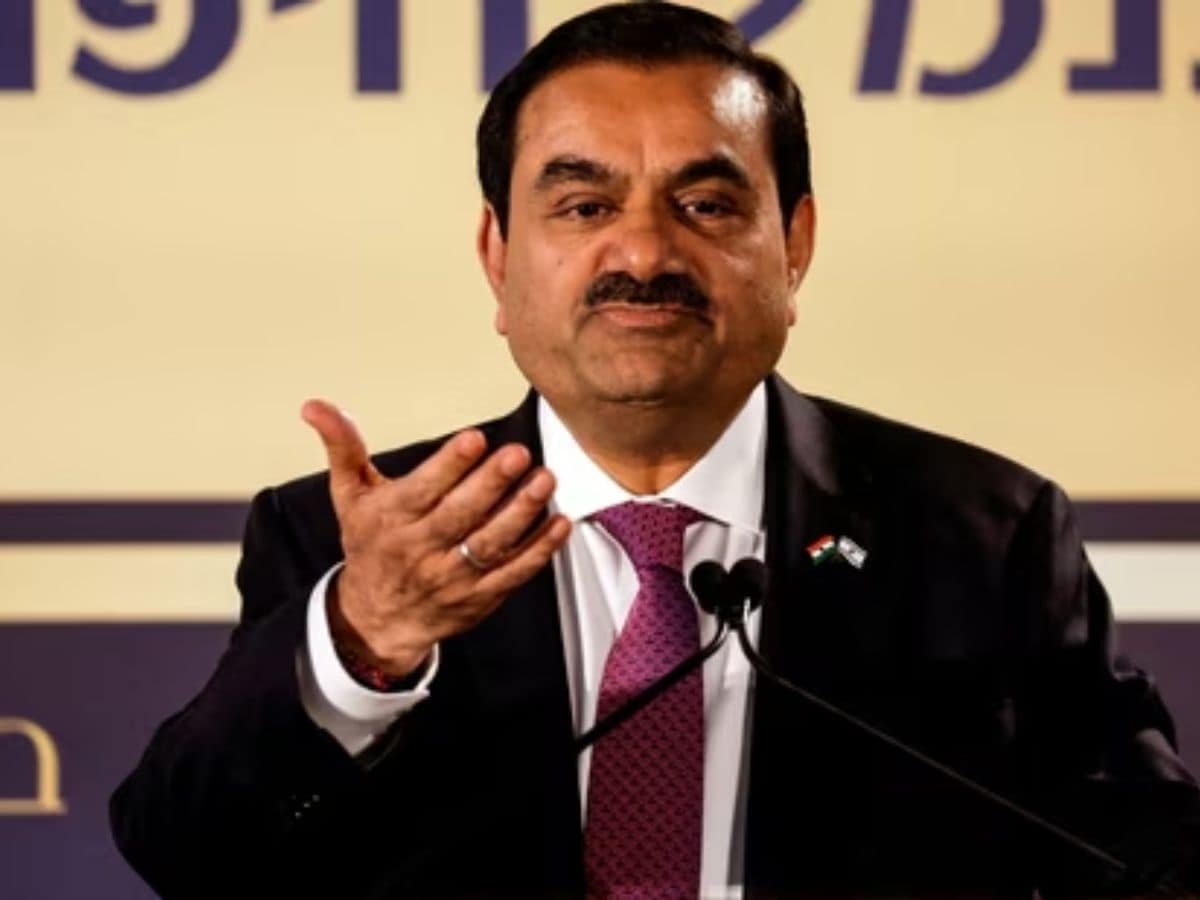
    New York: A New York court has ordered that the criminal and civil cases filed against Indian billionaire Gautam Adani and others in a bribery scheme are “related” and will be assigned to the judge overseeing the criminal case.

    The order available on the court website of the US District Court Eastern District of New York says that “in consultation with District Judge Garaufis, because USA v. Adani et al., 24 Crim. 433 (NGG), Securities and Exchange Commission v. Adani et al., 24 Civ. 8080 (VMS), and Securities and Exchange Commission v. Cabanes, 24 Civ. 8081 (VMS) are based on similar allegations and arise from the same transactions or events”.

    “To promote judicial efficiency and avoid conflicting schedules, all three cases are marked as related. All three actions shall be assigned to the judges assigned to the earliest filed action, which is the criminal action, USA v. Adani et al., 24 Crim. 433 (NGG)… Ordered by Magistrate Judge Vera M. Scanlon on 12/12/2024.

    The case has now been reassigned to United States District Judge Nicholas Garaufis.

    Adani is being indicted by the US Department of Justice for his role in an alleged years-long scheme to pay USD 250 million bribes to Indian officials in exchange for favourable solar power contracts.

    The Adani group has denied the Department of Justice and the SEC’s allegations as ” baseless.”

    “The allegations made by the US Department of Justice and the US Securities and Exchange Commission against directors of Adani Green are baseless and denied,” a spokesperson for the Adani Group had said in a statement.

    The spokesperson pointed to a US Department of Justice statement that said: “The charges in the indictment are allegations and the defendants are presumed innocent unless and until proven guilty”.

    The group has said that “all possible legal recourse will be sought”.

    “The Adani Group has always upheld and is steadfastly committed to maintaining the highest standards of governance, transparency and regulatory compliance across all jurisdictions of its operations. We assure our stakeholders, partners and employees that we are a law-abiding organisation, fully compliant with all laws,” the spokesperson added.

    In November last year, the Securities and Exchange Commission (SEC) charged Gautam Adani Sagar Adani and Cyril Cabanes, an executive of Azure Power Global Ltd., for conduct arising out of a massive bribery scheme.

    In a parallel action, the US Attorney’s Office for the Eastern District of New York unsealed criminal charges against Gautam Sagar Adani and Cabanes, among other individuals connected to Adani Green and Azure Power.

    The criminal indictment charges Gautam Adani, Sagar Adani and Vneet S. Jaain with “conspiracies to commit securities and wire fraud and substantive securities fraud for their roles in a multi-billion-dollar scheme to obtain funds from US investors and global financial institutions based on false and misleading statements”.

    The indictment also charges Ranjit Gupta and Rupesh Agarwal, former executives of a renewable-energy company with securities that had traded on the New York Stock Exchange and Cyril Cabanes, Saurabh Agarwal and Deepak Malhotra, former employees of a Canadian institutional investor, with conspiracy to violate the Foreign Corrupt Practices Act in connection with a bribery scheme also perpetrated by Gautam S. Adani, Sagar R. Adani and Vneet S. Jaain, involving one of the world’s largest solar energy projects, a statement by the US Attorney’s Office, Eastern District of New York had said.

  • Court orders joint trial for Adani’s $265 mn bribery allegations

    Court orders joint trial for Adani’s $265 mn bribery allegations

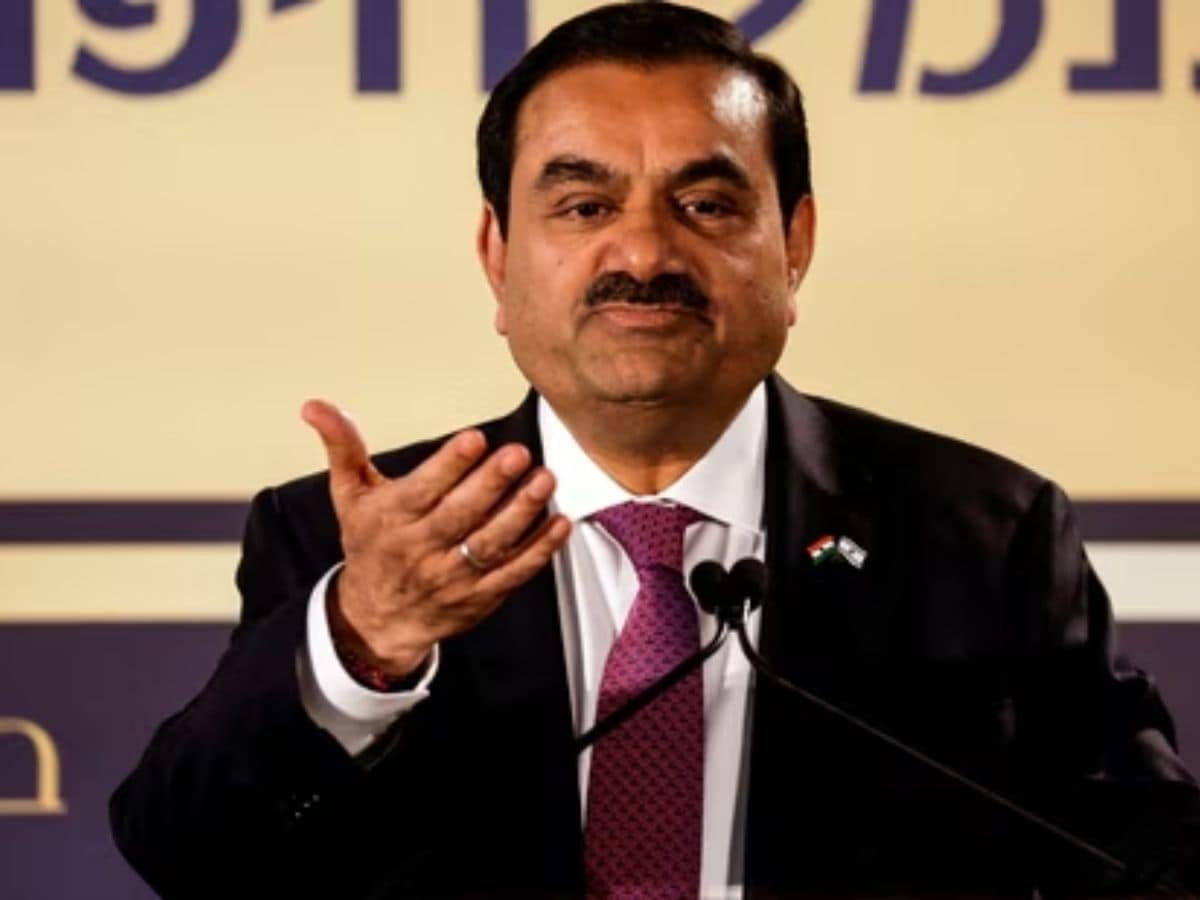
    New York: A New York court has ordered that the criminal and civil cases filed against Indian billionaire Gautam Adani and others in a bribery scheme are “related” and will be assigned to the judge overseeing the criminal case.

    The order available on the court website of the US District Court Eastern District of New York says that “in consultation with District Judge Garaufis, because USA v. Adani et al., 24 Crim. 433 (NGG), Securities and Exchange Commission v. Adani et al., 24 Civ. 8080 (VMS), and Securities and Exchange Commission v. Cabanes, 24 Civ. 8081 (VMS) are based on similar allegations and arise from the same transactions or events”.

    “To promote judicial efficiency and avoid conflicting schedules, all three cases are marked as related. All three actions shall be assigned to the judges assigned to the earliest filed action, which is the criminal action, USA v. Adani et al., 24 Crim. 433 (NGG)… Ordered by Magistrate Judge Vera M. Scanlon on 12/12/2024.

    The case has now been reassigned to United States District Judge Nicholas Garaufis.

    Adani is being indicted by the US Department of Justice for his role in an alleged years-long scheme to pay USD 250 million bribes to Indian officials in exchange for favourable solar power contracts.

    The Adani group has denied the Department of Justice and the SEC’s allegations as ” baseless.”

    “The allegations made by the US Department of Justice and the US Securities and Exchange Commission against directors of Adani Green are baseless and denied,” a spokesperson for the Adani Group had said in a statement.

    The spokesperson pointed to a US Department of Justice statement that said: “The charges in the indictment are allegations and the defendants are presumed innocent unless and until proven guilty”.

    The group has said that “all possible legal recourse will be sought”.

    “The Adani Group has always upheld and is steadfastly committed to maintaining the highest standards of governance, transparency and regulatory compliance across all jurisdictions of its operations. We assure our stakeholders, partners and employees that we are a law-abiding organisation, fully compliant with all laws,” the spokesperson added.

    In November last year, the Securities and Exchange Commission (SEC) charged Gautam Adani Sagar Adani and Cyril Cabanes, an executive of Azure Power Global Ltd., for conduct arising out of a massive bribery scheme.

    In a parallel action, the US Attorney’s Office for the Eastern District of New York unsealed criminal charges against Gautam Sagar Adani and Cabanes, among other individuals connected to Adani Green and Azure Power.

    The criminal indictment charges Gautam Adani, Sagar Adani and Vneet S. Jaain with “conspiracies to commit securities and wire fraud and substantive securities fraud for their roles in a multi-billion-dollar scheme to obtain funds from US investors and global financial institutions based on false and misleading statements”.

    The indictment also charges Ranjit Gupta and Rupesh Agarwal, former executives of a renewable-energy company with securities that had traded on the New York Stock Exchange and Cyril Cabanes, Saurabh Agarwal and Deepak Malhotra, former employees of a Canadian institutional investor, with conspiracy to violate the Foreign Corrupt Practices Act in connection with a bribery scheme also perpetrated by Gautam S. Adani, Sagar R. Adani and Vneet S. Jaain, involving one of the world’s largest solar energy projects, a statement by the US Attorney’s Office, Eastern District of New York had said.

  • Indian stock market opens lower, Nifty below 24,150

    Indian stock market opens lower, Nifty below 24,150

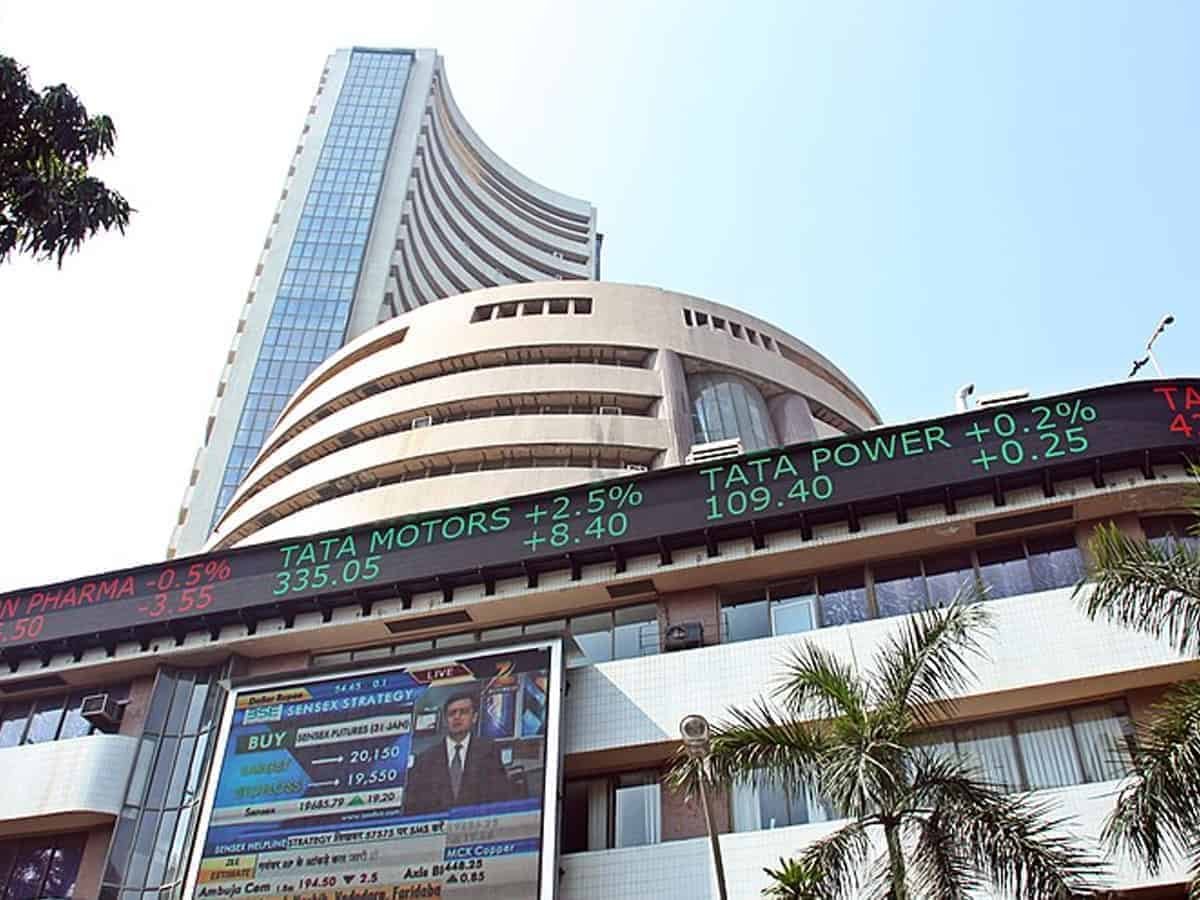
    Mumbai: The domestic benchmark indices opened lower on Friday as selling was seen in the IT, pharma, financial service and FMCG sectors.

    At around 9.29 am, Sensex was trading at 79.710.47 after dropping 233.24 points or 0.29 per cent, while Nifty was trading at 24,131.90 after declining 56.75 points or 0.23 per cent.

    The market trend remained positive. On the National Stock Exchange (NSE), 1,256 stocks were trading in green, while 401 stocks were in red.

    According to market experts, the uncanny ability of the market to surprise was evident in yesterday’s massive 445 point rally in Nifty. Even though FII buying helped in the rally, at Rs 1,506 crore net buying it was not good enough to trigger such a massive 1.8 per cent rally in Nifty.

    Nifty Bank was down 43.70 points or 0.08 per cent at 51,561.85. Nifty Midcap 100 index was trading at 58,275.60 after rising 167.40 points or 0.29 per cent. Nifty Smallcap 100 index was at 19,178.55 after rising 98.20 points or 0.51 per cent.

    On the sectoral front, buying was seen in the media, PSU bank, auto, metal, realty and energy sectors.

    In the Sensex pack, TCS, ITC, Zomato, Bharti Airtel, Asian Paints, Kotak Mahindra Bank, Bajaj Finserv, Reliance, L&T, Bajaj Finance and ICICI Bank were the top losers. HCL Tech, SBI, M&M, Adani Ports, Maruti Suzuki and IndusInd Bank were the top gainers.

    The Dow Jones declined 0.36 per cent to close at 42,392.27. The S&P 500 declined 0.22 per cent to 5,868.60 and the Nasdaq declined 0.16 per cent to close at 19,280.79 in the last trading session.

    In the Asian markets, Jakarta, Hong Kong, Bangkok and Seoul were trading in green while China was trading in red.

    “With dollar index at 109.25 and the U.S. 10-year yield at 4.56 per cent the macro construct is not favourable for sustained FII buying,” said experts.

    FIIs bought equities worth Rs 1,506.75 crore on January 2 and domestic institutional investors bought equities worth Rs 22.14 crore on the same day.