Category: BUSINESS

  • Rupee falls 3 paise to 85.78 against US dollar in early trade

    Rupee falls 3 paise to 85.78 against US dollar in early trade

    Mumbai: The rupee depreciated 3 paise to 85.78 against the US dollar in early trade on Friday, weighed down by the strength of the American currency in the overseas market and a muted trend in domestic equities.

    Forex traders said the US dollar gained against most currencies during 2024 and continued to remain on a strong footing this year.

    Moreover, the market will keep its focus on Donald Trump‘s policies which could boost growth but could also increase price pressures and this would keep the US FED on a hold for longer on interest rate cuts.

    At the interbank foreign exchange, the rupee opened at 85.77 then fell further to 85.78 against the American currency, registering a decline of 3 paise over its previous close.

    On Thursday, the rupee depreciated 11 paise to close at a record low of 85.75 against the US dollar.

    On December 27, the local currency touched its lifetime intraday low of 85.80 against the greenback.

    “The Indian rupee opened weaker after a record closing on Thursday, as dollar demand continued unabated while the RBI sold USD 1 billion to prevent further weakening. As rupee remains overvalued vs its peers, it continues to weaken to new record lows daily,” Anil Kumar Bhansali, Head of Treasury and Executive Director Finrex Treasury Advisors LLP said.

    Meanwhile, the dollar index, which gauges the greenback’s strength against a basket of six currencies, was at 109.19, down 0.19 per cent.

    “The US dollar headed for the best week since November when Trump won the elections, on US rates and economic outlook. It was underpinned by expectations of fewer rate cuts and a view that the US economy will continue to outperform its peers globally,” Bhansali added.

    Brent crude, the global oil benchmark, was quoted 0.30 per cent higher at USD 76.16 per barrel in futures trade.

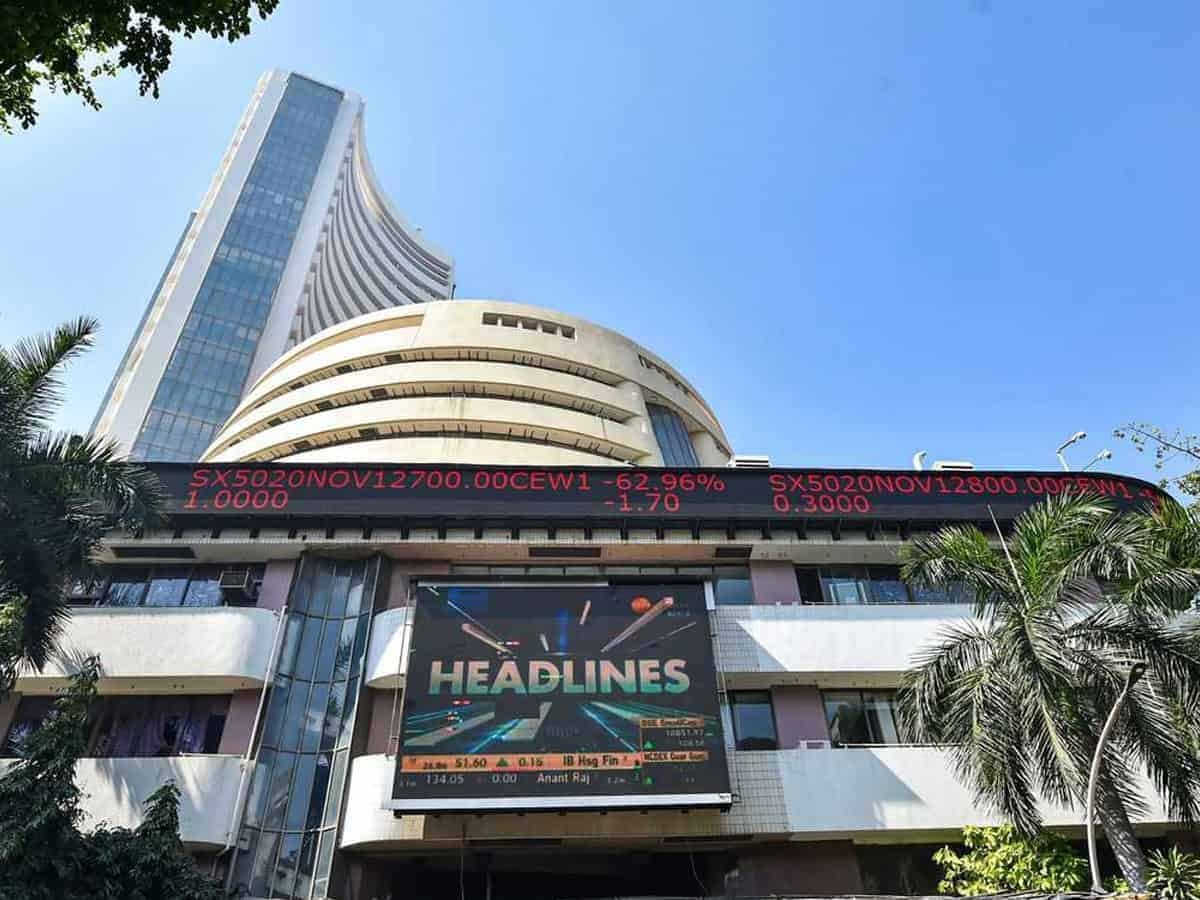
    In the domestic equity market, the 30-share BSE Sensex was trading 441.00 points or 0.55 per cent down at 79,502.71 in morning trade, while Nifty was lower by 113.45 points or 0.47 per cent to 24,075.20.

    Foreign Institutional Investors (FIIs) purchased Rs 1,506.75 crore in the capital markets on net basis on Thursday, according to exchange data.

  • SECI power agreements cannot be canceled without evidence of bribery: Naidu

    SECI power agreements cannot be canceled without evidence of bribery: Naidu

    Amaravati: Andhra Pradesh Chief Minister N. Chandrababu Naidu on Thursday said that the state government cannot cancel power purchase agreements with the Solar Energy Corporation of India (SECI) without obtaining concrete proof to back the bribery allegations.

    The Chief Minister’s comments came against the backdrop of last month’s decision by Andhra Pradesh Power Distribution Companies to procure over 4,000 million units of power from SECI, out of the total agreed 17,000 MU from the next financial year.

    Naidu asserted that SECI’s agreement to buy power from the Adani Group was an advantage to Andhra Pradesh.

    The Andhra Pradesh Chief Minister said that no action will be taken against Adani Green Energy Limited (AGEL) over allegations of bribery until “concrete proof” is established.

    The Chief Minister emphasised that he could proceed with action against anybody only after thoroughly establishing documentary proof. He was answering questions from reporters as to why he is not acting against certain individuals.

    “I never indulge in political vendettas. However, I will not spare wrongdoers,” he added.

    “We are getting proper documentation and once we get that then we will take action if there was any corruption involved. If we cancel the MoUs right away then it may lead to legal issues and unnecessary complications,” Chandrababu Naidu said in an informal interaction with reporters at the TDP headquarters.

    The allegations have been refuted by the Adani Group.

    Though the US indictment does not name any official, filings by the US Securities and Exchange Commission (SEC) allege that “Mr. Adani met with the Chief Minister of Andhra Pradesh during that period”. From May 2019 to June 2024, the Chief Minister of Andhra Pradesh was YSRCP chief YS Jagan Mohan Reddy.

    The Adani Group has also attributed a wrong understanding of the US indictment to the “incorrect” reporting about the bribery charges, stating that it offered no evidence about the alleged exchange of bribes.

    “The ill-founded US action and reckless false reporting have led to significant repercussions for the Indian conglomerate, such as international project cancellations, financial market impact, and sudden examination from strategic partners, investors, and the public,” the Adani Group said in a statement.

    Meanwhile, refuting the bribery allegations, the YSR Congress Party has said the agreement was between the state government, Discoms and SECI which is a central government organisation and there is no third-party involvement.

  • 16.15 lakh EVs incentivised under FAME-II scheme: Centre

    16.15 lakh EVs incentivised under FAME-II scheme: Centre

    New Delhi: A total of 16.15 lakh electric vehicles (EVs) have been incentivised under the Faster Adoption and Manufacturing of Hybrid and Electric Vehicles in India (FAME India)-II scheme, the government said on Thursday.

    It includes 14.27 lakh electric two-wheelers (e-2Ws), 1.59 lakh e-3Ws, 22,548 e-4Ws and 5,131 e-buses.

    Additionally, 10,985 EV public charging stations (PCS) have been sanctioned, with 8,812 allocated for installation.

    As of October 31, 2024, a total of Rs 8,844 crore has been spent, including Rs 6,577 crore for subsidies, Rs 2,244 crore for capital assets, and Rs 23 crore for other expenses, according to Ministry of Heavy Industries.

    The scheme includes a phased manufacturing program and has supported significant policy initiatives, such as reducing GST on EVs and enabling state EV policies, contributing to India’s transition to sustainable mobility.

    The first phase of the scheme was initially approved for a period of two years, commencing from April 1, 2015.

    After successful implementation of the scheme, the second phase — FAME-II — was launched in 2019 with an outlay of Rs 11,500 crore to provide incentives for electric vehicles, including two, three, four wheelers, electric buses and EV public charging stations.

    Overall, as many as 25,202 public charging stations for EVs have been installed in the country to date. Karnataka leads with 5,765 EV public charging stations, followed by Maharashtra at 3,728 and Uttar Pradesh at 1,989.

    The Ministry of Heavy Industries has been promoting the adoption of EVs in India. On September 29, 2024, the ministry notified the PM Electric Drive Revolution in Innovative Vehicle Enhancement (PM E-DRIVE) scheme to accelerate EV adoption, establish charging infrastructure and foster the development of the EV manufacturing ecosystem in the country.

    The scheme has a budget of Rs 10,900 crore for a two-year period. Of the total allocated budget, Rs 2,000 crore has been kept for the installation of EV public charging stations (EVPCS).

  • India’s coal production grows 5.3 per cent to 97.94 MT in December 2024

    India’s coal production grows 5.3 per cent to 97.94 MT in December 2024

    New Delhi: India’s total coal production recorded a growth rate of 5.33 per cent during December 2024 to touch 97.94 million tonnes (MT) compared to the corresponding figure of 92.98 MT for the same month in the previous year, the Coal Ministry said on Wednesday.

    Captive and other mines produced 18.95 MT, reflecting a significant growth of 29.61 per cent compared to 14.62 MT in the corresponding period of the last year.

    The cumulative coal production up to December 24 also witnessed substantial growth, reaching 726.29 MT in FY 2024-25, compared to 684.45 MT during the corresponding period of FY 2023-24, reflecting an increase of 6.11, the statement said.

    In terms of coal dispatch, the figures for December 24 surged to 92.59 MT, compared to 87.06 MT in December 2023, achieving a growth rate of 6.36 per cent.

    Dispatch from captive and other mines stood at 18.13 MT, marking a growth of 31.83 per cent compared to the corresponding period of last year.

    Additionally, the cumulative coal dispatch up to December 2024 reached 750.75 MT in FY 2024-25, compared to 711.07 MT in FY 2023-24, recording an impressive growth of 5.58 per cent.

    The Ministry of Coal said that it was continuing with initiatives aimed at enhancing production, ensuring seamless dispatch, and catering to the growing energy demands of the nation.

    The consistent growth in coal production and dispatch would help to achieve self-reliance in coal and fulfilling the vision of Atmanirbhar Bharat.

    India’s coal imports declined by 3.1 per cent to 149.39 million tonnes (MT) during April-October period of FY 2024-25 from 154.17 MT in the same period of the previous year due to the increase in domestic production.

    Additionally, the Non-Regulated Sector (other than power) witnessed a more significant drop of 8.8 per cent, during April-October 2024 as compared to the same period of last year.

    Despite possessing the fifth-largest coal reserves globally, India faces a significant shortfall in certain coal types, particularly coking coal and high-grade thermal coal, which are not adequately available from domestic sources.

    This gap in supply necessitates coal imports to sustain key industries, including steel production, and to meet the growing energy demand.

    Although there was a significant growth of 3.87 per cent in coal-based power generation from April 2024 to October 2024 compared to the same period last year, imports for blending purposes by thermal power plants decreased substantially by 19.5 per cent during the same period, a Coal Ministry statement said.

  • Bajaj Auto overtakes Ola Electric as top 2-wheeler EV company

    Bajaj Auto overtakes Ola Electric as top 2-wheeler EV company

    New Delhi: The New Year welcomed a new two-wheeler (2W) EV leader in India as Bajaj Auto overtook Ola Electric in the month of December in terms of market share.

    According to the data from the government’s Vahan portal, Bajaj Auto‘s market share in the two-wheeler EV segment increased by 3 per cent to 25 per cent in December 2024, which was 22 per cent in November.

    At the same time, Ola Electric’s market share declined by 5 per cent on a MoM (month-on-month) basis to 19 per cent in December. It was 24 per cent in November.

    Along with Bajaj, Ather Energy’s market share in the two-wheeler EV segment increased by 3 per cent to 14 per cent in December, from 11 percent in November.

    TVS Auto’s market share remained at 23 per cent last month. Hero MotoCorp‘s market share fell by 5 per cent to just one per cent in December from 6 per cent in November.

    Bhavish Aggarwal-led Ola Electric is facing tough competition in the two-wheeler EV segment as companies like Bajaj and TVS launch cheaper and better versions of their EV scooters.

    Ola Electric has also unveiled new vehicles, keeping in mind the increasing competition. It increased number of its stores from 800 to 4,000, and plans to use its batteries in its electric scooters from April 2025.

    At the same time, Bajaj Auto’s new platform not only includes the latest features, but the company has claimed that it will save 45 per cent, which will increase margins.

    TVS is also continuously increasing touchpoints for its electric scooter I-Qube.

    Apart from 250 EV outlets, the company has increased its touchpoints to around 4000 stores. Ather Energy is also increasing touchpoints in North India and has seen demand from strong EV markets like Gujarat and Maharashtra.

  • India enters 2025 with 214 GW green energy capacity: Pralhad Joshi

    India enters 2025 with 214 GW green energy capacity: Pralhad Joshi

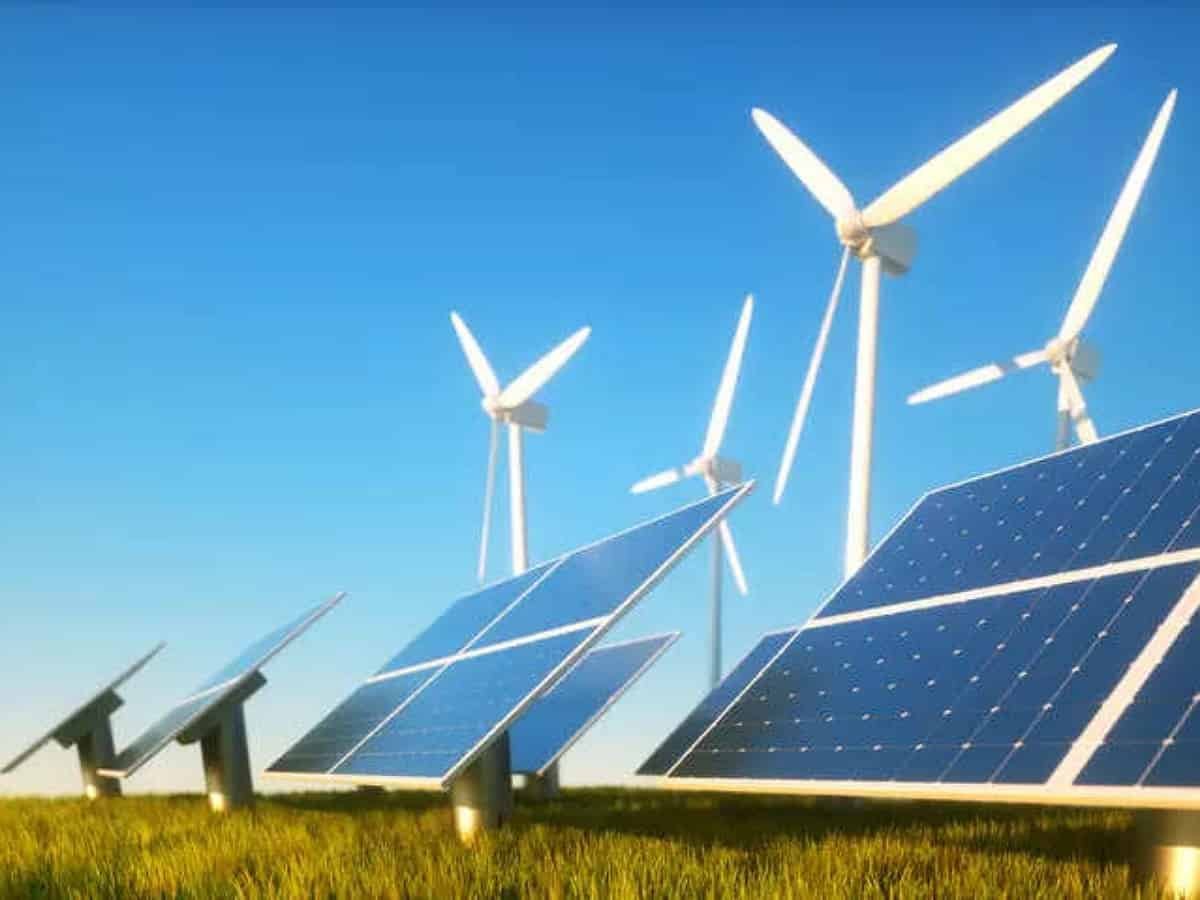
    New Delhi: As India ushers in New Year, it rounded off 2024 with 214 GW installed green energy capacity, according to figures compiled by the Ministry of New and Renewable Energy, while the country is firmly on track to meet its ambitious target of achieving 500 GW energy capacity from non-fossil fuels by 2030.

    Between April and November last year, India added nearly 15 GW of renewable energy capacity, almost double the 7.57 GW added during the same period last year.

    “As we step into 2025, India stands tall as a global lighthouse of sustainable development. Our achievements aren’t merely about meeting targets; they’re about reimagining what’s possible in the worldwide energy transition,” said Union Minister of New and Renewable Energy, Pralhad Joshi.

    India crossed the 200 GW milestone of total installed renewable energy capacity in September 2024. The total installed non-fossil fuel capacity further increased to 214 GW in November which is an increase of over 14 per cent as compared to the 187.05 GW in the same period last year.

    “Under PM Narendra Modi‘s transformative leadership, 2024 has marked a great moment in India’s renewable energy journey. Our achievement of more than 214 GW from non-fossil sources isn’t just a number – it represents our nation’s unwavering commitment to reaching our ambitious 500 GW goal by 2030,” Joshi said.

    The country’s solar energy capacity reached 94.17 GW in 2024 while the wind energy capacity was at 47.96 GW. The country’s total installed and pipeline solar projects combined stand (as on Nov 2024) at 261.15 GW, reflecting a strong pipeline for future growth and expansion in the solar sector.

    Within just 10 months of its launch, ‘PM Surya Ghar: Muft Bijli Yojana’ (PMSGMBY) has achieved 7 lakh installations — an average of 70,000 per month. This marks a 10-fold increase in monthly installations compared to the average of 7,000 per month prior to the launch of the scheme in February 2024.

    States such as Gujarat, Maharashtra, Kerala and Uttar Pradesh have demonstrated exceptional progress, reflecting robust infrastructure and stakeholder collaboration.

    Launched with an outlay of Rs 75,021 crore, the scheme targets installation of rooftop solar in one crore households, provides up to 300 units free electricity monthly and offers subsidies ranging from Rs 30,000 to Rs 78,000 per household.

    The government has also issued guidelines for ‘Incentives to DISCOMs’ with a financial outlay of Rs 4,950 crore, covering net meter availability and installation facilitation.

    Considerable progress has been made under the PM KUSUM scheme with over 2.95 lakh standalone off-grid solar water pumps being installed to help farmers with the setting up of 10,000 MW decentralized solar plants on their land.

    As many as 35 lakh grid-connected agriculture pumps have been solarized under the scheme and about 11.34 GW of solar energy capacity has been installed during January to November 2024.

    On the wind energy front, as of November 2024, India’s cumulative wind power capacity stands at 47.96 GW. The country’s total installed and pipeline wind energy projects (as on Nov 2024) add up to 74.44 GW, driving continued progress in renewable energy. Gujarat, Karnataka, and Tamil Nadu have emerged as the leading states in wind capacity addition during FY 2023-24.

    The ministry also continues with the implementation of the National Green Hydrogen Mission, approved with an outlay of Rs 19,744 crore. The mission aims to establish India as a global hub for green hydrogen production and export.

  • Raj Thackeray asks party workers to take up issues of inflation, unemployment

    Raj Thackeray asks party workers to take up issues of inflation, unemployment

    Mumbai: Maharashtra Navnirman Sena chief Raj Thackeray, after the party’s debacle in the state Assembly elections, in his New Year message on Wednesday asked the party workers to take up issues of unemployment, inflation and discrimination of Marathis in their own land.

    He also asked the workers to put in place a contact room in every party office to monitor atrocities against women and pursue such cases if they are not registered. “And if still nothing happens, then go and beat those who are involved in committing atrocities against women,” his message reads.

    The MNS chief directed the party workers to keep a vigil against hoarding of goods and commodities with the sole intention of providing relief to those affected by inflation. He asked them to inform the relevant departments about hoarding and try to become a link between farmers and consumers.

    “This year holds a special significance in the chronology because it marks the end of a quarter of a century. There have been so many changes in almost every aspect of human life that seemed like a different era just 25 years ago. During this 25-year period, our party, the Maharashtra Navnirman Sena has stabilised, and the party has seen many ups and downs. And all this has taught us a lot,” said Raj Thackeray.

    “Even though a lot has changed in these 25 years, many things have remained the same, in a metropolis like Mumbai, which is the capital of Maharashtra, Marathi people feel insecure. Young people do not get work, but at the same time, job opportunities are available to those coming from outside the state. The unemployed do not have a caste, but they are made to feel that caste, and they incite conflicts between castes. The lives of all workers, from farmers to the poor, are being ruined by inflation. And at the time of this and every other problem, people remember the Maharashtra Navnirman Sena, but forget the party at the time of voting,’’ said Raj Thackeray.

    “…We should accept this and move forward with some changes. After the Assembly results were declared on November 23, 2024, I participated in some public programmes, but deliberately avoided political commentary. I am still mulling over what exactly happened and I will speak about it in detail soon. But I appeal to the Mansainiks to forget what happened. Within a few weeks of the election results, the crackdown against Marathi Manoos started, and at that time the Maharashtra Navnirman Sena was expected to give a blow, and that is what we did. Basically, the fact that Marathi people are being used only for voting has been highlighted. In this, atrocities against women are increasing. There is a conflict between the two communities in the state, both of which are Marathi-speaking. And inflation has made people miserable,” he commented.

    “In short, open shakhas (party offices) to the public once again. And yes, while doing all this, you want to use social media to promote your work, but see if social media is not using you, or if you are not possessed yourself to it. In this situation, Mansainiks should put aside their own discomforts. We are not doing anything with the elections in mind, so it is our responsibility to take action in all this. As I said earlier, if someone attacks Marathi, I will come as a Marathi and if someone puts a finger on a Hindu’s neck, I will come as a Hindu, that is what we are doing,” Raj Thackeray said in his New Year message.

  • Space economy to grow nearly 5 times in next decade: Minister

    Space economy to grow nearly 5 times in next decade: Minister

    New Delhi: The Indian space economy is set to grow nearly 5 times from $8.4 billion to around $44 billion in the next decade, Union Minister of State for Science and Technology, Dr Jitendra Singh, has stressed.

    Investments in the sector reached Rs 1,000 crore in 2023 alone, placing India as a frontline player globally. India’s space sector has also emerged as a significant foreign exchange earner.

    Of the 220 million euros earned through launching foreign satellites, 187 million euros was generated in the last eight years. Countries benefiting from ISRO’s services include the US, France, Japan and others.

    Hailing ISRO’s Space Docking Experiment (SPADEX) mission, Dr Singh said that this achievement places India on par with global leaders in space docking technology.

    The SPADEX mission is a pivotal project by ISRO aimed at developing and demonstrating technologies for spacecraft rendezvous, docking, and undocking using two small satellites.

    “These capabilities are critical for future missions, including satellite servicing, space station operations, and interplanetary exploration,” the minister told reporters in the national capital.

    The primary objectives of SPADEX, said the Minister, include Demonstrating technology for spacecraft rendezvous and docking, Showcasing controllability in docked conditions to extend the life of target spacecraft and Testing power transfer between docked satellites.

    The mission also includes post-docking activities, with spacecraft conducting independent payload operations.

    According to Dr Singh the docking is expected to occur on January 7, 2025, at noon.

    The minister also highlighted a significant collaboration between the Department of Biotechnology and ISRO to explore the application of biology in Space.

    “Under Prime Minister Narendra Modi’s leadership, India will lead in ‘Space-Biology’ by studying physiological changes in space environments,” he stated.

    The 2023 New Space Policy allowed private sector participation in ISRO’s activities. This policy has led to a surge in space startups, growing from a single-digit count in 2021 to nearly 300 in 2023.

    Notable startups include AgniKul Cosmos, which established a private launchpad on ISRO premises, and Skyroot, which executed India’s first private sub-orbital launch.

    “These startups are reinforcing ISRO’s infrastructure and attracting global attention from companies like SpaceX,” Dr Singh remarked.

  • Indian share market begins New Year on flat trajectory

    Indian share market begins New Year on flat trajectory

    Mumbai: The domestic benchmark indices opened flat on Wednesday as selling was seen in auto, PSU bank, financial service, pharma and metal sectors on Nifty.

    At around 9:35 am, Sensex was trading at 78,054.12 after declining 84.89 points or 0.11 per cent, while the Nifty was trading at 23,617.55 after declining 27.25 points or 0.12 per cent.

    The market trend remained positive. On the National Stock Exchange (NSE), 1,538 stocks were trading in green, while 621 stocks were in red.

    According to market experts, the New Year began on a sombre note for the Indian equity market.

    “The near-term trend appears weak with the macro construct dominated by weak GDP and earnings growth,” they added.

    Nifty Bank was down 46.65 points or 0.09 per cent at 50,813.55. Nifty Midcap 100 index was trading at 57,270.40 after rising 70.95 points or 0.12 per cent. Nifty Smallcap 100 index was at 18,831.55 after rising 62.35 points or 0.33 per cent.

    On the sectoral front, buying was seen in the IT, FMCG, Media and Energy sectors on Nifty.

    In the Sensex pack, Axis Bank, ICICI Bank, IndusInd Bank, Tata Steel, SBI, Nestle India, Tata Motors, M&M and Maruti Suzuki were among the top losers. Sun Pharma, Asian Paints, Bajaj Finserv, L&T, TCS, Tech Mahindra, HCL Tech and UltraTech Cement were among the top gainers.

    The Dow Jones declined 0.07 per cent to close at 42,544.22. The S&P 500 declined 0.43 per cent to 5,881.60 and the Nasdaq declined 0.90 per cent to close at 19,310.79 in the previous trading session.

    In the Asian markets, Jakarta and Hong Kong were trading in green. while China, Bangkok, Seoul and Japan were trading in red.

    The headwinds from a strong dollar ( dollar index is at 108.5 per cent) and high U.S. bond yields will impact the market through more FII selling, at least in the early days of 2025.

    “Even though FII selling is matched by DII buying, in this tug of war, in the near-term, sentiments are on the side of FIIs since valuations continue to be elevated,” said experts.

    Investors should be cautious and watch for potentially market moving macro data, said experts.

    Foreign institutional investors (FIIs) sold equities worth Rs 4,645.22 crore on December 31, while domestic institutional investors bought equities worth Rs 4,546.73 crore on the same day.

  • India’s core sector industries record 4.3 pc growth in November

    India’s core sector industries record 4.3 pc growth in November

    New Delhi: The output of India’s eight core sector industries rose 4.3 per cent year-on-year in November due to a robust growth in cement and steel production during the month, according to government data released on Tuesday.

    The November figures reflect an acceleration compared to the revised figure of a corresponding 3.7 per cent growth in infrastructure output for October.

    Cement production surged by a robust 13 per cent in November, while steel output grew 4.8 per cent, slightly lower than the revised 5.2 per cent increase the previous month.

    Electricity generation increased by 3.8 per cent, improving from a revised 2 per cent growth in October.

    Fertiliser production rose by 2 per cent, a notable improvement from the 0.4 per cent increase in October.

    However, crude oil production declined by 2.1 per cent, compared to a 4.8 per cent drop in October, while natural gas output fell 1.9 per cent, slightly more than the 1.2 per cent decrease recorded in the previous month.

    Coal production rose by 7.5 per cent compared to 7.8 per cent in October, and refinery product output grew 2.9 per cent, compared to a 5.2 per cent rise in the previous month.

    For the April-November period, infrastructure output grew by 4.2 per cent, a slowdown compared to the 8.7 per cent growth seen in the same period last year.

    The eight core industries comprise 40.27 per cent of the weight of items included in the Index of Industrial Production (IIP) and are a good pointer to the overall industrial growth rate for the month.

    ICRA Chief Economist Aditi Nayar said: “The core sector growth rose to 4.3 per cent in November 2024 from a revised 3.7 per cent in October 2024, with an improvement in half of its 8 constituents, partly reflecting the fading impact of heavy rainfall in the earlier months. The sequential uptick in the core sector’s performance was especially driven by a sharp increase in the growth of cement output, on the back of a low base.”

    “Looking ahead, we expect the IIP to grow by 5-7 per cent in November 2024, partly benefiting from the uptick in core sector growth,” she added.