Category: BUSINESS

  • Indian market opens in green amid positive mixed global cues

    Indian market opens in green amid positive mixed global cues

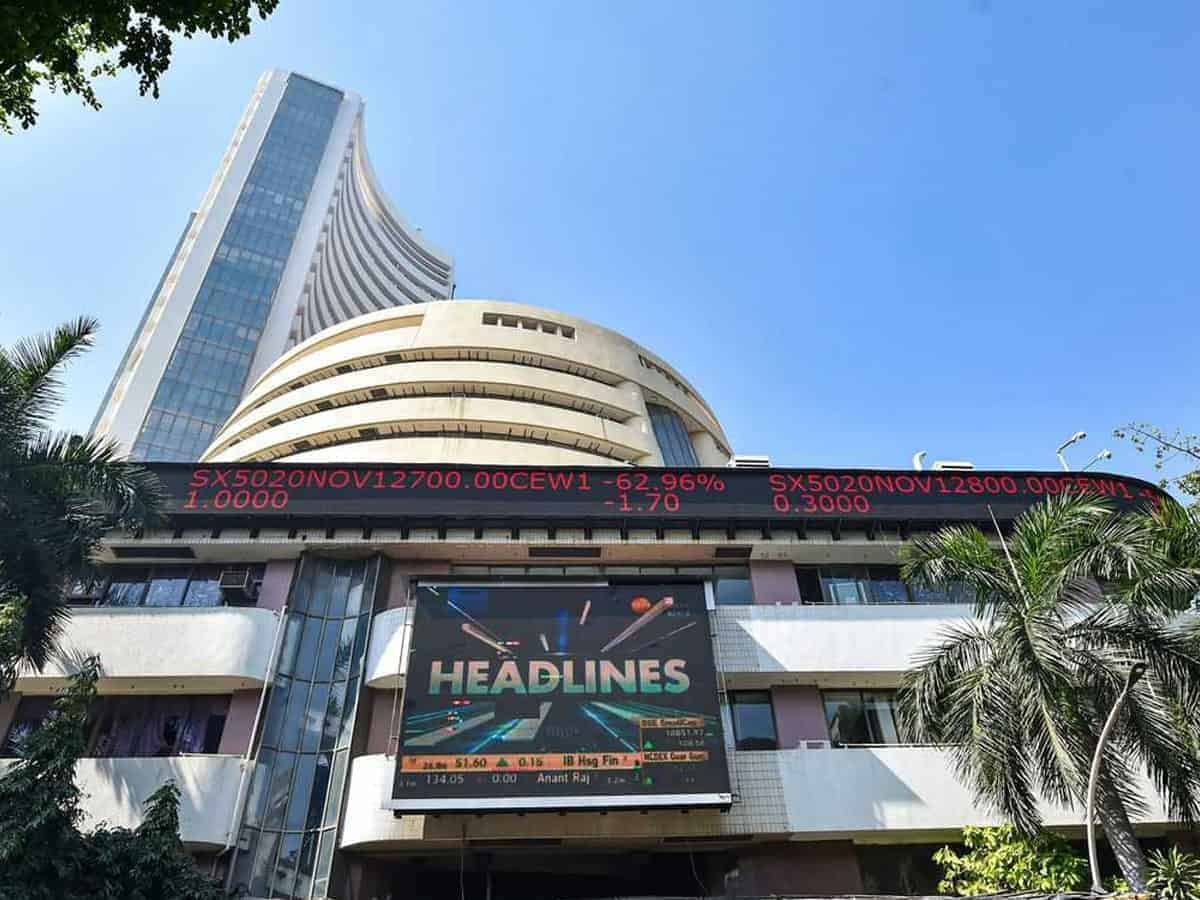
    Mumbai: The Indian stock market jumped more than 600 points in early trade on Monday amid positive mixed global cues.

    At around 9:29 am, Sensex was trading at 78,665.83 after gaining 624.24 points or 0.80 per cent, while the Nifty was trading at 23,773.45 after gaining 185.95 points or 0.79 per cent.

    The market trend remained positive. On the National Stock Exchange (NSE), 1,223 stocks were trading in green, while 494 stocks were in red.

    According to experts, in the short run, there will be market rebounds which may be followed by renewed FII selling.

    “A sustained rally is possible only when we have indications of a growth revival in the economy. This is likely in early 2025.,” they said.

    Nifty Bank was up 415.45 points or 0.82 per cent at 51,174.65. Nifty Midcap 100 index was trading at 57,266.45 after gaining 359.70 points or 0.63 per cent. Nifty Smallcap 100 index was at 18,797.25 after adding 82.95 points or 0.44 per cent.

    On the sectoral front, buying was seen in metal, realty, commodities, IT, auto, PSU Bank, Financial service, FMCG, and Pharma sectors.

    In the Sensex pack, Tata Steel, Tech Mahindra, Bajaj Finance, HCL Tech, HDFC Bank, ICICI Bank and Bharti Airtel were the top gainers. Whereas, Zomato and NTPC were the top losers.

    The Dow Jones closed in the last trading session at 42,840.26 after gaining 1.18 per cent. The S&P 500 added 1.09 per cent to 5,930.90 and the Nasdaq gained 1.03 per cent to close at 19,572.60.

    In the Asian markets, Hong Kong, China, Japan, Jakarta, Bangkok and Seoul were trading in green.

    “The FII buying witnessed in early December completely reversed last week with FII selling of Rs 15826 crores. The outperformance of the US (S&P 500 up 25 per cent year to date) and the relative underperformance of India (Nifty up 14.64 per cent year to date) are driving this change in FII strategy,” said experts.

    Foreign institutional investors (FIIs) sold equities worth Rs 3,597.82 crore on December 20, while domestic institutional investors bought equities worth Rs 1,374.37 crore on the same day.
  • PM Modi distributes 71,000 appointment letters

    PM Modi distributes 71,000 appointment letters

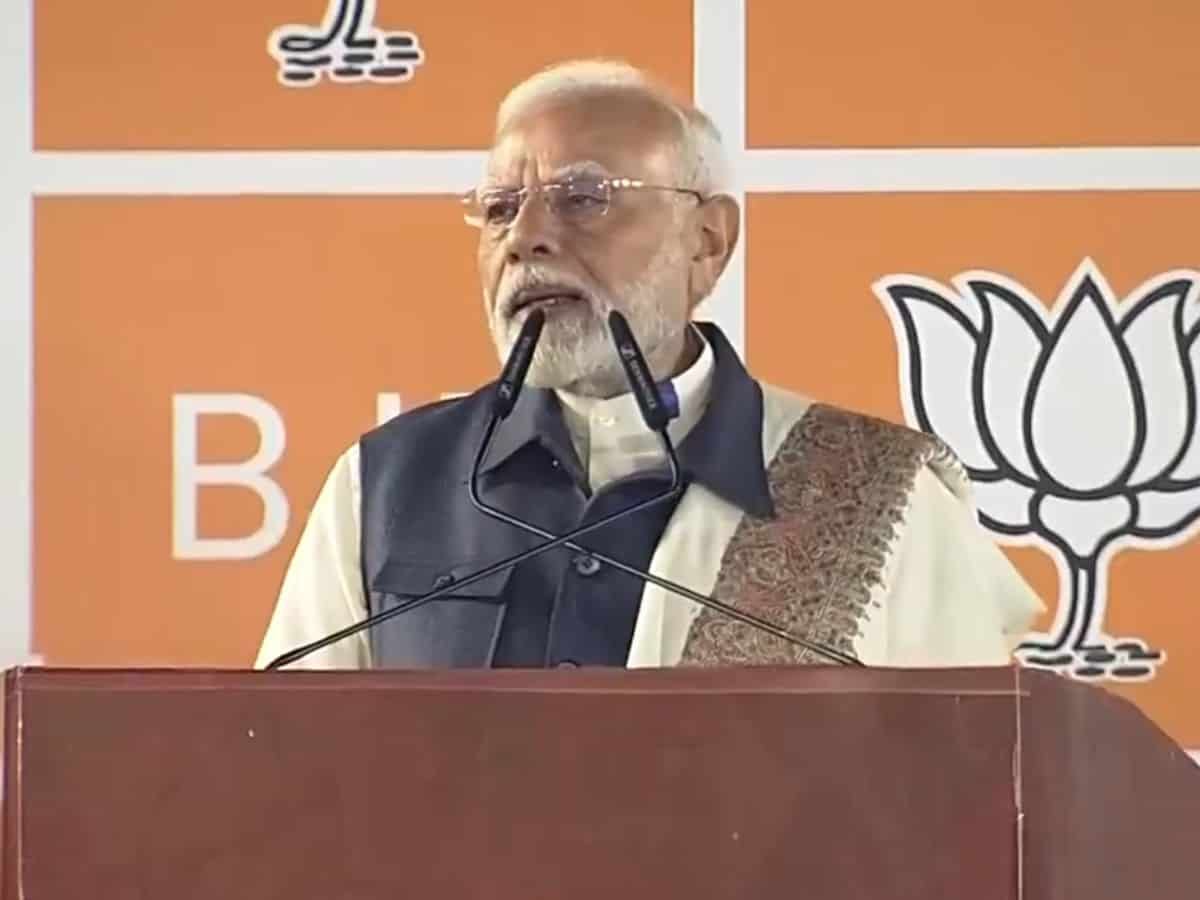
    New Delhi: Prime Minister Narendra Modi distributed over 71,000 appointment letters to newly recruited individuals via video conferencing on Monday.

    The event was part of the Centre’s Rozgar Mela initiative, aimed at empowering youth through job creation and fostering meaningful participation in nation-building.

    Addressing the gathering, PM Modi extended his congratulations to the recruits and their families, saying, “I met Indian youth and professionals in Kuwait, and now I am interacting with the youngsters of the nation. Today marks a new beginning for your journey. Your years of hard work have borne fruit.”

    He underscored the government’s achievements in leveraging India’s youth potential, stating, “Through Rozgar Mela, we are advancing this initiative. Over the past ten years, the campaign for providing jobs in government departments, ministries, and organisations has been ongoing. Today, over 71,000 youth have received their appointment letters.”

    Highlighting the transparent recruitment process, he added, “In the last decade, our government has provided permanent government jobs to over 10 lakh youth, a record in itself. Unlike previous governments, today, not only are lakhs of youth receiving government jobs but these appointments are being made with full transparency. I am confident the youth selected through this process will dedicate themselves wholeheartedly to the nation.”

    Reaffirming the Centre’s commitment to the vision of ‘Viksit Bharat 2047’, PM Modi attributed the country’s progress to the youth’s hard work, talent, and leadership.

    He cited initiatives like Make in India, Atmanirbhar Bharat Abhiyan, Startup India, and Digital India as examples of policies shaped by young minds.

    “Today, India stands as the world’s fifth-largest economy and third-largest startup ecosystem. Youth launching startups now have access to a well-planned ecosystem for support. In sports, modern facilities for training and tournaments ensure confidence among our young athletes. Across sectors, we are witnessing remarkable transformation,” he said.

    The Prime Minister also emphasized India’s achievements in manufacturing, renewable energy, tourism, space exploration, organic farming, defence, and wellness. He praised the advancements brought by the National Education Policy (NEP), Atal Tinkering Labs, and PM Shri Schools, which benefit rural and underprivileged students.

    Invoking Chaudhary Charan Singh’s legacy on ‘Kisan Diwas’, PM Modi highlighted the Centre’s efforts for rural development and farmer upliftment.

    He mentioned employment-focused schemes like Bima Suraksha, Lakhpati Didi, and Drone Didi, aimed at empowering rural areas and farmers.

    He also lauded the participation of women in the Rozgar Mela, saying, “Today, many women have received their appointment letters. I hope they inspire others. Schemes such as Sukanya Samruddhi Yojana, Jan Dhan Bank accounts, and Mudra Yojana enable women to pursue education without financial worries.”

    The Prime Minister also mentioned that under the PM Awas Yojana, maximum houses are under the name of women.

    The Rozgar Mela is being conducted at 45 locations across the country, with recruitments for various ministries and departments, including the Ministry of Home Affairs, Department of Posts, Department of Higher Education, Ministry of Health and Family Welfare, and Department of Financial Services.

    According to a government release, the Rozgar Mela aligns with the Prime Minister’s commitment to employment generation, offering meaningful opportunities for youth to contribute to nation-building and self-empowerment.

  • India’s savings rate surpasses global average amid rising financial inclusion: SBI report

    India’s savings rate surpasses global average amid rising financial inclusion: SBI report

    New Delhi: India’s savings rate has surpassed the global average as financial inclusion has shot up in the country with over 80 percent adults now having formal financial accounts, according to an SBI report released on Monday.

    India savings rate is at 30.2 percent, which is higher than the global average of 28.2 per cent, the report stated.

    “Due to various measures, India’s financial inclusion improved significantly and now more than 80 percent of adults in India have a formal financial account, compared to about 50 percent in 2011, which is improving the financialisation of the savings rate of Indian households,” the report points out.

    The share of net financial savings in total household savings has increased from 36 percent in FY14 to about 52 percent in FY21, however, during FY22 and FY23, the share has decelerated.

    FY24 trends reveal that the share of physical savings have again started to decline.

    Among financial savings, the share of bank deposits/currency is declining as new avenues of investment like mutual funds etc. are emerging, the research report from the State Bank of India’s Economic Research Department stated.

    In the last 10 years, funds mobilised by Indian companies from capital markets has increased more than 10-fold, from Rs 12,068 crore in FY14 to Rs 1.21 lakh crore in FY25 (till October).

    The savings of households in ‘shares and debentures’ has increased to around 1 percent of GDP in FY24, from 0.2 percent in FY14 and the share in household financial savings has increased from 1 percent to 5 percent.

    This shows that households are now increasingly contributing to the capital needs of the country, the report observed.

    In FY25 (till October), a total of Rs 1.21 lakh crore of capital was raised from equity markets from 302 issues. The region-wise data shows that the Western region’s share in both number and value is higher, and the share of central region is below 3 percent.

  • South Korea sees record high in voluntary vehicle recalls by automakers in 2024

    South Korea sees record high in voluntary vehicle recalls by automakers in 2024

    Seoul: The number of vehicles voluntarily recalled by automakers in South Korea reached an all-time high this year, with nearly 80 percent attributed to domestic giant Hyundai Motor Group, traffic authorities said on Sunday.

    A total of 5.12 million units across 1,684 different models were subject to recalls due to defects, according to the Korea Road Traffic Authority. Hyundai Motor and Kia accounted for a combined 4.07 million units, representing 79.2 per cent of the total.

    The figure surpasses last year’s 1.69 million recalled units and also breaks the previous record of 3.25 million units set in 2022, reports Yonhap news agency.

    The recalls were largely driven by manufacturing defects found in several popular models of Hyundai Motor Co. and Kia Corp. under Hyundai Motor Group.

    “Since many of the recalls involved popular models, the overall volume naturally increased,” said an official from the agency.

    Electric vehicles also saw a significant rise this year, with more than 1.2 million units recalled, surpassing 707,088 units in 2021 and 187,560 in 2020.

    In March, Hyundai and Kia announced a voluntary recall of nearly 170,000 EVs to address a software error, marking one of the largest single recall cases for EV models to date.

    Earlier this month, Hyundai Motor, BMW Korea and three other carmakers voluntarily recalled nearly 300,000 vehicles due to faulty components.

    The five companies, including Kia Corp., Honda Korea and Mercedes-Benz Korea, are recalling a total of 298,721 units of 84 different models.

    Last month, Kia, Ford Sales and Service Korea and two other carmakers voluntarily recalled more than 58,000 vehicles due to faulty components.

    The four companies, including Renault Korea Motors and Stellantis Korea, are recalling an overall 58,180 units of five different models, the Ministry of Land, Infrastructure and Transport said.

    Stellantis is a 50:50 joint company set up in 2021 through the merger of U.S. carmaker Fiat Chrysler Automobiles N.V. and French automaker PSA Groupe. It sells Jeep and Peugeot models in South Korea.

  • Kia to launch compact SUV ‘Syros’ in India next year

    Kia to launch compact SUV ‘Syros’ in India next year

    Seoul: Kia, South Korea’s second-biggest carmaker by sales, said on Sunday it will launch the compact SUV “Syros” in India next year to boost sales.

    Kia, the maker of K5 sedans and Sorento SUVs, unveiled the new model for the first time in India on Sunday. The Syros SUV will be released in two trims, one with a 1.0-liter gasoline turbocharged engine and the other with a 1.5-litre diesel engine, the company said in a press release.

    Starting with sales in India, Kia plans to introduce the compact car in the Asia-Pacific region, Latin America and the Middle East, it said, reports Yonhap news agency.

    The new model is equipped with safety features such as the front collision avoidance, lane-keeping assistance, surround view monitor and driver awareness warning systems. The company didn’t provide the vehicle’s price.

    Meanwhile, Kia India has announced up to 2 per cent price hike across its entire lineup, effective from January 1, “primarily due to rising commodity prices and escalating supply chain-related costs”.

    “At Kia, we are committed to delivering exceptional, technologically advanced vehicles of the highest quality to our valued customers. However, due to the persistent rise in commodity prices, unfavourable exchange rates, and increased input costs, a necessary price adjustment has become unavoidable,” said Hardeep Singh Brar, senior vice president, sales and marketing, Kia India.

    Despite these challenges, Kia is absorbing a significant portion of the cost increase, minimizing the financial impact on our customers, so they can continue enjoying their favourite Kia vehicles without major dent on their pockets, he added.

    Kia has sold 1.6 million units in India and overseas markets combined to date. Its best-selling innovation, Seltos, has surpassed 670,000-unit sales, followed by Sonet with over 480,000 units, Carens with 214,400 units and Carnival with over 15,000 units.

  • Over 71.81 cr Ayushman Bharat Health Account numbers generated: Centre

    Over 71.81 cr Ayushman Bharat Health Account numbers generated: Centre

    New Delhi: Over 71.81 crore Ayushman Bharat Health Account (ABHA) numbers have been generated (till December 22) and 46.53 crore health records have been linked with ABHA, the government said on Sunday.

    In addition to this, over 3.55 lakh health facilities have been registered on Healthcare Professionals Registry (HFR) and more than 5.38 lakh healthcare professionals have been registered on HPR.

    In the last 10 years, the country has implemented transformative policies and initiatives that reflect a steadfast commitment to achieving Universal Health Coverage.

    A key milestone in this journey was the launch of the Ayushman Bharat Pradhan Mantri Jan Arogya Yojana (AB PM-JAY).

    AB-PMJAY provides health cover of Rs 5 lakh per eligible beneficiary family per year for secondary and tertiary care hospitalisations corresponding to 1,961 treatment procedures across 27 specialties.

    As of December 17, AB PM-JAY has made significant strides with over 36.28 crore Ayushman Cards issued, empowering millions with health coverage.

    Gender-wise utilisation shows that women account for 49 per cent of the issued Ayushman cards and almost 50 per cent of total hospital admissions, showcasing the scheme’s role in promoting gender equity in healthcare, according to the Health Ministry.

    Additionally, AB PM-JAY has successfully empaneled 30,932 hospitals across the country.

    Another cornerstone of India’s healthcare achievements is Mission Indradhanush, which has expanded immunisation coverage under the Universal Immunisation Programme.

    “Mission Indradhanush includes a provision of 11 types of vaccines enhancing protection against preventable diseases. A total of 5.46 crore children and 1.32 crore pregnant women have been vaccinated in all phases of Mission Indradhanush conducted so far in the country,” informed the ministry.

    These efforts are underscored by a remarkable improvement in key health indicators, which highlight the effectiveness of targeted healthcare strategies and interventions.

    Maternal Mortality Ratio reduced from 103 per 100,000 live births in 2017-2019 to 97 per 100,000 live births in 2018-20. Infant Mortality Rate reduced from 32 per 1000 live births in 2018 to 28 per 1000 live births in 2020 and Total Fertility Rate is reduced from 2.2 in 2015-16 to 2.0 in 2019-21.

    “This progress is a testament to consumer-centric policies and initiatives supported by regular monitoring to ensure efficiency and impact.,” the ministry said.

  • Central PSUs record 47 pc jump in net profit for 2023-24

    Central PSUs record 47 pc jump in net profit for 2023-24

    New Delhi: Overall Net Profit of operating Central Public Sector Enterprises (CPSEs) rose to Rs 3.22 lakh crore in FY24 as against Rs 2.18 lakh crore in FY23 showing an increase of over 47 per cent, according to an official report.

    The market capitalisation of CPSEs more than doubled in Fiscal Year 2024-25 as compared to Fiscal Year 2023-24, the report said.

    The major contributors to the increase in market cap are NTPC Ltd, Oil & Natural Gas Corporation Ltd, Hindustan Aeronautics Ltd, Coal India Ltd and Indian Railway Finance Corporation Ltd.

    A major proportion of the increase in profit of Rs 0.89 lakh crore was contributed by the Petroleum (Refinery & Marketing) group, according to the report compiled by the Public Enterprises Department of the Finance Ministry.

    “Within the Petroleum (Refinery & Marketing) group, the major contribution towards the increase in Overall Net Profit is contributed by Indian Oil Corporation Ltd (Rs 0.31 lakh crore). The profitability of the Petroleum (Refinery & Marketing) group has impacted the overall profitability,” the survey said.

    Net Loss of loss-incurring CPSEs was Rs 0.21 lakh crore as against Rs 0.29 lakh crore showing a decrease of over 27 per cent. Major loss-incurring CPSEs are Bharat Sanchar Nigam Ltd, Rashtriya Ispat Nigam Ltd, Mahanagar Telephone Nigam Ltd, Bharat Petro Resources Ltd and NMDC Steel Ltd.

    “Hindustan Petroleum Corporation Ltd. converted from a loss of Rs 0.15 lakh crore to a profit of Rs 0.15 Lakh crores in FY 2023-24, while Bharat Sanchar Nigam Ltd was able to reduce the loss from Rs 0.08 lakh crore in FY 2022-23 to Rs 0.05 lakh crore in FY 2023-24,” the report said.

    Contribution to the Central Exchequer (CCE) of all CPSEs by way of excise duty, customs duty, GST, corporation tax, interest on Central Government loans, dividend, and other duties and taxes stood at Rs 4.85 lakh crore in FY 24 as against Rs 4.58 lakh crore in FY 23, showing an increase of around 6 per cent.

    Among the components of CCE, Excise duty is the highest component which accounts for 46 per cent in FY 2023-24. The increase in CCE is mainly due to an increase in Corporation tax from Rs 0.56 lakh crore in (FY 2022-23) to Rs 0.81 lakh crore in (FY 2023- 24).

    The top five CPSEs contributing to the Central Exchequer are Indian Oil Corporation Ltd, Bharat Petroleum Corporation Ltd, Hindustan Petroleum Corporation Ltd, Oil & Natural Gas Corporation Ltd and Mangalore Refinery and Petrochemicals Ltd.

  • US bond yields, dollar index, FII data key triggers for next week

    US bond yields, dollar index, FII data key triggers for next week

    Mumbai: The market outlook for next week will depend upon several global and domestic cues, including factors linked to the US market, and FII data, according to experts on Sunday.

    The US factors are — bond yields, the dollar Index, initial jobless claims, new home sales data, and Durable Goods Orders data.

    The global and Indian stock markets will remain closed on Wednesday, December 25, in observance of Christmas. This will result in a four-day trading week instead of the usual five days. Both markets reflect a “Santa effect” but in red, as heavy profit booking was witnessed before Christmas.

    The Indian stock market witnessed a sharp decline in the trading session from December 16-20. Nifty fell 1,180 points or 4.77 per cent to 23,587 and Sensex fell 4,091 points or 4.98 per cent to close at 78,041 breaking the important support of 80,000. Meanwhile, Bank Nifty closed at 50,759, falling 2,824 points or 5.27 per cent.

    Last week, only the pharma sector closed with gains, while all other sectors saw selling.

    The reason for this decline is attributed to FII selling and the US Fed’s outlook on interest rates, which has projected only two rate cuts in 2025.

    Last week also, FIIs sold Rs 15,828 crore in the cash market. However, domestic institutional investors (DIIs) invested Rs 11,874 crore.

    Puneet Singhania, Director at Master Trust Group said, “The Nifty50 experienced a significant breakdown, losing 4.77 per cent this week and closing near 23,600, below the crucial 23,800 support level and the 21week-EMA. This triggered broad-based selling across sectors. The next key support is at 23,200, where prices may find some cushioning. On the upside, strong resistance lies in the 23,800-23,900 zone, and a break above this could drive the index towards 24,300.”

    “However, the broader market sentiment remains bearish, with a “sell-on-rise” approach prevailing. Traders should exercise caution, closely monitoring support and resistance levels amid heightened volatility and weak technical signals,” he added.

    Pravesh Gour, Senior Technical Analyst at Swastika Investmart, said “The Bank Nifty has found support at its 200-day moving average (200-DMA), while the 100-day moving average (100-DMA) at 51,600 serves as an immediate hurdle. A breakdown below 50,400 could trigger additional selling pressure, potentially pushing the index down to 49,600. Conversely, a breakout above 51,600 may encounter resistance in the range of 51,800–52,000.”

  • More than 4 lakh jobs backlog for SC, ST, OBC filled since 2016: Centre

    More than 4 lakh jobs backlog for SC, ST, OBC filled since 2016: Centre

    New Delhi: More than four lakh backlog vacancies in government jobs reserved for Scheduled Caste (SC), Scheduled Tribe (ST) and Other Backward Class (OBC) candidates have been filled since 2016, the Parliament was informed.

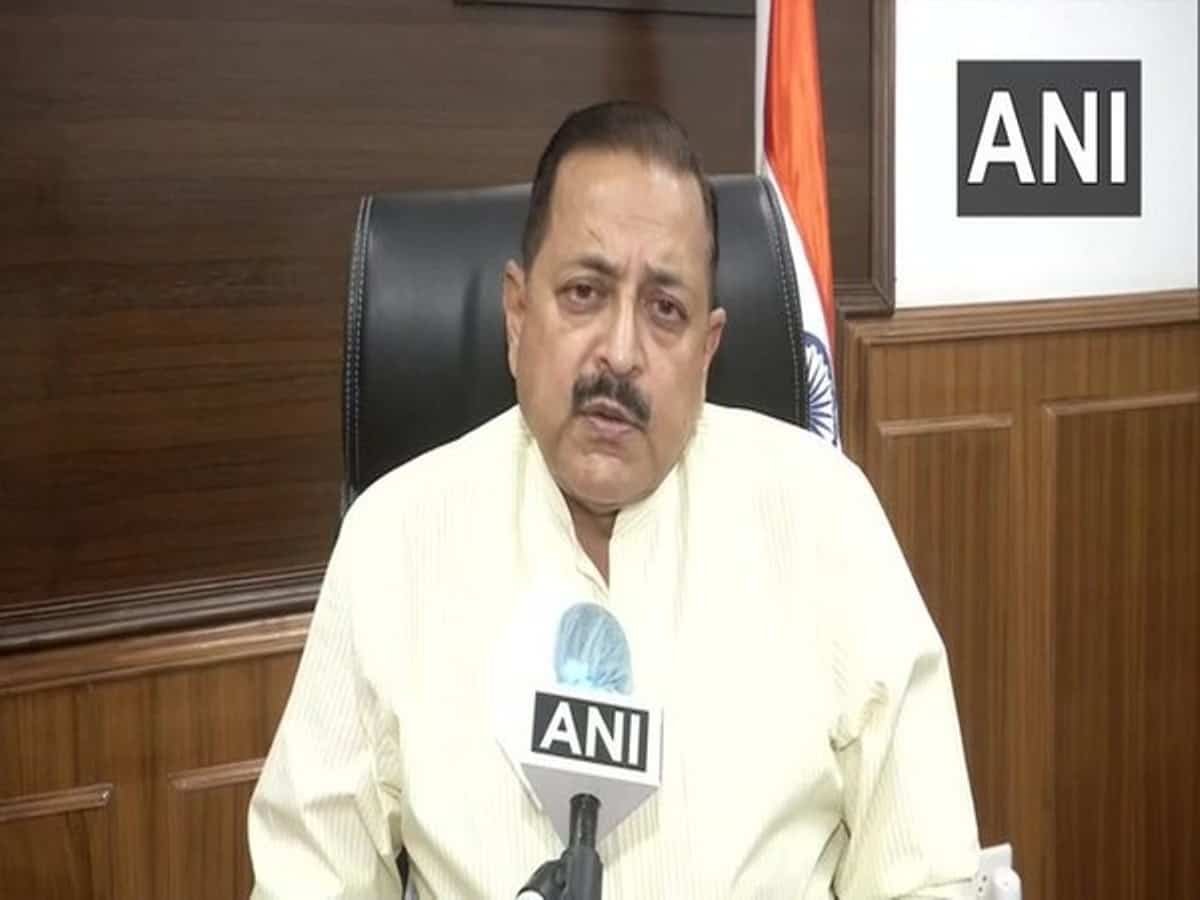
    “Occurrence and filling of vacancies, including the backlog reserved vacancies, is a continuous process,” Minister of State for Personnel Jitendra Singh said in a written reply to the Rajya Sabha.

    Instructions have been issued to all ministries and departments of the central government to constitute an in-house committee for identification of backlog reserved vacancies, to study the root cause of such vacancies, to initiate measures to remove the factors causing such vacancies and to fill them up including through special recruitment drives, the minister said.

    The minister said each ministry/department of the central government is required to designate an officer of the rank of Deputy Secretary and above, as Liaison Officer, to ensure due compliance of the orders and instructions pertaining to reservation.

    Each ministry/department is also required to set up a special reservation cell to assist the Liaison Officer.

    In answer to another question, the minister also said that the Government has undertaken the ‘Initiative for Increasing Efficiency in Decision Making in Government’ in alignment with the policy of ‘Minimum Government, Maximum Governance’.

    The initiative for increasing efficiency in decision making, incorporated into the Central Secretariat Manual of Office Procedure, adopted a four pronged approach with focus on delayering, delegation, digitization and desk officer system was implemented in all Ministries/Departments. In November 2024, the Government has issued directions to review the levels of disposal and channels of submission in Ministries/Departments and ensure that the levels do not exceed four.

    Mission Karmayogi is an initiative of the central government to enhance the attitudes, skills and knowledge of the Government employees. The mission targets to build capacity on domain, functional as well as behavioral competencies.

    A key feature of the Mission is the digital learning platform – IGOT Karmayogi, which provides more than 1500 courses to help civil servants upgrade their skills in governance, policy implementation, and technology. It promotes ensuring more efficient public service delivery and helps foster efficiency, accountability and transparency in the public service, Singh explained.

  • India’s renewable energy projects record 63 pc jump in investment: Report

    India’s renewable energy projects record 63 pc jump in investment: Report

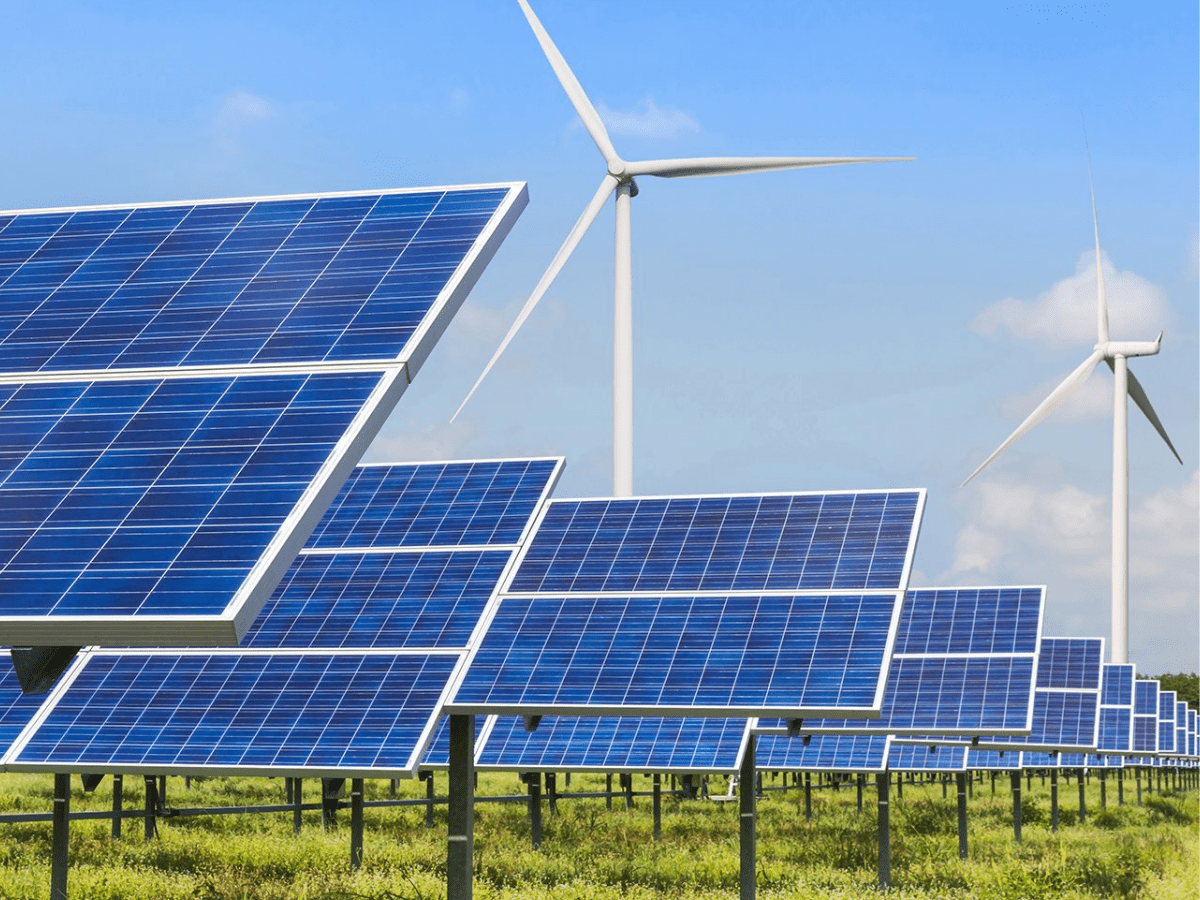
    New Delhi: Project finance flowing into renewable energy projects recorded a 63 per cent jump in 2023 compared to 2022 levels, to scale the Rs 30,255 crore ($3.66 billion) mark, according to a report by the Centre for Financial Accountability.

    The report, titled ‘Coal vs RE Investment in 2024’ states that while there was an increase in project finance lending to renewable energy projects, there was no project finance lending to new coal power projects for the third consecutive year. However, corporate finance lending to coal power and mining companies totalled $3 billion.

    Solar power projects dominated the renewable energy deals in 2023, accounting for 49 per cent of the total, followed by hybrid projects at 46 per cent and wind energy at 6 per cent.

    “We’ve consistently seen an increase in project finance to solar and wind power projects. This shows there is investor confidence in renewable power projects,” said Joe Athialy, Executive Director of the Centre for Financial Accountability.

    Over 96 per cent of coal-linked company financing in India from commercial banks was facilitated through underwriting in 2023, with loans making up the remaining 4 per cent.

    US-based banks led the corporate financing to coal-linked companies, contributing 65 per cent of the total.

    India has achieved 188 GW of non-fossil fuel capacity in 2023, the report said.

    Primary financing accounted for 77 per cent of project deals while refinancing comprised the remaining 23 per cent, the report said.

    Commercial banks provided 68 per cent of renewable energy loans, totalling Rs 20,625 crore ($2,497 million).

    The state-wise figures show that Gujarat received 25 per cent of the financed capacity, amounting to Rs 9,857 crore ($1,193 million), followed by Karnataka with Rs 4,593 crore ($556 million).

    India has added nearly 15 GW of renewable energy capacity during April-November in the current financial year, which is almost double the 7.54 GW added during the same period last year, Union Minister Pralhad Joshi said earlier this week

    Addressing the CII International Energy Conference and Exhibition (IECE) here, the Minister for Renewable Energy further stated that India’s total installed capacity in the non-fossil fuel energy sector has reached 214 GW, marking an increase of over 14 per cent compared to the same period last year.

    Additionally, he pointed out that 2.3 GW of new capacity was added in November 2024 alone, reflecting a four-fold increase from the 566 MW added in November 2023.

    Union Minister Joshi reiterated the Government’s commitment to achieving 500 GW of non-fossil fuel-based capacity by 2030.