Category: BUSINESS

  • Rupee recovers from all-time low against US dollar in early trade

    Rupee recovers from all-time low against US dollar in early trade

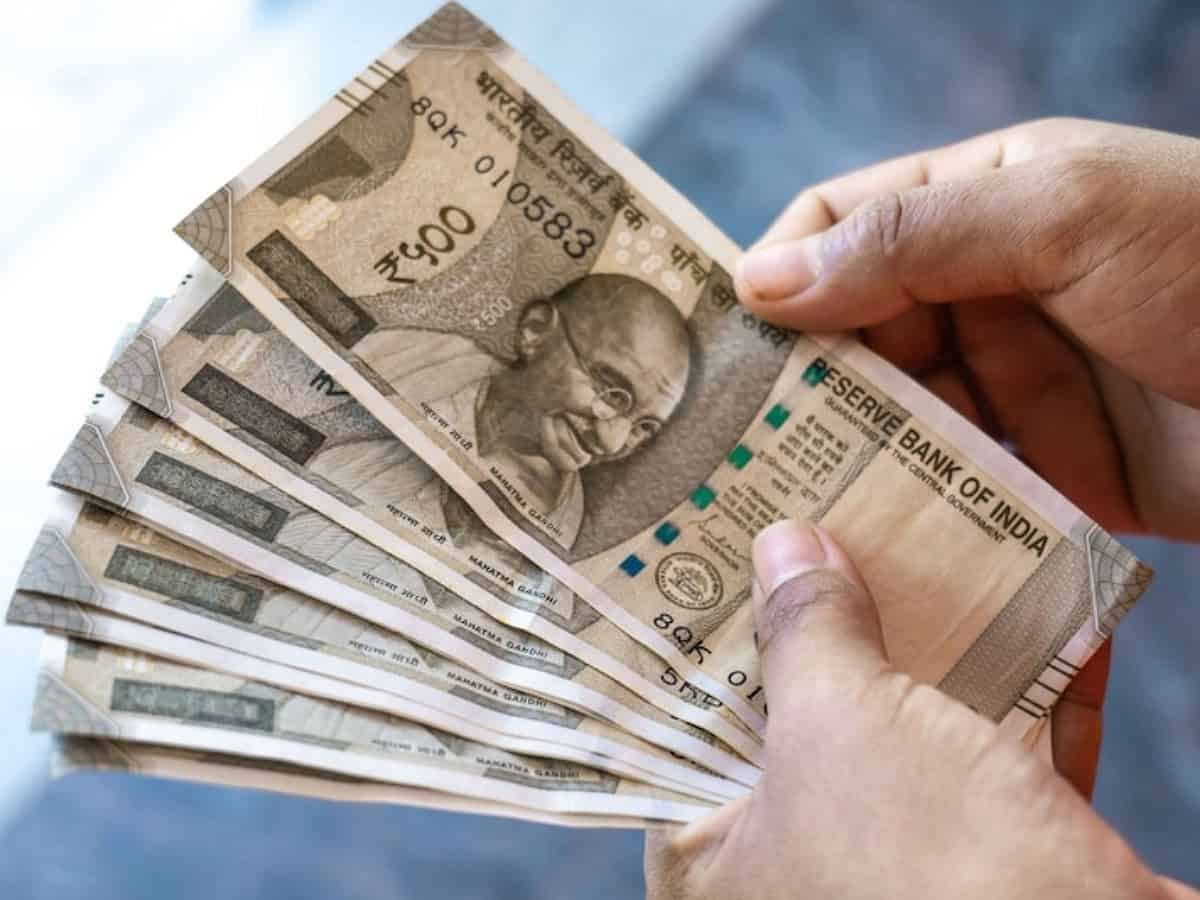
    Mumbai: The rupee saw some recovery from its all-time low level and appreciated 6 paise to 85.07 against the US dollar in early trade on Friday.

    Forex traders said the rupee is likely to remain in a weakening mode due to significant dollar demand. The Dollar Index (DXY) is expected to remain elevated, with resistance near the 110 level in the near-term amid a reduced likelihood of significant Fed rate cuts in 2025.

    The Federal Reserve cut rates by 25 basis points on Wednesday, but its forward guidance for 2025 has softened, with expectations reduced from four rate cuts to just two.

    At the interbank foreign exchange, the rupee opened at 85.07, registering a gain of 6 paise from its previous close. It was later trading at 85.10 against the greenback, a tad above the all-time low level.

    On Thursday, the rupee depreciated 19 paise and breached the crucial 85 level to close at a fresh all-time low of 85.13 against the US dollar.

    “The Indian rupee is facing headwinds from both global and local factors. As the Federal Reserve’s decision to adopt a cautious approach toward rate cuts in 2025 triggered a more than 1 per cent correction in Indian equities.

    “While on the domestic front, the Reserve Bank of India (RBI) appears constrained in its ability to intervene as effectively as earlier this year, partly due to tightening banking system liquidity,” CR Forex Advisors MD Amit Pabari said.

    As a result, the USDINR pair has breached the 85.00 mark. In the near-term, the pair is likely to consolidate within a range of 84.70 to 85.20, he said.

    Meanwhile, the dollar index, which gauges the greenback’s strength against a basket of six currencies, was trading higher by 0.03 per cent at 108.43.

    Brent crude, the global oil benchmark, fell 0.62 per cent to USD 72.43 per barrel in futures trade.

    On the domestic equity market front, the 30-share benchmark index Sensex was trading 145.13 points, or 0.18 per cent lower at 79,072.92 points. The Nifty was down 17.40 points, or 0.07 per cent, to 23,934.30 points.

    Foreign Institutional Investors (FIIs) were net sellers in the capital markets on Thursday, as they offloaded shares worth Rs 4,224.92 crore, according to exchange data.

  • Indian share market opens flat, Nifty above 23,900

    Indian share market opens flat, Nifty above 23,900

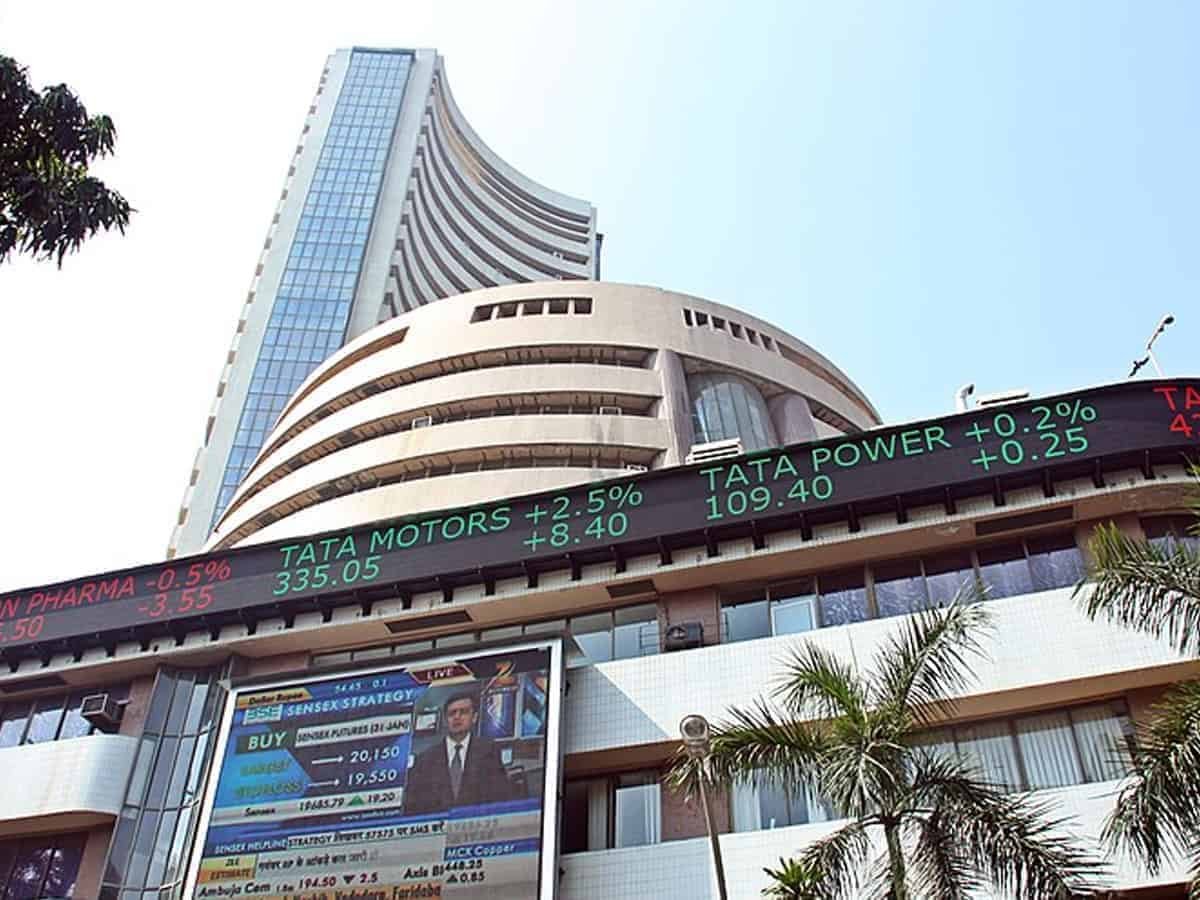
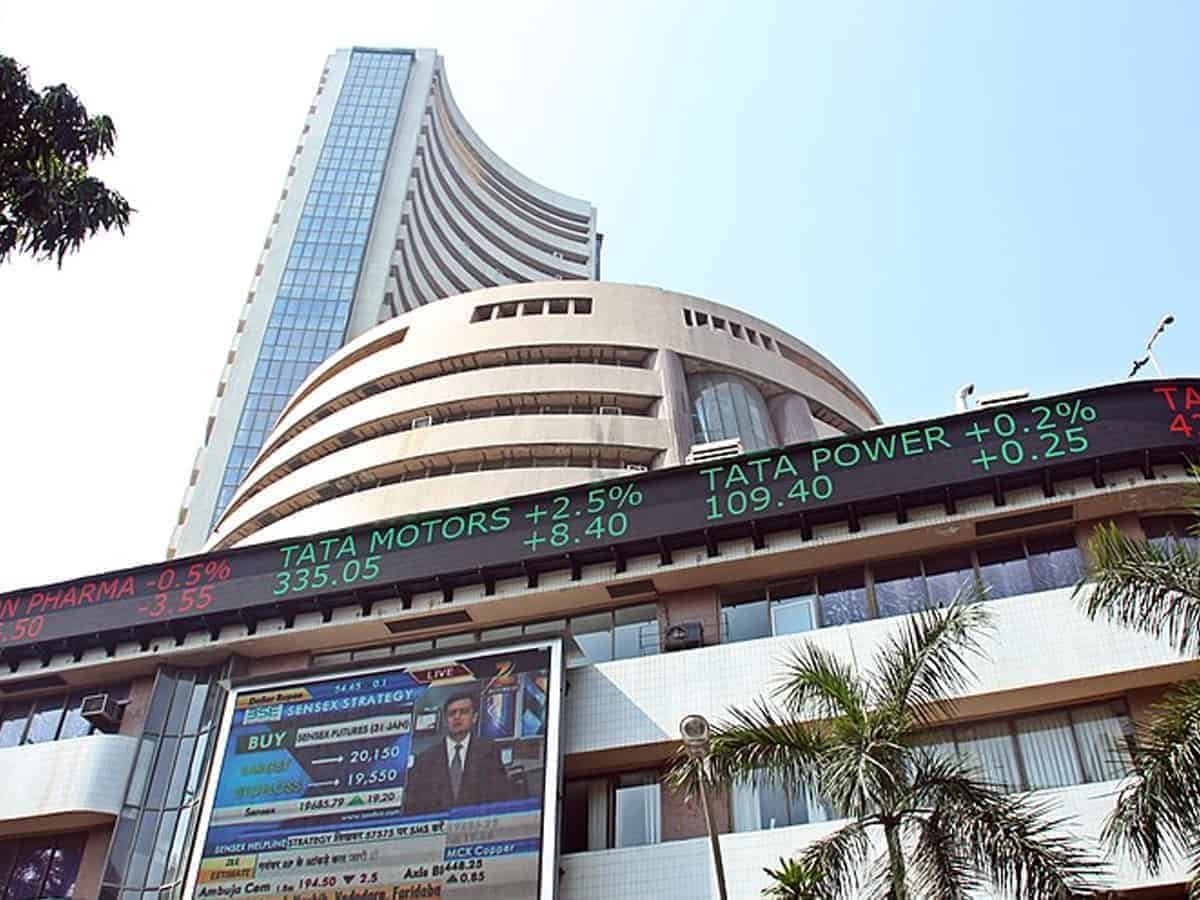
    Mumbai: The Indian stock market opened flat on Friday as the hawkish stance from the US Fed began to fade away. Buying was seen in auto, media and energy sectors in Nifty.

    The negative market reaction to the recent US Fed comments was not seen for long term and a large cap-led recovery is expected in the near future, said experts.

    At around 9:32 am, Sensex was trading at 79,122.61 after declining 95.44 points or 0.12 per cent, while the Nifty was trading at 23,932.10 after declining 19.60 points or 0.08 per cent.

    The market trend remained positive. On the National Stock Exchange (NSE), 992 stocks were trading in green, while 694 stocks were in red.

    Nifty Bank was down 153.10 points or 0.30 per cent at 51,422.60. Nifty Midcap 100 index was trading at 58,763.70 after gaining 207.45 points or 0.35 per cent. Nifty Smallcap 100 index was at 19,227.60 after adding 94.50 points or 0.49 per cent.

    On the sectoral front, selling was seen in PSU Bank, Financial service, FMCG and metal sectors.

    In the Sensex pack, Axis Bank, ITC, JSW Steel, Power Grid, M&M, Ultra Tech Cement and L&T were the top losers. While TCS, Infosys, Tata Motors, Bharti Airtel, HCL Tech, Tech Mahindra and Kotak Mahindra Bank were the top gainers.

    The Dow Jones closed at 42,342.24 after gaining 0.04 per cent. The S&P 500 dropped 0.09 per cent to 5,867.10 and the Nasdaq declined 0.10 per cent to close at 19,372.77 .

    In the Asian markets, the markets of Hong Kong, China and Japan were trading in green while Jakarta, Bangkok and Seoul were trading in red.

    According to experts, foreign institutional investors (FIIs) buying witnessed in early December is getting reversed now with this week’s selling reaching Rs 12,229 crore. This change in FII strategy is getting reflected in market trends too, with largecaps, particularly financials, coming under pressure due to FII selling.

    “This trend is unlikely to sustain and, therefore, retail investors can adopt a strategy opposite to the FII strategy. Quality largecaps will soon bounce back,” they added.

    FIIs sold equities worth Rs 4,224.92 crore on December 19, while domestic institutional investors bought equities worth Rs 3,943.24 crore on the same day.

  • NITI Aayog rolls out S.A.F.E. housing roadmap for industrial workersto boost growth

    NITI Aayog rolls out S.A.F.E. housing roadmap for industrial workersto boost growth

    New Delhi: NITI Aayog on Thursday released a comprehensive report on the crucial role of secure, affordable, flexible, and efficient (S.A.F.E.) accommodations for industrial workers in boosting India’s manufacturing sector.

    India is poised to elevate its manufacturing sector’s contribution to GDP from the current 17 per cent to 25 percent as part of its long-term vision of achieving Viksit Bharat by 2047. This ambitious goal is aligned with the country’s objectives of becoming a global manufacturing hub under flagship initiatives such as Make in India and Atmanirbhar Bharat. Realising this vision demands a robust workforce strategy, including sufficient, proximate, and affordable housing for industrial workers, the report states.

    Providing S.A.F.E. accommodations for industrial workers is essential to addressing challenges associated with workforce housing, it notes,

    The report highlights that proximate and well-designed housing improves workers’ quality of life, reduces commute times, and enhances overall productivity. This leads to lower attrition rates and recruitment costs, ensuring a stable and skilled workforce for factories.

    To address regulatory challenges, the report recommends that S.A.F.E. accommodations should be designated as a distinct category of residential housing for various tax concessions such as GST exemptions for accommodations meeting specified criteria (e.g., Rs 20,000 per person per month for a continuous stay of 90 days).

    Environmental clearances can be streamlined by including S.A.F.E. accommodations under the exemptions provided for industrial sheds, schools, colleges, and hostels in the draft notification issued by the Ministry of Environment, Forest, and Climate Change.

    There is also a need to promote gender-inclusive policies to encourage the development of accommodations suitable for workers, addressing their specific safety and welfare needs.

    Besides, zoning regulations should be amended to allow mixed-use developments near industrial hubs, facilitating worker housing close to workplaces.

    To overcome financial barriers, the report suggests Viability Gap Funding (VGF) to provide up to 30 to 40 per cent of project costs (excluding land). This includes 20 per cent from the Department of Economic Affairs (DEA) and 10 per cent from the sponsoring nodal ministry, with additional contributions from state governments.

    The report also favours amendment in the VGF scheme to include affordable rental housing as an eligible sector.

    It underscores the need to implement transparent bidding processes to determine VGF support, ensuring efficiency and cost-effectiveness.

    The report also recommends leveraging VGF to upgrade brownfield worker accommodations, enhancing their safety, capacity, and utility.

    The report highlights that in the Union Budget 2024-25, Finance Minister Nirmala Sitharaman emphasized the importance of rental housing with dormitory-style accommodations for industrial workers. This initiative, to be executed under a Public-Private Partnership (PPP) model with Viability Gap Funding (VGF) support and commitments from anchor industries, underscores the government’s commitment to addressing a critical component of India’s manufacturing ecosystem.

    “The provision of S.A.F.E. accommodations is not merely a welfare initiative but a strategic imperative for India’s economic growth. It addresses critical challenges in workforce retention, productivity, and global competitiveness, while fostering sustainable urban development,” the report states.

    By implementing the recommendations outlined in this report, India can create a robust ecosystem for industrial worker housing, enabling the manufacturing sector to thrive and contributing significantly to the nation’s Viksit Bharat vision. It is now imperative for all stakeholders – government, industry, and private developers – to collaborate and take decisive action to make S.A.F.E. accommodations a reality, the report adds.

  • Pradhan Mantri Awas Yojana Urban: 1.18 cr houses sanctioned

    Pradhan Mantri Awas Yojana Urban: 1.18 cr houses sanctioned

    New Delhi: Under Pradhan Mantri Awas Yojana – Urban (PMAY-U) a total of 1.18 crore houses have been sanctioned by the Ministry of Housing and Urban Affairs (MoHUA), out of which 1.14 crore have been grounded and 88.32 lakh are completed/delivered to the beneficiaries including homeless across the country, the Parliament was informed on Thursday.

    Minister of State for Housing and Urban Affairs Tokhan Sahu said in a reply in Lok Sabha that as per the Census of India 2011, a total of 9.38 lakh people were homeless in urban areas of the country.

    In reply to another question, Minister of Housing and Urban Affairs Manohar Lal said a High-Level Committee of reputed urban planners, urban economists, and institutions was constituted by MoHUA on May 31, 2022, to make recommendations on urban sector policies, capacity building, planning, implementation and governance.

    The term of the Committee expired on July 3, 2024. The terms of reference of the Committee inter alia, were to study urban planning scenarios in States/cities with identification of gaps and suggesting short/medium/long term solutions, he said.

    The Minister said the Committee’s report also gave innovative ideas and technological intervention on urban planning to enable cities to become ‘engines of economic growth and innovation’ and facilitate cities to become sustainable based on the carrying capacity of ecosystem support.

    Highlighting the efforts for better planning and making of city Master Plans, the minister said the MoHUA has issued Urban and Regional Development Plan Formulation and Implementation (URDPFI) Guidelines, 2014 which inter alia deal with urban planning and governance including sustainability and various challenges faced by the urban areas including Delhi.

    The minister said the MoHUA is implementing Atal Mission for Rejuvenation and Urban Transformation (AMRUT), under which there is a Sub-Scheme on Formulation of GIS-based Master plans for AMRUT cities. The Sub-Scheme aims at geo database creation and formulation of GIS-based Master Plans.

    At present, 461 AMRUT Cities in 35 States are on board under the scheme. So far, 219 towns have notified their Master Plans and Master plans for 158 towns are at the draft stage. He said under AMRUT 2.0, the Scheme for Formulation of GIS-based Master Plans has been extended to cover Class-II Towns with a population of 50,000 – 99,999. So far, 661 Class-II towns have submitted proposals under the scheme.

  • Seoul shares drop 2 pc amid fed’s slower easing signal, Micron’s overnight slump

    Seoul shares drop 2 pc amid fed’s slower easing signal, Micron’s overnight slump

    Seoul: Seoul shares tumbled nearly 2 per cent on Thursday as risk appetite weakened after the U.S. Federal Reserve hinted at a slower monetary easing cycle next year and U.S. tech giant Micron Technology’s sharp losses overnight.

    The benchmark Korea Composite Stock Price Index (KOSPI) plummeted 48.5 points, or 1.95 percent, to close at 2,435.93.

    The local currency was trading at 1,451.9 won against the greenback at 3:30 p.m., down 16.4 won from the previous session to reach a 15-year low, reports Yonhap news agency.

    The KOSPI’s trade volume was moderate at 492.8 million shares worth 8.3 trillion won (US$5.7 billion), with losers outnumbering winners 681 to 212.

    Foreigners and institutions dumped local shares worth 429.8 billion won and 504.2 billion won, respectively, as the Fed signalled fewer rate cuts in 2025 with hotter-than-expected inflation readings.

    The Fed’s caution sapped investors’ risk appetite despite its third consecutive rate cut, also driving down major U.S. indexes overnight.

    The Dow Jones Industrial Average fell 2.58 percent, the S&P 500 dropped 2.95 percent and the tech-heavy Nasdaq Composite slid 3.56 percent.

    Wall Street was also hit by Micron Technology‘s 4.33 percent fall sparked by weaker-than-expected earnings guidance. The company’s shares tumbled more than 10 percent during after-hours trading.

    “The Fed’s hawkish stance led to the weakening of the Korean won, sparking foreign and institutional investors to flock away from the Korean market,” Lee Kyoung-min, an analyst at Daishin Securities, said.

    In Seoul, most blue-chip tech shares steeply declined.

    Tech behemoth Samsung Electronics lost 3.28 percent to 53,100 won, while its chipmaking rival SK hynix shot down 4.63 percent to 175,000 won.

    Leading battery maker LG Energy Solution shed 2.49 percent to 372,000 won, tracking Tesla’s 8.28 percent slide overnight.

    Top automaker Hyundai Motor also dropped 2.08 percent to 212,000 won, and Kakao, the operator of the country’s dominant mobile messenger, plummeted 5.07 percent to 41,200 won.

    Samsung Biologics dipped 2.24 percent to 958,000 won and Celltrion tumbled 3.41 percent to 192,400 won.

  • Rupee falls to all-time low of 85.12 against US dollar

    Rupee falls to all-time low of 85.12 against US dollar

    New Delhi: The Indian rupee fell 18 paise to all-time low of 85.12 against the US dollar on the National Stock Exchange (NSE) over Federal Reserve’s hawkish commentary on rate cut outlook.

    The U.S. Fed meeting which was held on Wednesday, shifted its focus towards maximum employment and price stability, the FOMC halved the number of rate cuts expected for 2025.

    After the US Fed’s decision, there was a strong rally in the dollar and the dollar index crossed the 108 level. Apart from the Indian currency, its effect was also seen in other foreign currencies.

    The Indian currency opened on a weak note at Rs 85.06 against the dollar. Investors’ sentiment was affected by the soft trend of domestic stock markets, demand for dollars from importers, and foreign capital withdrawal.

    The Indian rupee closed at a record low of 84.94 against the US currency on the previous trading day.

    “The dollar index rising above 108 and the 10-year bond yield spiking to 4.52 per cent are negatives from the perspective of FII fund flows. But this is likely to be only temporary,” said experts.

    After the US Fed’s decision, the Dow Jones declined 2.58 per cent and closed at 42,326.87. The S&P 500 dropped 2.95 per cent to 5,872.20 and the Nasdaq declined 3.56 per cent to close at 19,392.69.

    Foreign institutional investors (FIIs) sold equities worth Rs 1,316.81 crore in India on December18, while domestic institutional investors bought equities worth Rs 4,084.08 crore on the same day.

    The Indian stock market opened with a decline on Thursday. At around 01:14 pm, the Sensex was trading at 79,300.6 after dropping 881.51 points or 1.10 per cent, while the Nifty was trading at 23,966.15 after dropping 232.70 points or 0.96 per cent.

  • Indian share market opens in red as US Fed warns less rate cuts this year

    Mumbai: The Indian stock market opened in red on Thursday after the US Federal Reserve cut interest rates by 25 basis points, but warned that rate cuts may not come so easily in 2025 as anticipated earlier.

    As Fed’s focus moves towards maximum employment and price stability, the FOMC halved the number of rate cuts expected for 2025.

    “Post US markets sharp negative reaction to the overall commentary, all Asian markets have opened negatively as well,” said market experts.

    At around 9:30 am, Sensex was trading at 79,158.53 after declining 1,023.67 points or 1.28 per cent, while the Nifty was trading at 23,892.4 after declining 306.45 points or 1.27 per cent.

    The market trend remained negative. On the National Stock Exchange (NSE), 223 stocks were trading in green, while 2,029 stocks were in red.

    Nifty Bank was down 783 points or 1.50 per cent at 51,356.55 Nifty Midcap 100 index was trading at 57,779.40 after dropping 943.85 points or 1.61 per cent. Nifty Smallcap 100 index was at 18,885.65 after dropping 344.70 points or 1.79 per cent.

    In the Sensex pack, Infosys, HCL Tech, Asian Paints, Tata Steel, Tech Mahindra, Tata Motors, SBI, JSW Steel and Bajaj Finance were the top losers. Hindustan Unilever and ITC were the top gainers.

    Contrary to expectations, the Fed’s forecast for the upcoming rate trajectory has only two subsequent 25 basis point cuts for 2025. Earlier, four 25 basis point cuts were expected for next year.

    “When valuations are high, the market needs only a trigger to correct sharply. This trigger was provided by the Fed guidance of fewer rate cuts in 2025, which went against market expectations,” said experts.

    “Even though the rate cut of 25 bp was in tune with the market’s expectation, the indication of only two cuts of 25 bp each in 2025 against market expectation of three or even four cuts spooked the market resulting in a sharp sell-off in Wall Street,” they added.

    The Dow Jones declined 2.58 per cent and closed at 42,326.87. The S&P 500 dropped 2.95 per cent to 5,872.20 and the Nasdaq declined 3.56 per cent to close at 19,392.69.

    In the Asian markets, the markets of Jakarta, Bangkok, Seoul, Japan, China and Hong Kong were trading in red.

    According to experts, sharp cuts in the market today will provide opportunities for investors to buy.

    “The broader market will be impacted less despite high valuations since the FII impact will be negligible in this segment. Therefore, there can be a sharp bounce back in growth stocks in this segment,” they noted.

    Foreign institutional investors (FIIs) sold equities worth Rs 1,316.81 crore in India on December 18, while domestic institutional investors bought equities worth Rs 4,084.08 crore on the same day.

  • Gold falls Rs 200 to Rs 79,100 per 10 gm; silver rises Rs 500

    Gold falls Rs 200 to Rs 79,100 per 10 gm; silver rises Rs 500

    New Delhi: Gold prices fell Rs 200 to Rs 79,100 per 10 grams in the national capital on Wednesday amid a firm trend in international markets, according to the All India Sarafa Association.

    The precious metal of 99.9 per cent purity settled at Rs 79,300 per 10 grams in the previous session.

    Snapping a three-day losing run, silver climbed Rs 500 to Rs 92,000 per kg on Wednesday. It closed at Rs 91,500 per kg on Tuesday.

    In the last three sessions, the white metal plunged Rs 5,500 per kg.

    The price of gold of 99.5 per cent purity slipped Rs 200 to Rs 78,700 per 10 grams from the previous close of Rs 78,900 per 10 grams on Tuesday.

    Gold remains on the defensive as the market braces for the outcome of the US Federal Reserve’s (Fed) meeting, which can provide forward guidance for bullion prices, experts said.

    Meanwhile, in futures trade on the MCX, gold contracts for February delivery went up Rs 74, or 0.1 per cent, to trade at Rs 76,945 per 10 grams.

    “Gold continues to trade within a range as market participants await the Fed’s policy announcement tonight, with increased focus on the 2025 outlook and concerns surrounding the job market,” Jateen Trivedi, VP Research Analyst of Commodity and Currency, LKP Securities, said.

    In MCX, gold is trading near Rs 76,950. The policy statement is expected to set the tone for the next leg of movement in gold prices, Trivedi added.

    However, silver contracts for March delivery slipped Rs 45, or 0.05 per cent, to Rs 90,830 per kg on the exchange.

    Comex gold futures in the Asian trading session rose 0.08 per cent to USD 2,664.10 per ounce.

    Gold prices declined on Wednesday as the US dollar’s strength and better-than-expected US retail sales data weighed down on bullion, Saumil Gandhi, Senior Analyst – Commodities at HDFC Securities, said.

    The solid consumer spending, along with the US economic resiliency and warmer inflation data in recent months, implies that the Fed may stop its rate-cutting cycle at the January meeting, which acts as negative for precious metals, Gandhi said.

    Meanwhile, silver traded flat at USD 30.92 per ounce in the global markets.

    “Gold and silver slipped under pressure from a strengthening US dollar, climbing Treasury yields, mixed US economic data and ceasefire updates,” Manav Modi, Analyst, Commodity Research at Motilal Oswal Financial Services Ltd, said.

    Market participants will focus on macroeconomic data such as the US housing, GDP and inflation, which could provide more insights on the trajectory of the gold and silver prices, Modi said.

    Investors will be looking for clues about the outcome of the FOMC rate decision and focus on the Fed Chair Jerome Powell’s commentary at the post-meeting news conference and the updated economic estimates, traders said.

    This, in turn, will influence the dollar and provide some impetus to the gold price, they added.

    On Tuesday, think tank GTRI said India’s gold imports have surged alarmingly, posing a potential threat to its trade balance and economic stability, and the government should take action to address this issue.

    The country’s gold imports in November reached a record high of USD 14.86 billion, registering a four-fold increase, mainly on account of festival and wedding demands, according to commerce ministry data.

    Gold imports stood at USD 3.44 billion in November 2023.

    The Global Trade Research Initiative (GTRI) said the imports are driven by multiple factors, including growing investment demand, tariff reductions, and loopholes in trade agreements.

  • Tourism & hospitality sector likely to add 61 lakh new jobs in India: Report

    Tourism & hospitality sector likely to add 61 lakh new jobs in India: Report

    New Delhi: The Tourism and hospitality sector is expected to add 61 lakh new jobs in India by 2034, according to a report on Wednesday.

    The whitepaper released by the Confederation of Indian Industry (CII) and EY at the 18th Annual CII Tourism Summit, showed that despite setbacks from the Covid-19 pandemic, the sector is witnessing a strong resurgence, fuelled by domestic tourism.

    Currently, the sector contributes to about 8 per cent of India’s total employment.

    The report noted that “by 2034, spending in this sector is projected to rise by 1.2 times, driving the need for an additional 61 lakh workers. This will comprise 46 lakh males and 15 lakh females — highlighting the sector’s pivotal role in gender inclusion and workforce expansion”.

    To meet this rising demand, the CII-EY report stressed the need for specialised skills in digital marketing, sustainable tourism, and customer service.

    It recommended developing gamified learning management systems (LMS) for continuous professional development; collaborating with industry associations to create clear career advancement pathways; and establishing a dedicated task force under the Ministry of Tourism to standardise skills and education.

    The whitepaper also “underscores the importance of incentivising workforce participation, particularly among women, while harnessing opportunities like medical tourism. It advocates for the creation of a central tourism and hospitality body to streamline governance, address fragmented infrastructure, and enhance operational efficiency.

    Aligned with global trends, the report stresses the integration of Digital Public Infrastructure (DPI) to position India as a creative tourism hub. Recommendations include industry status recognition, targeted subsidies, and Employment Linked Incentive (ELI) schemes to accelerate job creation.

    Notably, the report introduced a Tourism Employment Index (TEI) to analyse employment dynamics better. It explores leveraging the gig economy to provide flexibility and high-quality services during seasonal peaks, while community-driven programmes and Gen Z workforce preferences are identified as key enablers of a more inclusive and innovative work environment.

    “Looking toward 2036-37, the sector is projected to require an additional 61.31 lakh workers to cater to increasing tourism activities. Targeted efforts to upskill women and marginalised communities will be vital to bridge skill gaps and maximise the sector’s potential for economic development and employment generation,” the report said.

  • Indian stock market opens flat ahead of US Fed rate decision

    Mumbai: The Indian stock market opened flat on Wednesday as investors await the US Federal Reserve’s interest rate decision.

    At around 9:33 am, Sensex was trading at 80,651.44 after declining 33.01 points or 0.04 per cent, while the Nifty was trading at 24,328.75 after declining 7.25 points or 0.03 per cent.

    The market trend remained negative. On the National Stock Exchange (NSE), 882 stocks were trading in green, while 1,306 stocks were in red.

    The focus of global markets will be the Fed decision on Wednesday (US time). A 25 bp rate cut is priced-in by the market.

    “The attention will be on the Fed commentary. A significant trend in the Indian market is the outperformance of the broader market where good results are getting appreciated by the market and there is no concern of FII selling,” said experts.

    Nifty Bank was down 152.85 points or 0.29 per cent at 52,681.95. Nifty Midcap 100 index was trading at 58,900.55 after dropping 201.35 points or 0.34 per cent. Nifty Smallcap 100 index was at 19,346.40 after dropping 52.05 points or 0.27 per cent.

    In the Sensex pack, Tata Motors, Power Grid, L&T, Maruti, ICICI Bank, IndusInd Bank, UltraTech Cement, SBI and NTPC were the top losers. Sun Pharma, HCLTech, Tech Mahindra, TCS, ITC, Bharti Airtel and M&M were the top gainers.

    In the Asian markets, except Japan and Bangkok, the markets of China, Hong Kong, Seoul and Jakarta were trading in green.

    In US stock markets, the Nasdaq Composite and S&P 500 ended 0.32 per cent and 0.39 per cent lower respectively and Dow Jones Industrial Average ended 0.61 per cent down in the previous trading session.

    Foreign institutional investors (FIIs) sold equities worth Rs 6,409.86 crore in India on December 17, while domestic institutional investors bought equities worth Rs 2,706.48 crore on the same day.

    According to experts, the near-term market construct has turned weak with FIIs turning sellers on rallies.

    “The trend of FII buying in early December has proved to be, as feared, a flash in the pan. Yesterday’s massive FII sell figure of Rs 6410 crores in the cash market indicates that more selling is in store on market bounces,” they added.