Category: BUSINESS

  • EV, ancillary industries in India can attract $40 billion worth investments

    New Delhi: There is a potential $40 billion investment opportunity for the development of electric vehicles (EVs) and ancillary industries in India over the next 5-6 years, a report showed on Wednesday.

    About two-thirds of the planned investments can potentially materialise in the lithium-ion battery segment alone, said the report by Colliers, a professional services and investment management company.

    The deployment of these funds will rely upon successful implementation of government policies, charging infrastructure ramp-up and domestic manufacturing capacity scale-up, it added.

    At the same time, with an uptick in EV adoption, increasing need for charging infrastructure would potentially translate into real estate demand for more than 45 million square feet by 2030.

    The investment commitments in the domestic EV industry rose over 3 times times in the last three years.

    With an overall EV penetration rate of 8 per cent in India, Colliers estimates sales of around 2 million EVs in 2024.

    “While demand and supply incentives will continue to play a pivotal role in faster adoption of EVs, a multifold increase in EV sales can be fast-tracked by the reduction in production costs and improving affordability with respect to EV price points,” said Badal Yagnik, Chief Executive Officer, Colliers India.

    Additionally, high-capacity original equipment manufacturing units and large-scale production of lithium-ion battery variants must be high on the EV priority list, Yagnik added.

    With the rise in domestic production of EVs, about 13,000 acres of land acquisition and development plans can potentially materialize by 2030.

    Of the potential land development opportunities, more than 80 per cent is likely to come from lithium-ion battery manufacturers.

    It is imperative to focus on lithium-ion battery and ancillary segments and public private partnerships in augmentation of charging infrastructure on highways, expressways and urban agglomerations across the country, the report noted.

  • Green Energy shares down by 2 percent

    New Delhi: Shares of six Adani Group firms, out of 11 listed companies, declined in the mid-session deals on Wednesday, December 11, with Adani Green Energy falling more than 2 percent.

    Adani Green Energy’s scrip slipped 2.46 percent to Rs 1,147.30 apiece, Adani Ports and Special Economic Zone was down 1.13 percent, Adani Power (down 1.05 percent), Adani Energy Solutions (down 1.11 percent), and Adani Total Gas skidded by 0.33 percent on the BSE.

    The flagship firm Adani Enterprises dipped 0.38 per cent to Rs 2,456.65 per piece.

    On the other hand, shares of ACC rose 1.42 per cent to Rs 2,281.70 apiece, Ambuja Cements appreciated by 1.16 per cent, Sanghi Industries by 1.09 per cent, NDTV by 0.69 per cent and Adani Wilmar edged up 0.20 per cent on the bourse.

    The 30-share BSE Sensex climbed 125.97 points or 0.15 per cent to 81,636.02 in the mid-session trade.

    Billionaire Gautam Adani-led conglomerate said on Tuesday that it will use its own resources to fund a Sri Lankan port project and not seek US funding.

    In an exchange filing late on Tuesday, Adani Ports and SEZ Ltd said the project “is on track for commissioning by early next year” and added that the company will fund the ongoing project through “internal accruals”, aligning with its capital management strategy.

    The company said it has withdrawn its 2023 “request for financing from the US International Development Finance Corporation (DFC)”.

    The US International Development Finance Corp, in November last year, agreed to provide a USD 553 million loan to support the development, construction, and operation of a deep-water container terminal called the Colombo West International Terminal (CWIT) at the Port of Colombo in Sri Lanka.

    The CWIT is being developed by a consortium of Adani Ports, Sri Lankan conglomerate John Keells Holdings Plc, and the Sri Lanka Ports Authority (SLPA).

    DFC financing was part of the US government’s broader efforts to counter China’s growing influence in the region and was seen as an endorsement of Adani’s ability to develop world-class infrastructure.

    However, the loan process stalled after the DFC asked that the agreement between Adani and the SLPA be amended to align with their conditions, which then went under review by Sri Lanka’s Attorney General. As the project is nearing completion, Adani Ports, which holds 51 per cent of the venture, chose to proceed with the project without funding from the DFC, officials privy to the process explained.

    The US agency had recently stated that it was “actively assessing the ramifications” of the bribery allegations against the Adani group executives. It had so far not disbursed any money to the ports-to-energy conglomerate.

    Last month, the US Department of Justice charged the Adani group’s founder chairman Gautam Adani, and seven others over allegedly conspiring to pay USD 265 million in bribes to Indian officials to secure lucrative solar power supply contracts that were expected to yield USD 2 billion in profits over 20 years.

    Adani group has denied all charges as baseless and vowed to pursue all possible legal recourse.

    The Port of Colombo is the largest and busiest transhipment port in the Indian Ocean. It has been operating at more than 90 per cent utilisation since 2021, signalling its need for additional capacity.

    The geopolitically sensitive port project in Sri Lanka is as much of a move by the US to counter Chinese influence in the island nation.

    Phase 1 of the project is scheduled to become commercially operational by Q1 2025.

    The new terminal will cater to growing economies in the Bay of Bengal, taking advantage of Sri Lanka’s prime position on major shipping routes and its proximity to these expanding markets.

    The Colombo West International Terminal (CWIT) project was initiated in September 2021, when Adani Ports signed an agreement with the Sri Lanka Ports Authority and Sri Lankan conglomerate John Keells Holdings, pledging over USD 700 million to expand the capabilities of Colombo Port.

    The CWIT will be Sri Lanka’s largest and deepest container terminal, with a quay length of 1,400 metres and an alongside depth of 20 metres. When complete, the terminal will be able to handle Ultra Large Container Vessels (ULCVs) with capacities of 24,000 TEUs and is expected to have an annual handling capacity of over 3.2 million TEUs.

    As of September 30, 2024, Adani Ports had approximately USD 1.1 billion (Rs 8,893 crore) in cash reserves and generated an operating profit of USD 2.3 billion (Rs 18,846 crore) in the past 12 months.

    Shares of most Adani group firms ended lower on Tuesday with Adani Green Energy dropping more than 3 per cent amid a subdued sentiment in the stock market.

    Of the 11 listed Adani companies, 10 stocks settled lower while one closed in green.

  • India’s renewable energy capacity logs 14.2 pc growth at 213.7 GW

    India’s renewable energy capacity logs 14.2 pc growth at 213.7 GW

    New Delhi: India’s total non-fossil fuel installed capacity reached 213.70 GW in November, marking an impressive 14.2 per cent growth from 187.05 GW in the same month last year, the government said on Wednesday.

    Ministry of New and Renewable Energy (MNRE) reported significant progress in India’s renewable energy sector from November 2023 to November 2024, underscoring the country’s commitment to achieving its clean energy targets in line with the goals set by Prime Minister Narendra Modi.

    Meanwhile, the total non-fossil fuel capacity, which includes both installed and pipeline projects, surged to 472.90 GW, a substantial 28.5 per cent increase from the previous year’s 368.15 GW.

    During FY24-25, a total of 14.94 GW of new RE capacity was added till November 2024, nearly doubling the 7.54 GW added during the same period in FY23-24, according to the Ministry of New and Renewable Energy.

    In November 2024 alone, 2.3 GW of new capacity was added— marking a dramatic fourfold increase from the 566.06 MW added in November 2023.

    India’s renewable energy sector has seen widespread growth across all major categories.

    Solar power continues to lead, with installed capacity rising from 72.31 GW in 2023 to 94.17 GW in 2024, a robust growth of 30.2 per cent.

    Including pipeline projects, total solar capacity surged by 52.7 per cent, reaching 261.15 GW in 2024, compared to 171.10 GW in 2023. Wind power also made notable contributions, with installed capacity rising from 44.56 GW in 2023 to 47.96 GW in 2024, reflecting a growth of 7.6 per cent.

    According to the ministry, total wind capacity, including pipeline projects, increased by 17.4 per cent, from 63.41 GW in 2023 to 74.44 GW in 2024.

    Bioenergy and hydroelectric projects also made steady contributions to the renewable energy mix. Bioenergy capacity rose from 10.84 GW in 2023 to 11.34 GW in 2024, reflecting a growth of 4.6 per cent. Small hydro projects saw a slight increase, from 4.99 GW in 2023 to 5.08 GW in 2024, with total capacity, including pipeline projects, reaching 5.54 GW.

    Large hydroelectric projects grew incrementally, with installed capacity rising from 46.88 GW in 2023 to 46.97 GW in 2024, and total capacity, including pipeline projects, increasing to 67.02 GW from 64.85 GW in the previous year.

    In nuclear energy, installed nuclear capacity grew from 7.48 GW in 2023 to 8.18 GW in 2024, while the total capacity, including pipeline projects, remained steady at 22.48GW.

  • Apple Intelligence now features Image Playground, Genmoji, ChatGPT support

    Apple Intelligence now features Image Playground, Genmoji, ChatGPT support

    Cupertino: Apple on Wednesday announced the release of iOS 18.2, iPadOS 18.2, and macOS Sequoia 15.2, with a new set of Apple Intelligence features that will elevate users’ experience with iPhone, iPad, and Mac.

    Now, users can explore creative new ways to express themselves visually with Image Playground, create the perfect emoji for any situation with Genmoji, and make their writing even more dynamic with new enhancements to Writing Tools, the company said in a statement.

    Building on Apple Intelligence, users with an iPhone 16 or iPhone 16 Pro can instantly learn more about their surroundings with visual intelligence with Camera Control.

    And now with ChatGPT integrated into Writing Tools and Siri, users can tap into ChatGPT’s expertise without having to switch between apps, helping them get things done faster and easier than ever before.

    Apple Intelligence also begins language expansion with localised English support for Australia, Canada, Ireland, New Zealand, South Africa, and the UK.

    “Additional languages, including Chinese, English (India), English (Singapore), French, German, Italian, Japanese, Korean, Portuguese, Spanish, and Vietnamese will be coming throughout the year, with an initial set arriving in a software update in April,” said the tech giant.

    According to the company, the Image Playground experience allows users to easily create fun and unique images, with concepts like themes, costumes, accessories, and places.

    “Users can add their own text descriptions, and can even create images in the likeness of a family member or friend using photos from their photo library. Image Playground generates images in distinct styles, including Animation — a modern, 3D-animated look — and Illustration, which offers images with simple shapes, clear lines, and colourblocking,” said Apple.

    With the power of Apple Intelligence, emoji is taken to the next level with Genmoji, making conversations with family and friends more fun and playful, and opening up entirely new ways to communicate.

    The Notes app gets new tools to make note-taking more visual and dynamic. With Image Wand in the tool palette, users can quickly create images in their note using the written or visual context already captured within the note.

    “Writing Tools build on the existing options of Rewrite, Proofread, and Summarise with the new ability for users to specify the change they’d like to make, using the new Describe Your Change option,” according to Apple.

  • Facebook, Instagram, & WhatsApp down

    Facebook, Instagram, & WhatsApp down

    Mumbai: Thousands of users worldwide reported outages on Meta Platforms’ services, including Facebook, Instagram, Threads, and WhatsApp, on December 11.

    According to Downdetector, over 50,000 users reported issues with Facebook, where many faced difficulties logging in, uploading posts, and updating existing content.

    Instagram also saw more than 23,000 users affected, with reports of inaccessible posts and frequent app crashes.

    The disruptions began around 10:58 PM, leading to widespread frustration as users struggled with slow access to messages and posts. Many reported being unable to log in or update their feeds on both desktop and mobile versions of the platforms.

    WhatsApp users encountered similar problems, with difficulties in sending and receiving messages.The outages prompted a surge in complaints on social media, with users sharing their experiences of the disruptions. Notably, the issues appeared to affect all Meta services simultaneously.

    As of now, Meta has not issued an official statement regarding the cause of the outages or when they might be resolved. The situation remains fluid as users continue to seek updates on the status of their accounts and services.

  • USD 60 billion investment flowed into India’s Data Centre market: Report

    USD 60 billion investment flowed into India’s Data Centre market: Report

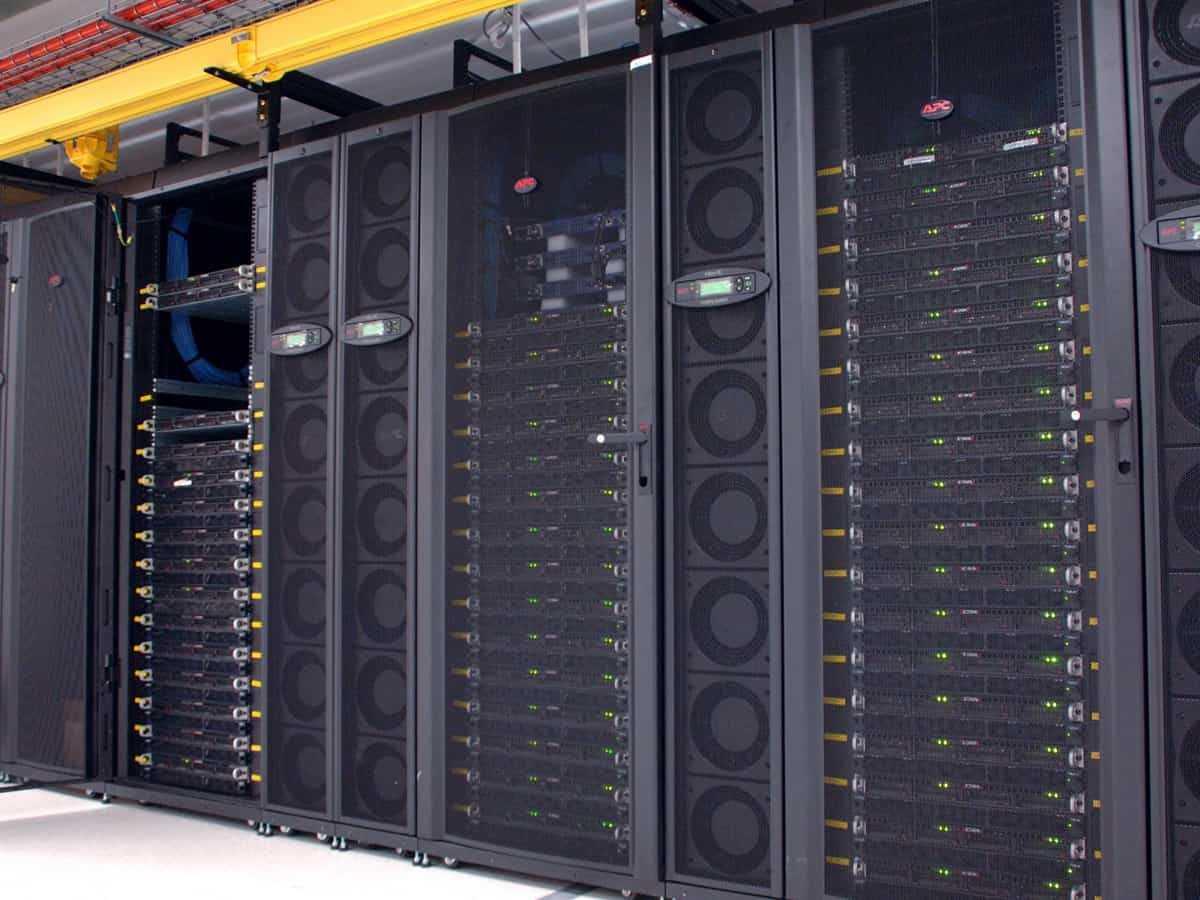
    New Delhi: India’s burgeoning Data Centre market has attracted USD 60 billion from both domestic and international investors between 2019-2024 and given the current growth curve is expected to surpass USD 100 billion in cumulative investment commitments by the end of 2027, according to the latest report by real estate consultant CBRE South Asia.

    Mumbai continues to dominate data centre stock, followed by Chennai, Delhi-NCR and Bengaluru, accounting for 90 per cent of the country’s total data centre stock as of September. Currently, India’s total DC stock stands at around 19 Mn. Sq. ft. (land area), which is expected to reach 31 Mn. Sq. ft. by the end of 2025, the report states.

    The sector is poised for significant growth in 2025, with nearly 475 MW of capacity under construction across major cities like Mumbai, Chennai, and Delhi-NCR. Key demand drivers for the year ahead include BFSI and Technology companies, it observes.

    Tier-II cities like Ahmedabad, Kochi, Visakhapatnam, and Lucknow are gaining traction as key locations for data centres, driven by regional data consumption growth and cost-efficiency advantages, the report points out.

    State-wise Maharashtra, Tamil Nadu, Telangana, Uttar Pradesh, and West Bengal emerged as the leading states in terms of cumulative investment commitments.

    India’s current data centre capacity stands at around 1,255 MW, and it is projected to further expand to 1,600 MW by the end of 2024. The country’s accelerated technology proliferation, digital transformation, increased Internet penetration, policy enablers, and growth in AI-generated data workload will pivot this growth, the report observes.

    As sustainability becomes a critical priority, there is a growing focus on integrating renewable energy solutions and advanced cooling technologies, which are helping enhance energy efficiency and reduce the carbon footprint of India’s data centres, the report points out.

    Additionally, with AI workloads expected to surpass traditional cloud computing demands, data centre operators are making significant upgrades to their infrastructure to accommodate the evolving needs of AI-driven applications, ensuring they can support the next generation of digital transformation, the report adds.

  • Indian manufacturing sector sees 5.6 pc annual pay growth for contractual workers

    Indian manufacturing sector sees 5.6 pc annual pay growth for contractual workers

    Bengaluru: The contractual employees in the Indian manufacturing sector saw their compensation packages grow at a 5.9 per cent compound annual growth rate (CAGR) from FY21 to FY24, according to a report on Monday.

    This growth was driven by inflation, increased demand for skilled workers, and the need for competitive pay to retain talent, according to the report by TeamLease Services, India’s leading staffing solutions company.

    Moreover, the sector’s workforce is predominantly young, with most individuals in the 28-37 age group (43.6 per cent).

    The expansion of the manufacturing sector in the country is led by industries like electronics manufacturing, automotive, textiles, and chemicals.

    “To unlock its potential, the sector must prioritise inclusive policies and invest in upskilling for Industry 4.0. Strategic workforce outsourcing can help reduce costs and address operational inefficiencies,” said Subburathinam P, Chief Operating Officer of TeamLease Staffing.

    “By focusing on retention and adaptability, the sector can not only achieve its $1 trillion valuation goal but also set a global standard for sustainable and equitable industrial growth,” he noted.

    As the manufacturing sector aims to achieve a $1 trillion valuation by 2025-26, addressing workforce dynamics will be pivotal in ensuring sustained growth.

    This growth is led by strategic government initiatives, technological advancements, and an evolving workforce landscape.

    The workforce is also diverse in terms of educational backgrounds, with nearly half being graduates.

    Both genders show the highest representation at the graduation level, 48.5 per cent for males and 46.4 per cent for females.

    Meanwhile, Maharashtra (17.2 per cent) and Tamil Nadu (14.6 per cent) are the leading states in contractual workforce contributions, followed by Uttar Pradesh (9.6 per cent) and Karnataka (9.4 per cent), the report mentioned.

    “A significant 89.5 per cent of employees in temporary roles are male, highlighting a significant underrepresentation of women. Females in the workforce, however, demonstrate higher representation in postgraduate qualifications (24.3 per cent compared to 10.5 per cent of males),” it noted.

    The report highlighted that companies are encouraged to enhance workplace safety, foster inclusivity, and invest in career development initiatives such as structured mentorship programmes.

  • 2025 to see new growth opportunities in tier 2, 3 cities

    2025 to see new growth opportunities in tier 2, 3 cities

    New Delhi: After witnessing a bumper growth in 2024 across residential, office and industrial domains, 2025 is likely to be a year of consolidation and continued innovation for the Indian real estate sector, a report showed on Monday.

    While residential and office markets can potentially stabilise after consecutive peaks, industrial and warehousing demand can witness heightened traction, fuelled by rising manufacturing output and a thriving logistics industry, according to a Colliers India report.

    In 2025, rapid urbanisation, key infrastructure project completion and industrial corridor development will create new growth opportunities, particularly in tier 2 and 3 cities.

    In 2024, annual gross leasing across the top six cities reached 47 million square feet by the third quarter of the ongoing year, reflecting a 23 per cent year-on-year increase.

    On the residential front, supported by stable interest rates, launches and sales across major cities of the country are likely to end on a strong note this year. Average housing prices across the top eight cities have already surged 11 per cent annually in 2024.

    The first nine months of 2024 saw a 17 per cent annual growth in industrial and warehousing demand, registering 20.2 million square feet of leasing across the top five cities. Almost half of the leasing activity is expected to come from Delhi-NCR and Chennai.

    Institutional inflows in Indian real estate continue to remain healthy in 2024, indicating sustained investor confidence. Of the $4.7 billion real estate investments during the first nine months of 2024, office and industrial and warehousing segment together accounted for over 70 per cent share.

    Buoyed by domestic growth prospects and long-term returns, institutional investments are likely to be around $5-6 billion by the end of 2024.

    “2025 could be another year, wherein multiple real estate classes ride high on investor and end-user optimism. Notably, alternative asset classes such as data centres, co-living and senior housing are likely to witness accelerated growth, reflecting a broader and steady shift in demographics and consumer preferences,” said Badal Yagnik, Chief Executive Officer, Colliers India.

    A supportive regulatory environment and recent regulatory push such as SM-REITs (Small and Medium REITs) and refinement of state-specific RERA (Real Estate Regulation and Development Authority Act) regulations have enhanced transparency and institutionalisation in the real estate sector.

    Policy frameworks have also driven a sense of fair pricing across real estate segments, attracting both developers and investors.

    “Leasing activity from both domestic occupiers, as well as Global Capability Centres (GCCs) is likely to end on a strong note in 2024. Residential activity is expected to match 2023 levels, with strong sales across affordable, middle-income and luxury segments,” said the report.

  • WPI inflation declines in November, food prices ease

    WPI inflation declines in November, food prices ease

    New Delhi: Wholesale price inflation eased to 1.89 per cent in November, as prices of food items, especially vegetables turned cheaper, as per the government data released on Monday.

    The Wholesale Price Index (WPI) based inflation was 2.36 per cent in October 2024. It was 0.39 per cent in November, last year.

    As per the data, inflation in food items eased to 8.63 per cent in November, as against 13.54 per cent in October. The decline was led by a dip in vegetable inflation which stood at 28.57 per cent, as against 63.04 per cent in October.

    Inflation in potato, however, continued to be high at 82.79 per cent, while in onion it fell sharply to 2.85 per cent in November.

    The fuel and power category witnessed a deflation of 5.83 per cent in November, against a deflation of 5.79 per cent in October. In manufactured items, inflation was 2 per cent in November, against 1.50 per cent in October.

  • Congress amended Constitution for gains: Nirmala Sitharaman

    New Delhi: Union Finance Minister Nirmala Sitharaman, who initiated the debate on the Constitution in Rajya Sabha on Monday, launched a sharp attack on Congress, accusing the party of amending the Constitution repeatedly to restrict civil liberties and for their gains.

    “In the last seven decades, this living document, our Constitution, has seen many amendments,” she said, alleging that the first amendment under Nehru’s interim government “curbed the freedom of speech”.

    Giving details about the First Amendment, Sitharaman said, “…The Supreme Court in 1950 had ruled in favour of the Communist magazine “Cross Roads” and the RSS organisational magazine “Organizer”. But in response, the (then) interim government thought that there was a need for a first Constitutional amendment and that was brought in by the Indian National Congress (INC) and it was essentially to curb the freedom. So India, a democratic country which prides itself even today on freedom of expression saw the first interim government coming up with a Constitutional amendment which was to curb the freedom of speech of Indians and that within one year of adoption of the Constitution…”

    “This First Amendment was done to harm the press and it is still affecting the freedom of media. This amendment was done by PM Nehru despite MPs being against it,” she said.

    She said a critical evaluation of amendments based on four criteria: whether they were genuine, their outcomes for the people, the processes adopted, and adherence to the Constitution’s spirit, was required.

    “The first Prime Minister of this country scrutinized the amending bill himself before its approval in Parliament. However, the debate in Parliament was far from smooth. Shri Syama Prasad Mukherjee remarked: ‘You can pass a law and claim to frame and form the Constitution, but now you are treating this Constitution as mere paper. You trusted the people of this country to write it, and now you come forward and stab them in the back.’ Kameshwar Singh, a member of the Constituent Assembly, also expressed disagreement, stating: ‘It is highly improper to make such changes to the Constitution.’ These actions showed an utter disregard for the Constitution, bypassing the judiciary,” she said.

    “Those who are working on amending the Constitution, if they are good people outcome will be good, if they are bad people outcome will be bad,” said the Union Minister.

    “Today, we hear comments from the Congress party on the judicial system, but they themselves went to great lengths in the past to undermine it. For instance, to nullify judgments, they introduced amendments. In the case of Indira Gandhi vs. Raj Narain, during the Emergency in 1975, a biography of Nehru was banned, and the film ‘Kissa Kursi Ka’ was also banned just because it questioned Indira Gandhi and raised critical issues…That’s the extent they went to bypass judicial scrutiny. Congress speaks about protecting rights and also the judicial system…how?”

    The Finance Minister while lauding the Consitution and the people of India said, ” As we mark 75 years of the Constitution, it is time, I think, to reaffirm our commitment to building India, that is Bharat, which upholds the spirit and shines through this sacred document.”

    “…Post Second World War, over 50 countries had become independent and had their Constitution written. But many have changed their Constitutions, not just amended them but literally changed the entire feature of their Constitution. But our Constitution has stood the test of time, of course, yielded itself to very many amendments…”