Category: BUSINESS

  • Retail inflation eases as food prices moderate

    Retail inflation eases as food prices moderate

    New Delhi: Retail inflation declined in November to 5.48 percent and came within Reserve Bank’s comfort zone mainly due to easing food prices, creating headroom for a rate cut at the central bank’s rate-setting panel meets under new Governor Sanjay Malhotra in February.

    The Consumer Price Index (CPI) based headline inflation was at 6.21 per cent in October and 5.55 per cent in November 2023.

    “During the month of November, 2024 significant decline in inflation is observed in vegetables, pulses and products, sugar and confectionary, fruits, eggs, milk and products, spices, transport and communication and personal care and effects subgroups,” National Statistics Office (NSO) said in a statement.

    According to the CPI data released by the NSO on Thursday, inflation in the food basket reduced to 9.04 per cent in November. It was 10.87 per cent in October and 8.70 per cent in November 2023.

    The data revealed that the top five items showing highest year-on-year inflation in November 2024 were garlic (85.14), potato (66.65), cauliflower (47.7), cabbage (43.58) and coconut oil (42.13).

    The key items having lowest year-on-year inflation were jeera (-35.04), ginger (-16.96), LPG excluding conveyance (-10.24) and dry chillies (-9.73).

    The government has tasked the RBI to ensure that the headline inflation remains at 4 per cent with a margin of 2 per cent on either side. The RBI has maintained a short-term lending rate (repo) at 6.5 per cent since February 2023.

    Aditi Nayar, Chief Economist, ICRA said led by food inflation, the CPI inflation expectedly eased to 5.5 per cent in November 2024 from 6.2 per cent in October 2024, falling back within the medium-term target range and offering a dose of relief.

    She further said that the cumulative sowing of rabi crops exceeded the year-ago levels by 1.5 per cent year-on-year by December 9, 2024, led by pulses, rice, wheat and coarse cereals, whereas the rabi sowing for oilseeds contracted by 4.3 per cent annually.

    “In our view, if the headline CPI inflation eases to 5.0 per cent or lower by December 2024, the likelihood of a rate cut by the MPC in its February 2025 meeting would be very high. We maintain our baseline expectation of two rate cuts of 25 bps each in the awaited rate cutting cycle,” Nayar said.

    Last week, the RBI Governor headed Monetary Policy Committee (MPC) had left the repo unchanged at 6.5 per cent citing concern on the inflation front.

    Sanjay Malhotra took over as RBI Governor on Wednesday after Shaktikanta Das demitted office after completing a six-year tenure.

    The Reserve Bank raised the inflation projection for the current fiscal to 4.8 per cent from 4.5 per cent. It also said that the lingering food price pressures are likely to keep headline inflation elevated in the December quarter.

    CPI-based headline inflation increased from an average of 3.6 per cent during July-August to 5.5 per cent in September and further to 6.2 per cent in October 2024.

    The NSO data also revealed that the CPI inflation rate for rural and urban areas were 5.95 per cent and 4.83 per cent, respectively, in November.

    Among states, the highest inflation was recorded in Chhattisgarh (8.39 per cent) and lowest in Delhi (2.65 per cent).

    It can be observed that after December 2023, inflation rate for both CPI (General) and CFPI were declining, reaching their lowest point in July 2024, it said.

    “However, from August, 2024 to October 2024, an increasing trend was observed. Thereafter, in November, 2024 inflation again declined. The decline in inflation in November 2024 is mainly due to decline in inflation in the ‘food & beverages’ group,” NSO added.

    NSO collects the price data from selected 1,114 urban markets and 1,181 villages.
  • Indian share market opens lower, auto and IT stocks drag

    Indian share market opens lower, auto and IT stocks drag

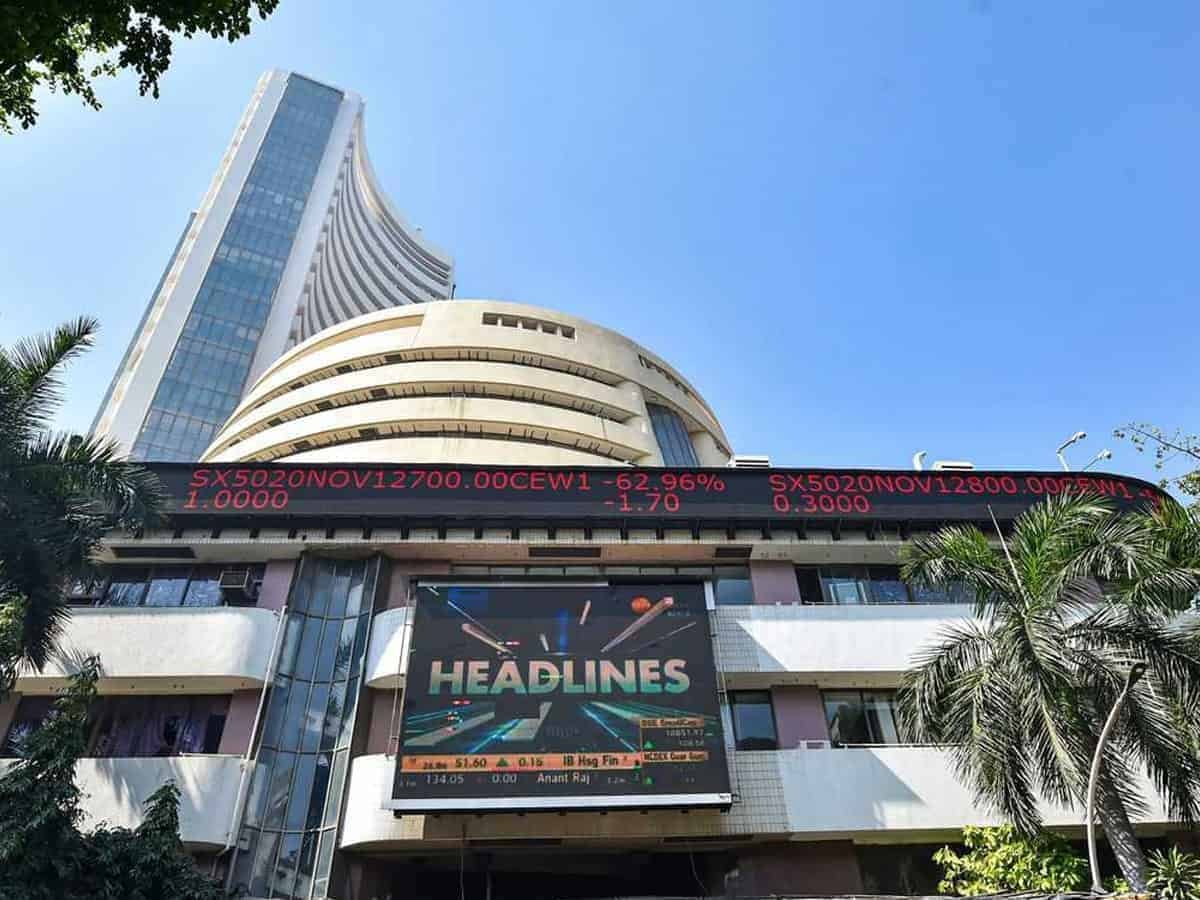
    Mumbai: The Indian stock market opened in red on Monday as selling was seen in Nifty’s auto, IT, PSU Bank, pharma and metal sectors.

    At around 9:32 am, Sensex was trading at 81,876.95 after declining 256.17 points or 0.31 per cent, while the Nifty was trading at 24,705.60 after dropping 62.70 points or 0.25 per cent.

    The market trend remained positive. On the National Stock Exchange (NSE), 1,170 stocks were trading in green, while 571 stocks were in red.

    Akshay Chinchalkar of Axis Securities said that Friday’s highly volatile session saw the Nifty slump during the early part of the session, “but the day’s low occurred exactly at the falling neckline of the bullish head-and-shoulders pattern which was activated on December 3 with an upside objective of 25,500.”

    This objective remains valid as long as the market stays above 23,873, but more critical support now is the Friday low of 24,180, he added.

    Nifty Bank was down 168 points or 0.31 per cent at 53,415.80. Nifty Midcap 100 index was trading at 59,234.85 after rising 243.30 points or 0.41 per cent. Nifty Smallcap 100 index was at 19,515.40 after rising 108.10 points or 0.56 per cent.

    According to market experts, the huge positions in F&O segments are causing such heightened volatility in the market. The 500 point move in the nifty from the day’s trough to the peak indicates massive short covering.

    In the Sensex pack, NTPC, JSW Steel, M&M, Titan, Kotak Mahindra Bank, Infosys, TCS, Hindustan Unilever Limited, Axis Bank and Tech Mahindra were the top losers. Tata Steel, UltraTech Cement, L&T, ITC, Tata Motors, IndusInd Bank and HCL Tech were the top gainers.

    In the Asian markets, except China, the markets of Hong Kong, Bangkok, Seoul, Jakarta and Japan were trading in red.

    In US stock markets the Nasdaq Composite ended 0.12 per cent higher and Dow Jones Industrial Average ended 0.20 per cent down on the previous trading session.

    Foreign institutional investors (FIIs) bought equities worth Rs 2,335.32 crore on December 13, while domestic institutional investors sold equities worth Rs 732.20 crore on the same day.

  • Indian share market opens in red amid selling across sectors

    Indian share market opens in red amid selling across sectors

    Mumbai: The Indian stock market opened in red on Friday as selling was seen in Nifty’s all sectors in early trade.

    At around 9:29 am, Sensex was trading at 80,840.9 after declining 449.02 points or 0.55 per cent, while Nifty was trading at 24,421.15 after dropping 127.55 points or 0.52 per cent.

    The market trend remained negative. On the National Stock Exchange (NSE), 559 stocks were trading in green, while 1,657 stocks were in red.

    According to market experts, “November CPI inflation at 5.48 per cent has come within the RBI’s tolerance limit. If this trend continues it can pave the way for a rate cut by the monetary policy committee (MPC) in February.”

    “However, the rising dollar is a concern since it can lead to imported inflation. Nifty is unlikely to break from the range of 24,500-24,850,” they added.

    Nifty Bank was down 40.95 points or 0.08 per cent at 53,175.50 Nifty Midcap 100 index was trading at 58,706.85 after dropping 314.85 points or 0.53 per cent. Nifty Smallcap 100 index was at 19,336.50 after dropping 130.05 points or 0.67 per cent.

    Akshay Chinchalkar of Axis Securities said that Thursday was another down day on the Nifty with the market yet again failing to get past what is now undoubtedly a key near-term hurdle near 24,700.

    “Yesterday’s drop had higher participation compared with what was seen the day before, which means market participants are nervous,” he mentioned

    In the Sensex pack, Power Grid, Bharti Airtel, Adani Ports, Sun Pharma, NTPC and Tata Motors were the top gainers. Whereas, JSW Steel, Tata Steel, Infosys, M&M, Titan, UltraTech Cement, Bajaj Finance and L&T were the top losers.

    In the Asian markets, except Seoul, the markets of Hong Kong, Bangkok, China, Jakarta and Japan were trading in red.

    In the US stock markets, the S&P 500 and Nasdaq Composite ended 0.54 per cent and 0.66 per cent lower, respectively. The Dow Jones Industrial Average ended 0.53 per cent down on the previous trading day.

    Foreign institutional investors (FIIs) sold equities worth Rs 3,560.01 crore in the Indian market on December 12, while domestic institutional investors bought equities worth Rs 2,646.65 crore on the same day.

  • Rupee recovers from all-time low against US dollar in early trade

    Rupee recovers from all-time low against US dollar in early trade

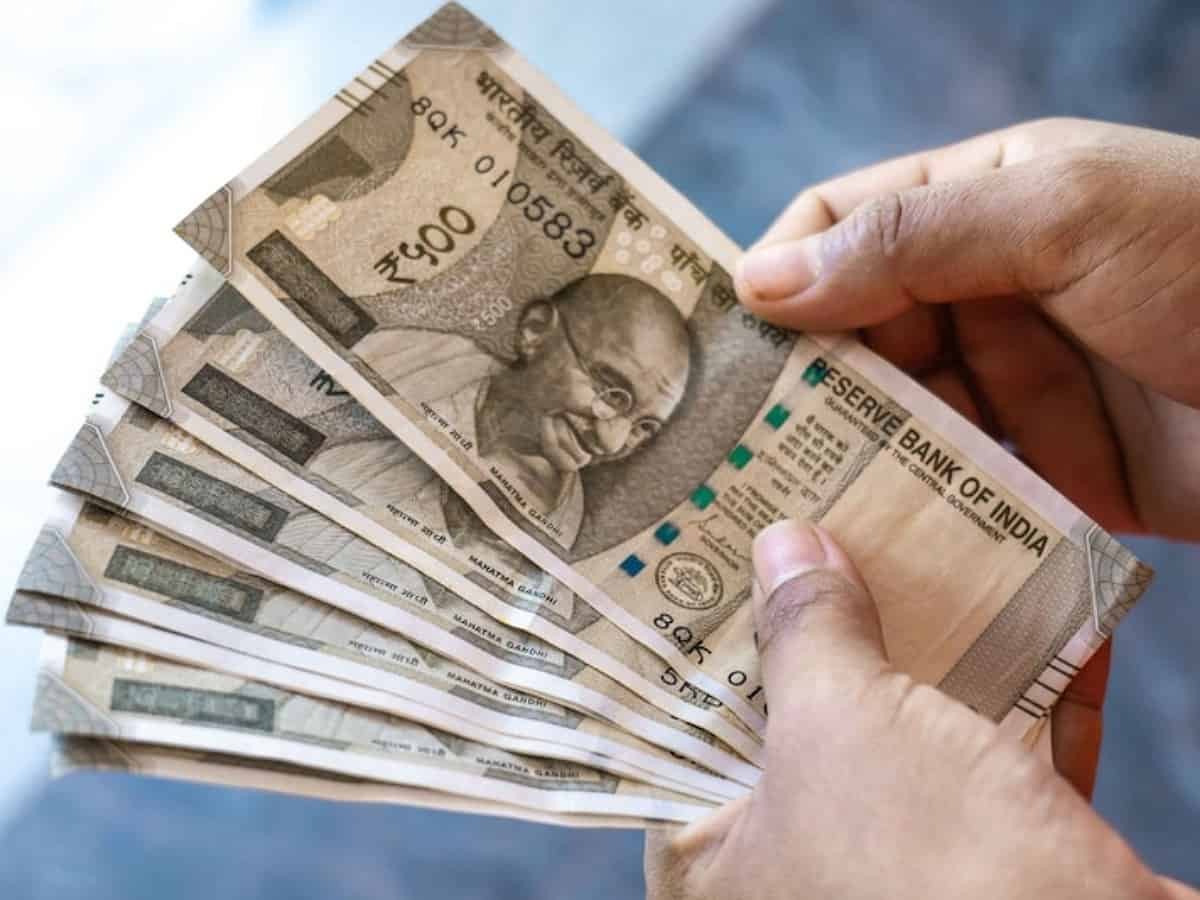
    Mumbai: The rupee saw some recovery from its all-time low level and appreciated 5 paise to 84.83 against the US dollar in early trade on Friday on the back of favourable domestic inflation data.

    However, a strengthening American currency and volatile domestic equity markets amid foreign fund outflows capped the recovery in the local unit, forex traders said.

    At the interbank foreign exchange, the rupee opened at 84.85 and inched up further to 84.83 against the greenback, registering a gain of 5 paise from its previous close.

    On Thursday, the rupee fell 5 paise to end the session at the lowest level of 84.88 against the US dollar.

    The previous record low closing level was recorded on December 9, when the unit settled 20 paise lower at 84.86 against the dollar.

    The latest official data released on Thursday showed India’s retail inflation declined in November to 5.48 per cent and came within the Reserve Bank’s comfort zone mainly due to easing food prices, creating headroom for a rate cut at the central bank’s rate-setting panel meeting under new Governor Sanjay Malhotra in February.

    The country’s industrial production (IIP) growth, however, slowed to 3.5 per cent year-on-year in October 2024, mainly due to poor performance of mining, power and manufacturing, as per official data released on Thursday.

    Meanwhile, the dollar index, which gauges the greenback’s strength against a basket of six currencies, was trading higher by 0.12 per cent at 106.77.

    Analysts said that the dollar has been strengthening after the US inflation numbers came on expected lines, raising hopes for an interest rate cut by the Federal Reserve.

    Brent crude, the global oil benchmark, rose 0.01 per cent to USD 73.42 per barrel in futures trade.

    On the domestic equity market front, the 30-share benchmark index Sensex was trading 388.68 points, or 0.48 per cent lower at 80,901.28 points. The Nifty was down 115.20 points, or 0.47 per cent, to 24,433.50 points. Both the indices ended lower on Thursday.

    Foreign Institutional Investors (FIIs) were net sellers in the capital markets on Thursday, as they offloaded shares worth Rs 3,560.01 crore, according to exchange data.

  • RBI receives IED threat for its South Mumbai building

    RBI receives IED threat for its South Mumbai building

    Mumbai: The Reserve Bank of India has received a threat email claiming that an improvised explosive device (IED) has been planted in its building in south Mumbai, a police official said on Friday.

    The message was sent to the official email address of the RBI Governor on Thursday following which the authorities at the central bank alerted the police. The sender is yet to be unidentified, the official said.

    Police have searched the premises and nothing suspicious has been found so far, he said.

    In the email written in the Russian language, the sender claimed that an IED had been planted in the building and it would be activated remotely within five days, the official said.

    The sender also asked the RBI Governor to join the “brotherhood movement for Ukraine”.

    A case has been registered at Mata Ramabai Ambedkar Marg police station in south Mumbai, the official said, adding that an investigation is underway.

  • Zomato gets GST demand notice of Rs 803 crore

    Zomato gets GST demand notice of Rs 803 crore

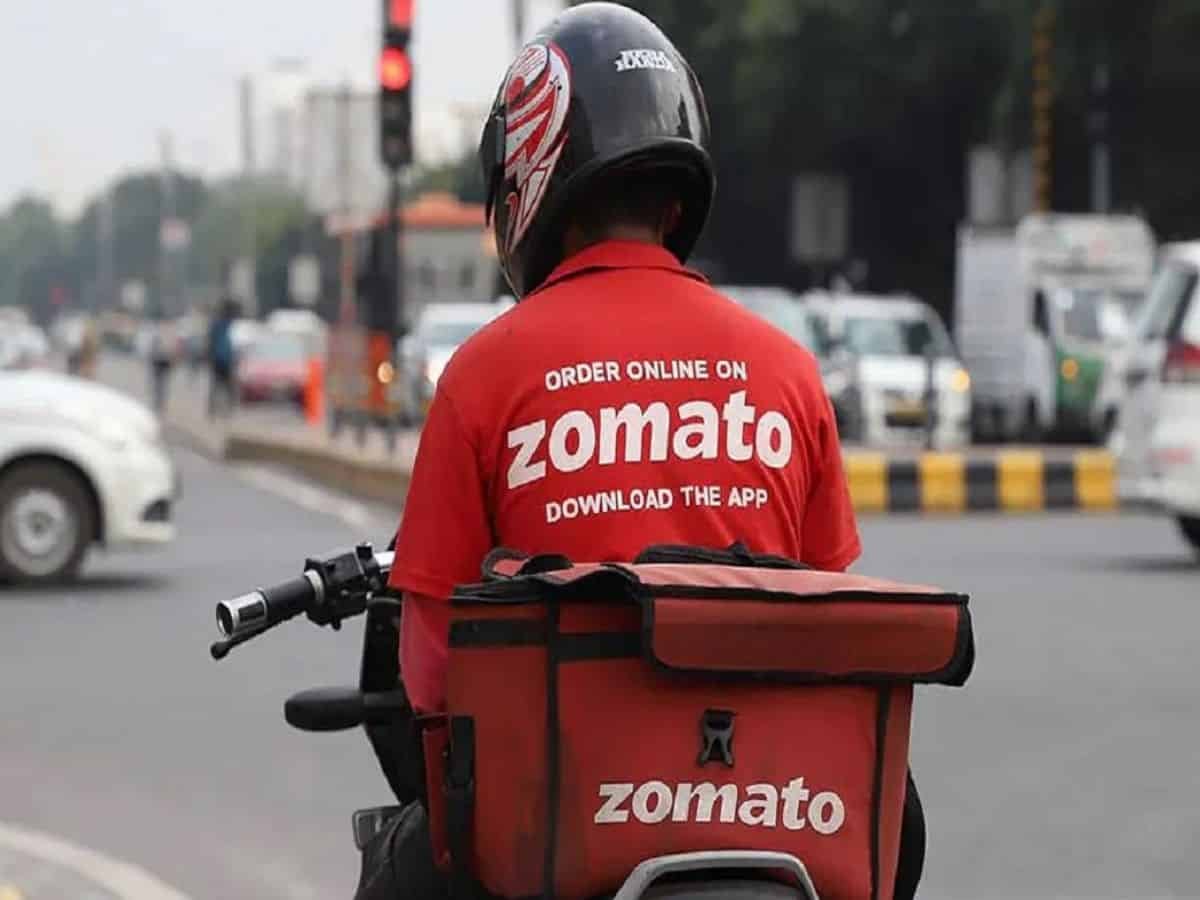
    Mumbai: Food delivery and quick commerce services provider Zomato has received a tax demand notice of Rs 803 crore from the Goods and Services Tax (GST) department.

    In a stock exchange filing, the company said this notice has been given by the Joint Commissioner of CGST and Central Excise in Thane. This tax notice includes GST demand and interest and penalty.

    “This tax demand notice is for not paying GST on delivery charges. The total amount of Rs 803 crore includes GST demand of Rs 401.7 crore and interest/penalty of the same amount,” according to the exchange filling.

    The company further said, “We believe that we have a strong case on merits, supported by the opinion of our external legal and tax advisors. The company will file an appeal against the order before the appropriate authority.”

    Earlier, in January and June this year, Zomato received Rs 4.2 crore and Rs 9.45 crore GST demand notices, respectively.

    Zomato in 2023 received a GST demand notice of Rs 400 crore on delivery charges.

    Delivery charges are levied by Zomato, Swiggy and other food and quick commerce companies on their services.

    “These companies claim that gig workers work as delivery partners. They are paid on an order basis. This delivery charge collected from the users is given directly to the gig worker,” according to reports.

    The delivery charge has been considered a service in GST laws, as the platforms are collecting it. Due to this, 18 per cent GST can be levied on delivery.

    Zomato recently raised over $1 billion through qualified institutions placement (QIP) of equity shares.

    The company’s stock was trading flat at Rs 285 apiece on Friday.

    In Q2 FY 25, Zomato’s total income grew 68.5 per cent year-on-year to Rs 4,799 crore, from Rs 2,848 crore in the same period of the previous financial year. The company’s net profit increased 4.8 times to Rs 176 crore in the September quarter.

  • India’s growth on resilient trajectory, equity markets in consolidation phase

    India’s growth on resilient trajectory, equity markets in consolidation phase

    Mumbai: India’s economic momentum is expected to recover in the second half of FY25, driven by a rebound in government capex post-elections, recovery in rural consumption, and on the back of festive season demand, a report by Motilal Oswal Private Wealth (MOPW) said on Saturday.

    The growth remains steady, positioning India as one of the fastest-growing major economies globally, with relatively low volatility and stable growth, said the Alpha Strategist Report.

    Equity markets now are in consolidation phase after a corrective phase of 10-12 per cent in the benchmark indices.

    “With the recent market correction, large-cap valuations appear attractive. Investors can adopt a lump-sum strategy for Hybrid, Large, and Flexi-cap funds while taking a staggered approach over three months for select mid- and small-cap strategies,” the report mentioned.

    FII turned net buyers after 38 trading sessions with an infusion of Rs 9,947 crore.

    “The Indian economy continues to remain on strong footing and signs are visible for growth coming back on track gradually. Hence, we continue to remain positive on the equity markets from long term perspective,” the report mentioned.

    It cautioned investors to tread with caution by adopting a strategy which is balanced and resilient.

    “Based on their risk profile, investors having the appropriate level of equity allocation can continue to remain invested,” the report mentioned.

    Considering the recent corrections, if equity allocation is lower than desired levels, investors can increase allocation by implementing a lump sum investment strategy for Hybrid, large and flexicap strategies and 3 to 6 months for select mid and small-cap strategies with accelerated deployment in the event of a meaningful correction.

    “With the evolving interest rate scenario, the fixed income portfolio should be Overweight on Accrual Strategies and Neutral on Duration Strategies,” the report mentioned.

  • Zepto’s expenses surge over 71 pc in FY24, losses at Rs 1,248 cr

    Zepto’s expenses surge over 71 pc in FY24, losses at Rs 1,248 cr

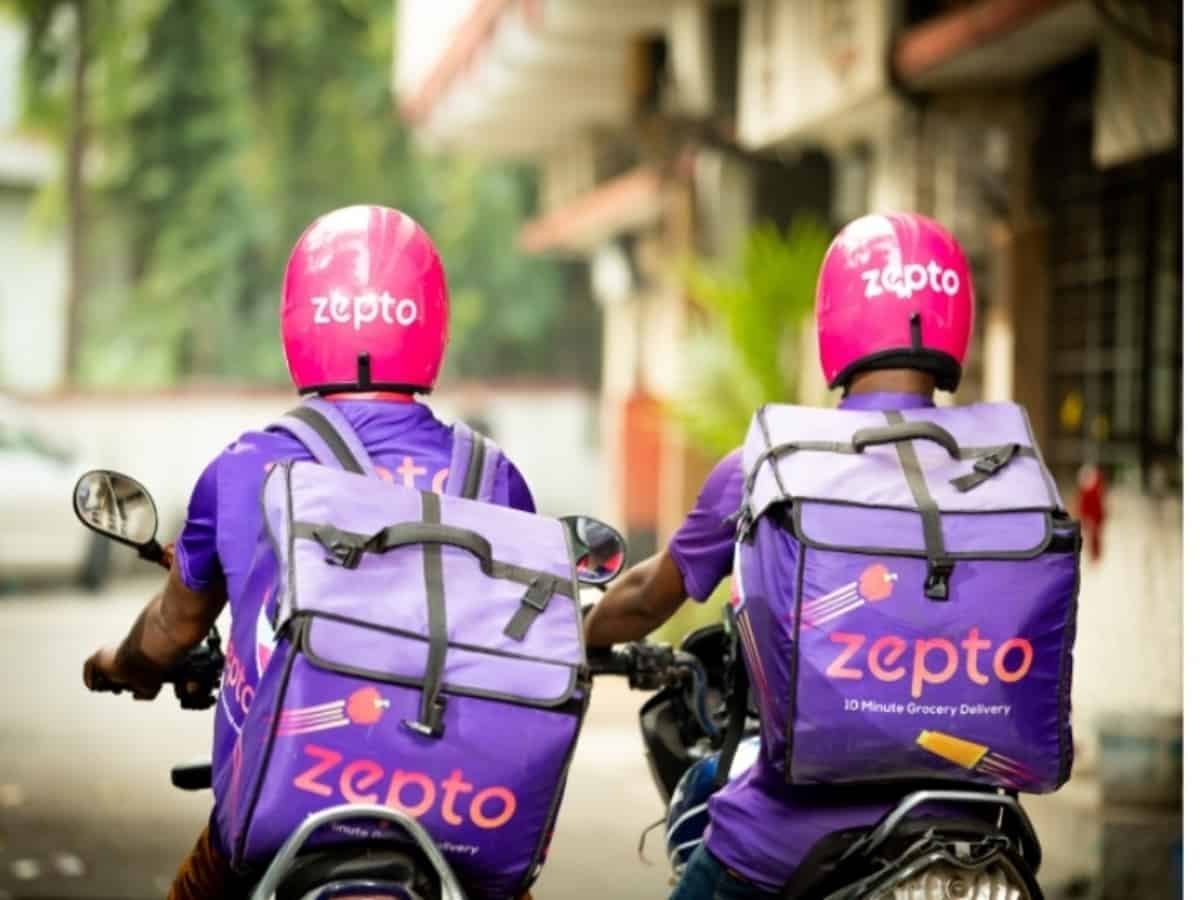
    New Delhi: Blinkit’s rival Zepto saw its expenses surge a whopping 71.6 per cent to Rs 5,747 crore in the last financial year (FY24), as the company clocked Rs 1,248.6 crore in losses.

    The return on capital employed (ROCE) for the quick commerce company stood at -119.3 per cent and its EBITDA margin was -23.81 per cent, as per its financials.

    Zepto’s operational revenue stood at Rs 4,454 crore in FY24. Effectively, the company spent Rs 5,747 crore (from Rs 3,350 crore in FY23) to earn Rs 4,454 crore last fiscal.

    The Aadit Palicha-run company saw its information technology and advertising expenses rise to Rs 116 crore and Rs 303 crore, a rise of 65.7 per cent and 40.3 per cent, respectively.

    The company incurred Rs 493 crore in warehousing costs and Rs 580 crore in delivery expenses.

    When it comes to earnings, income from sale of products constituted over 89 per cent of the total operating revenue, and the rest of the income came from delivery, warehousing and advertising services.

    Zepto also earned Rs 44 crore from non-operating income, as per its financials.

    The company’s current assets stood at Rs 1,398 crore in FY24. Zepto recently earned $350 million in a funding round led by Motilal Oswal Private Wealth at a valuation of $5 billion.

    Last week, Palicha said he is not against work-life balance and even recommends it to his competitors. His statement came after a viral post accused the quick e-commerce platform of toxic work culture.

    The Reddit post, by an anonymous user, alleged that Zepto’s working environment was “toxic”, with employees working exhausting 14-hour shifts. It claimed that the company also pressured employees with demanding expectations.

    In quick commerce, despite Swiggy’s Instamart inventing the category, Zomato’s Blinkit has taken an early lead, and Zepto continues to execute well.

  • 40 Indian startups secure over $787 million in funding this week

    40 Indian startups secure over $787 million in funding this week

    New Delhi: In a significant week for the Indian startup ecosystem, nearly 40 startups secured more than $787 million in funding as the economy remained resilient amid the geo-political conditions.

    These deals included 16 growth-stage deals and 23 early-stage ones. This is a massive jump from $250 million raised cumulatively across 18 deals last week. Cloud kitchen unicorn Rebel Foods led the funding with $210 million led by Temasek in a mix of primary and secondary share sales.

    Rebel Foods is planning for a public listing by next year. Fintech startup Mintifi raised a total of $180 million in its Series E round led by TVG and Prosus. Mintifi plans to deploy the fresh capital to expand its footprint across key sectors. Meanwhile, CarDekho SEA, the Southeast Asia business unit of digital automotive solutions provider CarDekho Group, raised its first external funding round of $60 million.

    The round was led by prominent growth and private equity investors Navis Capital Partners (Navis) and Dragon Fund. Following this round, the cumulative fundraise now stands at more than $100 million.

    Haber, a leading industrial AI startup, raised $44 million in its Series C funding round, which included $38 million in equity and $6 million in debt.

    The funding round was led by Creaegis, BEENEXT, and Accel. SolarSquare, India’s leading home solar startup based in Mumbai, secured $40 million in its Series B funding round, marking the largest venture capital raise in the Indian solar sector.

    The round was led by Lightspeed with participation from Lightrock. K12 Techno Services secured $40 million in funding from Kenro Capital, a growth-stage secondary venture capital firm.

    Moreover, 23 early-stage startups secured funding worth $54.01 million during the week. Nearly 73,151 startups in India now have at least one woman Director — nearly half of the 1,52,139 startups supported by the government, thus showcasing the crucial role women play in driving innovation and economic growth, according to the Ministry of Commerce and Industry statement.

  • UPI transactions surge to Rs 223 lakh crore in Jan-Nov

    UPI transactions surge to Rs 223 lakh crore in Jan-Nov

    New Delhi: The Unified Payments Interface (UPI) has achieved 15,547 crore transactions worth Rs 223 lakh crore from January to November this year, ‘showcasing its transformative impact on financial transactions’ in India, the Finance Ministry said on Saturday.

    The Finance Ministry also said that UPI is now accepted in seven countries including France, UAE, Singapore, Sri Lanka, Mauritius, Bhutan and Nepal. The UPI system provides a cheaper and quicker alternative to the available channels of cross-border remittances.

    UPI has succeeded in increasing financial inclusion and promoting equitable economic growth by enabling underserved groups, including subprime and new-to-credit borrowers to access formal credit for the first time, according to a new study by IIM and ISB professors.

    The authors said the success of UPI can be replicated in other countries as well and India can play a leading role in helping them adopt the fintech system.

    “Within a short span, UPI led to exponential penetration of digital payments across India and is used at all levels from street vendors to large shopping malls

    Since its launch in 2016, the Unified Payments Interface (UPI) has transformed financial access in India, enabling 300 million individuals and 50 million merchants to perform seamless digital transactions, according to a study by IIM and ISB professors.

    By October 2023, 75 per cent of all retail digital payments in India were through UPI. The rapid adoption of UPI was possible due to affordable internet across the country. A 10 per cent increase in UPI transactions led to a 7 per cent rise in credit availability, reflecting how digital financial histories enabled lenders to assess borrowers better., the study states.

    The authors said fintech lenders scaled rapidly, increasing their loan volumes 77 times, far outpacing traditional banks in catering to smaller, underserved borrowers.

    The study also highlights that despite the credit surge, default rates did not rise, showing that UPI-enabled digital transaction data helped lenders expand responsibly.

    In order to ensure greater financial inclusion, the RBI last week decided to permit small financial banks (SFBs) to also extend pre-sanctioned credit lines through the UPI.

    In September 2023, the scope of Unified Payments Interface (UPI) was expanded by enabling pre-sanctioned credit lines to be linked through UPI and used as a funding account by Scheduled Commercial Banks but Payments Banks, Small Finance Banks (SFBs) and Regional Rural Banks were excluded from this ambit.

    “Credit line on UPI has the potential to make available low-ticket, low-tenor products to ‘new-to-credit’ customers. SFBs leverage a high-tech, low-cost model to reach the last mile customer and can play an enabling role in expanding the reach of credit on UPI,” the RBI said.

    “It is, therefore, proposed to permit SFBs to extend pre-sanctioned credit lines through the UPI. Necessary guidelines will be issued shortly,” the RBI statement added.