Category: BUSINESS

  • Indian stock market opens higher, Nifty above 23,000

    Indian stock market opens higher, Nifty above 23,000

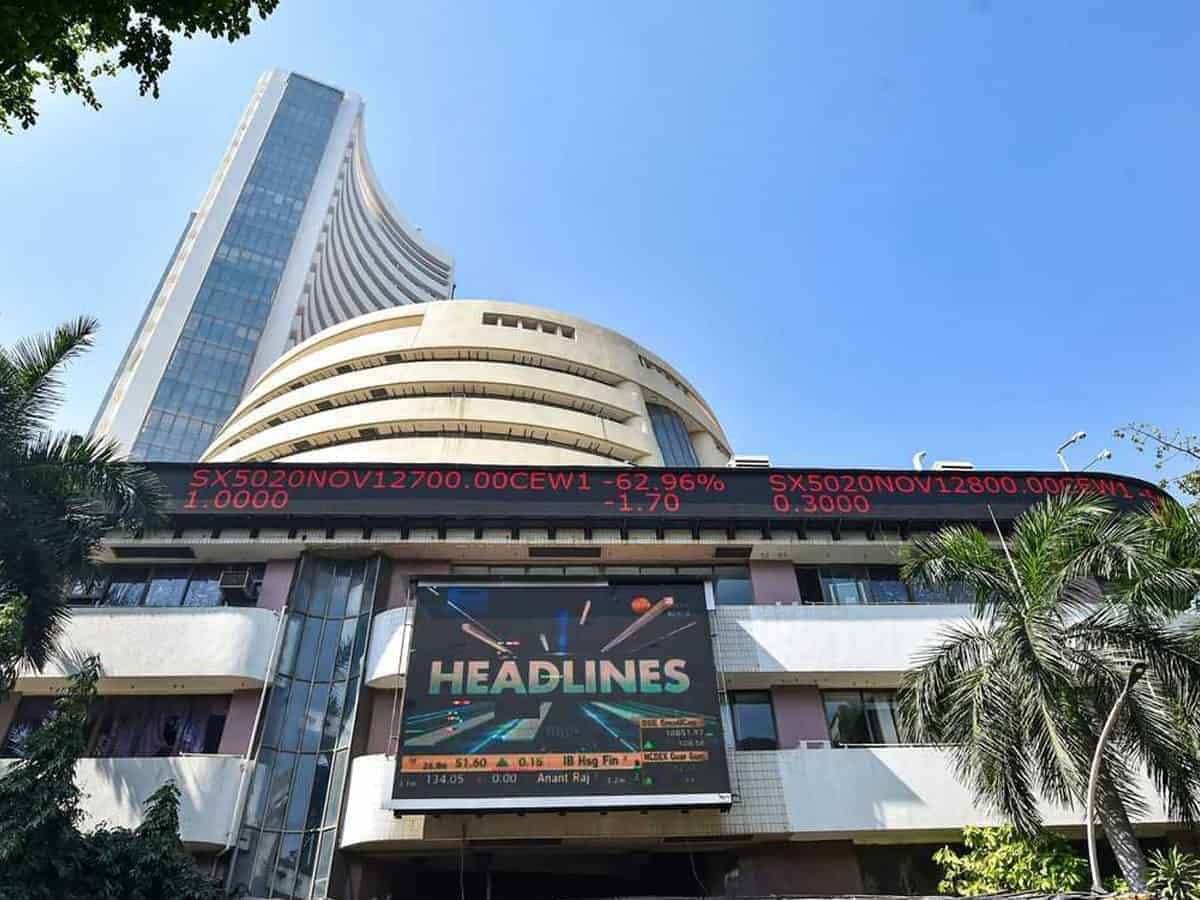
    Mumbai: The domestic benchmark indices opened higher on Wednesday for second day in a row, as investors are now looking forward to positive cues in the upcoming Union Budget 2025-26.

    As of 9.33 a.m., Sensex was up 195 points or 0.29 per cent at 76,122 while Nifty 50 was up 65 points or 0.29 per cent at 23,025.

    According to market watchers, the US Federal Reserve’s decision on Wednesday (US time) is unlikely to influence the market since no change in policy is expected from the meeting.

    Hyderabad Institute of Excellence“ width=

    On Tuesday, the benchmark indices had the best session since January 2.

    Shrikant Chouhan, head, equity research, Kotak Securities, said that after a promising start, the market bounced back sharply.

    “However, profit booking was again witnessed at higher levels. On the daily chart, a long-legged doji candlestick structure is formed, indicating indecision between the bulls and the bears. We believe 23,150/76,300 would act as the trend decider level for the bulls,” he mentioned.

    Above 23,150/76600, the market may retest the levels of 23,250/76900 to 23,350/77,200.

    In the early trade, Infosys, ICICI Bank, HDFC Bank, Bajaj Auto and Tata Consultancy Services added to the Nifty 50 index.

    On NSE, 10 sectoral indices rose, and two declined out of 12. The NSE Media rose the most and the NSE FMCG declined the most. Broader markets outperformed benchmark indices. The BSE Midcap and Smallcap were up 0.89 per cent and 1.04 per cent, respectively.

    On BSE, 19 sectors advanced and two declined out of 21. The BSE IT rose the most, and BSE FMCG declined the most.

    The charts of Bank Nifty indicate that it may get support at 48,500, followed by 48,200 and 47,900. If the index advances further, 49,000 would be the initial key resistance, followed by 49,300 and 49,600, said experts.

    The foreign institutional investors (FIIs) sold equities worth Rs 4,920.69 crore on January 28. On the other hand, domestic institutional investors (DIIs) bought equities worth Rs 6,814.33 crore on the same day.
  • Honda aims to capture 40 pc of global bike market

    Honda aims to capture 40 pc of global bike market

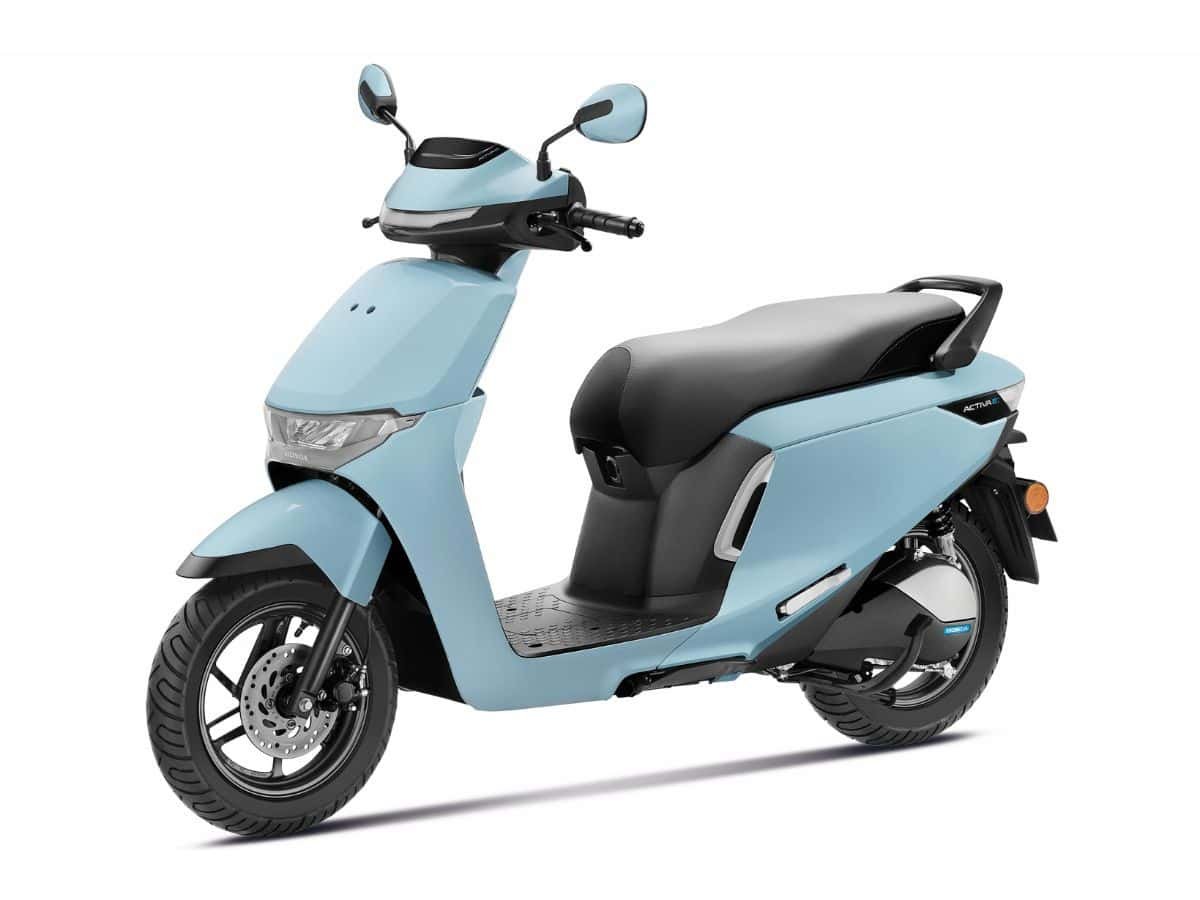
    New Delhi: Honda Motor Company has announced that for the current fiscal year ending March 31, its global motorcycle unit sales are expected to reach 20.2 million units, which is approximately a 40 per cent share of its global sales.

    The Asian market, including India, Indonesia, Thailand and Vietnam, accounts for 85 per cent of global unit sales (17.17 million units), and Japan, Europe and the US markets account for 6 per cent (1.2 million units), the company said at a press briefing by top Honda executives in Tokyo.

    The Japanese auto giant said it is envisioning further growth in global demand for motorcycles, mainly in the region referred to as the “Global South,” which consists of: Southwest Asia, whose largest market is India, as well as Indonesia, the Philippines; and Brazil and other Central and South American countries.

    Hyderabad Institute of Excellence“ width=

    Regarding its India business, Honda Motor Company said it has steadily increased sales volume and the largest market share is now within reach. The company has plans to set up an electric motorcycle plant in India by 2028.

    With this expected trend, the industry-wide global motorcycle sales, currently at a scale of 50 million units, is projected to grow to 60 million units by 2030, including electric vehicles.

    In order to respond to this market growth and increased demand with certainty, Honda will continue introducing more competitive products, pursue carbon neutrality through various measures including electrification and further solidify its motorcycle business, with a long-term target to capture a 50% share of the global motorcycle market including electric motorcycles.

    Honda plans to roll out 30 electric two-wheeler models by 2030 to meet its projected EV sales target of annual 4 million units.

    Honda’s two-wheeler business clocked $3.6 billion in operating profit for the year ended March 2024. It currently produces over 20 million units every year in 37 facilities across 23 countries and regions.

    The automaker also said it is exploring the possibility of relocation of its Mexico plant, in light of potential tariffs on Mexico by US President Donald Trump. Honda Motor Co makes around 9,000 units annually at its Mexican facility, which are exported to the US. “Of course there will be an effect. We’re considering relocation as a possible option but no decisions have been made,” said Minoru Kato, executive officer in charge of Honda’s motorcycle unit.

  • 1 in every 2 cars to be a battery electric vehicle by 2035: Report

    1 in every 2 cars to be a battery electric vehicle by 2035: Report

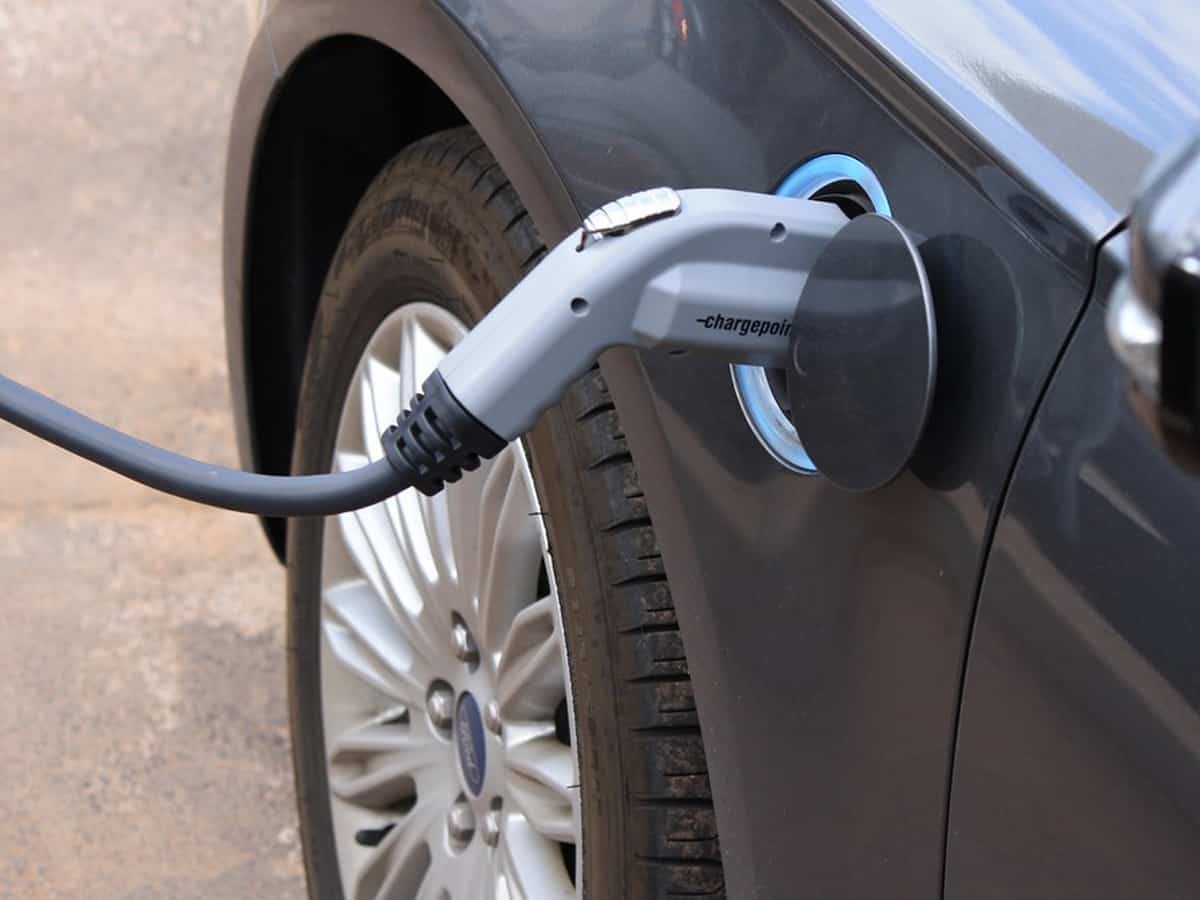
    New Delhi: One out of every two cars sold globally is projected to be a battery electric vehicle (BEV) by 2035, a report said on Wednesday.

    Their sales are predicted to make up 48 percent of the global market share, up from just 16 percent in 2025.

    According to the Counterpoint Research report, global BEV sales jumped by 22 per cent in 2023, a strong year-over-year growth despite a temporary slowdown in 2024.

    Hyderabad Institute of Excellence“ width=

    In fact, automakers are increasing efforts to improve production processes, reduce costs, and partner with battery manufacturers to meet growing demand, the report added.

    As a result, BEVs are expected to keep climbing in sales, with growth projected at 17 per cent annually between 2025 and 2030.

    The global passenger vehicle market is expected to grow at a steady pace, with sales projected to reach over 105 million units by 2035.

    This significant shift in the automotive market is driven by rapidly growing demand for electric vehicles (EVs), especially in key markets like South Korea, and Europe, the report noted.

    Regions like Southeast Asia, Latin America, India and Japan are also expected to see rapid growth in EV sales, with local brands driving adoption in these areas.

    In contrast, the US is likely to take steps to protect its domestic automakers, potentially blocking Chinese EV manufacturers from entering the market.

    However, plug-in hybrid electric vehicles (PHEVs), which combine electric and gasoline-powered engines, are expected to experience a slowdown after 2030 as BEV adoption continues to gain traction.

    “Major Western automakers are struggling to make profits from their BEV units. To tackle this, they are shifting gears and focusing more on PHEVs for now,” said Abhik Mukherjee, research analyst at Counterpoint.

  • Committee formed to study supply of sand for Indiramma Illu in Telangana

    Committee formed to study supply of sand for Indiramma Illu in Telangana

    Hyderabad: Chief minister A Revanth Reddy ordered a study on the supply of sand to the Indiramma houses being constructed across the state.

    A four-member committee comprising state special chief secretary to finance Ramakrishna Rao, secretary to mining N Sridhar, flagship programs commissioner K Sasanka, and TGMDC managing director Sushil Kumar has been appointed.

    The committee will submit the report with detailed procedures and modalities in a week.

    Hyderabad Institute of Excellence“ width=

    Revanth Reddy conducted a review of the mines department at Dr BR Ambedkar Telangana State Secretariat on Tuesday, January 28.

    He instructed the officials to conduct a comprehensive study on how to supply sand to the beneficiaries in the wake of a large number of Indiramma Illu going to be constructed across the state. He observed that the construction activity has been increasing every year. However, the government could not earn the expected revenues from the sale of sand, and on the other hand, the consumers are also bearing the brunt of the escalating sand prices.

    The chief minister emphasized that consumers should buy sand at a lower price, while also contributing to increasing the revenue for the government.

    The officials have been asked to take all necessary steps to curb the sand mafia.

    Revanth Reddy also enquired about the non-collection of fines imposed on major and minor mineral mining companies.

    The committee will also conduct a comprehensive study on major and minor mineral policy and submit a report within two weeks.

    State housing minister P Srinivasa Reddy, chief minister’s advisor Vem Narender Reddy, state chief secretary Santhi Kumari, chief minister’s principal secretary V Seshadri, and CM’s secretary Manick Raj participated in the review.

  • UPI’s share in India’s digital payments surged to 83pc: RBI report

    UPI’s share in India’s digital payments surged to 83pc: RBI report

    Mumbai: The share of the Unified Payments Interface (UPI) in India’s digital payments has surged from 34 per cent in 2019 to an impressive 83 per cent in 2024, with a remarkable CAGR (cumulative average growth rate) of 74 per cent over the last five years, according to the RBI’s payment system report.

    In contrast, the share of other payment systems like RTGS, NEFT, IMPS, credit cards, debit cards, etc. in digital payments volume declined from 66 per cent to 17 per cent during the same period, the report states.

    UPI has been the most significant contributor to the growth of digital payments in India due to its usefulness and ease of use, the report points out. At a macro level, the volume of UPI transactions increased from 375 crore in 2018 to 17,221 crore in 2024, whereas the total value of transactions surged from Rs 5.86 lakh crore in 2018 to Rs 246.83 lakh crore in 2024.

    Hyderabad Institute of Excellence“ width=

    This amounts to five year CAGR of 89.3 per cent and 86.5 per cent in terms of volume and value, respectively, the report states. Both P2P (person-to-person) and P2M (person-to-merchant) transactions leverage UPI’s secure and real-time payment capabilities, making it easier for individuals and businesses to execute financial transactions without relying on traditional, time-consuming methods.

    The UPI P2M transaction volume has surpassed the UPI P2P transaction volumes since 2023, however, in value terms, the UPI P2P transaction value is still higher than UPI P2M transaction values.

    Over the past few years, digital payments in India have witnessed phenomenal growth buoyed by the spectacular progress of UPI and the plethora of digital payment options available.

    In 2024 alone, India recorded 208.5 billion digital payment transactions. UPI P2M grew at a CAGR of 99 per cent for transaction values below Rs 500 over 2019-24. In contrast, UPI P2P grew at a CAGR of 56 per cent during the same period.

    For higher ticket-sized transactions — those exceeding Rs 2,000 — UPI P2M grew at a CAGR of 109 per cent during the same five-year period, while UPI P2P recorded a CAGR of 57 per cent. The National Payments Corporation of India’s (NPCI) low-value transaction payment method, UPI Lite, recorded 2.04 million transactions daily, valued at Rs 20.02 crore in December 2024.

    “When Paytm and PhonePe introduced UPI Lite on February 15, 2023, and May 2, 2023, respectively, a sustained increase in UPI Lite payment volumes and values was observed,” the RBI report observes.

    “UPI has propelled India to the forefront in the provision of digital payment solutions as ‘public good’. This public good approach has the potential to be adopted by other economies, whatever stage of development they are at. UPI and its features bear lessons on democratisation of the payment system to the smallest value and penetration of digital payments to previously unreached segments,” the report added.

  • US embassy cancels visa appointments in Colombia amid deportation dispute

    US embassy cancels visa appointments in Colombia amid deportation dispute

    Bogota: Visa appointments at the US Embassy in Colombia were cancelled Monday following a dispute over deportation flights from the US that nearly turned into a costly trade war between the two countries.

    Dozens of Colombians showed up outside the US Embassy in Bogota and were handed letters by local staff that said their appointments had been cancelled “due to the Colombian government’s refusal to accept repatriation flights of Colombian nationals”. Others with visa appointments for Monday received similar email messages.

    Obtaining an appointment can take up to two years.

    Hyderabad Institute of Excellence“ width=

    Tensions between Colombia and the United States escalated Sunday after President Gustavo Petro wrote an early morning message on X saying he would not allow two US air force planes carrying Colombian deportees to land in the country. He had previously authorized the flights.

    Petro also shared a video that showed another group of deportees reportedly arriving in Brazil with shackles on their legs. He said Colombia would only accept deportation flights when the United States had established protocols that ensured the “dignified treatment” of expelled migrants.

    President Donald Trump responded with a post of his own on Truth Social, in which he called for 25% emergency tariffs on Colombian exports to the United States, and also said that the US visas of Colombian government officials would be revoked, while goods coming from the South American country would face enhanced customs inspections.

    Meanwhile, the State Department said Sunday it would stop issuing visas to Colombian nationals until deportation flights resumed.

    Tensions decreased Sunday night following negotiations between the countries, with the White House saying in a statement that Colombia had allowed the resumption of deportation flights and “agreed to all of President Trump’s terms,” including the arrival of deportees on military flights.

    In the past, most Colombians removed from the United States had been arriving on charter flights organised by US government contractors.

    The White House said tariffs on Colombian exports would be put on hold, but added that visa restrictions on Colombian officials and enhanced custom inspections would remain “until the first planeload of Colombian deportees is successfully returned”.

    The State Department has not responded to requests for comment on the resumption of visa appointments.

    Last year, more than 1.6 million Colombians travelled to the US legally, according to a report by the Ministry of Commerce. The report said the United States was the top destination for Colombians travelling abroad.

  • Centre unveils enhanced system to simplify certification process for exporters

    New Delhi: In a bid to simplify the certification process for exporters and enhance trade efficiency, the government on Monday launched an upgraded Certificate of Origin (eCoO) 2.0 system.

    The Directorate General of Foreign Trade (DGFT) unveiled the upgraded system to simplify the certification process for exporters with several user-friendly features, such as multi-user access, which enables exporters to authorise multiple users under a single Importer Exporter Code (IEC).

    Additionally, the system now supports Aadhaar-based e-signing alongside digital signature tokens, providing greater flexibility.

    Hyderabad Institute of Excellence“ width=

    An integrated dashboard offers exporters seamless access to eCoO services, Free Trade Agreement (FTA) information, trade events, and other resources.

    The platform also introduces an in-lieu Certificate of Origin feature, allowing exporters to request corrections to previously issued certificates through an easy online application process, according to the Ministry of Commerce and Industry.

    As of January 1, the electronic filing of Non-Preferential Certificates of Origin has become mandatory via the eCoO 2.0 platform.

    This trade facilitation initiative has been streamlining the certification process, and improving turnaround times for exporters, marking a significant advancement in enhancing the ease of doing business.

    “The platform processes over 7,000 eCoOs daily, including both preferential and non-preferential certificates, connecting 125 issuing agencies which includes 110 national and regional chambers of commerce and industry, over 650 issuing officers and all Indian exporters under one unified system,” informed the ministry.

    DGFT has introduced the procedure for availing online Back-to-Back Certificates of Origin (Non-Preferential).

    These certificates cater to goods not of Indian origin, intended for re-export, trans-shipment, or merchanting trade.

    Issued based on documentary evidence from the foreign country of origin, the Back-to-Back CoO ensures transparency and accuracy by explicitly mentioning details of the origin and supporting documents, said the ministry.

  • RBI to inject another Rs 1.1L crore to enhance liquidity in banking system

    RBI to inject another Rs 1.1L crore to enhance liquidity in banking system

    Mumbai: The Reserve Bank of India (RBI) on Monday announced that it would inject another Rs 110,000 crore liquidity into the banking system through open market purchase auctions of Government securities and carrying out a variable rate repo auction. Besides, a $5 billion dollar-rupee swap auction would also be held to provide more liquidity in the system.

    The RBI said that the steps were being taken after a review of the current liquidity and financial conditions.

    The open market operations purchase auctions of Government of India securities for an aggregate amount of Rs 60,000 crore will be done in three tranches of Rs 20,000 crore each to be held on January 30, February 13, and February 20, 2025, the RBI said.

    Hyderabad Institute of Excellence“ width=

    A 56-day Variable Rate Repo (VRR) auction for a notified amount of Rs 50,000 crore will be held on February 7, while the USD/INR Buy/Sell Swap auction of USD 5 billion for a tenor of six months will be held on January 31, 2025, according to the RBI statement.

    Detailed instructions for each operation will be issued separately, the statement added.

    The Reserve Bank also said that it will continue to monitor evolving liquidity and market conditions and take measures as appropriate to ensure orderly liquidity conditions.

    Reserve Bank of India got in touch with banks last week to understand the impact of its new liquidity coverage norms following concerns that the move would adversely impact the flow of credit in the economy.

    Banks have provided some feedback, asked for deferment of the norms and alternative mechanisms to cope with the likely hit from these norms.

    The move has been initiated at a time when Sanjay Malhotra has just taken over as the new RBI Governor succeeding Shaktikanta Das, who completed an extended tenure as head of the central bank in December.

    Liquidity has already turned tight as the banking system was facing a deficit of over Rs 3 lakh crore last week despite the daily variable repo rate auctions that the RBI started carrying out last week.

    The RBI had on July 25 issued a draft circular which will require banks to set aside more funds to cover their risks from April 1 this year.

    The RBI said banking has undergone rapid transformation in recent years. While increased usage of technology has facilitated the ability to make instantaneous bank transfers and withdrawals, it has also led to a concomitant increase in risks, requiring proactive management. It has reviewed the Liquidity Coverage Ratio (LCR) framework to increase the resilience of banks.

    Banks have been directed to assign an additional 5 per cent funds as a run-off factor for retail deposits which are enabled with internet and mobile banking facilities (IMB). Stable retail deposits enabled with IMB shall have 10 per cent run-off factor and less stable deposits enabled with IMB shall have 15 per cent run-off factor.

    LCR requires banks to maintain sufficient high-quality liquid assets (HQLAs), comprising mainly government securities, to manage a potential liquidity crunch due to any sudden withdrawal of funds. RBI has rejected the request of banks to include their existing cash reserve ratios to estimate HQLAs.

    According to treasury officials of banks, this would in effect mean over Rs 4 lakh crore would have to be diverted from banks to buy government bonds instead of extending credit to corporates and individuals to demand in the economy.

    Banks have also sounded the finance ministry on the need for easing the stringent RBI guidelines which are likely to hit credit growth.

  • India’s tourism sector to see 24 mn new jobs by 2033 as smaller cities grow

    India’s tourism sector to see 24 mn new jobs by 2033 as smaller cities grow

    New Delhi: The rapid development of smaller cities in India is expected to generate 24 million talent opportunities in tier 2 and 3 markets by 2033, with a balanced workforce comprising 75 per cent male and 25 per cent female talent, according to a new report.

    As per the World Travel and Tourism Council (WTTC), India’s travel and tourism GDP is projected to grow at an average annual rate of 7.1 per cent over the next decade. Currently, the tourism and hospitality sector contributes approximately 8 per cent to India’s total employment.

    This momentum is expected to accelerate, with sectoral spending projected to rise by 1.2 times by 2034, emphasising the need for a highly skilled workforce to meet future demands, said the report by NLB Services, a global technology and digital talent solutions provider.

    Hyderabad Institute of Excellence“ width=

    While metropolitan hubs have traditionally driven India’s tourism economy, tier 2 and 3 cities are emerging as key contributors. Travellers are increasingly seeking unexplored destinations, fuelled by the rise of staycations post-pandemic, improved connectivity and a growing inclination toward religious tourism.

    “By capitalising on the growth of Tier 2 and Tier 3 destinations, leveraging emerging trends, and fostering a skilled workforce, the sector is poised to play a transformative role in the nation’s economic and social progress,” said Sachin Alug, CEO, NLB Services.

    Religious tourism, in particular, has been a significant driver of growth, gaining momentum year after year.

    The sector is expected to generate $59 billion in revenue by 2028 and create a significant number of temporary and permanent jobs by 2030.

    The increasing reliance on gig and temporary workers is providing flexible employment opportunities, especially during peak seasons.

    For instance, Mahakumbh 2025 is anticipated to generate an estimated 1.2 million gig and temporary jobs across various roles, including hotel staff, tour guides, and travel coordinators, to manage the massive influx of visitors.

    Religious tourism hubs like Ayodhya, Ujjain, Badrinath, Varanasi, Haridwar, Mathura, Tirupati, Amritsar, Bodhgaya are spearheading this growth, said the report.

    Beyond religious tourism, cities like Lucknow, Jaipur, Jodhpur, Kochi, Rishikesh, Ahmedabad, Shillong, Guwahati, and Agra are witnessing remarkable growth due to their cultural significance and enhanced connectivity.

    Trends like destination weddings, adventure sports tourism, ecotourism, cultural tourism, and rural tourism are further propelling these destinations.

    To sustain this growth and meet future workforce demands, focus on the upcoming budget will also be critical. Incentives that promote training for tour guides, hotel staff, logistics operators, and local artisans can strengthen the sector’s foundation, said the report.

  • Telangana is committed to building strong trade relations with Japan: Sridhar Babu

    Telangana is committed to building strong trade relations with Japan: Sridhar Babu

    Hyderabad: The Telangana government welcomed a visiting Japanese delegation in hopes of building potential partnerships in trade and industries.

    The delegation comes from the Aichi administrative district of Japan. Headed by Hirohito Kondo, a member of the Aichi assembly, the team met state IT minister D Sridhar Babu at the Secretariat on Monday, January 27. They invited him to participate in the 20th Asian Games scheduled to take place in Aichi in 2026.

    Minister Sridhar Babu assured Telangana is open to partnering in emerging technologies, startups, and industrial innovation in Japan.

    Hyderabad Institute of Excellence“ width=Hyderabad Institute of Excellence“ width=

    “Looking forward to a win-win collaboration that leverages the strengths of both Telangana and Aichi Prefecture for mutual growth and prosperity,” he posted on X (formerly known as Twitter), following the meeting.

    Kondo also brought attention to the global attraction of Aichi’s Ghibli Animation Park which has been drawing tourists globally. He expressed optimism about the mutual benefits of fostering closer ties between the two regions.

    Aichi region is known as the home of automobile giant Toyota, housing its manufacturing, aerospace, robotics, and advanced machinery. It recently launched Japan’s largest startup incubation centre named “Station AI.”