Category: BUSINESS

  • Mining sector reforms a major step toward Viksit Bharat: G. Kishan Reddy

    Mining sector reforms a major step toward Viksit Bharat: G. Kishan Reddy

    New Delhi: The reforms in the mining sector, especially with respect to critical minerals, will mark a major step toward realising the vision of Viksit Bharat by 2047, Union Coal and Mines Minister G. Kishan Reddy said on Saturday.

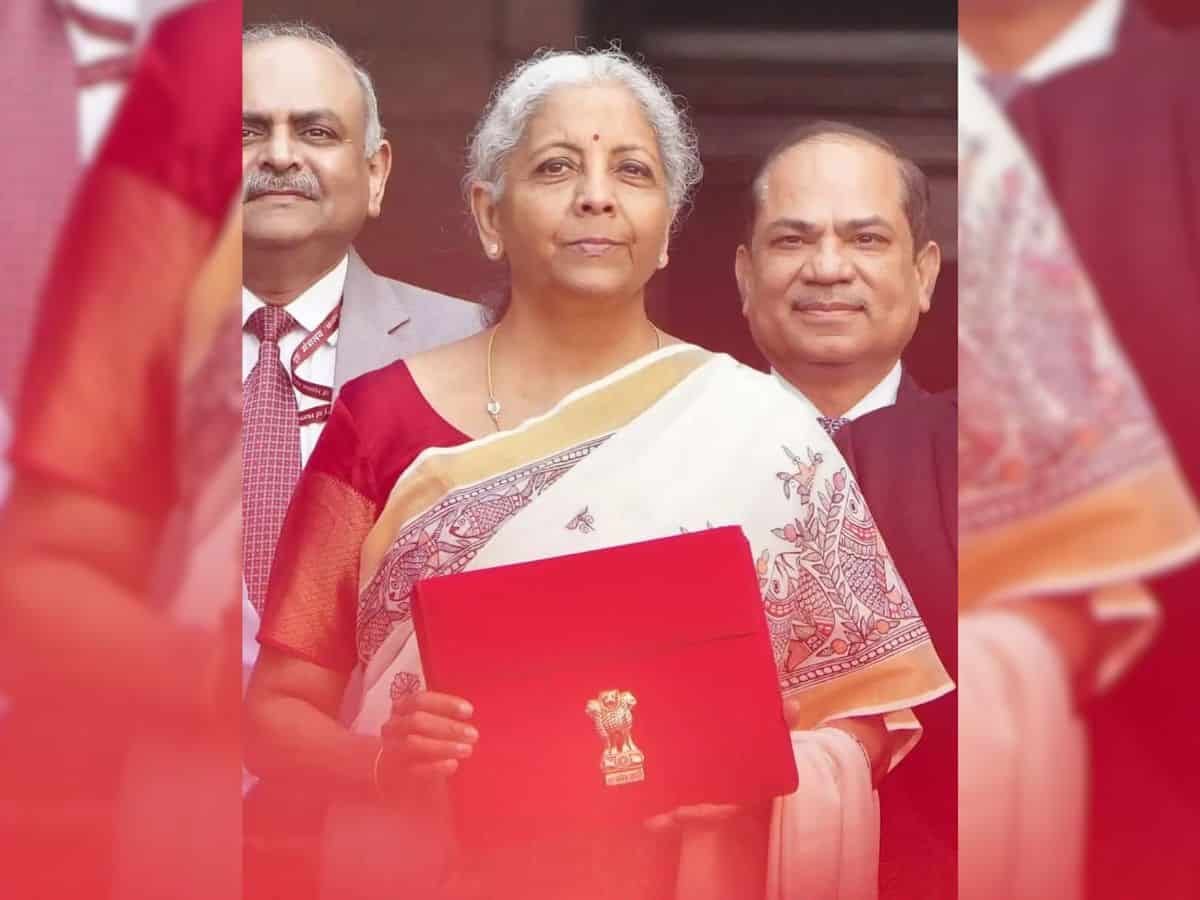
    Presenting the Budget 2025-26, Finance Minister Nirmala Sitaraman emphasised that it aims to initiate transformative reforms across six domains in which mining plays a significant role.

    “This also signals India’s major push towards energy transition and sustainable development, strengthening our global competitiveness over the next five years,” said Reddy.

    Hyderabad Institute of Excellence

    In line with the spirit of competitive federalism, the introduction of the State Mining Index is a transformative step that will enhance the professionalisation of state-mining departments, said the minister, adding that the announcement of a ‘Tailings Policy’ further bolsters the objectives of the National Critical Mineral Mission.

    The elimination of import duties on non-ferrous metal scraps and critical mineral scraps, including cobalt powder and lithium-ion battery (LIB) scraps, is a game-changer, he added.

    “The allocation of Rs 300 crore for coal and lignite gasification will provide pathways to lower emissions, carbon capture and Hydrogen production,” the minister said.

    MS Creative SchoolMS Creative School

    From being a corruption-laden and litigation-ridden sector prior to 2014, today India’s mining sector is aspiring to be a global player in sustainable mining and critical mineral value chain.

    The series of reforms in the coal and mining sector will drive production and innovation at home and at the same time position India as a key player in the global minerals market.

    Building on the series of tax relief measures for the mining sector of last year’s Budget, particularly concerning critical minerals, this year’s budget also introduces a range of progressive tax proposals.

    These measures will significantly enhance the competitiveness of the entire mining sector, especially as India begins to solidify its position in the critical mineral industry.

    India’s mining sector is aspiring to be a global player in sustainable mining and critical mineral value chains.

    “As we strive to achieve the goal of Net Zero emissions by 2070 and lead the global energy transition race, the mining sector will play a critical role in securing the critical minerals required for this transformation,” said Reddy.

  • Union govt to receive Rs 2.56 lakh cr as dividend from RBI, PSBs in FY26

    Union govt to receive Rs 2.56 lakh cr as dividend from RBI, PSBs in FY26

    New Delhi: The government on Saturday projected a dividend income of Rs 2.56 lakh crore from the Reserve Bank and public sector financial institutions in FY2025-25, as per the Budget documents.

    In the current financial year, receipts from dividends/surplus of RBI, nationalised banks and financial institutions are estimated at Rs 2.34 lakh crore, about Rs 1,410 crore higher than the previous estimates.

    The documents stated that the total central government’s receipts from ‘dividends from public sector enterprises and other investments’ would be Rs 3.25 lakh crore, up from Rs 2.89 lakh crore.

    Hyderabad Institute of Excellence

    In her Budget speech, Finance Minister Nirmala Sitharaman said the total receipts other than borrowings and the total expenditure are estimated at Rs 34.96 lakh crore and Rs 50.65 lakh crore, respectively.

    The net tax receipts are estimated at Rs 28.37 lakh crore.

    The Centre’s fiscal deficit is estimated at 4.4 per cent of GDP during the next financial year.

    MS Creative SchoolMS Creative School

    To finance the fiscal deficit, the net market borrowings from dated securities are estimated at Rs 11.54 lakh crore during 2024-25. The balance financing is expected to come from small savings and other sources.

    The gross market borrowings are estimated at Rs 14.82 lakh crore.

    Sitharaman also announced that the government’s endeavour will be to keep the fiscal deficit each year such that the Central government debt remains on a declining path as a percentage of the GDP.

  • No tax payable upto Rs 12L, new slabs introduced

    No tax payable upto Rs 12L, new slabs introduced

    New Delhi: The Budget 2025-26 gave relief to the middle class with regard to tax incidence and rejigged slabs.

    Sitharaman announced that annual income of up to Rs 12 lakh will be exempt from I-T under the new income tax regime. For salaried taxpayers, this income threshold will be Rs 12.75 lakh after taking into account standard deduction.

    A taxpayer in the new regime with an income of Rs 12 lakh will get a benefit of Rs 80,000 in tax. A person having an income of Rs 18 lakh will get a benefit of Rs 70,000 in tax.

    Hyderabad Institute of Excellence

    New Tax Slabs

    Income Levels Tax Slabs
    Rs 0-4 lakh NIL
    Rs 4-8 lakh 5 percent
    Rs 8-12 lakh 10 percent
    Rs 12-16 lakh 16 percent
    16-20 lakh 20 percent
    Rs 20-24 lakh 25 percent
    Above 24 lakh 30 percent

    A person with an income of Rs 25 lakh gets a benefit of Rs 1.10 lakh.

    “The new structure will substantially reduce the taxes of the middle class and leave more money in their hands, boosting household consumption, savings and investment,” Sitharaman said in her Budget speech.

    The new income tax regime offers lower tax rates and only a standard deduction of Rs 75,000 and a Rs 15,000 deduction for family pension.

    MS Creative SchoolMS Creative School

    However, the Budget has not made any changes in tax slabs under the old income tax regime, which includes a host of tax exemptions and deductions.

    The finance minister Nirmala Sitharaman also said that the government will introduce a new Income Tax Bill next week.

    The new Income Tax Code will be announced next week, and the I-T Department will “trust first, scrutinise later”, the Finance Minister said while presenting the Budget 2025-26.

    “Transformative tax reforms” promised

    The finance minister unveiled “transformative” tax reforms that ranged from a simpler income tax law to a higher TCS threshold for remittances and income tax benefits for the middle class.

    Sitharaman in the 2025-26 Budget promised to bring a simpler, less voluminous new law to replace six decades-old law governing income tax, saying it will have the spirit of “Nyay” (justice) and will work on the principle of “trust first, scrutinize later”.

    She also extended the time limit to 4 years for individuals filing updated tax returns. Updated returns are filed by taxpayers who had omitted to report their correct income. Currently, such returns can be filed within two years of the relevant assessment year.

    Nearly 90 lakh taxpayers have voluntarily updated their incomes by paying additional tax.

    Sitharaman in her Budget speech said the objectives of her taxation proposal are reforms in Personal Income Tax with special focus on middle class, rationalization of TDS/TCS for easing difficulties and voluntary compliance.

    The Budget increased the threshold for tax deduction at source for better clarity and uniformity.

    TCS, TDS and more

    In the FY26 Budget, the limit for TDS deduction on interest for senior citizens has been doubled to Rs 1 lakh from the present Rs 50,000.

    Similarly, the annual limit of Rs 2.40 lakh for TDS on rent is being increased to Rs 6 lakh. This will reduce the number of transactions liable to TDS, thus benefitting small tax payers receiving small payments, Sitharaman said.

    The threshold to collect tax at source (TCS) on remittances under RBI’s Liberalized Remittance Scheme (LRS) too has been increased from Rs 7 lakh to Rs 10 lakh.

    The TCS on remittances for education purposes, where such remittance is out of a loan taken from a specified financial institution, has been exempted.

  • Hopes running high of tax cut as Sitharaman presents record 8th budget

    Hopes running high of tax cut as Sitharaman presents record 8th budget

    New Delhi: A cut or tweak in income tax rates/slabs to ease the burden of middle class struggling with high prices and stagnant wage growth is widely expected in Finance Minister Nirmala Sitharaman’s record setting eighth consecutive Budget.

    The Budget for the fiscal year starting April 1 is expected to contain measures to shore up weakening economic growth while being fiscally prudent. It is likely to focus on steps to boost consumption while sticking to the roadmap of narrowing the fiscal deficit.

    Expectations of relief on income tax, particularly for lower middle class, is high after Prime Minister Narendra Modi invoked goddess of wealth for elevating poor and middle class.

    Hyderabad Institute of Excellence“ width=

    “I pray to Goddess Lakshmi that the poor and the middle-class sections in the country are blessed by her,” Modi said on Friday while speaking to reporters outside Parliament before the start of the Budget session.

    His government’s first full-year budget in the third term will be presented against the backdrop of geopolitical uncertainties and an economic growth rate slowing to four year low, with new US President Donald Trump threatening tariffs against countries like India.

    Analysts and experts expect some tax rationalisation, export push, better implementation of capital spending plans and clear roadmap on structural reforms. They also see some expansion in the production-linked incentives, and increased allocation to some welfare schemes while continuing focus on infrastructure creation/upgrade.

    Also, tariff cuts to encourage local manufacturing are expected.

    Increased allocations to boost job creation and skills, lower customs duties on intermediaries and increase in agriculture investments are also high on the list of expectations. Measures for accelerating domestic demand and private consumption are also expected.

    They all agree on one thing – the government will continue on the path of fiscal consolidation, with a projected fiscal deficit of 4.5 per cent of GDP for FY26 (April 2025 to March 2026) against 4.8 per cent in the current fiscal ending March 31.

    Rumki Majumdar, Economist, Deloitte India, said the first quarter data points to a notable increase in private consumption and a modest improvement in investment activity. “We expect these two to be the fundamental growth pillars as global uncertainties weigh on net exports.”

    “With the conclusion of the Indian elections, we anticipate that government spending will pick up, supporting growth in the coming quarters of FY2025,” she said, adding the government is likely to continue to prioritise and enhance efforts towards skill development and employment generation.

    Also, the focus may be on long-term solutions aimed at strengthening the agricultural value chain, incentivising production and addressing structural supply-side issues that add to the delivery cost to address sticky inflation.

    “Following the US elections, the risk of volatility in global trade has increased, with potential measures, such as higher import tariffs and tax cuts to promote manufacturing in the US,” she said, adding that the government may look to implement a range of measures to enhance the competitiveness of Indian products on the global stage.

    These may include tariff rationalisation, duty exemptions and remission schemes, which would help lower the cost of Indian exports. Additionally, the government is likely to focus on simplifying export compliance procedures to reduce barriers and enhance exporters’ efficiency.

    EY expects increasing capital expenditure growth by at least 20 per cent to drive economic activity, particularly in sectors like manufacturing and infrastructure.

    DK Srivastava, Chief Policy Advisor, EY India, said, “As we navigate a challenging economic landscape, the upcoming budget must balance fiscal prudence with growth-oriented measures. Increasing capital expenditure and putting more disposable income in the hands of consumers, particularly urban consumers, will be pivotal to uplifting growth in domestic demand”.

    While there may be challenges, such as global economic headwinds and pressure on the Indian rupee, some measures in the budget are seen to help India sustain its growth trajectory.

    Revisiting tariff structures to support domestic manufacturing and reduce dependency on imports while helping manage exchange rate pressures are likely.

    Government infrastructure spending has been crucial to India’s strong growth in recent years, even though the Rs 11.11 lakh crore outlay for the current fiscal will likely fall short by one-fifth.

    “We expect the central government to prioritise macro stability by sticking with the fiscal consolidation path and steer clear of populist measures,” Radhika Rao, Senior Economist at DBS said.

    This will help keep additional spending and incremental inflationary impact in check. Instead, moves might include fine-tuning existing measures and focus on medium-term demand boost.

    This budget is also set against the backdrop of slower domestic consumption and activity, which is likely to be in focus in the announcements. Emphasis will be on employment and skilling with a focus on boosting incomes, support labour intensive sectors, draw in private sector players, and defend against a tougher geopolitical environment.


  • Centre expands Aadhaar authentication to boost good governance, ease of living

    Centre expands Aadhaar authentication to boost good governance, ease of living

    New Delhi: In a bid to help improve transparency and inclusivity in the decision-making process, the Centre on Friday expanded Aadhaar authentication to government and private entities for providing various services in the public interest boosting innovation, knowledge and public service enhancement.

    The IT Ministry notified the Aadhaar Authentication for Good Governance (Social Welfare, Innovation, Knowledge) Amendment Rules, 2025 under the Aadhaar (Targeted Delivery of Financial and Other Subsidies, Benefits and Services) Act, 2016.

    According to the ministry, the amendment seeks to enhance the scope and utility of Aadhaar authentication to further promote good governance, social welfare, innovation, and knowledge dissemination allowing the usage of Aadhaar for improving service delivery and, thereby, enhancing ease of living for residents and enabling better access to various services for them.

    Hyderabad Institute of Excellence“ width=

    The amendment would help people seamlessly avail the services of e-commerce, travel, tourism, hospitality and health sector etc. being provided by entities other than government entities also.

    The amendment enables both government and non-government entities to avail Aadhaar authentication service for providing various services in the public interest for related specific purposes like enablement of innovation, spread of knowledge, promoting ease of living of residents and enabling better access to services for them.

    “This will help both the service providers as well as the service seekers to have trusted transactions,” according to the MeitY.

    Any entity seeking Aadhaar authentication will be required to apply with the details of intended requirements to the concerned ministry or department of the Central or the State government in a format being made available on a portal for this purpose.

    “The applications will be examined by UIDAI and MeitY will issue the approval based on the recommendation of UIDAI. The concerned ministry or department of the Central or State Government will notify the entity for Aadhaar usage after receiving confirmation from MeitY,” the ministry informed.

  • Economic Survey likely to project 6.3-6.8 pc GDP growth in FY’26

    Economic Survey likely to project 6.3-6.8 pc GDP growth in FY’26

    New Delhi: The Economic Survey is likely to project a 6.3-6.8 per cent GDP growth for the next fiscal year, sources said.

    The Survey 2024-25, authored by Chief Economic Advisor V Anantha Nageshwaran and his team, will be tabled in Parliament this afternoon.

    India’s GDP is projected to grow at a 4-year low pace of 6.4 percent in the current fiscal on weak manufacturing and investments, as per estimates of the National Statistics office.

    Hyderabad Institute of Excellence“ width=Hyderabad Institute of Excellence“ width=

    This is lower than the growth projected in last year’s Economic Survey of 6.5-7 percent and the Reserve Bank of India‘s 6.6 percent estimate.

    The Economic Survey, tabled every year a day ahead of the Union Budget, gives a broad roundup on macroeconomic performance of the ongoing fiscal and a glimpse of how the next fiscal is likely to pan out.

  • Stock market opens higher ahead of Eco Survey, Union Budget

    Stock market opens higher ahead of Eco Survey, Union Budget

    Mumbai: As the nation gears up for the Economic Survey and the Union Budget 2025-26, the domestic benchmark indices on Friday opened higher. Optimism was seen in the air as investors looked for potential catalysts in the upcoming Budget.

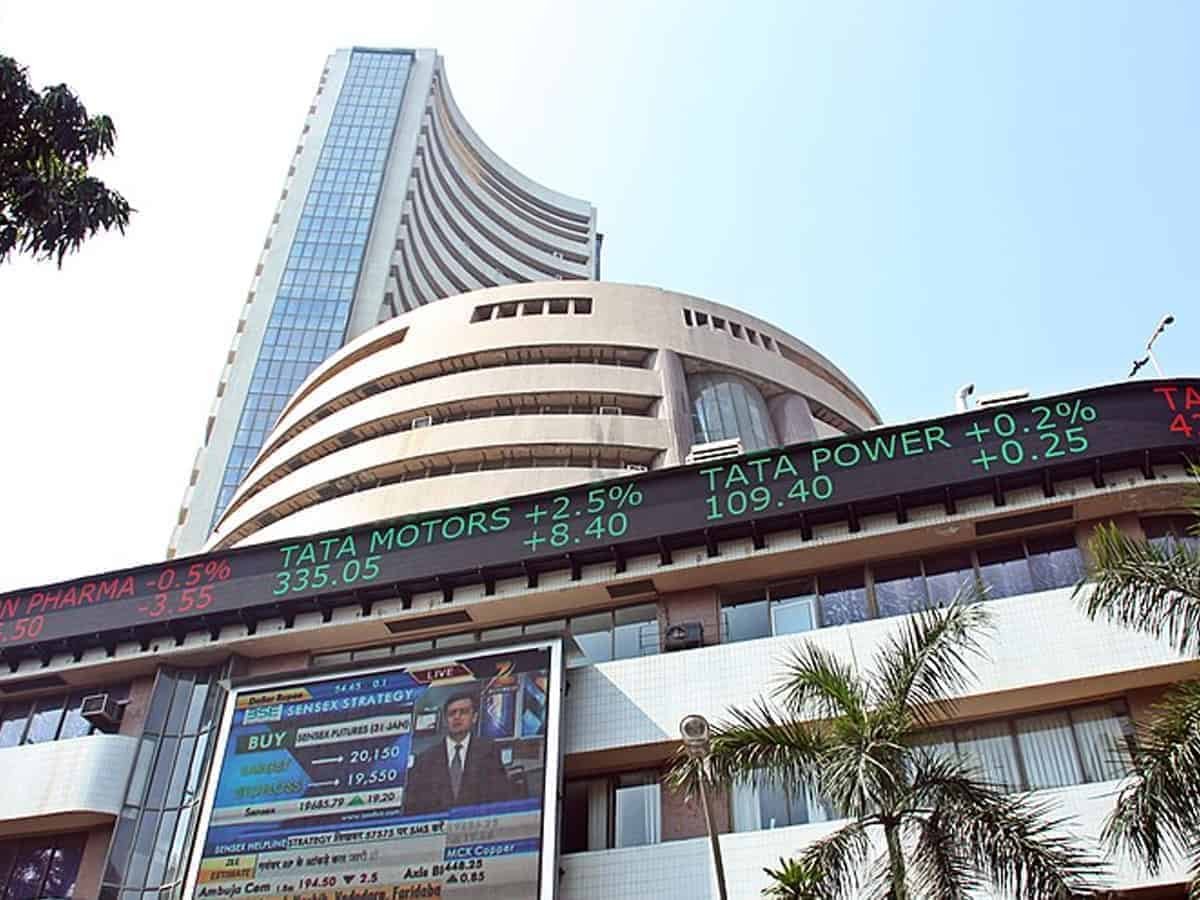
    While the Sensex was up almost 184 points or 0.24 per cent at 76,935 around 9.31 a.m., the Nifty gained 74 points or 0.32 per cent at 23,323 in early trade.

    Sensex and Nifty have been on a three-day winning streak this week despite foreign institutional investors (FIIs) unwinding long positions.

    Hyderabad Institute of Excellence“ width=

    Larsen & Toubro, Infosys, Titan, Tata Consumer Products and Maruti Suzuki India added to the Nifty 50 index, while Bharti Airtel, ICICI Bank, HDFC Bank, NTPC and Coal India weighed on the Nifty 50 index.

    On the NSE, six sectors advanced and six declined out of 12. The NSE Nifty Metal declined the most, and the NSE Nifty IT advanced the most.

    The BSE Midcap and Smallcap indices were trading 0.31 per cent or 0.295 higher, respectively.

    According to market watchers, some volatility is expected amid the Union Budget announcements, and key sectors to watch out for include railways, infrastructure, fertilisers, textiles and electric vehicles (EV), etc.

    Akshay Chinchalkar, Head of Research, Axis Securities, said that Nifty had a volatile outing on Thursday as a slump post noon saw a recovery in the final hour of trading.

    “What’s notable is that the December close was 23,644, so if we aren’t able to close above this level today, it will be the first time since September 2001 that the Nifty would have fallen for four successive months,” he mentioned.

    The FIIs remained net sellers on January 30, as they sold equities worth Rs 4,582.95 crore, while domestic institutional investors purchased equities worth Rs 2,165.89 crore on the same day.

    Given the prevailing volatility, traders are advised to exercise caution, implement strict stop-loss strategies, and avoid carrying positions overnight while maintaining strict stop-losses, as high volatility is expected ahead of the Union Budget 2025, said Hardik Matalia of Choice Broking.

    The Economic Survey is prepared under the supervision of the Chief Economic Advisor V. Anantha Nageswaran, and includes insights into the economy prepared by the economic division of the Department of Economic Affairs in the Ministry of Finance.

    The Union Budget will be presented by Finance Minister Nirmala Sitharaman on February 1.

  • President Trump threatens BRICS with 100 pc tariffs

    President Trump threatens BRICS with 100 pc tariffs

    New Delhi: Expressing his stance against de-dollarisation vehemently on Friday, Donald Trump warned BRICS nations and threatened them with 100 percent tariffs on their exports if they try to replace the US dollar as the main currency in global trade.

    President Trump has repeatedly said that BRICS nations must maintain the US dollar‘s role in global trade or face economic consequences, said an NDTV report.

    Friday’s warning is a repeat of the one that he made on November 30, weeks after winning the 2024 election, the report stated.

    Hyderabad Institute of Excellence“ width=

    In a post President Trump wrote, “The idea that the BRICS Countries are trying to move away from the Dollar, while we stand by and watch, is OVER.”

    “We are going to require a commitment from these seemingly hostile Countries that they will neither create a new BRICS Currency, nor back any other Currency to replace the mighty US Dollar or, they will face 100 per cent tariffs, and should expect to say goodbye to selling into the wonderful US Economy,” said NDTV, quoting a post by the US President.

    “They can go find another sucker Nation. There is no chance that BRICS will replace the US Dollar in International Trade, or anywhere else, and any Country that tries should say hello to Tariffs, and goodbye to America,” Trump wrote in his post on Friday.

    For years, the BRICS group of nations have been mulling ways to reduce dependence on the American dollar.

    Even though the grouping does not have a common currency as of now, its member nations that include Brazil, Russia, India, China, and South Africa have been of late promoting trade in their local currencies, the report said.

    Significantly, Russia called for de-dollarisation at the 15th BRICS Summit in 2023 and the move gained momentum at the June 2024 BRICS foreign ministers’ meeting in Russia, where member states advocated for using local currencies in bilateral and multilateral trade, the report said.

    Despite de-dollarisation bids and America’s push against it, the fact remains that the US dollar remains the world’s dominant reserve currency and President Trump intends to ensure that, even if it means arm-twisting nations by using the threat of crippling tariffs.

  • Indian automotive sector may see 70 pc workforce expansion in H2 FY25

    Indian automotive sector may see 70 pc workforce expansion in H2 FY25

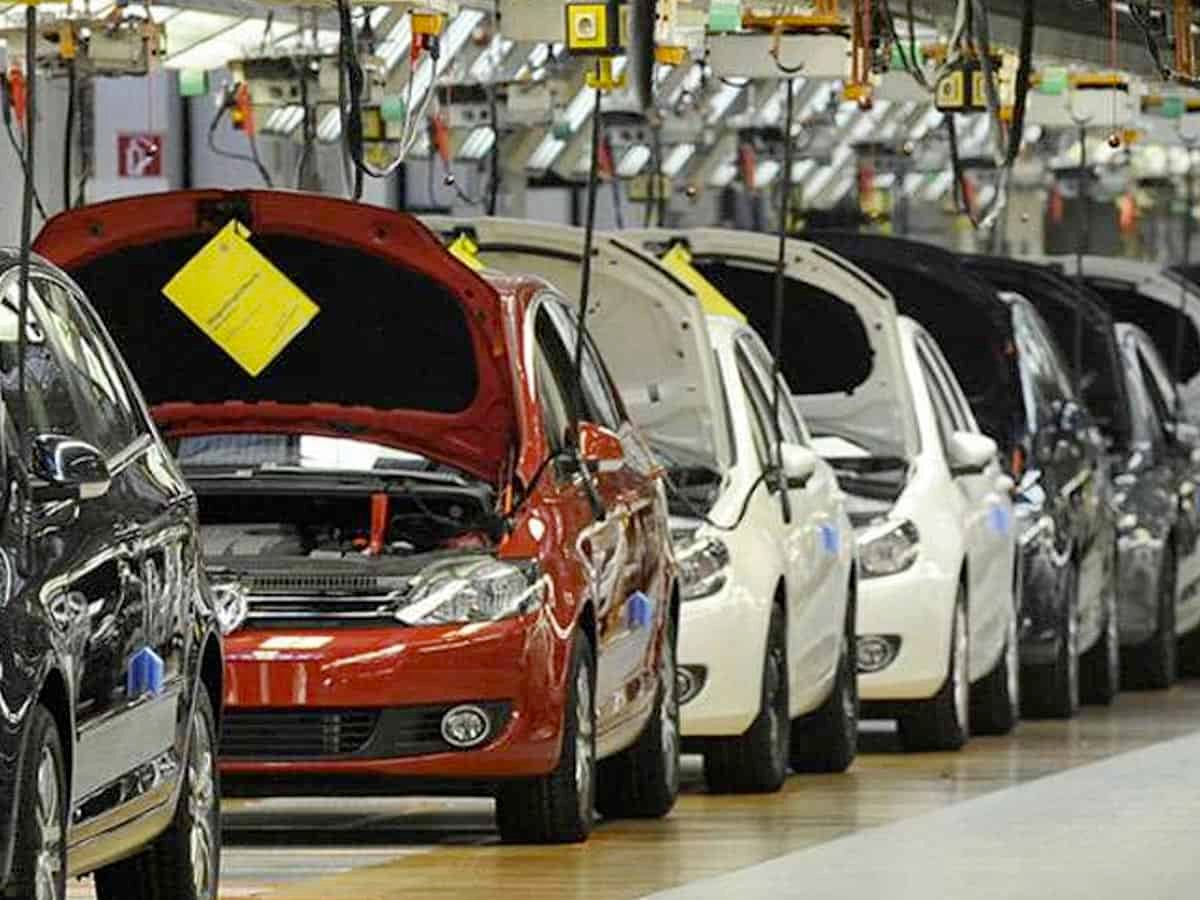
    Bengaluru: The Indian automotive sector, which contributes approximately 7 per cent to the country’s GDP, is likely to see 70 percent workforce expansion in the second half of FY25, a report showed on Thursday.

    The automotive sector is experiencing a net employment change of 8.5 percent, with hiring momentum fuelled by growing consumer interest in electric vehicles (EVs), premium models, and high-tech, connected automobiles, said the report by TeamLease Services, India’s premier staffing solutions company.

    This surge in demand is compelling companies to ramp up EV production and integrate advanced technologies, creating a robust demand for specialised roles such as robotics experts, software engineers, and supply chain managers.

    Hyderabad Institute of Excellence“ width=

    A significant 70 per cent of employers in the sector plan to expand their workforce, showcasing the industry’s growth trajectory and its pivotal role in the Indian economy.

    The geographical distribution of hiring trends reveals that Chennai (63 per cent), Mumbai (62 per cent), and Delhi (61 per cent) are the leading cities for workforce expansion in existing roles.

    For new job opportunities, Gurgaon took the lead, with 19 per cent of employers indicating expansion, followed closely by Mumbai, Indore, and Coimbatore, each at 15 per cent, according to the report.

    “The automotive sector is witnessing a shift as it adapts to changing consumer preferences and technological advancements. The focus on EVs, connected vehicles, and premium models has redefined the industry’s growth narrative and talent requirements,” said Subburathinam P, Chief Operating Officer, TeamLease Services.

    Companies are investing in specialized skill sets like IoT, AI and Analytics while optimizing existing resources to stay competitive. This dynamic interplay between innovation and workforce strategy positions the sector as a key driver of India’s economic and employment growth, he mentioned.

    By function, engineering roles dominate hiring intent at 66 per cent, followed by sales (60 per cent) and information and communication technology (ICT) roles (56 per cent).

    A significant 82 per cent of employers in the sector are extending working hours to meet seasonal demand rather than solely expanding their workforce.

    This approach reflects a conscious effort to balance productivity with cost efficiency, particularly in a sector marked by rapid technological advancements and shifting market dynamics, said the report.

  • L&T’s Q3 profit dips despite 53 pc surge in orders

    L&T’s Q3 profit dips despite 53 pc surge in orders

    Mumbai: Larsen & Toubro (L&T) reported over 1 per cent decline in net profit for the third quarter (Q3) of the financial year 2024-25 at Rs 3,358.84 crore, excluding non-controlling interests, from Rs 3,395.29 crore reported in the previous quarter (Q2 FY25).

    L&T’s revenue rose by 17 per cent at Rs 64,668 crore in Q3FY25, up from Rs 55,128 crore in Q3FY24, according to its stock exchange filing.

    However, despite this growth, the company fell short of market expectations. Analysts attributed the decline to a contraction in L&T’s operating margins.

    Hyderabad Institute of Excellence“ width=

    The company’s EBITDA margin declined by 70 basis points to 9.7 per cent in Q3FY25 from 10.4 percent a year ago.

    This decline was primarily due to a sharp rise in costs. The cost of raw materials and components surged by 50 per cent, while expenses for construction materials went up by 16 per cent.

    L&T’s infrastructure projects segment had been facing margin pressure for several quarters.

    The company had secured infrastructure contracts at highly competitive prices following the COVID-19 pandemic and the geopolitical crisis caused by the Russia-Ukraine conflict in 2022-23.

    The Energy Projects segment also witnessed a decline in operating margins. The segment’s EBITDA margin fell to 8.3 per cent in Q3FY25, down from 9.7 per cent in the same period last year.

    Meanwhile, L&T’s IT & Technology Services segment reported a revenue increase of 7.7 per cent at Rs 12,061 crore for the December quarter.

    Despite the growth in revenue, profit from this segment fell 7 per cent to Rs 1,833.8 crore.

    The EBITDA margin for the segment dropped to 18.7 per cent, compared to 20.7 per cent a year ago.

    L&T remains optimistic about future performance in this segment, expecting stronger revenue growth due to recent deal wins and positive sentiment towards discretionary spending.

    International billing made up 93 per cent of the total customer revenue in this segment.

    The company’s consolidated order book stood at Rs 5,64,223 crore at the end of December 2024, with 42 per cent of it coming from international markets. This was a significant jump from Rs 4,69,807 crore recorded in the previous year.