Category: BUSINESS

  • Budget math looks realistic, economic growth to pick up pace: Morgan Stanley

    Budget math looks realistic, economic growth to pick up pace: Morgan Stanley

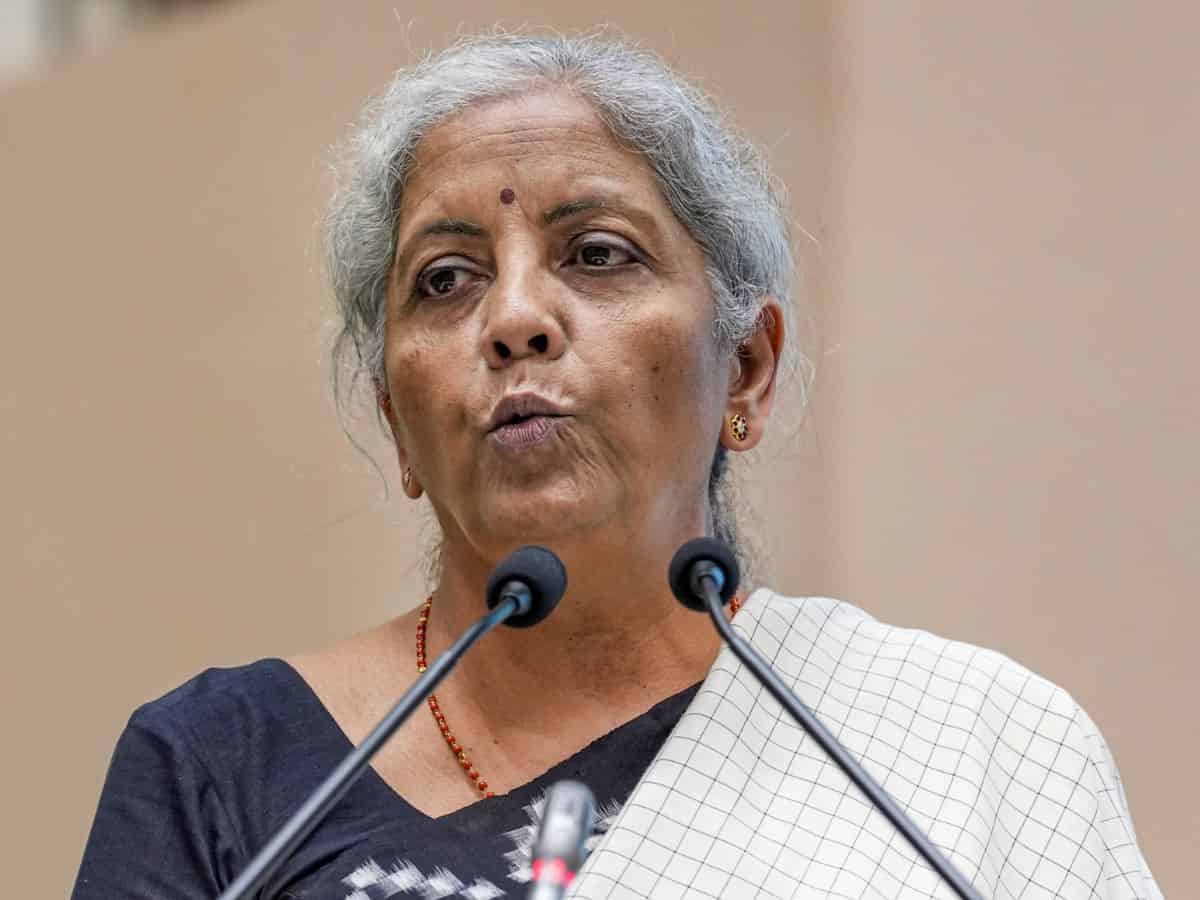
    New Delhi: The Union Budget has managed to meet the goals of boosting consumption though tax cuts, increasing capex through transfers to states, and maintaining the path of fiscal consolidation which is expected to lead to a recovery in the economic growth rate with macro stability in a comfortable range, according to a Morgan Stanley report released on Monday.

    The report said that both fiscal and monetary policy are pivoting to support growth, which is in line with “our view of a cyclical recovery in growth”.

    “The Budget math looks realistic, with nominal GDP assumed at 10.1 per cent for F2026 and gross tax revenue growth of 10.8 per cent. We will remain watchful of income tax collection growth, which the government expects to be 14.4 per cent, given the income tax cuts and execution of capex spending to meet the targets,” the report stated.

    Hyderabad Institute of Excellence

    The report pointed out that the Budget has balanced needs to support growth and continue with fiscal consolidation. As such, the Budget targets a lower fiscal deficit of 4.4 per cent of GDP for F2026 even as it reduced income taxes to support consumption, especially for middle income tax payers, and expanded capex growth, mainly through a boost in grants to states for capex creation.

    “Indeed, as per the Finance Minister, direct tax changes should lead to a 1.0 per cent revenue loss of Rs 1 lakh crore (0.3 per cent of GDP), which should help support consumption,” the Morgan Stanley report said.

    On the spending side, the mix remains tilted to capex, with effective capex (direct capex plus grants in aid of creation of capital assets) seen growing at 17.4 per cent in F2026BE vs. 5.3 per cent of F2025RE.

    MS Creative SchoolMS Creative School

    “We expect the Budget to support growth recovery through measures to promote consumption and increase effective capex spending, which will likely lead to a more broad-based recovery, while at the same time continued consolidation should help macro stability remain in check,” the report observed.

    The simultaneous boost to consumption and capex has to be sweet for equities, especially in the context of continuing and better-than-anticipated fiscal consolidation (projected primary deficit: 0.8 per cent).

    The plethora of announcements around easing of India’s tax regime, including permanent establishment rules, GIFT city clarifications, extension of exemptions to sovereign funds, and changes to tax deduction and collection at source could improve FDI and private investment sentiment, according to the report.

    “A new tax code is coming this week, as per the Budget, which could reveal a more liberal tax environment. We are overweight Financials, Consumer Discretionary, Industrials and Technology, and underweight other sectors,” the report added.

  • Govt may introduce new income tax bill on Feb 6

    Govt may introduce new income tax bill on Feb 6

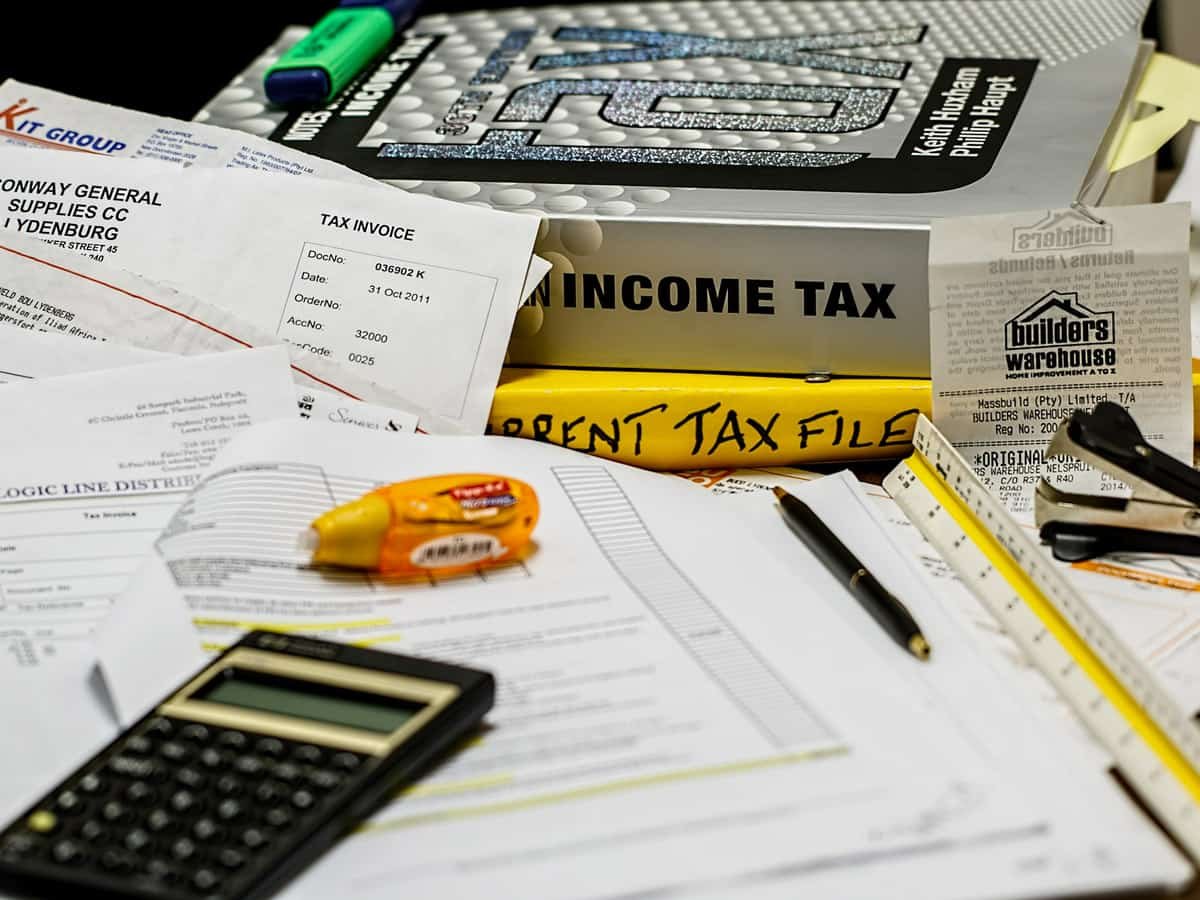
    New Delhi: After the revision in tax slabs in the Union Budget 2025-26 to leave ‘enough money in the hands’ of taxpayers, the government is likely to unveil the much-anticipated draft of the new Income Tax Bill on February 6.

    The proposed bill aims to bring sweeping reforms to the current Income Tax Act and could potentially see up to 3 lakh words slashed from the near 6 lakh words at present.

    According to a report in NDTV profit on Monday, citing people in the know, the draft bill is likely to provide directions to widen the tax net, given the contraction in the tax base following the new exemption limits.

    Hyderabad Institute of Excellence

    Union Finance Minister Nirmala Sitharaman, in her post-Budget press conference, said about 1 crore taxpayers will be directly benefitted from the extended rebates and exemptions, under the New Tax regime.

    One crore people will benefit due to the increased tax exemption limit from Rs 7 lakh to Rs 12 lakh. They will have to pay no income tax, she mentioned.

    As per the new slabs, proposed in Budget 2025-26, those with an income of up to Rs 12 lakh will have to pay no income tax, marking a decisive change in the tax structure.

    MS Creative SchoolMS Creative School

    Drawing a comparison between the prevailing tax rates and the proposed new ones in FY25-26, she said that those who are earning Rs 8 lakh will have Rs 30,000 more money into their pockets because their tax liability has been brought to zero.

    There will be no income tax payable up to income of Rs 12 lakh (average income of Rs 1 lakh per month other than special rate income such as capital gains) under the new regime. This limit will be Rs 12.75 lakh for salaried taxpayers, due to the standard deduction of Rs 75,000.

    Tax rebate is being provided in addition to the benefit due to slab rate reduction in such a manner that there is no tax payable by them. The maximum rebate available is Rs 60,000 which is there for a taxpayer having income of Rs 12 lakh on which tax is payable as per the new slabs.

  • Government’s consumption growth estimated to improve in FY25

    Government’s consumption growth estimated to improve in FY25

    New Delhi: The government consumption growth is estimated to improve in FY25 given the increase in the revenue expenditures of both state and union governments, while private consumption growth is expected to be driven by rural demand, easing inflation and a favourable base, according to a report on Sunday.

    Exports are also expected to witness strong growth supported by robust growth in services exports, said PwC’s ‘Budget 2025–26: Fostering India’s Inclusive Growth’ report, which offers detailed insights into the budget highlights, economic outlook and key tax and regulatory proposals that will shape India’s economic trajectory in the coming years.

    As per the first advance estimates, India’s economic growth is expected to moderate to 6.4 per cent in financial year (FY) 2025, compared to 8.2 per cent growth in FY24, mainly due to slowdown in urban consumption, high food inflation, slow growth in capital formation and global headwinds.

    Hyderabad Institute of Excellence

    However, India is expected to remain the world’s fastest growing in 2025, supported by a strong domestic market, rising working age population and strong macroeconomic fundamentals, said the report.

    The government estimates that it will better its fiscal deficit target of 4.9 per cent and pegs it at 4.8 per cent for financial year (FY) 2025.

    It has also budgeted a fiscal deficit of 4.4 per cent for FY26, thereby keeping its commitment to attain a lower than 4.5 per cent deficit by FY26.

    MS Creative SchoolMS Creative School

    The economic survey projects growth in the range of 6.3 per cent to 6.8 per cent in FY26.

    “Inflation is expected to moderate to an average of 4.5 per cent in FY26, aided by a favourable food inflation with good harvest and normal monsoon expected and softening commodity prices,” said the report.

    The exchange rate, which has been under pressure, should improve, as the volatility in Foreign Portfolio Investor (FPI) flows subsides and crude price softening begins to lower the prices of the Indian crude import basket, it added.

  • Budget is by the people, for the people: FM Nirmala Sitharaman

    Budget is by the people, for the people: FM Nirmala Sitharaman

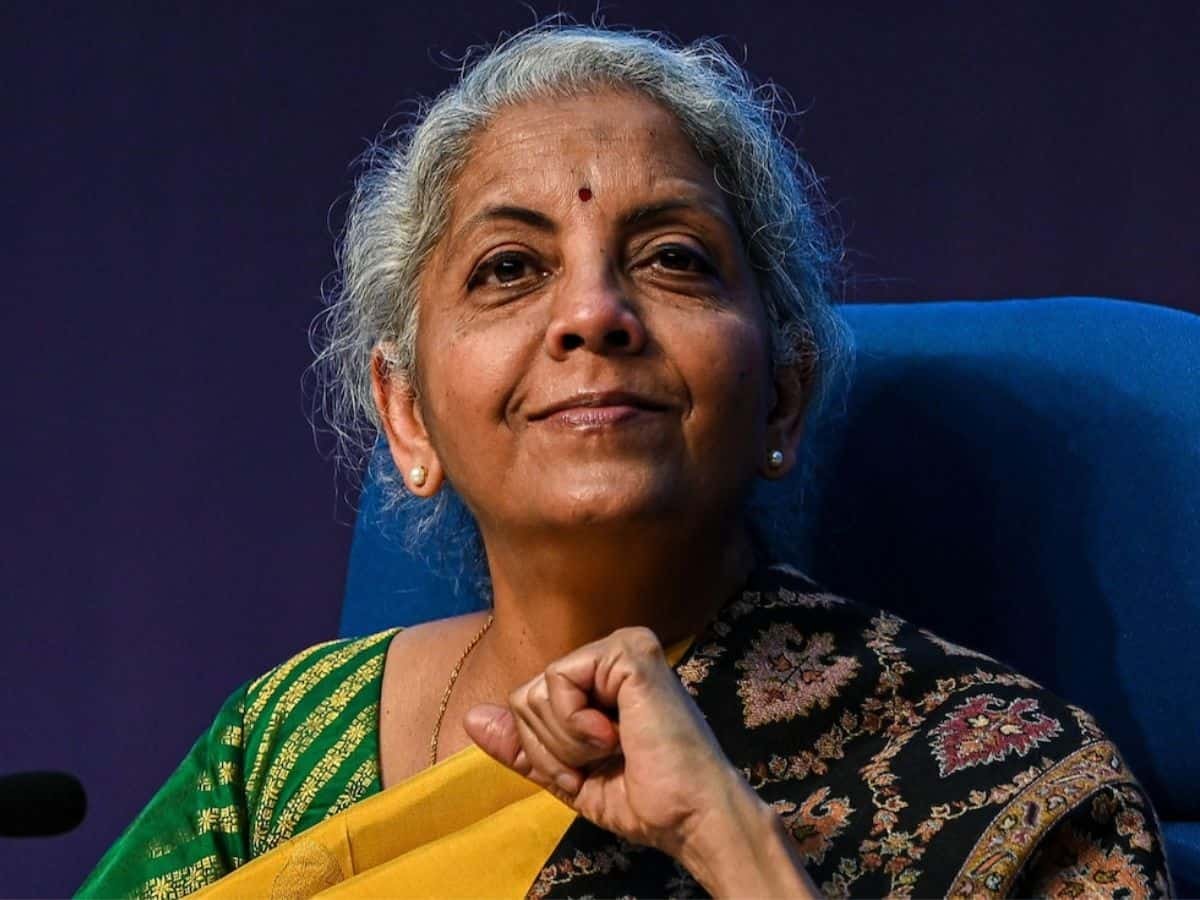
    New Delhi: Paraphrasing Abraham Lincoln, Finance Minister Nirmala Sitharaman on Sunday described the Union Budget as “by the people, for the people, of the people”, and said Prime Minister Narendra Modi was fully behind the idea to cut taxes but it took time to convince the bureaucrats.

    “We have heard the voice of middle class” who had been complaining about their aspirations not being met despite being honest taxpayers, she told PTI in an interview.

  • Lok Sabha gets Rs 903 crore, Rajya Sabha Rs 413 crore in Budget

    Lok Sabha gets Rs 903 crore, Rajya Sabha Rs 413 crore in Budget

    New Delhi: Lok Sabha has been allocated Rs 903 crore in the Union Budget, more than double the amount given to the Rajya Sabha.

    A sizeable allocation — Rs 558.81 crore of the total Rs 903 crore — has been assigned to the Lok Sabha Secretariat, which also includes Grants in Aid to the Sansad TV.

    Of the Rs 413 crore allocated to Rajya Sabha, Rs 2.52 crore have been assigned for salaries and allowances of the Chairman and Deputy Chairman in the Rajya Sabha Secretariat.

    Hyderabad Institute of ExcellenceHyderabad Institute of Excellence

    The budget for Rajya Sabha also has a separate allocation of Rs 3 crore for the salaries and allowances of Leader of the Opposition in Rajya Sabha and his secretariat. The budget has also allocated Rs 98.84 crore for members.

    For Lok Sabha, Rs 1.56 crore has been allocated for salaries and allowances of the Speaker and Deputy Speaker, and there is no separate provision for the office of the Leader of the Opposition.

    There was no Leader of the Opposition in the Lok Sabha for 10 years as no opposition party had the required numbers to be eligible for the post.

    MS Creative SchoolMS Creative School

    The Lok Sabha budget allocated Rs 338.79 crore for members. Lok Sabha has 543 members, while Rajya Sabha has 245.

  • Won’t accept ‘Oh Rupee is weakening!’: Nirmala Sitharaman

    Won’t accept ‘Oh Rupee is weakening!’: Nirmala Sitharaman

    New Delhi: Finance Minister Nirmala Sitharaman on Sunday rejected criticism over the slide of the Indian rupee, saying it has depreciated only against a strengthening US dollar but remained stable against all other currencies because of the strong macroeconomic fundamentals.

    In an interview with PTI, she said a 3 per cent depreciation in the rupee against the US dollar in past few months is a matter of concern as it makes imports costlier, but she rejected criticism that the local currency has seen all-round weakness.

    “I am concerned but I will not accept the criticism that ‘Oh Rupee is weakening!’ Our macroeconomic fundamentals are strong. Rupee wouldn’t be stable against all the currencies if the fundamentals were weak,” she said.

    Hyderabad Institute of Excellence

    The Indian rupee has been under pressure in the last few months but it continues to be the least volatile currency against the US dollar among its Asian and global peers. The reasons for the rupee hitting record lows almost on a daily basis against the US dollar range from widening trade deficit to a surge in the dollar index after the US Federal Reserve hinted at fewer rate cuts in 2025.

    The Reserve Bank has reportedly spent USD 77 billion from its foreign exchange reserves to defend the rupee from falling sharply in the spot market, taking India’s foreign exchange reserves down to USD USD 629.557 billion as on January 30, 2024, from USD 701.176 billion on October 4, 2024.

    “Rupee’s volatility is against the dollar. Rupee has behaved in a far more stable fashion than any other currency,” Sitharaman said.

    MS Creative SchoolMS Creative School

    Rupee volatility is noticeable as the dollar is strengthening.

    “RBI also has been looking at ways in which it will interfere in the market only to stabilise the need for avoiding huge volatility based reasons. So we are all closely watching the situation,” she said.

    She termed critics pointing to rupee volatility and depreciation as “a very quick argument”.

    “But in today’s dollar strengthening environment and in the new US administration, the rupee will have to be understood in its relationship with the dollar (and) the fluctuations which come as a result of that. Criticisms can come, but those criticisms will also have to go with a response with a bit more study,” she added.

  • Customs duties rationalised in Budget to strengthen India’s economy: FM Sitharaman

    Customs duties rationalised in Budget to strengthen India’s economy: FM Sitharaman

    New Delhi: The Centre has introduced customs duty rationalisation to ensure that the Indian economy becomes aatmanirbhar (self-reliant), Finance Minister Nirmala Sitharaman said in a post-budget interview with NDTV.

    Sitharaman was responding to NDTV Editor-in-Chief Sanjay Pugalia’s question on whether the budgetary announcement of reducing customs duty on many automobiles, which will benefit companies like Tesla and Harley Davidson, is a signal amid US President Donald Trump’s tariff announcements.

    “We are looking at our own economy. We are looking to strengthen the foundation of the Indian economy, to make it a manufacturing hub,” she said.

    Hyderabad Institute of Excellence

    The Finance Minister added that the announcement in the Union Budget of reducing customs duties aims at making cheap raw materials available for MSMEs, getting critical minerals and allowing Indian companies to import materials and export a finished product of high value.

    Tariffs on Harley Davidson bikes were reduced further ahead of Prime Minister Narendra Modi‘s proposed visit to the US. For motorcycles with an engine capacity not exceeding 1600 cc, the duty on CBUs (completely built units) has been slashed from 50 per cent to 40 per cent. For larger motorcycles with engine capacity exceeding 1600 cc, the reductions are higher.

    Though basic customs duty on the import of cars and other motor vehicles has also been reduced, it is not clear whether their effective duty rates will change.

    MS Creative SchoolMS Creative School

    The Finance Minister said the government has created a balance between strengthening the foundation of a ‘Viksit Bharat’ and equally focusing on key sectors like health, nutrition and education through welfare schemes.

    She also rejected criticism by the Opposition that the BJP-led Centre was only trying to woo voters in Bihar and Delhi through the announcements in the Union Budget.

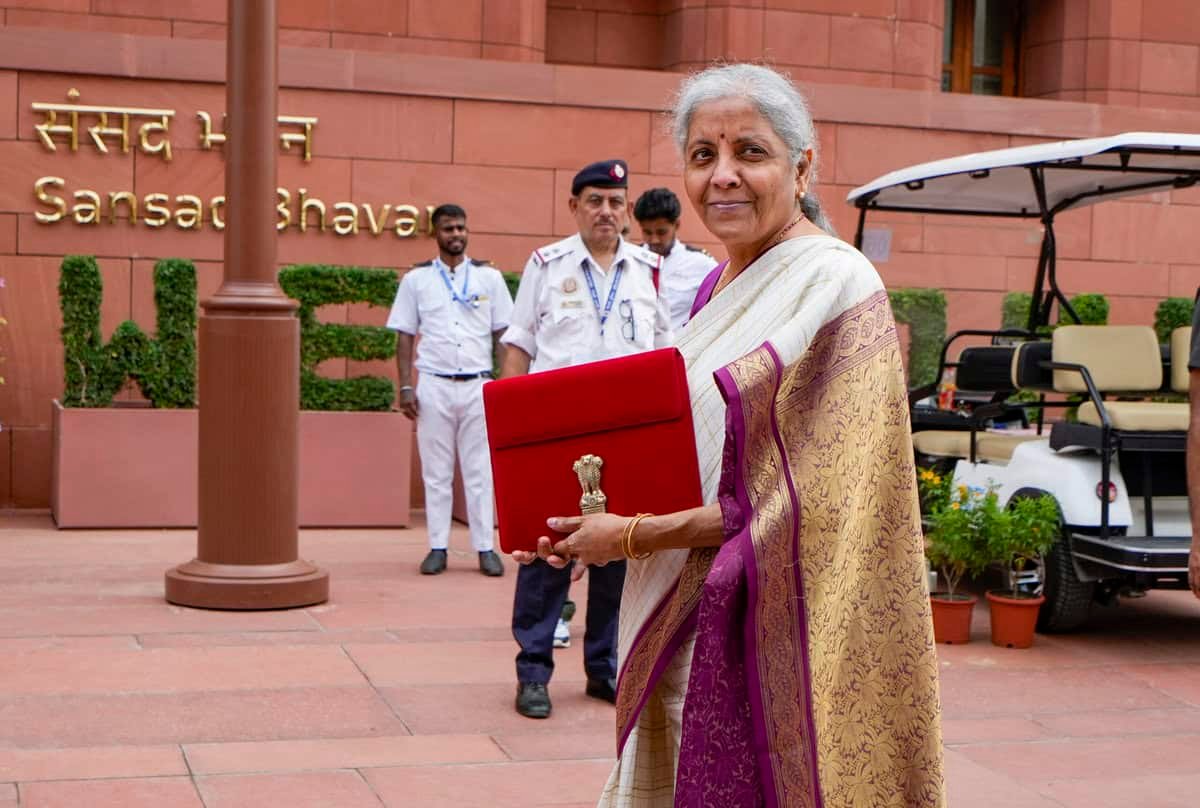
    Sitharaman presented the Union Budget 2025-26, which was her eighth consecutive presentation, on Saturday.

  • 3 CoEs to help India position itself as a global powerhouse in AI

    3 CoEs to help India position itself as a global powerhouse in AI

    New Delhi: With artificial intelligence (AI) becoming an essential tool for a tech powered economy, it is heartening to see the introduction of Centres of Excellence (COE) for Artificial Intelligence in education, industry leaders said on Sunday.

    Aligning with India’s broader vision to become a global AI hub, Finance Minister Nirmala Sitharaman has announced the creation of three Centres of Excellence (CoEs) in AI for education with a budget allocation of Rs 500 crore.

    “To position India as a leader in the global AI race, it is imperative to prioritise investment in STEM talent. We also have the digital infrastructure, and the talent pool required to cultivate a thriving startup ecosystem capable of propelling innovation,” said Aparna Iyer, CFO, Wipro Limited.

    Hyderabad Institute of Excellence

    To unleash this potential, it is also important to offer financial support and streamline the process of conducting business to bolster the startup community. The Fund of Funds for Startups (FFS) will provide the impetus to boost this ecosystem, she mentioned.

    According to Atul Soneja, Chief Operating Officer, Tech Mahindra, the Budget‘s forward-looking focus on deep-tech innovations like AI, global capability centres (GCCs), and future-ready talent underscores a strong commitment towards “Viksit Bharat.”

    “The other initiatives like Deeptech Fund of Funds and 10,000 fellowships for tech research, 5 National CoEs and a CoE for AI in Education, reiterate our commitment to developing an ecosystem for next-gen tech,” he noted.

    MS Creative SchoolMS Creative School

    According to the government, these new AI Centres of Excellence will work on advanced research, the development of AI learning tools, and foster collaboration between educational institutions and industries. The goal is to equip students with the skills they need to thrive in the future.

    Chocko Valliappa, Founder and CEO of Vee Technologies, said the Finance Minister’s announcement for setting up a Centre for Excellence in AI for the education sector deserves to be raised to create novel technologies for the rapid reskilling of manpower that may find itself out of jobs due to the integration of AI in various workplaces.

    “In keeping with the FM’s focus on AI and research, I believe that technical higher education institutions in the private sector demonstrating excellence in new technologies, AI, robotics and Data Sciences are granted autonomous or central university status in a fast-track mode nationwide,” he said.

    This will also help enhance capacity building in novel technologies at a much lower cost to the nation compared to what it will cost to add the 6,500 more engineering seats in the IITs, as announced in the budget speech.

    According to Anjani Kumar, Partner, Deloitte India, the investment in setting up AI CoE for education is a critical step towards government’s ongoing efforts in leveraging AI for societal development.

    “This investment comes on the heels of the Rs 990 crore investment announced in October last year in establishing AI CoEs for agriculture, healthcare, and sustainability. The capacity building in these four key areas provides India an opportunity to unlock new possibilities to position itself as a global powerhouse in AI,” Kumar emphasised.

  • Hyundai’s US sales jump 15 pc YoY in January

    Hyundai’s US sales jump 15 pc YoY in January

    Seoul: Hyundai Motor, South Korea’s top automaker, saw its sales in the United States climb 15 per cent from a year ago in January, marking its biggest sales for the month to date, the company said on Sunday.

    Hyundai Motor’s U.S. sales reached 54,503 units last month, compared with 47,543 units sold in the same month last year, according to the automaker.

    The on-year growth was driven by a 74 percent surge in sales of hybrid models and a 15 percent increase in sales of electric vehicles (EVs), with the Santa Fe hybrid EV (HEV), Tucson HEV, Ioniq 5 and 6 EVs all posting record sales for January, reports Yonhap news agency.

    Hyderabad Institute of Excellence

    Kia, Hyundai’s sister company and South Korea’s second-largest carmaker, also saw US sales rise 12 percent on-year to 57,007 units in January, according to the company. It marked Kia’s record U.S. sales for January.

    The company attributed the increase in sales to its lineup of sport utility vehicles (SUVs) and solid sales of the new K4 sedan.

    Meanwhile, combined vehicle sales of leading South Korean automakers Hyundai Motor and Kia in Europe fell 3.9 per cent on-year in 2024, industry data showed.

    MS Creative SchoolMS Creative School

    According to the data from the European Automobile Manufacturers’ Association (ACEA), Hyundai Motor and Kia sold a combined 1,063,517 units in Europe last year.

    ACEA data showed Hyundai Motor’s sales stayed nearly unchanged from a year earlier at 534,360 units, while those of Kia dropped 7.5 percent to 529,157 units.

    The combined market share of Hyundai and Kia in Europe for 2024 was tallied at 8.2 percent, down 0.4 percentage point from the previous year.

    Hyundai Motor Group said it succeeded in surpassing sales of over 1 million units in Europe for the fourth straight year.

    For the month of December, the South Korean automakers sold 79,066 units combined, up. 2.7 percent from a year ago.

  • Karnataka Industry Minister on Union Budget

    Karnataka Industry Minister on Union Budget

    Bengaluru: Karnataka’s Minister for Large and Medium Industries M.B. Patil said on Saturday that the Union government’s Budget is “highly disappointing”, adding that no special package has been announced for the development of north Karnataka.

    The expectation that AIIMS would finally be sanctioned for north Karnataka this time has also turned out to be futile, Patil added.

    “In summary, this is yet another “anti-people” Budget, the Minister said while criticising the Union Budget presented by Union Finance Minister Nirmala Sitharaman on Saturday.

    Hyderabad Institute of Excellence

    “Union Finance Minister Sitharaman has introduced eye-catching strategies that appear to benefit middle-class taxpayers significantly. However, the Budget lacks any provisions that could boost GDP growth, which is concerning,” Patil opined.

    The absence of a significant increase in capital expenditure is also a worrying factor, he said.

    Speaking about the Budget presented by the Central government on Saturday, he said, “At first glance, this Budget appears to bring relief to middle-class taxpayers, but in reality, that is not the case. They have announced a tax exemption up to Rs 12 lakh, but if the income exceeds even by one rupee, the exemption is not applicable.”

    MS Creative SchoolMS Creative School

    “Instead, a tax of more than 20 per cent is imposed. Instead of this, the government should have ensured direct and straightforward benefits for taxpayers. Prime Minister Narendra Modi-led government has failed to meet the expectations of society, and people will realise this in the coming days,” Patil added.

    “Keeping capital expenditure almost unchanged is not beneficial for economic growth, as it will slow down development. To compete with neighbouring China, India needed to increase its capital investment. However, the lack of such a proposal in the Budget is unfortunate,” he said.

    He emphasised the need for industrial growth and infrastructure development, especially for Karnataka, which is the Information Technology, Biotechnology, and startup capital of the country.

    However, the Prime Minister Narendra Modi-led Union government has not announced any specific beneficial initiatives for the state, the Minister said.

    “Karnataka contributes significantly to the country’s overall export trade, so it deserves more allocation. Merely announcing schemes for states like Bihar with an eye on elections will not yield any real benefits,” he added as he expressed his dissatisfaction with the Union Budget.

    Transforming India into a $5 trillion economy requires bold and historic measures, but this Budget has failed to demonstrate that courage, Patil opined.

    Karnataka Home Minister G. Parameshwara said that the Union Budget for 2025-26 presented by Finance Minister Sitharaman has completely neglected the development of Karnataka, despite it being the second-highest tax-paying state in the country.

    “The wealth generated from the taxes paid by the people of South Indian states has been diverted towards the development of North Indian states. The Budget has ignored the development of Scheduled Castes, Scheduled Tribes, and Other Backward Classes,” he added.

    “There are no strong policies for irrigation projects or initiatives to increase farmers’ income. Additionally, no solutions have been provided for the growing unemployment crisis among the youth,” he said.

    “Even though Karnataka has three Union Ministers in the Central government, the state has gained nothing from this Budget. The hopes of receiving special schemes for the safety and development of Karnataka’s metropolitan cities have also been dashed,” Parameshwara added.

    The Central government, led by Prime Minister Narendra Modi, has once again betrayed the people of Karnataka through this Budget, he said.