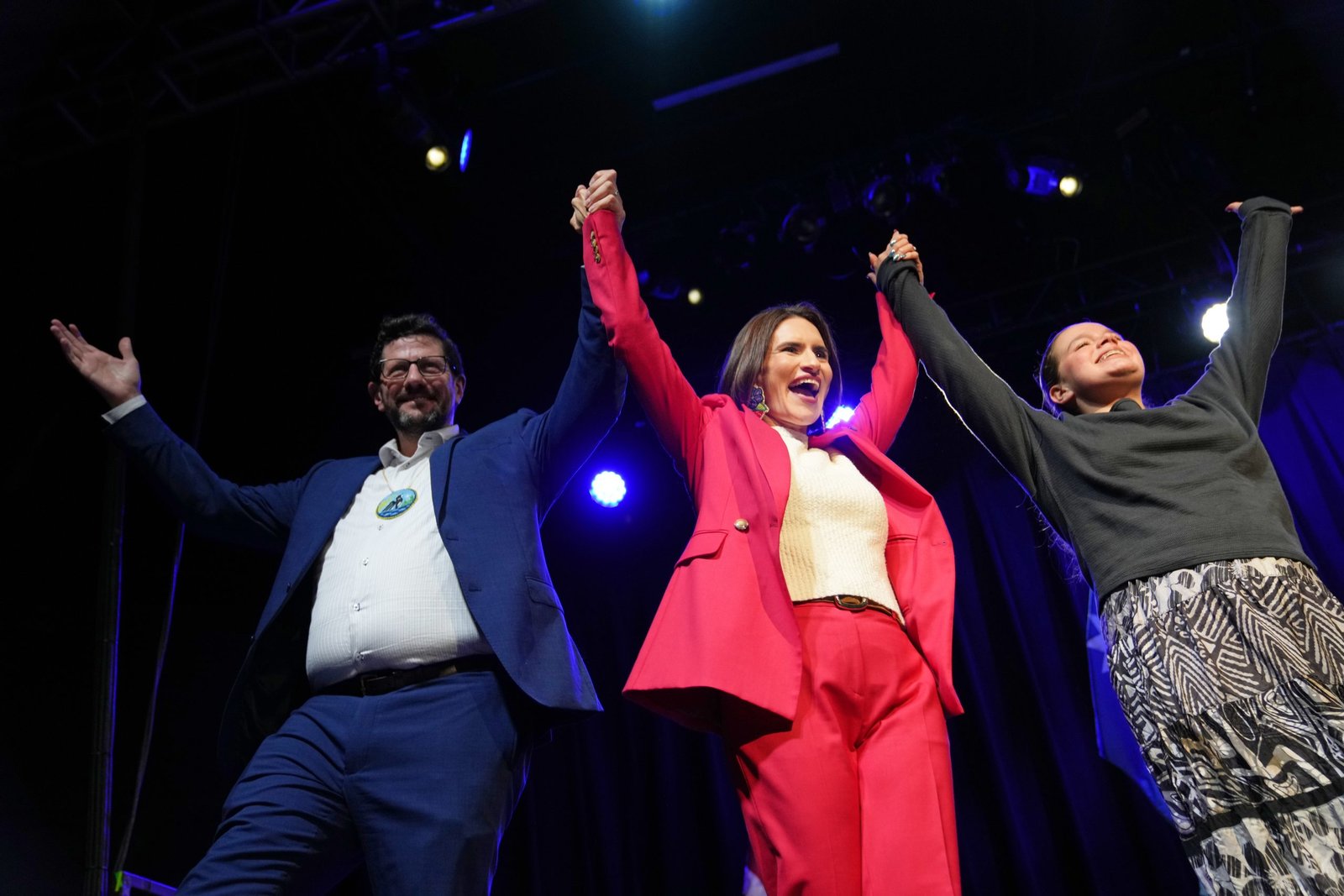
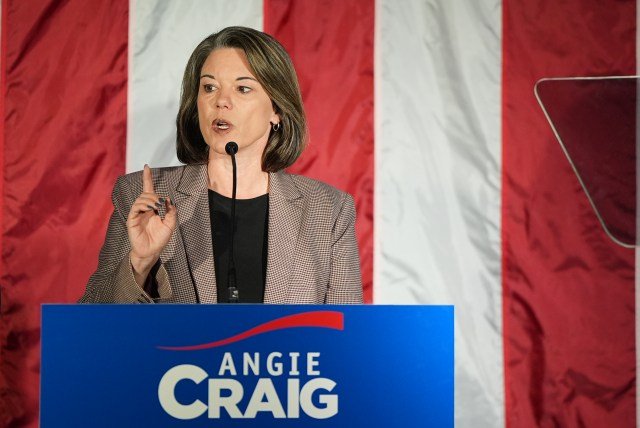
WASHINGTON – Both national trends and very local reasons help to explain Lt. Gov. Peggy Flanagan’s overwhelming victory over Rep. Angie Craig in the bitter contest for a U.S. Senate seat.
Craig, a moderate who has represented the 2nd Congressional District since 2019, decided to run for a statewide seat in a bad year for centrist Democrats in primaries. Flanagan beat her with 59% of the vote to Craig’s 39%.
According to an Associated Press analysis, nearly 270 progressive candidates won primaries this year, many of them defeating incumbents.
Flanagan and Matt Little, who won the Democratic primary for the 2nd Congressional District seat, are among the most recent.
Larry Jacobs, a University of Minnesota political science professor, said the “No. 1 reason” Flanagan trounced Craig was that “Donald Trump has radicalized Dems.”
“Half of Americans ‘very strongly’ disapprove of his performance as president and very strongly dislike him,” Jacobs said. “Off the charts.”
Laken Riley Act loomed
Before Sen. Tina Smith announced her retirement last year, setting up the tantalizing opportunity for Craig to run for an open Senate seat, and way before Operation Metro Surge roiled the state nearly a year later, Craig voted for the Laken Riley Act.
That law gave Immigration and Customs Enforcement (ICE) broader authority to detain immigrants charged with certain crimes and was the first bill Trump signed into law.
Flanagan’s campaign pummeled Craig for that vote, even after Craig said she regretted it and launched a vigorous anti-ICE campaign.
Related: After hard-fought primaries, it’s Peggy Flanagan vs. Michele Tafoya for U.S. Senate
Jacobs said it wasn’t just the controversial vote — in which Craig was among about 60 Democrats to cross party lines — that spelled trouble for the lawmaker.
“Angie’s problem wasn’t the vote for Laken alone; it was her apparent collaboration with Trump,” Jacobs said. “Flanagan ran on a full on ‘Fight Trump’ campaign.”
Yet that vote did motivate state Democratic voters, especially because of Operation Metro Surge’s excesses.
Solomon Steen, an immigration attorney, said he decided to support Flanagan after a Venezuelan man was shot by ICE agents near Steen’s home in Minneapolis.
“There were children present, they tear-gassed our neighbors, and we all showed up to protest,” Steen said at Flanagan’s watch party Tuesday night.
“That moment was right before caucuses when everyone was trying to figure out how we are going to respond to this moment,” he added, “and now we’re here and we have nominated our future senator, who will dismantle ICE.”
In her victory speech, Flanagan said, “We need to rip ICE apart and stop them from terrorizing our communities.” Yet she stopped short of following other progressives who insist ICE should be abolished.
The numbers also show that Democrats were much more motivated to vote in the primary than Republicans. That motivation, at least in part, was likely based on a determination to back a candidate who would fight hardest against Trump policies.
According to the Minnesota Secretary of State’s tabulations, 406,518 Republican voters participated in the GOP primary for U.S. Senate, with former sportscaster Michele Tafoya the winner of that contest.
But nearly 697,144 DFLers cast votes for Democrats seeking Smith’s seat, with Flanagan winning 411,432 of those votes. Tafoya, meanwhile, only received 211,623 votes for Republicans who cast ballots in the Senate primary.
Craig was banking on hopes that newly energized DFLers who participated in the Democratic conventions this year, giving Flanagan outsized support, would not be a decisive factor in the primary election. But the results of Tuesday’s elections showed Craig’s hopes were misplaced.
There was also a lopsided turnout when it came to party affiliation in the governor’s primaries and other contests held on Tuesday.
No ‘stop Flanagan’ movement
Flanagan also benefitted the move to the left by the Democratic Party that has resulted in progressives notching unexpected wins in primaries across the nation.
But not all progressives won their races. Notably, Francesca Hong lost narrowly in neighboring Wisconsin on Tuesday night, dealing a major blow to progressives who were hoping to make inroads in the Midwest.
Hong, a political neophyte, was scorched for social media posts that, among other things, said she wanted to “cancel Thanksgiving.” She narrowly lost her primary to David Crowley, an establishment-backed candidate.
Related: Outside groups fuel bitter Senate race between Peggy Flanagan and Angie Craig
In contrast, Flanagan has spent nearly all of her adult life in politics and has been very careful to avoid alienating general election voters, many of whom are more moderate than those who cast ballots in the primary. And unlike Hong, Flanagan had the solid backing of DFLers in local, state and federal government and had run statewide before.
“(Flanagan) is less of a lightning rod than either Hong or (Abdul) El-Sayed,” said Kyle Kondik of the University of Virginia’s Center for Politics.
But unlike Hong, fellow progressive El-Sayed won Michigan’s Democratic primary for U.S. Senate.
Still, Kondik said there “was not a ‘stop Flanagan’ movement in Minnesota in the same way I think there was in Michigan against El-Sayed and in Wisconsin against Hong.”
“Both Flanagan and Craig seemed capable of holding the seat, so voters opted for the more progressive option,” he said. “That’s probably an oversimplification itself but there’s probably something to it.”
On Wednesday, the National Republican Senatorial Committee, which is heavily invested in promoting Tafoya, attacked Flanagan as a “socialist nut job mired in fraud scandals.” But that type of campaign may not do as well against Flanagan as it did against Hong.
Craig, meanwhile, has closed ranks behind Flanagan, first in a concession speech that urged her supporters to get behind the lieutenant governor.
“I deeply admire Peggy’s commitment to Minnesota and her dedication to improving the lives of everyone around her,” Craig said. “Peggy’s story is one of grit, of determination and resolve. This election was a choice between two women – and it’s a great damn day to see women running – even against each other.”
On Wednesday, Craig followed up with a post on X with a picture of her standing behind Flanagan. The post said “Onward, Together.”
So it seems Craig may not be giving up on politics.
If Sen. Amy Klobuchar wins her race for governor against Minnesota Speaker of the House Lisa Demuth, there will be a second open U.S. Senate seat in the state.
That seat would not be filled immediately through an election, but through an appointment by the governor.
Reporter Claire Carlson contributed to this report.
The post How Peggy Flanagan won a chance to succeed Sen. Tina Smith appeared first on MinnPost.
Leave a Reply