
This story on Peggy Flanagan was originally reported by Mel Leonor Barclay of The 19th. Meet Mel and read more of their reporting on gender, politics and policy.
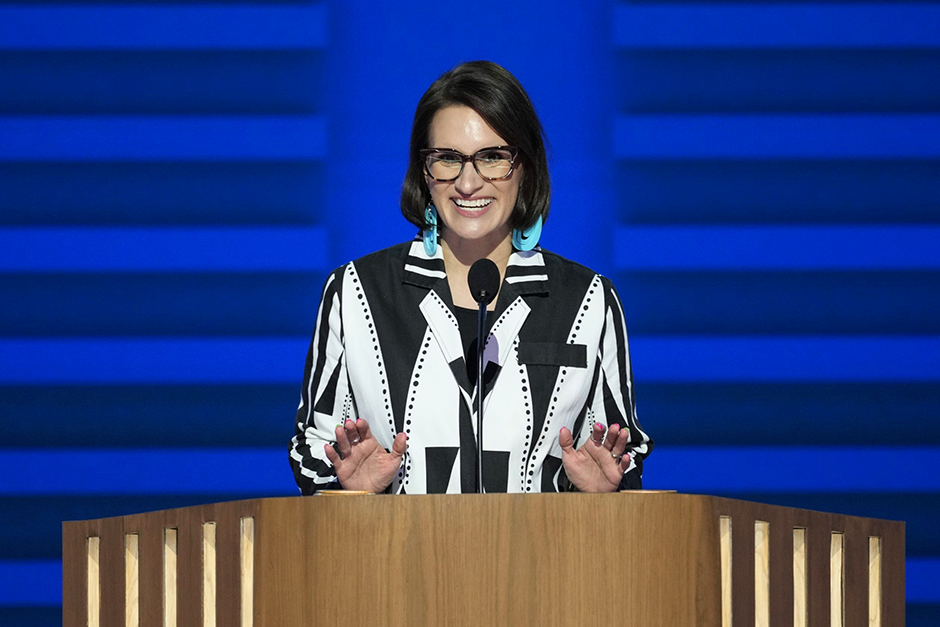
Lt. Gov. Peggy Flanagan easily won Minnesota’s Democratic primary for a U.S. Senate seat, according to Decision Desk HQ, putting her a step closer to becoming the first Native American woman elected to the chamber.
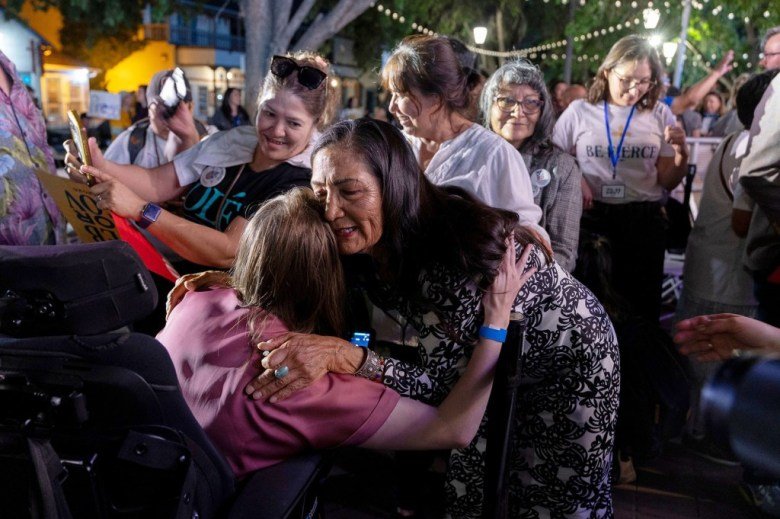
Flanagan, a member of the White Earth Band of Ojibwe, is not the only Native woman who could make history this year: In New Mexico, former Secretary of the Interior Deb Haaland, a Laguna Pueblo member, is widely expected to become New Mexico’s next governor after winning the Democratic nomination in June.
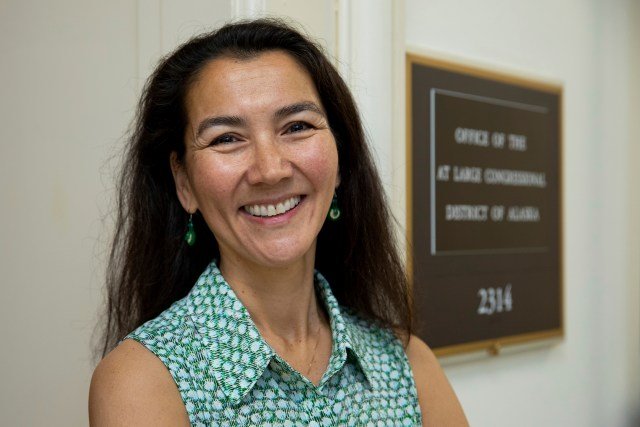
And in Alaska, a hyper-competitive race for an open U.S. Senate seat could return former Rep. Mary Peltola, the first Alaska Native elected to Congress, back to Washington.
Related: After hard-fought primaries, it’s Peggy Flanagan vs. Michele Tafoya for U.S. Senate
Their victories would mark a significant stride toward better representation for Native American women in American politics, making them more visible in the halls of power and giving voice and lived experience to issues that significantly impact this population, from unequal pay to the epidemic of violence facing Native American women.
“Our democracy functions best when it accurately reflects the people it seeks to represent, and so having a Native American woman serving in the United States Senate is good for our democracy,” Flanagan said in an interview with The 19th. “Being an Ojibwe woman is not a hat that I put on and take off. I’m a Native woman every day. I know that you know when I get to Washington, I’m not going by myself. That I am bringing Indian country with me.”
In Tuesday’s primary in Minnesota, Flanagan defeated Rep. Angie Craig, a moderate lawmaker who represents a suburban district south of Minneapolis, by promising to deliver “bold” change with the backing of top progressive leaders. Flanagan heavily criticized Craig over her past support of a Trump-backed immigration enforcement law to win in a state rattled by the administration’s violent immigration enforcement campaign last winter.
Native American women are about 1.5 percent of the U.S. population but have been historically underrepresented as elected officials. To reach equitable representation in Congress, voters would need to elect at least seven Native American women to Congress; right now, there is only one: Rep. Sharice Davids of Kansas, a member of the Ho-Chunk Nation.
Haaland and Davids became the first Native American women to ever serve in Congress when they were sworn into office in 2019. In 2020, Rep. Yvette Herrell was elected to represent New Mexico’s 2nd Congressional District, becoming the first Republican Native American woman in Congress. Herrell, who is a member of the Cherokee Nation, lost her seat to Democrat Rep. Gabe Vasquez in 2022. Peltola joined Congress following a special election in 2022; she lost a reelection bid in 2024.
After her inauguration, Haaland said she was “very grateful” to not be the only Native American woman in Congress. The partnership she developed with Davids, Haaland said, became important as they worked to combat the epidemic of violence against Native Americans, particularly women, who face murder rates at 10 times the national average.
Related: Trump’s immigration crackdown looms over Minnesota’s bruising Senate primary
“When I first was elected to Congress, nobody was talking about it on a national level, and it was me and Sharice Davids who really worked hard to bring it to the attention of our colleagues in the House,” said Haaland, who held the first House hearing on murdered and missing Indigenous women while in Congress and, during the reauthorization of the Violence Against Women Act, advocated for victim services funding for Native American women in state courts. Later, as interior secretary, she created a specialized unit focused on the issue within the Bureau of Indian Affairs.
“It’s going to be steady work by caring people who really want to ensure that we’re making progress on this issue,” Haaland said.
Flanagan said that she is committed to carrying on this work and that she will bring her experience in Minnesota to the table. In Minnesota, Flanagan pushed for the creation of the nation’s first state-level office focused on the issue. Since its creation in 2021, the office has become a key liaison for families navigating the complicated law enforcement system, pushing for clear data to make sure victims aren’t invisible and forging new training standards for Minnesota police officers.
Related: Something new for the Minnesota Legislature: a caucus of first Minnesotans
The office itself was the product of Native women “in decision-making roles and roles of authority,” Flanagan said. She worked with four other Native American women serving in the state’s legislature at the time to push for attention to the issue.
Flanagan said she is also deeply concerned by funding cuts and layoffs that the Trump administration has made to programs that benefit Native American tribes. The Trump administration fired a significant number of federal workers at the Bureau of Indian Education, which operates or funds more than 175 K-12 schools and two higher education institutions. The administration terminated the leases for a dozen Indian Health Services (IHS) offices, and sought to lay off almost 1,000 IHS workers, reversing that last decision only after an outcry. Staff for the Interior Department’s Bureau of Indian Affairs is down by 11 percent, which a government watchdog said has created critical vacancies in an already strained agency tasked with overseeing programs that support law enforcement, schools and the management of natural resources. Many of the services that the federal government funds or provides to tribe members are the obligations of centuries-old treaties.
“The bare minimum that we should expect — like the floor — should be that the federal government honors treaty rights, tribal sovereignty and upholds trust responsibilities,” Flanagan said. “We’ve never done that as a federal government before, but perhaps it will help having the voice of a Native woman serving in the United States Senate to be able to do that work.”
Flanagan will face former NFL broadcaster Michele Tafoya in the general election this November, according to projections. Tafoya, who had the backing of the National Republican Senatorial Committee, is seen as a strong recruit from Republicans with relatively moderate views on abortion bans and gun control laws.
Related: Michele Tafoya has the support of the national GOP, but winning over state activists is a challenge
Haaland’s nomination for New Mexico governor is in itself historic: The first Native American woman to be nominated for governor by a major party was Democrat Paulette Jordan, who ran to lead Idaho in 2020 — just six years ago.
Haaland emphasized that her history-making potential is not central to her run for office, and yet, an important step for representation of Native Americans in government.
“It’s not why I’m running, but it’s who I am,” Haaland said. “When we’ve had the Trump White House denouncing diversity, equity, and inclusion, it’s a reminder to people that representation truly does matter and that there are other voices out there. It’s not business as usual in this election.”
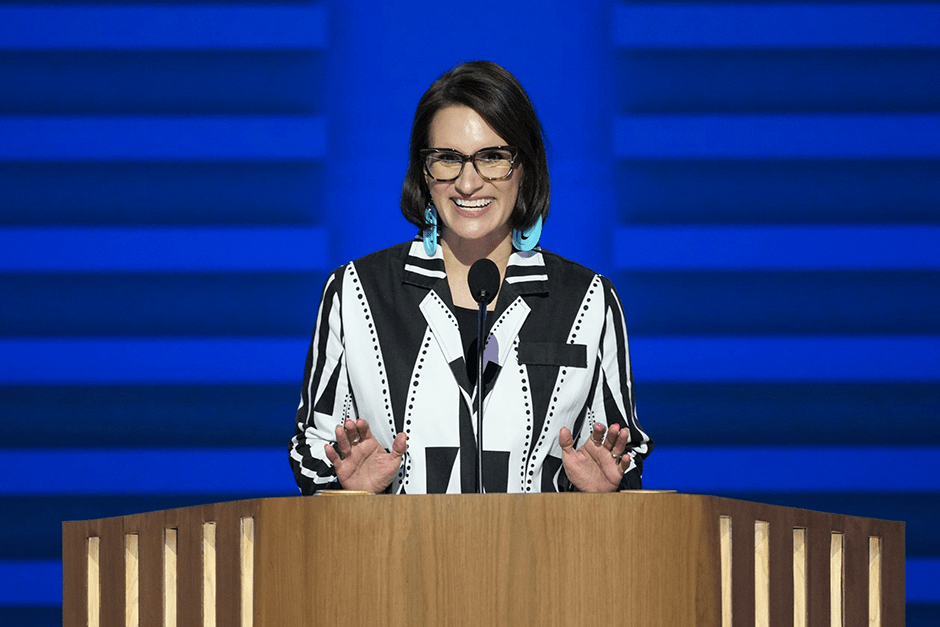
Both Haaland and Flanagan, representation of their Native American roots has been immediately visible. Haaland is known for wearing jewelry designed by Native American artists from across the country; Flanagan for wearing clothing designed by Native American designers, inspired by Native American traditions. If she’s elected to Congress, Flanagan said, people can expect more of that.
“It’s so funny, sometimes people — I like to say, dudes online —are like, that’s not what a lieutenant governor is supposed to dress like. And I’m like, well, I am the lieutenant governor, and this is how I dress,” she said. “I want my daughter, and I want other young Native people to see that you can be your full Indigenous self in every place and space.”
For Flanagan, the value of representation comes across on the campaign trail, and in her daughter’s own outlook as a future leader.
“When I hear Siobhan call Deb Haaland Auntie Deb, or when I’m on the campaign trail and young Native women and girls are calling me Auntie Peggy, it is one of the most powerful things that has happened on the campaign trail.”
The post Peggy Flanagan could make history for Native American women in November. She’s not the only one. appeared first on MinnPost.
Leave a Reply