WASHINGTON – One item frequently cited as being impacted by the trade war that broke out this week between Canada and the United States is the hockey stick.
Hockey sticks are listed among the products imported from Canada subject to a 50% tariff. Canada has retaliated with its own 50% tariff on hockey sticks made in the United States. But those levies are largely symbolic.
That’s because most hockey sticks used by the NHL and amateur players of the sport in the United States and Canada are now made in China, with some also manufactured in Vietnam, Pakistan and Mexico.
The reason? Hockey sticks were once made of wood, such as those made of durable 21-ply laminated Finnish birch by Christian Brothers in Warroad. But now most are made of carbon fiber, and few are manufactured in either the United States or Canada.
David Elliot, co-owner of Haggard Hockey in Fargo, said he imports most of his sticks from China. He said the difficult process of making a carbon fiber hockey stick, which includes climate-controlled factories, makes it difficult for them to be manufactured in the United States or Canada, although there is some production in both countries.
As far as the new trade war, a result of unfruitful trade talks between the United States and Canada, Elliot hopes it benefits him as fewer sticks will be imported from Canada.
“I’m hoping (the trade war) is more disruptive for our sake,” he said.
Canadian counter tariffs to hit Minnesota farmers
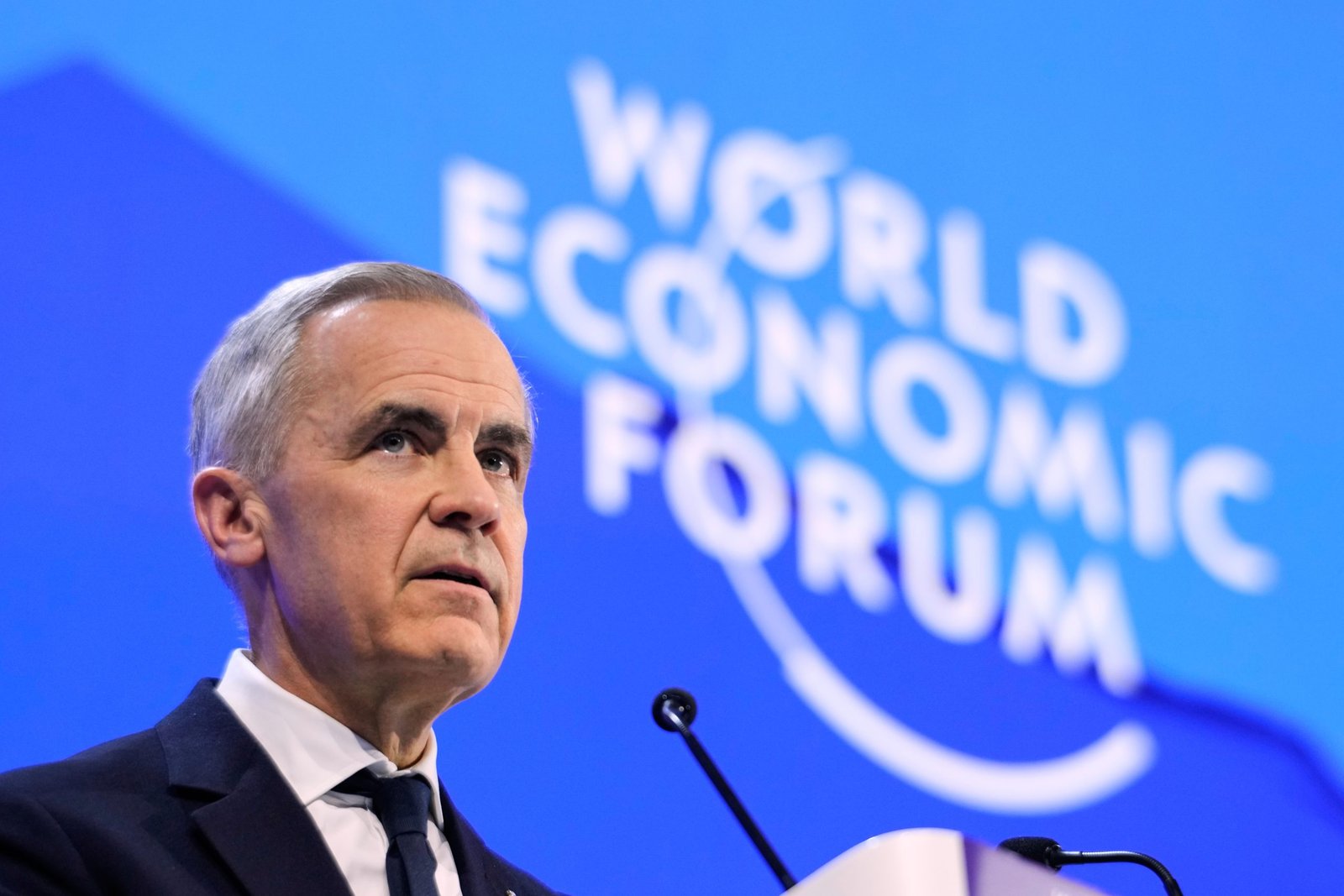
Other industries, especially in border states like Minnesota that trade heavily with Canada, are dismayed by the impasse, which was touched off after Canadian Prime Minister Mark Carney walked away from trade talks with the United States because he said Washington was asking for too many concessions, especially involving auto manufacturing.
Minnesota imports about $13 billion of Canadian goods every year and exports about $5 billion in goods to its northern neighbor.
The popular fertilizer potash and oil and other fuels are at top of the list of items the Trump administration has exempted from tariffs.
But Alyanna Jones, an international trade economist with Peacock Tariff Consulting, a firm with offices in the United States and Ontario, said the trade war is likely to escalate and those imports may eventually also be subject to the 50% levies.
Minnesota would be hard hit by Trump trade war with Canada and Mexico
As it stands, Minnesota’s agricultural sector is likely to be affected the most severely, said Brennan Fitzgerald, who like Jones is an international trade economist at the firm that advises businesses on tariff compliance and mitigation.
Fitzgerald said the state’s farmers will be hurt by a sharp increase in heavy farm equipment that is manufactured in Canada.
Like many automobiles, heavy farm equipment travels back and forth between factories in the United States and Canada before it is finished. Now new tariffs will be charged every time that equipment crosses the border.
Agriculture products, including pigs, also cross the border. And the state’s soybean farmers “will be heavily impacted” as they are likely to lose another market for their product, Fitzgerald said.
Data shows Minnesota has paid a steep price for Trump’s tariffs
The trade war will also sharply increase the price of lumber and paper products from Canada, hurting new home construction and renovations.
In summation, a lot of products are going to be more expensive.
The situation could also result in a black-market and the smuggling of certain goods across Minnesota’s border with Canada.
“I think you will see that happening,” Fitzgerald said. “Companies have been punished by the federal government of both sides. So, I would not be surprised if there are alternatives.”
Trump imposed tariffs on Canada shortly after he began his second term last year and Canada retaliated. But the tariffs were only 25% and many products were exempted from the levies.
Canadians responded to that first round of tariffs with boycotts of U.S. alcohol, vegetables and cross-border travel. Meanwhile, Carney looked for new bilateral trade relationships with other nations.
The defiance appears to be even stronger this time, with Carney and many Canadians adopting an “elbows up” (to use a hockey phrase) response to what they consider an attack from the United States.
In other news:
▪️State government reporter Matthew Blake wrote about the challenge Republican state Sen. Jim Abeler faces as he seeks reelection this year.
▪️Metro reporter Trevor Mitchell has a story about how many of the boards in Minneapolis and St. Paul that make decisions on which local projects get a green light are consistently short on members and lack attendance.
▪️President Donald Trump has created a rift with the state’s cattle producers, who generally strongly support the president, with a plan to import cheaper beef from overseas.
▪️The controversial reopening of a former prison in Appleton as an ICE detention facility may fall short of economic expectations, Greater Minnesota reporter Brian Arola writes.
Please keep your comments, and any questions, coming. I’ll try my best to respond. Contact me at aradelat@minnpost.com.
The post D.C. Memo: Canada goes elbows up in trade war appeared first on MinnPost.
WASHINGTON – President Donald Trump’s decision to allow the import of cheap beef has resulted in a plunge in the price of domestic cattle, prompting Minnesota ranchers who are strong supporters of the president to say they’ve been betrayed.
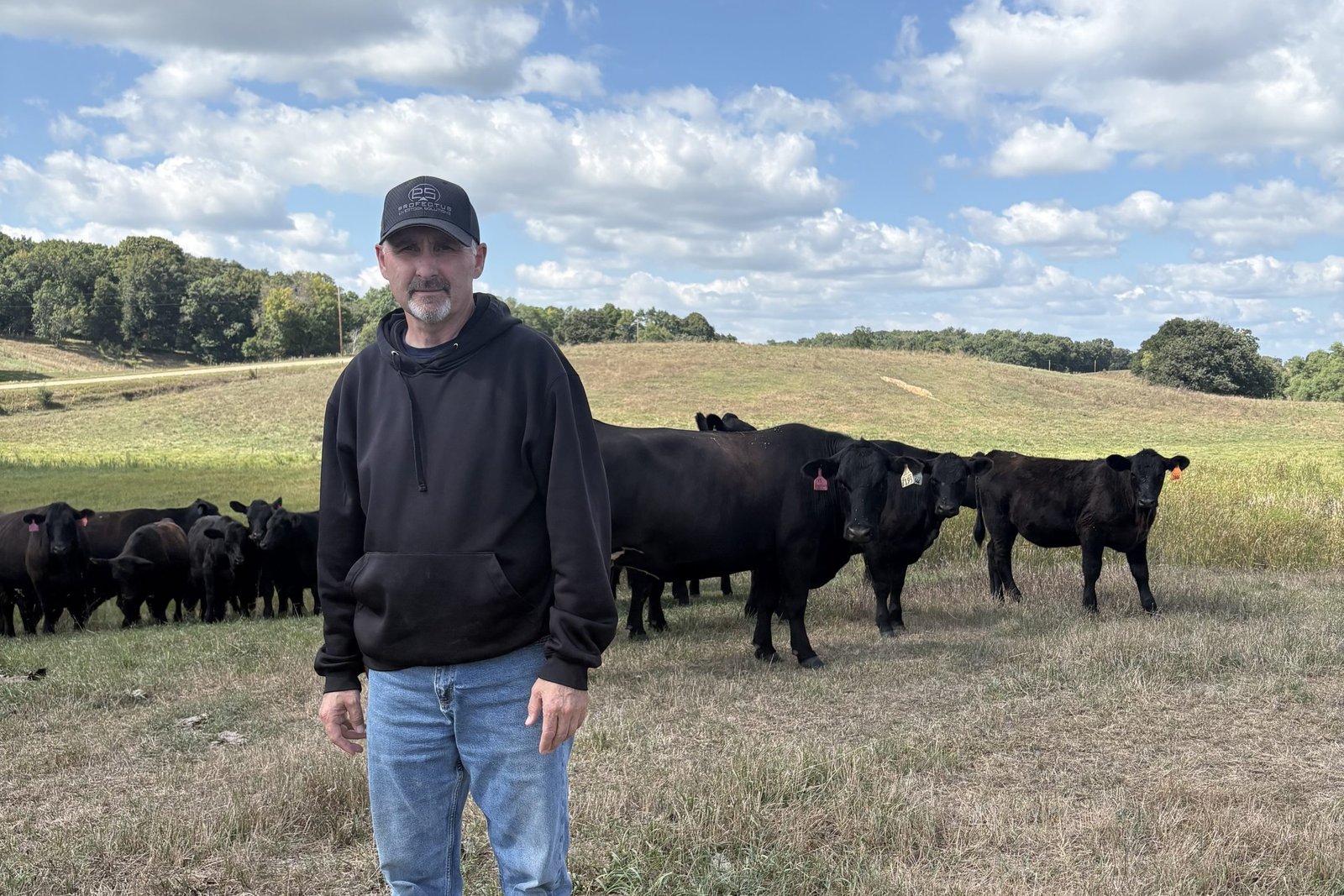
“It’s kind of a big shot in the gut,” said Don Schiefelbein, whose farm near Kimball breeds and feeds about 5,000 heads of cattle, most of them Black Angus.
In a post on Truth Social last Friday, Trump announced that the United States will import up to 300,000 metric tons of foreign beef, at a price to be sold at 25% below “current market prices.”
“This deal will reduce prices for Americans while giving space for our Great American Beef Herd to grow again,” Trump said.
The White House followed up with a proclamation about the beef import plan on Wednesday.
From 2025: Delay in conservation grants adds another layer of uncertainty for Minnesota farmers and ranchers
To Schiefelbein, whose father started a ranch in the 1950s that now supports about 100 family members, the president’s plan is bewildering and “really feels hurtful.”
“This is a president who many (ranchers,) including our family, has supported over the past 12 years,” he said.
Schiefelbein and ranchers across the country hope Trump reverses himself. But damage has already been done, they say.
Leaders of the nation’s cattle industry say they were not consulted about the plan. The National Cattlemen’s Beef Association panned the plan, saying it “sacrifices long-term stability for short-term messaging” and won’t result in lower prices for consumers.
Schiefelbein said he “understood the politics” of the situation.
“Affordability” has become a rallying cry for both parties as November’s midterm election comes closer and as Americans grapple with relentless inflation. And beef prices have surged as the nation’s herds are at their smallest point since the 1950s.
But Schiefelbein said the price of everything has risen, including the diesel and fertilizer his farm buys to grow the soybeans, corn and alfalfa that feed his cattle. “I understand beef is high, but everything is high,” he said
And he said the cattle market was beginning to “self-correct,” with beef prices falling about 15% since June and herds growing again.
He said that has not been evident at the supermarket because “it takes a while for that market price to get down to the consumer.”
Schiefelbein called Trump’s plan “100% counterproductive.”
“I don’t think anyone is thinking, ‘Should I invest in expansion when the president arbitrarily said I’m going to cut your price by 25 percent,’” he said.
‘Really disheartening’
Jake Thompson, who raises a herd of 230 Black Angus cows near Barnesville, also said the decision to allow cheap imported beef unfairly targeted ranchers.
“It was really disheartening,” he said of Trump’s announcement. “There was a lack of understanding that here we have a group that is supportive of the president.”
Cattle futures prices dropped immediately after the president posted his announcement.
Thompson, who is also the president of the Minnesota State Cattlemen’s Association, said ranchers “immediately lost $72 a cow based on a tweet.”
“It’s not going to have an immediate impact on consumers, but for us it did have an immediate impact,” he said of Trump’s plan. “And even if they do have an effect on food prices, it’s going to be for a short period of time.”
Trump put a 90-day window on the imports of cheaper beef, having the program sunset after November’s elections.
From 2023: Lost in translation: How USDA barriers leave immigrant farmers and ranchers behind
Like other ranchers, Thompson said Trump should instead pressure supermarket chains and other retailers that sell groceries, including Walmart and Target, to lower their prices.
Thompson said he still supports Trump and his policies. He hopes the industry “has such a good relationship with (Trump) that it opens some doors so he could listen to us.”
Some are not sympathetic to the plight of the nation’s ranchers.
When Nebraska Farm Bureau President Mark McHargue complained that the president’s plan was “short-sighted” and would cause “long-term damage to an unbelievably complex beef supply chain” in a post on X, dozens criticized him.
Respondents reminded McHargue that he congratulated Trump on his reelection and that had voted for the president. They said he “owned” the situation.
Opening the border to Mexican cattle, too
Minnesota is home to about 2 million beef cattle, fewer than the 6 million in Nebraska and far fewer than the 12 million in Texas, but still a respectable herd.
Kaitlyn Root, the executive director of the Minnesota State Cattlemen’s Association, echoed others in saying “no one got a heads up about the announcement.”
She predicted Trump’s plan would not lower prices, just as an earlier proposal to import beef from Argentina failed to do.
Related: Minnesota bankruptcies rise as a ‘perfect storm’ of challenges roils farm country
“What these announcements do is create frustration and anxiety for cattle producers and uncertainty in the market,” she said.
On Monday, the Trump administration reopened a border crossing in Arizona to cattle from Mexico as part of its effort to reduce record-high beef prices.
Mexican cattle had been banned from the United States since May of 2025 in response to concerns about the screw worm, a parasite with flesh-eating larvae that can infest and even kill cattle or other animals.
But the U.S. Department of Agriculture said concerns about screw worm infestation have abated.
Even so, economists agree with the nation’s cattlemen that Trump’s efforts to bring down beef prices aren’t likely to work.
A main reason? They say that removing a 26.4% duty from beef imports would not guarantee those savings would be passed down to the consumer because processing, transportation, packaging and retailer margins all contribute to retail pricing.
The post Minnesota cattle producers have a beef with Trump over foreign imports appeared first on MinnPost.
This article on mail ballots was originally published by Votebeat, a nonprofit news organization covering local election administration and voting access.
Update, August 26, 1:27 p.m.:This story has been updated with the fact that, shortly after publication, a federal judge lifted an order that was blocking the U.S. Postal Service from putting new rules on mail ballots in place for the November election.
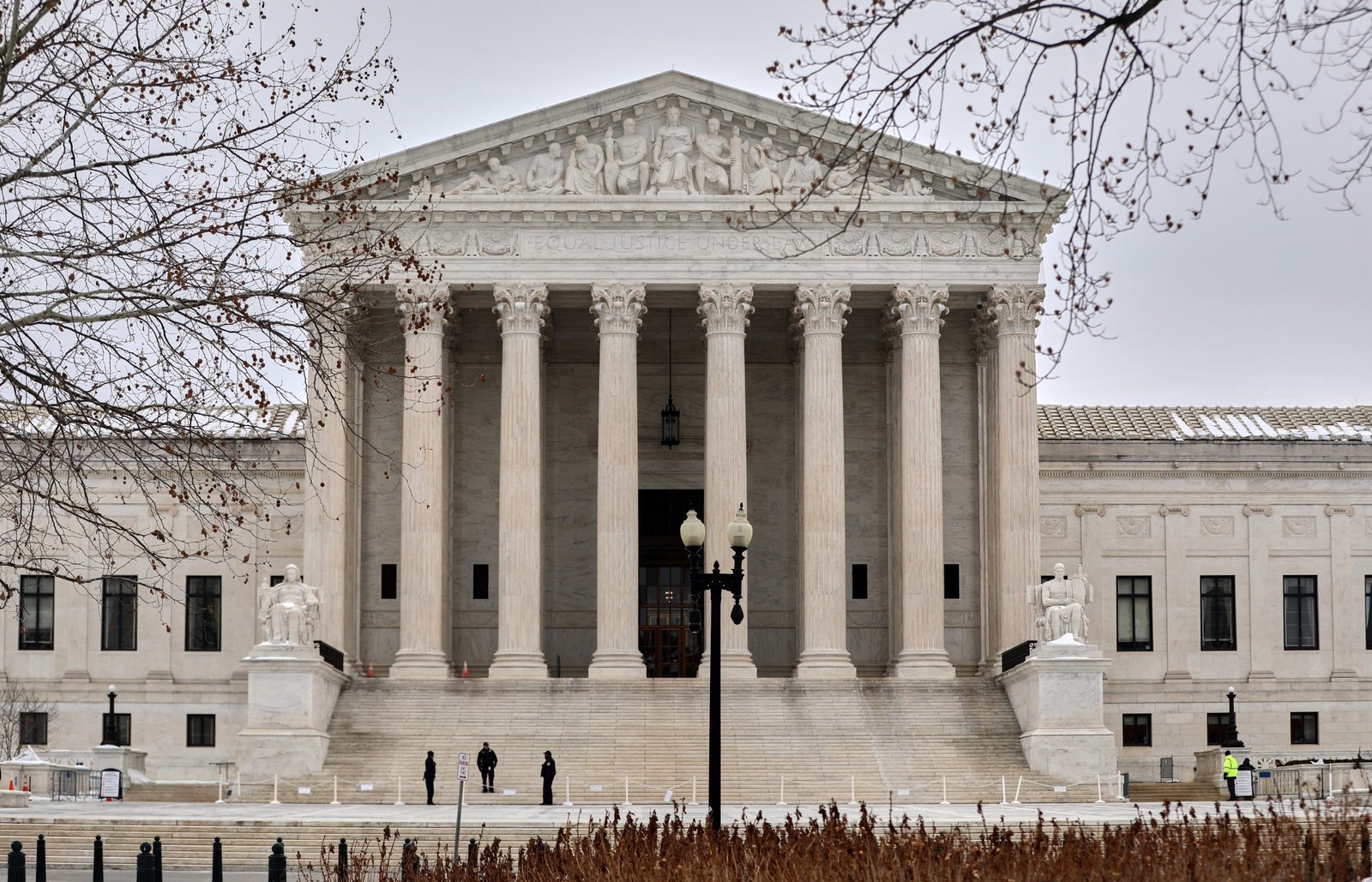
Monday’s U.S. Supreme Court ruling in favor of President Donald Trump’s attempt to restrict mail ballots via executive order is procedural and narrow, but it’s fueling broad confusion and uncertainty as the November election grows inexorably closer.
On Wednesday, in response to the high court decision, U.S. District Judge Indira Talwani removed the last legal block preventing the U.S. Postal Service from finalizing its proposed changes for the 2026 elections, even though she warned that the move could create “chaos” as the election closes in.
On Wednesday, a coalition of Democratic states at the forefront of the fight filed a new federal lawsuit against the Postal Service asking the court to block the changes, a move that will likely put them on a fast track back to the Supreme Court and leave election officials contending with messy legal rulings for some time to come.
Related: Top election official Steve Simon says SAVE America Act would create ‘chaos,’ disenfranchise voters in Minnesota
“Across the country, states are already deep into preparations for the 2026 elections,” New York Attorney General Letitia James said in announcing the lawsuit. “Now, at the last moment, the federal government is attempting to meddle in those preparations and potentially threaten countless Americans’ right to vote.”
In a separate case, voting rights groups and Democratic leaders on Tuesday also asked federal courts to block the changes from going into effect for this November’s election.
“The 2026 election has already begun, and this is sowing chaos,” said Paul Gronke, a political science professor at Reed College in Oregon and a founder of the Elections & Voting Information Center.
Meanwhile, as the fight rages over how the U.S. Postal Service will handle mail ballots, North Carolina is preparing to send the first ones out next week.
Jason Tyson, director of external affairs for the North Carolina State Board of Elections, said the state is still planning to send out its ballots as expected.
“At this time, with so much left unresolved, we cannot comment on hypotheticals about what may or may not happen with the USPS and the executive order in the courts, as the situation is uncertain,” he said. “If it becomes necessary, we will do our best to comply with any court decisions.”
Monday’s high court ruling added to a messy snarl of court cases over Trump’s March executive order that sought to allow the U.S. Postal Service to reject delivery of mail ballots to voters in states that don’t meet new federal requirements.
Related: Does a recent U.S. Supreme Court decision affect how Minnesota can warn of pesticide health dangers?
The justices, who split along ideological lines, ruled only on a narrow legal argument and stressed their decision didn’t speak to the merits of Trump’s plan. While the case was pending, the Postal Service last week moved to finalize the new rules, action that a federal judge ruled Tuesday had violated a court order.
The Postal Service rules require states to use a new online federal government system to send it a list of all voters that should receive mail ballots. The Postal Service would refuse to send ballots to anyone not on the list. The envelopes would have to meet new design standards, including unique barcodes that have to be checked by the Postal Service.
Is it too late for changes?
While the matter works its way through the courts, states across the nation have already designed, ordered, and paid for ballots that don’t necessarily comply with the new design guidelines (though North Carolina’s Tyson says theirs do).
North Carolina’s ballots start going out Sept. 4. Seven other states, including New York, Wisconsin, and Minnesota, can start sending out their ballots the following week.
Tammy Patrick, the chief program officer at the Election Center, a national nonprofit association for election administrators, said there was no way that states would be able to successfully shift to the new system if it were to be approved by the courts.
“I don’t know of a single state where this could be adopted and rolled out quickly, and that I think is a real problem,” she said.
Related: Data centers in Minnesota: The next big election issue
Trump supporters who have been cheering his push to assert more control over elections hailed the court ruling but expressed concern that time was running out to set up the system for the November election.
Catherine Engelbrecht, founder of the conservative, Texas-based anti-voter-fraud group True the Vote, said she supports the effort but acknowledged the Trump administration faces a daunting challenge in trying to set up the new system with fewer than 70 days to go before Election Day.
“It’s a tall hill to climb, but somebody’s got to do it,” she said.
Even if the courts block the Trump administration from moving ahead with the new plan for November, some voting rights advocates predicted that the president would still look for other ways to impose his policies.
Jared Davidson, an election law attorney at Protect Democracy, said that the Trump administration continues to face legal setbacks in its efforts to impose federal regulations on elections because the Constitution gives states primary responsibility for running elections.
“In the days and weeks ahead I think we can all expect that this administration will throw all kinds of spaghetti at the wall to see what sticks,” said Davidson. “But the law could not be clearer that this is an effort to take control over elections by an executive where there is no authority to do that whatsoever.”
Dion Nissenbaum is Votebeat’s senior national reporter and is based in Houston. Contact Dion atdnissenbaum@votebeat.org.
Votebeat is a nonprofit news organization covering local election integrity and voting access. Sign up for their newsletters here.
The post Election officials wrestle with uncertainty amid legal battles over Trump mail ballot restrictions appeared first on MinnPost.
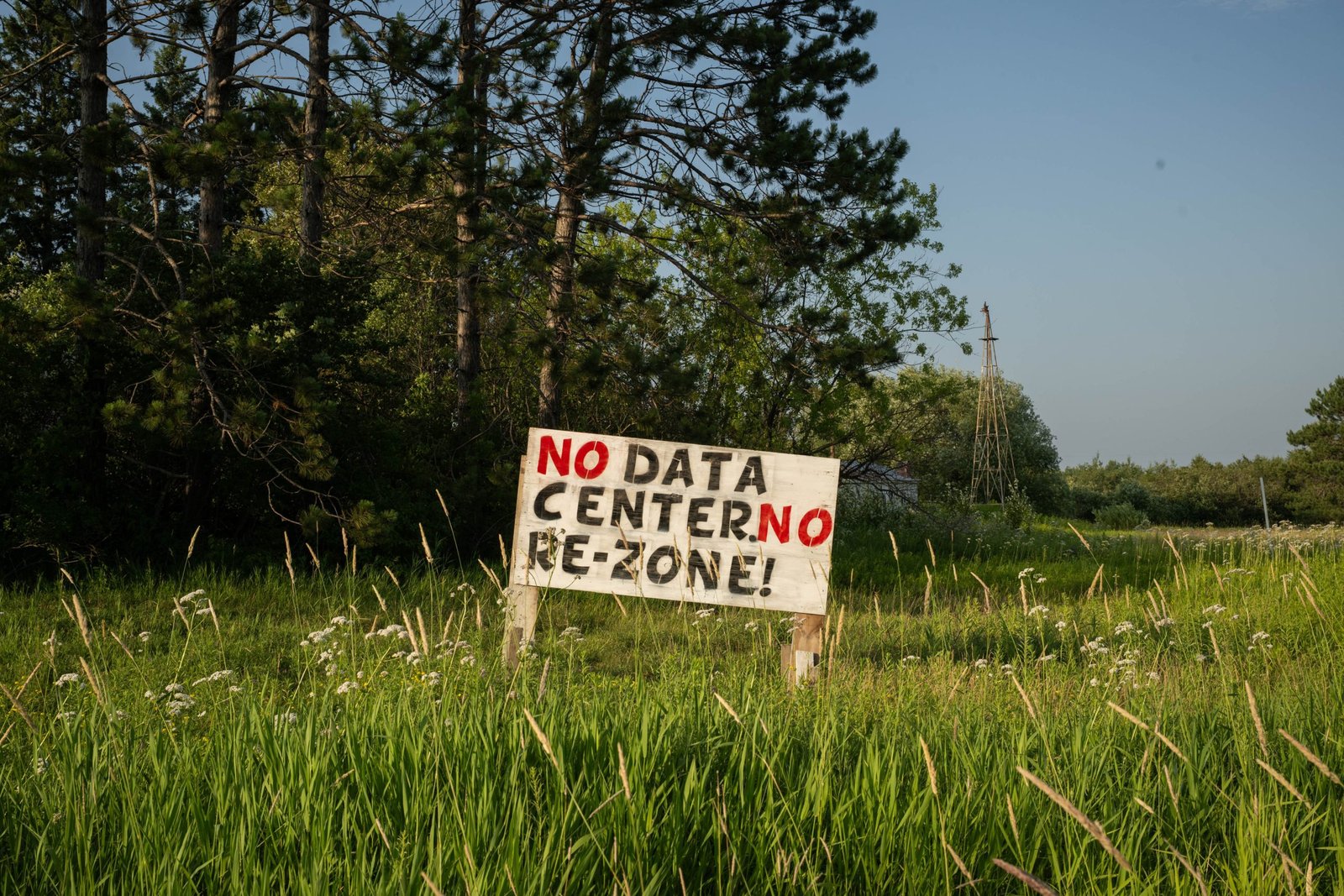
HARRISBURG, Pa. (AP) — The snowballing opposition to data centers in communities across the United States has transformed the midterm election landscape, thrown a wrench into the plans of the world’s richest companies and brought perhaps the industry’s biggest booster, President Donald Trump, to its defense.
It’s a dramatic shift from two years ago, when few people had even heard of a data center.
But the late 2022 debut of OpenAI’s ChatGPT ignited worldwide demand for chatbots and other generative AI products that typically require large amounts of computing power to train and operate. Now, Oracle, Meta, Google, Amazon and Microsoft expect to plunge more than $700 billion into data centers in the U.S. this year alone.
Here are some takeaways from the shifting politics of data centers.
Sprawling into rural America
Tech giants and developers need huge tracts of land to accommodate mammoth computing warehouses, so they’ve been exploring deeper into rural America.
The push has united conservative ranching and farming communities with left-leaning environmental advocacy groups, who share a combined concern about drought-stricken waterways, pollution in food-growing areas and shrinking farmland.
Related: Data centers: Where projects go, local Minnesota candidates follow
In New Mexico, where Oracle and OpenAI are building Project Jupiter, a $165 billion data center complex planned near the Mexican border, concerns over dwindling water supplies are mounting.
There, the Center for Biological Diversity, an environmental advocacy group, challenged the state’s approval of well drilling permits to supply millions of gallons of water to Project Jupiter. The center said the state approved a permit last year after ignoring public-notification procedures in state law.
Samantha Barncastle Salopek, a water rights lawyer who comes from a pecan-farming family, said farmers and ranchers are worried about their water rights in a state hammered by drought. She is running as a Republican for a seat on the Doña Ana County commission.
Trump defies political wisdom on data centers
Trump continues to stick up for data centers, even as politicians from both parties run from them and many communities try to block them.
He said last week that if he were a mayor or a governor with a chance to land a big data center, “I would absolutely want it, because the jobs are enormous and the money paid, the taxes paid, are just enormous.”
Trump also acknowledged, however, that data centers need “a little public relations help.”
The Republican president is a leading champion for the industry, seeing it as critical to winning the artificial intelligence race against China.
His administration is pushing to help tech giants build and connect data centers to power plants and high-voltage power lines and convert Cold War-era uranium enrichment plants into data center and power plant complexes.
Data centers could see the regulatory landscape toughen
Governors who once pursued data center projects for their states are shifting their stances or taking steps to toughen regulations on data centers.
In some states, governors have halted their state’s sales tax exemption for new data center projects. Other states are trying to force data centers to pay for their own electricity supply, limit their water use, disclose more about their operations and win community support before they get a state permit or tax exemption.
In Texas, Republican Gov. Greg Abbott ordered regulators to take steps to ensure Texans were not paying higher electricity bills because of data centers, and promised to push a legislative agenda next year to impose tougher regulations on data centers, including taking away the state’s billion-dollar-plus-per-year tax break.
New York Gov. Kathy Hochul, a Democrat, ordered a one-year ban on large data centers.
Worries that AI’s energy demands will scuttle climate goals
The explosive energy demand of artificial intelligence has set in motion the biggest-ever construction boom of natural gas-fired power plants, and sent renewable energy allies in search of ways to ensure that data centers will be powered by climate-friendly sources, too.
Michigan, Oregon and Minnesota have enacted laws in the last 18 months designed to protect their preexisting requirements that electric utilities use only emissions-free energy sources by 2040. Similar legislation is in play at the end of California’s legislative session this month.
Related: In pausing data centers, Minnesota courts did what local officials wouldn’t
In other states, including Georgia, Colorado and North Carolina, environmental advocates and corporations with clean energy goals are working regulatory levers to push monopoly utilities that historically control the energy supply and grid access.
Data centers still have a friend in labor unions
Members of building trades unions are employed on a huge number of massive data center projects, as union locals scramble to recruit new apprentices and expand training centers to feed the explosive demand.
National union leaders say their ranks are growing faster than they have ever seen. Meanwhile, tech giants are putting millions toward training programs.
Unions aren’t just working on the projects. They are also advocating for data centers in Congress, statehouses and communities. In packed town council meetings where a project is under consideration, union members often show up to answer complaints about data centers in ways that executives at tech giants and the development firms rarely do.
The post Here’s all the ways that data center controversies have transformed the midterm elections appeared first on MinnPost.
This story on the debate over transgender athletes was originally reported by Amanda Becker of The 19th. Meet Amanda and read more of their reporting on gender, politics and policy.
It took mere minutes for the U.S. Supreme Court decision upholding state bans on trans athletes competing in women’s and girls’ sports to reverberate in Ohio’s competitive governor’s race — and the reactions from the Republican and Democratic nominees were all but indistinguishable.
“Ohio has barred men from competing with women in women’s sports and the Supreme Court now held that it’s constitutional,” Republican Vivek Ramaswamy told a Toledo newspaper.
Ramaswamy, a pharmaceutical entrepreneur, called the ruling “common sense” and pledged to enforce an Ohio law containing a ban on trans athletes in school-age sports. It was vetoed by the state’s current Republican Gov. Mike DeWine and opposed by every Democrat in the state legislature.
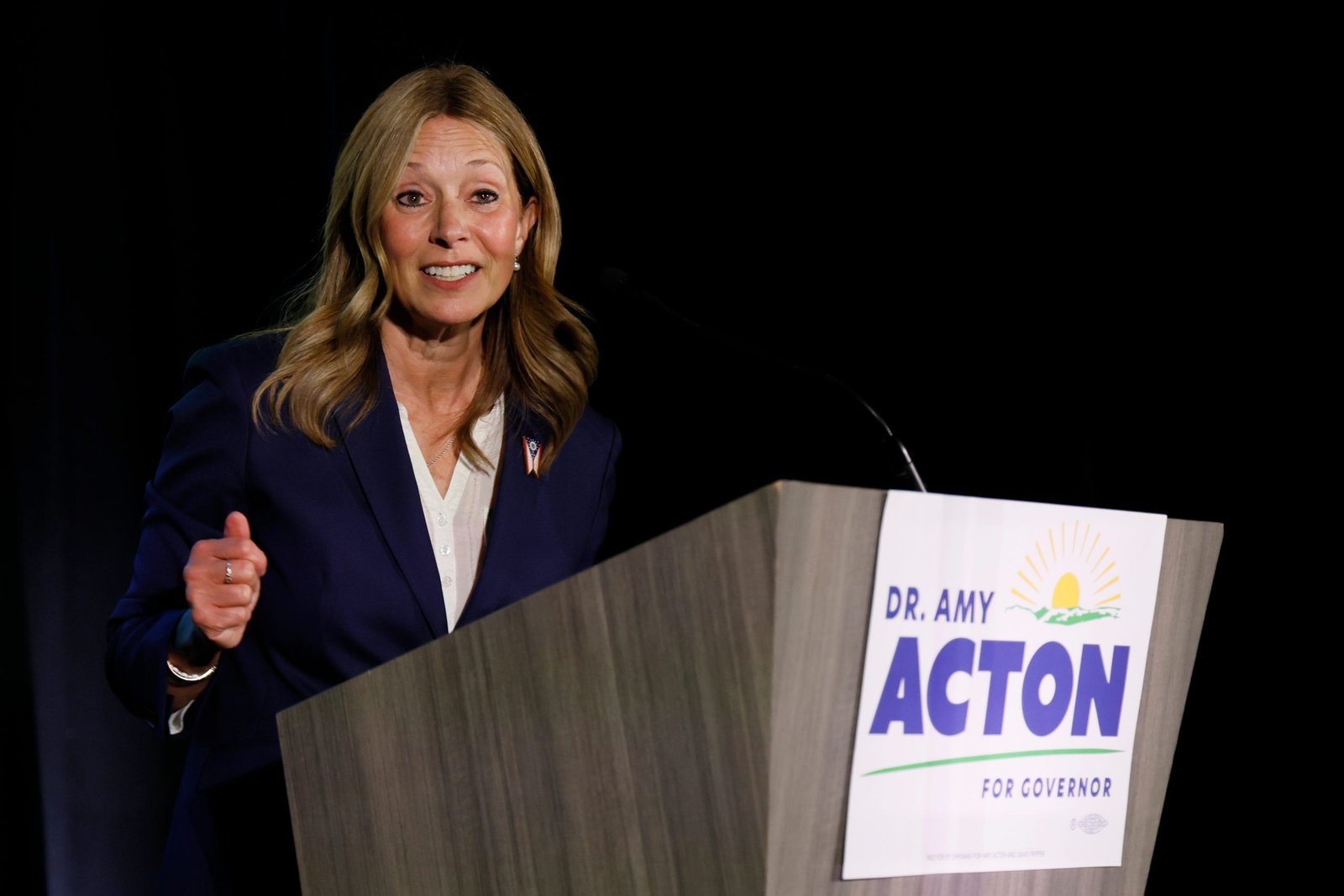
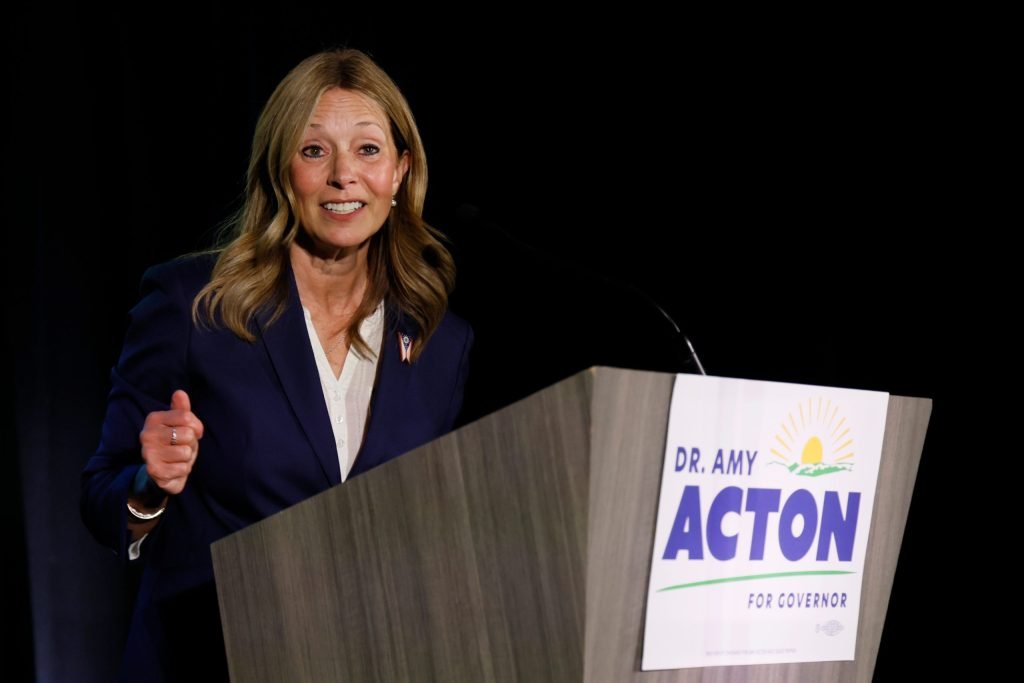
Then, Democrat Dr. Amy Acton weighed in.
“I do not support boys playing in girls sports. This is already settled law in Ohio, and as governor I will enforce and uphold the law,” the physician, who served as DeWine’s public health director, said in a statement to the same newspaper.
“As a doctor, public servant, and a mom, I will always stand up for fairness and protect kids’ health and safety,” she added.
Two candidates, from two different parties, taking the same public position, using the same language — wording favored by President Donald Trump’s MAGA movement that misgendered transgender athletes by referring to them as men instead of trans women. And in Acton’s case, language that misgendered trans children.
Related: Minnesota Republicans want trans girls out of girls sports, but complaints are hard to find
Democrats have been trying to figure out how to respond to Republicans’ anti-trans attacks since former Vice President Kamala Harris lost to Trump in the 2024 election. Republican campaigns and allied political groups spent more than $215 million that election cycle on ads targeting Democratic candidates’ past support for trans people and LGBTQ+ issues, according to data from AdImpact, which tracks political ad spending. In the final weeks of the campaign, tens of millions of dollars worth of these ads targeting Harris blanketed key suburbs in battleground states. They ended with the line: “Kamala is for they/them; President Trump is for you.” Harris never figured out how to respond. Internal research from the top super PAC supporting Harris showed that the “they/them” ads, on average, moved viewers 2.7 points in Trump’s favor.
The conversation among Democrats about how the party’s candidates should — or should not — respond to anti-trans attacks has since taken up a lot of oxygen in Washington as party strategists debate the best course forward.
Now, the conversation is consuming Democrats in Ohio.
Acton’s initial statement on the day of the Supreme Court ruling landed like a lead balloon with the state’s LGBTQ+ groups and leaders, the vast majority of whom were enthusiastic about her candidacy and the potential to beat Ramaswamy, who said during a GOP presidential primary debate in late 2023 that being trans was a “mental health disorder.”
Several Ohio-based LGBTQ+ leaders told The 19th that they expected to hear more from the candidate herself. They hoped she might clean up the inarticulate language she used misgendering trans children, or offer additional reassurances to LGBTQ+ Ohioans that she would have their backs.
But no public or private reassurances came.
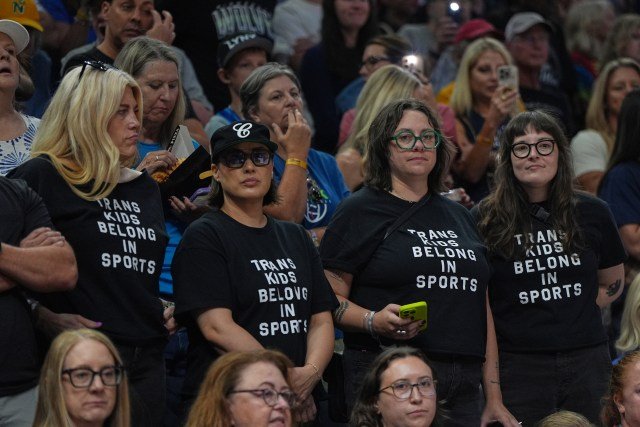
Fans wear shirts saying “Trans Kids Belong In Sports” during a WNBA basketball game between the Minnesota Lynx and the Indiana Fever Sunday, Aug. 2, 2026, in Minneapolis. Credit: AP Photo/Abbie Parr
Equality Ohio, one of the state’s largest groups working to protect the rights of LGBTQ+ people, updated Acton’s status on its 2026 Candidate Scorecard to “pending” from an “A” grade.
Ramaswamy’s “F” rating has remained unchanged.
“This reflects our belief that accountability is still possible, and that the door remains open at this time. Should Dr. Acton choose to take meaningful steps forward, we will update the status accordingly,” the group said in a statement.
The ratings change was announced during what was initially branded as a “conversation” between Acton’s campaign, the state party and LGBTQ+ stakeholders that only further inflamed the situation. The meeting — and its fallout — was first reported by the Buckeye Flame, a Cleveland-based news site focused on Ohio’s LGBTQ+ community.
The vice chair of the Ohio Democratic Party’s Pride Caucus, who is trans, was not admitted to the meeting and had to participate on speakerphone via the chair. It quickly became clear that it was less a conversation than a chance for participants to air concerns without any response from the campaign, attendees told The 19th. One described Acton’s campaign manager, Philip Stein, as “looking like someone who wanted to crawl under the table.”
Another participant said they went into the meeting thinking it could be a “teachable moment” that could repair relations between the campaign and Ohio’s LGBTQ+ community; they left feeling like the misgendering of trans children was intentional and a “cynical, consultant-driven play” to appeal to conservative voters.
“It felt like they were trying to throw trans people under the bus to provoke a backlash,” the person added.
Related: Federal policy changes put gender-affirming care for youth at risk
Meeting participants who spoke to The 19th all asked to not be identified because the campaign has told them that talking to the press precludes future conversations.
Acton’s campaign wrote in an email to The 19th that she “will always stand up for Ohioans, including the LGBT community. As governor, she is committed to standing up to discrimination and ensuring all Ohioans receive equal protection under the law.”
More than 11 percent of Ohio’s adult population is LGBTQ+, according to an analysis released this month by the Human Rights Campaign, and research shows that queer people vote at higher rates than the overall adult public. While LGBTQ+ voters tend to favor Democrats, participants on the Zoom call told The 19th that the fallout would likely dampen queer voters’ willingness to support Acton by donating money, putting signs in their yards, going door-to-door in the final push or phonebanking.
Recent opinion polls show Acton and Ramaswamy nearly tied, trading single-digit leads well within polls’ margins of error.
Governors are uniquely positioned to defend or reject anti-trans bills: Congress remains deadlocked on all but the most pressing, must-pass legislation; the U.S. Supreme Court decided that state-legislature passed bans on trans athletes in sports can stand.
The law at issue in Ohio, H.B. 68, also prohibits minors from receiving gender-affirming care. DeWine vetoed it for that reason, but the GOP supermajority in the state legislature overrode his veto. The legality of the ban on gender-affirming care is a live question before the state Supreme Court.
Acton, in an interview with The 19th following the U.S. Supreme Court ruling but before the campaign’s Zoom meeting with LGBTQ+ leaders, offered a more nuanced position on the law than she has shared publicly:
“This is a political battle,” Acton said, “and sadly, people are using people’s healthcare and personal decisions and choices as a way to pit us intentionally against one another, and it has been a successful tactic politically to scare people and frighten everyday Ohioans.”
“I’m also here to fight for our common humanity,” she continued. “The governor vetoed pretty draconian legislation, and the way he did that is he took advice from folks: I, amongst many people, gave advice. He listened to families. As governor, I will always research issues, listen to the absolute best experts in the field, as he did, talk to families and understand their personal decisions and what’s going on with their healthcare, with their physicians.”
She added that Democrats needed to break the GOP supermajority in the statehouse so gubernatorial vetoes could not be overridden.
Related: Roller derby was already queer-friendly. Then it got more inclusive.
Acton’s campaign did not explain why she has not incorporated a more holistic approach to LGBTQ+ issues, like the one she described to The 19th, during campaign trail discussions. The campaign, as well as Acton herself, often point out that she is trying to become the first Democrat to lead Ohio in 15 years. A single Ohio Supreme Court justice is the only elected Democrat in statewide office; Ramaswamy is a billionaire self-funding his campaign with the backing of Peter Thiel, a tech billionaire and Trump ally.
Still, Acton’s public statement on trans athletes puts her at the conservative end of an array of approaches being taken by Democrats on issues impacting trans people in the country’s five most competitive gubernatorial races.
In Georgia, which has a ban on trans athletes competing in public school and college sports, Keisha Lance Bottoms is trying to flip the governor’s seat for Democrats in a race against Republican healthcare executive Rick Jackson. Shortly after the Supreme Court ruling, Bottoms’ campaign told a local news outlet that, as a mother, she “understands that there are important differences between male and female athletes in competitive sports. However, Keisha believes decisions about athletic participation should be made by appropriate athletic governing bodies — not by politicians.” Bottoms, the former mayor of Atlanta, also told a local editorial board regarding gender-affirming care: “I do not believe the government should weigh in on medical decisions by Georgians and their physicians,” and that those decisions should not be “dictated by politicians looking to score political points.” Nearly every reliable poll has shown Bottoms ahead of Jackson since they won their respective primaries.
In Wisconsin, term-limited Democratic Gov. Tony Evers has repeatedly blocked bans related to trans athletes and gender-affirming care from taking effect. Milwaukee County Executive David Crowley, the Democratic nominee for governor, has said that decisions regarding trans athletes should be left up to the state’s high school athletics association. He told HuffPost: “We don’t have to throw out our morals, our ethics … we don’t have to capitulate and get involved in these cultural wars Republicans try to throw out there because they don’t have anything to run on.” Polling conducted after the state’s August 12 primaries shows Crowley with a slight lead over his Republican opponent, U.S. Rep. Tom Tiffany, who is also a small business owner.
In Nevada, where sitting Republican Gov. Joe Lombardo tried but failed to get a “Protect Girls’ Sports” initiative onto 2026 ballots, Democratic Attorney General and gubernatorial candidate Aaron Ford has differentiated between his own beliefs and how he would govern. “I personally do not support trans athletes competing in sports opposite their gender assigned at birth,” Ford told a Nevada newspaper, using language preferred by LGBTQ+ rights groups. “But let’s be clear, Lombardo doesn’t care about this issue; he’s only using it as a political ploy to drum up support for his flailing reelection campaign.” Polls show Lombardo with a lead in the race.
In Iowa, Democrat Rob Sand responded with a simple “no” when a conservative radio host asked him in May 2025 whether “biological males” should play women’s sports — another way to describe trans women that many in the LGBTQ+ community find offensive. But Sand, the state’s auditor, has also backed protections for trans people. He said at a town hall that it was “wrong” for Iowa Republicans to repeal state civil rights protections for trans people — Iowa was the first state in the country to do so. “You should not be fired from your job in the state of Iowa for being different. You should not be evicted from your apartment,” Sand said. Polls have for months shown Sand with a lead over Republican businessman Zach Lahn. The nonpartisan Cook Political Report last week moved the Iowa gubernatorial contest from the “toss up” category to “leans Democratic” in its competitiveness rankings.
John Neffinger, a Democratic strategist and past communications director for the Democratic National Committee, said Democrats should remember that, beyond sports, a majority of voters believe trans people should be protected from discrimination. Candidates shouldn’t be afraid to highlight their desire to support basic protections for LGBTQ+ people, he added.
Polling consistently shows, for example, that more than half of voters prefer the Democratic Party’s approach to handling issues impacting trans people over solutions offered by the Republican Party. That includes polls conducted by Fox News.
The political challenge for Democratic candidates is that nearly three-quarters of American adults say they are “uncomfortable” with trans athletes competing on sports teams that align with their gender identities, according to data from the nonpartisan Pew Research Center. Republicans have used Democrats’ past pro-LGBTQ+ stances to highlight this perceived vulnerability with voters in widespread attack ads. The dynamic has put many battleground Democratic candidates in between a voting populace not ready to largely embrace trans athletes in kids’ sports and many LGBTQ+ and progressive groups that want candidates to offer full-throated support for trans people as they face existential threats from the Trump administration.
In focus groups of a dozen or so undecided voters, Neffinger said, there might be one person who objects to LGBTQ+ protections on moral grounds, but the vast majority show a high level of empathy for the challenges trans people face in public life — especially trans children and their parents.
“When you talk about sports, what you get from people is, ‘Now, that’s not right,’” Neffinger said. “But even then, they don’t want politicians picking on kids, they get that that’s not cool.”
For several years now, Neffinger has been in a cohort of Democratic strategists trying to help and encourage the party’s candidates and lawmakers to figure out how to meet Republicans’ anti-trans attacks head on. There are ways for candidates to walk the line between where the average voter is and where LGBTQ+ and other progressive advocacy groups want them to be, he said. They just have to be willing to do it.
Neffinger pointed to a 2025 statement from Sen. Catherine Cortez Masto shortly after the Nevada Democrat voted against the Republican-offered Protection of Women and Girls in Sports Act as an effective example of messaging that resonates with middle-of-the-road voters.
Cortez Masto’s statement read: “I support fair play and safety and do not support transgender athletes competing in girls’ and women’s sports when it compromises those principles. I believe local schools, student athletes, coaches, and parents are much better equipped to implement fair, strong policies on this issue than politicians in Congress.”
Staking out a fairness-based position — for everyone — paves the way for politicians to offer different policy solutions as circumstances demand, Neffinger said. That could mean allowing prepubescent athletes to compete on teams that match their gender identities, or on a case-by-case basis permitting trans athletes who received gender-affirming care before going through puberty, he added.
“Saying ‘no boys in girls sports’ feels like the latest way to dodge — ‘don’t make me talk about this.’ It doesn’t look like leadership, it looks like a cop-out, and it actually feels like you’re picking on trans kids,” he added.
Democrats of all stripes — centrists, progressives and LGBTQ+ advocates — also point to the 2025 governor’s race in Virginia, when Democratic former Rep. Abigail Spanberger beat Republican Winsome Earle-Sears, the state’s former lieutenant governor who spent as much as $9 million attacking Spanberger’s support for trans rights. Spanberger beat Earle-Sears by more than 15 points, and by nearly 30 points in Loudoun County, an exurban area near Washington, D.C., where anti-trans ads were believed to have hurt Harris the year before. Harris won Virginia, but only by about 5 points.
The various Democratic factions agree that what made Spanberger’s approach successful was that she introduced voters to her values early on, then took on anti-trans attacks as a matter of discrimination. Spanberger also emphasized that parents and doctors should make decisions for children, and she took voters’ concerns about fairness in sports seriously.
“Leaders must take a joint approach: fiercely defending LGBTQI+ people from discrimination and advocating for policies that will lift up families across the country,” the Center for American Progress, a Democratic policy organization, concluded in a recent analysis that caused ripples in Washington by recommending the party’s base accept some restrictions on trans athletes in youth sports.
Nan Whaley, the former Democratic mayor of Dayton, Ohio, and the party’s gubernatorial nominee in 2022, acknowledged that the political landscape related to LGBTQ+ issues has shifted to the right since her unsuccessful bid. She is an enthusiastic supporter of Acton and believes that, despite the falling out between her campaign and LGBTQ+ groups, voters should trust her. Whaley said that trans Ohioans have shared fears with her about their safety; some have asked whether she thinks they should leave the state, given its politics.
“If Vivek Ramaswamy wins, I don’t know what I can say to them, but I know what I can say if Amy Acton is governor,” Whaley said. “That’s what’s at stake.”
The post Democrats don’t agree on how to talk about trans athletes. Just look at Ohio. appeared first on MinnPost.
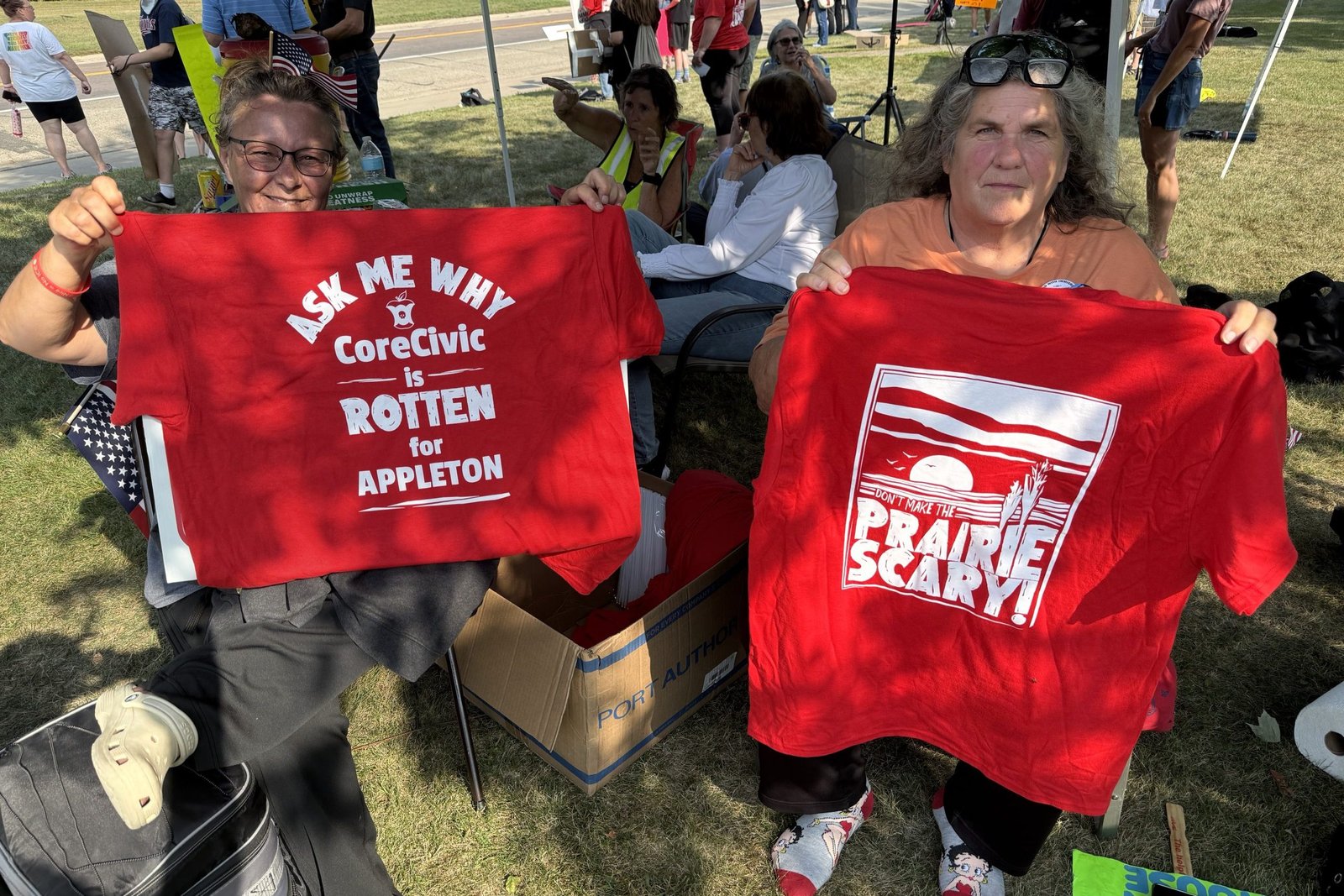
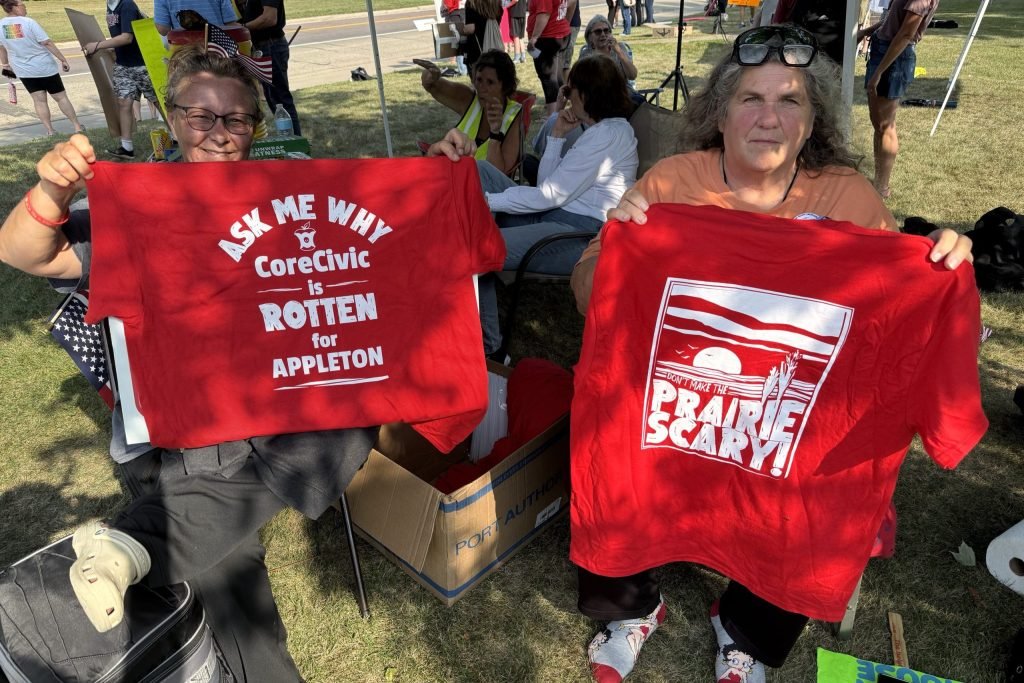
APPLETON, Minn. — While protesters continue to raise moral objections over the pending use of a local prison to detain immigrants, public officials and residents are grappling with practical concerns related to the facility’s reopening.
They want to recoup property taxes in this western Minnesota town, build up housing stock and make sure the city reaps economic benefits associated with the Trump administration’s use of the Prairie Correctional Facility.
Jobs and revenue from the prison, which has been closed since 2010, will be a “significant benefit to our residents and local economy, both of which have faced challenges since the facility closed 16 years ago,” the city of Appleton said in a statement.
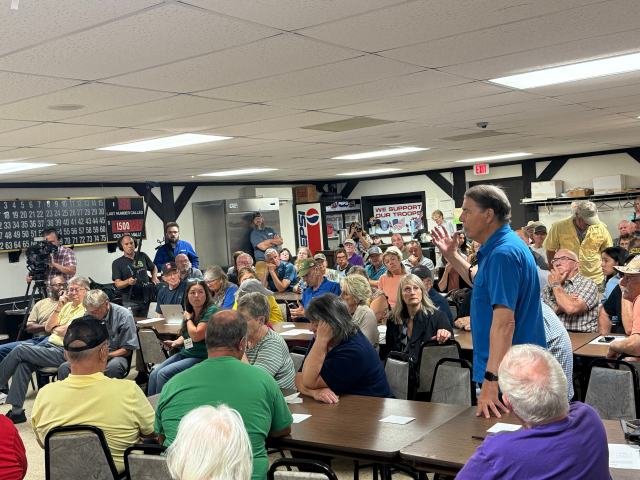
Brian Wojtalewicz heard this sentiment from elected officials in a packed town hall meeting last week at Appleton’s VFW. The local attorney thought they were overlooking something, so he stood up to ask a question.
Related: It’s official: The dormant prison in rural Appleton will become an ICE detention center
“Of course we need jobs and economic development, but there’s something seriously wrong with our immigration policy,” he said. “And it’s downright stupid to take all those workers out of their jobs and house them here using millions of dollars of our tax money. So where’s that concern?”
Brian Wojtalewicz stands to ask a question during a town hall meeting on Appleton’s upcoming ICE detention facility at the city’s VFW Thursday. Credit: Photo Brian Arola / MinnPost
Although others in the crowd raised similar points, the event was focused more on logistics than values. But it raised big questions about how much of the prison’s economic promises will actually be realized in Appleton.
Here are a few of the biggest uncertainties swirling around the project:
How will the city, county and school district fill a gaping property tax hole?
CoreCivic, a private prison company, received a contract to provide immigrant detention for Immigration and Customs Enforcement (ICE) at the Appleton prison this summer. It then flipped the 1,600-bed facility to the federal government for a reported $496.6 million.
View this post on Instagram
The effect of this sale is immense because the federal government isn’t subject to taxes. Appleton, Swift County and the local school district stand to lose out on revenue they would’ve been entitled to if the prison stayed under private ownership.
The city, which has about 1,400 residents, will take the biggest hit as about 30% of its budget derives from property taxes paid on the prison’s site. In all, CoreCivic’s tax payment in 2026 was about $810,000 distributed to the city, county and school district.
Local officials are negotiating with the company to mitigate the lost revenue, said Gary Hendrickx, a Swift County commissioner from Appleton. The sides haven’t reached an agreement yet.
“For the taxpayers of Swift County and Appleton, there will hopefully be something done so that we move forward without such a huge loss in property tax,” he said.
If CoreCivic doesn’t make local governments whole, the city may be forced to make cuts to stave off property tax hikes. Those considerations are on the table in city budget meetings, said Appleton’s mayor, Justin Koepp.
“This is one of the questions that we’re waiting on yet, is if there will be any type of funding available to help us out so we do not have to raise property taxes anymore,” he said.
Property tax holes will be reflected in budgets starting in 2028, giving the sides time to iron out a solution. Compared to that tangible property tax hit and timeline, however, economic benefits remain only theoretical.
State Sen. Torrey Westrom, R-Elbow Lake, feels confident the prison will bring jobs and opportunity to the community. He convened the town hall and has been a cheerleader for reopening the facility throughout his time in office.
But he acknowledged “stresses and strains” come along with the opportunity. Most people in Appleton seem to think it’s worth it, he said.
“I was eating in town and going around town some, and everybody there seems to have enthusiasm or excitement, from the workers to others that we talk to on the street, of these jobs coming back to the area and what it could mean,” he said.
Wojtalewicz suspects views on the prison fall roughly along political lines. About 63% of Appleton voters went for Trump in the 2024 election, but vocal opposition isn’t hard to find in the city and surrounding area.
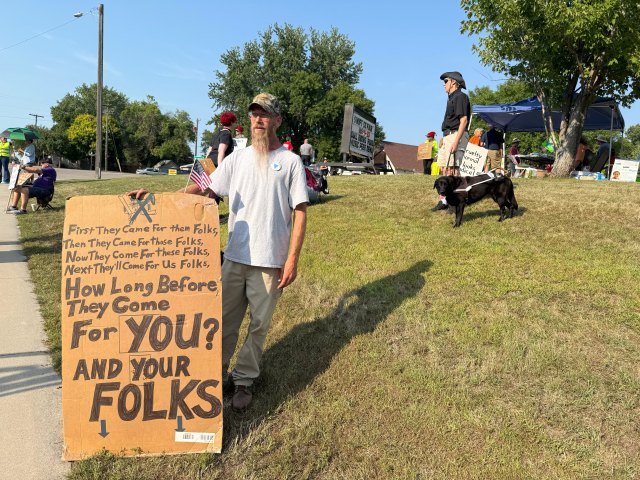
Protesting on a corner in Appleton with more than 50 others last Thursday, Nathan Compart expressed skepticism that the prison will benefit county taxpayers like himself. It won’t be worth it, he said.
“That’s not coming to this neighborhood,” he said of CoreCivic’s funding from ICE. “It’s corporate; that’s going into corporate shareholder profits … it’s going somewhere else, and they’re just using us as a tool to get it there.”
Nathan Compart, who lives in the Appleton area, protests against an ICE detention facility set to open in the city. Credit: Photo Brian Arola / MinnPost
How will the prison impact the area’s job market?
Job estimates at the facility range from 450 to 525. At least some employees are likely to live in Appleton — more on that below — paying property taxes, buying gas and shopping for groceries as steady participants in the local economy.
But the area’s net job gain may not be as big as the large numbers cited at the town hall. Hendrickx pointed out that the prison could pull applicants from other businesses in the city and region, some of which would struggle to find replacements.
Let’s use health care as an example, because rural hospitals and clinics are often in great need of workers. A prison luring health workers away from hospitals and clinics would replace, rather than add, jobs while leaving a vital sector wanting for professionals.
“How are they going to fill the positions that are going to be vacant?” Hendrickx asked. “We’ll work on it, but those are things that are long-term and we have to address them, but we’re trying our best at that point.”
None of this suggests the prison won’t add more jobs than it replaces. It just won’t be a simple additive on top of the existing job market.
Where will detention center workers live?
Appleton’s housing stock got to the point that the city has had to demolish condemned homes. There simply aren’t enough homes or apartment units in the city to accommodate hundreds of workers at this point.
For that reason, many of the workers will live elsewhere, again costing the city property tax revenue. Temporary “man camp” housing came up at the town hall, although that wouldn’t help the city or county much, either.
Here’s where state programs come in, Westrom said. Local governments could use workforce housing funds to build residences, and bonding bill dollars for the infrastructure needed to facilitate more housing.
Here’s the problem: It’s hard to disentangle state funding from politics. A city’s plea for state funding to support an ICE detention facility seems unlikely to reach sympathetic ears at the Capitol as long as the DFL is in control.
And what happens if the city and county go through with major investments to accommodate the prison only for a new federal administration or Congress to curb Trump’s agenda? Appleton has a history of catering city services to the prison and then being overleveraged once the industry goes bust.
“You’re going to tell me that a new president, say a Democratic president, comes in, and all of this isn’t going to change?” asked Megan Stein, an Otter Tail County resident whose relatives live in Appleton.
Officials didn’t address her concerns, she said. She felt like they kept bringing up vague benefits that might come to fruition.
Related: ICE eyes shuttered Appleton prison as it plans massive expansion of immigrant detention centers
Town hall participants maintained that political winds, like the federal government’s decision to reopen the facility, are out of their hands. Rep. Paul Anderson, R-Starbuck, said the meeting was focused on how to move forward and achieve the best outcome for the area.
“These decisions were made far above our pay grades here, and we have to adapt and live with them, and make sure that it turns out the best way possible,” he said.
Highlighting the city’s fraught history with the facility, Dennis Kohlman took to the mic to share how he once tried to get the Vikings to build a football stadium in Appleton. Under the proposal, the city would’ve turned the prison into a casino and hotel.
“That didn’t happen,” he said. “The federal government is now taking control, so we got what we got.”
The post Taxes, jobs and housing: Appleton has some other questions about the prison reopening under federal control appeared first on MinnPost.
WASHINGTON – For Nick Kosevich, co-owner of a drinks “emporium” in Minneapolis, it’s the best of times and also the worst of times.
That’s because the fate of the hemp-derived THC intoxicating drinks that have become increasingly popular at the Earl Giles Drink Emporium is unclear.
The emporium is a vast establishment with a restaurant and event space that sells all types of beverages. But its financial health rests in part on what Congress will do after it returns from its summer recess next month.
Before Congress took its summer break, the U.S. Senate approved a stop-gap funding bill that would prevent a shutdown of the federal government after Sept. 30., the end of the federal fiscal year.
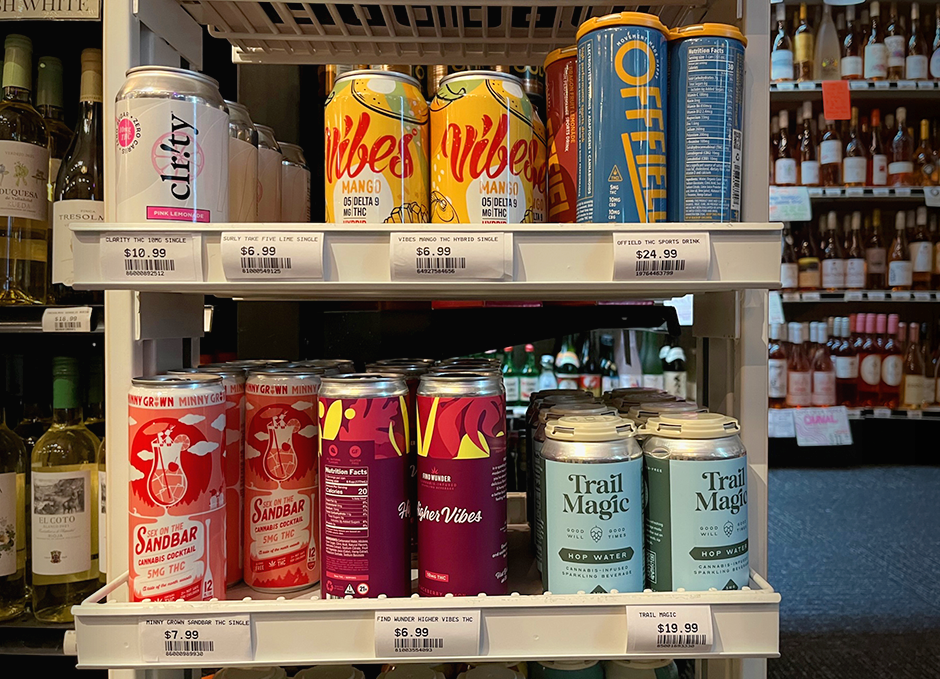
That bill would also extend for about a month a looming federal ban on hemp-derived products Congress imposed last year when it set a Nov. 11 deadline to outlaw drinks, gummies and even some CBD products containing more than 0.4 milligrams of THC, the psychoactive ingredient in cannabis.
Kosevich said his business, established 11 years ago, began making and selling THC-infused drinks in 2023 after the state allowed production and sales of those drinks and other hemp-based edibles.
He said those drinks are by far the most popular sold at the emporium, which also provides a concentrate for companies in other states that make their own THC-infused drinks.
But demand for that concentrate has dried up.
“They say, ‘We’re not placing another order with you until it’s figured out,’” Kosevich said.
He estimates his business has lost about $1 million in revenue since Congress approved the hemp ban last November.
He also said sellers of THC-infused drinks are getting rid of their inventories because they don’t want to be saddled with products they can’t sell.
Still, Kosevich said there’s new hope in the industry since the Senate gave the ban a reprieve. “I feel the tide has changed a bit in the last month,” he said.
When Congress returns in September, the U.S. House will consider the Senate’s budget bill. Early reports indicate the lower chamber will pass the measure.
Another break is that if that budget bill reaches President Donald Trump’s desk he’s likely to sign it. And Trump has expressed support for the one-month delay in the hemp ban that’s in that budget bill.
Related: U.S. Senate throws Minnesota’s hemp-based THC drinks and gummies industry a lifeline
The Senate’s delay of the hemp ban is also significant because it pushes off the issue until after November’s general election. That might give several bills – introduced by Rep. Angie Craig, D-2nd District; Sen. Amy Klobuchar, D-Minn.; and other Democratic and Republican lawmakers – that would impose strict federal regulations instead of prohibition a better chance of approval.
And the hemp issue would be married to a short-term spending bill, called a continuing resolution, or CR, that is likely to be renewed at least one more time, and probably several, possibly extending indefinitely the state of grace the Senate gave the hemp-made drinks and edibles industry.
Trump touts unusual and unprecedented census report to bolster 2020 fraud claims
President Donald Trump this week returned to an old theme – that the 2020 elections were rigged and that he, not former President Joe Biden, was the actual winner of the balloting.
Trump seized at what he said were 24,000 illegal votes uncovered by the U.S. Census Bureau in a review of 128 million individual voter and citizenship records.
He also said on Truth Social that when the Census Bureau examined another 32 million votes, the number of fraudulent votes would “explode.”
The Census Bureau said its analysis involved both government and private data, including information from the IRS, Social Security Administration and state voter records.
The bureau looked for instances in which registered voters lacked U.S. birth certificates, passports or other proof of citizenship or had been issued a green card or other documentation indicating they were a noncitizen.
But not possessing a passport or a birth certificate does not mean a voter is not a citizen. And government databases contain plenty of outdated and incorrect information.
In any case, Biden won the election by more than 7 million votes, and even if there were 24,000 fraudulent votes that could have been tossed, it would not have changed the outcome.
But the Census Bureau’s announcement did give Trump another opportunity to call on Congress to approve the SAVE America Act, a bill that would require a person to have strict documentary proof of U.S. citizenship in order to register to vote and government-issued identification to cast a ballot.
The U.S. House has approved the legislation, but there is not enough support in the U.S. Senate for it to become law.
USDA seeks to open federal forests in Minnesota to development
The U.S. Department of Agriculture this week moved to rescind the “roadless rule,” which was enacted in 2001 to protect more than 60 million acres of national forests and grassland from development.
If the rule is repealed, 77 acres of Minnesota’s Chippewa National Forest and nearly 62,000 acres in Superior National Forest would be open to development, including logging.
But most of the affected areas are further west, where there are vast tracks of federal lands.
“Our forests can’t afford another decade of inaction,” Agriculture Secretary Brooke Rollins said in a statement. “It’s time to turn the page on the failed roadless rule and return our forests to health and productivity.”
But environmental groups, including the Chicago-based Environmental Law and Policy Center, decried the proposal to roll back protections on the national forests.
“The Trump Administration’s proposed repeal of the Roadless Rule is reckless and indefensible,” the ELPC said in a statement. “For more than two decades, the rule has protected much of the wildness that remains in our national forests. The protections have been particularly vital in the Midwest, where less than 200,000 acres of roadless land survived the widespread logging of the past two centuries.”
The USDA has opened a 30-day public comment period for those who want to weigh in on the proposed elimination of the roadless rule.
In other news:
▪️State government reporter Matthew Blake wrote that a federal judge has granted the Walz administration’s motion to dismiss a lawsuit that called for the elimination of the Nursing Home Workforce Standards Board, a panel that sets employment rules for the industry.
▪️Gov. Tim Walz added to his legacy this week by issuing an executive order that would halt all state permitting work on a proposed copper-nickel mine in Superior National Forest. But the ban will end 90 days after the governor leaves office in January, and the federal government is not hindered by the government’s actions in moving forward on its own.
▪️Metro reporter Trevor Mitchell wrote that “Freyplexes” are back as the city’s budget allows for the construction of four-unit buildings aimed at boosting multi-unit affordable housing.
▪️A Supreme Court ruling that allows the Trump administration to end Temporary Protected Status for Haitians, stripping them of the right to live and work in the United States, has Haitians in Minnesota weighing whether to return to a violent homeland or go underground. The state’s Somalis and Venezuelans have also lost this protection and Salvadorans are about to lose their TPS status, too.
This and that
A reader is curious about what would happen if U.S. Sen. Amy Klobuchar wins the governor’s race and there’s a need to fill her Senate seat through an appointment. Klobuchar has avoided indicating whom she would appoint if she has that chance.
“An aspect of the Craig v Flanagan race that I’m curious about is what will happen in January, when it’s extremely likely the Klobuchar seat will be open – with Klobuchar as the appointer,” the reader wrote. “Is Craig the de facto frontrunner for that vacancy? If Flanagan loses to Tafoya, would she get the nod? Does Klobs have someone else in mind ? Has Craig alienated DFLers?”
A lot of good questions. But the only one I’m confident to answer, right now, is that I don’t think Rep. Angie Craig has alienated a large number of DFLers, especially since she’s thrown her support very enthusiastically to Lt. Gov. Peggy Flanagan.
The post D.C. Memo: THC drink makers hoping for a save appeared first on MinnPost.
WASHINGTON – Many members of Minnesota’s Haitian community are facing a grim choice – abandon the life they’ve built in the United States and return to a dangerous, strife-torn country or go underground and risk deportation.
And many Salvadorans living in the state will face the same fate soon.
That’s because the U.S. Supreme Court recently ruled that the Trump administration can end the Temporary Protected Status (TPS) of Haitians and other immigrant groups, nullifying lower court suits that sought to extend the protection.
TPS gives nationals from countries experiencing crises like armed conflict or natural disasters protection from deportation and provides work authorization. Although the status is conferred for a specific time period, usually 18 months, previous administrations have renewed the protections several times for many nations.
Related: Immigrants fleeing gang violence see door to asylum closing at Fort Snelling
Meanwhile, a federal judge lifted a legal block last week and Somalis living in the United States also lost their TPS status. Although there is a sizable Somali population in Minnesota, only about 400 had that protection.
David Policard, a Haitian and executive director of VANSE, a nonprofit that supports Haitian immigrants in Minnesota, said calls for help have spiked since the Supreme Court ruling.
Policard said most of the Haitians who have reached out to VANSE are asking for help with housing, food and healthcare because they have lost their jobs.
And he said few are planning to return to Haiti, where armed gangs have seized control of the troubled Caribbean nation and where poverty, hunger and unemployment are rising.
“Over 95% have planned on going underground and wait (the Trump administration) out,” Policard said.
The U.S. Census says there are about 2,200 Haitians in Minnesota while other counts put that figure closer to 4,000. But it’s unclear how many had TPS status.
If they have lived in the United States for a year or less, those who lose TPS status can apply for asylum. But those applications can be denied and many applicants — while waiting for their day in court — have been fitted with ankle bracelets to monitor their movement.
Many other nations will lose their TPS designations in coming months. TPS for El Salvadoran nationals will expire Sept. 9. Designations for Sudan and Ukraine are set to expire Oct. 19. TPS for Haiti ended July 27.
The Trump administration said its termination of protections for hundreds of thousands of immigrants is justified.
“Temporary Protected Status is just that — TEMPORARY,” said DHS Secretary Markwayne Mullin on X. “If you are in our nation and your status has been terminated, you are here ILLEGALLY. You have two options: leave immediately or be swiftly deported.”
Policard said he knows of several Haitian immigrants in Minnesota who have been deported since the Supreme Court ruled last month.
“It seems that the administration wants to fast-track these people into immigration courts so they can deport them,” said Paul Hultgren, an immigration attorney in Osseo.
Singling out Haitians
Jean Perrault moved to the United States from Haiti in 1981 and is a conductor and composer who teaches in the Department of Music at the University of Minnesota Duluth.
He said even Haitians who have been living in the United States for a long time are concerned. And that it’s “mindboggling” that President Donald Trump singled out a group of people with inflammatory rhetoric — saying without proof at a campaign stop in Springfield, Ohio, that Haitians were eating cats and dogs in that city.
Perrault also said it’s ironic that the State Department has issued the most severe warning to Americans who think of traveling to Haiti but is prepared to deport tens of thousands of Haitians with productive lives in the United States to the troubled island nation
“Do not travel to Haiti for any reason,” the State Department’s warning said. “U.S. citizens are at risk due to crime, terrorism, kidnapping, unrest and limited healthcare.”
Another accomplished Haitian who lived in Minnesota has done what many of her countrymen have done — moved to Canada.
Djenane Saint Juste lived in Minnesota under TPS protection since 2014. A founder of the performing arts group Afoutayi, Saint Juste worked to bring Haitian dance to the Twin Cities, with performances at the Minnesota Opera.
Karen Quisenberry, production director of the opera, called Saint Juste a “lovely choreographer, community contributor, and human.”
But after Saint Juste was denied a green card last year, and after losing TPS protection, she moved with her mother to Canada, a nation that, like Haiti, also speaks French and where immigrant advocates are pressing for legal status for these newcomers.
Related: Explaining TPS, a little-known immigration law that’s really important to a lot of Minnesotans
Haitians in Minnesota run small businesses and are overrepresented as employees of the home healthcare, nursing home and construction businesses. Some Haitians also work in the state’s dairy farms, according to Policard.
With the support of business groups, Democrats in the U.S. House were able to pass a bill in the spring that would extend Haitian TPS protections until early 2029. But the legislation stalled in the U.S. Senate and was unlikely to secure Trump’s signature.
Impact on Salvadorans
The administration’s move to end their TPS status will ripple through several Minnesota industries. But there is likely to be a greater impact when the TPS status of immigrants from El Salvador ends next month.
There are about 17,500 Salvadorans living in Minnesota. But it’s unclear how many have TPS status.
According to the Minnesota Department of Economic Development, immigrants from El Salvador have a high employment rate, working in manufacturing, healthcare, education, construction, hospitality and food processing.
Ana Pottratz Acosta, a professor at Mitchell Hamline School of Law, said migrants from El Salvador and Venezuela, a country that lost its TPS status last year, have or had the largest TPS populations in Minnesota.
She said Minnesota’s Salvadorans and Venezuelans might be eligible to win asylum or have lived long enough in the United States to have a U.S.- born child who could provide a path to legal status.
Yet Pottratz Acosta also said there could be an increase in immigration enforcement in the state. “I would not surprise me that after termination of TPS there may be targeted enforcement,” she said.
The post Stripping TPS from Haitians, Salvadorans and others is the newest phase of Trump’s enforcement strategy appeared first on MinnPost.
ORLANDO, Fla. (AP) — Across 250 years, only three elected governors out of thousands have been Black — all Democrats and all men, including current Maryland Gov. Wes Moore.
But Moore could soon have company.
With Florida Republicans nominating U.S. Rep. Byron Donalds on Tuesday, there are seven Black major party gubernatorial nominees in addition to Moore — men and women, Democrats and Republicans — on November ballots.
“We do have a unique moment here,” said Moore, who recently became chair of the National Governors Association. He often says that his historic status is “not an applause line” but instead represents a bigger challenge that this country is still looking to overcome.
The Black nominees typically do not focus on the history at stake, instead emphasizing their experience and policy proposals.
Related: Demuth will run on fraud to beat Klobuchar, but their anti-fraud proposals are similar
“Florida is a great meritocracy in America,” Donalds told reporters Tuesday night after not mentioning his race at all in his victory speech. “I’ll let you guys write about that,” he added.
But many said that more reflective representation matters given the nation’s history, from slavery to Jim Crow and the lingering effects.
“It’s not a secret that some issues in the African American community get ignored and don’t have a voice,” said Aaron Ford, Nevada’s first Black attorney general and now the Democratic nominee for governor. Ford said he brings a focus to issues ranging from voting rights and civil rights to the economy.
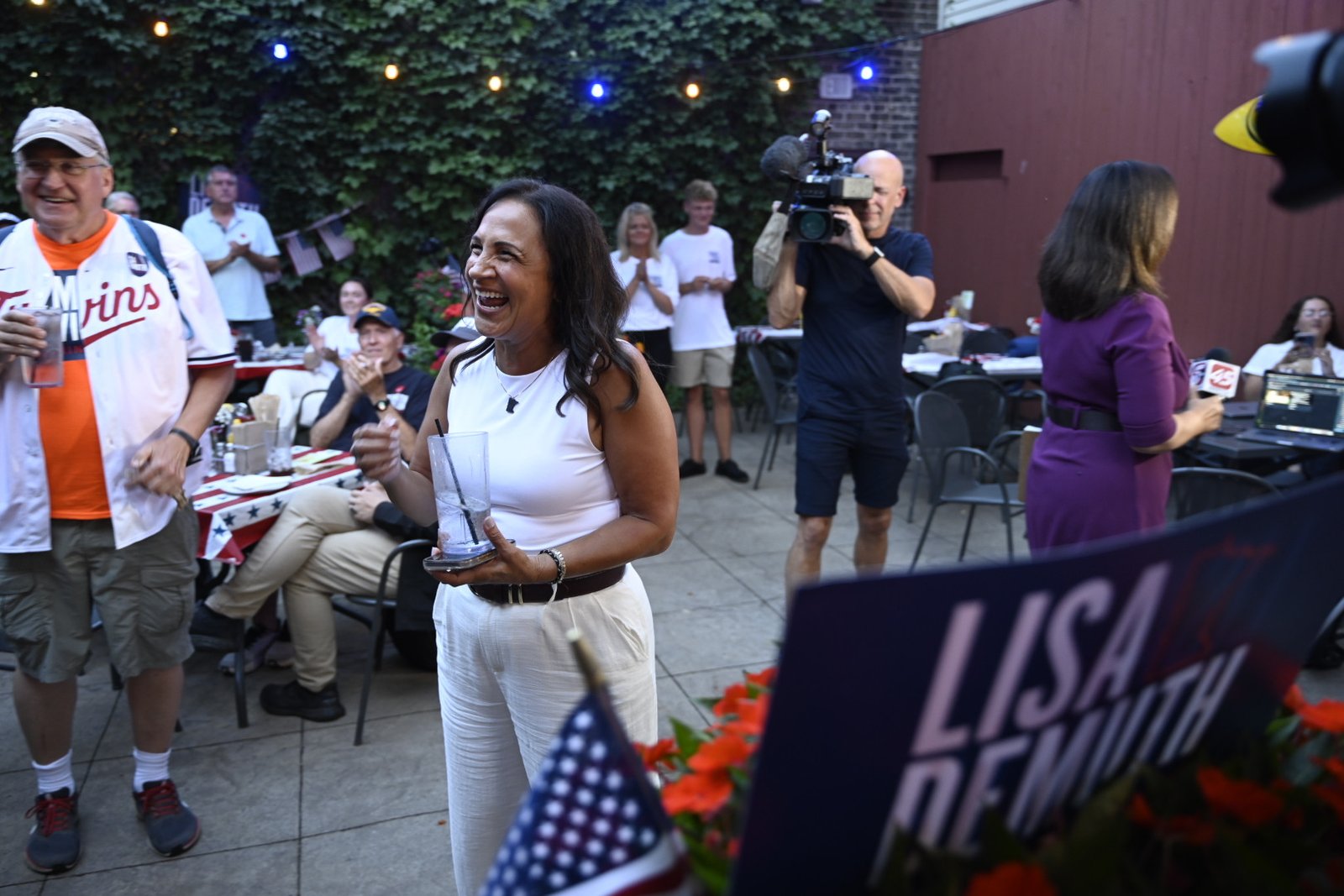
Republican Lisa Demuth said she “has never led with any type of identity politics” as Minnesota’s first Black House speaker and now her party’s nominee for governor. “But I recognize the historic state we are in right now,” she said. Michigan Republicans also chose U.S. Rep. John James, who is Black, as their gubernatorial nominee.
Former New York Gov. David Paterson, a Democrat who was not elected but ascended when Eliot Spitzer resigned in 2008, celebrated that the slate crosses party lines. “This is one day when maybe the Democrats and Republicans could stand in front of a statue of George Washington and let him know that we’re finally getting it right,” he said.
Democrats, meanwhile, emphasized that their Black candidates — who also include Keisha Lance Bottoms in Georgia, Jermaine Johnson in South Carolina and David Crowley in Wisconsin — are especially important after the U.S. Supreme Court cleared the way for states to redraw legislative districts that are majority or plurality nonwhite. That was compounded by President Donald Trump’s attacks on diversity initiatives and push to rewrite how the U.S. tells its history of the slave trade and Jim Crow segregation.
“Governors, in many ways, are becoming the last lines of defense against what we’re seeing in Washington,” Moore said.
A challenge for Black politicians, even more so than reaching the US Senate
Karen Finney, who helped push Democrat Joe Biden to select a Black woman as his vice presidential running mate, said Black politicians often are the first and loudest advocates on issues that acutely affect Black constituents. She and others cited health disparities such as maternal and infant mortality and sickle cell disease, and Finney noted that an inflationary economy hits harder in Black communities that, on average, have lower income and net worth than the wider population.
She said it is important for legislators to raise those matters and even more impactful when it is an executive.
“These are people who have the power to shape our lives, and they shape the agenda,” Finney said.
But the governor’s seat has been notoriously hard for Black politicians to reach, even more difficult than the U.S. Senate. Democrat Douglas Wilder of Virginia took office in 1990 as the nation’s first elected Black governor.
“I didn’t become Maryland’s first Black governor because the Democratic Party said, ‘I think it’s time for us to put Wes Moore up in the seat’,” Moore said. “I had to run against the party.”
“I don’t think that the party is doing enough,” Moore added, specifically bemoaning a “negligence” in Southern states where Black voters anchor Democrats’ base.
Stacey Abrams, who lost two Georgia governor’s races, recalled white Democratic power players raising money for her primary opponent in 2018, although she disputed that explicit racism was the issue.
“We do what we’ve done because it’s what we did,” she said. “Black women have not been executives, and the absence of that proof point becomes a self-reinforcing philosophy.”
This time, she noted, Bottoms already has been an executive as mayor of Atlanta.
Democrats and Republicans talk about ‘identity politics’ differently
In Minnesota, history will be made in November when the state elects its first female governor as Demuth competes against Democrat Amy Klobuchar, a U.S. senator. Demuth said she looks forward to a day when such distinctions seem less notable.
“One of the things that I really do look forward to is where it’s already done, where it no longer makes history,” she said. “So I think of young women, little girls that are looking at you, could I ever be governor of Minnesota? I hope when I win, they’re able to look at, point to that and say she’s already done it.”
In Georgia, Bottoms told the National Association of Black Journalists last week that she does not “give a lot of talk … about the historical nature” of her campaign. Yet she notes her family’s Georgia ties go “back at least five generations through a plantation in Crawfordville” and that her grandfather had to “walk through these back doors” when he moved to Atlanta. She never mentioned slavery or segregation but said her ancestry “is always present with me.”
Abrams, who has campaigned for Bottoms and other Democrats this year, was more direct, arguing that all politics is identity politics of some kind — and that Republicans’ version is simply more coded.
“When your Constitution specifically strips a race of its humanity, you cannot then later on say identity doesn’t matter and has no effect, and we’ve spent 250 years trying to reckon with that identity” with social, political and legal fights, she continued. “So, it’s deeply disingenuous, if not woefully naive, to say that identity does not matter.”
Race shapes many decisions, but not all of them
Deval Patrick, whose tenure in Massachusetts overlapped with Paterson’s in New York, said his race mattered especially to his Black constituents and what they wanted from him. It was “just different than the expectations of my predecessors,” he said, recalling criticism after he did not visit a Boston neighborhood where a teenager had been killed by gun violence.
“His mother was on the news grieving, and at some point she said while the cameras were rolling, where is Gov. Patrick?” he said. “Nobody had ever asked one of my predecessors to come to a crime scene in a neighborhood. Never.”
In Nevada, Ford said being governor still means recognizing how many core issues – jobs, housing and healthcare – cross demographic lines.
“It could be a white man, a Latino woman. It could be a person urban, suburban or rural Nevada. It could be someone from northern Nevada, southern Nevada. These are the issues that are important to them,” he said.
Patrick, who talks regularly with Ford and Moore, agreed, saying that is not just how a governor does the job, but how a candidate wins it in the first place.
“The successful candidates are the ones who present themselves as candidates for everyone,” he said, “and not candidates for just some.”
Sloan reported from Washington.
The post Americans have elected only 3 Black governors. This year, 8 major party candidates are on the ballot appeared first on MinnPost.
Gov. Tim Walz’s decision to use his authority to halt all state permitting of a proposed Twin Metals copper-nickel mine in the Boundary Waters will not stop the federal government from considering new permits for the project.
That’s because the proposed mine site is on federal land in Superior National Forest and Congress in April lifted a federal moratorium on any sulfide mining in that area.
So, Twin Metals can pursue a restoration of federal leases that were cancelled by the Biden administration, and if they are obtained, the federal government can move forward with its environmental review of the project.
Related: The battle over mining near the Boundary Waters now moves to home turf
“The state government cannot prevent the federal government from issuing leases and conducting an environmental review,” said Becky Rom, the national chair of Save the Boundary Waters. “And you might see these leases issued without consideration of science.”
Yet, the plan Twin Metals has to mine copper and nickel in the Boundary Waters is a two-track process. On the state’s track, Walz, in his waning days in office, used his executive powers to put down a clear marker of where the state stands on the issue of nonferrous mining in the Boundary Waters’ watershed.
Brad Karkkainen, an authority on environmental and natural resources law at the University of Minnesota, said Congress voted to end a moratorium on mining that had been established by a rule issued by the U.S. Forest Service and the Bureau of Land Management.
“The congressional action removed federal impediments to mining development in or near the Boundary Waters,” Karkkainen said. “It does not compel mining development, nor does it override the state’s concurrent and independent authority to issue or deny permits for any new mines within the state of Minnesota.”
Related: Klobuchar vows to be a transformative governor as she vies for Walz’s seat
Walz’s order also instructs the Minnesota Department of Natural Resources to draft legislation to be considered by the next session of the state legislature that would ban sulfide mining in the watershed.
Similar legislation has failed to win approval in the past.
Still, the governor’s actions, which included halting all state government work on environmental reviews or permitting work on mining proposals while litigation over state mining regulations is ongoing, is a new chapter in a continuing battle over the future of copper-nickel mining in the state.
The litigation over the state’s mine siting permitting rules, brought by environmental groups that oppose the construction of Twin Metal’s mine is scheduled to be considered in state court in February.
“It makes no sense to move forward to review a mine when those rules are about to change,” Rom said.
Sarah Strommen, commissioner of the Minnesota Department of Natural Resources, acknowledged the federal government is moving on a different track. But she said the state would not cooperate with the federal government’s review in any way.
“It’s important to note that while the federal government cannot unilaterally authorize a mine to begin construction, it can begin its environmental review process and may ask DNR to be what is referred to as a cooperating agency … it would not be prudent for the DNR to participate as a cooperating agency in any federal environmental review” she said.
At a press conference Tuesday in Ely, Walz said he is confident his executive order will withstand any challenge.
“This is solid,” he said. “As I said, we’ve done the legal work.”
Joshua Huder, an expert on separation of powers at Georgetown University, said this is likely a case “where state law and federal law overlap, meaning Walz may be able to put in place a ban even if Congress has prohibited the Department of Interior from keeping its ban on the books.”
Nevertheless, Walz expects a blustery and hyperbolic response from the Trump administration, which he threw a zinger at in his press conference Tuesday.
“These people can’t manage a reflecting pool, so why would we think they could manage this mine?” he said.
The bottom line, he added, is “there’s nothing they can do about it.”
The governor’s actions, however, reignited the debate about mining near the Boundary Waters.
Lawmakers representing northeastern Minnesota criticized the order.
Rep. Pete Stauber, R-8th District, who sponsored the legislation to lift the federal moratorium on mining in the watershed, said in a statement that it order is “radical” and “job killing.”
“Simply put, the governor’s executive order is an outright war on Northern Minnesota and our way of life,” he said.
State Rep. Roger Skraba, a Republican from Ely, said special interests got to the governor just like they persuaded President Joe Biden to impose the federal moratorium.
Related: The Boundary Waters is not a place to experiment with mining
“Let the agencies, the regulatory agencies, review the plans,” he said. “Then if they make it, they do. If they don’t, they don’t. Don’t say you can’t even look at the plans. Seriously? That’s good governance? I beg to differ.”
Walz’s successor will decide whether to keep the executive order, which sunsets 90 days after the governor leaves office, or scrap it.
Sen. Grand Hauschild, DFL-Hermantown, said his constituents are tired of executive overreach by a governor who leaves office in a matter of months.
“The truth is, no one can honestly say whether they support a mining project before it has gone through the full environmental review and permitting process,” Hauschild said in a statement.
Environmental groups and tribal leaders, meanwhile, applauded Walz’s announcement.
“Walz made it clear that federal overreach will not decide the fate of Minnesota’s waters,” stated Chris Knopf, executive director of Friends of the Boundary Waters Wilderness. “He defended what is best about this state. This is the kind of action a governor is remembered for.”
At the very least, Walz’s order pauses what was already going to be a lengthy timeline for copper-nickel mine permitting in Minnesota. Even proponents of the project have said they expected years or even more than a decade to pass before mining got up and running.
The post Walz halts state action on mine near Boundary Waters, but federal process stays on track appeared first on MinnPost.