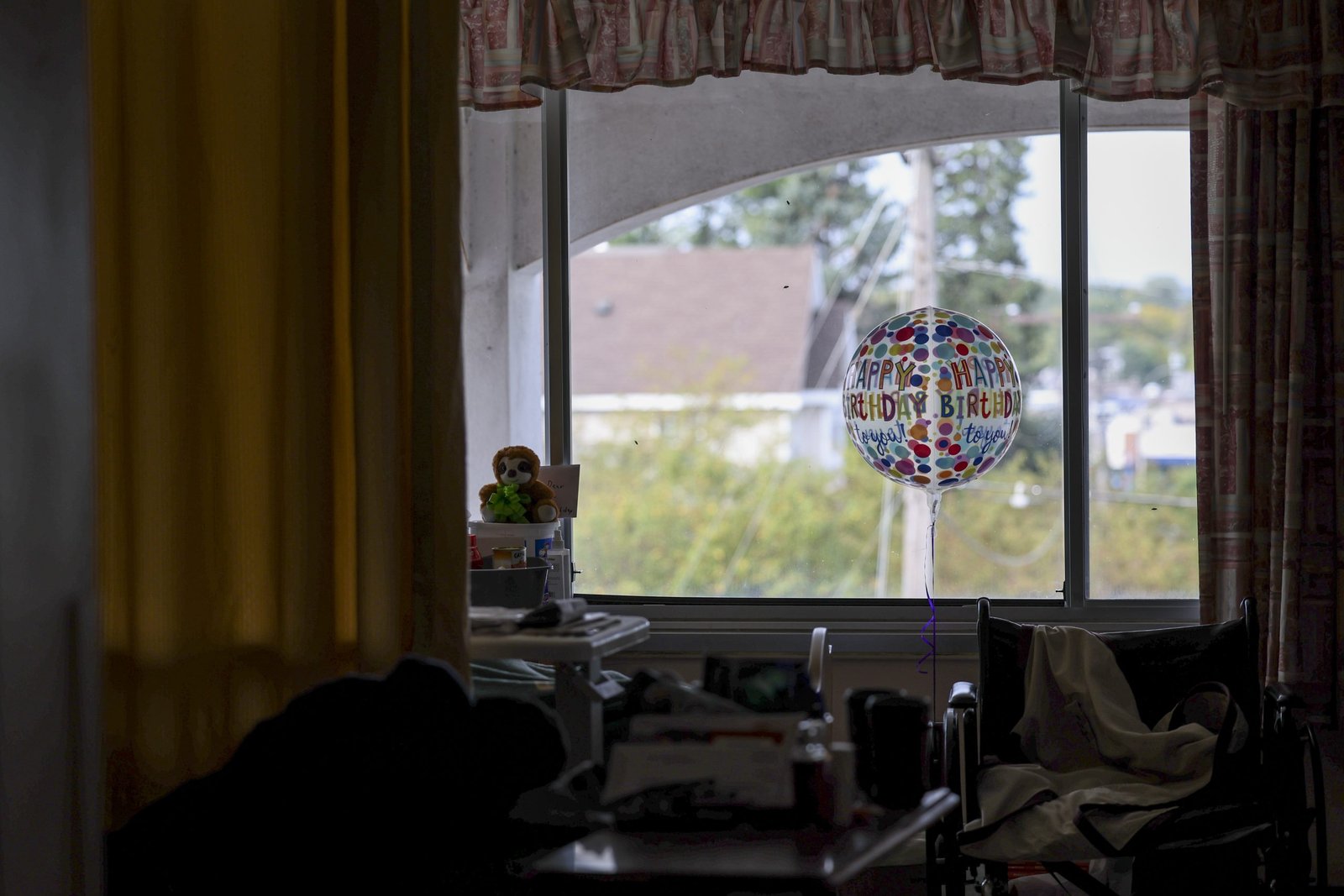
After more than eight months of delays caused by both the Trump administration and state officials, the federal government on Tuesday approved an unprecedented plan under which Minnesota will put Medicaid money toward paying nursing home workers a minimum wage.
Per the agreement, $36 million in Medicaid dollars (half from the feds, half from the state) will be used to establish the wage floor.
Under rules hammered out by the Minnesota Nursing Home Workforce Standards Board, all nursing home workers will get at least $19 an hour for the remainder of this year and $20.50 per hour starting in 2027. Workers with nursing certificates get more.
Unions cheered the announcement.
“We are grateful to the Minnesota Nursing Home Workforce Standards Board for making these historic wage increases happen for nursing home workers,” said Rasha Ahmad Sharif, director of the nursing home sector for SEIU Health Care Minnesota and Iowa. “These workers are a lifeline to our elders and most vulnerable residents, and they deserve financial peace of mind so they can provide the best care possible”
Related: Trump administration temporarily blocks Minnesota’s historic wage floor for nursing home workers
The Long-Term Care Imperative, which represents nursing home operators, did not return a request for comment as of midday Friday.
The industry group filed a lawsuit in March to get rid of the Workforce Standards Board. However, nursing home operators have indicated that they would follow the wage rules even as they pursue legal action.
One pressing concern for both labor and industry is whether the new wage floor begins in September or 30 days after federal approval, or whether it is applied retroactively.
The rule the Workforce Standards Board passed said that the wages would go into effect Jan. 1.
However, the state’s Department of Human Services, which administers the purse strings for Medicaid, was months late in filing the necessary paperwork with the U.S. Centers for Medicare and Medicaid Services.
Then, the Centers for Medicare & Medicaid Services extended the review period for 90 days after the agency had questions about Minnesota’s plan.
Related: Minnesota nursing homes fed up as they await federal backing of pay hike
State officials had not answered questions by Friday about whether the wage floor would be applied retroactively.
The Legislature in May greenlit a $9.5 million pot for nursing home workers paid out in $3,000 checks so as to make up for not getting wage bumps at the start of the year.
Payment rules for a specific industry of workers is a creature of the 2023 “trifecta” where the DFL Party controlled the governor’s office and both legislative chambers. DFLers were lobbied by SEIU Health Care Minnesota & Iowa to create a state board around the conditions of nursing home workers, the lowest paid group among the industries that the union represented.
The final legislation, written by Rep. Esther Agbaje, DFL-Minneapolis, created a Nursing Home Workforce Standards Board
For certified nursing assistants, the minimum wage is $22.50 per hour, jumping to $24 an hour in 2027. Trained medication aides, certified nurses with additional training to administer medicines, get $23.50 beginning in January and $25 in 2027.
The highest wage floor is for licensed practical nurses, who can also administer medications as well as advise patients and families on care options. They are set to make at least $27 in 2026, and $28.50 the year after that.
Related: Late lobbying push yields $9.5 million for Minnesota nursing home worker bonuses
The state’s approximate 330 nursing homes are adopting this new rule even as their trade association is trying to eliminate the Workforce Standards Board.
A lawsuit filed in March by the Long-Term Care Imperative claimed that nursing home operators essentially bargain against themselves on the nine-member workforce board, which includes three representatives from employers, three from labor and three from Gov. Tim Walz’s administration. Operators point out that Walz and the unions have voted in lockstep, effectively voiding their voice.
State officials moved to dismiss the lawsuit and federal Judge Nancy Brasel heard oral arguments in May. Brasel has yet to make a ruling.
The post Trump administration OKs use of federal money to pay Minnesota nursing home workers appeared first on MinnPost.
This story was originally published by ProPublica.
It was late March when Joe Teirab, the second-in-command at Minnesota’s U.S. attorney’s office, received an urgent email from Washington.
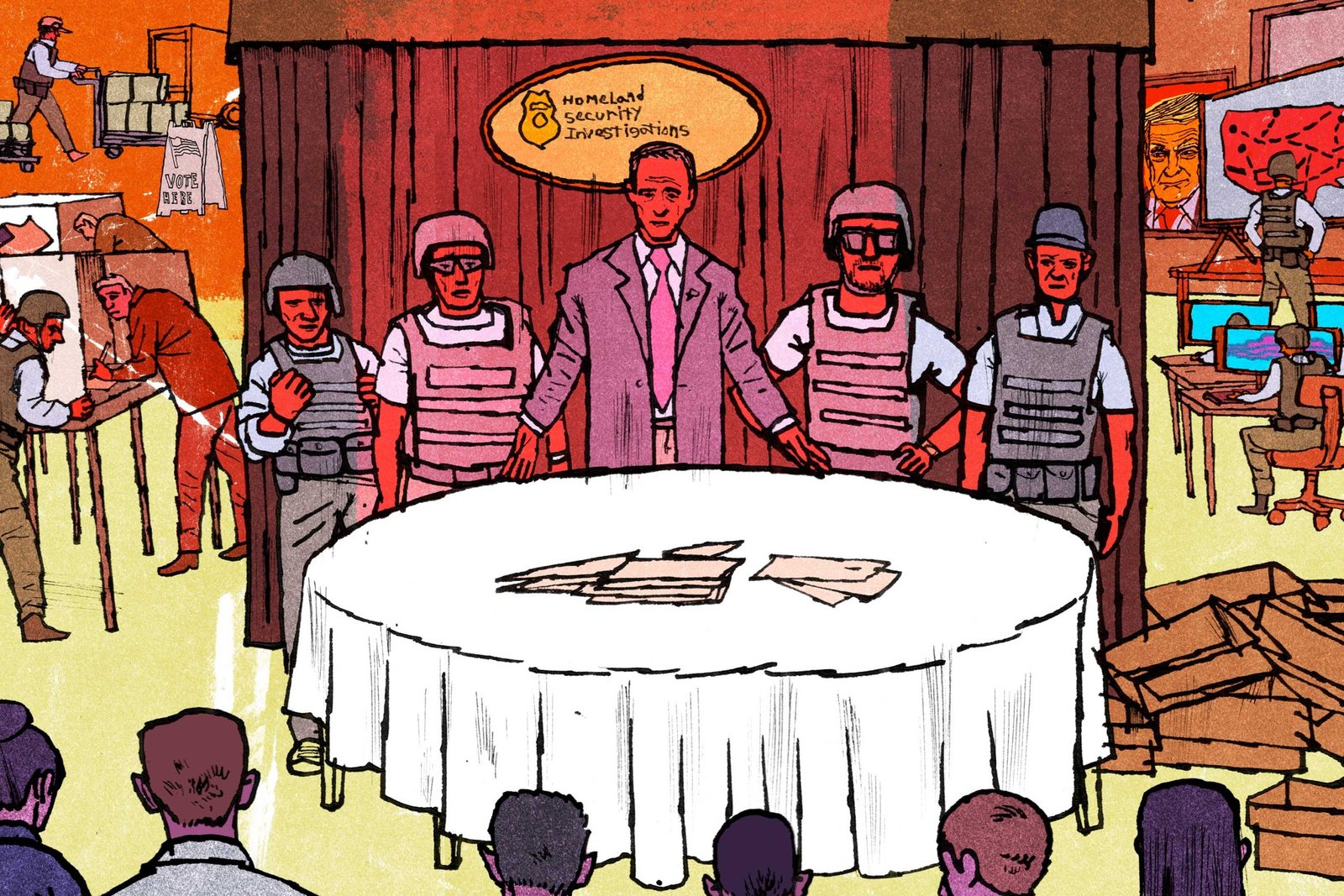
The federal government was scrambling to find criminal cases to back up President Donald Trump’s claims that illegal voting by noncitizens was tipping the scales in American elections. Agents from Homeland Security Investigations, a massive federal law enforcement agency, had been dispatched to work leads across the country, including hundreds in Minnesota.
Teirab was already under pressure. In an earlier missive, Nick Davis, a high-ranking Justice Department appointee helping to lead the election fraud crusade, had reminded him the cases were so high priority that Teirab and his staff couldn’t decline to move forward on them without express approval from agency higher-ups. On March 24, Davis demanded a status report — within hours.
Teirab, a former Marine and a Harvard Law graduate who’d run unsuccessfully for Congress as a Republican, responded with a blunt reality check.
“Bottom line up front,” he replied in an email reviewed by ProPublica. After subpoenaing records on about 130 people, only one had been referred for prosecution, his staff had told him. Agents had deluged local election offices with calls and demands for voting histories, demonstrating “a complete lack of understanding” of illegal voting investigations.
“The HSI task force has been disjointed and disorganized,” Teirab wrote. The entire process, he said, had been “dysfunctional.”
Since Trump regained the White House, his administration has launched a series of unprecedented initiatives to find and prosecute voting by noncitizens, which he’s long claimed, without evidence, is rampant.
He’s stepped up this push in recent weeks, saying in a nationally televised speech that the American election system was “so vulnerable that no one can possibly defend it.” To support that assertion, the Department of Homeland Security, HSI’s parent agency, released documents asserting it had found more than 250,000 noncitizens on voter rolls in just four states, all led by Democrats. The documents included no explanation of how that number was calculated.
It’s well known the administration has tasked HSI — a force established to combat drug cartels, terrorism and other cross-border criminal enterprises — with leading the campaign to find election fraud cases in the United States.
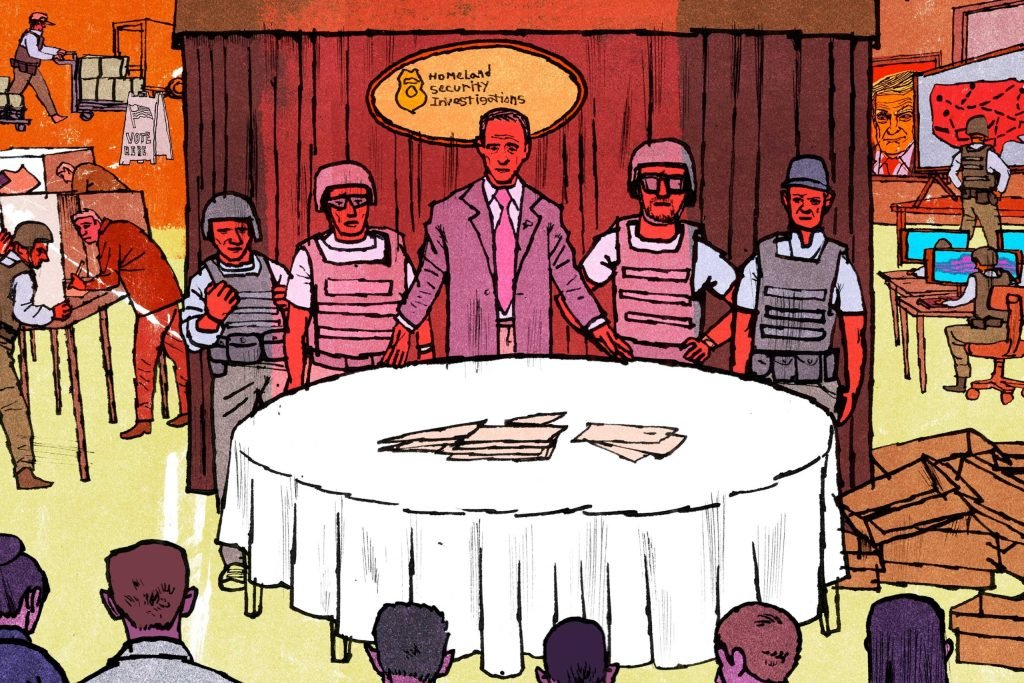
But an investigation by ProPublica reveals for the first time how the Trump administration came to harness HSI’s personnel, technology and sweeping legal authority in service of its election agenda — and how meager the results have been, despite the prodigious resources sunk into the effort.
According to interviews and internal emails reviewed by ProPublica, career staffers at the Justice Department warned that transferring voter rolls to HSI to enable it to search for noncitizen voters could violate federal privacy laws. Similarly, longtime HSI insiders cautioned that using the agency’s databases and tools to search these lists would yield mismatches and wildly inflated results.
The administration plowed forward anyway.
Related: 8 things you should know about Trump’s effort to ‘take over’ the midterm elections
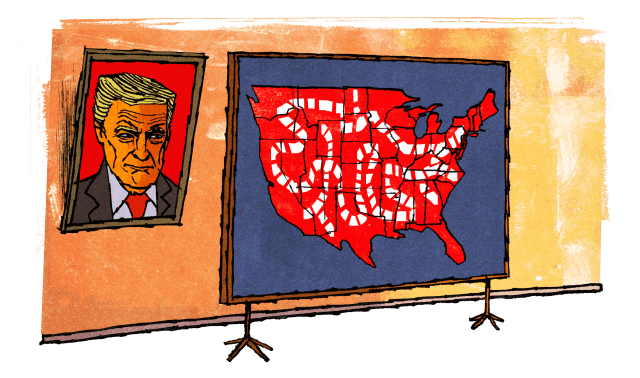
HSI’s involvement in the hunt for election fraud traces at least to summer 2025, when agency supervisors embraced a proposal from a midlevel agent who’d publicly echoed Trump’s claims about elections. He argued the agency’s powerful databases and tools could find noncitizens even on the voter lists that states make publicly available, from which the most confidential information has been redacted. Under Trump, the Justice Department had collected many public voter rolls as part of a controversial effort to compel states to turn over the unredacted versions.
Those searches went forward, ProPublica’s reporting shows, helping to generate tens of thousands of leads regarding illegal voting across the country. But when HSI agents were sent to investigate them, the results were similar to what Teirab reported from Minnesota.
Between January 2025 and May 2026, a ProPublica analysis of Justice Department data shows, fewer than 150 alleged noncitizen voters were referred for prosecution. Even fewer — 41 — were charged with voting illegally or other election-related crimes. (More than 150 million people voted in the most recent presidential election.)
In response to questions from ProPublica, administration officials insisted the effort spearheaded by HSI was producing meaningful results.
“President Trump is committed to ensuring that Americans have full confidence in the administration of elections, and that includes totally accurate and up-to-date voter rolls free of errors and unlawfully registered non-citizen voters,” Abigail Jackson, a White House spokesperson, said in response to ProPublica’s request for comment. “Noncitizens voting is a crime. Anyone breaking the law will be held accountable.”
A DHS spokesperson didn’t answer questions about why so few prosecutions have resulted from HSI’s work. The agency wouldn’t specify what tools or techniques HSI had used, but confirmed it had cross-referenced “publicly available data” from state voter rolls with information on “known illegal aliens” in its systems. “It’s not rocket science,” the spokesperson wrote of this initiative in a response to ProPublica’s questions. “It’s an easy step to secure our elections.”
Teirab and the U.S. attorney’s office in Minnesota declined to comment.
There’s an array of reasons why Trump’s campaign to document claims of widespread voter fraud hasn’t succeeded. Most obviously, it’s exceedingly rare, as countless studies and state audits have found. Noncitizens often get on voter rolls by accident or when government officials make errors. Last month, New Jersey disclosed that a mistake involving its Motor Vehicle Commission caused 6,600 noncitizens to be registered (fewer than 400 voted).
The administration’s critics say its hunt for noncitizen voters aligns with Trump’s attempts to seek more federal control over elections while stoking doubt and fear about the voting process. Since taking back the Oval Office, Trump has tried to impose new restrictions on voter registration, mail-in ballots and voting machines, though judges have shut down most of these efforts.
Former officials at DHS and the Justice Department called the move to involve HSI a further escalation and questioned the propriety of aiming the agency’s muscle and technology at individual cases of illegal voting.
“It’s one thing if you’re going after Pablo Escobar,” said Steve Bunnell, a former DHS general counsel and senior intelligence adviser who handled voting fraud prosecutions during more than a decade at the Justice Department. “It’s another thing if you’re going after some cleaning lady who’s been working in the United States for 20 years and taking care of her 80-year-old mother and taking her little kids to church.”
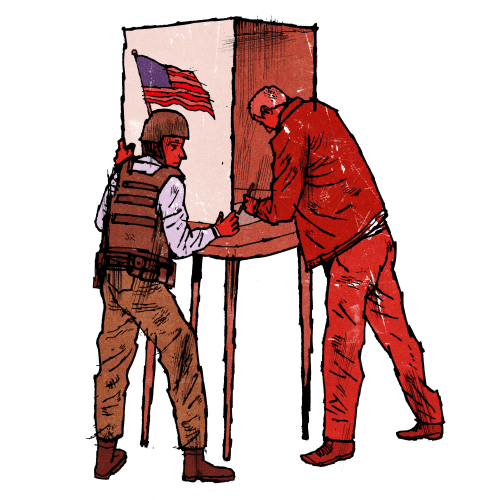
Credit: Matt Rota for ProPublica
“The Swiss Army Knife of Federal Law Enforcement”
Trump’s enlistment of HSI in his election fight is no accident. Cobbled together in the aftermath of 9/11, the agency has 7,100 armed, highly trained agents and another 800 criminal analysts, as well as access to troves of confidential data about hundreds of millions of Americans.
Though part of Immigration and Customs Enforcement, the agency has historically stayed out of immigration cases. During the first Trump administration, leaders of 19 HSI regional offices — virtually its entire top field hierarchy — signed a letter calling for HSI to become a standalone agency, arguing that ICE’s deportation work dissuaded people from cooperating with its investigations. But when Trump returned to the White House, it swiftly became clear that the agency would play a central role in investigations related to the president’s twin obsessions, illegal immigration and noncitizen voting.
Trump picked his field general for repurposing HSI even before taking the oath of office. In December 2024, he named Anthony Salisbury, a 50-year-old career agent who’d run the agency’s Miami office, as a deputy homeland security adviser, reporting to White House policy chief Stephen Miller. He was also given a dual appointment as head of HSI.
Salisbury was colorful: A mixed martial arts enthusiast, he once appeared at the agency’s headquarters with his face bruised and eye blackened from a recent bout. He’d sometimes entertain colleagues by pulling out a bridge that covers his missing front teeth.
To agency veterans, however, he was forever linked to a 2011 operation he’d overseen in Mexico in which one agent was killed and another wounded in a highway ambush by a drug cartel. An agency review submitted to Trump in April 2020 concluded that errors by HSI supervisors, including Salisbury, contributed to the outcome; it urged the administration to consider disciplinary action. None was taken against Salisbury, however.
Salisbury did not respond to requests for comment from ProPublica. A White House official called him “a critical member of the Trump administration” who was “cleared” in every review of the Mexico incident and was subsequently “promoted six times under multiple administrations.”
“It’s one thing if you’re going after Pablo Escobar. It’s another thing if you’re going after some cleaning lady who’s been working in the United States for 20 years and taking care of her 80-year-old mother and taking her little kids to church.”Steve Bunnell, a former DHS general counsel and senior intelligence adviser
Once elevated to his new posts, Salisbury took charge of carrying out the second Trump administration’s agenda for HSI, personally issuing staffing directives, reassignments and promotions, current and former agency officials told ProPublica. (A number of them spoke on condition of anonymity out of fear of retribution.)
Starting in early 2025, Salisbury oversaw the unprecedented reassignment of more than 6,000 agents to immigration enforcement, diverting most of the agency from its normal duties. He then also pointed HSI at noncitizen voting, presiding over multiple meetings with officials at DOJ and Homeland Security focused on election fraud, according to emails reviewed by ProPublica and agency supervisors who worked with him.
“Stephen Miller has an HSI deputy for a reason,” said Eric Balliet, a high-level HSI manager who retired in 2024 after 23 years with the agency. (Like many HSI veterans, Balliet has remained in close contact with former colleagues.) “Salisbury is going to salute and execute, and he is going to make sure that from the HSI side, they fall in line, and there’s going to be no resistance or pushback. HSI has been turned into the Swiss Army knife of federal law enforcement.”
In early July 2025, Frank Quiñones, an HSI special agent who’d worked under Salisbury in Florida, approached leaders at the HSI Innovation Lab with an idea for using the agency’s technology to find noncitizen voters on state voter rolls, sources at the agency told ProPublica. Quiñones had been transferred to Washington to oversee a unit that had previously handled cases involving the theft of government benefits but that had been enlisted into voting investigations.
The lab, housed in an unmarked office in a D.C. suburb, had access to the government’s most sensitive databases, from suspicious activity reports to arrest records. Staffed by a combination of HSI experts and outside consultants, it developed software tools to comb the data for information that could help agents pursue criminal suspects.
Related: DHS deploys 2,000 federal agents to Minneapolis area to carry out ‘largest immigration operation ever’
Quiñones was a true believer in Trump’s claims about election fraud: In multiple Facebook posts and reposts, ProPublica found, he promoted claims that the 2020 presidential vote had been stolen. At a meeting with the Innovation Lab’s overseers, according to sources who worked in the lab, he pitched using the lab’s technology to identify illegal voters — even though the agency lacked voter rolls that included identifiers such as partial Social Security numbers. (Quiñones did not respond to ProPublica requests for comment.)
For proof of concept, Quiñones proposed using a February 2021 public voter list he’d obtained for New Jersey and running it through HSI’s databases. The lab staff viewed his idea as “a little insane,” one recalled — both unreliable and improper. Since the public rolls don’t include voters’ unique identifiers, people at the lab also knew linking them to HSI’s data would produce mismatches — what the staffer called an “ungodly” number of false positives. The lab team also worried about violating longstanding safeguards limiting use of private citizen data. They “didn’t want to touch this,” the staffer added. Quiñones defended his idea, repeatedly declaring: “The president wants this!”
Tom Hodge, an HSI data analyst at the meeting, proposed running the voter information through the Athena Toolbox, an analytical platform developed by the Sandia National Laboratories that had access to all of HSI’s databases. (Hodge did not respond to ProPublica requests for comment. Sandia referred ProPublica’s questions to the facilities’ parent agencies, including the Department of Energy, which did not respond to our requests.)
Hodge and the Sandia team spent the next six weeks on the project, reporting they’d found large numbers of noncitizens on Quiñones’ 2021 New Jersey list. According to one former HSI official, they said they’d found “5,000 high-confidence illegal voters” in just a single New Jersey county. (Officials at the New Jersey secretary of state’s office, which oversees the state’s voter rolls, declined to comment on the claim. Beth Thompson, head of a group for local New Jersey election officials, called the number impossibly high, even accounting for the mistake disclosed by the state.)
The apparent breakthrough couldn’t have come at a better time.
The Trump administration’s other efforts to identify noncitizens on state voter rolls were running into a variety of roadblocks.
The administration had hoped to persuade states to check their voters’ citizenship status using a system called the Systematic Alien Verification for Entitlements, or SAVE, but many didn’t. Most states also refused the Justice Department’s demands to turn over their unredacted voter rolls, including partial Social Security numbers, which thwarted the agency’s plan to run them through SAVE. Courts have stymied the DOJ’s attempts to sue for the records, citing the Constitution, which gives primary control over elections to the states.
In an Aug. 21 email to a half dozen administration officials, Quiñones touted the solution he’d brought to the HSI Innovation Lab: using HSI’s platform to search voter rolls. The results, Quiñones noted, could fuel both criminal and immigration investigations.
By the end of the month, those in top election-related roles at DHS and the Justice Department were actively promoting what they dubbed the “HSI Tool” as a preferred alternative to SAVE, according to people familiar with the matter. Among them was Heather Honey, the prominent election denier appointed as a senior counselor at DHS, who is helping lead the government’s efforts to identify noncitizens on voter rolls. (Honey did not respond to ProPublica’s requests for comment. In an email responding to questions to her, DHS said Honey’s “expertise in election administration” was “invaluable to the Department’s efforts to protect critical infrastructure.”)
The White House, too, got behind the idea. In a November email, J. Brian Sikma, special assistant to the president, excitedly noted that the New Jersey trial cross-checking voter rolls with DHS data appeared to have identified a “very significant number” of “potential non-citizens.” (Sikma didn’t respond to a request for comment.)
The DOJ, Sikma reported, had already obtained public voter rolls for many other states. He included a list of them, adding: “It is of paramount importance that these also be reviewed expeditiously.”
Credit: Matt Rota for ProPublica
Running “Roughshod” Over Privacy
As the push to use HSI’s tech to search voter information gained momentum, a new problem emerged.
Career attorneys at the Justice Department, including specialists on privacy law, raised concerns that transferring voter rolls wholesale from the agency to DHS might not be legal, according to internal emails reviewed by ProPublica and interviews with several former officials.
The voter rolls the DOJ had collected contained sensitive information on millions of Americans. Even the public versions, which political parties and candidates routinely obtain to target ads and messages, included voters’ addresses, birth dates and party affiliations. For the 16 states that have agreed to share their unredacted voter lists, the DOJ had citizens’ partial Social Security numbers or driver’s license information, too.
Federal laws, particularly the Privacy Act, dictate what data government agencies can collect, what it can be used for, how it can be shared, and how it must be protected. Agencies have to disclose their plans in advance, gathering public comment. A person’s information can’t be released or shared without their consent, subject to limited exceptions.
From the outset, the Trump administration’s effort to combine data across federal agencies has repeatedly drawn criticism from courts and whistleblowers for failing to adhere to restrictions meant to keep data private and secure. In June, for example, a judge prohibited the government from using SAVE for mass searches, ruling the administration had violated federal privacy laws by giving DHS access to Social Security data to enhance the tool. The administration has appealed that ruling.
In July 2025, as word got around that the DOJ might hand over voter data to DHS, a half dozen career attorneys who had been reassigned into the voting section voiced their unease to supervisors, according to two former DOJ lawyers. Their concerns were disregarded, prompting most to resign.
Instead, the DOJ’s office of legal counsel pushed forward with plans to share the public voter rolls, claiming a Privacy Act exception allowed HSI to receive such data without public notice as long as it was for law enforcement purposes. DHS just needed to submit a letter officially requesting the data for those purposes, an attorney in the legal counsel’s office explained, according to internal emails.
But this exception was meant to be used to get information on individual criminal suspects, not to gain mass access to data on people suspected of no wrongdoing, according to Nikhel Sus, chief counsel for Citizens for Responsibility and Ethics in Washington, which has sued the Trump administration on behalf of voter and pro-privacy groups, filing the case that eventually limited SAVE’s use.
“[Anthony] Salisbury is going to salute and execute, and he is going to make sure that from the HSI side, they fall in line, and there’s going to be no resistance or pushback. HSI has been turned into the Swiss Army knife of federal law enforcement.”Eric Balliet, a former high-level HSI manager
Peter Winn, a 29-year Justice Department veteran who had served as the agency’s acting privacy chief for nearly a decade, drafted a letter to set out the data-sharing agreement between the DOJ and DHS, according to internal documents reviewed by ProPublica.
Related: How the Trump administration collects immigration data on public assistance recipients
In a Feb. 12 email to two top DOJ officials, he said he’d rewritten an initial draft memo to “make the information sharing arrangement far easier to defend, if and when it is challenged in court.”
Rather than simply handing over the voter rolls, Winn proposed having DHS request “pertinent and relevant” information about specific people from the DOJ, then having technical staff at Justice and Homeland Security “coordinate” to fulfill the requests.
“Having slept on it,” Winn wrote, “I ended up deciding that our initial idea of sending a huge amount of raw unprocessed voter registration data to DHS, involved taking far too much unnecessary legal risk, given that 99% of the data would implicate the privacy and civil liberties of United States Citizens, and would risk adding to the false narrative in the establishment press of DOJ and DHS being unconcerned with the privacy and civil liberties of Americans.”
Winn attached his proposed letter, to be signed by Todd Lyons, then the acting director of ICE.
Winn’s suggested restrictions were quickly abandoned, however. A second draft of the letter, dated March 4, contained altered language providing that the voter information would be “transferred” to HSI, with one exception: Voters’ party affiliation would be redacted, if possible, it said.
The final letter, signed by Lyons and sent to the DOJ just two days later, abandoned even that limitation. Just three paragraphs long, it permitted HSI to use the voter rolls to pursue any “appropriate investigation of potential violations of federal election law.”
In response to questions from ProPublica, Winn said “I can’t really comment on internal drafts of correspondence.”
A Justice Department spokesperson defended the government’s actions, saying “no one should oppose intergovernmental data sharing and coordination that enable swift investigations and prosecution of illegal alien voting.” DHS echoed the DOJ’s view, calling such information sharing “essential to protecting America’s election process by keeping noncitizens off voter rolls” and “an easy step to secure our elections.”
Sus said that by pooling voters’ sensitive personal identifiers, along with their party and voting histories, the administration has “run roughshod” over privacy laws and is creating a “1984-style database” that could be used to surveil political participation.
CREW filed a lawsuit in April on behalf of the nonprofit advocacy group Common Cause that argues it’s illegal for the administration to use the law enforcement exception to justify mass sharing of voter information.
Balliet, the former HSI agent, expressed similar concerns, saying that handing over voter rolls to run through DHS’ systems amounted to “a mass data-collection effort by the government against its own citizens in a non-criminal setting.” On a practical level, he added, the data sharing increased the risk of breaches that can open law-abiding citizens up to identity theft.
“As a citizen, I want the government to take seriously the protection of my private data,” he said. “If it falls into the wrong hands, it’s not the government that suffers. It’s me.”
Credit: Matt Rota for ProPublica
Collapsing Claims
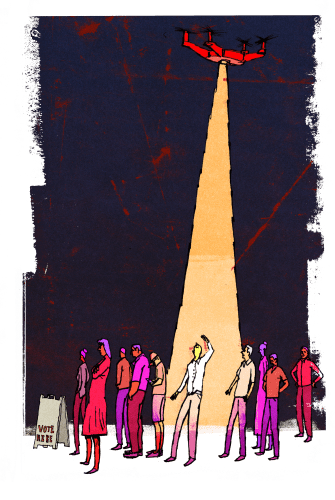
By January 2026, scores of HSI agents were fanning out across the country to investigate thousands of leads about illegal voting.
About 25,000 of them involved people SAVE had identified as potential noncitizens on state voter rolls. Another 15,000 were given to HSI’s cross-border financial crimes unit, which was told to prioritize them over money laundering and fraud cases, a former high-level HSI official said. Quiñones’ unit led a separate effort to find additional cases by reviewing whether people who’d recently become citizens had voted before they were naturalized, then lied about it in naturalization interviews.
Still more leads came from running public voter rolls through the HSI lab’s databases, though it’s not clear how many. Agency sources told ProPublica that the rolls of New Jersey and Pennsylvania were searched using the Athena Toolbox. When DHS announced it had found more than 250,000 noncitizens on the registered voter lists of four Democrat-led states, it said that included “as many as” 35,152 in New Jersey and 14,576 in Pennsylvania. Both states have asked DHS to provide the source of the numbers.
Once federal investigators started digging into these cases, however, they often fell apart.
Through May, prosecutors had charged fewer than four dozen people with crimes related to noncitizen voting, ProPublica’s analysis of DOJ data and federal court filings shows, getting convictions or guilty pleas in 14 cases.
The largest cluster of cases was brought in the Southern District of Florida, headed by Jason Reding Quiñones (no relation to the HSI agent), a staunch Trump ally who has led investigations of the president’s political opponents. Voters have been sentenced in eight of the office’s cases; seven others are pending.
Prosecutors have initiated a total of seven noncitizen voting cases as of May in the four states where DHS claimed to have found more than a quarter million noncitizens on the rolls. Collectively, these states have more than 40 million registered voters.
Overall, the paltry numbers reflect the realities HSI investigators confronted on the ground as they tried to convert leads into cases, a ProPublica review of records obtained by voting-advocacy groups Campaign Legal Center and Democracy Forward shows.
Emails between agents and local election officials in Texas and Ohio indicate much of the federal information on purported noncitizens was inaccurate, the consequence of flawed data matching. When agents demanded voting histories and registration forms, they often discovered people weren’t registered in the counties where HSI thought they were. When voters register, they must attest that they are U.S. citizens; agents found some, however, who’d been put on voter rolls in error after disclosing they weren’t citizens. Many had never voted.
“Our initial idea of sending a huge amount of raw unprocessed voter registration data to DHS, involved taking far too much unnecessary legal risk, given that 99% of the data would implicate the privacy and civil liberties of United States Citizens.”Peter Winn, a Justice Department veteran, in an email urging limits on data sharing that were not adopted
Most HSI agents, steeped in pursuing complex international crimes, had no experience in pursuing voting fraud. In his email to Nick Davis at the Justice Department, Teirab, the top deputy in Minnesota’s U.S. attorney’s office, described the chaos that ensued when the state and at least six counties got subpoenas for voters’ records. The demands “presented a host of issues,” Teirab wrote to Davis. (Davis did not respond to a request for comment.)
“An unknown number of agents are constantly arriving in Minnesota without any knowledge of the investigation, the issues already discussed and decided, and the processes they need to follow,” Teirab complained. “Instead of getting up to speed and learning, they have demanded many calls and subpoenas, most of which demonstrate a complete lack of understanding of the investigation.”
Related: Minnesota election experts: SAVE America Act would disrupt voting to fix ‘a problem that doesn’t exist’
In Stearns County in central Minnesota, HSI agents subpoenaed voting histories on 13 people, county officials told ProPublica. Only six turned out to live there.
Minnesota Secretary of State Steve Simon, a Democrat, said the effort revealed federal investigators’ ignorance about “the nuance of elections administration.” The rate of purposeful election crime is “microscopic,” he said. “The very human errors that can happen are not some sort of plot or scheme to dirty up the voting rolls, but are just everyday human beings making mistakes, not intending at all to violate any law.”
As of May, only one illegal voting case has been referred for prosecution in Minnesota. The state has more than 3.8 million registered voters.
Even Republican-led states like Ohio, which has shared its unredacted voter rolls with the DOJ and run them through the SAVE system, have struggled to meet Trump administration demands to deliver cases.
In October, the Ohio secretary of state referred more than 1,000 voters identified as possible noncitizens to the federal government, claiming 167 had voted at least once since 2018. At least nine HSI agents in Cincinnati and Cleveland began to investigate, emails obtained by Campaign Legal Center and shared with ProPublica show.
The agents bombarded local election officials with requests for voting histories and other records, some dating back decades. “Sorry again for piecemealing these to you,” one agent wrote to an official in Butler County, outside Cincinnati, after making five separate requests over two weeks. Mohamed Al-Hamdani, a Democratic member of Montgomery County’s Board of Elections, which received similar inquiries, said they amounted to “witch hunts” that ate up staff time.
In February, Davis sent an email pressing Ohio’s two U.S. attorneys’ offices for an “election integrity” update, asking: “How close are we to complaints/indictments, how many subjects, what issues you’ve run into, how many referrals have been closed and why, how helpful HSI has been.”
As of May, just two voting cases had been referred for prosecution in Ohio and no one had been charged, federal data shows. The state has nearly 8 million voters.
In the past, it was uncommon for federal prosecutors to pursue charges against noncitizen voters who didn’t understand that it was against the law for them to vote. Without evidence of a coordinated effort or plot, it didn’t make sense to put resources into such prosecutions, a former DOJ official who oversaw election cases said.
Now, however, U.S. attorneys’ offices are taking a different approach, pursuing prosecutions that could result in prison terms or deportation.
In May 2025, federal prosecutors in Florida filed illegal voting charges against a mother and daughter, both Ukrainian citizens, who’d registered after becoming permanent U.S. residents, then voted in the 2024 presidential election. They’ve pleaded not guilty, with the mother saying in an interview with investigators that she thought having a green card meant she could vote. They and their attorneys didn’t respond to requests for comment from ProPublica. The prosecutor handling the case for the Southern District of Florida also didn’t respond to questions. The mother and daughter are scheduled to go to trial in September.
Credit: Matt Rota for ProPublica
“Far-Reaching Consequences”
Experts on both elections and national security warn there may be profound longer-term costs to unleashing the federal government’s investigative and prosecutorial might to try to prove the president’s claims about noncitizen voting.
Current and former HSI agents say critical investigations — including task forces aimed at drug rings, human trafficking and money laundering — have languished as the agency has pivoted to take on noncitizen voting and immigration enforcement.
In February 2026, according to court files and emails reviewed by ProPublica, an HSI agent in Ohio who’d been leading a multistate child sex abuse investigation was abruptly assigned to pursue dozens of leads on suspected noncitizen voters, work that took months. It wasn’t until May that he made an arrest in the other case. Prosecutors have filed child exploitation and pornography charges against the man, 38, in connection with acts involving at least five 14-year-old girls.
Cases like this “don’t just stop,” said Balliet, the 23-year HSI veteran. “When you pull people off them for an extended period of time, those criminal networks will adapt, and people get killed and kidnapped.”
Federal data hints at a broader slowdown in what had been HSI’s most urgent work. According to an annual government report, the number of wiretaps obtained by DHS — often to investigate drug trafficking — plummeted to 23 in 2025, from 133 the previous year. In the report, DHS attributed the decline to several factors, including “changes in administration enforcement and prosecutorial priorities.”
“It’s never been a better time to be involved in transnational organized crime,” said John Tobon, a high-ranking HSI official who retired in early 2025.
“The very human errors that can happen are not some sort of plot or scheme to dirty up the voting rolls, but are just everyday human beings making mistakes, not intending at all to violate any law.”Minnesota Secretary of State Steve Simon
In its statement, DHS denied HSI has neglected its core mission, saying the agency has increased its efforts to combat criminal cartels, gangs and drug traffickers in response to multiple Trump executive orders.
Though HSI’s voting-related investigations have yielded only a small number of prosecutions, voter advocacy groups worry the Trump administration will use them to justify more extreme interventions.
Its latest tactics include threatening to withhold funds from states it says are refusing to check their voter rolls for noncitizens and saying it will prosecute state election officials who “knowingly” fail to remove noncitizens. Trump has also continued to press Congress to enact the SAVE America Act, which would require people to provide proof of citizenship when registering to vote, a measure advocates have criticized as a barrier to voting. Democrats are preparing for the prospect of federal troops being sent to the polls to intimidate voters.
“Those concerns are playing out in real time, with far-reaching consequences,” said Dax Goldstein, a director at the States United Democracy Center, a nonprofit group that works to build confidence in elections. “When federal agencies are misused and weaponized, people lose trust in government itself.”
The post How Trump’s unprecedented effort to prosecute noncitizen voters fell apart appeared first on MinnPost.
WASHINGTON — If you live in Washington, D.C. — and maybe even if you don’t — you know the White House is a massive construction site, the ailing Reflecting Pool is hidden behind fencing and the Kennedy Center is no longer hosting the best of the arts.
What’s new is that the cost of these projects continues to climb.
President Donald Trump’s reshaping of the U.S. Capital, which also includes gilding bronze statues and plans for a massive arch, has already caused consternation here. But it’s the taxpayers in Minnesota and across the country who will foot the bills.
On Wednesday, The Washington Post, citing confidential contracts and other documents, reported that the administration is now planning to spend at least $927 million on White House campus projects, including the East Wing, with most of the money coming from taxpayers.
Also this week, White House officials asked the Justice Department to weigh the possibility of bringing a new criminal case against David Hearn, the former Olympian who was accused of vandalizing the Lincoln Memorial Reflecting Pool, after federal prosecutors dismissed charges against him earlier this month.
Related: D.C. Memo: Trump roils the waters with demolition at White House
That dismissal was based on information that the damage was caused by a “botched installation” by a contractor, not vandals.
Yet Trump continued to say the disaster was caused by vandals, even as he admitted on Truth Social that there “may have been some contractor difficulty.” About $14 million was spent to try to upgrade the pool and it’s not clear how much more it will cost to fix the botched job.
The Trump administration also spent $5.1 million to put gold leaf on two iconic “Arts of War and Arts of Peace” equestrian statues that stand at the Lincoln Memorial Circle. The statues were donated by Italy to the city in 1951.
And the Trump-appointed board of the Kennedy Center once again voted to move forward with Trump’s controversial plan to close the building for a $250 million renovation that will last two years.
The board, which is headed by Trump, also voted to carve the president’s name on the marble of the Kennedy Center in the form of an engraving that says: “Restored and Renovated by President Donald J. Trump.”
The general election is off to a fast start
Minnesota is only a few days into its general election season, having determined in Tuesday’s primaries which Republicans and Democrats will run for office in November’s general election.
Yet super PACs are already buying up airtime and funding digital ads.
A group called the American Action Network that is aligned with GOP leaders in the U.S. House announced Thursday that it was spending $22 million on TV and digital ads in 41 congressional districts, including Rep. Brad Finstad’s southern Minnesota 1st District,
Finstad is facing a stronger-than-expected challenge from Democrat Jake Johnson in that reliably “red district.”
The ads echo Finstad’s praise of Trump’s tax cut package, which has temporarily rolled back federal taxes on tips and on some Social Security income. The ads also accuse Democrats of adopting extremist policies.
Meanwhile on Aug. 5, a week before Tuesday’s primaries, a Democratic group called Win Senate reached out to the state’s TV stations to prepare to buy time slots for an ad blitz supporting the Democratic nominee for U.S. Senate, which turned out to be Lt. Gov. Peggy Flanagan, and attacking Michele Tafoya, the GOP candidate for that seat.
Democrats, who are in the minority in the Senate, need to flip four seats to take control of the Senate while keeping all “blue” states in their hands. But the outreach to the state’s TV stations seems to mean that Democrats want to ensure there’s no problem in keeping Minnesota in their column.
The leader of the Senate Democrats, Sen. Chuck Schumer, however, may be of two minds when it comes to a Flanagan victory. The New York Democrat wants to become Senate Majority Leader should the chamber switch hands. But Flanagan has joined calls to replace Schumer with someone else.
Flanagan has said she’d prefer a “progressive champion” to lead Senate Democrats.
Feds probed MN labor unions, immigrant advocates
Meanwhile, as the New York Times and other outlets reported, four days after Alex Pretti was fatally shot while filming officers during Operation Metro Surge, the Trump administration’s immigration crackdown in Minnesota, the Homeland Security Department quietly opened an investigation at its office in St. Paul.
As the Times wrote: “The target was not the Border Patrol agents who had killed Pretti, a 37-year-old government nurse, in late January. Instead, it was several left-leaning political organizations — labor unions, a climate change group, socialist collectives — that investigators believed had provided help and money to what they described as the ‘violent opportunists and agitators’ on the street.”
Some of the groups under investigation included immigrant advocacy groups, such as Monarca, a local of the AFL-CIO and other labor groups, including the Minneapolis Federation of Educators and the Minnesota Association of Professional Employees.
So far, the Times said none of the 18 Minnesota organizations targeted by the Homeland Security inquiry, conducted with the U.S. attorney’s office in Minnesota, have faced charges.
If you can’t access the Times article, we also posted the AP’s story.
In other news:
▪️ Reporters Trevor Mitchell and Maddie Robinsonwrote thatCedrick Frazier and Anders Folk both advanced through Tuesday’s nonpartisan primary for Hennepin county attorney, setting up a November race that will likely serve as a referendum on the progressive policies of Mary Moriarty, who chose not to run for reelection after serving a single term.
▪️ Maddie Robinson also wrote about Kratom, a substance derived from a tree found in Southeast Asia that is increasingly used as a recreational drug or to self-treat pain, anxiety and opioid abuse. But it can cause dependency and lead to overdoses.
▪️ After the dust cleared on Tuesday’s elections, a question remained: How did Lt. Gov. Peggy Flanagan win such a resounding victory in the Senate primary over Rep. Angie Craig?
▪️ And Matthew Blake wrote about how Minnesota Republican voters shrugged off the endorsements of Donald Trump and the state GOP to elect state House Speaker Lisa Demuth as their choice to run for governor.
Please keep your comments, and any questions, coming. I’ll try my best to respond.
The post D.C. Memo: Trump’s $1B White House makeover appeared first on MinnPost.
WASHINGTON – Both national trends and very local reasons help to explain Lt. Gov. Peggy Flanagan’s overwhelming victory over Rep. Angie Craig in the bitter contest for a U.S. Senate seat.
Craig, a moderate who has represented the 2nd Congressional District since 2019, decided to run for a statewide seat in a bad year for centrist Democrats in primaries. Flanagan beat her with 59% of the vote to Craig’s 39%.
According to an Associated Press analysis, nearly 270 progressive candidates won primaries this year, many of them defeating incumbents.
Flanagan and Matt Little, who won the Democratic primary for the 2nd Congressional District seat, are among the most recent.
Larry Jacobs, a University of Minnesota political science professor, said the “No. 1 reason” Flanagan trounced Craig was that “Donald Trump has radicalized Dems.”
“Half of Americans ‘very strongly’ disapprove of his performance as president and very strongly dislike him,” Jacobs said. “Off the charts.”
Laken Riley Act loomed
Before Sen. Tina Smith announced her retirement last year, setting up the tantalizing opportunity for Craig to run for an open Senate seat, and way before Operation Metro Surge roiled the state nearly a year later, Craig voted for the Laken Riley Act.
That law gave Immigration and Customs Enforcement (ICE) broader authority to detain immigrants charged with certain crimes and was the first bill Trump signed into law.
Flanagan’s campaign pummeled Craig for that vote, even after Craig said she regretted it and launched a vigorous anti-ICE campaign.
Related: After hard-fought primaries, it’s Peggy Flanagan vs. Michele Tafoya for U.S. Senate
Jacobs said it wasn’t just the controversial vote — in which Craig was among about 60 Democrats to cross party lines — that spelled trouble for the lawmaker.
“Angie’s problem wasn’t the vote for Laken alone; it was her apparent collaboration with Trump,” Jacobs said. “Flanagan ran on a full on ‘Fight Trump’ campaign.”
Yet that vote did motivate state Democratic voters, especially because of Operation Metro Surge’s excesses.
Solomon Steen, an immigration attorney, said he decided to support Flanagan after a Venezuelan man was shot by ICE agents near Steen’s home in Minneapolis.
“There were children present, they tear-gassed our neighbors, and we all showed up to protest,” Steen said at Flanagan’s watch party Tuesday night.
“That moment was right before caucuses when everyone was trying to figure out how we are going to respond to this moment,” he added, “and now we’re here and we have nominated our future senator, who will dismantle ICE.”
In her victory speech, Flanagan said, “We need to rip ICE apart and stop them from terrorizing our communities.” Yet she stopped short of following other progressives who insist ICE should be abolished.
The numbers also show that Democrats were much more motivated to vote in the primary than Republicans. That motivation, at least in part, was likely based on a determination to back a candidate who would fight hardest against Trump policies.
According to the Minnesota Secretary of State’s tabulations, 406,518 Republican voters participated in the GOP primary for U.S. Senate, with former sportscaster Michele Tafoya the winner of that contest.
But nearly 697,144 DFLers cast votes for Democrats seeking Smith’s seat, with Flanagan winning 411,432 of those votes. Tafoya, meanwhile, only received 211,623 votes for Republicans who cast ballots in the Senate primary.
Craig was banking on hopes that newly energized DFLers who participated in the Democratic conventions this year, giving Flanagan outsized support, would not be a decisive factor in the primary election. But the results of Tuesday’s elections showed Craig’s hopes were misplaced.
There was also a lopsided turnout when it came to party affiliation in the governor’s primaries and other contests held on Tuesday.
No ‘stop Flanagan’ movement
Flanagan also benefitted the move to the left by the Democratic Party that has resulted in progressives notching unexpected wins in primaries across the nation.
But not all progressives won their races. Notably, Francesca Hong lost narrowly in neighboring Wisconsin on Tuesday night, dealing a major blow to progressives who were hoping to make inroads in the Midwest.
Hong, a political neophyte, was scorched for social media posts that, among other things, said she wanted to “cancel Thanksgiving.” She narrowly lost her primary to David Crowley, an establishment-backed candidate.
Related: Outside groups fuel bitter Senate race between Peggy Flanagan and Angie Craig
In contrast, Flanagan has spent nearly all of her adult life in politics and has been very careful to avoid alienating general election voters, many of whom are more moderate than those who cast ballots in the primary. And unlike Hong, Flanagan had the solid backing of DFLers in local, state and federal government and had run statewide before.
“(Flanagan) is less of a lightning rod than either Hong or (Abdul) El-Sayed,” said Kyle Kondik of the University of Virginia’s Center for Politics.
But unlike Hong, fellow progressive El-Sayed won Michigan’s Democratic primary for U.S. Senate.
Still, Kondik said there “was not a ‘stop Flanagan’ movement in Minnesota in the same way I think there was in Michigan against El-Sayed and in Wisconsin against Hong.”
“Both Flanagan and Craig seemed capable of holding the seat, so voters opted for the more progressive option,” he said. “That’s probably an oversimplification itself but there’s probably something to it.”
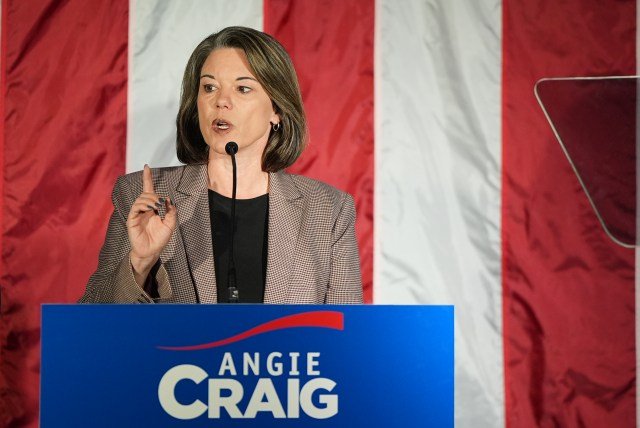
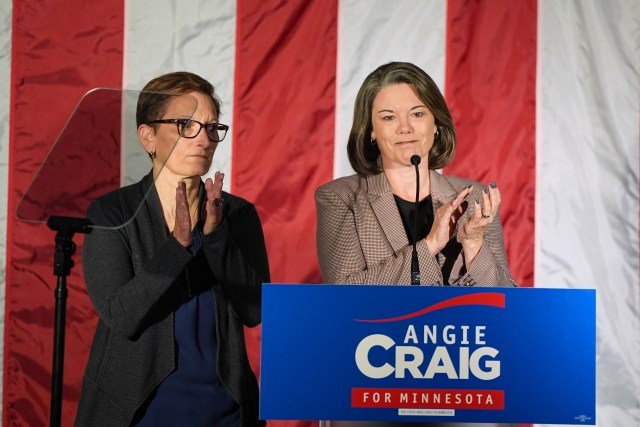
U.S. Rep. Angie Craig, D-Minn., candidate for U.S Senate, addresses supporters during an election night event on Tuesday, Aug. 11, 2026, in St. Paul, Minn. (AP Photo/Abbie Parr) Credit: AP Photo/Abbie Parr
On Wednesday, the National Republican Senatorial Committee, which is heavily invested in promoting Tafoya, attacked Flanagan as a “socialist nut job mired in fraud scandals.” But that type of campaign may not do as well against Flanagan as it did against Hong.
Craig, meanwhile, has closed ranks behind Flanagan, first in a concession speech that urged her supporters to get behind the lieutenant governor.
“I deeply admire Peggy’s commitment to Minnesota and her dedication to improving the lives of everyone around her,” Craig said. “Peggy’s story is one of grit, of determination and resolve. This election was a choice between two women – and it’s a great damn day to see women running – even against each other.”
On Wednesday, Craig followed up with a post on X with a picture of her standing behind Flanagan. The post said “Onward, Together.”
So it seems Craig may not be giving up on politics.
If Sen. Amy Klobuchar wins her race for governor against Minnesota Speaker of the House Lisa Demuth, there will be a second open U.S. Senate seat in the state.
That seat would not be filled immediately through an election, but through an appointment by the governor.
Reporter Claire Carlson contributed to this report.
The post How Peggy Flanagan won a chance to succeed Sen. Tina Smith appeared first on MinnPost.
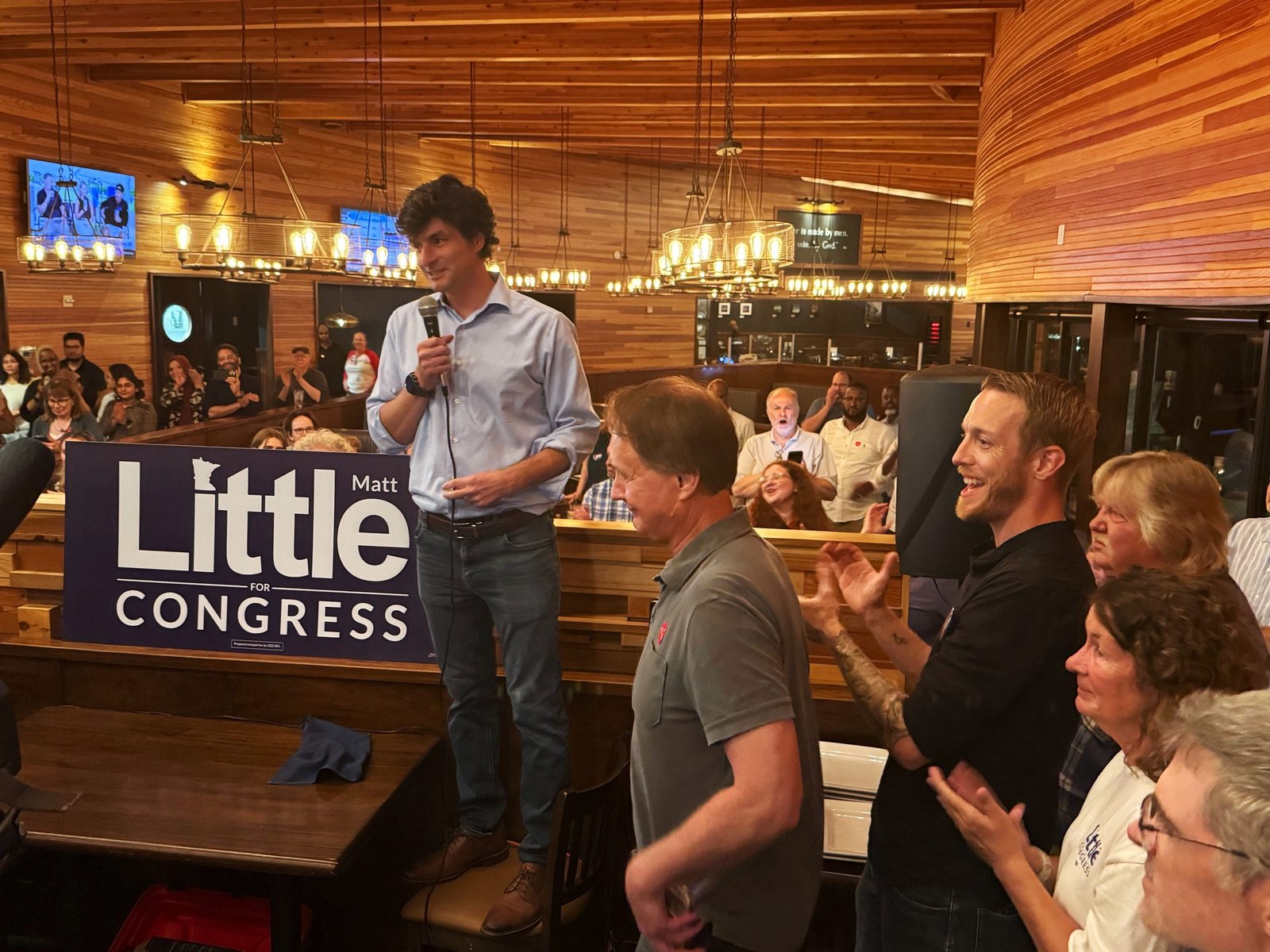
LAKEVILLE, Minn. – Matt Little handily defeated his DFL rivals in the 2nd Congressional District and notched another victory for progressives aiming to increase their influence by winning Democratic primaries this year.
Now his challenge is trying to keep Minnesota’s most “purple” congressional district in DFL hands.
“You can win an election telling the truth,” Little said in his victory speech Tuesday night at his campaign party in this Twin Cities suburb. “You can win an election doing what’s right. You can win an election without selling out our neighbors.”
The race to replace Rep. Angie Craig attracted two progressives, Little and state Rep. Kaela Berg, and a more moderate candidate, state Sen. Matt Klein. With 98% of precincts reporting, Little had won 47.2% of the vote, Klein 30.4% and Berg 16.7%.
Related: Craig’s legacy in ‘purple’ district hangs over the DFLers hoping to replace her
Craig had represented the district since 2018 as a centrist Democrat, sometimes crossing party lines to vote for GOP legislation that bolstered local police and border security.
She gave up the seat to run for the U.S. Senate, where she was locked in a Democratic primary race with Lt. Gov. Peggy Flanagan.
To win and keep the 2nd District, Craig had to hew to the center because it includes urban voters who are loyal Democrats, suburban voters who belong to both parties and or are unaffiliated, and rural voters who are reliably Republican.
Little is a completely different candidate, born of the surge of progressive activism in the Democratic Party that has emerged as a rebuke to the Trump administration’s tough immigration enforcement policies and its relationship with Israel.
Little won the DFL’s endorsement and ran to the left of his primary opponents, even fellow progressive Berg, throughout his campaign. He billed himself as a fighter who wouldn’t compromise on his support for Medicare for All, replacing ICE and fighting what he calls corporate greed.
Related: Matt Little, other Minnesota progressive candidates campaign on ‘Medicare for All’ as ranks of uninsured grow
He exhibited a combative style in interactions with his opponents. At a debate in January, Klein and Berg accused him of mischaracterizing their positions.
“We can’t be bought,” Little said in his victory speech. “You know that private insurance money? We don’t take it because we’re fighting for Medicare for All. You know that private prison money? We don’t take it because the only people that should be in a detention center are those ICE murderers.”
An attorney who specializes in personal injury and malpractice cases, Little raised his profile during Operation Metro Surge.
He spent one or two days a week following federal immigration agents and posting some of those encounters on TikTok, including one of the ICE agents converging at his home in New Market Township.
Angelo Gonzales of Shakopee, who was at Little’s campaign party, said he saw Little demonstrate against ICE during Operation Metro Surge. “I decided during the winter that when Matt became our nominee, I would do everything I can to support him,” he said.
Little, a former Lakeville mayor who also served a term in the state Senate, will face Republican Eric Pratt, a senior member of the state Senate Finance Committee and a former vice president of U.S. Bank, in November’s general election.
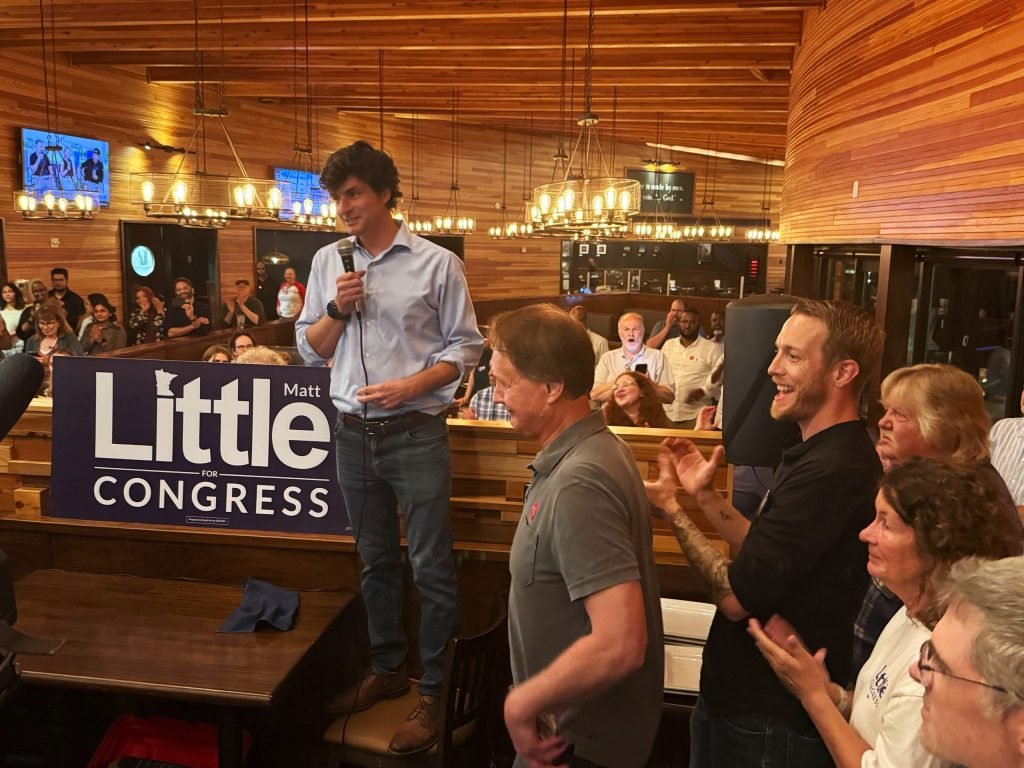
Supporter react to candidate Matt Little’s win in his congressional primary election at the campaign’s watch party in Lakeville, Minn. on Tuesday, August 11, 2026. (Brian Arola/MinnPost) Credit: Brian Arola/MinnPost
“I know for sure Eric Pratt doesn’t want to see me come,” Little told cheering supporters.
The 2nd Congressional District includes the southern Twin Cities metro area and runs south nearly to Mankato, encompassing all of Scott, Dakota and Le Sueur Counties as well as parts of Rice and Washington Counties.
While it was long represented by Republicans in Congress, the 2nd District has trended more Democratic in recent years in part because of population shifts towards its more urban areas. The Cook Political Report rates it as “likely Democratic.”
Related: Klein, Little and Berg hunt for DFL delegates as they wrestle for 2nd District seat
But it also has had a history of being represented by moderates and Little could lose some of the ground Craig made among independents and even some Republicans.
Little pushed back against this idea on the campaign trail. He pointed to his record representing a Republican-leaning city as mayor and a Republican-leaning district in the state Legislature.
Kailen Roeder, a primary voter in Le Sueur, backed Klein. Compared with Little, he said Klein seemed like the more pragmatic and experienced candidate in a similar vein to Craig, whom he backed in the Senate primary.
“Little appeals to a kind of populist, left-wing sentiment and he uses the kind of language and mannerisms as Bernie Sanders,” Roeder said. “I think that there’s a certain value and appeal to that, but I don’t know that it really has practicality.”
That being said, Roeder felt whoever won on Tuesday would be a strong candidate in November.
The post Matt Little prevails in the 2nd District, expanding progressive wins in Democratic primaries appeared first on MinnPost.
This story on Peggy Flanagan was originally reported by Mel Leonor Barclay of The 19th. Meet Mel and read more of their reporting on gender, politics and policy.
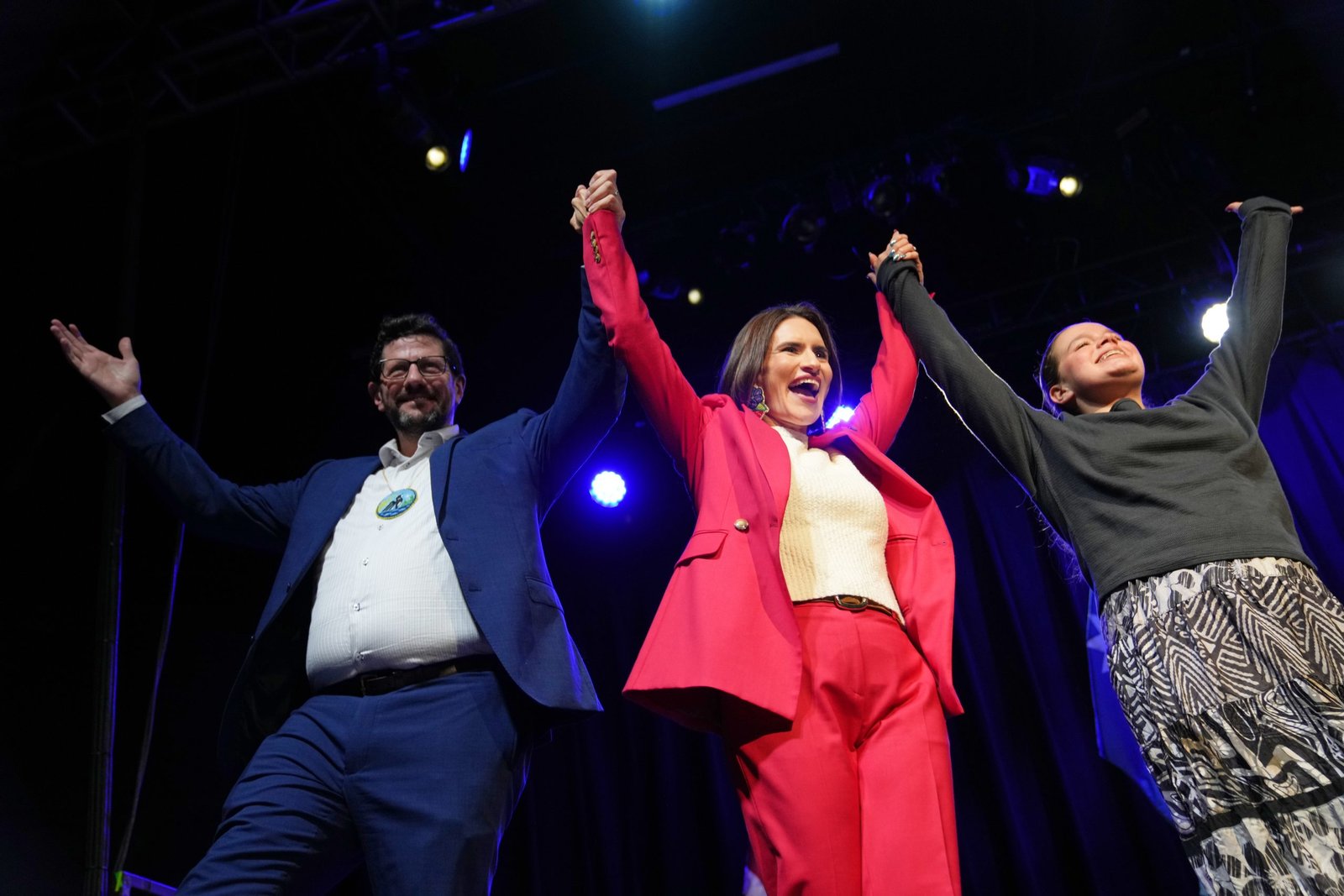
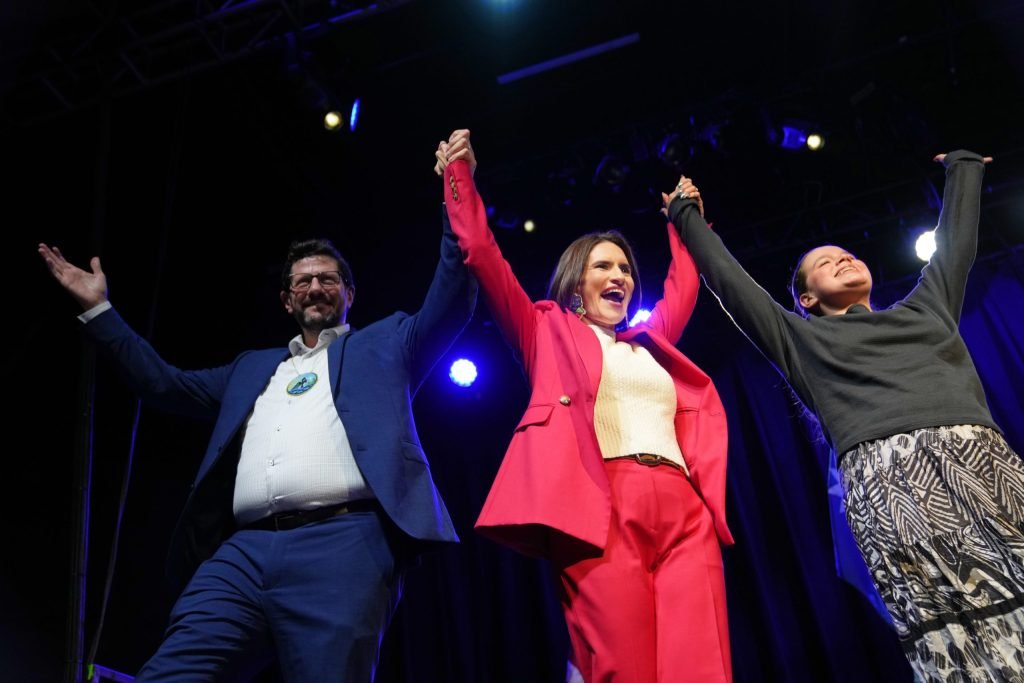
Lt. Gov. Peggy Flanagan easily won Minnesota’s Democratic primary for a U.S. Senate seat, according to Decision Desk HQ, putting her a step closer to becoming the first Native American woman elected to the chamber.
Flanagan, a member of the White Earth Band of Ojibwe, is not the only Native woman who could make history this year: In New Mexico, former Secretary of the Interior Deb Haaland, a Laguna Pueblo member, is widely expected to become New Mexico’s next governor after winning the Democratic nomination in June.
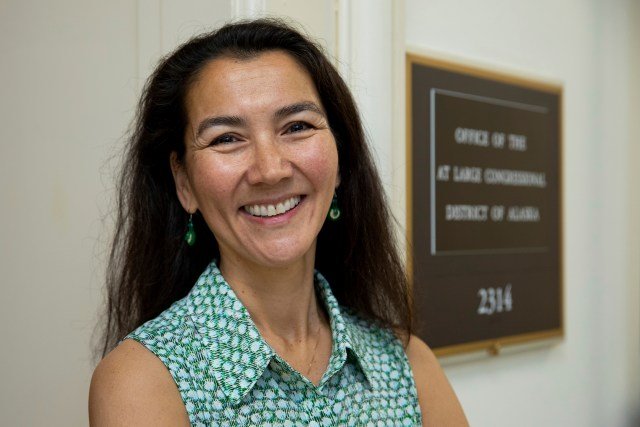
And in Alaska, a hyper-competitive race for an open U.S. Senate seat could return former Rep. Mary Peltola, the first Alaska Native elected to Congress, back to Washington.
Related: After hard-fought primaries, it’s Peggy Flanagan vs. Michele Tafoya for U.S. Senate
Their victories would mark a significant stride toward better representation for Native American women in American politics, making them more visible in the halls of power and giving voice and lived experience to issues that significantly impact this population, from unequal pay to the epidemic of violence facing Native American women.
FILE -Rep.-elect Mary Peltola, D-Alaska, poses for a portrait on Capitol Hill in Washington on Monday, Sept. 12, 2022. (AP Photo/Amanda Andrade-Rhoades) Credit: AP
“Our democracy functions best when it accurately reflects the people it seeks to represent, and so having a Native American woman serving in the United States Senate is good for our democracy,” Flanagan said in an interview with The 19th. “Being an Ojibwe woman is not a hat that I put on and take off. I’m a Native woman every day. I know that you know when I get to Washington, I’m not going by myself. That I am bringing Indian country with me.”
In Tuesday’s primary in Minnesota, Flanagan defeated Rep. Angie Craig, a moderate lawmaker who represents a suburban district south of Minneapolis, by promising to deliver “bold” change with the backing of top progressive leaders. Flanagan heavily criticized Craig over her past support of a Trump-backed immigration enforcement law to win in a state rattled by the administration’s violent immigration enforcement campaign last winter.
Native American women are about 1.5 percent of the U.S. population but have been historically underrepresented as elected officials. To reach equitable representation in Congress, voters would need to elect at least seven Native American women to Congress; right now, there is only one: Rep. Sharice Davids of Kansas, a member of the Ho-Chunk Nation.
Haaland and Davids became the first Native American women to ever serve in Congress when they were sworn into office in 2019. In 2020, Rep. Yvette Herrell was elected to represent New Mexico’s 2nd Congressional District, becoming the first Republican Native American woman in Congress. Herrell, who is a member of the Cherokee Nation, lost her seat to Democrat Rep. Gabe Vasquez in 2022. Peltola joined Congress following a special election in 2022; she lost a reelection bid in 2024.
After her inauguration, Haaland said she was “very grateful” to not be the only Native American woman in Congress. The partnership she developed with Davids, Haaland said, became important as they worked to combat the epidemic of violence against Native Americans, particularly women, who face murder rates at 10 times the national average.
Related: Trump’s immigration crackdown looms over Minnesota’s bruising Senate primary
“When I first was elected to Congress, nobody was talking about it on a national level, and it was me and Sharice Davids who really worked hard to bring it to the attention of our colleagues in the House,” said Haaland, who held the first House hearing on murdered and missing Indigenous women while in Congress and, during the reauthorization of the Violence Against Women Act, advocated for victim services funding for Native American women in state courts. Later, as interior secretary, she created a specialized unit focused on the issue within the Bureau of Indian Affairs.
“It’s going to be steady work by caring people who really want to ensure that we’re making progress on this issue,” Haaland said.
Flanagan said that she is committed to carrying on this work and that she will bring her experience in Minnesota to the table. In Minnesota, Flanagan pushed for the creation of the nation’s first state-level office focused on the issue. Since its creation in 2021, the office has become a key liaison for families navigating the complicated law enforcement system, pushing for clear data to make sure victims aren’t invisible and forging new training standards for Minnesota police officers.
Related: Something new for the Minnesota Legislature: a caucus of first Minnesotans
The office itself was the product of Native women “in decision-making roles and roles of authority,” Flanagan said. She worked with four other Native American women serving in the state’s legislature at the time to push for attention to the issue.
Flanagan said she is also deeply concerned by funding cuts and layoffs that the Trump administration has made to programs that benefit Native American tribes. The Trump administration fired a significant number of federal workers at the Bureau of Indian Education, which operates or funds more than 175 K-12 schools and two higher education institutions. The administration terminated the leases for a dozen Indian Health Services (IHS) offices, and sought to lay off almost 1,000 IHS workers, reversing that last decision only after an outcry. Staff for the Interior Department’s Bureau of Indian Affairs is down by 11 percent, which a government watchdog said has created critical vacancies in an already strained agency tasked with overseeing programs that support law enforcement, schools and the management of natural resources. Many of the services that the federal government funds or provides to tribe members are the obligations of centuries-old treaties.
“The bare minimum that we should expect — like the floor — should be that the federal government honors treaty rights, tribal sovereignty and upholds trust responsibilities,” Flanagan said. “We’ve never done that as a federal government before, but perhaps it will help having the voice of a Native woman serving in the United States Senate to be able to do that work.”
Flanagan will face former NFL broadcaster Michele Tafoya in the general election this November, according to projections. Tafoya, who had the backing of the National Republican Senatorial Committee, is seen as a strong recruit from Republicans with relatively moderate views on abortion bans and gun control laws.
Related: Michele Tafoya has the support of the national GOP, but winning over state activists is a challenge
Haaland’s nomination for New Mexico governor is in itself historic: The first Native American woman to be nominated for governor by a major party was Democrat Paulette Jordan, who ran to lead Idaho in 2020 — just six years ago.
Haaland emphasized that her history-making potential is not central to her run for office, and yet, an important step for representation of Native Americans in government.
“It’s not why I’m running, but it’s who I am,” Haaland said. “When we’ve had the Trump White House denouncing diversity, equity, and inclusion, it’s a reminder to people that representation truly does matter and that there are other voices out there. It’s not business as usual in this election.”
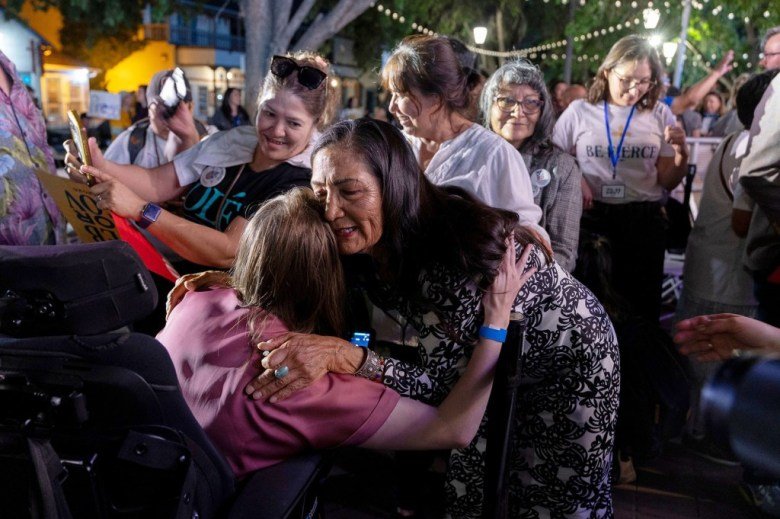
Democratic gubernatorial candidate Deb Haaland hugs and greets supporters following her speech during a primary election night watch party after winning the Democratic nomination, on June 2, 2026, in Albuquerque, New Mexico. (Jon Austria/AP)
Both Haaland and Flanagan, representation of their Native American roots has been immediately visible. Haaland is known for wearing jewelry designed by Native American artists from across the country; Flanagan for wearing clothing designed by Native American designers, inspired by Native American traditions. If she’s elected to Congress, Flanagan said, people can expect more of that.
“It’s so funny, sometimes people — I like to say, dudes online —are like, that’s not what a lieutenant governor is supposed to dress like. And I’m like, well, I am the lieutenant governor, and this is how I dress,” she said. “I want my daughter, and I want other young Native people to see that you can be your full Indigenous self in every place and space.”
For Flanagan, the value of representation comes across on the campaign trail, and in her daughter’s own outlook as a future leader.
“When I hear Siobhan call Deb Haaland Auntie Deb, or when I’m on the campaign trail and young Native women and girls are calling me Auntie Peggy, it is one of the most powerful things that has happened on the campaign trail.”
The post Peggy Flanagan could make history for Native American women in November. She’s not the only one. appeared first on MinnPost.
MINNEAPOLIS – Lt. Gov. Peggy Flanagan defeated Rep. Angie Craig to run as the DFL Party’s candidate for retiring Sen. Tina Smith’s seat, giving progressives in the party another primary win.
Flanagan distanced herself from her former running mate, Gov. Tim Walz, who has been singed by allegations of fraud in state offices and ran a campaign stressing affordability, universal child care and a stronger social safety net.
“I’m running to make sure people can afford their lives,” Flanagan told MinnPost last month.
Craig began the race last year as the apparent front runner, having had plenty of experience campaigning to keep a seat “blue” in the swingy 2nd congressional district.
U.S. Rep. Angie Craig, D-Minn., right, candidate for U.S Senate, addresses supporters next to her wife Cheryl Greene during an election night event on Tuesday, Aug. 11, 2026, in St. Paul, Minn. (AP Photo/Abbie Parr) Credit: AP Photo/Abbie Parr
The lawmaker is also skilled at raising campaign money – something Flanagan sought to turn into a liability by attacking Craig for taking money from corporate PACS.
Still, both campaigns spent heavily.
Related: Trump’s immigration crackdown looms over Minnesota’s bruising Senate primary
Craig’s campaign raised more than $11 million and spent more than $9 million while Flanagan raised more than $6.4 million and spent more than $5.4 million.
Flanagan, meanwhile, has statewide name recognition but less experience campaigning on her own as she won the lieutenant governor’s job on a ticket with Walz, who did most of the stumping.
But Craig’s campaign ran off course during last winter’s immigration enforcement surge in Minnesota.
The reaction and resistance to Trump administration attempts at mass deportations in the state put a spotlight on Craig’s vote in favor of the Laken Riley Act. It gave Immigration and Customs Enforcement broader authority to detain immigrants charged with certain crimes and was the first bill President Donald Trump signed into law.
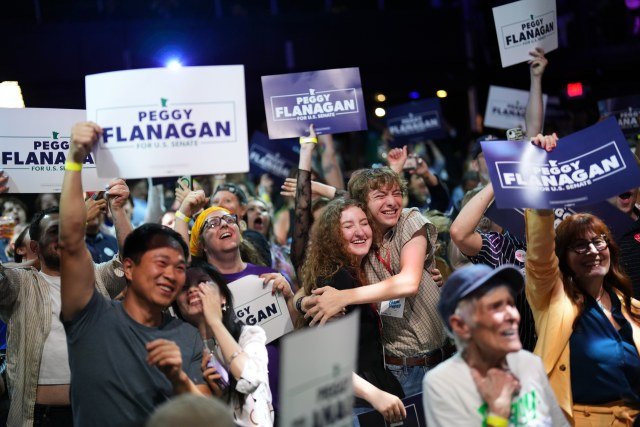
Supporters cheer during an election night event for Minnesota Lt. Gov. Peggy Flanagan, a Democratic candidate for U.S. Senate, on Tuesday, Aug. 11, 2026, in Minneapolis. (AP Photo/Ellen Schmidt) Credit: AP Photo/Ellen Schmidt
Craig eventually said she regretted that vote.
Emboldened by Abdul El-Sayed’s victory in Michigan over a more conservative Democrat, progressives saw an opportunity to expand their reach in the Midwest.
Related: Minnesota and Wisconsin primaries next to feature progressive clash with Democratic establishment
But Democratic Party officials in Washington, D.C., believed the more conservative Craig, who wrested control of the 2nd Congressional District from the GOP, would run better statewide.
Dan Poffenberger of Stillwater, a Lutheran pastor at Shepherd of the Lake Lutheran Church and Craig’s pastor, said that moderation served her well.
“I grew up in a moderate Republican household, and so it resonates with me that she could win in a very purple district over and over again,” Poffenberger said at Craig’s watch party in St. Paul. “And I watched how hard she worked, especially in the rural areas, to connect with people and to understand the issues. Like she had to really master ag policy, and that’s not easy.”
As the official Democratic candidate, Flanagan will face Michele Tafoya, who won the Republican Senate primary race.
Tafoya’s win breaks with recent GOP tradition, which favors the endorsed candidate, especially in statewide elections. Former Navy SEAL Adam Schwarze was the endorsed Republican candidate.
Tafoya had better name recognition than her opponents, who besides Schwarze included former NBA player Royce White and former Navy submariner Tom Weiler.
Related: Michele Tafoya has the support of the national GOP, but winning over state activists is a challenge
Her campaign also greatly outraised and outspent her GOP rivals and was heavily promoted by the National Republican Senatorial Committee (NRSC).
Republicans have not won a statewide race in Minnesota since 2006, having failed to field candidates who appeal to voters in a state that’s closely divided regarding allegiance to political parties.
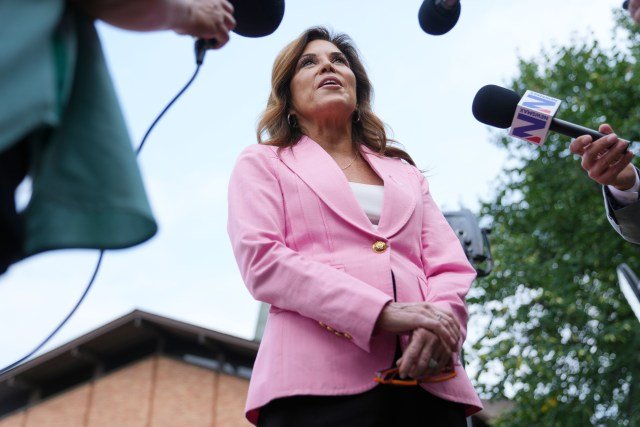
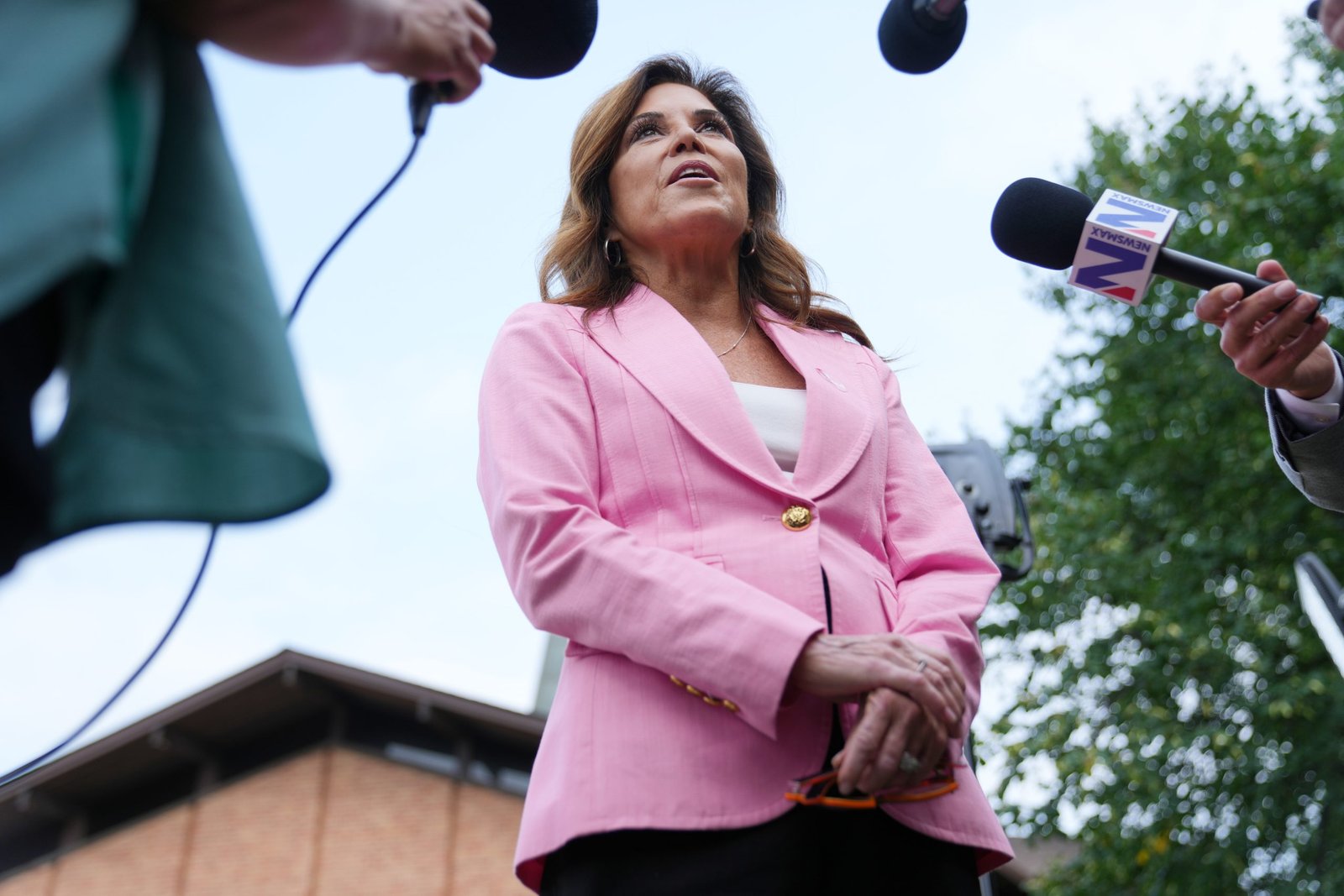
Michele Tafoya, a Republican candidate for U.S. Senate, answers questions after voting on Tuesday, Aug. 11, 2026, in Minneapolis. (AP Photo/Ellen Schmidt) Credit: AP Photo/Ellen Schmidt
While she shifted to the right during the primary race, Tafoya is expected to drift back to relatively moderate positions she’s previously espoused on issues like abortion as she battles Flanagan for Smith’s seat.
The post Peggy Flanagan overcomes Walz baggage in beating Angie Craig for the DFL Senate nomination appeared first on MinnPost.
WASHINGTON – Millions in spending by outside groups to influence the hotly contested U.S. Senate primary race between Lt. Gov. Peggy Flanagan and Rep. Angie Craig is filling the airwaves with attack ads and demonstrating the power of money in politics.
Television ads and other appeals will reach a crescendo as next Tuesday’s primary election draws near because the political action groups funding them have ramped up their last-minute spending.
The campaigns of Flanagan and Craig, Democrats vying to win retiring Sen. Tina Smith’s seat, are forbidden by law from coordinating with these outside groups spending big money on their behalf.
But there doesn’t have to be direct contact to know what a candidate wants and needs. Campaigns helpfully post their positions on their campaign websites to inform outside groups. And there are often relationships between the candidate and outside groups.
Related: Craig’s legacy in ‘purple’ district hangs over the DFLers hoping to replace her
For instance, Flanagan has benefitted from nearly $2.5 million in spending by the Democratic Lieutenant Governor’s Association (DLGA) political action committee, according to an analysis by Sunlight Research.
Flanagan served a one-year term as head of the DLGA. Now its PAC has spent nearly $500,000 in ads that support Flanagan and about $2 million in ads that attack Craig.
Top donors to the PAC include the Forward Movement Foundation, which donated $1 million and does not disclose its donors. The foundation has also given $4 million to the American Israel Public Affairs Committee (AIPAC).
Other top donors to the DLGA PAC include health care giants Vertex Pharmaceuticals and AstraZeneca, the Lockheed Martin employees PAC and AIPAC secretary and treasurer Mark Rubin, who gave $111,500.
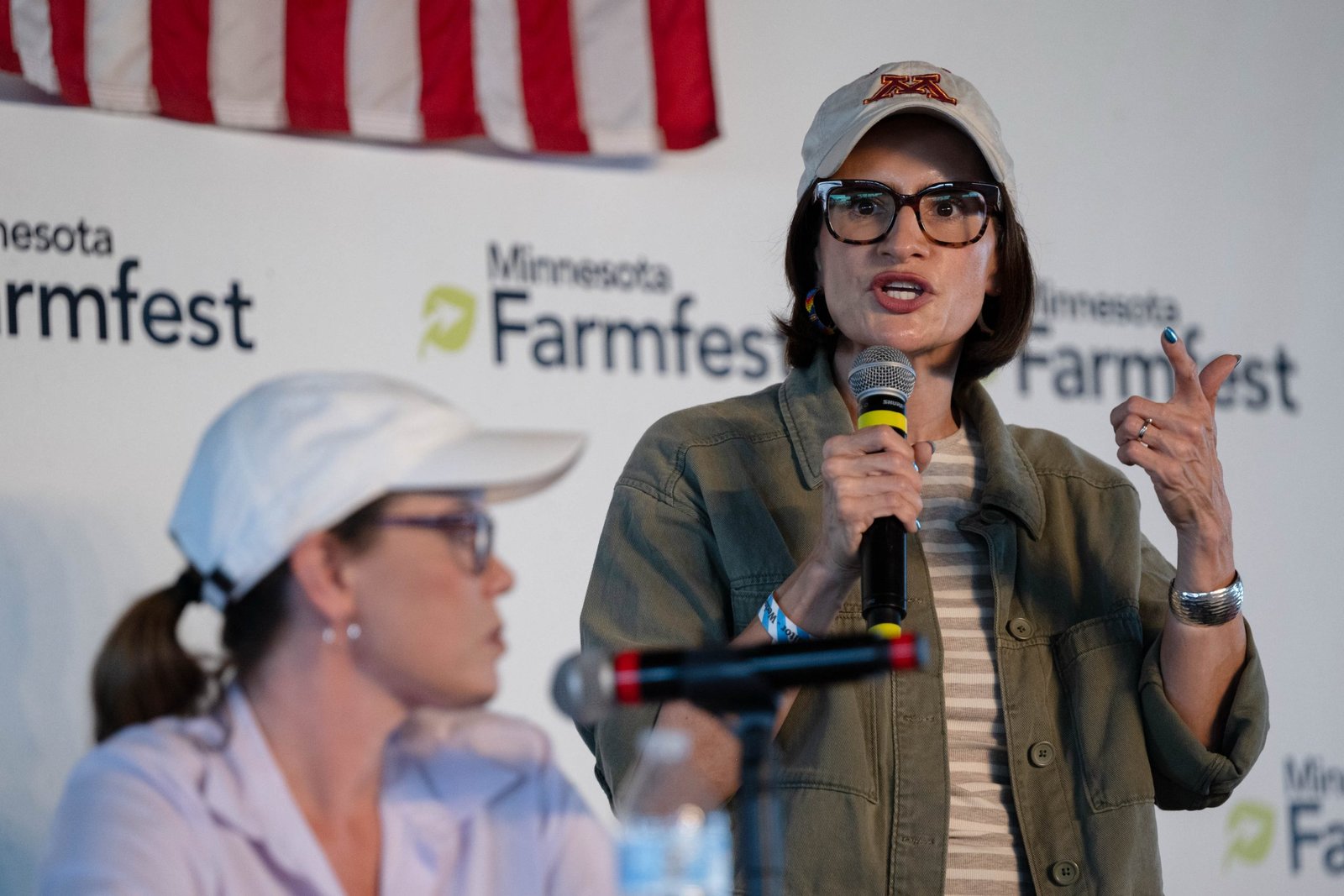
U.S. Rep. Angie Craig, D-2nd District, a Democratic candidate for U.S. Senate, speaks during Farmfest in Morgan, Minn., on Aug. 5, 2026. Credit: Bridget Bennett/MinnPost/CatchLight Local/Report for America
The DLGA also has a separate, non-profit PAC whose top donors included CVS, Wells Fargo, Comcast and United Health Care.
Flanagan has made it a tenet of her campaign to not accept any corporate PAC money and has excoriated Craig for accepting money from corporate donors, which she says makes Craig beholden to them.
Craig’s retort is that the lieutenant governor is hypocritical because her campaign benefits from corporate donors that give to the DLGA PACs.
DLGA executive director Kevin Holst said the organization’s PACs were formed to help Democratic lieutenant governors get elected. Unlike Minnesota, where the lieutenant governor candidate runs with his or her party’s candidate for governor on one slate, 17 states, including Texas, North Carolina and California, hold separate races for governor and lieutenant governor.
But Holst said the PAC’s policy was changed in 2024 to also help lieutenant governors in primaries for other political offices.
This year, the PAC backed New Jersey Lt. Gov. Tahesha Way, who lost a primary for a U.S. House seat, and Illinois Lt. Gov. Juliana Stratton, who won a primary to run as the Democratic candidate for U.S. Senate in her state.
After Stratton won that primary, the DLGA pivoted to Flanagan’s race.
Holst said the PAC is helping Flanagan “level the playing field” against Craig, who has raised more campaign cash than the lieutenant governor and has much more outside money helping her campaign. He said the DLGA PACs are “sister committees of the Democratic Party.”
He also said the DLGA’s help is not crucial to Flanagan’s campaign.
“This is going to be a safe ‘blue’ seat and we think Lt. Gov. Flanagan is going to win it handily, even without our help,” Holst said.
Outside groups spend millions to help Craig
Craig was a prodigious fundraiser in her battles to keep the “swingy” 2nd Congressional District in Democratic hands and has for years benefitted from spending by outside groups.
The main group, called North Star Dawn PAC (Dawn, by the way, is Craig’s middle name) has spent about $7 million on TV ads promoting Craig and attacking Flanagan and millions more on digital ads and direct mail.
The group was launched in May, about the same time the DLGA PAC began spending on behalf of Flanagan.
Like the DLGA PAC, the North Star Dawn PAC is a super PAC, a type of political action committee that can raise and spend unlimited amounts of money from individuals, corporations, and unions to advocate for or against political candidates.
But the North Star Dawn PAC receives most of its funding from a group called Civic Progress, which is not required to publicly identify the individuals or organizations that fund it, classifying it as “dark money.”
The North Star Dawn PAC is run by several Democratic consultants who have worked on other Democratic campaigns, including Jerid Kurtz, who was briefly a campaign manager for Sen. Raphael Warnock, D-Ga.
The PAC did not respond to requests for information about its support of Craig. Craig’s campaign said it did not know anything about this deep-pocketed supporter.
Craig has other outside help, too.
Like Civic Progress, there are other groups that do not disclose their donors called Unite to Win, Minnesotans for Progress and Center Forward that also spent money – a total of almost $6 million – to boost Craig’s candidacy.
“Dark money is worse than any other source in a campaign because you don’t know where it’s coming from,” said Public Citizen lobbyist Craig Holman. “It could come from a single, very wealthy, individual who is trying to buy an election.”
An ‘onslaught of money’
Craig told MinnPost she “deplores the onslaught of money” in political races.
But she also said she is not about to disarm unilaterally and ban corporate donors or discourage the help of outside groups, especially since the U.S. Supreme Court recently struck down federal limits on how much money political parties can spend in coordination with candidates, a decision that is said to favor the GOP.
“I don’t think, as Democrats, we can tie one hand behind our backs,” Craig said.
She also said she’d welcome tighter restrictions on campaign funding, just as long as they applied to all candidates for political office.
Sen. Elizabeth Warren, D-Mass., who has stumped in Minnesota for Flanagan and is a major proponent of campaign finance reform, said she was impressed when the lieutenant governor called her and said her campaign would not take any corporate PAC money.
“Most people would like that money but Peggy said ‘no,’” Warren said. “She wanted to give people of Minnesota a real choice.”
Related: Angie Craig hopes risky new strategy will stop Flanagan’s momentum
Warren said progressives like her and Flanagan will never “get big structural change” unless they “change the structure of money.”
“He who pays the piper plays the tune,” Warren said.
But even with the best of intentions, money floods into American politics. That’s how the DLGA was able to greatly increase its fundraising – and help Flanagan — in this campaign cycle.
Holman said federal campaign laws “themselves are good.” But the not so good are the interpretation and reversal by the Supreme Court of those laws, beginning with the landmark 2010 Citizens United decision.
That ruling reversed century-old campaign finance restrictions and enabled corporations and other outside groups to spend unlimited money on elections.
“We really have no reasonable regulations on money in politics today,” Holman said.
Michael Nolan and Seraphina Harris-Feron from MuckRock’s Sunlight Research Desk provided research and data analysis for this story.
The post Outside groups fuel bitter Senate race between Peggy Flanagan and Angie Craig appeared first on MinnPost.
WASHINGTON – Millions in spending by outside groups to influence the hotly contested U.S. Senate primary race between Lt. Gov. Peggy Flanagan and Rep. Angie Craig is filling the airwaves with attack ads and demonstrating the power of money in politics.
Television ads and other appeals will reach a crescendo as next Tuesday’s primary election draws near because the political action groups funding them have ramped up their last-minute spending.
The campaigns of Flanagan and Craig, Democrats vying to win retiring Sen. Tina Smith’s seat, are forbidden by law from coordinating with these outside groups spending big money on their behalf.
But there doesn’t have to be direct contact to know what a candidate wants and needs. Campaigns helpfully post their positions on their campaign websites to inform outside groups. And there are often relationships between the candidate and outside groups.
Related: Craig’s legacy in ‘purple’ district hangs over the DFLers hoping to replace her
For instance, Flanagan has benefitted from nearly $2.5 million in spending by the Democratic Lieutenant Governor’s Association (DLGA) political action committee, according to an analysis by Sunlight Research.
Flanagan served a one-year term as head of the DLGA. Now its PAC has spent nearly $500,000 in ads that support Flanagan and about $2 million in ads that attack Craig.
Top donors to the PAC include the Forward Movement Foundation, which donated $1 million and does not disclose its donors. The foundation has also given $4 million to the American Israel Public Affairs Committee (AIPAC).
Other top donors to the DLGA PAC include health care giants Vertex Pharmaceuticals and AstraZeneca, the Lockheed Martin employees PAC and AIPAC secretary and treasurer Mark Rubin, who gave $111,500.
U.S. Rep. Angie Craig, D-2nd District, a Democratic candidate for U.S. Senate, speaks during Farmfest in Morgan, Minn., on Aug. 5, 2026. Credit: Bridget Bennett/MinnPost/CatchLight Local/Report for America
The DLGA also has a separate, non-profit PAC whose top donors included CVS, Wells Fargo, Comcast and United Health Care.
Flanagan has made it a tenet of her campaign to not accept any corporate PAC money and has excoriated Craig for accepting money from corporate donors, which she says makes Craig beholden to them.
Craig’s retort is that the lieutenant governor is hypocritical because her campaign benefits from corporate donors that give to the DLGA PACs.
DLGA executive director Kevin Holst said the organization’s PACs were formed to help Democratic lieutenant governors get elected. Unlike Minnesota, where the lieutenant governor candidate runs with his or her party’s candidate for governor on one slate, 17 states, including Texas, North Carolina and California, hold separate races for governor and lieutenant governor.
But Holst said the PAC’s policy was changed in 2024 to also help lieutenant governors in primaries for other political offices.
This year, the PAC backed New Jersey Lt. Gov. Tahesha Way, who lost a primary for a U.S. House seat, and Illinois Lt. Gov. Juliana Stratton, who won a primary to run as the Democratic candidate for U.S. Senate in her state.
After Stratton won that primary, the DLGA pivoted to Flanagan’s race.
Holst said the PAC is helping Flanagan “level the playing field” against Craig, who has raised more campaign cash than the lieutenant governor and has much more outside money helping her campaign. He said the DLGA PACs are “sister committees of the Democratic Party.”
He also said the DLGA’s help is not crucial to Flanagan’s campaign.
“This is going to be a safe ‘blue’ seat and we think Lt. Gov. Flanagan is going to win it handily, even without our help,” Holst said.
Outside groups spend millions to help Craig
Craig was a prodigious fundraiser in her battles to keep the “swingy” 2nd Congressional District in Democratic hands and has for years benefitted from spending by outside groups.
The main group, called North Star Dawn PAC (Dawn, by the way, is Craig’s middle name) has spent about $7 million on TV ads promoting Craig and attacking Flanagan and millions more on digital ads and direct mail.
The group was launched in May, about the same time the DLGA PAC began spending on behalf of Flanagan.
Like the DLGA PAC, the North Star Dawn PAC is a super PAC, a type of political action committee that can raise and spend unlimited amounts of money from individuals, corporations, and unions to advocate for or against political candidates.
But the North Star Dawn PAC receives most of its funding from a group called Civic Progress, which is not required to publicly identify the individuals or organizations that fund it, classifying it as “dark money.”
The North Star Dawn PAC is run by several Democratic consultants who have worked on other Democratic campaigns, including Jerid Kurtz, who was briefly a campaign manager for Sen. Raphael Warnock, D-Ga.
The PAC did not respond to requests for information about its support of Craig. Craig’s campaign said it did not know anything about this deep-pocketed supporter.
Craig has other outside help, too.
Like Civic Progress, there are other groups that do not disclose their donors called Unite to Win, Minnesotans for Progress and Center Forward that also spent money – a total of almost $6 million – to boost Craig’s candidacy.
“Dark money is worse than any other source in a campaign because you don’t know where it’s coming from,” said Public Citizen lobbyist Craig Holman. “It could come from a single, very wealthy, individual who is trying to buy an election.”
An ‘onslaught of money’
Craig told MinnPost she “deplores the onslaught of money” in political races.
But she also said she is not about to disarm unilaterally and ban corporate donors or discourage the help of outside groups, especially since the U.S. Supreme Court recently struck down federal limits on how much money political parties can spend in coordination with candidates, a decision that is said to favor the GOP.
“I don’t think, as Democrats, we can tie one hand behind our backs,” Craig said.
She also said she’d welcome tighter restrictions on campaign funding, just as long as they applied to all candidates for political office.
Sen. Elizabeth Warren, D-Mass., who has stumped in Minnesota for Flanagan and is a major proponent of campaign finance reform, said she was impressed when the lieutenant governor called her and said her campaign would not take any corporate PAC money.
“Most people would like that money but Peggy said ‘no,’” Warren said. “She wanted to give people of Minnesota a real choice.”
Related: Angie Craig hopes risky new strategy will stop Flanagan’s momentum
Warren said progressives like her and Flanagan will never “get big structural change” unless they “change the structure of money.”
“He who pays the piper plays the tune,” Warren said.
But even with the best of intentions, money floods into American politics. That’s how the DLGA was able to greatly increase its fundraising – and help Flanagan — in this campaign cycle.
Holman said federal campaign laws “themselves are good.” But the not so good are the interpretation and reversal by the Supreme Court of those laws, beginning with the landmark 2010 Citizens United decision.
That ruling reversed century-old campaign finance restrictions and enabled corporations and other outside groups to spend unlimited money on elections.
“We really have no reasonable regulations on money in politics today,” Holman said.
Michael Nolan and Seraphina Harris-Feron from MuckRock’s Sunlight Research Desk provided research and data analysis for this story.
The post Outside groups fuel bitter Senate race between Peggy Flanagan and Angie Craig appeared first on MinnPost.