Category: World

  • Exit poll shows liberal candidate Lee forecast to win South Korean presidential election

    Exit poll shows liberal candidate Lee forecast to win South Korean presidential election

    SEOUL, South Korea (AP) — Liberal candidate Lee Jae-myung is forecast to win South Korea’s snap presidential election, a joint exit poll on Tuesday showed, two months after his archrival and then conservative President Yoon Suk Yeol was removed from office over his short-lived imposition of martial law.

    The exit poll by South Korea’s three major TV stations -– KBS, MBC and SBS -– showed Lee projected to obtain 51.7% of the total votes cast, beating main conservative candidate Kim Moon Soo on 39.3%.

    READ MORE: What to know about South Korea’s presidential election

    Pre-election surveys also suggested Lee, the Democratic Party candidate, appeared headed for an easy win, riding on deep public frustration over the conservatives in the wake of Yoon’s martial law debacle. Kim has struggled to win over moderate, swing voters as his People Power Party remains in a quagmire of internal feuding over how to view Yoon’s actions.

    As the exit poll was announced, Democratic Party members cheered and applauded in jubilant scenes at a party hall, chanting Lee’s name. At Kim’s party headquarters, lawmakers sat in silence.

    Voting began at 6 a.m. local time at 14,295 polling stations nationwide and closed at 8 p.m. Nearly 80% of the country’s 44.4 million eligible voter cast ballots, according to an ongoing tally. That’s one of the highest turnouts for a presidential election in South Korea and reflected public eagerness to move past the political turmoil.

    The election serves as another defining moment in the country’s resilient democracy, but observers worry a domestic divide worsened after Yoon’s martial law stunt is far from over and could pose a big political burden on the new president.

    The past six months saw large crowds of people rallying in the streets to either denounce or support Yoon, while a leadership vacuum caused by Yoon’s impeachment and ensuing formal dismissal rattled the country’s high-level diplomatic activities and financial markets.

    The winning candidate will immediately be sworn in as president Wednesday for a single, full term of five years without the typical two-month transition period.

    Promise to revitalize the economy

    The new president will face major challenges including a slowing economy, U.S. President Donald Trump’s America-first policies and North Korea’s evolving nuclear threats.

    In a Facebook posting earlier Tuesday, Lee, whose Democratic Party led the legislative effort to oust Yoon, called for voters to “deliver a stern and resolute judgement” against the conservatives over martial law.

    In one of his final campaign speeches Monday, Lee argued that a win by Kim would mean the “the return of the rebellion forces, the destruction of democracy and the deprival of people’s human rights.” He also promised to revitalize the economy, reduce inequality and ease national divisions. He urged the people to vote for him.

    Kim, a former labor minister under Yoon, warned that a Lee win would allow him to wield excessive power, launch political retaliation against opponents and legislate laws to protect him from various legal troubles, as his party already controls parliament.

    Lee “is now trying to seize all power in South Korea and establish a Hitler-like dictatorship,” Kim told a rally in the southeastern city of Busan.

    Pragmatic diplomacy

    Lee, who served as governor of Gyeonggi province and mayor of Seongnam city, has been a highly divisive figure in South Korean politics for years.

    As a former child laborer known for his inspirational rags-to-riches story, Lee came to fame through biting criticism of the country’s conservative establishment and calls to build a more assertive South Korea in foreign policy. That rhetoric has given him an image as someone who can institute sweeping reforms and fix the country’s deep-seated economic inequality and corruption.

    READ MORE: South Korean opposition leader Lee Jae-myung announces presidential bid after Yoon’s ouster

    His critics view him as a dangerous populist who relies on a political division and backpedals on promises too easily.

    On foreign policy, Lee has not made any contentious remarks recently and has steadfastly vowed to pursue pragmatic diplomacy. He has called South Korea’s alliance with the U.S. the foundation of its foreign policy and promised to solidify a trilateral Seoul-Washington-Tokyo partnership, a stance that is not much different than the position held by South Korea’s conservatives.

    Experts say there aren’t many diplomatic options for South Korea as it tries to address Trump’s tariff hikes and calls for South Korea to pay more for the cost of the U.S. military presence, as well as North Korea’s headlong pursuit of nuclear weapons. Experts say that has made both Lee and Kim avoid unveiling ambitious foreign policy goals.

    Impact of tariff hikes

    Lee’s government still could become engaged in “a little bit of friction” with the Trump administration, while Kim’s government, which prioritize relations with Washington, would likely offer more concessions to the U.S., said Chung Jin-young, a former dean of the Graduate School of Pan-Pacific International Studies at South Korea’s Kyung Hee University.

    Chung predicted Lee won’t be able to pursue overly drastic steps on foreign policy and security, given the country’s foreign exchange and financial markets are very vulnerable to such changes.

    Lee has preached patience over Trump’s tariff policy, arguing it would be a mistake to rush negotiations in pursuit of an early agreement with Washington. Kim has said he would meet Trump as soon as possible.

    On Monday, South Korean trade officials held an emergency meeting to discuss a response to Trump’s announcement that the U.S. will raise tariffs on steel and aluminum products to 50% beginning June 4. South Korea’s central bank last week sharply lowered its 2025 growth outlook to 0.8%, citing the potential impact of Trump’s tariff hikes and weak domestic demand worsened by the political turmoil of past months.

    Warmer ties with North Korea?

    Relations with North Korea remain badly strained since 2019, with the North focused on expanding its nuclear arsenal while refusing dialogues with South Korea and the U.S.

    Since his second term began in January, Trump has repeatedly expressed his intent to resume diplomacy with North Korean leader Kim Jong Un, but Kim has so far ignored the offer while making Russia his priority in foreign policy.

    Lee, who wants warmer ties with North Korea, recently acknowledged it would be “very difficult” to realize a summit with Kim Jong Un anytime soon. Lee said he would support Trump’s push to restart talks with Kim Jong Un, which he believed would eventually allow South Korea to be involved in some projects in North Korea.

    Foreign policy strategists for Lee understand there isn’t much South Korea can do to bring about a denuclearization of North Korea, said Paik Wooyeal, a professor at Seoul’s Yonsei University.

    He said Lee also doesn’t share the Korean nationalistic zeal held by ex-liberal President Moon Jae-in, who met Kim Jong Un three times during his 2017-22 term.

    Support PBS News Hour

    Your donation makes a difference in these uncertain times.


  • China says U.S. violating tariffs truce with moves on AI chips and student visas

    China says U.S. violating tariffs truce with moves on AI chips and student visas

    TAIPEI, Taiwan (AP) — China criticized the U.S. on Monday over moves it alleged harmed Chinese interests, including issuing AI chip export control guidelines, stopping the sale of chip design software to China, and planning to revoke Chinese student visas.

    “These practices seriously violate the consensus,” the Commerce Ministry said in a statement, referring to a China-U.S. joint statement in which the United States and China agreed to slash their massive recent tariffs, restarting stalled trade between the world’s two biggest economies.

    But last month’s de-escalation in President Donald Trump’s trade wars did nothing to resolve underlying differences between Beijing and Washington and Monday’s statement showed how easily such agreements can lead to further turbulence.

    READ MORE: Trump administration rescinds rule limiting AI chip exports to foreign markets

    The deal lasts 90 days, creating time for U.S. and Chinese negotiators to reach a more substantive agreement. But the pause also leaves tariffs higher than before Trump started ramping them up last month. And businesses and investors must contend with uncertainty about whether the truce will last.

    U.S. Trade Representative Jamieson Greer said the U.S. agreed to drop the 145% tax Trump imposed last month to 30%. China agreed to lower its tariff rate on U.S. goods to 10% from 125%.

    The Commerce Ministry said China held up its end of the deal, canceling or suspending tariffs and non-tariff measures taken against the U.S. “reciprocal tariffs” following the agreement.

    “The United States has unilaterally provoked new economic and trade frictions, exacerbating the uncertainty and instability of bilateral economic and trade relations,” while China has stood by its commitments, the statement said.

    It also threatened unspecified retaliation, saying China will “continue to take resolute and forceful measures to safeguard its legitimate rights and interests.”

    Trump stirred further controversy Friday, saying he will no longer be nice with China on trade, declaring in a social media post that the country had broken an agreement with the United States.

    Hours later, Trump said in the Oval Office that he will speak with Chinese President Xi Jinping and “hopefully we’ll work that out,” while still insisting China had violated the agreement.

    “The bad news is that China, perhaps not surprisingly to some, HAS TOTALLY VIOLATED ITS AGREEMENT WITH US,” Trump posted. “So much for being Mr. NICE GUY!”

    In response to recent comments by Trump, the Commerce Ministry said of the U.S.: “Instead of reflecting on itself, it has turned the tables and unreasonably accused China of violating the consensus, which is seriously contrary to the facts.”

    U.S. Commerce Secretary Howard Lutnick said that the Chinese were “just slow rolling the deal” from Geneva.

    Appearing on Fox News on Sunday, Lutnick said the U.S. was “taking certain actions to show them what it feels like on the other side of that equation,” adding that Trump would “work it out” with Xi.

    The Trump administration also stepped up the clash with China in other ways last week, announcing that it would start revoking visas for Chinese students studying in the U.S.

    U.S. campuses host more than 275,000 students from China.

    Both countries are in a race to develop advanced technologies such as artificial intelligence, with Washington seeking to curb China’s access to the most advanced computer chips. China is also seeking to displace the U.S. as the leading power in the Asia-Pacific, including through gaining control over close U.S. partner and leading tech giant Taiwan.

    Support PBS News Hour

    Your donation makes a difference in these uncertain times.
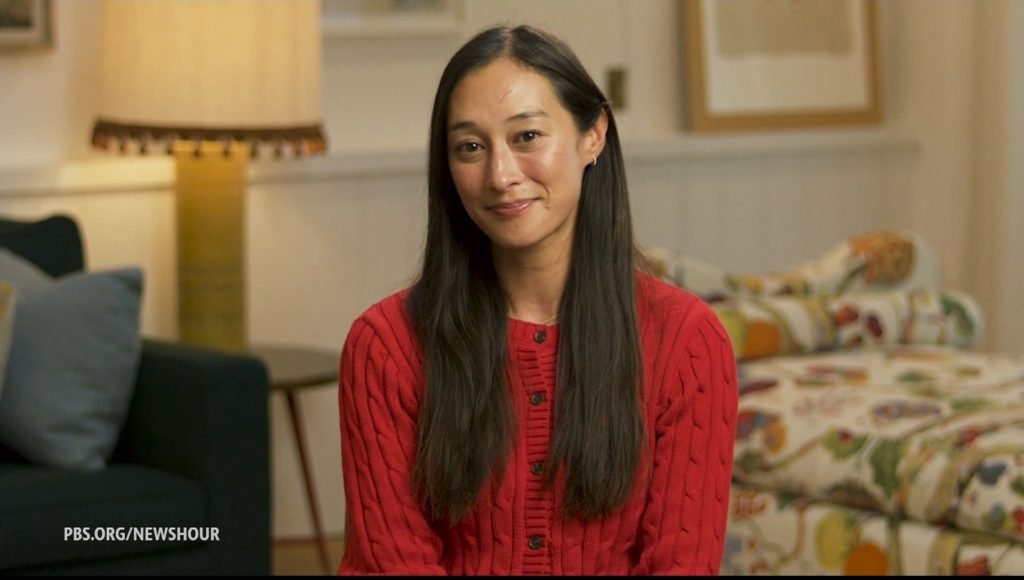

  • A Brief But Spectacular take on big talk

    A Brief But Spectacular take on big talk

    Kalina Silverman, Founder, Big Talk:

    I feel that everything we do in life — we have a limited amount of time — should be meaningful. Every conversation we have, every relationship, there should be something to it that keeps you moving forward with a sense of human connection and purpose.

    Every time I meet someone new and have a meaningful conversation with them, I get this sense of a high, euphoria. More than anything, any drug you could ever take, just having a meaningful interaction with a complete stranger makes me elated.

    I love people. I have always loved people. I remember, when I was in kindergarten, I visited China for the first time, and my grandpa tried to convince me that he was friends with everyone in the whole wide world. And he walked with me and he said hi to every single person we encountered and started a conversation with them.

    And I think little 5-year-old me actually took a lot of inspiration from that. One night, I was having a deep conversation with a friend and he said: “Screw small talk.” So the name big talk popped into my mind, and I didn’t know what to do with it at the time.

    And that following summer I had the opportunity to go to Germany to work on a project about the Holocaust. We had to meet new people right away, build trust with them, be invited into their homes, into government offices, and have big talk, instead of small talk. And that was really inspiring to me.

    And I remember, on my last day in Germany, I saw a question written on the Berlin Wall, and it said: “What do you want to do before you die?”

    And I thought, that’s big talk. So I decided to try a social experiment where I walked up to strangers, skipped the small talk and made big talk to ask them: “What do you want to do before you die?”

    This is the beginning of an experiment called Big Talk.

    One day, I walked up to this man in Beverly Hills on Rodeo Drive. He was wearing a suit. He looked really busy. And I asked him: “What do you want to do before you die and what would you do if you found out you were going to die tomorrow?”

    And this businessman, buttoned up, broke down into tears and told me he wished he spent more time with his kids, instead of working. And he told me his mom was asked that question right before she died too. So it was really personal to him. That was just an aha moment for me, because he challenged my own stereotypes and so many people who are watching.

    The greatest impact I have been able to make with Big Talk has been through the recent interviews I have done with Los Angeles wildfire survivors.

    What did you love and lose in the fire?

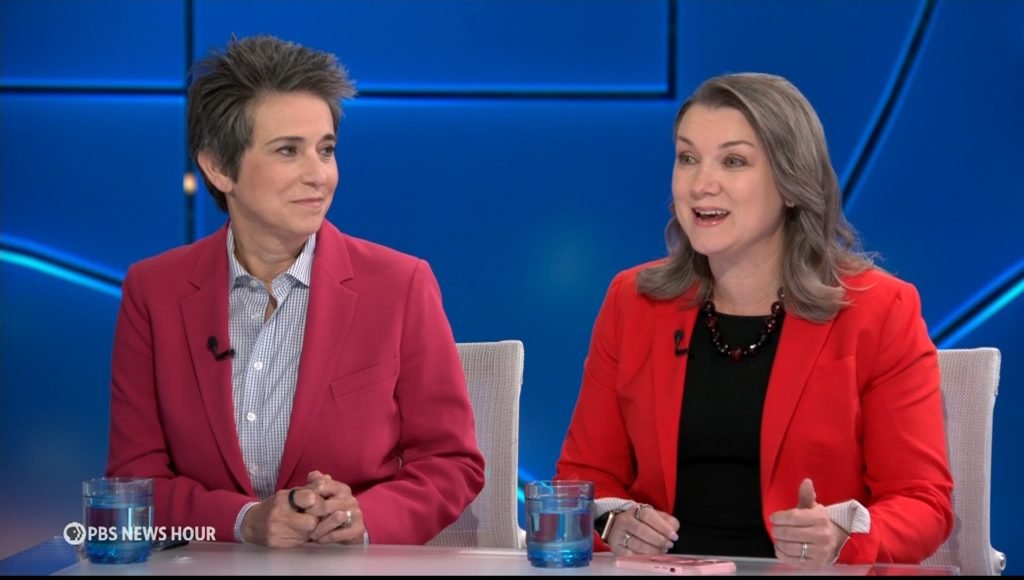
  • Tamara Keith and Amy Walter on Trump’s budget and GOP support for cuts

    Tamara Keith and Amy Walter on Trump’s budget and GOP support for cuts

    Amy Walter:

    Well, I think there’s — we’re at this point where it’s too big to fail and that there isn’t much choice now for senators in what they’re able to be able to carve out.

    But I think what Tam brought up with Senator Hawley is a really good point, which is here’s a great opportunity for you as an elected member to show your constituents that you really care about a certain issue. You can make the argument that you brought it in front of the president, the president made accommodations to you. This is a very good political tool.

    I think what we’re seeing with that response from Senator Ernst is also an example of the fight that is going to be happening, and it is already happening, over the marketing around this bill. Republicans are convinced that many of these town halls — this was her response was in a town hall that was very — that it wasn’t exactly a friendly audience.

    And their perspective is, these are just liberal activists, these are not regular voters. Once regular voters understand we’re only talking about waste and abuse, we’re not talking about kicking needy people over Medicaid, we will win, the polls show this.

    Democrats, of course, feel very differently. They say the polls show that Medicaid is really popular, we’re going to make this the centerpiece of our campaign.

    And so the fight now is on to really define the bill, but internally, on Capitol Hill, I think the reality is, it is going to be something that not everybody is going to like, but they have to pass it.

  • Top immigration official defends tactics as arrests rise nationwide

    Top immigration official defends tactics as arrests rise nationwide

    BOSTON (AP) — The head of U.S. Immigration and Customs Enforcement on Monday defended his tactics against criticism that authorities are being too heavy-handed as they ramp up arrests toward President Donald Trump’s promises of mass deportations.

    San Diego Mayor Todd Gloria said he was “deeply upset” by an ICE operation at a popular Italian restaurant just before the dinner rush on Friday. A chaotic showdown unfolded outside as customers and witnesses shouted, smoke filled the air, and agents wore heavy tactical gear to face an angry crowd.

    Todd Lyons, ICE’s acting director, turned emotional when asked to explain why officials wear masks. He said some have received death threats and been harassed online.

    “I’m sorry if people are offended by them wearing masks, but I’m not going to let my officers and agents go out there and put their lives on the line, their family on the line because people don’t like what immigration enforcement is,” he said at a news conference in Boston to announce nearly 1,500 arrests in the region as part of a month-long “surge operation.”

    Lyons was leaving the room when a reporter asked him about the masks. He returned to the podium.

    “Is that the issue here that we’re just upset about the masks?” he asked. “Or is anyone upset about the fact that ICE officers’ families were labeled terrorists?”

    Lyons may have been referring to comments by San Diego Councilman Sean Elo-Rivera, who called ICE officers “terrorists” after Friday’s restaurant raid. “This isn’t safety. It’s state-sponsored terrorism,” Elo-Rivera wrote on Instagram.

    The Department of Homeland Security reposted Elo-Rivera’s message, saying that likening ICE to terrorists was “sickening.” The councilman stuck by his comments on Monday.

    Other elected officials, such as Gloria and U.S. Rep. Scott Peters of San Diego, both Democrats, were more muted but also sharply critical of ICE and the Republican White House.

    “Federal actions like these are billed as a public safety measure, but it had the complete opposite effect. What we saw undermines trust and creates fear in our community,” Gloria said.

    ICE said Monday that the operation at Buona Forchetta, an anchor of San Diego’s trendy South Park neighborhood, resulted in four arrests of people in the U.S. illegally. Authorities executed criminal search warrants for illegal hiring and making false statements when the crowd “became unruly,” prompting them to use flash-bang devices.

    “When gatherings like these are formed, it not only places law enforcement in danger but also the demonstrators/onlookers attempting to impede law enforcement activity,” ICE said in a statement.

    The owners said they were closing their restaurants in Southern California for two days.

    “We wish we could find stronger words, but the truth is we are heartbroken,” the owners said in a statement. “The traumatic incident involving a federal enforcement operation at our original and beloved South Park location has left a mark on all of us. A wound that is still raw, still echoing in our kitchens, our dining rooms, and our hearts.”

    Lyons said in an interview on Fox & Friends Sunday that ICE was averaging about 1,600 arrests a day, a sharp increase from previous data that showed 78,155 arrests between Jan. 20 and May 19 — a daily average of 656. He said ICE can and will do more.

    Stephen Miller, the key architect of Trump’s immigration policy, last week set a goal of 3,000 arrests a day and said the number could go higher. That pace would be a huge challenge with current funding. ICE housed an average of more than 46,000 detainees during the first half of May, already above its budgeted capacity.

    Lyons said operations like the surge in Massachusetts wouldn’t be necessary if “sanctuary cities would change their policy.” There’s no legal definition for sanctuary city policies, but they generally limit cooperation by local law enforcement with federal immigration officers. Homeland Security published a list of more than 500 sanctuary jurisdictions but removed it from its website after criticism that it contained inaccuracies, even from its allies.

    Lyons stood near a poster board with mug shots of unnamed immigrants. A full list of those arrested was not available, nor was information about the crimes specific individuals are accused of committing.

    Lyons called them “dangerous criminals” who are “terrorizing family, friends and our neighbors.”

    State, local and federal authorities participated in a raid Saturday at a South Carolina nightclub that officials said was popular with drug dealers, resulting in the arrests of 66 people who were in the country illegally. Cardell Morant, special agent in charge of Homeland Security Investigations in South Carolina and North Carolina, said the 3 a.m. operations came during a “cartel after-party.”

    Officials did not release additional details about the charges being faced by those who were arrested during the raid in Charleston County.

    Rebecca Santana in Washington, Elliot Spagat in San Diego and Jeffrey Collins in Columbia, South Carolina, contributed.

    Support PBS News Hour

    Your donation makes a difference in these uncertain times.

  • As delegations meet for ceasefire talks, Russia reels from Ukrainian drone attacks

    As delegations meet for ceasefire talks, Russia reels from Ukrainian drone attacks

    Nick Schifrin:

    So the Ukrainians claimed it was 41 Russian bombers. Russia only has about 90 of these bombers. So if Ukraine is telling the truth, then it’s a huge portion of Russia’s strategic assets in terms of its bombers.

    A senior defense official yesterday told reporters that the number is probably inflated, and a separate U.S. official told me that as well. But, nonetheless, it is a very significant strike. We have seen multiple aircraft burned out, even from space, as I pointed out.

    It shows a lot of planning. It shows an intelligence capability inside Russia that we did not know Ukraine had, just logistics, trying to get all of those drones, to construct them in Russia, to build some kind of container to conceal them, and then to get close to these four bases. That shows a level of sophistication that a senior defense official told us yesterday we have not seen Ukraine have.

    It also demonstrates, Amna, perhaps that Ukraine still has the capability to do that kind of attack again.

  • How the Trump administration’s plans to slash NASA’s budget will impact science

    How the Trump administration’s plans to slash NASA’s budget will impact science

    Funding for science is very much on the chopping block in President Trump’s proposed budget. It’s a fraught moment for NASA, particularly for those focused on earth science and not human space travel. Over the weekend, Trump announced he was withdrawing the nomination of his original pick to lead NASA, billionaire Jared Isaacman. Miles O’Brien reports.

  • Romanian man pleads guilty to ‘swatting’ plot that targeted an ex-U.S. president and lawmakers

    Romanian man pleads guilty to ‘swatting’ plot that targeted an ex-U.S. president and lawmakers

    WASHINGTON (AP) — A Romanian citizen pleaded guilty on Monday to engaging in a plot to use “swatting” calls and bomb threats to intimidate and threaten dozens of people with bogus police emergencies, including a former U.S. president and several members of Congress.

    Thomasz Szabo, 26, is scheduled to be sentenced on Oct. 23 by U.S. District Judge Amy Berman Jackson in Washington, D.C.

    Szabo was extradited from Romania in November 2024. He was charged with Nemanja Radovanovic, 21, of Serbia.

    Szabo pleaded guilty to one count of conspiracy and one count of making bomb threats.

    The two men targeted roughly 100 people with “swatting” calls to instigate an aggressive response by police officers at the victims’ homes, a federal indictment alleges.

    A U.S. Secret Service agent’s affidavit doesn’t name the former U.S. president or any other officials identified as victims of the hoax calls.

    The two defendants are not explicitly charged in the indictment with threatening a former president, but one of the alleged victims is identified as a “former elected official from the executive branch” who was swatted on Jan. 9. 2024. Radovanovic falsely reported a killing and threatened to set off an explosion at that person’s home, the indictment says.

    Szabo told Radovanovic that they should pick targets from both the Republican and Democratic parties because “we are not on any side,” the indictment says.

    “This defendant led a dangerous swatting criminal conspiracy, deliberately threatening dozens of government officials with violent hoaxes and targeting our nation’s security infrastructure from behind a screen overseas,” Attorney General Pam Bondi said in a statement.

    Charges against Radovanovic are still pending. Online court records indicate that he hasn’t made any court appearances in Washington yet.

    Support PBS News Hour

    Your donation makes a difference in these uncertain times.


  • News Wrap: 3 killed and dozens more hurt heading to Gaza aid distribution site

    News Wrap: 3 killed and dozens more hurt heading to Gaza aid distribution site

    In our news wrap Monday, three people were killed and dozens more injured while headed to an aid distribution site in Gaza, more than 100 wildfires in Canada forced mass evacuations and sent smoke and unhealthy air deep into the U.S. and Newark airport reopened one of its three runways nearly two weeks ahead of schedule.

  • Investigators say man used makeshift flamethrower in attack on pro-Israel group in Boulder

    Investigators say man used makeshift flamethrower in attack on pro-Israel group in Boulder

    Laura Barron-Lopez:

    Authorities scoured for evidence today, both at the suspect’s alleged residence and into his background. For now, they believe he acted alone.

    A Department of Homeland Security official said Soliman was living in the U.S. illegally. After arriving legally in 2022, he overstayed his tourist B-2 visa. President Trump today seized upon that on his social media, writing: “This is yet another example of why we must keep our border secure.”

    Israeli Prime Minister Benjamin Netanyahu also condemned the attack, saying the victims were targeted simply because they were Jews.

    One of the victims was a Holocaust survivor, according to a Justice Department official.