WASHINGTON (AP) — A split Supreme Court declined on Monday to hear a challenge to a state ban on assault weapons, a term referring to semiautomatic rifles that are popular among gun owners and that have also been used in mass shootings.
WATCH: Supreme Court upholds Biden regulation making ghost guns easier to trace
The majority did not explain its reasoning in turning down the case over weapons like the AR-15, as is typical. But three conservative justices on the nine-member court publicly noted their disagreement, and a fourth said he is skeptical that such bans are constitutional.
Justices Samuel Alito and Neil Gorsuch said they would have taken the case, and Justice Clarence Thomas wrote separately to say the law likely runs afoul of the Second Amendment.
“I would not wait to decide whether the government can ban the most popular rifle in America,” Thomas wrote. “That question is of critical importance to tens of millions of law-abiding AR–15 owners throughout the country.”
Justice Brett Kavanaugh agreed with the decision to pass on the case now but indicated that he is skeptical such bans are constitutional and that he expects the court will address the issue “in the next term or two.”
The Maryland law was passed after the 2012 shooting at Sandy Hook Elementary School in Connecticut that killed 20 children and six adults. The shooter was armed with an AR-15, one of the firearms commonly referred to as an assault weapon.
Several states have similar measures, and congressional Democrats have also supported the concept. The challengers had argued that people have a constitutional right to own the firearms like the AR-15, which most gun owners use legally.
The case comes nearly three years after the high court handed down a landmark ruling that expanded Second Amendment rights and spawned challenges to firearm laws around the country.
Ten states and the District of Columbia have similar laws, covering major cities like New York and Los Angeles. Congress allowed a national assault weapons ban to expire in 2004.
Attorneys for Maryland contend the guns aren’t protected by the Constitution because they’re similar to military-grade weapons.
The law bans dozens of firearms — including the AR-15, the AK-47 and the Barrett .50-caliber sniper rifle — and puts a 10-round limit on gun magazines.
The high court also rebuffed a bid to overturn state bans on high-capacity gun magazines in a separate case out of Rhode Island on Monday. Thomas, Alito and Gorsuch said they would have heard the case. More than a dozen states have similar laws limiting the amount of ammunition a magazine can hold.
Thomas and Kavanaugh have previously expressed skepticism about assault weapon bans.
As an appeals court judge in 2011, Kavanaugh wrote a dissent saying that a similar measure in Washington, D.C., was unconstitutional. Thomas, meanwhile, dissented in 2015 when the Supreme Court declined to hear a challenge to a municipal ban on AR-15-style weapons, writing that the “overwhelming majority” of people who owned the weapons used them for lawful purposes like self-defense.
The high court in 2022 handed down a ruling that expanded gun rights and told lower-court judges they should no longer consider factors like public safety in deciding whether firearm laws are constitutional. Instead, they should focus on whether a law fits into the nation’s historic tradition of gun ownership, the court said.
That led to a flurry of challenges to gun laws around the country, multiple restrictions struck down, and confusion among lower-court judges over what gun laws can stay on the books.
Since then, the Supreme Court has overturned a ban on rapid-fire gun accessories called bump stocks but upheld a law barring people under domestic-violence restraining orders from having guns and regulations on nearly untraceable ghost guns.
Support PBS News Hour
Your donation makes a difference in these uncertain times.
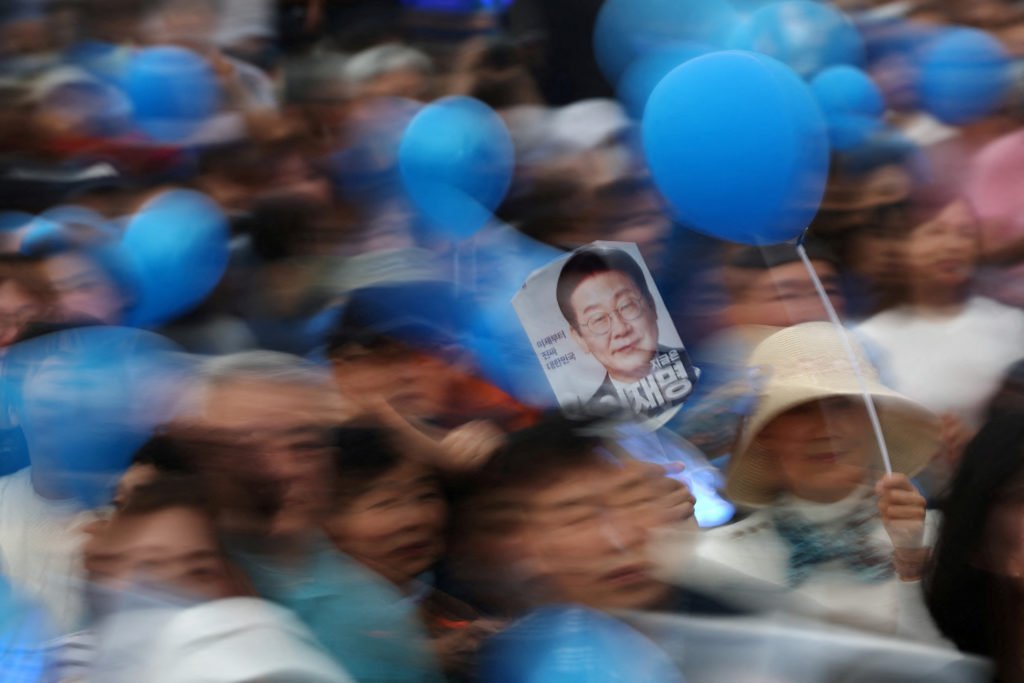
SEOUL, South Korea (AP) — After months of political turmoil, South Korea will elect a new president this week to succeed conservative Yoon Suk Yeol, who was ousted over his brief but shocking imposition of martial law.
Surveys suggested liberal Lee Jae-myung is heavily favored to win Tuesday’s snap election, riding on a wave of public disappointment of Yoon’s martial law debacle in December. The main conservative candidate, Kim Moon Soo, wants a come-from-behind victory, but observers say his refusal to directly criticize Yoon made it difficult for him to narrow the gap with Lee.
READ MORE: South Korea’s acting leader resigns amid reports he’s launching his presidential campaign
The winner will be sworn in as president on Wednesday without the typical two-month transition period. The new leader faces the urgent tasks of trying to heal the deep domestic divide over Yoon’s action as well as focusing on U.S. President Donald Trump’s America-first policy and North Korea’s advancing nuclear program.
Who is running for the presidency?
Lee, who represents the main liberal Democratic Party, is the favorite to win the elections. In three Gallup Korea surveys released last week, 46% to 49% of respondents picked Lee as their choice for next president, giving him a comfortable lead over Kim with 35% to 37%.
Lee narrowly lost the 2022 election to Yoon, and spearheaded parliament’s two votes to overturn Yoon’s martial law decree and impeach him, before the Constitutional Court formally dismissed him in April.
Lee’s outspoken criticism of South Korea’s conservative establishment and calls to punish those involved in Yoon’s martial law enactment have caused worries among his opponents that Lee’s election would further polarize the country.
READ MORE: South Korea will hold snap election on June 3 to choose Yoon’s successor
Kim, a former labor minister under Yoon, has fought an uphill battle against Lee as his People Power Party struggles to restore public confidence. Kim’s opposition to Yoon’s impeachment and reluctance to explicitly criticize the disgraced leader drove him away from moderate voters, analysts say.
Three other politicians are running for the presidency, including Lee Jun-seok of the small conservative New Reform Party, who has categorically rejected Kim’s request to field a unified candidate between them to prevent a split in conservative votes.
What are main issues?
The election has got ugly, with candidates leveling damaging statements, personal attacks and even sexually offensive language against each other without unveiling clear, long-term visions for South Korea.
During last week’s televised debate, Lee Jae-myung labelled Kim as “Yoon Suk Yeol’s avatar,” while Kim called Lee a “harbinger of monster politics and dictatorship.” Lee Jun-seok faced withering public criticism after he used graphic references to women’s bodies to criticize Lee Jae-myung’s son over his purported sexually explicit online slur targeting a female singer.
Unlike past elections, North Korea’s nuclear program hasn’t emerged as a hot-button topic, suggesting that most candidates share a view that South Korea has few immediate ways to convince North Korea to abandon its nuclear weapons. Dealing with Trump’s aggressive tariffs policy hasn’t been a divisive issue either.
Kim has instead focused on portraying Lee Jae-myung as a dangerous leader who would likely wield excessive power by putting the judiciary under his control and revising laws to stop his criminal trials. Lee, for his part, has repeatedly questioned Kim’s ties with Yoon.
What challenges await the new leader?
South Korea’s new president will have little time to negotiate with the United States before July 9, when Trump’s 90-day pause on global tariffs expires, potentially exposing South Korean products to 25% tax rates. A U.S. federal court has recently ruled that Trump lacks authority to impose the tariffs, but the White House has appealed, leaving the long-term outcome unclear.
South Korea’s outgoing administration was trying to finalize a comprehensive “package” deal with the U.S. by early July to soften the blow to the country’s trade-dependent economy.
Lee has accused government officials of rushing negotiations for short-term political gains and said it wouldn’t serve national interests to obsess over securing an early agreement with Washington. Kim said he would place a priority on a meeting with Trump as soon as possible to resolve trade issues.
The next government in Seoul may also struggle to ease security tensions over North Korea’s advancing nuclear weapons program, which has been complicated by North Korea’s support of Russia’s war against Ukraine.
Lee has expressed a willingness to improve ties with North Korea but acknowledged that it would be difficult to hold a summit with North Korean leader Kim Jong Un anytime soon. He said he would support Trump’s push to resume nuclear diplomacy with North Korea. Kim Moon Soo has promised to build up South Korea’s military capability and win stronger U.S. security support, suggesting he would uphold Yoon’s hard-line approach on North Korea.
Can the new government ease the national divide?
The most pressing domestic issue facing the new president will be a starkly divided nation that had seen millions rallying for months to either support or denounce Yoon.
Yoon had labeled Lee’s party as “anti-state” forces abusing their legislative majority to block his agenda. He also endorsed unsubstantiated conspiracy theories that the liberals had benefited from election fraud, prompting his supporters to rally in the streets with “Stop the Steal” signs.
Lee has issued a message of unity and vowed not to seek political vengeance against his rivals if elected. But his critics doubt that, suspecting Lee could use investigations of Yoon’s martial law decree as a vehicle to suppress his opponents.
Yoon’s legal saga is likely to overshadow the early months of Seoul’s next government, as the former president continues to stand trial on high-stakes rebellion charges, which carry a possible sentence of death or life in prison.
Support PBS News Hour
Your donation makes a difference in these uncertain times.
BOULDER, Colo. (AP) — Authorities searched for evidence Monday after a man with a makeshift flamethrower yelled “Free Palestine” and hurled an incendiary device into a group that had assembled to raise attention for Israeli hostages in Gaza. Eight people were injured in the Sunday attack, some with burns.
READ MORE: Police investigating attack at outdoor mall in Boulder, Colorado
The suspect, Mohamed Sabry Soliman, 45, was booked into the Boulder County jail north of Denver and expected to face charges in connection with the attack the FBI was investigating as a terrorist act. Court records show he was scheduled to appear in state court in Boulder at 1:30 p.m.
The burst of violence at the popular Pearl Street pedestrian mall, a four-block area in downtown Boulder, unfolded against the backdrop of a war between Israel and Hamas that continues to inflame global tensions and has contributed to a spike in antisemitic violence in the United States. The attack happened on the beginning of the Jewish holiday of Shavuot, which is marked with the reading of the Torah and barely a week after a man who also yelled “Free Palestine” was charged with fatally shooting two Israeli embassy staffers outside of a Jewish museum in Washington.
Israeli Prime Minister Benjamin Netanyahu issued a statement Monday saying he, his wife and the entire nation of Israel were praying for the full recovery of the people wounded in the “vicious terror attack” in Colorado.
“This attack was aimed against peaceful people who wished to express their solidarity with the hostages held by Hamas, simply because they were Jews,” Netanyahu said.
Attack leads to increased security elsewhere
“Sadly, attacks like this are becoming too common across the country,” said Mark Michalek, the special agent in charge of the FBI’s Denver field office, which encompasses Boulder.
In New York, the police department said it upped its presence at religious sites throughout the city for Shavuot.
The eight victims who were wounded range in age from 52 to 88 and the injuries spanned from serious to minor, officials said.
The attack occurred as people with a volunteer group called Run For Their Lives was concluding their weekly demonstration to raise visibility for the hostages who remain in Gaza. Video from the scene shows a witness shouting, “He’s right there. He’s throwing Molotov cocktails,” as a police officer with his gun drawn advances on a bare-chested suspect who is holding containers in each hand.
Alex Osante of San Diego said he was having lunch on a restaurant patio across the pedestrian mall when he heard the crash of a bottle breaking on the ground and a “boom” sound followed by people yelling and screaming.
In video of the scene captured by Osante, people could be seen pouring water on a woman lying on the ground who Osante said had caught on fire during the attack. A man, who later identified himself as an Israeli visiting Boulder who decided to join the group that day, ran up to Osante on the video asking for some water to help.
Suspect reemerged after initial attack before being arrested
After the initial attack, Osante said the suspect went behind some bushes and then reemerged and threw a Molotov cocktail but apparently accidentally caught himself on fire as he threw it. The man then took off his shirt and what appeared to be a bulletproof vest before the police arrived. The man dropped to the ground and was arrested without any apparent resistance in the video that Osante filmed.
As people tried to help the woman on the ground, another woman who appeared to be a participant in the event yelled to others out of the camera’s view, defending their cause, saying they don’t talk about the government but just talk about the hostages.
Lynn Segal, 72, was among about 20 people who gathered Sunday. They had finished their march in front of the courthouse when a “rope of fire” shot in front of her and then “two big flares.”
She said the scene quickly turned chaotic as people worked to find water to put out flames and find help.
Authorities say they believe the suspect acted alone
Authorities said Sunday they believe Soliman acted alone and that no other suspect was being sought. No criminal charges were immediately announced but officials said they would move to hold Soliman accountable. He was also injured and was taken to the hospital to be treated. Authorities did not elaborate on the nature of his injuries, but a booking photo showed him with a large bandage over one ear.
Soliman was living in the U.S. illegally after having entered the country in August 2022 on a B2 visa that expired in February 2023, Department of Homeland Security Assistant Secretary Tricia McLaughlin said in a post on X. McLaughlin said Soliman filed for asylum in September 2022. DHS did not immediately respond to requests for additional information.
READ MORE: Asylum-seekers deported from U.S. to Panama fear they will be forgotten as options dwindle
Public records listed Soliman as living in a modest rented townhouse in Colorado Springs, where local media outlets reported federal law enforcement agents were on the scene Sunday. An X account under the suspect’s name and with a profile photo that appeared to match the man arrested was created in 2022 and had never made a post. He followed only 18 other accounts, including Colorado Gov. Jared Polis, the mayor of Colorado Springs, the local police department and several area news outlets.
An online resume under Soliman’s name said he was employed by a Denver-area health care company working in accounting and inventory control, with prior employers listed as companies in Egypt. Under education, the resume listed Al-Azhar University, a historic center for Islamic and Arabic learning located in Cairo.
FBI leaders immediately declared the attack an act of terrorism and the Justice Department denounced it as a “needless act of violence, which follows recent attacks against Jewish Americans.”
“This act of terror is being investigated as an act of ideologically motivated violence based on the early information, the evidence, and witness accounts. We will speak clearly on these incidents when the facts warrant it,” FBI Deputy Director Dan Bongino said in a post on X.
Israel’s war in Gaza began when Hamas-led militants stormed into southern Israel on Oct. 7, 2023, killing some 1,200 people, mostly civilians, and abducting about 250 others. They are still holding 58 hostages, around a third believed to be alive, after most of the rest were released in ceasefire agreements or other deals.
Israel’s military campaign has killed more than 54,000 people in Hamas-run Gaza, mostly women and children, according to Gaza’s Health Ministry, which does not say how many of the dead were civilians or combatants. The offensive has destroyed vast areas, displaced around 90% of the population and left people almost completely reliant on international aid.
The violence comes four years after a shooting rampage at a grocery store in Boulder, about 25 miles (40 kilometers) northwest of Denver, that killed 10 people. The gunman was sentenced to life in prison for murder after a jury rejected his attempt to avoid prison time by pleading not guilty by reason of insanity.
Multiple blocks of the pedestrian mall area were evacuated by police. The scene shortly after the attack was tense, as law enforcement agents with a police dog walked through the streets looking for threats and instructed the public to stay clear of the mall.
Tucker reported from Washington. Associated Press journalists Brittany Peterson and David Zalubowski in Boulder, Colorado; Kimberlee Kruesi in Providence, Rhode Island; Steve Karnowski in Minneapolis; Alanna Durkin Richer and Michael Biesecker in Washington and Jim Mustian in New York contributed to this report.
Support PBS News Hour
Your donation makes a difference in these uncertain times.
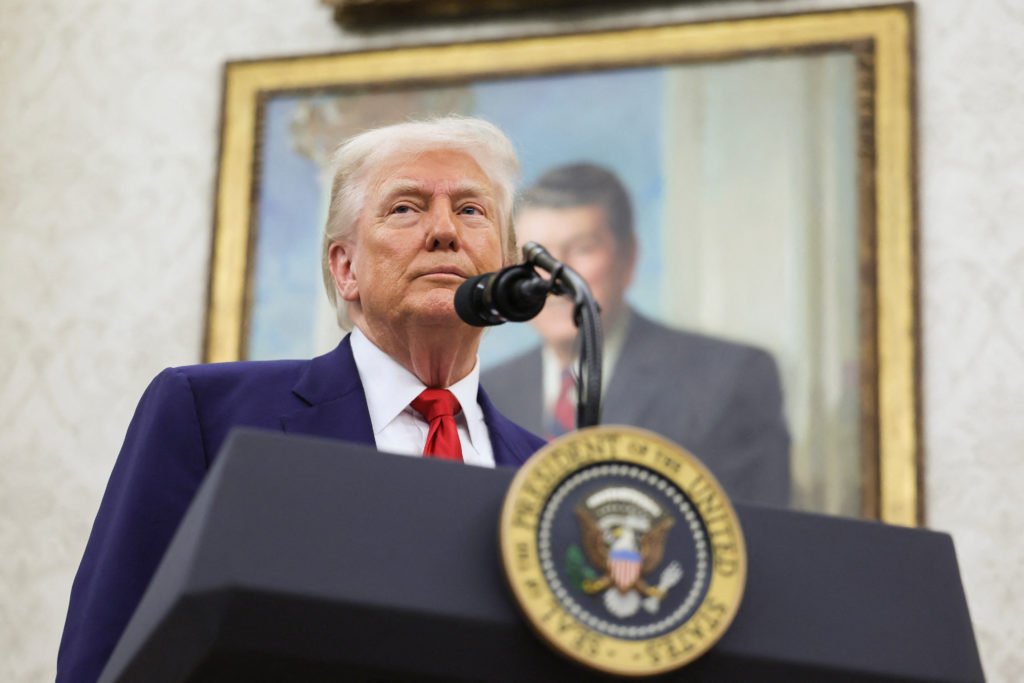
WASHINGTON (AP) — President Donald Trump faces the challenge of convincing Republican senators, global investors, voters and even Elon Musk that he won’t bury the federal government in debt with his multitrillion-dollar tax breaks package.
The response so far from financial markets has been skeptical as Trump seems unable to trim deficits as promised.
WATCH: House GOP passes Trump’s ‘big, beautiful bill,’ but it faces uncertain future in Senate
“All of this rhetoric about cutting trillions of dollars of spending has come to nothing — and the tax bill codifies that,” said Michael Strain, director of economic policy studies at the American Enterprise Institute, a right-leaning think tank. “There is a level of concern about the competence of Congress and this administration and that makes adding a whole bunch of money to the deficit riskier.”
The White House has viciously lashed out at anyone who has voiced concern about the debt snowballing under Trump, even though it did exactly that in his first term after his 2017 tax cuts.
White House press secretary Karoline Leavitt opened her briefing Thursday by saying she wanted “to debunk some false claims” about his tax cuts.
Leavitt said the “blatantly wrong claim that the ‘One, Big, Beautiful Bill‘ increases the deficit is based on the Congressional Budget Office and other scorekeepers who use shoddy assumptions and have historically been terrible at forecasting across Democrat and Republican administrations alike.”
House Speaker Mike Johnson piled onto Congress’ number crunchers on Sunday, telling NBC’s “Meet the Press,” “The CBO sometimes gets projections correct, but they’re always off, every single time, when they project economic growth. They always underestimate the growth that will be brought about by tax cuts and reduction in regulations.”
But Trump himself has suggested that the lack of sufficient spending cuts to offset his tax reductions came out of the need to hold the Republican congressional coalition together.
“We have to get a lot of votes,” Trump said last week. “We can’t be cutting.”
That has left the administration betting on the hope that economic growth can do the trick, a belief that few outside of Trump’s orbit think is viable.
Most economists consider the non-partisan CBO to be the foundational standard for assessing policies, though it does not produce cost estimates for actions taken by the executive branch such as Trump’s unilateral tariffs.
Tech billionaire Musk, who was until recently part of Trump’s inner sanctum as the leader of the Department of Government Efficiency, told CBS News: “I was disappointed to see the massive spending bill, frankly, which increases the budget deficit, not just decreases it, and undermines the work that the DOGE team is doing.”
Federal debt keeps rising
The tax and spending cuts that passed the House last month would add more than $5 trillion to the national debt in the coming decade if all of them are allowed to continue, according to the Committee for a Responsible Financial Budget, a fiscal watchdog group.
To make the bill’s price tag appear lower, various parts of the legislation are set to expire. This same tactic was used with Trump’s 2017 tax cuts and it set up this year’s dilemma, in which many of the tax cuts in that earlier package will sunset next year unless Congress renews them.
But the debt is a much bigger problem now than it was eight years ago. Investors are demanding the government pay a higher premium to keep borrowing as the total debt has crossed $36.1 trillion. The interest rate on a 10-year Treasury Note is around 4.5%, up dramatically from the roughly 2.5% rate being charged when the 2017 tax cuts became law.
READ MORE: Moody’s strips U.S. government of top credit rating over failure to rein in debt
The White House Council of Economic Advisers argues that its policies will unleash so much rapid growth that the annual budget deficits will shrink in size relative to the overall economy, putting the U.S. government on a fiscally sustainable path.
The council argues the economy would expand over the next four years at an annual average of about 3.2%, instead of the Congressional Budget Office’s expected 1.9%, and as many as 7.4 million jobs would be created or saved.
Council chair Stephen Miran told reporters that when the growth being forecast by the White House is coupled with expected revenues from tariffs, the expected budget deficits will fall. The tax cuts will increase the supply of money for investment, the supply of workers and the supply of domestically produced goods — all of which, by Miran’s logic, would cause faster growth without creating new inflationary pressures.
“I do want to assure everyone that the deficit is a very significant concern for this administration,” Miran said.
White House budget director Russell Vought told reporters the idea that the bill is “in any way harmful to debt and deficits is fundamentally untrue.”
Economists doubt Trump’s plan can spark enough growth to reduce deficits
Most outside economists expect additional debt would keep interest rates higher and slow overall economic growth as the cost of borrowing for homes, cars, businesses and even college educations would increase.
“This just adds to the problem future policymakers are going to face,” said Brendan Duke, a former Biden administration aide now at the Center on Budget and Policy Priorities, a liberal think tank. Duke said that with the tax cuts in the bill set to expire in 2028, lawmakers would be “dealing with Social Security, Medicare and expiring tax cuts at the same time.”
Kent Smetters, faculty director of the Penn Wharton Budget Model, said the growth projections from Trump’s economic team are “a work of fiction.” He said the bill would lead some workers to choose to work fewer hours in order to qualify for Medicaid.
“I don’t know of any serious forecaster that has meaningfully raised their growth forecast because of this legislation,” said Harvard University professor Jason Furman, who was the Council of Economic Advisers chair under the Obama administration. “These are mostly not growth- and competitiveness-oriented tax cuts. And, in fact, the higher long-term interest rates will go the other way and hurt growth.”
The White House’s inability so far to calm deficit concerns is stirring up political blowback for Trump as the tax and spending cuts approved by the House now move to the Senate. Republican Sens. Ron Johnson of Wisconsin and Rand Paul of Kentucky have both expressed concerns about the likely deficit increases, with Paul saying Sunday there are enough GOP senators to stall the bill until deficits are addressed.
“I think there are four of us at this point” who would oppose the legislation “if the bill, at least, is not modified in a good direction,” Paul said on CBS’ “Face the Nation.”
“The GOP will own the debt once they vote for this,” Paul said.
Four Republican holdouts would be enough to halt the bill in the Senate, where the party holds a three-seat majority.
Trump banking on tariff revenues to help
The White House is also banking that tariff revenues will help cover the additional deficits, even though recent court rulings cast doubt on the legitimacy of Trump declaring an economic emergency to impose sweeping taxes on imports.
WATCH: What’s next for Trump’s tariffs amid legal back and forth
When Trump announced his near-universal tariffs in April, he specifically said his policies would generate enough new revenues to start paying down the national debt. His comments dovetailed with remarks by aides, including Treasury Secretary Scott Bessent, that yearly budget deficits could be more than halved.
“It’s our turn to prosper and in so doing, use trillions and trillions of dollars to reduce our taxes and pay down our national debt, and it’ll all happen very quickly,” Trump said two months ago as he talked up his import taxes and encouraged lawmakers to pass the separate tax and spending cuts.
The Trump administration is correct that growth can help reduce deficit pressures, but it’s not enough on its own to accomplish the task, according to new research by economists Douglas Elmendorf, Glenn Hubbard and Zachary Liscow.
Ernie Tedeschi, director of economics at the Budget Lab at Yale University, said additional “growth doesn’t even get us close to where we need to be.”
The government would need $10 trillion of deficit reduction over the next 10 years just to stabilize the debt, Tedeschi said. And even though the White House says the tax cuts would add to growth, most of the cost goes to preserve existing tax breaks, so that’s unlikely to boost the economy meaningfully.
“It’s treading water,” Tedeschi said.
Support PBS News Hour
Your donation makes a difference in these uncertain times.
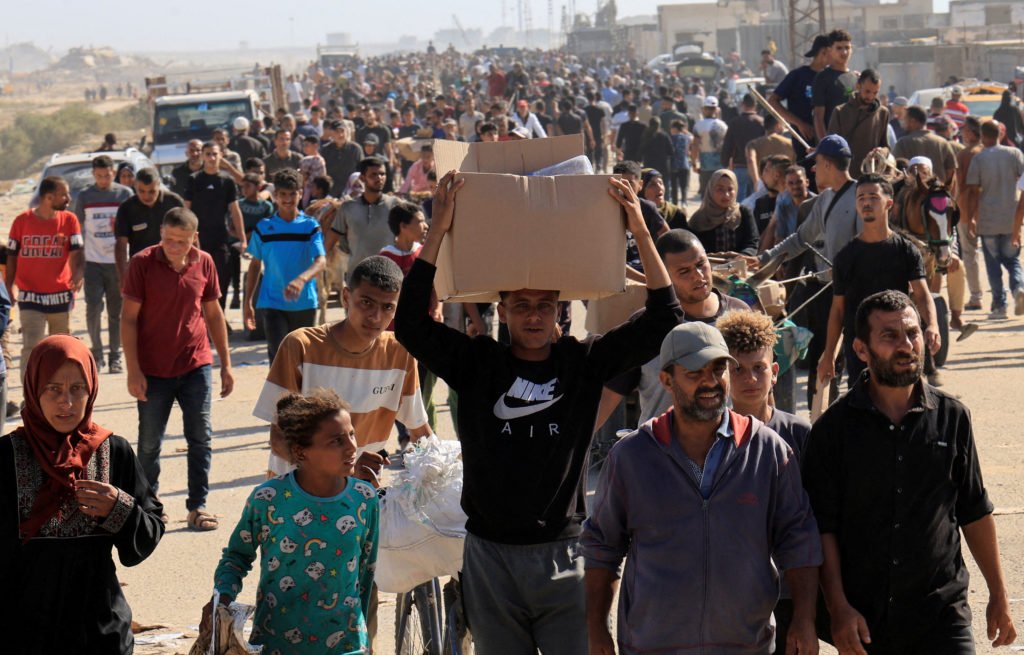
RAFAH, Gaza Strip (AP) — At least 31 people were killed and over 170 were wounded Sunday as large crowds were on their way to receive food in the Gaza Strip, health officials and witnesses said. Witnesses said Israeli forces fired toward the crowds just before dawn around a kilometer (about 1,100 yards) from an aid site run by an Israeli-backed foundation.
READ MORE: Dozens are killed getting food aid in Gaza. Multiple witnesses say it was Israeli troops, but Israel denies responsibility
Israel’s military denied its forces fired at civilians near or within the site in the southern city of Rafah. An Israeli military official, speaking on condition of anonymity in line with procedure, said troops fired warning shots at several suspects advancing toward them overnight.
The military also released drone footage it said was shot Sunday, apparently in daylight, in the southern city of Khan Younis, showing what it said were armed, masked men firing at civilians trying to collect aid. The Associated Press could not independently verify the video, and it was not clear who was being targeted. “Hamas is doing everything in its power to prevent the successful distribution of food in Gaza,” the statement said.
The Gaza Humanitarian Foundation — promoted by Israel and the United States — said in a statement it delivered aid “without incident,” and released a separate video it said was shot Sunday at the site that appeared to show people collecting aid. The AP was not able to verify the video. The foundation has denied previous accounts of chaos and gunfire around its sites, which are in Israeli military zones where independent media has no access.
It was the deadliest incident yet around the new aid distribution system, which has operated for less than a week.
The International Committee of the Red Cross said in a statement its field hospital in Rafah received 179 casualties including women and children, 21 of them declared dead upon arrival, the majority with gunshot or shrapnel wounds. It was unclear if any of the dead were militants.
“All patients said they had been trying to reach an aid distribution site,” the ICRC said, calling it the highest number of “weapon-wounded” people in a single incident since the hospital was set up over a year ago.
The head of the World Food Program, Cindy McCain, told ABC News that staffers on the ground were reporting people killed and called it a “tragedy.”
“Aid distribution has become a death trap,” the head of the United Nations agency for Palestinian refugees, Philippe Lazzarini, said in a statement.
In a separate statement, Israeli military chief of staff Lt. Gen. Eyal Zamir ordered that more aid sites be established — and that troops’ ground operation be expanded in unspecified parts of northern and southern Gaza.
A new aid system marred by chaos
Multiple witnesses have said Israeli troops fired on crowds near the foundation’s sites. Before Sunday, 17 people were killed while trying to reach them, according to Zaher al-Waheidi, head of the Gaza Health Ministry’s records department.
The foundation says private security contractors guarding its sites have not fired on crowds. Israel’s military has acknowledged firing warning shots on previous occasions.
WATCH: How Israel is responding to latest U.S. proposals to pause war in Gaza
The foundation said in a statement it distributed 16 truckloads of aid early Sunday “without incident,” and dismissed what it described as “false reporting about deaths, mass injuries and chaos.”
U.N. agencies and major aid groups have refused to work with the new system, saying it violates humanitarian principles.
‘The scene was horrible’
Thousands of people headed toward the distribution site hours before dawn. As they approached, Israeli forces ordered them to disperse and come back later, witnesses said. When the crowds reached the Flag Roundabout, around 1 kilometer away, at around 3 a.m., Israeli forces opened fire, the witnesses said.
“There was fire from all directions, from naval warships, from tanks and drones,” said Amr Abu Teiba, who was in the crowd.
He said he saw at least 10 bodies with gunshot wounds and several other wounded people, including women. People used carts to ferry the dead and wounded. “The scene was horrible,” he said.
Most people were shot “in the upper part of their bodies, including the head, neck and chest,” said Dr. Marwan al-Hams, a Health Ministry official at Nasser Hospital, where many were transferred from the Red Cross field hospital. A colleague, surgeon Khaled al-Ser, said 150 wounded people had arrived, along with 28 bodies.
The hospital corridors were filled with patients, “but unlike what I have witnessed before, where most of the patients were women and children, today it was mainly men,” a spokesperson with medical charity MSF, Nour Alsaqa, said in a statement.
Ibrahim Abu Saoud, another witness, said the military fired from about 300 meters (yards) away. He said he saw many people with gunshot wounds, including a young man who died at the scene. “We weren’t able to help him,” he said.
Mohammed Abu Teaima, 33, said he saw Israeli forces open fire and kill his cousin and a woman as they headed toward the distribution site. He said his cousin was shot in his chest, and his brother-in-law was among the wounded.
“They opened heavy fire directly toward us,” he said.
An AP reporter arrived at the field hospital at around 6 a.m. and saw dozens of wounded, including women and children. The reporter also saw crowds of people returning from the distribution point. Some carried boxes of aid but most appeared to be empty-handed.
Gaza’s Health Ministry said least 31 people were killed and over 170 were wounded.
READ MORE: Desperate Palestinians stop, unload UN food trucks as Israeli attacks kill dozens in Gaza
“This is sinful, enough with the humiliation. They humiliated us for the sake of food,” said Ilham Jarghon as fellow Palestinians wept and prayed for the dead.
Later Sunday, Israeli artillery shells struck tents sheltering displaced people in Khan Younis, killing three and wounding at least 30, according to Nasser Hospital. Israel’s military said it was looking into it.
The UN says new aid system violates humanitarian principles
Israel and the U.S. say the new system is aimed at preventing Hamas from siphoning off assistance. Israel has not provided evidence of systematic diversion, and the U.N. denies it has occurred.
U.N. agencies and major aid groups say the new system allows Israel to control who receives aid and forces people to relocate to distribution sites, risking yet more mass displacement in the coastal territory.
“It’s essentially engineered scarcity,” Jonathan Whittall, interim head in Gaza of the U.N. humanitarian office, said last week.
The U.N. system has struggled to bring in aid after Israel slightly eased its nearly three-month blockade of the territory last month. The groups say Israeli restrictions, the breakdown of law and order and widespread looting make it extremely difficult to deliver aid to Gaza’s roughly 2 million Palestinians.
Experts have warned that the territory is at risk of famine if more aid is not brought in.
The war began when Hamas-led militants stormed into southern Israel on Oct. 7, 2023, killing some 1,200 people, mostly civilians, and abducting 251. They are still holding 58 hostages, around a third believed to be alive, after most of the rest were released in ceasefire agreements or other deals.
Israel’s military campaign has killed over 54,000 people in Hamas-run Gaza, mostly women and children, according to Gaza’s Health Ministry, which does not say how many of the dead were civilians or combatants. The offensive has destroyed vast areas, displaced around 90% of the population and left people almost completely reliant on international aid.
The latest efforts at ceasefire talks appeared to stumble Saturday when Hamas said it had sought amendments to a U.S. ceasefire proposal that Israel had approved, and the U.S. envoy called that “unacceptable.”
Mediators Qatar and Egypt in a joint statement Sunday said they continued “intensive efforts to bridge the gaps in viewpoints” and hoped for “a swift agreement for a temporary ceasefire lasting 60 days, leading to a permanent ceasefire in the Gaza Strip.”
Magdy reported from Cairo. Associated Press writer Tia Goldenberg in Tel Aviv, Israel, contributed to this report.
Support PBS News Hour
Your donation makes a difference in these uncertain times.
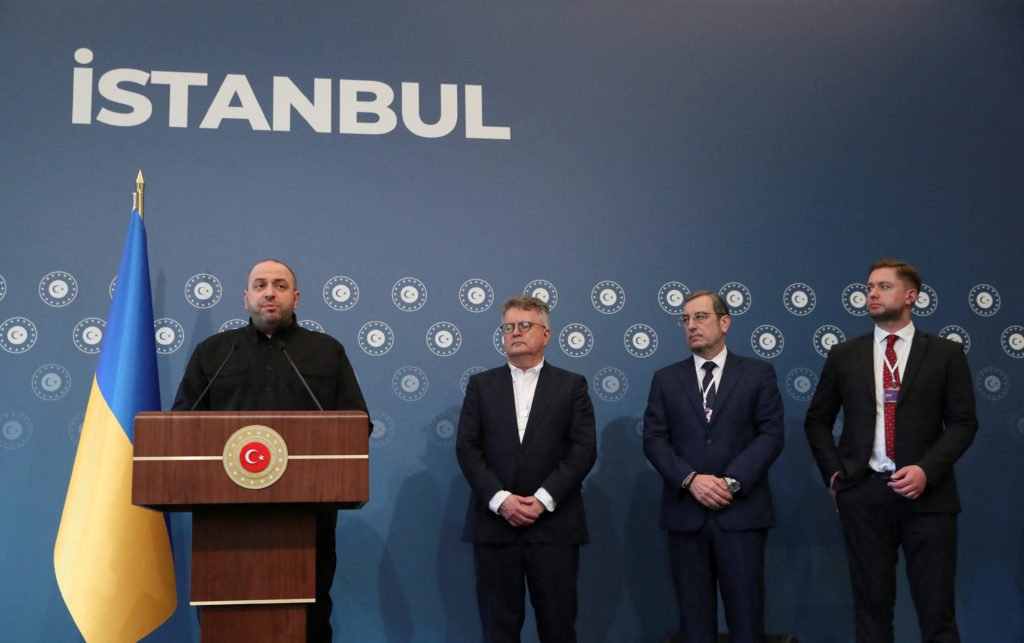
ISTANBUL (AP) — Delegations from Russia and Ukraine ended their latest peace talks Monday in Turkey after just over an hour, Ukrainian President Volodymyr Zelenskyy and Russian state media said.
Speaking in Vilnius, Lithuania, Zelenskyy said both sides “exchanged documents through the Turkish side, and we are preparing a new release of prisoners of the war.”
READ MORE: After trip to Ukraine, U.S. senators warn Putin is preparing new offensive
Expectations were low for any breakthrough on ending the 3-year-old war after a string of stunning attacks over the weekend.
Kyiv officials said a surprise drone attack Sunday destroyed more than 40 warplanes at air bases deep inside Russia, including the remote Arctic, Siberian and Far East regions more than 7,000 kilometers (4,300 miles) from Ukraine.
The complex and unprecedented raid, which struck simultaneously in three time zones, took over a year and a half to prepare and was “a major slap in the face for Russia’s military power,” said Vasyl Maliuk, the head of the Ukrainian security service who led its planning.
Zelenskyy called it a “brilliant operation” that would go down in history. The operation destroyed or heavily damaged nearly a third of Moscow’s strategic bomber fleet, according to Ukrainian officials.
Russia on Sunday fired the biggest number of drones — 472 — at Ukraine since its full-scale invasion in 2022, Ukraine’s air force said, in an apparent effort to overwhelm air defenses. That was part of a recently escalating campaign of strikes in civilian areas of Ukraine.
Hopes not high for the peace talks
In Lithuania, Zelenskyy said a new release of prisoners of war was being prepared after the Istanbul meeting. The previous direct talks on May 16 also led to a swap of prisoners, with 1,000 on both sides being exchanged.
Ukraine also handed Russia an official list of children it says were forcibly deported and must be returned, said Andriy Yermak, head of Zelenskyy’s office.
Turkish Foreign Minister Hakan Fidan had chaired the peace talks at Istanbul’s Ciragan Palace, a residence dating from the Ottoman Empire.
The talks aimed to discuss both sides’ ceasefire terms, he said, adding that “the whole world’s eyes are focused on the contacts and discussions you will have here.”
U.S.-led efforts to push the two sides into accepting a ceasefire have so far failed. Ukraine accepted that step, but the Kremlin effectively rejected it.
The Ukrainian delegation was led by Defense Minister Rustem Umerov, while Vladimir Medinsky, an aide to Russian President Vladimir Putin, headed the Kremlin team.
The Russian and Ukrainian delegations, each numbering more than a dozen people, sat at a U-shaped table across from each other with Turkish officials between them. Many of the Ukrainians wore military fatigues.
READ MORE: Germany offers to help Ukraine develop long-range missiles to strike Russia
Recent comments by senior officials in both countries indicate they remain far apart on the key conditions for stopping the war.
The Institute for the Study of War, a Washington-based think tank, said Sunday that “Russia is attempting to delay negotiations and prolong the war in order to make additional battlefield gains.”
The relentless fighting has frustrated U.S. President Donald Trump’s goal of bringing about a quick end to the war. A week ago, he expressed impatience with Putin as Moscow pounded Kyiv and other Ukrainian cities with drones and missiles for a third straight night. Trump said on social media that Putin “has gone absolutely CRAZY!”
A round of renewed direct talks, held May 16, also in Istanbul, ended after less than two hours. While both sides agreed on a large prisoner swap, there was no breakthrough.
Ukraine upbeat after strikes on air bases
Ukraine was triumphant after targeting the distant Russian air bases. The official Russian response was muted, with the attack getting little coverage on state-controlled television. Russia-1 TV channel on Sunday evening spent a little over a minute on it with a brief Defense Ministry statement read out before images shifted to Russian drone strikes on Ukrainian positions.
Zelenskyy said the setbacks for the Kremlin would help force it to the negotiating table, even as its pursues a summer offensive on the battlefield.
“Russia must feel what its losses mean. That is what will push it toward diplomacy,” he said Monday in Vilnius, Lithuania, meeting with leaders from the Nordic nations and countries on NATO’s eastern flank.
Ukraine has occasionally struck air bases hosting Russia’s nuclear capable strategic bombers since early in the war, prompting Moscow to redeploy most of them to the regions farther from the front line.
Because Sunday’s drones were launched from trucks close to the bases in five Russian regions, military defenses had virtually no time to prepare for them.
Many Russian military bloggers chided the military for its failure to build protective shields for the bombers despite previous attacks, but the large size of the planes makes that challenging.
The attacks were “a big blow to Russian strategic airpower” and exposed significant vulnerabilities in Moscow’s military capabilities, said Phillips O’Brien, a professor of strategic studies at the University of St. Andrews in Scotland.
READ MORE: Ukraine drone attack destroys dozens of military aircraft inside Russia
Edward Lucas, a senior fellow at the Washington-based Center for European Policy Analysis, called it “the most audacious attack of the war” and “a military and strategic game-changer.”
“Battered, beleaguered, tired, and outnumbered, Ukrainians have, at minimal cost, in complete secrecy, and over vast distances, destroyed or damaged dozens, perhaps more, of Russia’s strategic bombers,” he said.
Front-line fighting and shelling grinds on
Zelenskyy said that “if the Istanbul meeting brings nothing, that clearly means strong new sanctions are urgently, urgently needed” against Russia.
International concerns about the war’s consequences, as well as trade tensions, drove Asian share prices lower Monday while oil prices surged.
Fierce fighting has continued along the roughly 1,000-kilometer (620-mile) front line, and both sides have hit each other’s territory with deep strikes.
Russian forces shelled Ukraine’s southern Kherson region, killing three people and injuring 19 others, including two children, regional officials said Monday.
Also, a missile strike and shelling around the southern city of Zaporizhzhia, killing five people and injured nine others, officials said.
Russian air defenses downed 162 Ukrainian drones over eight Russian regions overnight, as well as over the Crimean Peninsula, Russia’s Defense Ministry said Monday. Moscow illegally annexed the peninsula in 2014.
Ukrainian air defenses damaged 52 out of 80 drones launched by Russia overnight, the Ukrainian air force said.
Associated Press writers Suzan Frazer in Ankara, Turkey; Hanna Arhirova in Kyiv, Ukraine, and Geir Moulson in Berlin contributed.
Support PBS News Hour
Your donation makes a difference in these uncertain times.
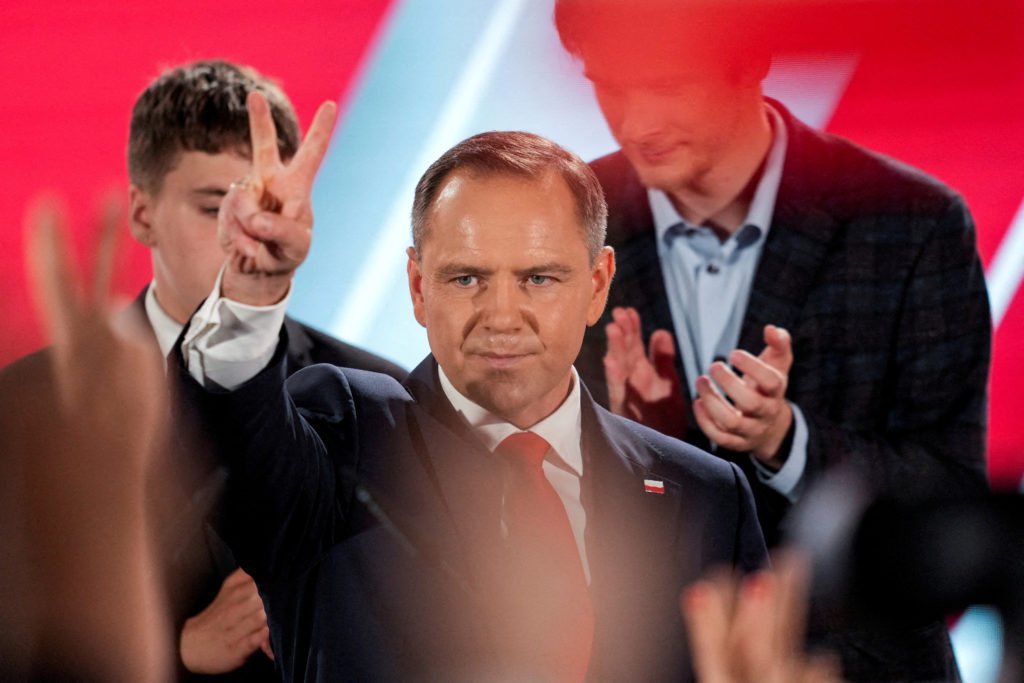
WARSAW, Poland (AP) — Conservative Karol Nawrocki won Poland’s weekend presidential runoff election, according to the final vote count on Monday. Nawrocki won 50.89% of votes in a very tight race against liberal Warsaw Mayor Rafał Trzaskowski, who received 49.11%.
The race had Poland on edge since a first round of voting two weeks earlier, revealing deep divisions in the country along the eastern flank of NATO and the European Union.
READ MORE: Liberal mayor and conservative historian headed to presidential runoff in Poland, exit poll shows
An early exit poll released Sunday evening suggested Trzaskowski was headed to victory before updated polling began to reverse the picture a couple of hours later.
The outcome suggests that Poland can be expected to take a more populist and nationalist path under its new president, who was backed by U.S. President Donald Trump.
Trzaskowski conceded defeat and congratulated Nawrocki on Monday, thanking all those who voted for him. “I fought for us to build a strong, safe, honest, and empathetic Poland together,” he wrote on X. “I’m sorry I wasn’t able to convince the majority of citizens of my vision for Poland. I’m sorry we didn’t win together.”
Congratulations from different corners
Ukrainian President Volodymyr Zelenskyy was among the leaders offering their congratulations to Nawrocki on Monday morning, an acknowledgment of Poland’s key role as a neighbor, ally and hub for Western weapons sent to Kyiv.
He called Poland “a pillar of regional and European security,” and said, “by reinforcing one another on our continent, we give greater strength to Europe in global competition and bring the achievement of real and lasting peace closer. I look forward to continued fruitful cooperation with Poland and with President Nawrocki personally.”
Hungarian Prime Minister Viktor Orbán, who shares Nawrocki’s national conservative worldview, hailed Nawrocki’s “fantastic victory.”
Meanwhile, European Commission President Ursula von der Leyen offered measured congratulations, emphasizing continued EU-Poland collaboration rooted in shared democratic values: “We are all stronger together in our community of peace, democracy, and values. So let us work to ensure the security and prosperity of our common home.”
The role of a president in Poland
Most day-to-day power in the Polish political system rests with a prime minister chosen by the parliament. However, the president’s role is not merely ceremonial. The office holds the power to influence foreign policy and to veto legislation.
Nawrocki will succeed Andrzej Duda, a conservative whose second and final term ends on Aug. 6.
Under the Polish constitution, the president serves a five-year term and may be re-elected once.
A headache for Tusk
Prime Minister Donald Tusk came to power in late 2023 with a coalition government that spans a broad ideological divide — so broad that it hasn’t been able to fulfill certain of his electoral promises, such as loosening the restrictive abortion law or passing a civil partnership law for same-sex couples.
READ MORE: European leaders gather for emergency meeting over fear Trump is isolating EU allies
But Duda’s veto power has been another obstacle. It has prevented Tusk from fulfilling promises to reverse laws that politicized the court system in a way that the EU found to be undemocratic.
Now it appears Tusk will have no way to fulfill those promises, which he made both to voters and the EU.
Some observers in Poland have said the unfulfilled promises could make it more difficult for Tusk to continue his term until the next parliamentary election scheduled for late 2027, particularly if Law and Justice dangles the prospect of future cooperation with conservatives in his coalition.
A former boxer, historian and political novice
Nawrocki, a 42-year-old amateur boxer and historian, was tapped by the Law and Justice party as part of its push for a fresh start.
The party governed Poland from 2015 to 2023, when it lost power to Tusk’s centrist coalition. Some political observers predicted it would never make a comeback, and Nawrocki was chosen as a new face who would not be burned by the scandals of the party’s eight years of rule.
The election outcome vindicated party leader Jarosław Kaczyński’s strategy but on Monday many were also blaming the increasingly unpopular Tusk and Trzaskowski.
Nawrocki has most recently been the head of the Institute of National Remembrance, which embraces nationalist historical narratives. He led efforts to topple monuments to the Soviet Red Army in Poland, and Russia responded by putting him on a wanted list, according to Polish media reports.
Nawrocki’s supporters describe him as the embodiment of traditional, patriotic values. Those who oppose secular trends, including LGBTQ+ visibility, have embraced him, viewing him as a reflection of the values they grew up with.
Nawrocki’s candidacy was clouded by allegations of past connections to criminal figures and his participation in a violent street brawl. He denies the criminal links but was unapologetic about the street fight, saying he had taken part in various “noble” fights in his life. The revelations did not seem to hurt his support among right-wing voters, many of whom see the allegations as politically motivated.
The Trump factor
Trump made it clear he wanted Nawrocki as Poland’s president.
He welcomed Nawrocki to the White House a month ago. And last week the conservative group CPAC held its first meeting in Poland to give Nawrocki a boost. Kristi Noem, the U.S. Homeland Security Secretary and a prominent Trump ally, strongly praised Nawrocki and urged Poles to vote for him.
The U.S. has about 10,000 troops stationed in Poland and Noem suggested that military ties could deepen with Nawrocki as president.
A common refrain from Nawrocki’s supporters is that he will restore “normality,” as they believe Trump has done. U.S. flags often appeared at Nawrocki’s rallies, and his supporters believed that he offered a better chance for good ties with the Trump administration.
Nawrocki has also echoed some of Trump’s language on Ukraine. He promises to continue Poland’s support for Ukraine but has been critical of President Volodymyr Zelenskyy, accusing him of taking advantage of allies. He has accused Ukrainian refugees of taking advantage of Polish generosity, vowing to prioritize Poles for social services such as health care and schooling.
Support PBS News Hour
Your donation makes a difference in these uncertain times.
On the 1st of June 2025, Ukraine executed a massive attack on several airbases of Russia destroying around 40 fighter jets. This attack using FPV drones not only destroyed Russian military assets but also inflicted a deep wound on Russian President Vladimir Putin’s pride. While a strong response from Russia to the Ukrainian offensive is almost certain, what is even more certain is the end of hopes of any ceasefire between Russian and a NATO-backed Ukraine in the near future.
Ukraine’s Operation Spiderweb and how it will keep Russia-Ukraine entangled in a prolonged war
Under the operation code-named Pavutyna or Spiderweb, Ukraine used First-person view (FPV) drones, where an operator can view what’s in front of the drone using its cameras. When aircraft were spotted, they were targeted from weapons carried on the drones, ensuring very close-range precise strikes. The drones were smuggled into Russia much earlier, and were hidden inside mobile wooden cabins loaded onto trucks. The drones were hidden on the roof of the cabins, with a lid on the roof that could be opened remotely. When all the trucks were placed at the desired locations near the airbases in Belaya, Diaghilevo, Olenya and Ivanovo, the operation began.
The Ukrainian officials said that they have been planning this operation for 1.5 years. Reports say that around 40 to 41 Russian aircrafts, including nuclear capable TU-95 and Tu-22 strategic bombers were damaged in the attack. Ukraine also attacked a military unit in the village of Sridni, the first such attack in Siberia.
In a video message, Ukrainian President Volodymyr Zelenskyy lauded Operation Spiderweb and sheer brilliance with which it was executed, stunning Russia. Zelenskyy said that around 117 drones were used and about 34 per cent of Russia’s strategic cruise missile carriers stationed at targeted airbases were hit.
“Today, a brilliant operation was carried out. The preparation took over a year and a half. What’s most interesting, is that the “office” of our operation on Russian territory was located directly next to FSB headquarters in one of their regions. In total, 117 drones were used in the operation with a corresponding number of drone operators involved. 34% of the strategic cruise missile carriers stationed at air bases were hit. We will continue this work,” the Ukrainian President said.
Today, a brilliant operation was carried out. The preparation took over a year and a half. What’s most interesting, is that the “office” of our operation on Russian territory was located directly next to FSB headquarters in one of their regions.
— Volodymyr Zelenskyy / Володимир Зеленський (@ZelenskyyUa) June 1, 2025
In a subsequent thread posted on X, President Zelenskyy claimed that Russia has been intensifying its drone and missile attacks against Ukraine. He further asserted that Ukraine never wanted this war and even offered a ceasefire, however, it was “the Russians who chose to continue the war – even under conditions where the entire world is calling for an end to the killing.”
Not for a single second did we want this war. We offered the Russians a ceasefire. Since March 11, the U.S. proposal for a full and unconditional ceasefire has been on the table. It was the Russians who chose to continue the war – even under conditions where the entire world is…
— Volodymyr Zelenskyy / Володимир Зеленський (@ZelenskyyUa) June 1, 2025
Described as the biggest drone strike attack on Russia since the war erupted, Ukraine’s offensive comes across as a bold but reckless move. While executing such an attack deep inside Russia shows Ukraine’s military capabilities and willingness to take risks, however, the timing of the attack raises concerns. The timing of the Ukrainian drone attacks right ahead of the scheduled peace talks in Istanbul raises questions if it was Ukraine’s deliberate attempt to sabotage negotiations or a profound strategic error. This question becomes even more significant when the Ukrainian President says “we will continue to do so”.
While the first round of peace talks between Moscow and Kiev may have not been successful in securing a ceasefire commitment, the talks concluded with both agreeing to exchange around a thousand prisoners of war. Last month, both the warring nations implemented this agreement and PoWs were exchanged, hinting that, although gradually, things may take positive turn in this prolonged war. However, Russia’s missile and drone strikes and now Ukraine’s Operation Spiderweb has essentially crushed the hopes for even a short term ceasefire, let alone lasting peace.
Even as the Russian aircrafts destroyed by Ukrainian drones burn and Russian leadership fumes, the leaders of Russia and Ukraine will meet each other in Istanbul on 2nd June, for peace talks, ironically.
While the planned peace talks are not expected to yield any significantly positive outcomes, Russia would not sit silent after the Ukrainian attack or continue with the usual tactics, rather, sone fear that Russian forces might even start considering the Nuclear option against Ukraine.
For President Putin, the Ukrainian attack is both, a setback and an opportunity. The Ukrainian drone strikes deep inside Russia have not only inflicted damages to fighter jets, but Putin’s image of an untouchable strongman. Russian nationalists, who form Putin’s large support base, expect a robust response. Agreeing to ceasefire immediately after such an attack, would come across as a sign of weakness and Ukraine and its European allies would project this as Russia’s defeat. Besides, President Putin’s reputation as a defender of Russian sovereignty would also be undermined.
Putin has continuously said that Russia’s war against Ukraine is its defence against what Moscow calls Western encroachment and a fight against the root causes of the conflict. These include Ukraine’s desire to join NATO which would translate into bringing NATO forces to the doorstep of Russia, Kiev’s refusal to cede territories occupied by Russia, alongside Western sanctions. Since the Ukrainian attack came just ahead of peace talks, Kiev has essentially handed an opportunity to Moscow to go berserk in response to Ukraine’s “act of terror”.
So far, Ukraine’s Western backers have been accusing Russia of deliberately prolonging the conflict. Hoever, after Operation Spiderweb, Moscow will allege that it is Ukraine and its Western allies who are escalating the war, making it untenable for Putin to accept ceasefire without desired concessions.
Notably, Ukraine has submitted its draft memorandum outlining a peaceful resolution and President Putin’s advisor Vladimir Medinsky, who would lead the Russian delegation at peace talks has confirmed receiving the document. Russia, however, has not submitted its memorandum to Ukraine, Turkey or the US, so far. Moscow is anticipated to reveal its stance during the meeting in Istanbul.
It is, however, expected that Russia would demand Ukraine to recognise Russian control over annexed Ukrainian territories, relinquish NATO dream, and demilitarise. The Ukrainian attack has allowed Moscow to stiffen its demands, and the Russian delegation might argue that Ukraine’s attack proved the need for stricter conditions to ensure Russia’s security and integrity.
Speculations are rife that Putin might opt for immediate escalation by using advanced weaponry including Orshenik missiles, Kalibr, and other warheads. However, Moscow might also pick a gradual, more methodical approach and continue to grind Ukraine’s defences while avoiding the adverse economic impacts a dramatic escalation would trigger including fresh wave of sanctions.
Reports say that the Russian forces are advancing in eastern Ukraine, with intent of creating buffer zones along the border, and have almost expelled Ukrainian forces from Russia’s Kursk region. These developments suggest that although time taking, Putin’s strategy of outlasting Ukraine and its Western allies has worked arguably well. Prolonging the conflict would help Russia erode Ukraine’s manpower and EU’s resolve.
In either case, the war will persist and yield devastating consequences for both the warring nations. The continued attacks and counterattacks by Russia and a NATO-backed Ukraine ensures the creation of a cycle of destruction and devastation where peace is the ultimate casualty.
Donald Trump’s dream of playing ‘peacemaker’ now lies in tatters
Ukraine and Russia have been accusing each other of delaying negotiations and having no intentions to end the war. Meanwhile, US President Donald Trump, who promised to bring an end to this war, is left clueless and frustrated as things fall apart despite his tall promises of peace.
The 1st June attack has shattered Donald Trump’s ambitions of being hailed as a messiah by brokering peace between Russia and Ukraine. During his election campaign last year, Donald Trump had famously claimed that if voted to power, he would end the Russia-Ukraine conflict within 24 hours, however, it’s been nearly five months already and Trump’s efforts to end the Russia-Ukraine war embarrassingly faltered.
Earlier, Trump’s decision not to impose fresh sanctions against Moscow had rattled Kiev as he was seen inching closer to Putin. However, Trump’s more recent remarks directly accusing President Putin of taking measures counterproductive to peace efforts as well as calling Putin “absolutely crazy” indicate that evolving situation has left Trump clueless.
Last month, Ukraine and the United States signed the minerals deal under which the US will gain access to the war-torn nation’s rare earth deposits, including oil and gas. It must be noted that Trump has significantly reduced aid to Ukraine, thus compelling the war-torn country to ink a deal to secure long-term US investment. Trump has also been willing to make Ukraine give up its NATO aspirations, held telephonic conversations with Putin, however, none of his efforts have yielded results that could make Kiev and Moscow to agree to a ceasefire, forget lasting peace.
President Trump has tried all this conventional US tactics of talks, trade and threats, however, neither Russia nor Ukraine have stopped fighting. Neither President Putin will easily commit to a ceasefire, especially after the June 1 attack, nor President Zelenskyy would relent on his NATO dream, particularly without ironclad security guarantees, which the US is not in a position anymore to ensure. With both the warring nations prioritising military posturing over diplomacy and mediation efforts going futile, neither a ceasefire nor lasting peace are on the horizon. For Trump, after India’s outright denial of Trump’s trade-backed mediation stopping India-Pakistan clashes, the escalation of Russia-Ukraine war suggests that Trump’s peacemaker dream was just a naïve dream never meant to translate into reality.
BOULDER, Colo. (AP) — Several people were injured and some may have been set on fire at an outdoor mall in Boulder, Colorado, police said. Police said a man was taken into custody in the attack that the FBI immediately described as a “targeted terror attack.”
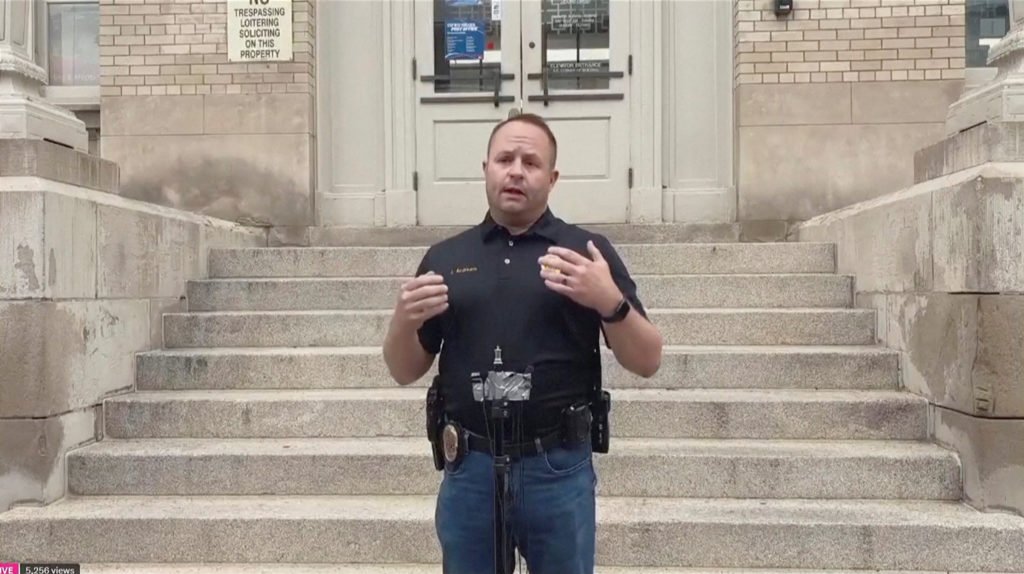
Boulder Police Chief Steve Redfearn told reporters Sunday evening that it was too early to discuss a motive but that witnesses were being interviewed.
“It would be irresponsible for me to speculate on motive this early on,” he said.
The Boulder attack took place at a popular pedestrian mall known for attracting tourists and college students. On Sunday, demonstrators with a volunteer group called Run For Their Lives had gathered to call for the release of hostages who remain in Gaza. The group has multiple chapters across the world that regularly meet to walk to advocate for hostage releases.
Sunday’s attack also occurred as law enforcement authorities in the U.S. grapple with a spike in antisemitic violence. And last week, a man was arrested on charges in the fatal shooting of two Israeli embassy staffers and shouted “Free Palestine” as he was being led away by police.
Boulder police said there were “several victims” in the attack. The injuries authorities found were consistent with reports of individuals being set on fire, Redfearn said, adding that injuries ranged from serious to minor.
Multiple blocks of the pedestrian mall area were evacuated by police. The scene shortly after the attack was tense, as law enforcement agents with a police dog walked through the streets looking for threats and instructed the public to stay clear of the pedestrian mall.
“Our agents and local law enforcement are on the scene already, and we will share updates as more information becomes available,” FBI Director Kash Patel posted on social media.
Colorado Gov. Jared Polis said in a statement that he was “closely monitoring” the situation, adding that “hate-filled acts of any kind are unacceptable.”
Support PBS News Hour
Your tax-deductible donation ensures our vital reporting continues to thrive.
World Pride, the international LGBTQ+ celebration, is underway in Washington, D.C. against the backdrop of the Trump administration rolling back LGBTQ+ rights and protections, particularly for transgender people. June Crenshaw, deputy director of the Capital Pride Alliance, joins John Yang to discuss.