Category: World

  • Musk slams Trump’s ‘big, beautiful’ bill as GOP senators race to meet July 4th deadline

    Musk slams Trump’s ‘big, beautiful’ bill as GOP senators race to meet July 4th deadline

    WASHINGTON (AP) — President Donald Trump wants his “big, beautiful” bill of tax breaks and spending cuts on his desk to be signed into law by the Fourth of July, and he’s pushing the slow-rolling Senate to make it happen sooner rather than later.

    Trump met with Senate Majority Leader John Thune at the White House early this week and has been dialing senators for one-on-one chats, using both the carrot and stick to nudge, badger and encourage them to act. But it’s still a long road ahead for the 1,000-page-plus package.

    “His question to me was, How do you think the bill’s going to go in the Senate?” Sen. Josh Hawley, R-Mo., said about his call with Trump. “Do you think there’s going to be problems?”

    WATCH: Tamara Keith and Amy Walter on Trump’s budget and GOP support for cuts

    It’s a potentially tumultuous three-week sprint for senators preparing to put their own imprint on the massive Republican package that cleared the House late last month by a single vote. The senators have been meeting for weeks behind closed doors, including as they returned to Washington late Monday, to revise the package ahead of what is expected to be a similarly narrow vote in the Senate.

    “Passing THE ONE, BIG, BEAUTIFUL BILL is a Historic Opportunity to turn our Country around,” Trump posted on social media. He urged them Monday “to work as fast as they can to get this Bill to MY DESK before the Fourth of JULY.”

    But Trump’s high-octane ally, billionaire Elon Musk, lambasted the package — and those voting for it.
    “This massive, outrageous, pork-filled Congressional spending bill is a disgusting abomination,” Musk posted on his site X, as some lawmakers have expressed reservations about the details. “Shame on those who voted for it: you know you did wrong. You know it.”

    Thune, like House Speaker Mike Johnson, has few votes to spare from the Senate’s slim, 53-seat GOP majority. Democrats are waging an all-out political assault on GOP proposals to cut Medicaid, food stamps and green energy investments to help pay for more than $4.5 trillion in tax cuts — with many lawmakers being hammered at boisterous town halls back home.

    “It’d be nice if we could have everybody on board to do it, but, you know, individual members are going to stake out their positions,” Thune said Tuesday.

    “But in the end, we have to succeed. Failure’s not an option.”

    Speaker Johnson called Musk’s harsh criticism of the bill “very disappointing.”

    “With all due respect,” said Johnson, who said he spoke with Musk for more than 20 minutes, “my friend Elon is terribly wrong about the one big beautiful bill.”

    At its core, the package seeks to extend the tax cuts approved in 2017, during Trump’s first term at the White House, and add new ones the presidents campaigned on, including no taxes on tips and others. It also includes a massive build-up of $350 billion for border security, deportations and national security.

    To defray the lost tax revenue to the government and avoid piling onto the nation’s $36 trillion debt load, Republicans want reduce federal spending by imposing work requirements for some Americans who rely on government safety net services. Estimates are 8.6 million people would no longer have health care and nearly 4 million would lose Supplemental Nutritional Assistance Program benefits, known as SNAP.

    The package also would raise the nation’s debt limit by $4 trillion to allow more borrowing to pay the bills.

    Senate Democratic Leader Chuck Schumer said Trump’s bill “is ugly to its very core.”

    Schumer said Tuesday senators should listen to Musk. “Behind the smoke and mirrors lies a cruel and draconian truth: tax breaks for the ultra-wealthy paid for by gutting health care for millions of Americans,” said the New York senator.

    The nonpartisan Congressional Budget Office is expected to soon provide an overall analysis of the package’s impacts on the government balance sheets. But Republicans are ready to blast those findings from the congressional scorekeeper as flawed.

    Trump Tuesday switched to tougher tactics, deriding the holdout Republican senators to get on board.
    The president laid into Kentucky Sen. Rand Paul, the libertarian-leaning deficit hawk who has made a career of arguing against government spending. Paul wants the package’s $4 trillion increase to the debt ceiling out of the bill.

    “Rand votes NO on everything, but never has any practical or constructive ideas. His ideas are actually crazy (losers!).” Trump posted.

    Paul seemed unfazed. “I like the president, supported the president,” the senator said. “But I can’t in good conscience give up every principle that I stand for and every principle that I was elected upon.”

    The July 4th deadline is not only aspirational for the president, it’s all but mandatory for Treasury Secretary Scott Bessent who has warned Congress that the nation will run out of money to pay its bills if the debt ceiling, now at $36 trillion, is not lifted by mid-July or early August to allow more borrowing. Bessent has also been meeting behind closed doors with senators and GOP leadership.

    The road ahead is also a test for Thune of South Dakota who, like Johnson, is a newer leader in Congress and among the many Republicans adjusting their own priorities with Trump’s return to the White House.

    WATCH: Powell delivers remarks as Trump pushes budget that could add $5.1 trillion in debt

    While Johnson has warned against massive changes to the package, Thune faces demands from his senators for adjustments.

    To make most of the tax cuts permanent — particularly the business tax breaks that are the Senate priorities — senators may shave some of Trump’s proposed new tax breaks on automobile loans or overtime pay, which are policies less prized by some senators.

    There are also discussions about altering the $40,000 cap that the House proposed for state and local deductions, known as SALT, which are important to lawmakers in high-tax New York, California and other states, but less so among GOP senators.

    “We’re having all those discussions,” said Sen. Thom Tillis, R-N.C., another key voice in the debate.
    Hawley is a among a group of senators, including Maine Sen. Susan Collins and Alaska Sen. Lisa Murkowski, who have raised concerns about the Medicaid changes that could boot people from health insurance.

    A potential copay of up to $35 for Medicaid services that was part of the House package, as well as a termination of a provider tax that many states rely on to help fund rural hospitals, have also raised concerns.

    “The best way to not be accused of cutting Medicaid is to not cut Medicaid,” Hawley said.

    Collins said she is reviewing the details.

    There’s also a House provision that would allow the auction of spectrum bandwidth that some senators oppose.

    Associated Press journalists Kevin Freking, Mary Clare Jalonick, Matt Brown, Joey Cappelletti, Michelle L. Price, Josh Boak and Nathan Ellgren contributed to this report.

    Support PBS News Hour

    Your donation makes a difference in these uncertain times.

  • Far-right leader Geert Wilders throws Dutch politics into turmoil by pulling party from ruling coalition

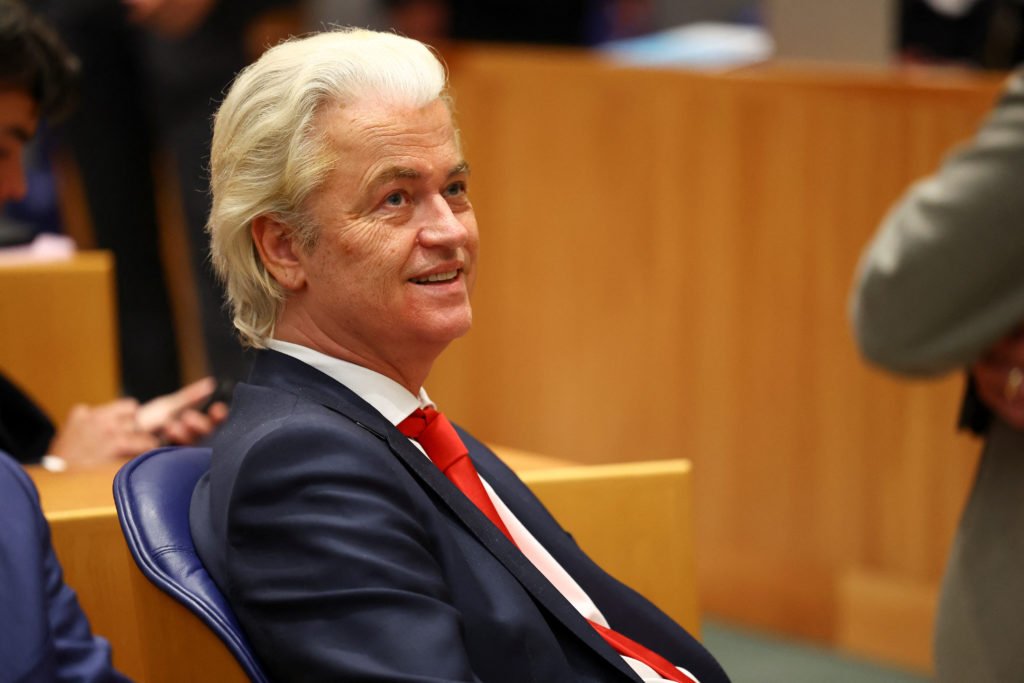
    Far-right leader Geert Wilders throws Dutch politics into turmoil by pulling party from ruling coalition

    THE HAGUE, Netherlands (AP) — Populist far-right lawmaker Geert Wilders plunged Dutch politics into turmoil Tuesday by withdrawing his party’s ministers from the ruling coalition in a dispute over a crackdown on migration. The remaining ministers will run a caretaker administration until new elections can be organized.

    The decision means the Netherlands will have a caretaker government when it hosts a summit of NATO leaders in three weeks.

    Prime Minister Dick Schoof held an emergency Cabinet meeting to discuss the crisis and then visited King Willem-Alexander to offer him the resignations of ministers from Wilders’ Party for Freedom.

    Schoof, a career civil servant who was handpicked by Wilders a year ago to lead the government, said he had repeatedly told coalition leaders in recent days that bringing down the government would be “unnecessary and irresponsible.”

    “We are facing major challenges nationally and internationally and, more than ever, decisiveness is required for the safety of our resilience and the economy in a rapidly changing world,” Schoof said.

    No date for a new election has been set, but it is unlikely before the fall.

    Schoof’s 11-month-old administration goes down in history as one of the shortest-lived governments in Dutch political history.

    Wilders announced his decision early Tuesday in a message on X after a brief meeting in parliament of leaders of the four parties that make up the fractious administration.

    Wilders blames inaction on migration.

    Wilders told reporters that he was withdrawing his support for the coalition and pulling his ministers out of the Cabinet over its failure to act on his desire for a clampdown on migration.

    “I signed up for the toughest asylum policy and not the downfall of the Netherlands,” said Wilders, whose Party for Freedom is still riding high in Dutch opinion polls, though the gap with the center-left opposition is negligible.

    Coalition partners rejected that argument, saying they all support cracking down on migration.

    Prime minister appealed for leaders to act responsibly.

    Dilan Yesilgöz, leader of the right-wing People’s Party for Freedom and Democracy, said before the meeting that Schoof urged the leaders to act responsibly.

    “The prime minister who appealed to us this morning said that we are facing enormous international challenges, we have a war on our continent, an economic crisis may be coming our way,” Yesilgöz told reporters in parliament.

    But just minutes later, the meeting was over and so was Wilders’ involvement in the government.

    “I’m shocked,” Yesilgöz said, calling Wilders’ decision “super-irresponsible.”

    READ MORE: Far-right politician Geert Wilders says he lacks enough coalition support to become Dutch prime minister

    After years in opposition, Wilders’ party won the last election on pledges to slash migration. He has grown increasingly frustrated at what he sees as the slow pace of the coalition’s efforts to implement his plans.

    Last week, Wilders demanded coalition partners sign on to a 10-point plan that aims to radically slash migration, including using the army to guard land borders and turning away all asylum-seekers. He said at the time that if immigration policy is not toughened up, his party “is out of the Cabinet.”

    He made good on that pledge Tuesday.

    Wilders’ decision comes days after conservative Karol Nawrocki was announced the winner of Poland’s weekend presidential runoff election, a victory that suggests that Poland will likely take a more populist and nationalist path under its new president, who was backed by U.S. President Donald Trump.

    It is not the first time Wilders has turned his back on power. He pledged his support to a minority government led by former Prime Minister Mark Rutte in 2010, but walked away less than two years later after a dispute about government austerity measures.

    “You know that if you work with Wilders in a coalition … it won’t go well,” Rob Jetten, leader of the opposition D66 party, told Dutch broadcaster NOS.

    Other coalition leaders look to uncertain political future.

    Caroline van der Plas, leader of the pro-agriculture populist Farmers Citizens Movement that is part of the coalition, said she was angry at Wilders’ decision.

    “He is not putting the Netherlands first, he is putting Geert Wilders first,” she told Dutch broadcaster NOS.

    Nicolien van Vroonhoven, leader of the New Social Contract party that has taken a battering in polls since joining the coalition and the departure of its talismanic leader Pieter Omtzigt, said the government could continue without Wilders, saying a minority Cabinet “is definitely an option.” Schoof’s statement appeared to put an end to such a course of events.

    Opposition welcomes Wilders’ departure.

    Frans Timmermans, the former European Commission climate chief who now leads the main opposition bloc in parliament, welcomed Wilders’ decision. He said he would not support a minority government and called for fresh elections as soon as possible.

    “Well, I think it’s an opportunity for all democratic parties to rid ourselves of the extremes because it’s clear that with the extremes you can’t govern. When things get difficult, they run away,” he told The Associated Press.

    Support PBS News Hour

    Your donation makes a difference in these uncertain times.


  • American labor market shows resilience as job openings rise

    American labor market shows resilience as job openings rise

    WASHINGTON (AP) — U.S. job openings rose unexpectedly in April, showing that the labor market remains resilient in the face of uncertainty arising from President Donald Trump’s trade wars.

    The Labor Department reported Tuesday that employers posted 7.4 million job vacancies in April, up from 7.2 million in March. Economists had expected openings to drift down to 7.1 million.

    But the number of Americans quitting their jobs— a sign of confidence in their prospects — fell, and layoffs ticked higher. And in another sign the job market has cooled from the hiring boom of 2021-2023, the Labor Department reported one job every unemployed person. As recently as December 2022, there were two vacancies for every jobless American.

    Openings remain high by historical standards but have dropped sharply since peaking at 12.1 million in March 2022, when the economy was still roaring back COVID-19 lockdowns.

    The Labor Department’s Job Openings and Labor Turnover Summary showed little evidence of cuts to the federal workforce by billionaire Elon Musk’s Department of Government Efficiency. Openings for federal jobs rose to 134,000 in April from 121,000 in March. And federal layoffs fell to 4,000 from 8,000 in March and 19,000 in February.

    Although it has decelerated, the American job market has remained resilient in the face of high interest rates engineered by the Federal Reserve in 2022 and 2023 to fight a resurgence of inflation.

    WATCH: Credit rating downgrade triggers warning signs for U.S. economy

    The economic outlook is uncertain, largely because of Trump’s economic policies — huge taxes on imports, purges of federal workers and the deportation of immigrants working in the United States illegally.

    Carl Weinberg, chief economist at High Frequency Economics, said the JOLTS report shows that companies are waiting to see how Trump’s policies play out. “Once companies are more certain that bad times are coming, they will start to shed workers,” he wrote in a commentary. “However, the economy is still near full employment. We suspect companies are still hoarding workers until they are very, very sure about an economic downturn.″

    The Labor Department is expected to report Friday that employers added 130,000 jobs last month, down from 177,000 in April. The unemployment rate is expected to stay at a low 4.2%, according to a survey of forecasters by the data firm FactSet.

    Support PBS News Hour

    Your donation makes a difference in these uncertain times.


  • WATCH LIVE: Vance speaks at American Compass event as he meets right-wing activist Loomer

    WATCH LIVE: Vance speaks at American Compass event as he meets right-wing activist Loomer

    Vice President JD Vance and Secretary of State Marco Rubio will speak at an American Compass Gala on Tuesday.

    The event is scheduled to begin at 7 p.m. ET. Watch in the player above.

    On Tuesday, Vance met with right-wing activist Laura Loomer, according to a person familiar with the meeting who spoke on condition of anonymity because they are not authorized to speak publicly.

    It is not clear what Vance and Loomer discussed when they met at the Eisenhower Executive Office Building, where the vice president’s offices are located.

    Loomer has sought to publicly identify members of the Trump administration she feels are not loyal to the president’s agenda. Trump fired some National Security Council officials after an earlier meeting she had with Trump where she raised concerns about staff loyalty.

    Support PBS News Hour

    Your donation makes a difference in these uncertain times.


  • Accidental discovery at New York planetarium unlocks secret into universe’s inner workings

    Accidental discovery at New York planetarium unlocks secret into universe’s inner workings

    NEW YORK (AP) — Scientists have unlocked one of the solar system’s many secrets from an unexpected source: a planetarium show opening to the public on Monday.

    At the American Museum of Natural History last fall, experts were hard at work preparing “Encounters in the Milky Way,” a deep dive into our home galaxy shaped by the movements of stars and other celestial objects.

    They were fine-tuning a scene featuring what’s known as the Oort Cloud, a region far beyond Pluto filled with icy relics from the solar system’s formation. Comets can hurtle toward Earth from the cloud, but scientists have never glimpsed its true shape.

    One evening while watching the Oort Cloud scene, scientists noticed something strange projected onto the planetarium’s dome.

    “Why is there a spiral there?” said Jackie Faherty, an astrophysicist who leads the museum’s educational programs and helped put together the planetarium show.

    The inner section of the Oort Cloud, made of billions of comets, resembled a bar with two waving arms, similar to the shape of our Milky Way galaxy.

    Scientists had long thought the Oort Cloud was shaped like a sphere or flattened shell, warped by the push and pull of other planets and the Milky Way itself. The planetarium show hinted that a more complex shape could lie inside.

    READ MORE: Milky Way’s chance of colliding with Andromeda galaxy is less than previously thought, astronomers report

    The museum contacted the researcher who provided the Oort Cloud data for the show, who was also surprised to see the spiral.

    “It’s kind of a freak accident that it actually happened,” said David Nesvorny with the Southwest Research Institute.

    Realizing they’d stumbled on something new, the researchers published their findings earlier this year in The Astrophysical Journal.

    The spiral is “a striking shift in our understanding of the outer solar system,” planetary scientist Andre Izidoro with Rice University, who was not involved with the study, said in an email.

    The discovery, relying on data on how celestial objects move and using simulations, will be difficult to confirm with observations. But knowing more about the orbits of distant comets could give scientists some clues, Izidoro said.

    While putting together the planetarium show, the museum’s experts weren’t expecting a window into the universe’s inner workings. The show, narrated by actor Pedro Pascal, features many vivid scenes that may capture audiences more than the Oort Cloud, said the museum’s Jon Parker — including an ongoing merge of the Sagittarius mini galaxy with the Milky Way.

    No matter how striking and beautiful the visuals of the show, the museum was committed to making it scientifically accurate. That’s what created the perfect conditions to stumble upon something new, said the museum’s Carter Emmart.

    “You just never know what you’re going to find,” Emmart said.

    The Associated Press Health and Science Department receives support from the Howard Hughes Medical Institute’s Science and Educational Media Group and the Robert Wood Johnson Foundation. The AP is solely responsible for all content.

    Support PBS News Hour

    Your donation makes a difference in these uncertain times.


  • Newark mayor sues federal prosecutor, saying arrest at immigration detention site was political

    Newark mayor sues federal prosecutor, saying arrest at immigration detention site was political

    NEWARK, N.J. (AP) — Newark Mayor Ras Baraka sued New Jersey’s top federal prosecutor on Tuesday over his arrest on a trespassing charge at a federal immigration detention facility, saying the Trump-appointed attorney had pursued the case out of political spite.

    Baraka, who leads New Jersey’s biggest city, is a candidate in a crowded primary field for the Democratic nomination for governor next Tuesday. The lawsuit against interim U.S. Attorney for New Jersey Alina Habba coincided with the day early in-person voting began.

    The lawsuit seeks damages for “false arrest and malicious prosecution,” and also accuses Habba of defamation for comments she made about his case, which was later dropped.

    Citing a post on X in which Habba said Baraka “committed trespass,” the lawsuit says Habba issued a “defamatory statement” and authorized his “false arrest” despite “clear evidence that Mayor Baraka had not committed the petty offense of ‘defiant trespass.’” The suit also names Ricky Patel, the Homeland Security Investigations agent in charge in Newark. Baraka’s attorney, Nancy Erika Smith, said they also expect to sue President Donald Trump’s administration but are required to wait six months.

    “This is not about revenge,” Baraka said during a news conference. “Ultimately, I think this is about them taking accountability for what has happened to me.”

    Emails seeking comment were left Tuesday with Habba’s office and the Homeland Security Department, where Patel works.

    Videos capture chaos outside the detention center

    The episode outside the Delaney Hall federal immigration detention center has had dramatic fallout. It began on May 9 when Baraka tried to join three Democratic members of Congress — Rob Menendez, LaMonica McIver and Bonnie Watson Coleman — who went to the facility for an oversight tour, something authorized under federal law. Baraka, an outspoken critic of Trump’s immigration crackdown and the detention center, was denied entry.

    Video from the event showed him walking from the facility side of the fence to the street side, where other people had been protesting. Uniformed officials then came to arrest him. As they did, people could be heard urging the group to protect the mayor. The video shows a crowd forming and pushing as officials led off a handcuffed Baraka.

    READ MORE: Newark mayor arrested at immigration detention facility where he was protesting

    He was initially charged with trespass, but Habba dropped that charge last month and charged McIver with two counts of assaulting officers stemming from her role in the skirmish at the facility’s gate.

    U.S. Magistrate Judge Andre Espinosa rebuked Habba’s office after moving to dismiss the charges. “The hasty arrest of Newark Mayor Ras Baraka, followed swiftly by the dismissal of these trespassing charges a mere 13 days later, suggests a worrisome misstep by your Office,” he wrote.

    McIver decried the charges and signaled she plans to fight them. A preliminary hearing is scheduled later this month.

    Baraka said the aftermath of the withdrawn charge meant he had to explain it in the media and argue his case when he had done nothing wrong.

    “I want somebody to apologize, write a letter, say this was wrong, come out and say, ‘We shouldn’t have done this,’” he said.

    New Jersey targeted over its so-called sanctuary policies

    Delaney Hall, a 1,000-bed facility, opened earlier this year as a federal immigration detention facility. Florida-based Geo Group Inc., which owns and operates the property, was awarded a 15-year contract valued at $1 billion in February. The announcement was part of the president’s plans to sharply increase detention beds nationwide from a budget of about 41,000 beds this year.

    Baraka sued Geo soon after that deal was announced.

    Then, on May 23, the Trump Justice Department filed a suit against Newark and three other New Jersey cities over their so-called sanctuary policies. There is no legal definition for sanctuary city policies, but they generally limit cooperation by local law enforcement with federal immigration officers.

    New Jersey’s attorney general has a statewide directive in place prohibiting local police from collaborating in federal civil immigration matters. The policies are aimed at barring cooperation on civil enforcement matters, not at blocking cooperation on criminal matters. They specifically carve out exceptions for when Immigration and Customs Enforcement supplies police with a judicial criminal warrant. The Justice Department said, though, the cities won’t notify ICE when they’ve made criminal arrests, according to the suit.

    It’s unclear whether Baraka’s role in these fights with the White House is affecting his campaign for governor. He’s one of six candidates seeking the Democratic nomination in the June 10 election to succeed term-limited Democratic Gov. Phil Murphy.

    On Tuesday, Baraka explained the timing of the suit as an effort to get the case before the court before it was too late. He described the arrest and fallout as a distraction during the campaign.

    “But I also think that us not responding is consent,” he said.

    In a video ad in the election’s final weeks, Baraka has embraced a theme his rivals are also pushing: affordability. He says he’ll cut taxes. While some of the images show him standing in front of what appears to be Delaney Hall, he doesn’t mention immigration or the arrest specifically, saying: “I’ll keep Trump out of your homes and out of your lives.”

    Trump has endorsed Jack Ciattarelli, one of several Republicans running in the gubernatorial primary. Ciattarelli has said if he’s elected, his first executive order would be to end any sanctuary policies for immigrants in the country illegally.

    Associated Press writer Alanna Durkin Richer in Washington contributed to this report.

    Support PBS News Hour

    Your donation makes a difference in these uncertain times.


  • Republicans have made proof of citizenship for voting a priority, but states remain skeptical

    Republicans have made proof of citizenship for voting a priority, but states remain skeptical

    AUSTIN, Texas (AP) — President Donald Trump and congressional Republicans have made it a priority this year to require people to prove citizenship before they can register to vote. Turning that aspiration into reality has proved difficult.

    READ MORE: Trump signs action requiring proof of citizenship for voters, other measures overhauling U.S. elections

    Trump’s executive order directing a documentary, proof-of-citizenship requirement for federal elections has been blocked by a judge, while federal legislation to accomplish it doesn’t appear to have the votes to pass in the Senate. At the same time, state-level efforts have found little success, even in places where Republicans control the legislature and governor’s office.

    The most recent state effort to falter is in Texas, where a Senate bill failed to gain full legislative approval before lawmakers adjourned on Monday. The Texas bill was one of the nation’s most sweeping proof-of-citizenship proposals because it would have applied not only to new registrants but also to the state’s roughly 18.6 million registered voters.

    “The bill authors failed spectacularly to explain how this bill would be implemented and how it would be able to be implemented without inconveniencing a ton of voters,” said Anthony Gutierrez, director of the voting rights group Common Cause Texas.

    Voting by noncitizens is rare

    Voting by noncitizens is already illegal and punishable as a felony, potentially leading to deportation, but Trump and his allies have pressed for a proof-of-citizenship mandate by arguing it would improve public confidence in elections.

    Before his win last year, Trump falsely claimed noncitizens might vote in large enough numbers to sway the outcome. Although noncitizen voting does occur, research and reviews of state cases has shown it to be rare and more often a mistake.

    Voting rights groups say the various proposals seeking to require proof-of-citizenship are overly burdensome and threaten to disenfranchise millions of Americans. Many do not have easy access to their birth certificates, have not gotten a U.S. passport or have a name that no longer matches the one on their birth certificate — such as women who changed their last name when they married.

    Married women who changed names are a particular concern

    The number of states considering bills related to proof of citizenship for voting tripled from 2023 to this year, said Liz Avore, senior policy adviser with the Voting Rights Lab, an advocacy group that tracks election legislation in the states.

    That hasn’t resulted in many new laws, at least so far. Republicans in Wyoming passed their own proof-of-citizenship legislation, but similar measures have stalled or failed in multiple GOP-led states, including Florida, Missouri, Texas and Utah. A proposal remains active in Ohio, although Gov. Mike DeWine, a Republican, has said he doesn’t want to sign any more bills that make it harder to vote.

    READ MORE: Why voting rights groups warn the SAVE Act may make it harder for married women to vote

    In Texas, the legislation swiftly passed the state Senate after it was introduced in March but never made it to a floor vote in the House. It was unclear why legislation that was such a priority for Senate Republicans – every one of them co-authored the bill — ended up faltering.

    “I just think people realized, as flawed as this playbook has been in other states, Texas didn’t need to make this mistake,” said Rep. John Bucy, a Democrat who serves as vice chair of the House elections committee.

    Bucy pointed to specific concerns about married women who changed their last name. This surfaced in local elections earlier this year in New Hampshire, which passed a proof-of-citizenship requirement last year.

    Similar laws have created confusion

    Other states that previously sought to add such a requirement have faced lawsuits and complications when trying to implement it.

    In Arizona, a state audit found that problems with the way data was handled had affected the tracking and verification of residents’ citizenship status. It came after officials had identified some 200,000 voters who were thought to have provided proof of their citizenship but had not.

    A proof-of-citizenship requirement was in effect for three years in Kansas before it was overturned by federal courts. The state’s own expert estimated that almost all of the roughly 30,000 people who were prevented from registering to vote while it was in effect were U.S. citizens who otherwise had been eligible.

    In Missouri, legislation seeking to add a proof-of-citizenship requirement cleared a Senate committee but never came to a vote in the Republican-led chamber.

    READ MORE: Trump has pressed for new voting requirements. Republicans in Congress will try to make that happen

    Republican state Sen. Ben Brown had promoted the legislation as a follow-up to a constitutional amendment stating that only U.S. citizens can vote, which Missouri voters overwhelmingly approved last November. He said there were several factors that led to the bill not advancing this year. Due to the session’s limited schedule, he chose to prioritize another elections bill banning foreign contributions in state ballot measure campaigns.

    “Our legislative session ending mid-May means a lot of things die at the finish line because you simply run out of time,” Brown said, noting he also took time to research concerns raised by local election officials and plans to reintroduce the proof-of-citizenship bill next year.

    Complications prompt states to focus on other issues

    The Republican-controlled Legislature in Utah also prioritized other election changes, adding voter ID requirements and requiring people to opt in to receive their ballots in the mail. Before Gov. Spencer Cox signed the bill into law, Utah was the only Republican-controlled state that allowed all elections to be conducted by mail without a need to opt in.

    Under the Florida bill that has failed to advance, voter registration applications wouldn’t be considered valid until state officials had verified citizenship, either by confirming a previous voting history, checking the applicant’s status in state and federal databases, or verifying documents they provided.

    The bill would have required voters to prove their citizenship even when updating their registration to change their address or party affiliation.

    Its sponsor, Republican state Rep. Jenna Persons-Mulicka, said it was meant to follow through on Trump’s executive order: “This bill fully answers the president’s call,” she said.

    Cassidy reported from Atlanta. Associated Press writers Mead Gruver in Cheyenne, Wyoming; David A. Lieb in Jefferson City, Missouri; Kate Payne in Tallahassee, Florida; Hannah Schoenbaum in Salt Lake City; Julie Carr Smyth in Columbus, Ohio; and Isabella Volmert in Lansing, Michigan, contributed to this report.

    Support PBS News Hour

    Your donation makes a difference in these uncertain times.


  • Boulder suspect backed off initial plan to kill all in demonstration group, police say

    Boulder suspect backed off initial plan to kill all in demonstration group, police say

    BOULDER, Colo. (AP) — A man in Boulder disguised as a gardener who wounded 12 people in an attack on a group holding their weekly demonstration for the release of Israeli hostages in Gaza had planned to kill them all but appeared to have second thoughts, according to authorities.

    Mohamed Sabry Soliman had 18 Molotov cocktails but threw just two during Sunday’s attack in which he yelled “Free Palestine,” police said. He didn’t carry out his full plan “because he got scared and had never hurt anyone before,” police wrote in an affidavit.

    WATCH: Investigators say man used makeshift flamethrower in attack on pro-Israel group in Boulder

    The two incendiary devices he did throw into the group of about 20 people were enough to wound more than half of them, and authorities said he expressed no regrets about the attack.

    The 45-year-old Soliman — whose first name also was spelled Mohammed in some court documents — planned the attack for more than a year and specifically targeted what he described as a “Zionist group,” authorities said in court papers charging him with a federal hate crime.

    “When he was interviewed about the attack, he said he wanted them all to die, he had no regrets and he would go back and do it again,” Acting U.S. Attorney J. Bishop Grewell for the District of Colorado said during a news conference Monday.

    Federal and state prosecutors filed separate criminal cases against Soliman, charging him with a hate crime and attempted murder, respectively. He faces additional state charges related to the incendiary devices, and more charges are possible in federal court, where the Justice Department will seek a grand jury indictment.

    Soliman is being held on a $10 million, cash-only bond, prosecutors said. His next court hearing is set for Thursday.

    An FBI affidavit says Soliman told the police he was driven by a desire “to kill all Zionist people,” a reference to the movement to establish and protect a Jewish state in Israel.

    Soliman’s attorney, public defender Kathryn Herold, declined to comment after the hearing.

    Soliman was living in the U.S. illegally after entering the country in August 2022 on a B2 visa that expired in February 2023, Department of Homeland Security Assistant Secretary Tricia McLaughlin said in a post on the social platform X.

    The burst of violence at the popular Pearl Street pedestrian mall in downtown Boulder unfolded against the backdrop of the Israel-Hamas war, which continues to inflame global tensions and has contributed to a spike in antisemitic violence in the United States. The attack happened on the beginning of the Jewish holiday of Shavuot and barely a week after a man who also yelled “Free Palestine” was charged with fatally shooting two Israeli Embassy staffers outside a Jewish museum in Washington.

    Six victims hospitalized

    The victims who were wounded range in age from 52 to 88, and the injuries spanned from serious to minor, officials said.

    Six of the injured were taken to hospitals, and four have since been released, said Miri Kornfeld, a Denver-based organizer connected to the group. She said the clothing of one of those who remains hospitalized caught on fire.

    Members of the volunteer group called Run For Their Lives were holding their weekly demonstration when the attack happened. Video from the scene captured by witness Alex Osante of San Diego shows people pouring water on a woman lying on the ground who Osante said had caught fire during the attack.

    Molotov cocktails found

    Osante said that after the suspect threw the two incendiary devices, apparently catching himself on fire as he threw the second, he took off his shirt and what appeared to be a bulletproof vest before police arrived. The man dropped to the ground and was arrested without any apparent resistance in the video Osante filmed.

    The Molotov cocktails were made up of glass wine carafe bottles or jars with clear liquid and red rags hanging out of the them, the FBI said.

    “He stated that he had been planning the attack for a year and was waiting until after his daughter graduated to conduct the attack,” the affidavit says.

    He had gas in a backpack sprayer but told investigators he didn’t spray it on anyone but himself “because he had planned on dying.”

    Soliman also told investigators he took a concealed carry class and tried to buy a gun but was denied because he is not a legal U.S. citizen.

    Suspect hospitalized after attack

    Authorities said they believe Soliman acted alone. He was also injured and taken to a hospital. Authorities did not elaborate on the nature of his injuries, but a booking photo showed him with a large bandage over one ear.

    Soliman, who was born in Egypt, moved three years ago to Colorado Springs, where he lived with his wife and five kids, according to state court documents. He previously spent 17 years living in Kuwait.

    McLaughlin said Soliman filed for asylum in September 2022 and was granted a work authorization in March 2023 that had expired. DHS did not respond to requests for additional information.

    Tucker reported from Washington.

    Support PBS News Hour

    Your donation makes a difference in these uncertain times.


  • Russian rockets kill 3 in northeastern Ukraine as Kyiv claims it damaged Crimean bridge

    Russian rockets kill 3 in northeastern Ukraine as Kyiv claims it damaged Crimean bridge

    KYIV, Ukraine (AP) — A Russian rocket attack targeted the northeastern Ukrainian city of Sumy on Tuesday, killing at least three people and wounding 25, officials said. President Volodymyr Zelenskyy denounced the assault, saying it underscored that Moscow has no intentions of halting the 3-year-old war.

    WATCH: As delegations meet for ceasefire talks, Russia reels from Ukrainian drone attacks

    The attack came a day after direct peace talks in Istanbul made no progress on ending the fighting. Local authorities said the barrage of rockets struck apartment buildings and a medical facility in the center of Sumy.

    Meanwhile, Ukraine’s secret services said they struck inside Russia again, two days after a spectacular Ukrainian drone attack on air bases deep inside the country.

    A vital bridge to Crimea

    The Ukrainian Security Service, known by its acronym SBU, claimed it damaged the foundations of the Kerch Bridge linking Russia and illegally annexed Crimea — a key artery for Russian military supplies in the war.

    The SBU said it detonated 1,100 kilograms (2,400 pounds) of explosives on the seabed overnight, in an operation that took several months to set up. It was the third Ukrainian strike on the bridge since Russia’s invasion of its neighbor in February 2022, the SBU said.

    “The bridge is now effectively in an emergency condition,” the SBU claimed.

    The agency said no civilians were killed or injured in the operation. It was not possible to independently confirm those claims.

    Traffic across the Kerch Bridge was halted for three hours early Tuesday, but it reopened at 9 a.m., official Russian social media channels said. It closed for a second time at 3:20 p.m. and reopened again after two and a half hours.

    Zelenskyy appeals for pressure on Moscow

    The Ukrainian president called the attack on Sumy a “completely deliberate” strike on civilians.

    “That’s all you need to know about Russia’s ‘desire’ to end this war,” the Ukrainian president wrote on social media.

    Zelenskyy appealed for global pressure and “decisive action from the United States, Europe and everyone in the world who holds power.” Without it, he said, Russian President Vladimir Putin “will not agree even to a ceasefire.”

    The war has killed more than 12,000 Ukrainian civilians, according to the United Nations, as well as tens of thousands of soldiers on both sides along the roughly 1,000-kilometer (620-mile) front line where the fighting grinds on despite U.S.-led efforts to broker a peace deal.

    A stunning Ukrainian drone attack

    Though Russia has a bigger army and more economic resources than Ukraine, the Ukrainian drone attack over the weekend damaged or destroyed more than 40 warplanes at air bases deep inside Russia, Ukrainian officials said, touting it as a serious blow to the Kremlin’s strategic arsenal and military prestige.

    The Russian Defense Ministry acknowledged that the Ukrainian attack set several planes ablaze at two air bases but said the military repelled attempted attacks on three other air bases.

    READ MORE: Ukraine’s drone attack on Russian warplanes was a serious blow to the Kremlin’s strategic arsenal

    Both Zelenskyy and Putin have been eager to show U.S. President Donald Trump that they share his ambition to end the fighting — and avoid possible punitive measures from Washington. Ukraine has accepted a U.S.-proposed ceasefire, but the Kremlin effectively rejected it. Putin has made it clear that any peace settlement has to be on his terms.

    Delegations from the warring sides agreed Monday to swap dead and wounded troops, but their conditions for ending the war remained far apart.

    Dmitry Medvedev, a former Russian president who now serves as deputy head of the country’s Security Council chaired by Putin, indicated on Tuesday that there would be no let-up in Russia’s invasion.

    “The Istanbul talks are not for striking a compromise peace on someone else’s delusional terms but for ensuring our swift victory and the complete destruction” of Ukraine’s government, he said.

    In an apparent comment on the latest Ukrainian strikes, he declared that “retribution is inevitable.”

    A Putin-Zelenskyy-Trump meeting ‘unlikely’ soon, Moscow says

    Kremlin spokesman Dmitry Peskov responded to suggestions that a face-to-face meeting between Putin, Trump and Zelenskyy could break the deadlock, saying the possibility was “unlikely in the near future.”
    Meanwhile, a senior Ukrainian delegation led by First Deputy Prime Minister and Economy Minister Yuliia Svyrydenko has traveled to Washington for talks about defense, sanctions and postwar recovery, said Andrii Yermak, the head of Ukraine’s presidential office.

    The delegation will meet with representatives from both major U.S. political parties, as well as with advisers to Trump, Yermak added.

    Ukrainians in Kyiv welcomed the strikes on Russian air bases but were gloomy about prospects for a peace agreement.

    “Russia has invested too many resources in this war to just … stop for nothing,” said serviceman Oleh Nikolenko, 43.

    His wife, Anastasia Nikolenko, a 38-year-old designer, said diplomacy cannot stop the fighting. “We need to show by force, by physical force, that we cannot be defeated,” she said.

    Russia recently expanded its attacks on Sumy and the Kharkiv region following Putin’s promise to create a buffer zone along the border that might prevent long-range Ukrainian attacks from hitting Russian soil. Sumy, about 25 kilometers (15 miles) from the border, had a prewar population of around 250,000.

    The Russian Defense Ministry claimed its troops had taken the Ukrainian village of Andriivka, close to the border in the Sumy region. Ukraine made no immediate comment on the claim, which could not be independently verified.

    Russia also fired rocket artillery at Chystovodivka village in the Kharkiv region, killing two people and injuring three others, regional Gov. Oleh Syniehubov said.

    Support PBS News Hour

    Your donation makes a difference in these uncertain times.

  • Gaza officials say Israeli forces killed 27 heading to aid site. Israel says it fired near suspects

    Gaza officials say Israeli forces killed 27 heading to aid site. Israel says it fired near suspects

    RAFAH, Gaza Strip (AP) — Palestinian health officials and witnesses say Israeli forces fired on people as they headed toward an aid distribution site on Tuesday, killing at least 27, in the third such shooting in three days. The army said it fired “near a few individual suspects” who left the designated route, approached its forces and ignored warning shots.

    READ MORE: Israeli forces open near aid site, killing 3, Gaza health officials say

    The near-daily shootings have come after an Israeli and U.S.-backed foundation established aid distribution points inside Israeli military zones, a system it says is designed to circumvent Hamas. The United Nations has rejected the new system, saying it doesn’t address Gaza’s mounting hunger crisis and allows Israel to use aid as a weapon.

    The Israeli military said it was looking into reports of casualties on Tuesday. It previously said it fired warning shots at suspects who approached its forces early Sunday and Monday, when health officials and witnesses said that 34 people were killed. The military denies opening fire on civilians or blocking them from reaching the aid sites.

    The Gaza Humanitarian Foundation, which operates the sites, says there has been no violence in or around them. On Tuesday, it acknowledged that the Israeli military was investigating whether civilians were wounded “after moving beyond the designated safe corridor and into a closed military zone,” in an area that was “well beyond our secure distribution site.”

    A spokesperson for the group said that it was “saddened to learn that a number of civilians were injured and killed after moving beyond the designated safe corridor”.

    ‘Either way we will die’

    The shootings all occurred at the Flag Roundabout, around a kilometer (half-mile) from one of the GHF’s distribution sites in the now mostly uninhabited southern city of Rafah. The entire area is an Israeli military zone where journalists have no access outside of army-approved embeds.

    Yasser Abu Lubda, a 50-year-old displaced from Rafah, said that the shooting started around 4 a.m. on Tuesday and that he saw several people killed or wounded.

    Neima al-Aaraj, a woman from Khan Younis, said that the Israeli fire was “indiscriminate.” She added that when she managed to reach the distribution site, there was no aid left.

    “After the martyrs and wounded, I won’t return,” she said. “Either way we will die.”

    Rasha al-Nahal, another witness, said that “there was gunfire from all directions.” She said that she counted more than a dozen dead and several wounded along the road.

    When she reached the distribution site, she also found that there was no aid left, she said. So she gathered pasta from the ground and salvaged rice from a bag that had been dropped and trampled upon.

    “We’d rather die than deal with this,” she said. “Death is more dignified than what’s happening to us.”

    UN human rights official condemns shootings

    At least 27 people were killed early Tuesday, according to the Gaza Health Ministry.

    Hisham Mhanna, a spokesperson for the International Committee of the Red Cross, confirmed the toll, saying its field hospital in Rafah received 184 wounded people, 19 of whom were declared dead on arrival and eight more who later died of their wounds. The 27 dead were transferred to Nasser Hospital in the city of Khan Younis.

    Jeremy Laurence, a spokesman for the Office of the U.N. High Commissioner for Human Rights, told reporters in Geneva that it also had information indicating that 27 people were killed.

    There were three children and two women among the dead, according to Mohammed Saqr, head of nursing at Nasser Hospital. Hospital director Atef al-Hout said that most of the patients had gunshot wounds.

    READ MORE: At least 31 Palestinians were killed heading to a Gaza aid site, witnesses say. Israel denies responsibility

    An Associated Press reporter who arrived at the Red Cross field hospital at around 6 a.m. saw wounded people being transferred to other hospitals by ambulance.

    Outside, people were passing by on their way back from the aid hub, mostly empty-handed, while empty flour bags stained with blood lay on the ground.

    “Palestinians have been presented the grimmest of choices: die from starvation or risk being killed while trying to access the meager food that is being made available through Israel’s militarized humanitarian assistance mechanism,” Volker Türk, the U.N. High Commissioner for Human Rights, said in a statement.

    The Gaza Humanitarian Foundation said that it distributed 21 truckloads of food at the Rafah site on Tuesday, while its other two operational sites were closed.

    During a ceasefire earlier this year, around 600 aid trucks entered Gaza daily. The territory’s roughly 2 million people are almost completely reliant on international aid because Israel’s offensive has destroyed nearly all of Gaza’s food production capabilities.

    3 Israeli soldiers killed in northern Gaza

    The Israeli military, meanwhile, said that three of its soldiers were killed in northern Gaza, in what appeared to be the deadliest attack on Israel’s forces since it ended a ceasefire with Hamas in March.

    The military said the three soldiers, all in their early 20s, died during combat on Monday, without providing details. Israeli media reported that they were killed in an explosion in the Jabaliya area.

    Israel ended the ceasefire after Hamas refused to change the agreement to release more hostages sooner. Israeli strikes have killed thousands of Palestinians since then, according to Gaza’s Health Ministry. Israel also imposed a complete blockade on food and other imports for 2½ months, leading to warnings of famine before the restrictions were loosened in May.

    Israel says the restrictions and the new system are designed to prevent Hamas from stealing aid. The U.N. says its ability to deliver aid across Gaza has been hindered by Israeli restrictions, the breakdown of law and order and widespread looting, but that there’s no evidence of systematic diversion of aid by Hamas.

    Hamas-led militants killed around 1,200 people, mostly civilians, and took 251 people hostage in the Oct. 7, 2023, attack into southern Israel that ignited the war. They are still holding 58 hostages, a third of them believed to be alive, after most of the rest were released in ceasefire agreements or other deals.

    Israel’s military campaign has killed more than 54,000 Palestinians, mostly women and children, according to the Gaza Health Ministry, which doesn’t say how many of the dead were civilians or combatants. The ministry is led by medical professionals but reports to the Hamas-run government. Its toll is seen as generally reliable by U.N. agencies and independent experts, though Israel has challenged its numbers.

    Israel says it has killed around 20,000 militants, without providing evidence. Around 860 Israeli soldiers have been killed since the Oct. 7 attack, including more than 400 during the fighting inside Gaza.

    Magdy and Khaled reported from Cairo. Julia Frankel and Areej Hazboun in Jerusalem, and Jamey Keaten in Geneva, contributed to this report.

    Support PBS News Hour

    Your donation makes a difference in these uncertain times.