Category: World

  • FBI arrests man linked to California fertility clinic explosion at JFK airport, officials say

    FBI arrests man linked to California fertility clinic explosion at JFK airport, officials say

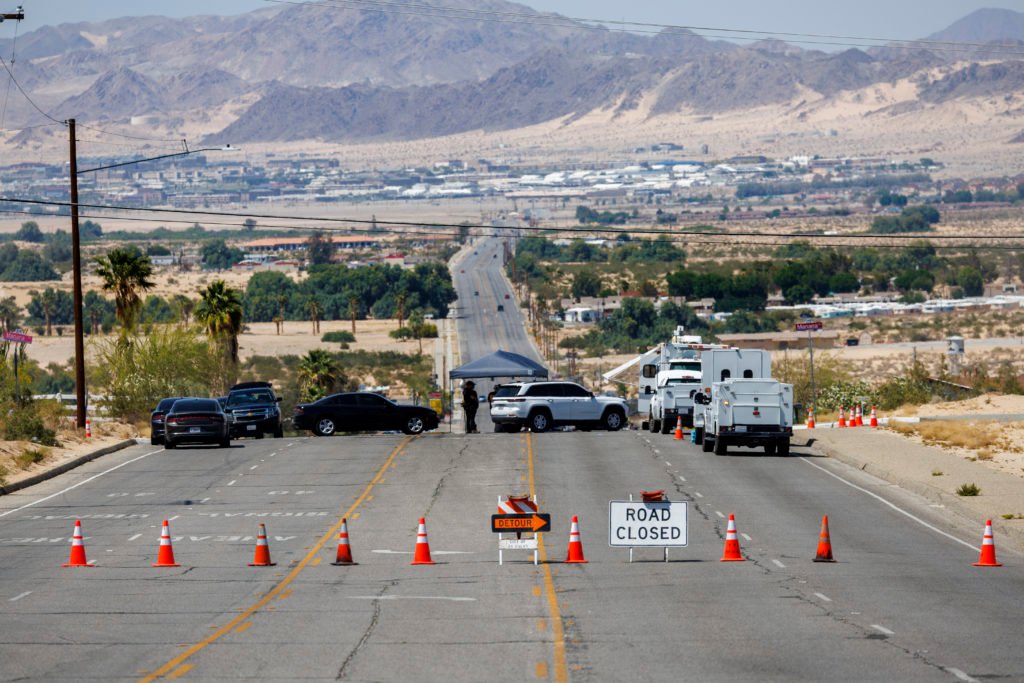
    NEW YORK (AP) — The FBI has arrested a man on charges linked to last month’s car bombing of a fertility clinic in Palm Springs, California, three law enforcement officials said Wednesday.

    The man, Daniel Park, a 32-year-old resident of Kent, Washington, was arrested Tuesday night at the John F. Kennedy Airport in New York, one of the officials said. It was not immediately clear what Park was charged with or how he was connected to the investigation. Authorities believe the bomber died in the blast.

    Federal prosecutors are expected to release details at a news conference in Los Angeles. The arrest was first reported by NBC News. The law enforcement officials spoke on condition of anonymity because they were not authorized to discuss a criminal case that has not been publicly disclosed.

    READ MORE: Authorities say suspect in California fertility clinic car bombing left behind ‘anti-pro-life’ writings

    The attack on the fertility clinic was carried out by Guy Edward Bartkus, who was also killed in the explosion, according to the FBI. Officials said at the time they were investigating whether Bartkus had any help.

    Authorities have described Bartkus as a member of the anti-natalist movement, a fringe group that opposes childbirth and population growth and believes people should not continue to procreate. Officials said he intentionally targeted the fertility clinic as an act of terrorism. He tried to livestream the explosion, but the attempt failed, the FBI says.

    The blast gutted the American Reproductive Centers fertility clinic in Palms Springs and shattered the windows of nearby buildings along a palm tree-lined street. Witnesses described a loud boom followed by a chaotic scene, with people screaming in terror and glass strewn along the sidewalk and street. A body was found near a charred vehicle outside the clinic.

    Investigators haven’t said if he intended to kill himself in the attack or why he chose the specific facility. The clinic he attacked provides services to help people get pregnant, including in vitro fertilization and fertility evaluations.

    Authorities executed a search warrant in Bartkus’ hometown of Twentynine Palms, a city of 28,000 residents northeast of Palm Springs with a large U.S. Marine Corps base. Authorities haven’t shared specifics about the explosives used to make the bomb and where Bartkus may have obtained them.

    READ MORE: So you want to increase your country’s birth rate? Experts say it’s tough

    A senior FBI official called the explosion possibly the “largest bombing scene that we’ve had in Southern California.”

    Scott Sweetow, a retired ATF explosives expert, said the amount of damage caused indicated that the suspect used a “high explosive” similar to dynamite and TNT rather than a “low explosive” like gun powder.

    Those types of explosives are normally difficult for civilians to access, but increasingly people are finding ways to concoct explosives at home, he said.

    “Once you know the chemistry involved, it’s pretty easy to get stuff,” Sweetow said. “The ingredients you could get at a grocery store.”

    The images of the aftermath also showed that the explosion appeared to blow from the street straight through the building and to the parking lot on the other side, something that could have been intentional or pure luck, Sweetow said. A part of the car was also blown through the building and landed in the back by a dumpster.

    Support PBS News Hour

    Your donation makes a difference in these uncertain times.

  • 4 things to know about this year’s Hajj pilgrimage

    4 things to know about this year’s Hajj pilgrimage


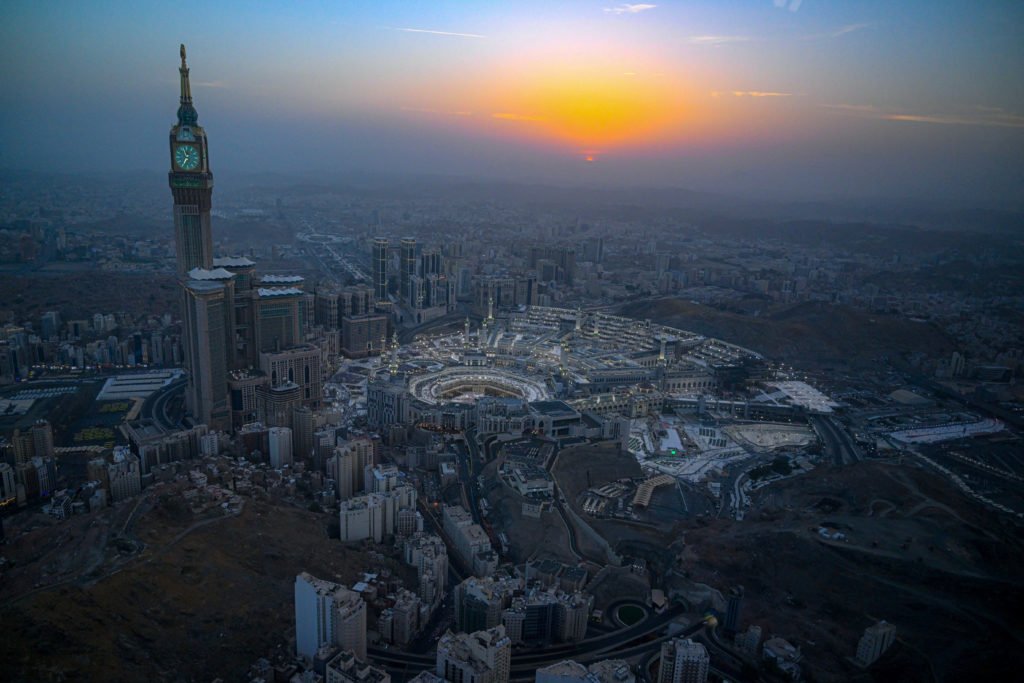
    ISLAMABAD, Pakistan (AP) — Muslims from around the world are in the Saudi city of Mecca for the Hajj, one of the Five Pillars of Islam.

    In the coming days, people will immerse themselves in religious rituals and acts of worship that originated more than 1,400 years ago.

    READ MORE: The Hajj pilgrimage and why it’s significant for Muslims

    They also have to contend with excess heat and other earthly factors, like a ban on children under the age of 12 and a crackdown on unauthorized entry.

    Here’s what to know about this year’s Hajj.

    Beating the heat in the Saudi desert

    Last year’s pilgrims struggled through burning sun and suffocating hot weather, with the mercury hitting 47 degrees Celsius (117 degrees Fahrenheit). More than 1,300 people died.

    This year, Saudi authorities are advising caution in direct sunlight, telling pilgrims to avoid going out during the day and uncovering their heads, except for rituals, unless necessary.

    People walk as they arrive at the grand mosque during the annual hajj pilgrimage in the holy city of Mecca

    People walk as they arrive at the grand mosque during the annual hajj pilgrimage in the holy city of Mecca, Saudi Arabia, June 3, 2025. Photo by Saudi Press Agency/Handout via Reuters

    An official safety kit emphasizes the importance of light-colored clothing and umbrellas. It also has details on recognizing and treating the symptoms of dehydration and heat exhaustion.

    But it’s tough to avoid the heat and crowds when the Hajj is outdoors. It’s a once-in-a-lifetime opportunity for many, elevating the personal stakes further, and temperatures in Mecca are already 41 degrees Celsius (about 106 Fahrenheit).

    Although the desert kingdom spends billions of dollars on crowd control and cooling, the sheer number of pilgrims and climatic conditions make it difficult to guarantee people’s safety.

    A ban on children under 12 at the Hajj

    Saudi Arabia has banned children under 12 from this year’s Hajj — one of the biggest policy changes in recent years.

    Riyadh reportedly introduced the ban as a precautionary measure to ensure children’s safety during the pilgrimage, which could be a dangerous environment for them because of the huge crowds.

    Children are exempt from doing the Hajj and are not required to fulfill other Islamic obligations, like prayer and fasting, until they reach puberty.

    READ MORE: Muslims converge at Mount Arafat to worship as Hajj pilgrimage reaches its peak

    But that doesn’t stop some parents from wanting to take their children to experience the Hajj and see the holiest site in Islam, the Kaaba, the black, cube-shaped structure that is the focal point for daily prayers.

    Father of five Talha Ayub, from the Pakistani city of Lahore, said his kids were staying with their grandparents while he and his wife performed the Hajj in a “more relaxed way.”

    “Even if children were allowed, we probably wouldn’t have taken them because the weather is extremely harsh this year,” said Ayub, whose children are aged 1 to 13. “I have mixed feelings about leaving them behind. I’ll miss them.”

    There’s no official age breakdown for pilgrims, but most are between 35 and 64.

    Layaways and lowering the price tag

    The price of a Hajj ranges from $4,000 to $20,000, depending on the length of stay, level of comfort, and country of departure. Depreciating currencies, high inflation, and tax hikes in Saudi Arabia also have an impact on how much Muslims end up paying.

    The countries that typically send the most pilgrims are developing nations. Some have trimmed the price of government-backed Hajj programs to make them more affordable. But this step isn’t always enough.

    Farid Ahmed Majumder, secretary general of the Hajj Agencies Association of Bangladesh, said the country was allowed to send some 127,000 pilgrims this year but failed to meet this quota, mainly because of higher costs.

    Pakistan has reduced the price of the state-run Hajj program. It has also debuted a flexible payment system.

    People walk past a marble mosaic of the Koran at a museum near the holy city of Mecca

    People walk past a marble mosaic of the Koran at a museum near the holy city of Mecca, Saudi Arabia, June 3, 2025. Photo by Khaled Abdullah/ Reuters

    Farmer and small business owner Zaheer Ahmad said he didn’t have enough money to pay for his Hajj up-front, 1.2 million rupees or about $4,255.

    He paid in three installments, applying for the Hajj in December with an advance and finishing his payments in February. “Otherwise, I might not have been able to go for Hajj at all,” he said.

    In Saudi Arabia, which has also introduced flexible payments, domestic pilgrims pay 20% within 72 hours of booking, another 40% during Ramadan and the final 40% the following month.

    Managing wait times and overcrowding

    Although the Hajj is at least a once-in-a-lifetime obligation — for every Muslim who can afford it and is physically able to make it — people don’t want to wait a lifetime to fulfill it.

    But the Hajj has limited capacity, countries have set quotas, and there is only one time each year to do it. Patience really is a virtue and everything needs to align: availability, health, and finances.

    READ MORE: Saudi Arabia cracks down on Hajj permits to prevent overcrowding

    Muslim-majority countries like Indonesia and Malaysia have decades-long waiting lists for the Hajj. Indonesia has 5.4 million people awaiting their turn, with the number increasing each year.

    While there is nothing to stop people from performing the Hajj more than once, some governments believe this practice deprives others of the opportunity, especially in countries where demand is high.

    Muslims perform morning prayers in the grand mosque during the annual hajj pilgrimage in the holy city of Mecca

    Muslims perform morning prayers in the grand mosque during the annual hajj pilgrimage in the holy city of Mecca, Saudi Arabia, on June 3, 2025. Photo by Saudi Press Agency/Handout via Reuters

    India has a ban on “repeaters” and excludes applications from anyone who has previously performed the pilgrimage through the national Hajj committee, although there are exceptions from those accompanying certain categories of people like the elderly.

    With a restricted supply of Hajj spaces, it’s inevitable that people will try to find ways to get to the holy city and stay there.

    In April, to curb unauthorized Hajj pilgrimages and control inbound travel, Saudi Arabia suspended the issue of short-term visas for 14 countries: India, Pakistan, Bangladesh, Egypt, Indonesia, Iraq, Nigeria, Jordan, Algeria, Sudan, Ethiopia, Tunisia, Yemen, and Morocco.

    People have in the past traveled to Saudi Arabia on short-term visas and entered Mecca without official permission for the Hajj. Authorities said that many of those who died in the heat during last year’s Hajj were unregistered and unable to access air-conditioned pilgrim amenities.

    The Interior Ministry warned in May that a fine of up to 20,000 riyals, or about $5,330, would be imposed on anyone attempting to enter Mecca during the Hajj without the correct visa.

    Associated Press writers Sheikh Saaliq in New Delhi, Julhas Alam in Dhaka, Bangladesh, and Munir Ahmed in Islamabad contributed to this report.

    Support PBS News Hour

    Your donation makes a difference in these uncertain times.

  • Canadian wildfire smoke causes ‘very unhealthy’ conditions in U.S. Midwest, even reaches Europe

    Canadian wildfire smoke causes ‘very unhealthy’ conditions in U.S. Midwest, even reaches Europe

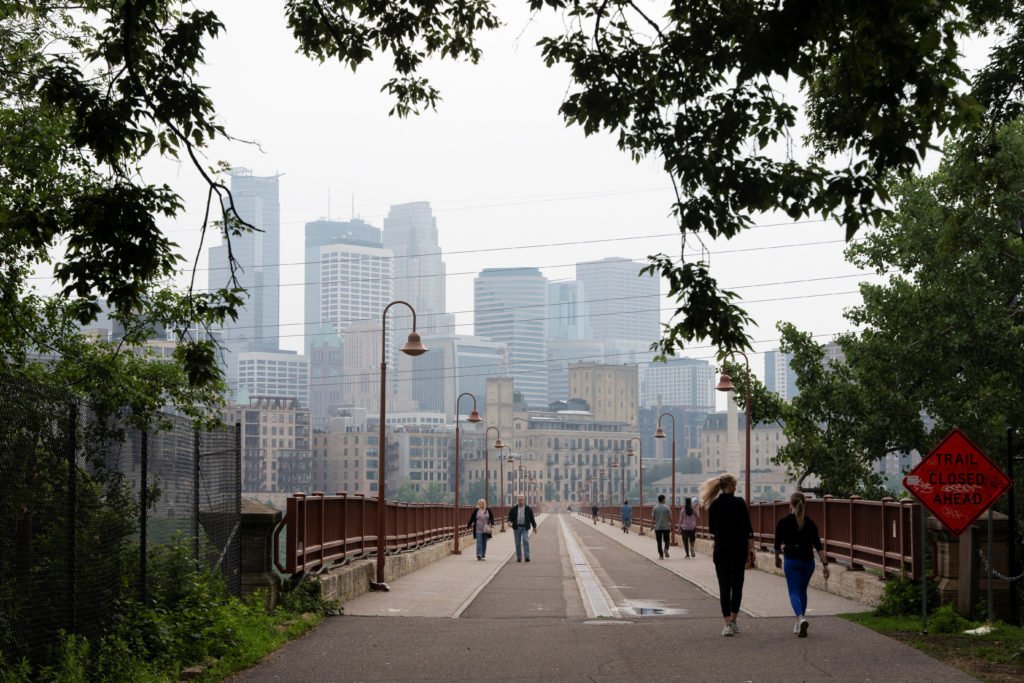
    MINNEAPOLIS (AP) — Smoke from Canadian wildfires carried another day of poor air quality south of the border to the Midwest, where conditions in parts of Minnesota, Wisconsin and Michigan were rated “very unhealthy” Tuesday.

    The fires have forced more than 27,000 Canadians in three provinces to flee their homes, and the smoke has even reached Europe.

    The smell of smoke hung over the Minneapolis-St. Paul area on Tuesday morning despite rain that obscured the full measure of the dirty air. The Minnesota Pollution Control Agency issued an alert for almost the entire state into Wednesday, but the Twin Cities area got the worst of it in the Midwest on Tuesday.

    WATCH MORE: Students and teachers find ways to keep learning after wildfires destroy schools

    “As the smoke continues to move across the state Tuesday, air quality will slowly improve from northwest to southeast for the remainder of the alert area,” the agency said. “The smoke is expected to leave the state by Wednesday at noon.”

    The Iowa Department of Natural Resources warned that air quality in a band from the state’s southwest corner to the northeast could fall into the unhealthy category through Thursday morning. The agency recommended that people, especially those with heart and lung disease, avoid long or intense activities and to take extra breaks while doing strenuous actions outdoors.

    Smoky conditions that have reached the U.S. periodically in recent weeks extended as far east Tuesday as Michigan, west into the Dakotas and Nebraska, and as far to the southeast as Georgia.

    Conditions at ground level are unhealthy

    The U.S. Environmental Protection Agency’s AirNow map showed a swath of red for “unhealthy” conditions across the eastern half Minnesota into western Wisconsin and northern Iowa. The map also showed purple for “very unhealthy” across much of the Minneapolis-St. Paul metropolitan area, where the Air Quality Index numbers of 250 and were common, though conditions started to improve slightly by late morning.

    The Air Quality Index — AQI — measures how clean or polluted the air is, focusing on health effects that might be experienced within a few hours or days after breathing polluted air. It is based on ground-level ozone, particle pollution, carbon monoxide, sulfur dioxide, and nitrogen dioxide. Particulates are the main issue from the fires

    READ MORE: For cities facing wildfires, contaminated drinking water is a growing concern

    The index ranges from green, where the air quality is satisfactory and air pollution poses little or no risk, to maroon, which is considered hazardous. That level comes with health warnings of emergency conditions where everyone is more likely to be affected, according to AirNow.

    While Minnesota officials warned on Monday that conditions in the northwest part of the state could reach the maroon category on Tuesday, conditions there were generally yellow, or moderate. There were a few scattered locations in the Twin Cities area that temporarily hit maroon on Tuesday morning. But by midday Tuesday, most of the remaining maroon spots in the region were on the Upper Peninsula of Michigan.

    Hospitals are seeing more patients with respiratory symptoms

    Hennepin Healthcare, the main emergency hospital in Minneapolis, has seen a slight increase in visits by patients with respiratory symptoms aggravated by the dirty air.

    Dr. Rachel Strykowski, a pulmonologist, said there is usually a bit of a delay before patients come in, which is unfortunate because the sooner those patients contact their doctors, the better the outcome. Typical symptoms, she said, include “increase in shortness of breath, wheezing, maybe coughing a bit more, and flares of their underlying disease, and that’s usually COPD and asthma.”

    What happens, Strykowski said, is that the fine particulate matter from the wildfire smoke triggers more inflammation in patients’ airways, aggravating their underlying medical conditions.

    Strykowski noted that this is usually a time those patients can go outside and enjoy the summer weather because there are fewer triggers, so the current ones forcing them to stay inside can feel “quite isolating.”

    People can protect themselves by staying indoors or by wearing N95 masks, she said. Strykowski added that they must be N95s because the cloth masks many people used during the COVID-19 pandemic don’t provide enough filtration.

    The Canadian fire situation

    Canada is having another bad wildfire season, and more than 27,000 people in three provinces have been forced to evacuate. Most of the smoke reaching the American Midwest has been coming from fires northwest of the provincial capital of Winnipeg in Manitoba.

    Winnipeg hotels opened Monday to evacuees. More than 17,000 Manitoba residents have been displaced since last week, including 5,000 residents of the community of Flin Flon, nearly 400 miles (645 kilometers) northwest of Winnipeg. In neighboring Saskatchewan, 2,500 residents of the town of La Ronge were ordered to flee Monday, on top of more than 8,000 in the province who had been evacuated earlier.

    In Saskatoon, where the premiers of Canada’s provinces and the country’s prime minister met Monday, Saskatchewan Premier Scott Moe said all of Canada has come together to help the Prairie provinces.
    Two people were killed by a wildfire in mid-May in Lac du Bonnet, northeast of Winnipeg.

    Canada’s worst-ever wildfire season was in 2023. It choked much of North America with dangerous smoke for months.

    The smoke reaches Europe

    Canada’s wildfires are so large and intense that the smoke is even reaching Europe, where it is causing hazy skies but isn’t expected to affect surface-air quality, according the European climate service Copernicus.

    The first high-altitude plume reached Greece and the eastern Mediterranean just over two weeks ago, with a much larger plume crossing the Atlantic within the past week and more expected in coming days, according to Copernicus.

    “That’s really an indicator of how intense these fires are, that they can deliver smoke,” high enough that they can be carried so far on jet streams, said Mark Parrington, senior scientist at the service.

    The fires also are putting out significant levels of carbon pollution — an estimated 56 megatonnes through Monday, second only to 2023, according to Copernicus.

    Associated Press writers Tammy Webber in Fenton, Michigan, and Scott McFetridge in Des Moines, Iowa, contributed to this report.

    Support PBS News Hour

    Your donation makes a difference in these uncertain times.


  • How Trump’s big bill will affect taxes, deficit and health care, according to the budget office

    How Trump’s big bill will affect taxes, deficit and health care, according to the budget office

    WASHINGTON (AP) — President Donald Trump’s big bill making its way through Congress will cut taxes by $3.7 trillion but also increase deficits by $2.4 trillion over the next decade, according to an analysis released Wednesday by the nonpartisan Congressional Budget Office.

    The CBO also estimates an increase of 10.9 million people without health insurance under the bill, including 1.4 million who are in the country without legal status in state-funded programs. The package would reduce federal outlays, or spending, by $1.3 trillion over that period, the budget office said.

    The analysis comes at a crucial moment in the legislative process as Trump is pushing Congress to have the final product on his desk to sign into law by Fourth of July. The work of the CBO, which for decades has served as the official scorekeeper of legislation in Congress, will be weighed by lawmakers and others seeking to understand the budgetary impacts of the sprawling 1,000-page plus package.

    READ MORE: Musk slams Trump’s ‘big, beautiful’ bill as GOP senators race to meet July 4th deadline

    Ahead of CBO’s release, the White House and Republican leaders criticized the budget office in a pre-emptive campaign designed to sow doubt in its findings.

    White House Press Secretary Karoline Leavitt said CBO has been “historically wrong” and Senate Majority Leader John Thune said the CBO was “flat wrong” because it underestimated the potential revenue from Trump’s first round of tax breaks in 2017. The CBO last year said receipts were $1.5 trillion or 5.6% greater than predicted, in large part because of the “burst of inflation” during the COVID-19 pandemic in 2021.

    Leavitt also suggested that CBO’s employees are biased, even though certain budget office workers face strict ethical rules — including restrictions on campaign donations and political activity — to ensure objectivity and impartiality.

    Alongside the costs of the bill, the CBO had previously estimated that 8.6 million people would no longer have health care and 4 million fewer would have food stamps each month due to the legislation’s proposed changes to Medicaid and other programs.

    WATCH LIVE: OMB Director Vought testifies in House budget hearing after Trump seeks to rescind $9 billion in spending

    The bill, called the “One Big Beautiful Bill Act” after the president’s own catch phrase, is grinding its way through Congress, as the top priority of Republicans, who control both the House and Senate — and face stiff opposition from Democrats at every step in the process.

    Democrats call it Trump’s “big, ugly bill.”

    All told, the package seeks to extend the individual income tax breaks that had been approved in 2017, but will expire in December if Congress fails to act, while adding new ones, including no taxes on tips. It also includes a massive buildup of $350 billion for border security, deportations and national security.

    To help cover the lost revenue, Republicans want to slash some federal spending. They propose phasing out green energy tax breaks put in place during Democrat Joe Biden’s presidency. New work requirements for some adults up to age 65 on Medicaid and the Supplemental Nutrition Assistance Program, known as SNAP, would begin in December 2026 and is expected to result in less spending on those programs.

    READ MORE: House Republicans narrowly passed Trump’s ‘big, beautiful’ bill. Here’s what’s in it

    The package also would provide a $4 trillion increase to the nation’s debt limit, which is now $36 trillion, to allow more borrowing. The Treasury projects the debt limit will need to be raised this summer to pay the nation’s already accrued bills.

    Now in its 50th year, the CBO was established by law after Congress sought to assert its control, as outlined in the constitution, over the budget process, in part by setting up the new office as an alternative to the White House’s Office of Management and Budget.

    Staffed by some 275 economists, analysts and other employees, the CBO says it seeks to provide the Congress with objective, impartial information about budgetary and economic issues.

    Its current director, Phillip Swagel, a former Treasury Department official in Republican President George W. Bush’s administration, was reappointed to a four-year term in 2023.

    Support PBS News Hour

    Your donation makes a difference in these uncertain times.


  • South Korea’s new president vows to pursue talks with North Korea and bolster ties with U.S., Japan

    South Korea’s new president vows to pursue talks with North Korea and bolster ties with U.S., Japan

    SEOUL, South Korea (AP) — South Korea’s new President Lee Jae-myung vowed Wednesday to restart dormant talks with North Korea and bolster a trilateral partnership with the U.S. and Japan, as he laid out key policy goals for his single, five-year term.

    Lee, who rose from childhood poverty to become South Korea’s leading liberal politician vowing to fight inequality and corruption, began his term earlier Wednesday, hours after winning a snap election that was triggered in April by the removal of then-President Yoon Suk Yeol over his ill-fated imposition of martial law late last year.

    READ MORE: From childhood poverty to the presidency, South Korea elects liberal who promised to fight inequality and corruption

    In his inaugural address at the National Assembly, Lee said that his government will deal with North Korean nuclear threats and its potential military aggressions with “strong deterrence” based on the South Korea-U.S. military alliance. But he said he would “open a communication channel with North Korea and establish peace on the Korean Peninsula through talks and cooperation.”

    He said he’ll pursue pragmatic diplomacy with neighboring countries and boost trilateral Seoul-Washington-Tokyo cooperation.

    “Through pragmatic diplomacy based on national interests, we will turn the crisis posed by the major shift in global economic and security landscapes into an opportunity to maximize our national interests,” Lee said.

    Security and economic challenges lie ahead

    It was unclear whether Lee’s election would cause any major, immediate shift in South Korea’s foreign policy. Lee, previously accused by critics of tilting toward China and North Korea and away from the U.S. and Japan, has recently repeatedly stressed South Korea’s alliance with the U.S. as the foundation of its foreign policy and avoided any contentious remarks that would raise questions on his views on the U.S. and Japan.

    READ MORE: South Korea fires warning shots as about 10 North Korean soldiers cross border

    “We’ll have to now see if the pressures of office will cause Lee Jae-myung to govern from the center — at least when it comes to matters of national security and the alliance with the United States,” said Ankit Panda, an expert with the Carnegie Endowment for International Peace.

    “It’s hard to predict with absolute certainty how he will deal with the U.S., North Korea, Japan and China because he’s changed his position so much,” said Duyeon Kim, a senior analyst at the Washington-based Center for a New American Security. “We can expect tensions if his government doesn’t align with Washington’s approach to China and Japan.”

    The toughest external challenges awaiting Lee are U.S. President Donald Trump’s tariff policy and North Korea’s expanding military partnerships with Russia. But experts earlier said whoever becomes president can’t do much to secure major progress in South Korea’s favor on those issues.

    U.S., Japan and China react

    The U.S. and Japan said they congratulated Lee’s election and expressed their commitments to developing three-way cooperation.

    Japanese Prime Minister Shigeru Ishiba said he wants to hold summit talks with Lee “as early as possible,” saying he hopes to further promote bilateral ties, both public and commercial. The U.S. State Department said that Seoul and Washington share “an ironclad commitment” to the alliance.

    Chinese President Xi Jinping also sent a congratulatory message to Lee, saying that Beijing is willing to work with Seoul to advance their cooperative partnership for the benefit of the countries’ peoples, according to state broadcaster CCTV.

    It’s unclear how North Korea would react to Lee’s speech, as it has shunned any talks with South Korea and the U.S. since 2019. North Korea in recent years has supplied weapons and troops to support Russia’s war against Ukraine, and South Korea, the U.S. and their partners suspect Russia might in return transfer high-tech technologies to North Korea to help it perfect its nuclear weapons program.
    Russia’s Tass news agency said Wednesday that top Russian security official Sergei Shoigu has arrived in Pyongyang for a meeting with North Korean leader Kim Jong Un, in the latest sign of the countries’ booming exchanges.

    Lee has said he would support Trump’s moves to restart nuclear diplomacy with Kim Jong Un as part of efforts to engage with North Korea. North Korea hasn’t publicly responded to Trump’s outreach.
    “Lee and Trump would personally want to resume dialogue with Kim Jong Un. But North Korea has no incentive to talk to Washington or Seoul,” said Duyeon Kim, the analyst. “Pyongyang has Beijing and Moscow’s support both politically and economically, and can buy a lot of time to further perfect its nuclear weapons.”

    Later Wednesday, Lee nominated former Unification Minister Lee Jong-seok, a dove who favors greater rapprochement with North Korea, as his spy chief. The nomination is likely related to Lee Jae-myung’s hopes to reopen talks, as the National Intelligence Service previously played a behind-the-scene role to promote ties with North Korea, observers say.

    Lee Jae-myung also nominated his key political ally and veteran lawmaker Kim Min-seok as prime minister, the government’s No. 2 job. Lee is expected to nominate other top Cabinet members in coming days.

    South Korea still faces political divide

    Lee called for unity to address the country’s stark political divide deepened after Yoon’s martial law debacle, saying that he will “answer the people’s solemn call to let hope bloom over deep and painful wounds.”

    READ MORE: South Korea’s parliament votes to impeach defiant President Yoon over his martial law order

    Lee still promised a thorough investigation into the circumstances surrounding Yoon’s martial law imposition, describing it as a “rebellion that seized people’s sovereignty with arms.”

    Lee said revitalizing a slowing domestic economy would be his top priority and that his government would immediately launch an emergency task force to wage a “head-on battle” against the threats of recession. He also promised more aggressive government spending to help spur economic activity.
    South Korea’s central bank last week cut its key interest rate and sharply lowered its growth outlook for 2025 to 0.8%, as it moved to counter Trump’s tariff hikes and weak domestic demand worsened by recent political turmoil.

    Lee also reiterated his campaign vows to reduce inequality, saying that “the polarization fueled by inequality is now hindering further growth.”

    Lee’s term began immediately without the usual two-month transition period after the National Election Commission formally confirmed his election victory. Before his inauguration, Lee visited the national cemetery in Seoul to pay his respects to late Korean leaders, patriots and war dead who are buried there, and he had a telephone call with Joint Chiefs of Staff chairman Kim Myung-soo to call for military readiness against possible North Korean aggression.

    Associated Press writers Mari Yamaguchi in Tokyo and Simina Mistreanu in Taipei, Taiwan, contributed to this report.

    Support PBS News Hour

    Your donation makes a difference in these uncertain times.


  • Canada: York Regional Police gets trolled for dancing to Punjabi song, netizens ask “is there any respectable profession left in Canada”

    Canada: York Regional Police gets trolled for dancing to Punjabi song, netizens ask “is there any respectable profession left in Canada”


    A video of Canada’s York Regional Police officials dancing to Punjabi songs has sparked criticism on social media. Several Canadian X users are trolling the York Police for prioritising dancing and merrymaking even as incidents of shooting and carjackings have skyrocketed in the area.

    Sharing an undated video of York Regional Police officials dancing to a Punjabi song at a public event, an X user wrote, “York Region saw a 92% rise in shootings and 106% increase in carjackings. Meanwhile York Regional Police: .”

    Canadian journalist Daniel Bordman said, “In India it would be very strange for the municipal police to dance to Bollywood songs, but in Canada public humiliation of people sworn to serve and protect us is the norm.”

    Meanwhile, another Canadian X user wrote, “York Regional Police! Is there any respectable profession left in Canada?”

    Notably, as per local media reports from last year, York Region was recorded 106 per cent increase in carjackings, 92 per cent increase in shootings. Till August 2024, 15 homicides, 46 shootings and 64 reported carjacking incidents were reported.

  • India vehemently opposes any financing support by Asian Development Bank to Pakistan, cites potential misuse for military expenditure

    India vehemently opposes any financing support by Asian Development Bank to Pakistan, cites potential misuse for military expenditure

    India has vehemently opposed any Asian Development Bank financing support to Pakistan, raising serious concerns about potential misuse of development funds for military expenditure and questioning Pakistan’s commitment to economic reforms.

    According to sources, India expressed deep reservations to the ADB about Pakistan’s deteriorating fiscal performance, declining tax collection, and suspected diversion of international development funds toward defence spending rather than development priorities.

    India highlighted Pakistan’s alarming fiscal trends as evidence of misplaced priorities. Pakistan’s tax collection as a share of GDP plummeted from 13.0% in FY2018 to just 9.2% in FY2023 – far below the Asia-Pacific average of 19.0%. Despite this revenue decline, Pakistan significantly increased defence expenditure during the same period.

    “The linkage between Pakistan’s increase in expenditure on its military, as opposed to development, cannot be fully explained solely in terms of its domestic resource mobilisation,” sources told ANI. India warned that this pattern suggests possible diversion of funds from international financial institutions, particularly through fungible debt financing instruments like Policy-Based Loans.

    India urged ADB management to adequately ring-fence financing to prevent such misuse of development resources.

    India questioned the effectiveness of previous ADB and IMF programs, noting that Pakistan has approached the International Monetary Fund for its 24th bailout program despite years of institutional support. This track record, India argued, calls into question both program design and implementation by Pakistani authorities.

    Sources pointed to Pakistan’s military’s entrenched interference in economic affairs as a fundamental obstacle to sustainable reforms. “Even when a civilian government is in power now, the army continues to play an outsized role in domestic politics and extends its tentacles deep into the economy,” India noted, highlighting the military’s leading role in Pakistan’s Special Investment Facilitation Council.

    India expressed strong reservations about Pakistan’s governance system, describing it as “a continuing severe threat to regional peace and security.” The country’s policy of cross-border terrorism has worsened regional security and significantly escalated Pakistan’s macroeconomic risks, thereby heightening enterprise risks for the ADB.

    India criticised Pakistan’s unsatisfactory progress on critical Financial Action Task Force (FATF) action items, particularly regarding terrorist financing investigations, prosecution of UN-designated terrorist group leaders, and freezing of criminal assets.

    India argued that Pakistan’s heavy reliance on external support for policy reforms undermines local ownership and creates a dangerous dependency cycle. “Policy reforms in Pakistan have been largely driven by external support from IFIs, including ADB, in recent years,” sources said, warning this approach lacks sustainability.

    Beyond development effectiveness, India raised concerns that Pakistan’s creditworthiness poses risks to ADB’s own financial health. Pakistan’s continued reliance on external debt, combined with its high debt-to-GDP ratio and poor credit rating, raises questions about the long-term sustainability of future exposures.

    “India urged ADB to be vigilant to safeguard the bank’s financial health and long-term prospects,” sources said, emphasising the need for careful risk assessment given Pakistan’s economic fragility.

    India’s comprehensive opposition comes as the ADB evaluates potential financing programs for Pakistan. The bank has not yet responded to India’s concerns, but the objections could complicate Pakistan’s efforts to secure additional development funding at a time when the country faces severe economic challenges.

    India expects the ADB to closely monitor the implementation of any policy matrix to achieve intended outcomes and prevent misuse of development resources for non-development purposes.


    (This news report is published from a syndicated feed. Except for the headline, the content has not been written or edited by Gplus staff)

  • Pakistani media uses Rahul Gandhi’s comments to amplify propaganda that India surrendered to Pakistan on Trump’s mediation

    Pakistani media uses Rahul Gandhi’s comments to amplify propaganda that India surrendered to Pakistan on Trump’s mediation

    The Gandhi scion and his party has once more supplied Pakistan with ammunition to target India through their statements in order to gain some brownie points. Rahul Gandhi supported President Donald Trump’s assertion of mediating between New Delhi and Islamabad, which was categorically dismissed by India and subsequently exposed when his tariffs were annulled by a United States court.

    Meanwhile, Congress also backed the same through a humiliating meme depicting Prime Minister Narendra Modi as receiving instructions from Trump to declare a ceasefire which was depicted as “surrender.”

    The media in Pakistan quickly seized upon the opportunity provided by India’s largest opposition party and utilized them to advance their malicious narrative. A journalist on popular Geo.tv stated, “Congress was already criticing PM Modi’s silence over Trump’s claims of mediating ceasefire between India and Pakistan. Now, they have also started poking fun at him.” He then described the derogatory meme posted by official Congress handle and also showed the video in which Rahul Gandhi mocked PM Modi.

    “India’s opposition is raising questions about whether the ceasefire was initiated at Pakistan’s request rather than as a result of Trump’s proposal. If that is the case, why did the government agree to it, especially since we were winning the war? If this is not accurate, then the claims made by the centre are misleading,” the anchor added throwing light on the petty politics of opposition leaders even in critical times.

    “A call came from Trump and Narendraji immediately surrendered. History is witness to this. This is the character of the BJP (Bharatiya Janata Party) and RSS (Rashtriya Swayamsevak Sangh). I am well aware of the BJP and RSS people. Apply a little pressure and they run away in fear,” Leader of the Opposition of Lok Sabha claimed at an event in Bhopal on 3rd June.

    “Narendraji followed Trump who directed ‘Narender, surrender’ and he replied ‘yes, sir’,” the Raebareli MP jibed. “India broke Pakistan in 1971 despite threat of America. Lions and lionesses of Congress fight against superpowers and never bow down,” he added while drawing parallels with Bangladesh liberation war.

    Notably, Gplus already reported how Rahul Gandhi’s dangerous remarks will offer more fodder to the Islamic Republic for propaganda. His fallacious accusations against foreign minister S Jaishankar and his remarks that called into question the outcome of “Operation Sindoor,” were also reported by Pakistan.

    “EAM (External Affairs Minister) Jaishankar’s silence isn’t just telling, it’s damning. So I’ll ask again: How many Indian aircraft did we lose because Pakistan knew? This wasn’t a lapse. It was a crime. And the nation deserves the truth,” he claimed on social media. “Informing Pakistan at the start of our attack was a crime. EAM has publicly admitted that GOI (Government of India) did it. Who authorised it,” he alleged in another post.

    Jaishankar had conveyed, “At the start of the operation, we had sent a message to Pakistan saying we are striking at terrorist infrastructure. We are not striking at the military. So, the military has an option of standing out and not interfere in this process. They chose not to take this good advice.”

    However, his statement was twisted by Congress and its stalwart. The Pakistani media promptly latched onto Rahul Gandhi’s post, declaring a false victory and attempted to portray “Operation Sindoor” as a defeat for India.

  • Morocco, with 99% Muslim population, bans animal slaughter on Bakrid – Read why King Mohammed VI has taken this unprecedented step

    Morocco, with 99% Muslim population, bans animal slaughter on Bakrid – Read why King Mohammed VI has taken this unprecedented step

    Ahead of Eid-ul-Adha or Bakrid, African country Morocco, which as a 99 per cent Muslim population, has banned animal slaughter this year. The Moroccan authorities began shutting down livestock markets to prevent the sale of sacrificial animals after King Mohammed VI announced his decision to cancel the traditional animal sacrifice this year due to the country’s ongoing drought and economic challenges. These challenges have caused a sharp decline in livestock numbers in the country.

    The Moroccan media reports say that various provinces have ordered the closing of all weekly sheep markets, banning gatherings related to the sale or slaughter of sacrificial animals. The Moroccan security forces are also reportedly taking away goats from houses.

    In addition, temporary closure of municipal slaughterhouses is also being implemented. In some areas, the ban is extended even to the sale of animal slaughter tools.

    This first of its kind decision comes after King Mohammed VI had asked Moroccan citizens earlier this year to refrain from performing Islamic animal slaughter or sacrifice to alleviate the financial burden as well as to preserve the country’s depleting livestock.

    The King of Morocco will perform the animal slaughter/sacrifice on Bakrid on behalf of all Moroccans.

    Notably, Morocco is grappling with severe drought for the past six years. This has resulted in the decrease in the number of sheep by almost 38 percent. Besides, rainfall has decreased by over 50 percent from the regular average, leading to a significant shortage of fodder and water for cattle.

    Meanwhile, some reports claim that the Moroccan king’s ban on animal slaughter on Bakrid has sparked outrage and protests in the country with people accusing the government of violating core Islamic tradition. It is also being claimed that the slaughter ban is simply a tactic to deflect attention from surging inflation and other failures of the government.

  • Family farm in Oregon grows crops to share South Asian cuisine with its community

    Family farm in Oregon grows crops to share South Asian cuisine with its community

    Lakshmi Tata, Manager, Edible Stories Market Garden:

    Me and my family own, operate Edible Stories Market Garden. It’s a small market garden in Hillsboro, Oregon.

    We decided to try growing some vegetables that are used in South Asian cooking. It just made it more meaningful for us to grow these foods that have some cultural heritage behind.

    Both my husband and me were thinking of what all we should be growing. And, of course, we have local farms that have — at that time, 10 years ago, were growing what you get in the regular grocery store. But then we said, why don’t we try growing something that other people are not growing?

    And over time, people started appreciating it. It was something that connected them to their heritage.

    Aanandhi Ganesh, Farmer in Training, Edible Stories Market Garden: When my mom goes out, she will, like, pick vegetables, different types of Indian vegetables, and she will come back home, and she will cook that. And she will be talking about how when she was in India how her mother or her grandmother would cook that, and she would be cooking in the same way.

    On our farm, we grow many different types of vegetables, but a few ones are like doodhi, which is a gourd. Many times, you just cut it up, boil it, use it for sambars, which is the type of soup, again, with many spices.

    My least favorite is karela. It’s a bitter gourd. It’s extremely bitter. We just chop it up and fry it. And many — you either really like it or really hate it.