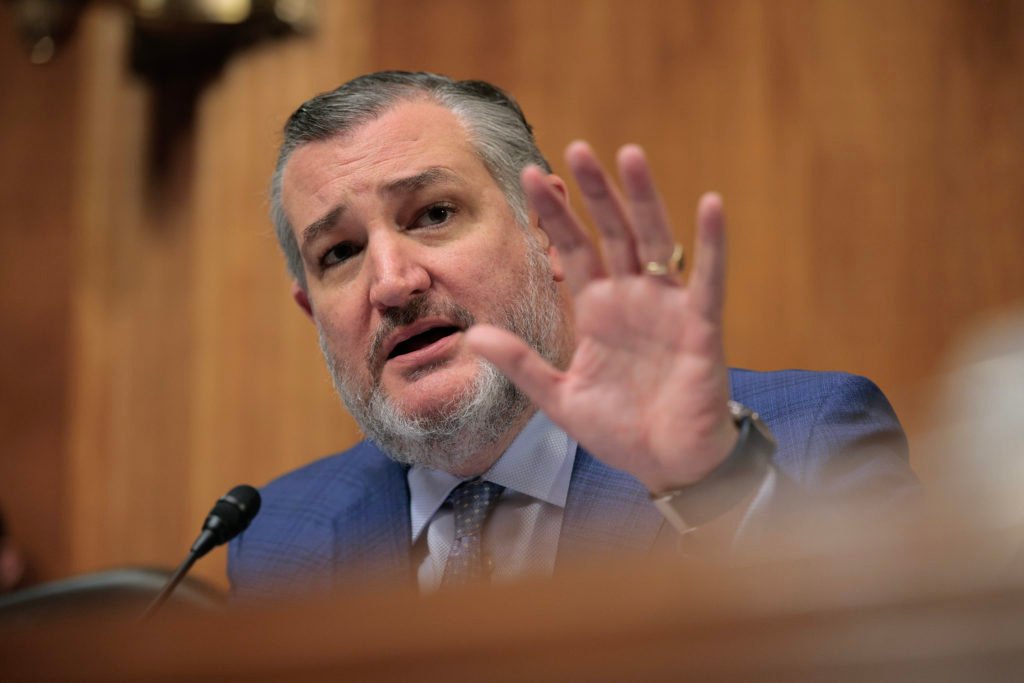
Sens. Ted Cruz, R-Texas, and Cory Booker, D-NJ, exchanged a fiery argument at a Senate Judiciary subcommittee hearing Tuesday about district judges.
WATCH: Law professor addresses unprecedented nature of judicial attacks under Trump administration
Cruz and Booker argued for about 9 minutes at the top of the hearing. Booker initially said he took fault with Cruz’s claim that no Democrats condemned attacks on federal judges, noting that Congress passed a bipartisan law to increase the security for Supreme Court justices.
Cruz responded that Department of Justice under the Biden administration didn’t arrest anyone for protesting outside of Supreme Court justices’ houses and claimed no Senate Democrats pressed former Attorney General Merrick Garland to make any arrests.
But Booker fired back, saying Cruz was shifting his argument.
“You said we were silent after people’s houses were protested. That is a patent lie, sir. We were not silent. We took action,” Booker said.
The two continued, accusing each other of hypocrisy, before Cruz turned to introduce the committee’s witnesses.
Support PBS News Hour
Your donation makes a difference in these uncertain times.
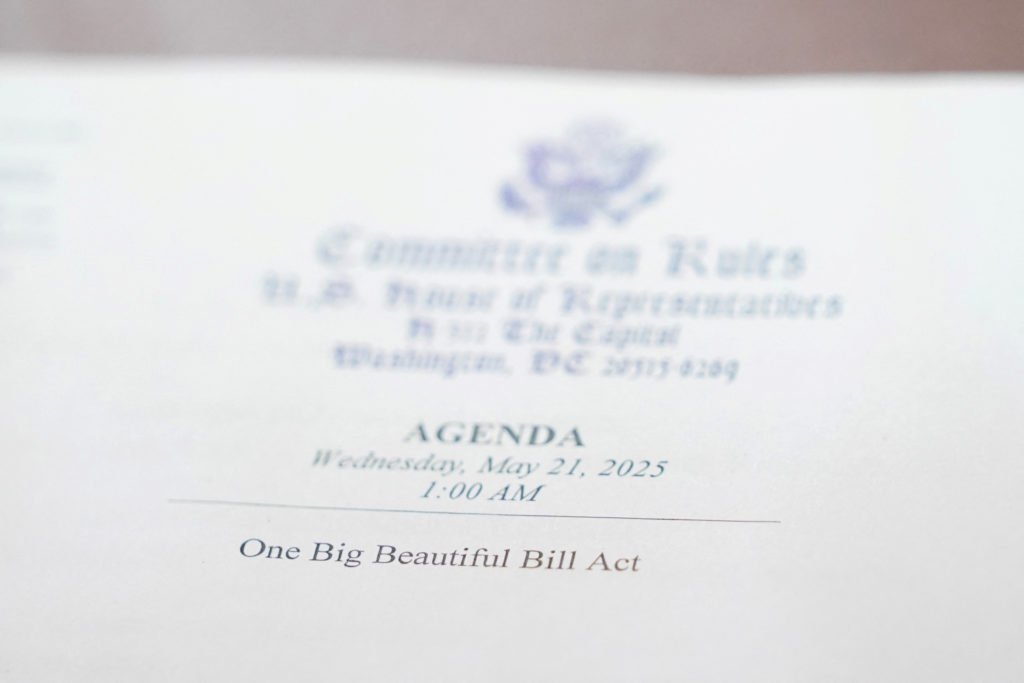
WASHINGTON (AP) — A small government office with some 275 employees has found itself caught in the political crossfire as Congress debates President Donald Trump’s “one big beautiful bill.”
The Congressional Budget Office has projected that the legislation would increase federal deficits by about $2.4 trillion over 10 years. That’s a problem for a Republican Congress that has spent much of the past four years criticizing former President Joe Biden and Democrats for the nation’s rising debt levels.
The White House and Republican leaders in Congress are taking issue with CBO’s findings. They say economic growth will be higher than the office is projecting, resulting in more revenue coming into government coffers. Meanwhile, Democrats are touting CBO’s findings as evidence of the bill’s failings.
Here’s a look at the office at the center of Washington’s latest political tug-of-war.
What is the CBO?
Lawmakers established the Congressional Budget Office more than 50 years ago to provide objective, impartial analysis to support the budget process. The CBO is required to produce a cost estimate for nearly every bill approved by a House or Senate committee and will weigh in earlier when asked to do so by lawmakers.
It also produces a report each Congress on how to reduce the debt if lawmakers so choose with each option including arguments for or against. Plus, it publishes detailed estimates when presidents make proposals that would affect mandator spending, which includes programs such as Social Security and Medicare.
Lawmakers created the office to help Congress play a stronger role in budget matters, providing them with an alternative to the Office of Management and Budget, which is part of a Republican or Democratic administration, depending upon the president in office.
Is the CBO partisan?
CBO hires analysts based on their expertise, not political affiliation. Staff is expected to maintain objectivity and avoid political influence. In evaluating potential employees, the CBO says that for most positions it looks at whether that person would be perceived to be free from political bias.
Like other federal employees, the CBO’s staff is also prohibited from making political contributions to members of Congress.
The CBO’s director, Phillip Swagel, served in former Republican President George W. Bush’s administration as an economic adviser and as an assistant secretary at the Treasury Department.
Why is the CBO being attacked now?
The stakes are incredibly high with Republicans looking to pass their massive tax cut and immigration bill by early July.
Outside groups, Democrats and some Republicans are highlighting CBO’s analysis that the bill will increase federal deficits by about $2.4 trillion over 10 years and leave 10.9 million more people uninsured in 2034.
Republicans spent much of Biden’s presidency focused on curbing federal deficits. They don’t want to be seen as contributing to the fiscal problem.
READ MORE: How Trump’s big bill will affect taxes, the deficit and health care, according to the budget office
GOP lawmakers say the CBO isn’t giving enough credit to the economic growth the bill will create, to the point where it would be deficit-neutral in the long run, if not better.
“The CBO assumes long-term GDP growth of an anemic 1.8% and that is absurd,” said White House press secretary Karoline Leavitt. “The American economy is going to boom like never before after the ‘One Big, Beautiful Bill’ is passed.”
Republicans began taking issue with the CBO even before Trump and the current Congress were sworn into office.
“CBO will always predict a dark future when Republicans propose tax relief – but the reality is never so dire,” Rep. Jason Smith, the Republican chairman of the House Ways and Means Committee, said in a December news release.
Recently, House Speaker Mike Johnson has been taking digs at the office.
“The CBO is notorious for getting things WRONG,” he said in a Facebook post.
What did CBO say about the tax cuts enacted in Trump’s first term?
In April 2018, CBO said that tax receipts would total $27 trillion from fiscal years 2018 to 2024.
Receipts came in about $1.5 trillion higher than the CBO projected. Republicans have seized on that discrepancy.
But the numbers don’t tell the whole story. Some of the criticism of the CBO ignores the context of a global pandemic as the federal government rushed to prop the economy up with massive spending bills under both Trump and Biden.
In a blog post last December, Swagel pointed out three reasons for the higher revenues: The primary reason was the burst of inflation that began in March 2021 as the country was recovering from COVID. That burst of inflation, he said, led to about $900 billion more in revenue.
There was also an increase in economic activity in “the later years of the period” adding $700 billion. Also, new tariffs added about $250 billion, with other legislation partially offsetting those three factors.
Support PBS News Hour
Your donation makes a difference in these uncertain times.
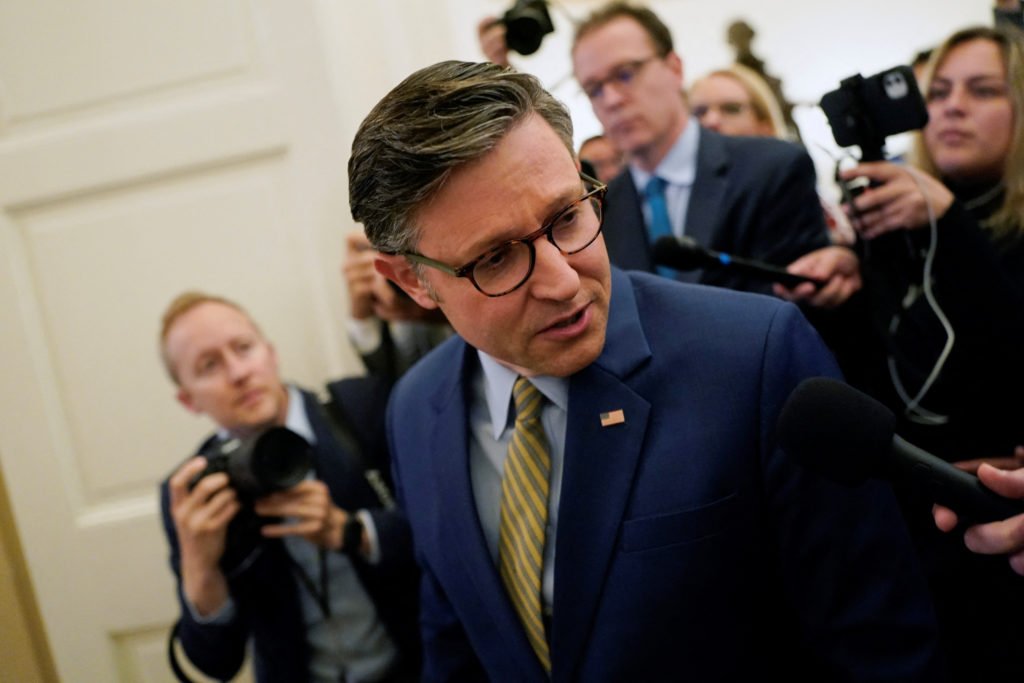
House Speaker Mike Johnson said Wednesday he called Elon Musk to discuss Musk’s posts criticizing President Donald Trump’s tax bill.
Watch the full Republican House leadership news conference in the video player above.
“I called Elon last night and he didn’t answer, but I hope to talk to him today,” Johnson told reporters Wednesday. He added, “I hope he comes around. I’d love to talk to him this week and I hope he calls me back today.”
READ MORE: Musk slams Trump’s ‘big, beautiful’ bill as GOP senators race to meet July 4th deadline
Johnson said he and Musk spoke at length Monday about the bill.
“Elon was encouraged by that conversation. We had a great, it was a very friendly, very fruitful conversation together, and he and I talked about the midterm elections, and he said, ‘I’m going to help,’” Johnson said.
“Then yesterday, you know, 24 hours later, he does a 180 and he comes out and opposed the bill and it surprised me, frankly,” he added.
Support PBS News Hour
Your donation makes a difference in these uncertain times.
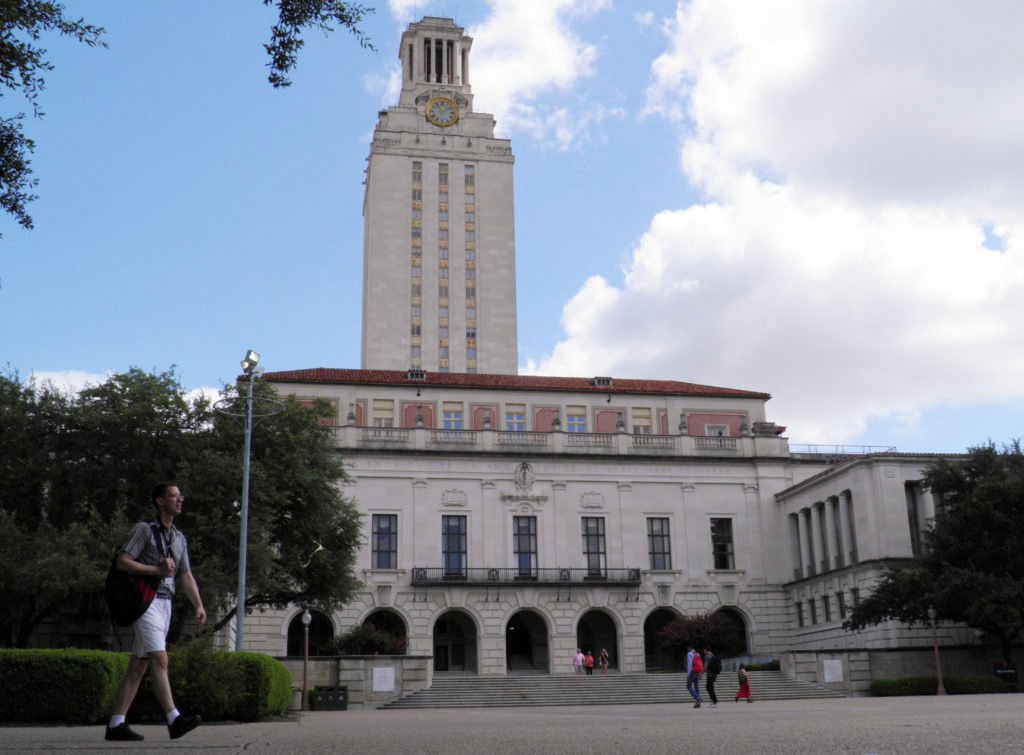
AUSTIN, Texas (AP) — The Justice Department on Wednesday sought to block a Texas law that for decades has given college students without legal residency in the U.S. access to reduced in-state tuition rates.
Texas was the first state in the nation in 2001 to pass a law allowing “Dreamers,” or young adults without legal status, to be eligible for in-state tuition if they meet certain residency criteria. Twenty-four states now have similar laws, according to the Higher Ed Immigration Portal, which tracks state policies on immigration and education.
WATCH: Tribal colleges face uncertain future amid federal funding cuts
The lawsuit filed in Texas federal court asks a judge to block the law, which some state Republican lawmakers have sought to repeal for years. The lawsuit is the latest effort by the Trump administration to crack down on immigration into the country.
“Under federal law, schools cannot provide benefits to illegal aliens that they do not provide to U.S. citizens,” said Attorney General Pam Bondi said. “The Justice Department will relentlessly fight to vindicate federal law and ensure that U.S. citizens are not treated like second-class citizens anywhere in the country.”
About 57,000 undocumented students are enrolled in Texas universities and colleges, according to the Presidents’ Alliance on Higher Education and Immigration, a nonpartisan nonprofit group of university leaders focused on immigration policy.
Support PBS News Hour
Your donation makes a difference in these uncertain times.
NEW YORK (AP) — Edmund White, the groundbreaking man of letters who documented and imagined the gay revolution through journalism, essays, plays and such novels as “A Boy’s Own Story” and “The Beautiful Room is Empty,” has died. He was 85.
White’s death was confirmed Wednesday by his agent, Bill Clegg.
Along with Larry Kramer, Armistead Maupin and others, White was among a generation of gay writers who in the 1970s became bards for a community no longer afraid to declare its existence. He was present at the Stonewall raids of 1969, when arrests at a club in Greenwich Village led to the birth of the modern gay movement and for decades was a participant and observer through the tragedy of AIDS, the advance of gay rights and culture and the recent backlash.
READ MORE: Ngũgĩ wa Thiong’o, Kenyan dissident and author who was giant of global literature, dies at 87
A resident of New York and Paris for much of his adult life, he was a novelist, journalist, biographer, playwright, activist, teacher and memoirist. “A Boy’s Own Story” was a bestseller and classic coming-of-age novel that demonstrated gay literature’s commercial appeal. He wrote a prizewinning biography of playwright Jean Genet, books on Marcel Proust and Arthur Rimbaud. He was a professor of creative writing at Princeton University, where colleagues included Toni Morrison and his close friend, Joyce Carol Oates.
“Among gay writers of his generation, Edmund White has emerged as the most versatile man of letters,” cultural critic Morris Dickstein wrote in The New York Times in 1995. “A cosmopolitan writer with a deep sense of tradition, he has bridged the gap between gay subcultures and a broader literary audience.”
Childhood yearnings
White was born in Cincinnati in 1940, but age at 7 moved with his mother to the Chicago area after his parents divorced. His father was a civil engineer “who reigned in silence over dinner as he studied his paper.” His mother was a psychologist “given to rages or fits of weeping.” Trapped in “the closed, sniveling, resentful world of childhood,” at times suicidal, White was at the same time a “fierce little autodidact” who sought escape through the stories of others, whether Thomas Mann’s “Death in Venice” or a biography of dancer Vaslav Nijinsky.
“As a young teenager I looked desperately for things to read that might excite me or assure me I wasn’t the only one, that might confirm my identity I was unhappily piecing together,” he wrote in the 1991 essay “Out of the Closet, On to the Bookshelf.”
READ MORE: Mario Vargas Llosa, Peruvian author and Nobel laureate, dies at 89
As he wrote in “A Boy’s Own Story,” he knew as a child that he was attracted to boys, but for years was convinced he must change — out of a desire to please his father (whom he otherwise despised) and a wish to be “normal.” Even as he secretly wrote a “coming out” novel while a teenager, he insisted on seeing a therapist and begged to be sent to boarding school. One of the funniest and saddest episodes from “A Boy’s Own Story” told of a brief crush he had on a teenage girl, ended by a polite and devastating note of rejection.
“For the next few months I grieved,” White writes. “I would stay up all night crying and playing records and writing sonnets to Helen. What was I crying for?”
Early struggles, changing times
Through much of the 1960s, he was writing novels that were rejected or never finished. Late at night, he would “dress as a hippie, and head out for the bars.” A favorite stop was the Stonewall, where he would down vodka tonics and try to find the nerve to ask a man he had crush on to dance. He was in the neighborhood on the night of June 28, 1969, when police raided the Stonewall and “all hell broke loose.”
“Up until that moment we had all thought homosexuality was a medical term,” wrote White, who soon joined the protests. “Suddenly we saw that we could be a minority group — with rights, a culture, an agenda.”
White’s debut novel, the surreal and suggestive “Forgetting Elena,” was published in 1973. He collaborated with Charles Silverstein on “The Joy of Gay Sex,” a follow-up to the bestselling “The Joy of Sex” that was updated after the emergence of AIDS. In 1978, his first openly gay novel, “Nocturnes for the King of Naples,” was released and he followed with the nonfiction “States of Desire,” his attempt to show “the varieties of gay experience and also to suggest the enormous range of gay life to straight and gay people — to show that gays aren’t just hairdressers, they’re also petroleum engineers and ranchers and short-order cooks.”
READ MORE: Athol Fugard, Tony Award-winning South African playwright whose searing works challenged apartheid, dies aged 92
His other works included “Skinned Alive: Stories” and the novel “A Previous Life,” in which he turns himself into a fictional character and imagines himself long forgotten after his death. In 2009, he published “City Boy,” a memoir of New York in the 1960s and ’70s in which he told of his friendships and rivalries and gave the real names of fictional characters from his earlier novels. Other recent books included the novels “Jack Holmes & His Friend” and the memoir “Inside a Pearl: My Years in Paris.”
“From an early age I had the idea that writing was truth-telling,” he told The Guardian around the time “Jack Holmes” was released. “It’s on the record. Everybody can see it. Maybe it goes back to the sacred origins of literature — the holy book. There’s nothing holy about it for me, but it should be serious and it should be totally transparent.”
Support PBS News Hour
Your donation makes a difference in these uncertain times.
BEIJING (AP) — For most Chinese, the 36th anniversary of a bloody crackdown that ended pro-democracy protests in China passed like any other weekday. And that’s just how the ruling Communist Party wants it.
Security was tight Wednesday around Beijing’s Tiananmen Square, where weeks of student-led protests shook the party in 1989. Under then-leader Deng Xiaoping, the military was sent in to end the protest on the night of June 3-4. Using live ammunition, soldiers forced their way through crowds that tried to block them from reaching the square. Hundreds and possibly thousands of people were killed, including dozens of soldiers.
The party has tried, with some success, to erase what it calls the “political turmoil” of 1989 from the collective memory. It bans any public commemoration or mention of the June 4 crackdown, scrubbing references from the internet.
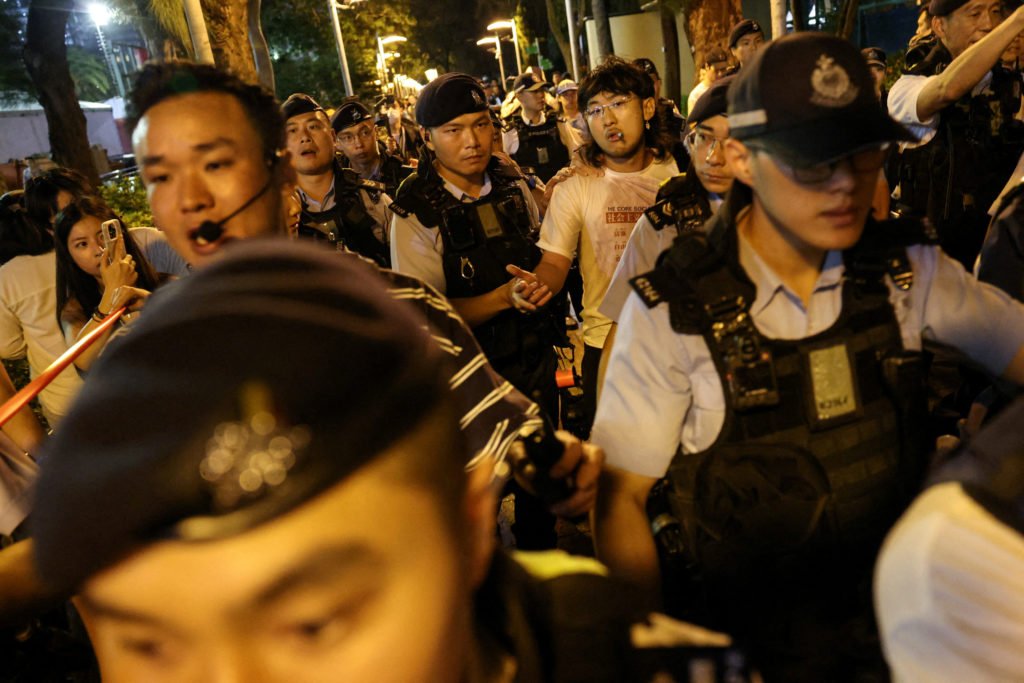
In recent years, that ban has been extended to Hong Kong, where a once-massive annual candlelight vigil is no longer permitted. Police said they brought 10 people on suspicion of breaching public peace to a police station for investigation. Three were still detained late Wednesday, while the rest were allowed to leave. Police also arrested a woman for failing to show her identity document and a man for obstructing police officers from performing their duties.
It is only in Taiwan, a self-governing island that is claimed by China but runs its own affairs, that large June 4 gatherings can still take place.
The crackdown reinforced Communist Party control
Tiananmen Square is a vast space in the center of Beijing with monumental, communist-era buildings along two sides and the mausoleum of Mao Zedong, who founded the communist era in 1949, on the south end.
University students occupied this symbolically important site in the spring of 1989. Their calls for freedoms divided the party leadership. The decision to send in troops marked a decisive turning point in the evolution of modern China, keeping the party firmly in control as it loosened economic restrictions.
Chinese officials have said the country’s rapid economic development since then proves the decisions made at the time were correct.
READ MORE: Hegseth warns Indo-Pacific allies of threat from China
“On the political turmoil that happened in the late 1980s, the Chinese government has already reached a clear conclusion,” Chinese Foreign Ministry spokesperson Lin Jian said Wednesday. He added that China would continue along its current path of what it calls “socialism with Chinese characteristics.”
Tiananmen Mothers, a group formed by relatives of the victims, made an annual online appeal to the government. Signed by 108 members, it called for an independent investigation into what happened on June 4, 1989, including a list of all who died. The group also demanded compensation for the families and a legal case against those responsible for the deaths.
The British and German Embassies in Beijing posted videos commemorating the anniversary on Weibo, a Chinese social media platform, but they were later taken down, presumably by censors. The Canadian and German Embassies displayed images of a single lit candle on large screens facing the main street.
Hong Kong’s once outspoken populace has been cowed
In Hong Kong, a carnival showcasing Chinese food and products was held in Victoria Park, where tens of thousands of people used to gather for a candlelight vigil to mark the anniversary.
Hong Kong authorities first shut down the vigil during the COVID-19 pandemic and arrested the organizers in 2021. The moves were part of a broader crackdown on dissent following monthslong anti-government protests in 2019 that turned violent and paralyzed parts of the city.
A former district council member, Chan Kim-kam, said customs officers questioned her at her shop on the eve of June 4 after she advertised small white candles for sale in an Instagram post titled “June, we don’t forget.”
“You know, Hong Kongers have become silent lambs after 2019,” said King Ng, who was at the park on Wednesday.
Police were out in force to try to prevent any protest, and took several people away from the park on Wednesday. They included a young woman wearing a school uniform and holding flowers, a man who lowered his head in apparent prayer, and a man wearing a white T-shirt reading “Vindication for June 4. It’s getting closer and closer.” Police also questioned a woman who lit up a mosquito lamp, but eventually let her go.
Rows of electronic candles lit up the windows of the U.S. consulate, and the British consulate projected “VIIV” — Roman numerals in reference to June 4 — on one of its walls.
The British and Canadian consulates earlier posted social media messages about remembering June 4. Hong Kong was a British colony until 1997. The U.S. consulate posted a message from U.S. Secretary of State Marco Rubio on its website.
“The CCP actively tries to censor the facts,” Rubio said, referring to China’s Communist Party. “But the world will never forget.”
Taiwan seeks support from democracies against China
Taiwan’s President Lai Ching-te used the anniversary to position the island he leads on the frontline of defending democracy against authoritarianism. In a Facebook post, he drew a distinction between Taiwan’s multiparty democracy and China’s one-party rule.
“Authoritarian governments often choose to remain silent and forget about history, while democratic societies choose to preserve the truth and refuse to forget those who have contributed to the ideals of human rights and the dreams they embrace,” Lai wrote.
Taiwan transitioned from authoritarianism to democracy in a process that began in the late 1980s. It relies on support principally from the U.S., along with other democratic partners, to deter China from an invasion.
Several hundred people gathered Wednesday evening for a candlelight vigil in downtown Taipei’s Freedom Square. In the center stood a scaled-down model of the “Pillar of Shame,” a sculpture commemorating the protests that once stood on the campus of the University of Hong Kong.
Hong Kong authorities have placed bounties on some activists who have moved abroad. Other democracy advocates in the semi-autonomous Chinese city remain in jail or intimidated into silence.
Wu Lang-huang, a Taiwanese professor who was present when troops arrived on the square in 1989, said he will continue to document what happened and collect related artifacts.
“It’s not just about remembering what happened then but also for the lessons it tells us about modern Hong Kong and Taiwan,” Wu said.
One of the vigil’s organizers, who went by the name Mimi for fear of repercussions, said some may question why people born years after the 1989 protests still care.
“It’s about memory, which is itself a form of resistance,” she said.
Leung reported from Hong Kong. Christopher Bodeen contributed reporting from Taipei.
Support PBS News Hour
Your donation makes a difference in these uncertain times.
WASHINGTON (AP) — A Texas hospital that repeatedly sent a woman who was bleeding and in pain home without ending her nonviable, life-threatening pregnancy violated the law, according to a newly released federal investigation.
The government’s findings, which have not been previously reported, were a small victory for 36-year-old Kyleigh Thurman, who ultimately lost part of her reproductive system after being discharged without any help from her hometown emergency room for her dangerous ectopic pregnancy.
But a new policy the Trump administration announced on Tuesday has thrown into doubt the federal government’s oversight of hospitals that deny women emergency abortions, even when they are at risk for serious infection, organ loss or severe hemorrhaging.
Thurman had hoped the federal government’s investigation, which issued a report in April after concluding its inquiry last year, would send a clear message that ectopic pregnancies must be treated by hospitals in Texas, which has one of the nation’s strictest abortion bans.
“I didn’t want anyone else to have to go through this,” Thurman said in an interview with the Associated Press from her Texas home this week. “I put a lot of the responsibility on the state of Texas and policy makers and the legislators that set this chain of events off.”
Uncertainty regarding emergency abortion access
Women around the country have been denied emergency abortions for their life-threatening pregnancies after states swiftly enacted abortion restrictions in response to a 2022 ruling from the U.S. Supreme Court, which includes three appointees of President Donald Trump.
The guidance issued by the Biden administration in 2022 was an effort to preserve access to emergency abortions for extreme cases in which women were experiencing medical emergencies. It directed hospitals — even ones in states with severe restrictions — to provide abortions in those emergency cases. If hospitals did not comply, they would be in violation of a federal law and risk losing some federal funds.
On Tuesday, the Centers for Medicare and Medicaid Services, the federal agency responsible for enforcing the law and inspecting hospitals, announced it would revoke the Biden-era guidance around emergency abortions.
The law, which requires doctors to provide stabilizing treatment, was one of the few ways that Thurman was able to hold the emergency room accountable after she didn’t receive any help from staff at Ascension Seton Williamson in Round Rock, Texas in February of 2023, a few months after Texas enacted its strict abortion ban.
An ectopic pregnancy left untreated
Emergency room staff observed that Thurman’s hormone levels had dropped, a pregnancy was not visible in her uterus and a structure was blocking her fallopian tube — all telltale signs of an ectopic pregnancy, when a fetus implants outside of the uterus and has no room to grow. If left untreated, ectopic pregnancies can rupture, causing organ damage, hemorrhage or even death.
READ MORE: Brain-dead woman must carry fetus to birth because of Georgia’s abortion ban, hospital tells family
Thurman, however, was sent home and given a pamphlet on miscarriage for her first pregnancy. She returned three days later, still bleeding, and was given an injected drug intended to end the pregnancy, but it was too late. Days later, she showed up again at the emergency room, bleeding out because the fertilized egg growing on Thurman’s fallopian tube ruptured it. She underwent an emergency surgery that removed part of her reproductive system.
CMS launched its investigation of how Ascension Seton Williamson handled Thurman’s case late last year, shortly after she filed a complaint. Investigators concluded the hospital failed to give her a proper medical screening exam, including an evaluation with an OB-GYN. The hospital violated the federal Emergency Medical Treatment and Labor Act, which requires emergency rooms to provide stabilizing treatment to all patients. Thurman was “at risk for deterioration of her health and wellbeing as a result of an untreated medical condition,” the investigation said in its report, which was publicly released last month.
Ascension, a vast hospital system that has facilities across multiple states, did not respond to questions about Thurman’s case, saying only that it is “is committed to providing high-quality care to all who seek our services.”
Penalties for doctors, hospital staff
Doctors and legal experts have warned abortion restrictions like the one Texas enacted have discouraged emergency room staff from aborting dangerous and nonviable pregnancies, even when a woman’s life is imperiled. The stakes are especially high in Texas, where doctors face up to 99 years in prison if convicted of performing an illegal abortion. Lawmakers in the state are weighing a law that would remove criminal penalties for doctors who provide abortions in certain medical emergencies.
“We see patients with miscarriages being denied care, bleeding out in parking lots. We see patients with nonviable pregnancies being told to continue those to term,” said Molly Duane, an attorney at the Center for Reproductive Rights that represented Thurman. “This is not, maybe, what some people thought abortion bans would look like, but this is the reality.”
The Biden administration routinely warned hospitals that they need to provide abortions when a woman’s health was in jeopardy, even suing Idaho over its state law that initially prohibited nearly all abortions, unless a woman’s life was on the line.
Questions remain about hospital investigations
But CMS’ announcement on Tuesday raises questions about whether such investigations will continue if hospitals do not provide abortions for women in medical emergencies.
The agency said it will still enforce the law, “including for identified emergency medical conditions that place the health of a pregnant woman or her unborn child in serious jeopardy.”
While states like Texas have clarified that ectopic pregnancies can legally be treated with abortions, the laws do not provide for every complication that might arise during a pregnancy. Several women in Texas have sued the state for its law, which has prevented women from terminating pregnancies in cases where their fetuses had deadly fetal anomalies or they went into labor too early for the fetus to survive.
Thurman worries pregnant patients with serious complications still won’t be able to get the help they may need in Texas emergency rooms.
“You cannot predict the ways a pregnancy can go,” Thurman said. “It can happen to anyone, still. There’s still so many ways in which pregnancies that aren’t ectopic can be deadly.”
Support PBS News Hour
Your donation makes a difference in these uncertain times.
BRUSSELS (AP) — Ukraine’s president on Wednesday urged Western backers to speed up deliveries of air defense systems to counter Russian missile strikes and to help boost weapons production.
The emphasis should be on U.S.-made Patriot systems, President Volodymyr Zelenskky told a Ukraine Defense Contact Group meeting at NATO headquarters in Brussels.
“These are the most effective way to force Russia to stop its missile strikes and terror,” he said via video link, urging representatives of around 50 countries to make good on past pledges.
U.S. Defense Secretary Pete Hegseth did not attend, the first time a Pentagon chief has been absent since the forum for organizing Ukraine’s military aid was set up three years ago. Hegseth’s predecessor, Lloyd Austin, created the group after Russia launched all-out war on Ukraine in 2022.
His absence is the latest step that the Trump administration has taken to distance itself from Ukraine’s efforts to repel Russia’s full-scale invasion, which began on Feb. 24, 2022. More than 12,000 Ukrainian civilians have been killed, according to U.N. estimates, as well as tens of thousands of soldiers on both sides.
READ MORE: Zelenskyy wants face-to-face talks with Putin. Putin says there’s nothing to talk about after Ukraine’s attacks
Zelenskyy also appealed to the participants to buy weapons direct from Ukraine. “Ukrainian industry still has significant untapped capacity, it just needs financing,” he said, underlining that a funding gap for weapons procurement amounts to about $18 billion.
The U.K., which chaired the meeting along with Germany, said it plans a tenfold increase in drone production to help Ukraine. Drones have become a decisive factor in the war, now in its fourth year.
“We must ensure that Ukraine’s forces have what they need, when they need it, to continue their fight. But this is not just Ukraine’s battle. It’s a battle for the security of Europe, for our security today, tomorrow, and for our future generations,” U.K. Defense Secretary John Healey said.
Lithuanian Defense Minister Dovile Sakaliene said that “you recognize true friends not during a party, but when you do have difficult times. So therefore, our continuation of support for Ukraine and increasing it is of utmost importance.”
Since the contact group was formed, Ukraine’s backers have collectively provided around $126 billion in weapons and military assistance, including more than $66.5 billion from the U.S.
The United States hasn’t chaired a meeting of the Ukraine Defense Contact Group since the Trump administration took office in January.
European NATO allies are concerned that the U.S. might withdraw troops from Europe to focus on the Indo-Pacific. French President Emmanuel Macron has warned that abandoning Ukraine would erode U.S. credibility in deterring any conflict with China over Taiwan.
Support PBS News Hour
Your donation makes a difference in these uncertain times.
WASHINGTON (AP) — U.S. President Donald Trump said that Russian President Vladimir Putin told him “very strongly” in a phone call Wednesday that he will respond to Ukraine’s weekend drone attack on Russian airfields.
The U.S. president said in a social media post that “It was a good conversation, but not a conversation that will lead to immediate Peace.”
The call that lasted for an hour and 15 minutes was Trump’s first known with Putin since May 19.
Trump said he and Putin also discussed Iran’s nuclear program.
WATCH: As delegations meet for ceasefire talks, Russia reels from Ukrainian drone attacks
THIS IS A BREAKING NEWS UPDATE. AP’s earlier story follows below.
KYIV, Ukraine (AP) — Ukrainian President Volodymyr Zelenskyy on Wednesday dismissed Russia’s ceasefire proposal as “an ultimatum” and renewed his call for direct talks with Russian President Vladimir Putin to break the deadlock over the war, which has dragged on for nearly 3½ years.
Putin, however, showed no willingness to meet with Zelenskyy, expressing anger Wednesday about what he said were Ukraine’s recent “terrorist acts” on Russian rail lines in the Kursk and Bryansk regions on the countries’ border.
“How can any such (summit) meetings be conducted in such circumstances? What shall we talk about?” Putin asked in a video call with top Russian officials.
He accused Ukraine of seeking a truce only to replenish its stockpiles of Western arms, recruit more soldiers and prepare new attacks like those in Kursk and Bryansk.
Both sides exchanged memorandums setting out their conditions for a ceasefire for discussion at Monday’s direct peace talks between delegations in Istanbul, their second meeting in just over two weeks. Zelenskyy had previously challenged Putin to meet him in Turkey, but Putin stayed away.
Russia and Ukraine have established red lines that make a quick deal unlikely, despite a U.S.-led international diplomatic push to stop the fighting. The Kremlin’s Istanbul proposal contained a list of demands that Kyiv and its Western allies see as nonstarters.
‘This document looks like spam’
Zelenskyy said that the second round of talks in Istanbul was no different from the first meeting on May 16. Zelenskyy described the latest negotiations in Istanbul as “a political performance” and “artificial diplomacy” designed to stall for time, delay sanctions and convince the United States that Russia is engaged in dialogue.
“The same ultimatums they voiced back then — now they just put them on paper … Honestly, this document looks like spam. It’s spam meant to flood us and create the impression that they’re doing something,” Zelenskyy said in his first reaction to the Russian document.
He added that the 2025 talks in Istanbul carry “the same content and spirit” as the fruitless negotiations held in the Turkish city in the early days of the war.
The Ukrainian leader said that he sees little value in continuing talks at the current level of delegations. Defense Minister Rustem Umerov led the Ukrainian delegation in Istanbul, while Vladimir Medinsky, an aide to Putin, headed the Russian team.
Zelenskyy said he wants a ceasefire with Russia before a possible summit meeting with Putin, possibly also including U.S. President Donald Trump, in an effort to remove obstacles to a peace settlement. The U.S. has led a recent diplomatic push to stop the full-scale invasion, which began on Feb. 24, 2022.
“We are proposing … a ceasefire before a leaders’ summit,” with the U.S. acting as a mediator, Zelenskyy told a media briefing in Kyiv.
“Why a ceasefire before the leaders’ meeting? Because if we meet and there is no mutual understanding, no willingness or vision on how to end this, then the ceasefire would end that same day. But if we see readiness to continue the dialogue and take real steps toward de-escalation, then the ceasefire would be extended with U.S. mediation guarantees,” he said.
Ukraine is ready to meet at any time from next Monday at a venue such as Istanbul, the Vatican or Switzerland, Zelenskyy said.
U.S. defense secretary stays away
A second round of peace talks on Monday between Russian and Ukrainian delegations in Istanbul lasted just over an hour and made no progress on ending the war. They agreed only to swap thousands of their dead and seriously wounded troops.
Also, a new prisoner exchange with Russia could take place over the weekend, Zelenskyy said.
The U.S. has shown signs of distancing itself from the conflict.
Defense Secretary Pete Hegseth skipped a meeting in Brussels on Wednesday of an international group coordinating military aid to Ukraine. It was the first time America’s Pentagon chief didn’t attend alongside 50 other defense leaders since the U.S. created the group three years ago.
An analysis published Tuesday by the Center for Strategic and International Studies, a Washington think tank, said the Kremlin is hoping for U.S. disengagement while avoiding further sanctions.
“Without serious pain, Putin will continue to drag the peace talks out, keep fighting, and wait for the United States to walk away,” it said.
In tandem with the talks, both sides have kept up offensive military actions along the roughly 1,000-kilometer (620-mile) front line and carried out deep strikes.
Ukraine’s Security Service gave more details Wednesday about its spectacular weekend drone strike on Russian air bases, which it claimed destroyed or damaged 41 Russian aircraft, including strategic bombers.
The agency claimed the planes struck included A-50, Tu-95, Tu-22, Tu-160, An-12, and Il-78 aircraft, adding that artificial intelligence helped guide the drones thousands of kilometers (miles) from Ukraine.
It also said it set off an explosion on Tuesday on the seabed beneath the Kerch Bridge, a vital transport link between Russia and illegally annexed Crimea, claiming it caused damage to the structure.
But Kremlin spokesperson Dmitry Peskov said Wednesday that there was no damage.
Russia’s Defense Ministry said Wednesday that its troops have taken control of another village in Ukraine’s northern Sumy region, on the border with Russia. Putin announced on May 22 that Russian troops aim to create a buffer zone that might help prevent Ukrainian cross-border attacks. Since then, Russia’s Ministry of Defense claims its forces have taken control of nine Sumy villages.
Illia Novikov in Kyiv, Ukraine and Katie Marie Davies in Manchester, England contributed.
Support PBS News Hour
Your donation makes a difference in these uncertain times.
NEW YORK (AP) — The FBI arrested a Washington state man accused of providing chemicals to make explosives for last month’s bombing of a fertility clinic in Palm Springs, California, federal authorities said Wednesday.
Watch the news conference in the video player above.
Daniel Park, 32, was taken into custody on Tuesday night at New York’s John F. Kennedy Airport upon his return from Poland, U.S. Attorney Bill Essayli told reporters.
READ MORE: FBI arrests man linked to California fertility clinic explosion at JFK airport, officials say
Federal authorities allege Park shipped 180 pounds of ammonium nitrate to Guy Edward Bartkus, 25, who bombed the clinic and was killed in the blast. The chemical compound is an explosive precursor that can be used to make homemade bombs, Essayli said.
Park, who is from Kent, Washington, also traveled to Southern California in late January to stay with Bartkus for about two weeks, Essayli said.
Authorities described Bartkus and Park as members of the anti-natalist movement, a fringe group that opposes childbirth and population growth and believes people should not continue to procreate. Officials said he intentionally targeted the fertility clinic as an act of terrorism. He tried to livestream the explosion, but the attempt failed, the FBI says.
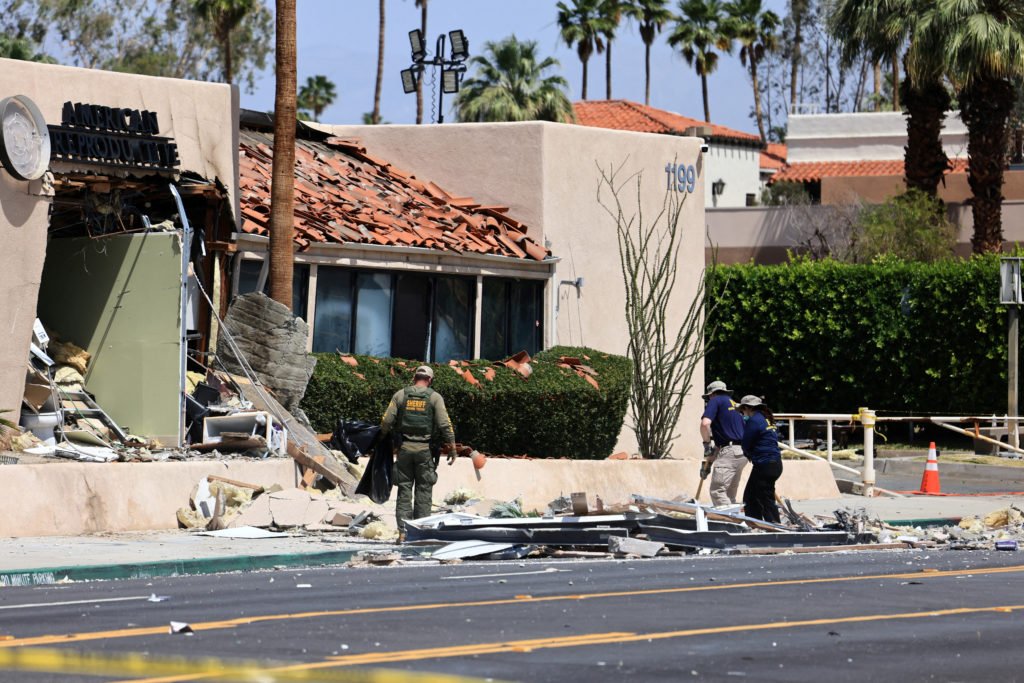
The blast gutted the American Reproductive Centers fertility clinic in Palms Springs and shattered the windows of nearby buildings along a palm tree-lined street. Witnesses described a loud boom followed by a chaotic scene, with people screaming in terror and glass strewn along the sidewalk and street. A body was found near a charred vehicle outside the clinic.
READ MORE: Authorities say suspect in California fertility clinic car bombing left behind ‘anti-pro-life’ writings
Investigators haven’t said if he intended to kill himself in the attack or why he chose the specific facility. The clinic provides services to help people get pregnant, including in vitro fertilization and fertility evaluations.
Authorities executed a search warrant in Bartkus’ hometown of Twentynine Palms, a city of 28,000 residents northeast of Palm Springs with a large U.S. Marine Corps base. Authorities haven’t shared specifics about the explosives used to make the bomb and where Bartkus may have obtained them.
A senior FBI official called the explosion possibly the “largest bombing scene that we’ve had in Southern California.”
Scott Sweetow, a retired ATF explosives expert, had previously said the amount of damage caused indicated that the suspect used a “high explosive” similar to dynamite and TNT rather than a “low explosive” like gun powder.
Those types of explosives are normally difficult for civilians to access, but increasingly people are finding ways to concoct explosives at home, he said.
“Once you know the chemistry involved, it’s pretty easy to get stuff,” Sweetow said. “The ingredients you could get at a grocery store.”
The images of the aftermath also showed that the explosion appeared to blow from the street straight through the building and to the parking lot on the other side, something that could have been intentional or pure luck, Sweetow said. A part of the car was also blown through the building and landed in the back by a dumpster.
Support PBS News Hour
Your donation makes a difference in these uncertain times.