Category: World

  • Governments try to understand Trump’s latest travel ban before it takes effect Monday

    Governments try to understand Trump’s latest travel ban before it takes effect Monday

    WASHINGTON (AP) — Governments of 12 countries whose citizens will be banned from visiting the United States beginning next week scrambled Thursday to understand President Donald Trump’s latest move to resurrect a hallmark policy of his first term.

    The ban that Trump announced Wednesday takes effect at 12:01 a.m. Monday, a cushion that may avoid the chaos that unfolded at airports nationwide when a similar measure took effect with virtually no notice in 2017. Trump, who signaled plans for a new ban upon taking office again in January, appears to be on firmer ground this time after the Supreme Court sided with him.

    WATCH: State Department holds news briefing as Trump creates new travel ban

    Some of the 12 countries also appeared on the list of banned countries in the Republican president’s first term. The new ban targets Afghanistan, Myanmar, Chad, the Republic of Congo, Equatorial Guinea, Eritrea, Haiti, Iran, Libya, Somalia, Sudan and Yemen.

    There will also be heightened restrictions on visitors from seven other countries: Burundi, Cuba, Laos, Sierra Leone, Togo, Turkmenistan and Venezuela. North Korea and Syria, which were on the banned list in the first Trump administration, were spared this time.

    While many of the banned and restricted countries send few people to the United States, Haiti, Cuba and Venezuela had been major sources of immigration in recent years.

    Trump tied the new ban to Sunday’s terror attack in Boulder, Colorado, saying it underscored the dangers posed by some visitors who overstay visas. The suspect, who is accused of turning a makeshift flamethrower on a group of people, is from Egypt, which is not on Trump’s restricted list. The Department of Homeland Security says he overstayed a tourist visa.

    The travel ban results from a Jan. 20 executive order Trump issued requiring the departments of State and Homeland Security and the director of national intelligence to compile a report on “hostile attitudes” toward the U.S. and whether entry from certain countries represented a national security risk.

    Visa overstays

    Trump said some countries had “deficient” screening for passports and other public documents or have historically refused to take back their own citizens. His findings rely extensively on an annual Homeland Security report of visa overstays of tourists, business visitors and students who arrive by air and sea, singling out countries with high percentages of those remaining after their visas expired.

    Measuring overstay rates has challenged experts for decades, but the government has made a limited attempt annually since 2016. Trump’s proclamation cites overstay rates for eight of the 12 banned countries.

    While Trump’s list captures many of the most egregious offenders, it omits others. Djibouti, for example, had a 23..9% overstay rate among business visitors and tourists in the 12-month period through September 2023, higher than seven countries on the banned list and six countries on the restricted list.

    The findings are “based on sketchy data and a misguided concept of collective punishment,” said Doug Rand, a former Biden administration official at U.S. Citizenship and Immigration Services.
    Reactions

    Venezuela’s government had already warned its citizens against traveling to the U.S. A video released last week by the foreign ministry told Venezuelans the U.S. “is a dangerous country where human rights of immigrants are nonexistent.”

    “If you are thinking about traveling, cancel your plans immediately,” it urged.

    But the decision is a significant blow to Venezuelans, who were already limited in their U.S. travel plans since the governments broke off diplomatic relations in 2019.

    The announcement stunned the family of María Aldana, who has long worked multiple jobs in Caracas to support her brother’s dream to study engineering in the U.S. The family has spent more than $6,000 to finance his goals.

    Aldana, 24, said her distraught brother, who enrolled at a Southern California university two years ago, called the family crying.

    “We did it all legally,” Aldana said.

    The African Union Commission, meanwhile, appealed to the United States to reconsider “in a manner that is balanced, evidence-based, and reflective of the long-standing partnership between the United States and Africa.”

    International aid groups and refugee resettlement organizations took a harsher tone: “This latest proclamation is an attempt to further eviscerate lawful immigration pathways under the false guise of national security,” said Sarah Mehta, the American Civil Liberties Union’s deputy director of policy and government affairs for immigration.

    Stephen Yale-Loehr, a retired Cornell University Law School professor and expert in immigration law, said the ban is likely to withstand legal challenges, noting the Supreme Court eventually allowed a ban to take effect in Trump’s first term. Trump’s invocation this week of national security, along with exceptions for green-card holders, athletes and others, could also help the ban stand up in court.

    Shock in Iran

    The news came as a shock to many in Iran despite the decades of enmity between the two countries. Reports suggest thousands of university students each year travel to America to study, and others have extended families living in America, some of whom fled after the 1979 Islamic Revolution that overthrew the shah.

    “My elder daughter got a bachelor’s degree from a top Iranian university and planned to continue in the U.S., but now she is badly distressed,” Nasrin Lajvardi said.

    Tensions also remain high because negotiations over Iran’s nuclear program have yet to reach any agreement, but Tehran resident Mehri Soltani offered rare support for Trump’s decision.

    “Those who have family members in the U.S., it’s their right to go, but a bunch of bad people and terrorists and murderers want to go there as well,” he said.

    ‘America has to cancel it’

    Outside the former U.S. Embassy in Kabul, Afghanistan, a Taliban guard expressed his disappointment.
    “America has to cancel it,” Ilias Kakal said.

    Travel agents there said the ban would have little practical effect as Afghan passport holders have faced problems for years getting U.S. visas.

    Since the Taliban took over the country in 2021, only Afghans with foreign passports or green cards were able to travel to the United States with any ease, they said, while even those applying for special visas due to their work with U.S. forces in Afghanistan were facing problems.

    First term ban

    During his first term, Trump issued an executive order banning travel to the U.S. by citizens of seven predominantly Muslim countries. It was one of the most chaotic and confusing moments of his young presidency.

    The order, often referred to as the “Muslim ban,” was retooled amid legal challenges, until a version was upheld by the Supreme Court in 2018.

    Trump and others have defended the initial ban on national security grounds, arguing it was aimed at protecting the country and not founded on anti-Muslim bias. However, the president had called for an explicit ban on Muslims during his first campaign for the White House.

    Amiri reported from the United Nations. Associated Press writers Regina Garcia Cano, Rebecca Santana, Jon Gambrell, Ellen Knickmeyer, Omar Farouk, Nasser Karimi, Elliot Spagat, Elena Becatoros and Danica Coto contributed to this report.

    Support PBS News Hour

    Your donation makes a difference in these uncertain times.


  • WATCH LIVE: Trump holds roundtable discussion with Fraternal Order of Police

    WATCH LIVE: Trump holds roundtable discussion with Fraternal Order of Police

    Asked about his travel ban proposal as he and German Chancellor Friedrich Merz sat in the Oval Office, President Donald Trump said “it can’t come soon enough.”

    Trump is scheduled to meet with the U.S. Fraternal Order of Police at 4 p.m. ET. Watch in the player above.

    Turning to Merz, Trump said, “It’s not your fault.” Of migration under Merz’s predecessor, former Chancellor Angela Merkel, Trump added: “I told her it shouldn’t have happened.”

    Merz is the current leader of Merkel’s party but has diverged from her in several ways, notably including cutting irregular migration as one of his focuses.

    Support PBS News Hour

    Your donation makes a difference in these uncertain times.


  • WATCH LIVE: State Department holds news briefing as Trump creates new travel ban

    WATCH LIVE: State Department holds news briefing as Trump creates new travel ban

    DAKAR, Senegal (AP) — Citing national security concerns, President Donald Trump on Wednesday banned citizens of 12 countries, primarily in Africa and the Middle East, from entering the United States and restricted access for citizens of seven other nations, resurrecting and expanding a hallmark policy of his first term.

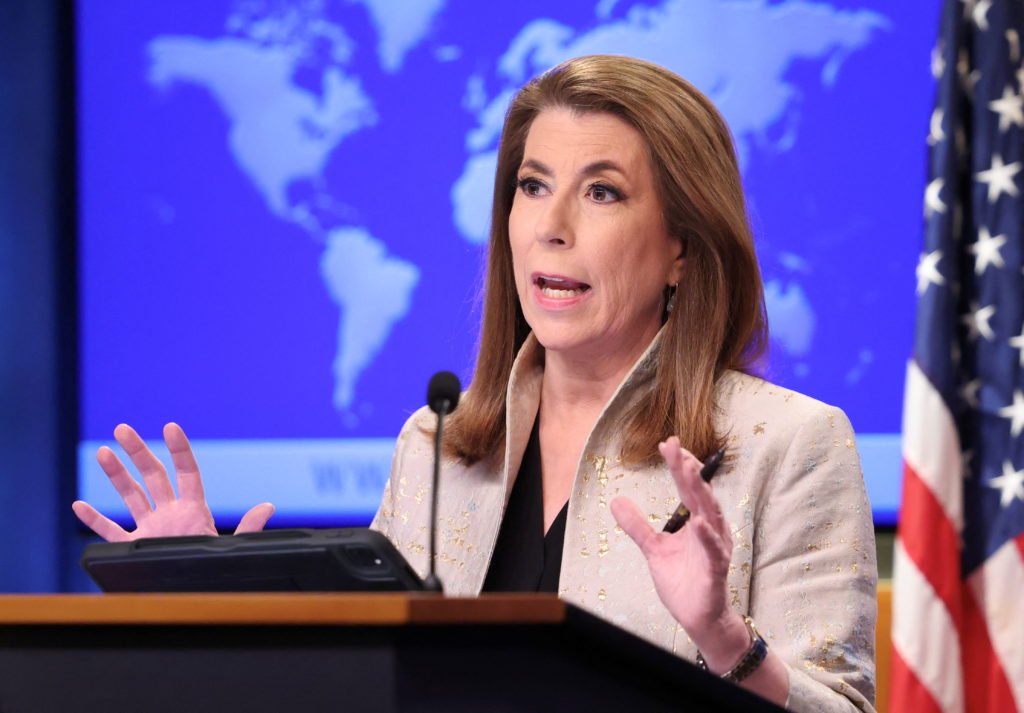
    State Department spokeswoman Tammy Bruce will hold a news briefing on Thursday at 2 p.m. ET. Watch in the player above.

    The travel ban applies to citizens of Afghanistan, Myanmar, Chad, the Republic of Congo, Equatorial Guinea, Eritrea, Haiti, Iran, Libya, Somalia, Sudan and Yemen.

    The policy change restricts entry for citizens of Burundi, Cuba, Laos, Sierra Leone, Togo, Turkmenistan and Venezuela who are outside the U.S. and do not hold a valid visa.

    Since returning to the White House, Trump has launched an unprecedented campaign of immigration enforcement that has pushed the limits of executive power and clashed with federal judges trying to restrain him.

    The travel ban results from a Jan. 20 executive order Trump issued requiring the departments of State and Homeland Security and the Director of National Intelligence to compile a report on “hostile attitudes” toward the U.S.

    The aim is to “protect its citizens from aliens who intend to commit terrorist attacks, threaten our national security, espouse hateful ideology, or otherwise exploit the immigration laws for malevolent purposes,” the administration said.

    In a video released on social media, Trump tied the new ban to a terror attack Sunday in Boulder, Colorado, saying it underscored the dangers posed by some visitors who overstay visas. The suspect in the attack is from Egypt, a country that is not on Trump’s restricted list. The Department of Homeland Security says he overstayed a tourist visa.

    Support PBS News Hour

    Your donation makes a difference in these uncertain times.


  • WATCH LIVE: Trump and Merz expected to discuss Ukraine support and NATO in White House meeting

    WATCH LIVE: Trump and Merz expected to discuss Ukraine support and NATO in White House meeting

    WASHINGTON (AP) — Germany’s new leader is meeting President Donald Trump in Washington on Thursday as he works to keep the U.S. on board with Western support for Ukraine, help defuse trade tensions that pose a risk to Europe’s biggest economy and further bolster his country’s long-criticized military spending.

    President Donald Trump and Chancellor Friedrich Merz are expected to meet at 11:45 a.m. EDT. Watch live in our video player above.

    Trump and Chancellor Friedrich Merz have spoken several times by phone, either bilaterally or with other European leaders, since Merz took office on May 6. German officials say the two leaders have started to build a “decent” relationship, with Merz wanting to avoid the antagonism that defined Trump’s relationship with one of his predecessors, Angela Merkel, in the Republican president’s first term.

    READ MORE: Trump says Putin told him Russia will respond to Ukrainian drone attack on airfields

    The 69-year-old Merz is a conservative former rival of Merkel’s who took over her party after she retired from politics. Merz also comes to office with an extensive business background — something that could align him with Trump.

    On Thursday, Merz told reporters in Washington ahead of his meeting with Trump that “the meeting has been well prepared on all sides.” He said he wants to discuss the Ukraine war, tariffs and NATO spending.

    “We will have to talk about NATO — we changed the constitution in Germany so that we can spend the means that need to be spent,” Merz said, adding that “we want to become the strongest conventional army in the European Union.” Before it took office, Merz’s coalition pushed plans through parliament to enable higher defense spending by loosening strict rules on incurring debt.

    Still, Merz said he didn’t anticipate major breakthroughs on any of the key issues that he planned to discuss with Trump.

    READ MORE: Zelenskyy asks Western allies to boost air defense deliveries as Hegseth skips Ukraine meeting

    A White House official said topics that Trump is likely to raise with Merz include Germany’s defense spending, trade, Ukraine and what the official called “democratic backsliding,” saying the administration’s view is that shared values such as freedom of speech have deteriorated in Germany and the country should reverse course. The official spoke on condition of anonymity to preview the discussions.

    But Merz told reporters Thursday morning that if Trump wanted to talk German domestic politics, he was ready to do that but he also stressed Germany holds back when it comes to American domestic politics.

    Merz will want to avoid an Oval Office showdown of the kind that Ukrainian President Volodymyr Zelenskyy and South African President Cyril Ramaphosa experienced in recent months. Asked about the risk of a White House blow-up, Merz spokesperson Stefan Kornelius said on Monday that the chancellor is “well-prepared” for the meeting and that he and Trump have “built up a decent relationship, at least by phone” and via text messaging.

    Keeping Ukraine’s Western backers together

    Merz has thrown himself into diplomacy on Ukraine, traveling to Kyiv with fellow European leaders days after taking office and receiving Zelenskyy in Berlin last week. He has thanked Trump for his support for an unconditional ceasefire while rejecting the idea of “dictated peace” or the “subjugation” of Ukraine and advocating for more sanctions against Russia.

    The White House official said Trump on Thursday will stress that direct peace talks must continue.

    READ MORE: Zelenskyy wants face-to-face talks with Putin. Putin says there’s nothing to talk about after Ukraine’s attacks

    In their first phone call since Merz became chancellor, Trump said he would support the efforts of Germany and other European countries to achieve peace, according to a readout from the German government. Merz also said last month that “it is of paramount importance that the political West not let itself be divided, so I will continue to make every effort to produce the greatest possible unity between the European and American partners.”

    Under Merz’s immediate predecessor, Olaf Scholz, Germany became the second-biggest supplier of military aid to Ukraine after the United States. Merz has vowed to keep up the support and last week pledged to help Ukraine develop its own long-range missile systems that would be free of any range limits.

    Military spending

    At home, Merz’s government is intensifying a drive that Scholz started to bolster the German military after Russia launched its full-scale invasion of Ukraine. In Trump’s first term, Berlin was a target of his ire for failing to meet the current NATO target of spending 2% of gross domestic product on defense, and Trump is now demanding at least 5% from allies.

    The White House official said the upcoming NATO summit in the Netherlands later this month is a “good opportunity” for Germany to commit to meeting that 5% mark.

    READ MORE: Germany offers to help Ukraine develop long-range missiles to strike Russia

    Scholz set up a 100 billion euro ($115 billion) special fund to modernize Germany’s armed forces — called the Bundeswehr — which had suffered from years of neglect. Germany has met the 2% target thanks to the fund, but it will be used up in 2027.

    Merz has said that “the government will in the future provide all the financing the Bundeswehr needs to become the strongest conventional army in Europe.” He has endorsed a plan for all allies to aim to spend 3.5% of GDP on their defense budgets by 2032, plus an extra 1.5% on potentially defense-related things like infrastructure.

    Germany’s economy and tariffs

    Another top priority for Merz is to get Germany’s economy, Europe’s biggest, moving again after it shrank the past two years. He wants to make it a “locomotive of growth,” but Trump’s tariff threats are a potential obstacle for a country whose exports have been a key strength. At present, the economy is forecast to stagnate in 2025.

    Germany exported $160 billion worth of goods to the U.S. last year, according to the Census Bureau. That was about $85 billion more than what the U.S. sent to Germany, a trade deficit that Trump wants to erase.

    WATCH: As Germany selects a new conservative chancellor, a look at the challenges he inherits

    “Germany is one of the very big investors in America,” Merz told reporters Thursday morning. “Only a few countries invest more than Germany in the USA. We are in third place in terms of foreign direct investment.”

    The U.S. president has specifically gone after the German auto sector, which includes major brands such as Audi, BMW, Mercedes Benz, Porsche and Volkswagen. Americans bought $36 billion worth of cars, trucks and auto parts from Germany last year, while the Germans purchased $10.2 billion worth of vehicles and parts from the U.S.

    Trump’s 25% tariff on autos and parts is specifically designed to increase the cost of German-made automobiles in hopes of causing them to move their factories to the U.S., even though many of the companies already have plants in the U.S. with Volkswagen in Tennessee, BMW in South Carolina and Mercedes-Benz in Alabama and South Carolina.

    There’s only so much Merz can achieve on his view that tariffs “benefit no one and damage everyone” while in Washington, as trade negotiations are a matter for the European Union’s executive commission. Trump recently delayed a planned 50% tariff on goods coming from the European Union, which would have otherwise gone into effect this month.

    Far-right tensions

    One source of strain in recent months is a speech Vice President JD Vance gave in Munich shortly before Germany’s election in February, in which he lectured European leaders about the state of democracy on the continent and said there is no place for “firewalls.”

    WATCH: German voters shift substantially to the right in landmark election

    That term is frequently used to describe mainstream German parties’ refusal to work with the far-right Alternative for Germany, which finished second in the election and is now the biggest opposition party.

    Merz criticized the comments. He told ARD television last month that it isn’t the place of a U.S. vice president “to say something like that to us in Germany; I wouldn’t do it in America, either.”

    Moulson reported from Berlin. Associated Press writer Josh Boak in Washington contributed to this report.

    Support PBS News Hour

    Your donation makes a difference in these uncertain times.

  • Ahead of Eid-ul-Azha, cattle smuggled from India largely missing in Bangladesh markets this year due to enhanced border vigilance: Reports

    Ahead of Eid-ul-Azha, cattle smuggled from India largely missing in Bangladesh markets this year due to enhanced border vigilance: Reports

    Following the fall of the Sheikh Hasina government, vigilance along the India-Bangladesh has been heightened by security forces of both the countries. While Indian security forces have started to catch large number of Bangladeshis trying to enter India. Bangladeshi forces also have increased border activities to prevent Awami League party members escaping into India.

    As a side-effect of this heightened vigilance, smuggling of cattle from India to Bangladesh has also come down significantly. And this has come as good news for cattle growers of Bangladesh ahead of Eid-ul-Azha, the Muslim festival of animal sacrifice.

    Just days to go before the ‘Feast of Sacrifice’, when millions of animals including cattle, goat, sheep, buffalo etc are slaughtered, sacrificial animal markets in Bangladesh are witnessing a surge in activities. As per a report by Daily Star, farmers and traders are in a better position this year, largely due to absence of smuggled animals from India.

    As a result of absence of Indian cattle, local farmers are getting better prices for their livestock sold for sacrificial slaughter. While cattle prices remained low in the country due to economic depression caused by political turmoil, absence of cows and buffalos smuggled from India have brought relief for local farmers.

    One trader said, “This time, smuggled cows and buffaloes didn’t end up in the market. While prices are lower than last year, the lack of smuggling animals means better prospects for local farmers.”

    As per reports, Border Guard Bangladesh (BGB) has also stepped up vigilance along the frontier to prevent illegal cross-border cattle smuggling, to safeguard the local market ecosystem. A BGB officer said that precautionary measures have been taken to curb cattle and leather smuggling during Eid-ul-Azha. Strict surveillance going on to maintain border security, added the official.

    Not just smuggling of animal, legal import is not taking place as export and import activities between India and Bangladesh have been suspended during Muslim festival. Indian officials said that trade will resume from 9th June.

    However, while animal smuggling has come down, it is still taking place in lower numbers. Bangladesh Dairy Farmers’ Association have alleged that despite the rigorous surveillance at border, cows and buffaloes are still coming into Bangladesh through the borders with India and Myanmar.

  • China and U.S. will hold more tariff talks, Trump says after Xi call

    China and U.S. will hold more tariff talks, Trump says after Xi call

    WASHINGTON (AP) — China and the U.S. have agreed to more tariff talks amid a trade standoff and concerns over rare earths, Trump said Thursday after a call with China’s leader.

    Trump and Chinese leader Xi Jinping spoke on Thursday at a time when stalled tariff negotiations between their two countries have roiled global trade.

    WATCH: What’s ahead for the U.S. economy as global markets react to Trump’s tariffs

    The conversation was confirmed by the Chinese foreign ministry, which said Trump initiated the call. The White House did not immediately comment.

    Trump had declared one day earlier that it was difficult to reach a deal with Xi.

    “I like President XI of China, always have, and always will, but he is VERY TOUGH, AND EXTREMELY HARD TO MAKE A DEAL WITH!!!” Trump posted Wednesday on his social media site.

    READ MORE: Trump’s 50% tariffs on steel and aluminum go into effect. Here’s what to know

    Trade negotiations between the United States and China stalled shortly after a May 12 agreement between the two countries to reduce their tariff rates while talks played out. Behind the gridlock has been the continued competition for an economic edge.

    The U.S. accuses China of not exporting critical minerals, and the Chinese government objects to America restricting its sale of advanced chips and its access to student visas for college and graduate students.

    READ MORE: U.S. and European trade negotiators make progress but no breakthrough yet

    Trump has lowered his 145% tariffs on Chinese goods to 30% for 90 days to allow for talks. China also reduced its taxes on U.S. goods from 125% to 10%. The back and forth has caused sharp swings in global markets and threatens to hamper trade between the two countries.

    Treasury Secretary Scott Bessent had suggested that only a conversation between Trump and Xi could resolve these differences so that talks could restart in earnest. The underlying tension between the two countries may still persist, though.

    Even if negotiations resume, Trump wants to lessen America’s reliance on Chinese factories and reindustrialize the U.S., whereas China wants the ability to continue its push into technologies such as electric vehicles and artificial intelligence that could be crucial to securing its economic future.

    READ MORE: China says U.S. violating tariffs truce with moves on AI chips and student visas

    The United States ran a trade imbalance of $295 billion with China in 2024, according to the Census Bureau. While the Chinese government’s focus on manufacturing has turned it into a major economic and geopolitical power, China has been muddling through a slowing economy after a real estate crisis and coronavirus pandemic lockdowns weakened consumer spending.

    Trump and Xi had last spoken in January, three days before Inauguration Day. The pair discussed trade then, as well as Trump’s demands that China do more to prevent the synthetic opioid fentanyl from entering the United States.

    Trump had long expressed optimism about the prospects for a major deal, before his post suggesting Xi was making that difficult. Last week, Trump went further, posting, “The bad news is that China, perhaps not surprisingly to some, HAS TOTALLY VIOLATED ITS AGREEMENT WITH US,” Trump posted. “So much for being Mr. NICE GUY!”

    Support PBS News Hour

    Your donation makes a difference in these uncertain times.


  • Supreme Court sides with Ohio woman in making it easier to claim ‘reverse’ workplace discrimination

    Supreme Court sides with Ohio woman in making it easier to claim ‘reverse’ workplace discrimination

    WASHINGTON (AP) — A unanimous Supreme Court has made it easier to bring lawsuits over so-called reverse discrimination, siding with an Ohio woman who claims she didn’t get a job and then was demoted because she is straight.

    LISTEN: Supreme Court seems likely to rule for woman who says she faced reverse workplace discrimination

    The justices’ decision Thursday affects lawsuits in 20 states and the District of Columbia where, until now, courts had set a higher bar when members of a majority group, including those who are white and heterosexual, sue for discrimination under federal law.

    The court ruled in an appeal from Marlean Ames, who has worked for the Ohio Department of Youth Services for more than 20 years.

    Support PBS News Hour

    Your donation makes a difference in these uncertain times.


  • Trump announces travel ban on citizens of 12 countries, set to go into effect Monday

    Trump announces travel ban on citizens of 12 countries, set to go into effect Monday

    WASHINGTON (AP) — President Donald Trump on Wednesday resurrected a hallmark policy of his first term, announcing that citizens of 12 countries would be banned from visiting the United States and those from seven others would face restrictions.

    The ban takes effect Monday at 12:01 a.m., a cushion that may avoid the chaos that unfolded at airports nationwide when a similar measure took effect with virtually no notice in 2017. Trump, who signaled plans for a new ban upon taking office in January, appears to be on firmer ground this time after the Supreme Court sided with him.

    READ MORE: Top immigration official defends tactics as arrests rise nationwide

    Some, but not all, 12 countries also appeared on the list of banned countries in Trump’s first term. The new ban includes Afghanistan, Myanmar, Chad, the Republic of Congo, Equatorial Guinea, Eritrea, Haiti, Iran, Libya, Somalia, Sudan and Yemen.

    There will be heightened restrictions on visitors from Burundi, Cuba, Laos, Sierra Leone, Togo, Turkmenistan and Venezuela.

    In a video released on social media, Trump tied the new ban to Sunday’s terror attack in Boulder, Colorado, saying it underscored the dangers posed by some visitors who overstay visas. The suspect in the attack is from Egypt, a country that is not on Trump’s restricted list. The Department of Homeland Security says he overstayed a tourist visa.

    Trump said some countries had “deficient” screening and vetting or have historically refused to take back their own citizens. His findings rely extensively on an annual Homeland Security report of visa overstays of tourists, business visitors and students who arrive by air and sea, singling out countries with high percentages of remaining after their visas expired.

    “We don’t want them,” Trump said.

    The inclusion of Afghanistan angered some supporters who have worked to resettle its people. The ban makes exceptions for Afghans on Special Immigrant Visas, generally people who worked most closely with the U.S. government during the two-decade-long war there.

    Afghanistan was also one of the largest sources of resettled refugees, with about 14,000 arrivals in a 12-month period through September 2024. Trump suspended refugee resettlement his first day in office.

    “To include Afghanistan — a nation whose people stood alongside American service members for 20 years — is a moral disgrace. It spits in the face of our allies, our veterans, and every value we claim to uphold,” said Shawn VanDiver, president and board chairman of #AfghanEvac.

    Trump wrote that Afghanistan “lacks a competent or cooperative central authority for issuing passports or civil documents and it does not have appropriate screening and vetting measures.” He also cited its visa overstay rates.

    Haiti, which avoided the travel ban during Trump’s first term, was also included for high overstay rates and large numbers who came to the U.S. illegally. Haitians continue to flee poverty, hunger and political instability deepens while police and a U.N.-backed mission fight a surge in gang violence, with armed men controlling at least 85% of its capital, Port-au-Prince.

    “Haiti lacks a central authority with sufficient availability and dissemination of law enforcement information necessary to ensure its nationals do not undermine the national security of the United States,” Trump wrote.

    The Iranian government offered no immediate reaction to being included. The Trump administration called it a “state sponsor of terrorism,” barring visitors except for those already holding visas or coming into the U.S. on special visas America issues for minorities facing persecution.

    Other Mideast nations on the list — Libya, Sudan and Yemen — all face ongoing civil strife and territory overseen by opposing factions. Sudan has an active war, while Yemen’s war is largely stalemated and Libyan forces remain armed.

    International aid groups and refugee resettlement organizations roundly condemned the new ban. “This policy is not about national security — it is about sowing division and vilifying communities that are seeking safety and opportunity in the United States,” said Abby Maxman, president of Oxfam America.

    The travel ban results from a Jan. 20 executive order Trump issued requiring the departments of State and Homeland Security and the Director of National Intelligence to compile a report on “hostile attitudes” toward the U.S. and whether entry from certain countries represented a national security risk.

    During his first term, Trump issued an executive order in January 2017 banning travel to the U.S. by citizens of seven predominantly Muslim countries — Iraq, Syria, Iran, Sudan, Libya, Somalia and Yemen.

    It was one of the most chaotic and confusing moments of his young presidency. Travelers from those nations were either barred from getting on their flights to the U.S. or detained at U.S. airports after they landed. They included students and faculty as well as businesspeople, tourists and people visiting friends and family.

    The order, often referred to as the “Muslim ban” or the “travel ban,” was retooled amid legal challenges, until a version was upheld by the Supreme Court in 2018.

    The ban affected various categories of travelers and immigrants from Iran, Somalia, Yemen, Syria and Libya, plus North Koreans and some Venezuelan government officials and their families.

    Trump and others have defended the initial ban on national security grounds, arguing it was aimed at protecting the country and not founded on anti-Muslim bias. However, the president had called for an explicit ban on Muslims during his first campaign for the White House.

    Amiri reported from the United Nations. Associated Press writers Rebecca Santana, Jon Gambrell, Ellen Knickmeyer and Danica Coto contributed to this report.

    Support PBS News Hour

    Your donation makes a difference in these uncertain times.

  • Who is Madam N, the Pakistani woman who lured Jyoti Malhotra and other Indian influencers into spying for ISI: Here’s how she was working to set up sleeper cell network of 500 spies in India

    Who is Madam N, the Pakistani woman who lured Jyoti Malhotra and other Indian influencers into spying for ISI: Here’s how she was working to set up sleeper cell network of 500 spies in India

    In the case pertaining to Indian social media influencers and YouTubers working as Pakistan’s spies, the name of a Pakistani woman Noshaba Shehzad Masood, whom intelligence agencies are identifying as ‘Madam N’, has emerged. This Pakistani woman runs a ‘travel agency’ in Lahore and helped Indian social media influencers and travel vloggers like Jyoti Malhotra to visit Pakistan and laid groundwork for using them as spies for Pakistan’s Inter-Services Intelligence (ISI).

    Codenamed as ‘Madam N’, Noshaba Shehzad runs a Lahore-based company ‘Jaiyana Travel and Tourism’. Her name emerged during the interrogation of arrested Indian influencers who were operating as Pakistani spies. This Madam N was working to set up a massive sleeper cell network of at least 500 spies who can hide in plain sight across India and transfer sensitive information to ISI.

    As per an NDTV report, Noshaba Shehzad aka Madam N’s husband is a retired officer of the Pakistani civil services. The Pakistani Army and the ISI gave her instructions on how to set up the sleeper cell network in India.

    Noshaba Shehzad lured Indian Hindus and Sikhs and introduced them to Pakistan Army and the ISI. With Madam N’s help, around 3,000 citizens from India and 1,500 non-resident Indians (NRIs) visit Pakistan in the last six months.

    She also had influence in Pakistani embassy in New Delhi and had been in in touch with the First Secretary (visa) Suhail Qamar and Counsellor (trade) Umar Sheryar. This essentially meant that she could easily arrange a Pakistani visa for whoever she wanted to visit Pakistan. Noshaba Shehzad was also in touch with Danish alias Ehsan-ur-Rehman, who worked as a visa officer in the Pakistani embassy in Delhi and was expelled from India after Jyoti Malhotra was exposed.

    Noshaba Shehzad’s company is the only agency that organises Sikh and Hindu pilgrimage to Pakistan, which works in collaboration with the Evacuee Trust Property Board. Despite there being no system for sending tourists from India to Pakistan and no process for issuing tourist visas to Indian citizens, the Pakistan High Commission in India was frequently issuing visas on the recommendation and sponsorship of Noshaba.

    ‘Madam N’ used to charge huge amounts from Indian pilgrims and then used the money for furthering Pakistani propaganda. She also appointed several travel agents in Indian cities, including the national capital, to promote her travel agency. It is through these agents that she was trapping new people.

  • How Indian students are sanitising their social media timeline before applying for the US visa

    How Indian students are sanitising their social media timeline before applying for the US visa

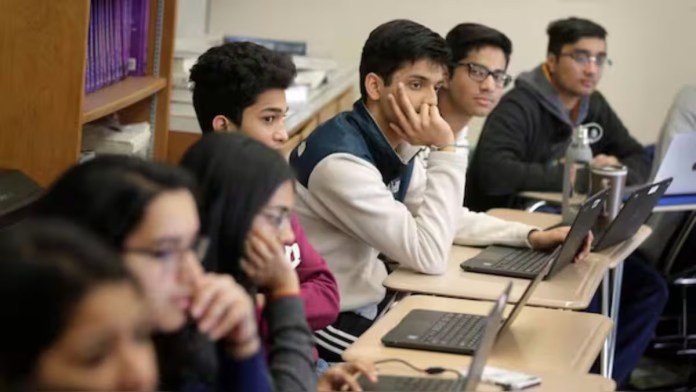
    Enhanced scrutiny in the US visa application process combined with Trump administration’s plans to mandate social media screening before visa approvals for international students has caused worries among Indian students aspiring to study in the US.

    In the light of pro-Palestine and anti-Semitic demonstrations carried out in various US universities last year, the Trump administration recently launched a crackdown on academic institutions including the Ivy League institutions.

    Elite institutions allowing anti-Semitic and radical activities on their campuses have been in headlines since October 2023, when Hamas killed and abducted civilians and Israel started a war in retaliation.

    The visa crackdown has led to Indian students, who are planning to apply to the US academic institutions, cleansing their social media timelines to avoid visa rejection.

    Fearing that their social media posts might lead to visa rejections, students are not just sanitising their social media accounts but in some cases even deleting them. In this process, the students are being guided by their visa counsellers who inform them about the content or posts which may be deemed inadmissible by the US authorities and could result in visa rejections.

    Sudden deletion of social media accounts might also alert authorities: experts

    Founder of Gradding.com, Mamta Shekhawat said that for conducting the background check of student visa applicants, the immigration authorities require students to provide the details of their social media profiles for the preceding five years. “Immigration authorities require student visa applicants to provide their social media handles for the previous five years, allowing them to make character evaluations and determine whether and how the applicant’s professional and academic background matches the visa objectives,” Shekhawat told India Today.

    Speaking about social media jokes, Shekhawat said, “Even the smallest hint of political or violent activism, or controversial remarks, can be counted as suspicious when piled together during the scrutiny of the visa application.” Advising students to be cautious of their digital footprint, Shekhawat warned them that sudden deletion of social media accounts might also alert the immigration authorities who will be vetting the social media profiles using AI tools. The entire project of screening of social media accounts of international students is being supervised by the US Secretary of State (SoS) Marco Rubio.

    Meenal Damani, an education consultant quoted in the India Today article, said that posting, liking, commenting or sharing posts relating to activities considered illegal in the US could result in visa rejection. “Don’t like, comment on, or share posts that could be misinterpreted. Refrain from joining, posting about, or engaging with political movements online. Even sharing someone else’s opinion can be viewed as an endorsement,” Damani said.

    Even though, what qualifies as ‘objectionable’ in the US remains unclear but anti-semitic and pro-Palestine views could certainly attract an unfavourable action by the US immigration authorities. “What can be deemed objectionable ranges from political opinions and controversial jokes to posts about protests or criticism of US policies,” India Today quoted Sanjog Anand, co-founder of Rostrum Education as saying.

    Indian students sanitise their social media profiles

    According to India Today, an Indian student, Manya (name changed), who was enrolled in a master’s programme at an Ivy League university, deleted her Instagram and LinkedIn accounts on the advice of her visa counsellor. Similarly, another student, Diljeet (name changed) turned on private mode on his social media accounts.

    Just like Suraj, a PhD scholar at Jawaharlal Nehru University (JNU), also began deleting his posts relating to Gaza casualties, Palestine and right-wing criticism after his post-doctoral appointment was halted by a US university. Uncertain whether this would suffice for getting a US visa, he is now considering deleting his Facebook and Instagram accounts.

    Trump administration has amplified scrutiny under the US immigration policy, particularly for international students planning to study in the US, as a step towards strengthening national security and curbing anti-semitism and radicalism. Last month, he introduced a 15% limit on the enrollment of international students in the US universities, including the Harvard university. Earlier, the Trump administration had terminated federal funding to Harvard, including $60 million in grants, $450 million in additional funding and $2.2 billion in research grants over the varsity’s alleged failure to curb antisemitism and comply with federal demands. Trump also called for the revocation of Harvard’s tax-exempt status. Harvard University has filed two lawsuits against the Trump administration.