
As graduates celebrate the end of the academic year and the beginning of a new journey, leaders, celebrities, thinkers and dignitaries have been delivering commencement speeches. We share some words of wisdom passed on to the class of 2025.
Category: World
-
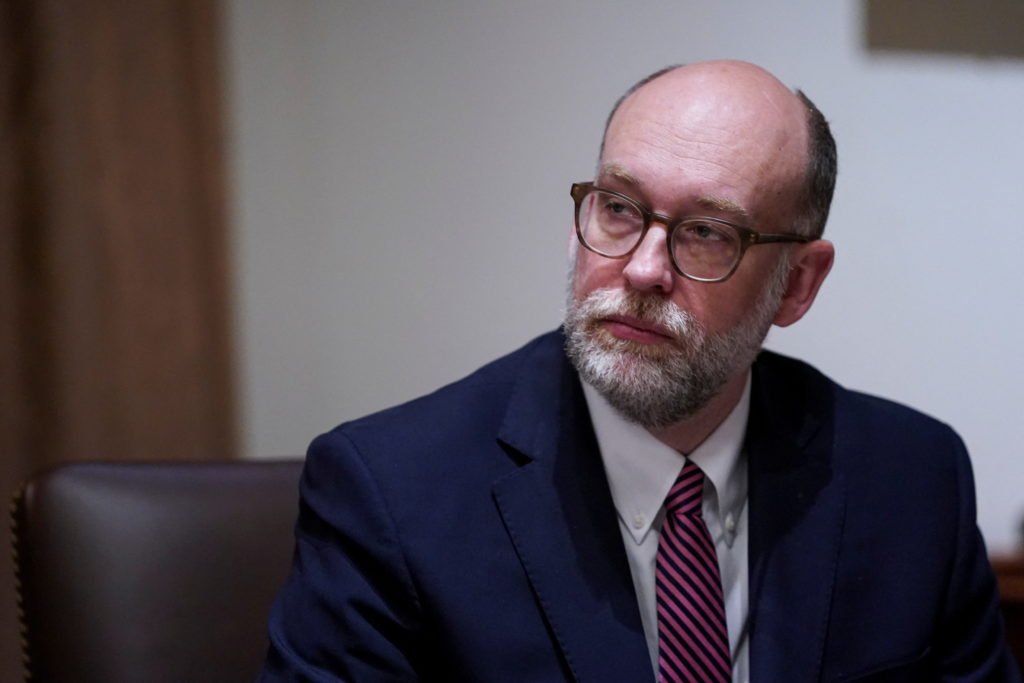
WATCH: Vought said Trump could ask to rescind more money if Congress approves first request
Office of Management and Budget Director Russ Vought told a House committee on Wednesday that the Trump administration could send more requests to claw back already appropriated money if its first attempt is successful.
Watch in the video player above.
Vought’s appearance before the House Appropriations Committee on Wednesday came a day after President Donald Trump asked Congress to withdraw $9.4 billion in money it had already approved, much of it for foreign aid or programs the administration has described as liberal-leaning or wasteful.
READ MORE: Trump’s memo asking Congress to take back approved funding for foreign aid, PBS, NPR
The request sought to formalize some of the cuts and freezes recommended by the Department of Government Efficiency.
“We are very anxious to see the reception, from a vote standpoint, in the House and the Senate,” Vought said, when asked by Rep. Mark Alford, R-Mo., if the committee would see more requests to take back money Congress has appropriated.
“I’m less concerned about the House as I am the Senate, and it’s very important for it to pass. If it does, it’ll be worth the effort and we’ll send up additional packages,” Vought said.
READ MORE: How Trump’s big bill will affect taxes, the deficit and health care, according to the budget office
Vought’s appearance came as the president tries to push his “One Big Beautiful Bill,” focused on preserving tax cuts, through the Senate. An estimate from the Congressional Budget Office released Wednesday suggested the legislation’s $3.7 trillion in tax cuts would also add $2.4 trillion to the deficit over the next decade. The estimate also says 10.9 million more people would be without health insurance, largely as a result of changes to Medicaid.
Republicans have argued the changes are necessary to eliminate waste and abuse in the federal government.
Support PBS News Hour
Your donation makes a difference in these uncertain times.
-

Local arts groups face budget gaps as NEA pulls grants
Geoff Bennett:
On May 3, the National Endowment for the Arts abruptly terminated grants to arts organizations across the country. As of tonight, an informal tally shows nearly 560 grants canceled, spanning performing visual, literary, folk arts, and education, totaling more than $27 million.
The sudden loss of federal funding has left organizations scrambling to fill budget gaps and contributed to the resignation of several senior NEA staffers.
Senior arts correspondent Jeffrey Brown has more for our series Art in Action, exploring the intersection of art and democracy as part of our canvas coverage.
-

Miles Taylor fights Trump’s order targeting him, calling it ‘an attack on free speech’
Miles Taylor:
Well, I think, until it affects you personally, it’s really, really easy to justify looking the other way.
And I will give you a very personal example, is, there are very close friends and family members that have watched us go through what we have gone through over the past few years in trying to speak the truth about this president, and even some of them have come to us and said, hey, listen, maybe you should keep a lower profile because they don’t want to get pulled into the crosshairs.
There’s this very built in self-interest of folks to try to look the other way because they don’t want to get hit by this. But once you do, once you’re affected, it’s tough to turn back. I mean, I’m sure, a few weeks ago, the board of trustees at Harvard had no interest in going to war legally with the president of the United States.
But now the existence of that institution is being tested, and they’re forced into it. So I think Americans will wake up the bigger impact this has on their lives. But the hope is that we can draw a line to keep that from happening, whether it’s misaligned tariffs or whether it’s retributive actions against the news organizations they watch every day.
Eventually, if this isn’t stopped, it will start to affect every American. But, by then, I think, in some ways, it’s too late.
-

Georgia teen says ICE detention was ‘life-altering’ and ‘like a prison’
Laura Barron-Lopez:
Last month in Dalton, Georgia, 19-year-old college student Ximena Arias-Cristobal became the latest target of Trump’s agenda. After being pulled over for a traffic violation she didn’t commit, Arias-Cristobal was handed over to Immigration Customs Enforcement agents and detained for 17 days.
Her arrests sparked protests and support from the community and the charges were ultimately dropped. Arias-Cristobal, who was brought to the U.S. illegally when she was 4 years old, was released on bond and faces deportation to Mexico.
Ximena joins me now to share her story.
Ximena, thank you so much for talking to us.
-

News Wrap: Trump says Putin vows to respond to Ukraine’s drone attack on Russian airfields
Amna Nawaz:
This comes as the Ukraine Contact Defense Group met in Belgium today for the first time without the U.S. secretary of defense. The Pentagon says that scheduling issues prevented Pete Hegseth from attending. The U.S. has played a leading role in the gathering of Ukraine backers. Former Defense Chief Lloyd Austin helped found the group three years ago.
Despite his absence from today’s gathering, Hegseth will meet with NATO defense ministers in Brussels tomorrow.
A federal judge issued an order today to prevent the deportation of Mohamed Sabry Soliman’s family. He’s the Egyptian man charged in this week’s firebomb attack on a Jewish group in Boulder, Colorado. Soliman’s wife and five children were taken into federal custody yesterday by U.S. immigration officials. He faces federal hate crime charges and state charges of attempted murder for the attack that injured 15 people.
Homeland Security Secretary Kristi Noem said today that the family is being processed for removal proceedings. Soliman’s family members have not been charged with any crime.
In Gaza, an aid group temporarily paused food deliveries today at its three distribution sites. That’s after health officials say dozens of Palestinians were killed this week in multiple shootings near the facilities. The U.S. and Israeli-backed Gaza Humanitarian Foundation says there’s been no violence at the sites themselves. Israel’s military says it fired near people it described as suspects after firing warning shots and they’re looking into reports of injuries.
In the meantime, hospital officials say Israeli strikes killed more than two dozen people overnight and into today across Gaza. One of the attacks hit a tent in Gaza City, killing two women and a child.
Turning now to India, a stampede outside of a cricket stadium in the southern city of Bengaluru today killed at least 11 people and injured more than 30 others. Thousands of fans had gathered to celebrate the winners of the Indian Premier League. Authorities say the crush began when some people who didn’t have passes tried to break into the stadium.
Footage from the scene showed the injured being rushed off in ambulances as festivities inside the stadium continued. This comes roughly five months after a stampede at a Hindu religious festival in Northern India killed at least 30 people.
In Saudi Arabia, Muslims from around the world are taking part in the annual Hajj pilgrimage to mecca amid warnings of excessive heat. People visited the grand mosque today as temperatures soared past 100 degrees. More than 1,300 pilgrims died in high heat last year, prompting changes this time around.
Authorities are cautioning people not to go out during the day and children under 12 are banned. The Hajj is one of the five pillars of Islam and is a once-in-a-lifetime obligation for every able-bodied Muslim who can afford it.
China’s Foreign Ministry says that Secretary of State Marco Rubio — quote — “distorted historical facts” in his statement marking the 36th anniversary of the Tiananmen Square crackdown. Rubio praised the courage of those who were killed, saying — quote — “The world will never forget.”
Security was tight around the square today. China’s leaders banned any public commemoration of the events of 1989, when troops were sent in to break up a massive student-led protest. Officials have never released a death toll, though estimates from eyewitnesses and rights group range into the thousands.
On Wall Street today, stocks ended mixed after recent gains. The Dow Jones industrial average slipped about 90 points on the day. The Nasdaq rose about 60 points, so around a third of 1 percent. The S&P 500 ended virtually flat.
And the groundbreaking gay writer Edmund White has died. Through essays, articles, and dozens of books like the bestselling “A Boy’s Own Story,” White chronicled gay life in America. He was present at the Stonewall riots in 1969 that sparked the gay rights movement. He later wrote that up until then — quote — “We had all thought homosexuality was a medical term. Suddenly we saw that we could be a minority group with rights, a culture, an agenda.”
White also wrote about the AIDS epidemic and in 1985 learned that he himself was HIV-positive. He later survived two major strokes. Edmund White was 85 years old.
-

What’s ahead for U.S. economy as global market reacts to Trump’s tariffs
Geoff Bennett:
The CBO also released a separate analysis today about the impact of President Trump’s tariffs. It projects current tariff policies would reduce the federal deficit by $2.8 trillion over the next decade, while also raising inflation and shrinking the size of the economy.
That deficit savings is a bit more than the big spending and tax cut bill would cost. It comes as President Trump issued new tariffs on steel and aluminum overnight, doubling them from 25 to 50 percent.
For more, we’re joined by Babak Hafezi. He’s an adjunct professor at American university’s Kogod School of business and CEO of Hafezi Capital. That’s an international consulting firm.
So, President Trump announced these sweeping tariffs last week during a visit to Pittsburgh, catching a lot of people off guard. Help us understand the administration’s rationale. Why move forward with this right now?
-
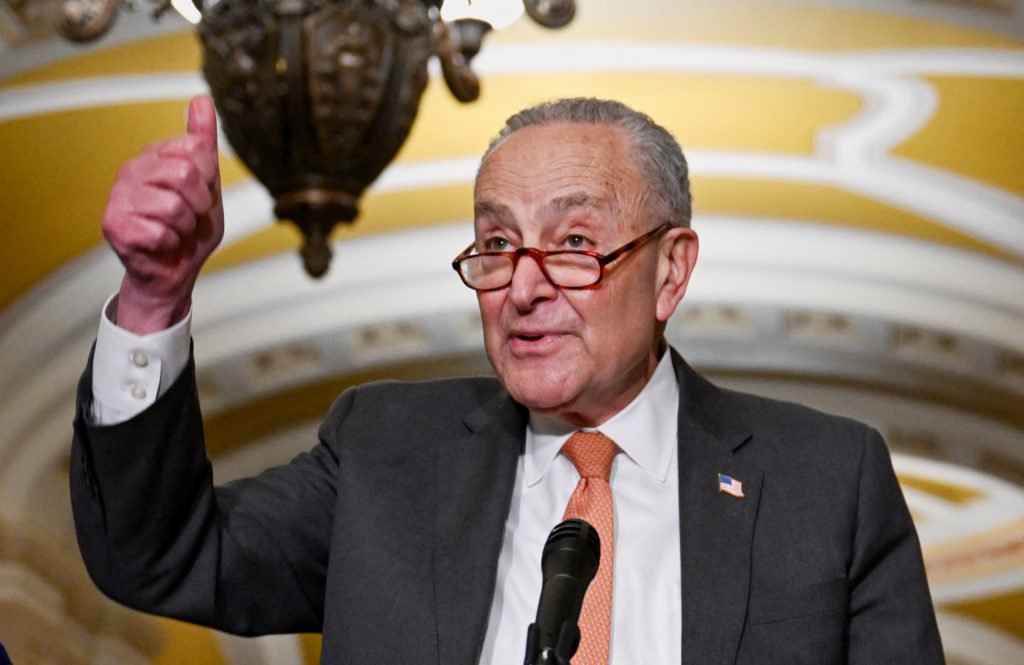
WATCH: Schumer says GOP wants to ‘strangle health care’ with Trump tax bill
WASHINGTON (AP) — President Donald Trump’s big bill in Congress would unleash trillions in tax cuts and slash spending, but also spike deficits by $2.4 trillion over the decade and leave some 10.9 million more people without health insurance, raising the political stakes for the GOP’s signature domestic priority.
Senate Minority Leader Chuck Schumer and other Senate Democrats held a news conference Wednesday. Watch in our video player above.
Republican leaders in Congress, determined to muscle the sweeping package forward, had little to say after the analysis released Wednesday by the nonpartisan Congressional Budget Office. GOP senators were heading for an afternoon meeting with Trump at the White House.
WATCH: House Speaker Johnson says Musk did ‘a 180’ in publicly opposing tax bill
But Democrats laboring to halt the march of Trump’s One Big Beautiful Bill Act piled on with relentless opposition.
“In the words of Elon Musk, this bill is a ‘disgusting abomination,’” said Rep. Brendan Boyle of Pennsylvania, the top Democrat on the House Budget Committee, reviving the billionaire former Trump aide’s criticism of the package.
The analysis comes at a crucial moment as Trump is pushing Congress, where Republicans have majority control, to send the final product to his desk to become law by the Fourth of July. The House passed the bill last month by a single vote, but it’s now slogging through the Senate, where Republicans want a number of significant changes.
And the politics are only intensifying.
After Musk blindsided Congress with his all-out assault against the bill this week, House Speaker Mike Johnson rushed to do damage control.
READ MORE: Musk slams Trump’s ‘big, beautiful’ bill as GOP senators race to meet July 4th deadline
The GOP speaker said he called Musk to discuss the criticism leveled late Tuesday, but had not heard back. Musk has threatened to use his political apparatus to go after Republicans in the midterm elections.
“I hope he comes around,” Johnson, R-La., told reporters.
Hours later, Musk, whose business interests could be impacted by green energy rollbacks in the bill, implored voters to call their representatives and senators: “Bankrupting America is NOT ok!” he wrote on social media, “KILL the BILL”
Tax breaks, but also cuts to health care
The work of the CBO, which for decades has served as the official scorekeeper of legislation in Congress, is closely watched by lawmakers and others seeking to understand the budgetary impacts of the sprawling 1,000-page-plus package.
Along with $3.75 trillion to extend the 2017 tax breaks and add the new ones Trump campaigned on, including no taxes on tips, it found that the package would reduce federal spending outlays by nearly $1.3 trillion, largely through proposed reductions to Medicaid and rollbacks of green energy initiatives.
WATCH: Exploring the potential impact of Medicaid cuts in Trump’s big budget bill
Some 7.8 million people would no longer have health insurance with changes to Medicaid, including 5.2 million from the proposed new work requirements on those able-bodied adults up to age 65, with some exceptions, according to the analysis.
As part of those Medicaid changes, 1.4 million people who are in the United States without legal status in state-funded health programs would no longer have coverage. Also, some 400,000 would lose coverage from the termination of a medical provider tax that key Republicans, including Sen. Josh Hawley of Missouri, want to keep in place to ensure rural hospitals can keep paying their bills.
Republicans argue that their proposals are intended to strengthen Medicaid and other programs by rooting out waste, fraud and abuse. They want the federal funding to go to those who most need health care and other services, often citing women and children.
WATCH: ‘We are all going to die,’ Sen. Ernst says after addressing Medicaid changes in combative town hall
But Senate Democratic Leader Chuck Schumer said those claims are bogus and are simply part of long-running GOP efforts to repeal and replace the Affordable Care Act, or Obamacare, as most states have expanded Medicaid to serve more people under the program.
“They just want to strangle health care,” Schumer said.
Additionally, the CBO had previously estimated that nearly 4 million fewer people would have food stamps each month due to the legislation’s proposed changes to the Supplemental Nutrition Assistance Program, known as SNAP. Some would see their benefits reduced by about $15 by 2034, the CBO has said.
Republicans criticize the CBO
Ahead of the CBO’s release, the White House and Republican leaders criticized the budget office in a preemptive campaign designed to sow doubt in its findings.
WATCH: White House criticizes GOP senators worried about national debt and attacks CBO
Senate Majority Leader John Thune said the CBO was “flat wrong” because it underestimated the potential revenue growth from Trump’s first round of tax breaks in 2017. The CBO last year said receipts were $1.5 trillion, or 5.6% greater than predicted, in large part because of the “burst of high inflation” during the COVID-19 pandemic in 2021.
White House Budget Director Russ Vought said when you adjust for “current policy,” which means not counting some $4.5 trillion in existing tax breaks that are simply being extended for the next decade, the overall package actually doesn’t pile onto the deficit. He argued that the spending cuts alone, in fact, help reduce deficits by $1.4 trillion over the decade.
WATCH: OMB Director Vought testifies in House budget hearing after Trump seeks to rescind $9 billion in spending
But Democrats and even some Republicans call that “current policy” accounting move a gimmick, but it’s the approach Senate Republicans intend to use during their consideration of the package to try to show it does not add to the nation’s deficits. Vought argued that the CBO is the one using a “gimmick” by tallying the costs of continuing those tax breaks that would otherwise expire.
“Russ is right,” Johnson, the House speaker, posted on social media. “Our One Big Beautiful Bill will REDUCE the deficit WHILE delivering on the mandate given to us by the American people. Let’s get it done!”
White House press secretary Karoline Leavitt has also suggested that the CBO’s employees are biased, even though certain budget office workers face strict ethical rules — including restrictions on campaign donations and political activity — to ensure objectivity and impartiality.
What’s at stake
The individual income tax breaks that had been approved during Trump’s first term in the White House will expire in December if Congress fails to act, in what Republicans warn would be a massive tax hike on many American households.
The package also includes a massive buildup of $350 billion for border security, deportations and national security that is central to the GOP agenda, as well as a $4 trillion increase to the nation’s $36 trillion debt limit, which the Treasury Department says is needed by this summer to pay the nation’s bills.
CBO aims for impartiality
Now in its 50th year, the CBO was established by law after Congress sought to assert its control, as outlined in the Constitution, over the budget process.
Staffed by some 275 economists, analysts and other employees, the CBO says it seeks to provide Congress with objective, impartial information about budgetary and economic issues.
READ MORE: What is the CBO? A look at the budget office in the middle of the debate over Trump’s big bill
Its current director, Phillip Swagel, a former Treasury official in Republican President George W. Bush’s administration, was reappointed to a four-year term in 2023.
Associated Press writers Kevin Freking and Joey Cappelletti contributed to this report.
Support PBS News Hour
Your donation makes a difference in these uncertain times.
-

White House revokes guidance requiring hospitals to provide emergency abortions
The Trump administration rescinded federal guidance that required emergency rooms to provide an abortion if the procedure would save a patient’s life. The Biden-era guidance argued the Emergency Medical Treatment and Active Labor Act required hospitals to provide treatment during a medical emergency, even in states with near-total abortion bans. Geoff Bennett discussed more with Sarah Varney.
-
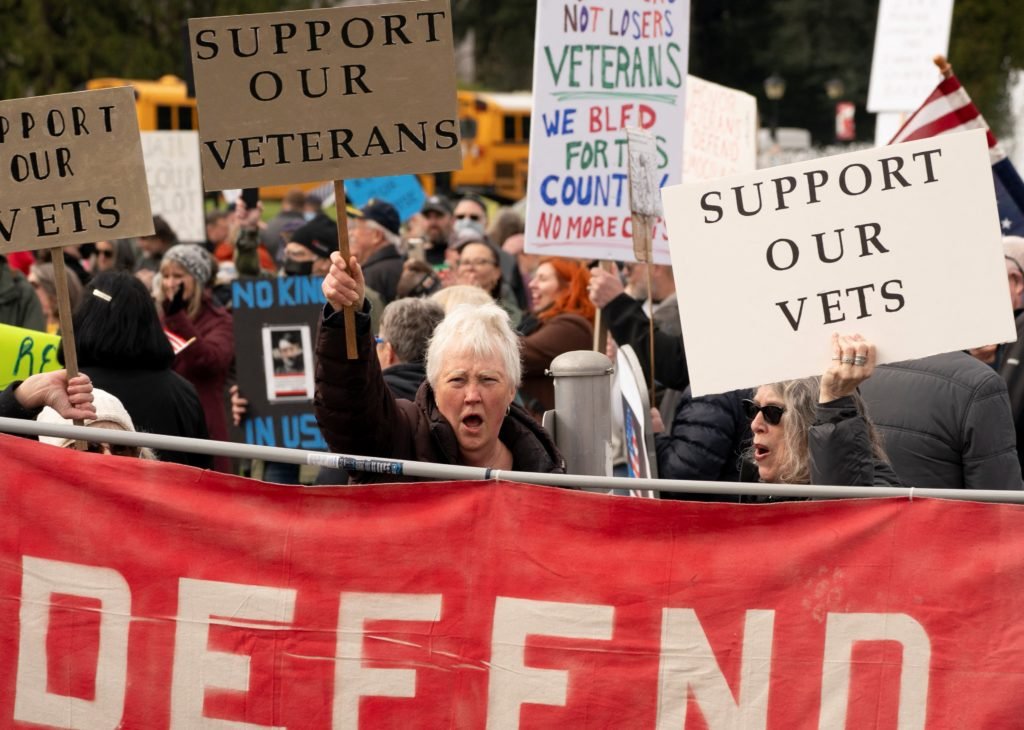
As U.S. veterans plan protest for D-Day, here’s a look at their nearly 250-year history of fighting for their benefits


This article was originally published by The Conversation.
Veterans across the United States will gather on June 6, 2025, to protest the Trump administration’s cuts to the Department of Veterans Affairs, as well as the slashing of staff and programs throughout the government. Veteran-led protests will be held at the National Mall, 16 state capitol buildings and over 100 other venues across 43 states.
READ MORE: 5 reasons federal cuts are hitting veterans especially hard
Veterans are disproportionately affected by federal cuts, in part because they make up only 6.1% of the U.S. population but, because of “veterans preference” in federal hiring, they compose 24% of the 3 million federal workers facing mass layoffs under the Trump administration.
Veterans also depend on comprehensive, free, federally funded health care through VA clinics throughout the country. But that care is deteriorating due to cuts, rule changes and return-to-work policies that make it impossible for many VA workers to effectively provide care.
Looming cuts to the VA may cause an irreversible blow if the VA stops providing comprehensive care to veterans and, instead, pushes veterans into seeing doctors in private practice.
This is not the first time that veterans have engaged in mass mobilization. Veterans groups in the U.S. have successfully mobilized for centuries, crossing traditional political divisions such as race, class and gender. They are powerful messengers, and their actions in the past have helped secure back pay and pensions for veterans, a Social Security and welfare system for U.S. civilians, and foreign policy changes to end wars abroad.
I’m a scholar of law, social movements and veterans benefits. Here’s a brief history of veterans’ campaigns that illustrates how veterans developed their political clout and effectively advocated to protect themselves, and many others, from harmful federal policies.

Then-Gov. Franklin D. Roosevelt of New York chats with inmates of the Veterans’ hospital at Castle Point, near Beacon, New York. Photo via Getty Images
Fighting for pensions
Veterans were not always politically popular, nor were they treated well by the federal government.
After the Revolutionary War ended in 1783, Gen. George Washington lobbied Congress to offer lifetime half-pay to officers who served until the end of the war. Given the federal government’s financial precariousness at the end of the war, this effort failed. Veterans were unable to successfully mobilize to advocate for the pensions, given their small numbers and internal divisions between more privileged officers and less privileged soldiers.
During the Civil War, Congress passed numerous laws designed to support veterans. The 1862 pension law allocated payouts in proportion to a soldier’s permanent bodily injury or disability caused by their service. The benefits were generous in comparison with prior allocations, and more veterans began applying for them.
READ MORE: Veterans say they feel betrayed after firing from federal jobs, including some who voted for Trump
Yet, by 1875 only 6.5% of veterans had signed up for pensions. Veterans began to organize to increase awareness about these benefits and to lobby for more.
The Grand Army of the Republic became a leading veterans organization that demanded better pension and disability benefits. At the end of the 1800s, earning veterans’ votes became a priority for aspiring politicians. The Grand Army of the Republic directly lobbied Congress to pass bills expanding veterans pensions, one of which Democratic President Grover Cleveland vetoed in 1887.
The organization then successfully mobilized its members to vote against Cleveland in the 1888 election, securing victory for presidential candidate William Henry Harrison and for Republicans in both houses of Congress. This secured the 1890 Arrears Act, which expanded veterans’ pensions and disability payments.
By the turn of the 19th century, over 40% of federal expenditures went to veterans.
Getting back pay
As more veterans returned in 1898 from fighting in the Spanish-American War, and with a huge influx of veterans 20 years later from World War I, veterans mobilized to streamline and expand pension and disability benefits.
In the 1920s, the two most prominent veterans organizations, the American Legion and Veterans of Foreign Wars, or VFW, formed a national legislative committee dedicated to lobbying for improved benefits. Each group boasted thousands of members whom they could call on to “barrage”– a veterans term – congressmen with letters. By 1929, even as the federal budget ballooned, veterans benefits still represented 20% of the total federal budget.
The 1924 “Bonus Act,” which Congress passed after overruling Calvin Coolidge’s presidential veto, offered WWI veterans a deferred “bonus” payment available in 1945. But veterans suffered immensely in the Great Depression, along with the rest of the country.
WATCH: VA Secretary Doug Collins on widespread cuts to his department and the impact on veterans
Veterans tried a new campaign tactic in 1932, creating the “Bonus Expeditionary Forces,” or “Bonus Army,” march on Washington, D.C., to demand their promised pay be delivered sooner.
Over the course of three months, from May through July 1932, 40,000 veterans set up encampments throughout the city. During their stay, they crowded congressional galleries and plazas during debates on the bill. When President Herbert Hoover called on the military to disband the encampments, he set himself up for electoral defeat later that year.
It took another four years for Congress to pass a law offering an immediate payout, but the veterans got their bonuses in 1936, not 1945.
Campaigning to prevent cuts
Building from public support bolstered by the Bonus Army march, veterans fought publicly to protect their benefits in the Great Depression.
In 1933, President Franklin Delano Roosevelt sought to cut veterans’ benefits to help finance other relief programs during the Depression, but veterans successfully lobbied Congress to rescind the cuts.
A 1933 VFW encampment in Milwaukee attracted 10,000 veterans who openly decried Roosevelt’s economic policies. The event featured left-wing Louisiana populist Sen. Huey P. Long and former Marine turned anti-Wall Street populist Smedley Butler.
WATCH: Trump honors fallen service members in wreath-laying ceremony at Arlington National Cemetery
The U.S. entered World War II in December 1941. To avoid another spectacle, FDR began developing a compensation program for World War II veterans even before the war’s end. During debates about these expenditures, veterans activism helped ensure the generous educational, housing and vocational benefits from the so-called GI Bill developed by FDR, and the soldier vote helped secure FDR’s fourth-term election in 1944.
Scholars credit the GI Bill with creating a booming U.S. economy from the 1950s through the 1970s and creating the contemporary middle class, an economic and social group now shrinking and under threat.
Beyond benefits
Vietnam war veterans hold a silent march down Pennsylvania Avenue past the White House on April 22, 1971. Photo via Getty Images
After World War II, veterans’ mobilization expanded from a focus on benefits to foreign policy.
Most famously, after its founding in 1967, Vietnam Veterans Against the War engaged in street theater and gathered testimonies about U.S. military abuses to condemn the U.S. government for violence against the Vietnamese.
READ MORE: 5 facts about the federal workforce that may surprise you
Vietnam Veterans Against the War helped organized a four-day protest in 1971 in Washington, D.C., including camping on the National Mall. The organization continued to mobilize in more traditional ways, drafting congressional legislation for benefits and promoting investment in psychological support for Vietnam veterans.

Veterans have continued to protest wars, particularly the Iraq War, engaging in street protests and also through mainstream politics such as elections and television advertising.
Given their experiences, veterans today know what they are standing up for on June 6: their own freedom and prosperity, as well as the country’s and the world’s.
Support PBS News Hour
Your donation makes a difference in these uncertain times.