Category: Uncategorized

  • Sign up for T-Mobile 5G Home Internet: one month included — plus up to $300 back

    Sign up for T-Mobile 5G Home Internet: one month included — plus up to $300 back

    T-Mobile just raised the bar for home internet again: They’re including one full month of T-Mobile 5G Home Internet for new customers. But wait…there’s more: you can also score up to a $300 Virtual Prepaid Mastercard1 when you sign up. Yes, you read that right. T-Mobile not only covers the first month of home internet service but also gives you the opportunity to experience a competitive 5G home internet offer currently available.

    There are no monthly equipment fees or annual contracts, and free 2-day shipping. It’s all included in a simple monthly price. With plans starting as low as $35/month with voice and Autopay. With their easy self-install kit, you can be up and running in about 15 minutes. No technician required.

    Perks for every plan2

    T-Mobile offers three straightforward plans3, each with its own rebate value:

    • Rely Plan: $35/month | $100 gift card
    • Amplified Plan: $45/month | $200 gift card
    • All-In Plan: $55/month | $300 gift card

    Rates above include $15 off of the monthly internet rate for those with a T-Mobile voice line and AutoPay.

    Why it’s more than just a rebate

    Yes, up to $300 back is great. But the All-In Plan also delivers serious long-term value:

    • Streaming On Us: Hulu (With Ads) and Paramount+ Essential subscriptions are included.
    • Next-Gen Hardware: A premium Wi-Fi 7 gateway and Wi-Fi mesh extender provide fast speeds (up to 498 Mbps) and increased speed in more places throughout your home.
    • Built-In Protection: The TechEdge Suite features 24/7 live video support and advanced cybersecurity to keep your home network secure.

    Gamers, remote workers, or those just fed up with their old provider; this is the kind of setup that actually keeps up with your life.

    A top-rated 5G home internet provider

    On top of their competitive pricing, T-Mobile now has the fastest 5G Home Internet.4, In the latest Speedtest® Intelligence® results from Ookla®, T-Mobile ranked as atop-performing5G home internet provider in the U.S. That makes a difference when you’re streaming 4K, video conferencing, or downloading massive files across multiple devices.

    T-Mobile’s performance edge is only possible because they leverage their massive 5G footprint across the country. This spanning coverage enables consistent connectivity, particularly in areas where cable and fiber don’t reach. It’s a strong 5G internet option for underserved regions.

    One month included and no risk

    Trying T-Mobile’s 5G home internet is as easy as saying “yes.” Your first month is covered, so you can see for yourself how it stacks up against your current setup. If it’s not the upgrade you were hoping for, you can cancel within the 15-Day Test Drive window. No strings attached.

    There’s also peace of mind built in: T-Mobile includes a 5-Year Price Lock Guarantee (exclusions like taxes & fees apply) with every plan. That means no unexpected rate jumps, no shady promo pricing, and no fine print waiting to surprise you down the road.

    T-Mobile is providing what we all want from our home internet: fast, simple, and no contract. And now they’re covering the first month to prove it.

    Check availability in your area, grab up to $300 back, and see why T-Mobile offers a strong 5G home internet experience today.

    1. Delivered via 5G Cellular network: speeds vary due to factors affecting local cellular network characteristics and management. Rely: During congestion, customers on this plan may notice speeds lower than other customers and further reduction if using >1.2TB/mo., due to data prioritization. Savings with $15 monthly bill credit. Credits may take up to 2 bill cycles; credits will stop if you cancel any lines or change plans. One Month On Us: Use code MONTHONUS at checkout. Plus tax. Month via bill credit. Test Drive: Qualifying new Home Internet line and timely gateway return required. Refund via one-time bill credit; allow 2 bill cycles from completion of offer requirements. Max 1/account. May not be combinable with some offers or discounts.
    2. Up to $300: Via virtual prepaid card when you activate a qualifying new Home Internet line online. Available for digital activations ($100: Rely; $200: Amplified; $300: All-In), not available in retail. Allow 14 weeks from rebate submission.
    3. Prices and promotional offer accurate at the time of publication
    4. All monthly prices listed do not include taxes and fees
    5. Source: Ookla® Speedtest Intelligence® data, 2H 2025. All rights reserved. 
  • Nvidia’s gaming GPU roadmap just hit a weird speed bump

    Nvidia’s gaming GPU roadmap just hit a weird speed bump

    NVIDIA is reportedly set to skip releasing any new gaming graphics chips in 2026, a rare and unexpected twist in an industry where new GPUs traditionally roll out annually. According to a report in The Information, supply constraints in the global memory market, driven largely by booming demand for AI accelerators and data-center memory, have left Nvidia with too little memory to go around, forcing the company to delay its planned RTX 50 Super refresh and to effectively deprioritize gaming GPUs this year.

    That situation could create an unusual gap in Nvidia’s product cycle. Even the next generation of flagship GPUs, the much-anticipated RTX 60 series, is now expected to be delayed beyond what gamers had hoped, with production potentially pushed into 2028 as memory shortages persist. Reports indicate Nvidia has even cut production of some existing RTX 50 series cards to free up memory for AI-focused chips.

    Why this matters for gamers and the GPU market

    For the gaming audience, a 2026 without new Nvidia GPUs is more than just disappointing. In fact, it could reshape upgrade planning and pricing for the entire PC market. NVIDIA’s RTX 50 series, including cards like the RTX 5090 and RTX 5080 that launched in 2025, was designed to succeed the RTX 40 generation and keep performance growing. But with memory chips in short supply and AI demand siphoning allocations, NVIDIA appears to be shelving the incremental “Super” refresh that was expected to arrive early this year.

    The global memory shortage itself has been widening for months, partly because memory makers have shifted production capacity toward high-bandwidth memory (HBM) and other components that serve AI workloads. That trend has driven up prices for consumer-oriented memory like GDDR and DDR, making it harder and more expensive for companies like Nvidia to secure enough supply for gaming-focused GPUs while still meeting booming AI-data-center demand.

    Perhaps the bigger shock isn’t just a delayed refresh but the absence of any new gaming GPU for the first time in decades. As such, the once-reliable cadence of mid-year refreshes and generational launches gives way to shortages and strategic prioritization. In this scenario, Nvidia’s gaming lineup may rely on existing RTX 50 cards longer than expected, and premiums on current GPUs could remain high as buyers wait for the next real jump in performance. For now, Nvidia hasn’t formally commented on the delays, but as things stand, the traditional rhythm of GPU releases is being disrupted, and gamers may find themselves holding onto current hardware longer than they anticipated.

  • Canva now lets ChatGPT create designs that match your brand design and logo

    Canva now lets ChatGPT create designs that match your brand design and logo

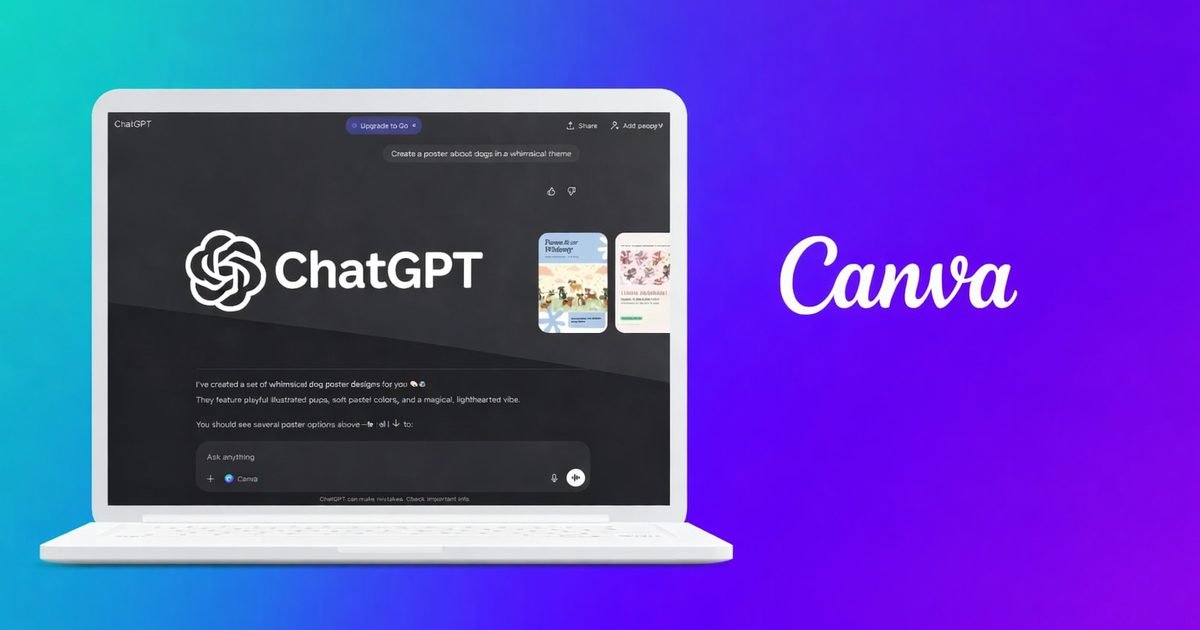
    AI-generated visuals can be produced quickly, but they often look generic and require manual editing before they can be shared. This is why Canva is making it easier for people to turn AI-generated ideas into visuals that truly reflect their brand.

    Starting today, ChatGPT users can create designs that will automatically match their company’s colors, fonts, and logos, thanks to a deeper integration with Canva. Now, when you ask ChatGPT to create something visual, like a pitch deck or a social media post, Canva can make sure it already looks like it belongs to your brand. This means you won’t have to adjust colors, fix fonts, or paste logos afterward.

    This rollout follows a similar launch last week inside Anthropic’s Claude, which recently added interactive app support to make AI chats more dynamic and hands-on.

    How Canva turns AI ideas into on-brand visuals

    At the center of this update is the Canva Brand Kit. A Brand Kit is where you or your team can store your official brand elements, like logos, fonts, and color palettes. Once that is set up, ChatGPT can generate designs that automatically follow those rules. Even if you do not know the design rules, the output would still come out right.

    Canva is also adding tools like the Guided Presentation Builder, which helps you focus on what you want to say first, before turning that content into polished, branded presentation slides. Another feature is Live Design Preview, which lets you see and tweak Canva designs directly inside ChatGPT, instead of jumping back and forth between them.

    All these new features are powered by Canva AI and have already been used to create more than 12 million designs across ChatGPT, Claude, and Microsoft Copilot. The Canva AI connector is available to ChatGPT users starting today through Canva’s AI hub.

    For everyday users, the big takeaway is simple. You can now go from an idea typed into ChatGPT to a ready-to-use design for your brand, without being a designer.

  • Smart glasses that feel wearable all day get a $70 price drop

    Smart glasses that feel wearable all day get a $70 price drop

    Smart glasses are finally moving past the “cool demo, never used” phase. The best versions are the ones that fit into normal life: you put them on, you get hands-free audio, you can grab quick photos or video without pulling out your phone, and you move on. The Oakley Meta HSTN smart AI glasses are $407.15 for a limited time, down from $479.00 for 15% off. That discount isn’t massive, but for a premium wearable in a newer category, it’s enough to make the timing feel right if you’ve been curious.

    What you’re getting

    These are performance-leaning smart glasses built around three practical features: camera, audio, and video. They’re rated for an 8-hour battery, and the camera captures up to 3K HD. The lenses here are a big part of the appeal, too: Clear to Grey Transitions lenses that adapt as lighting changes, so you’re not constantly swapping eyewear when you go from indoors to outdoors.

    In plain terms, this is a “one item, multiple roles” product. Sunglasses (or clear lenses that shift), earbuds without something in your ear, and a quick-capture camera for moments you don’t want to fumble for.

    Why it’s worth it

    The strongest case for smart glasses is convenience. They shine when your hands are busy: walking the dog, running errands, biking casually, traveling, or just being out with friends and wanting a quick clip without making the moment feel like a production. The audio part is also underrated. Open-ear style audio can be great when you want to hear what’s happening around you while still getting music or calls.

    Transitions lenses make this version more “wearable” day to day. It’s easier to justify something like this when it can live on your face for more of the day, not just during workouts.

    The bottom line

    At $407.15, the Oakley Meta HSTN is a strong pickup for someone who wants smart glasses that feel practical, especially with 3K video, an 8-hour battery, and Transitions lenses that make them easier to wear all day. If you love the idea of hands-free capture and open-ear audio, this limited-time discount is a solid nudge. If you know you won’t use the camera, or you prefer traditional sunglasses plus earbuds, you can skip it and keep your setup simple.

  • You might soon see unheard RAM brands appear inside your PC

    You might soon see unheard RAM brands appear inside your PC

    In a rare moment of concern and chaos in the PC industry, popular manufacturers like HP, Dell, Acer, and Asus are reportedly exploring sourcing dynamic random-access memory (DRAM) chips from Chinese suppliers.

    The move comes as a global memory crisis is squeezing supply, sending prices through the roof, and forcing companies to rethink their short-term strategies about procuring DRAM and NAND flash modules (via Nikkei Asia).

    PC makers eye Chinese memory as supply tightens

    Traditionally, all the renowned PC makers we’re talking about have relied on memory giants like Micron, Samsung, and SK Hynix, companies that have handled both quality and scale for OEMs.

    However, as these memory makers prioritize AI data centers and supporting infrastructure for their customers, consumer-grade PC memory is getting much less attention than it deserves, resulting in tighter inventories and higher costs while threatening new product launches.

    HP has already taken the first step by “qualifying” memory products (determining whether they meet the company’s quality standards) from a Chinese supplier, ChangXin Memory Technologies (CXMT), to diversify its supply chain. Interestingly, Dell is also analyzing components from the same suppliers.

    The other two manufacturers, Acer and Asus, have asked their production partners in China to check potential memory suppliers for notebooks and other systems; to me, it sounds like they’re keeping the suppliers as backup options.

    What’s in it for American buyers?

    The most immediate benefit of turning to Chinese buyers is supply diversity and security, which is crucial for brands operating on thin margins (especially in the entry-level and mid-range segments). It’s not about securing cheaper memory chips at scale; it’s about securing them in time to meet product launch deadlines.

    For end users, this could result in stable product availability (fewer “out of stock” lineups) and controlled pricing. Further, wider adoption of Chinese memory could shift the global semiconductor landscape, potentially challenging traditional suppliers’ market share and revenue and freeing up production for consumer-grade devices.

    Does this mean that the RAM stick in your next PC or laptop could be from a Chinese supplier? I don’t think so. Manufacturers would most likely use the Chinese supply chain to meet the global demand, i.e., outside of the United States.

    However, if the traditional memory makers don’t ease supply and the memory crisis worsens over time, you might expect computers sold in America to feature RAM modules from lesser-known names.

  • This limited-time price drop makes Nothing Ear (a) a standout value

    This limited-time price drop makes Nothing Ear (a) a standout value

    The best earbud deals aren’t just cheap, they’re “why is this so fully loaded?” cheap. That’s the vibe here. Nothing Ear (a) is currently $58.99, down from $109.00 for a 46% discount, and it’s marked as a limited-time deal. For anyone who wants modern features like active noise cancelling, long battery life, and the ability to tune sound without paying premium prices, this is the kind of discount that actually makes sense to act on.

    What you’re getting

    These are wireless earbuds with 45dB hybrid noise cancelling, Hi-Res Audio support, and an advanced equaliser so you can shape the sound to your taste instead of being stuck with one preset.

    You also get Dual Connect, which is handy if you switch between devices or want a smoother experience bouncing between a laptop and phone, plus 6 mics for clearer calls and voice pickup. Battery life is rated up to 42.5 hours with the case, which is the difference between charging constantly and charging occasionally.

    Why it’s worth it

    The main selling point is value density. Under $60 for ANC earbuds that also check the boxes for battery, call quality support, and sound tuning is a strong deal in 2026.

    This is also a smart buy if you want a “daily pair” you can toss in a bag and not stress about. They’re priced low enough that they can be a great backup to your nicer headphones, but capable enough that a lot of people will end up using them as their main pair.

    And because this is a limited-time price, it’s the sort of deal that can vanish quickly. If you’ve been thinking about upgrading old earbuds that cut out, die fast, or make calls sound rough, this is a straightforward fix at a good price.

    The bottom line

    At $58.99, Nothing Ear (a) is a strong value if you want feature-rich wireless earbuds with hybrid noise cancelling, long battery life, sound customization, and useful multi-device support. If you’re chasing the absolute best noise cancelling or audiophile-level tuning, you’ll pay more. But for an everyday set that covers almost everything most people want, this limited-time discount is excellent.

  • Best fiber internet deals right now

    Best fiber internet deals right now

    While fiber internet isn’t exactly new, it remains the clear benchmark for fast home broadband. Cable providers lean on asymmetrical speeds and 5G home internet continues to wrestle with congestion and variability, but fiber delivers what power users actually care about: consistent performance, low latency, and truly symmetrical upload and download speeds.

    What has changed is how fiber is priced. The best fiber internet deals hinge less on flashy introductory rates and more on the total cost of ownership: factoring in mobile bundles, equipment fees (or the lack of them), price guarantees, and cash-back incentives. Get those details right, and fiber is surprisingly affordable.

    Below are the best fiber internet deals available right now, ranked by real-world value rather than marketing promises.

    Quick picks: Best fiber internet deals by category

    T-Mobile Fiber: Best entry-level value

    Why it stands out: T-Mobile Fiber is becoming one of the most compelling budget-friendly fiber options in markets where it’s available. The pricing is aggressive, the terms are refreshingly simple, and you don’t need a phone line to access some of the best deals, though wireless customers still get extra savings.

    Current promo: Entry plans start at $55/month with Fiber AutoPay, with up to $200 back via virtual prepaid card1 on all plans (taxes and fees extra). In select cases, no T-Mobile voice line is required to qualify.

    Available plans:

    • Fiber 500: $55/month (500 Mbps symmetrical)
    • Fiber 1 Gig: $65/month (1,000 Mbps symmetrical)
    • Fiber 2 Gig: $95/month (2,000 Mbps symmetrical)

    Perks: Unlimited data, no contracts, complimentary Wi‑Fi 6 router, installation, mesh extender if needed, and a five-year price guarantee2. T-Mobile will also cover up to $750 in early termination fees3 if you’re switching from another provider.

    Best for: Budget-conscious households in covered areas that want fast, symmetrical speeds with strong cash-back incentives and straightforward terms.

    Verizon Fios: Best for long-term price stability

    Lead deal: 300 Mbps for $20/month with AutoPay and an eligible Verizon mobile plan

    Verizon Fios continues to be the safest bet if you value predictability over promotional hype. Many plans come with multi-year price locks, some stretching close to 2030, and Verizon avoids the hidden equipment fees with other ISPs.

    The catch, however, is bundling. Without a qualifying Verizon Wireless plan, the monthly cost rises noticeably. With it, Fios is one of the most stable fiber options on the market.

    Best for: Remote workers, families, and anyone who wants the same bill month after month without renegotiation headaches.

    AT&T Fiber: Best for nationwide availability & mobile bundles

    Lead deal: Up to $20 off fiber plans when bundled with AT&T Unlimited Wireless (effective entry pricing around $45/month)

    AT&T Fiber shines thanks to its sheer footprint, particularly across the Sun Belt and Midwest. Bundling with wireless unlocks consistent discounts, and higher-speed tiers (especially 2 Gig and above) often include $200 reward cards.

    AT&T will also cover early termination fees from your previous provider, making it easier to switch without penalty.

    Best for: Existing AT&T wireless customers and households in regions where Verizon or Google Fiber aren’t available.

    Google Fiber: Best for simplicity and performance

    Lead deal: 1 Gig for $70/month, no contracts

    Google Fiber remains the simplest fiber offering available. There are no promo expirations, no data caps, and increasingly, Wi‑Fi 7 hardware is included. Its multi-gig plans, including 3 Gig and 8 Gig tiers, still set the bar for households that genuinely need extreme throughput.

    Availability remains the biggest drawback. If you can get Google Fiber, it’s an easy recommendation. If you can’t, there’s no workaround.

    Best for: Power users, creators, and large households that value transparency and top-tier performance over bargain pricing.

    Frontier Fiber: Best for aggressive new-customer promos

    Lead deal: Plans starting around $30/month, with select tiers offering several months of complimentary service

    Frontier continues to push hard into former Verizon territories, and its introductory offers reflect that. The upfront cost is often the lowest you’ll pay for fiber in year one, with speeds now reaching up to 7 Gig in select markets.

    Just be aware that prices typically rise after the promotional period ends.

    Best for: Deal hunters and renters who prioritize low upfront costs and don’t mind revisiting their options in a year or two.

    Optimum Fiber: Best regional budget option

    Lead deal: 200–500 Mbps plans starting as low as $25/month

    In select Northeast and Midwest markets, Optimum Fiber still undercuts competitors with bare-bones pricing and rotating perks, such as free HBO Max for a year or switcher incentives.

    Consistency varies by region, and not every Optimum fiber plan delivers symmetrical speeds, so reading the fine print matters here more than most.

    Best for: Households chasing the lowest possible monthly bill in areas where Optimum Fiber is well-established.

    Buyer’s guide: What to look for in fiber internet in 2026

    Symmetrical speeds matter more than ever. Upload bandwidth is crucial for video calls, cloud backups, livestreaming, and competitive gaming — all areas where fiber still dominates cable.

    Do the bundle math. A discounted fiber plan only makes sense if the bundled mobile service still fits your needs. Always calculate the combined monthly cost.

    Watch for hidden costs. Fiber is better than cable, but not perfect. Installation fees, AutoPay requirements, and expiring rewards can all affect long-term value.

    Our recommendation

    If Google Fiber is available at your address, it’s still the simplest, least stressful option. For households already tied to a major wireless carrier, Verizon Fios or AT&T Fiber usually deliver the best long-term value. And if you’re in a newly expanded market, T-Mobile Fiber deserves serious attention — it’s one of the least expensive ways to get true fiber speeds right now, with fewer strings attached than most competitors.

    Fiber remains the smartest option for your home internet in 2026, as long as you choose a deal that holds up after the promo period ends.

    1. Via virtual prepaid Mastercard® when you sign up online and activate a qualifying new Home Internet line. Allow 14 weeks from rebate submission.
    2. Exclusions like taxes & fees apply.
    3. Up to $750 for early termination fees paid via virtual prepaid card to you. Requires 60 days service before validation.
  • Hyundai has no Kona EV plans for 2026, but it isn’t retiring for good

    Hyundai has no Kona EV plans for 2026, but it isn’t retiring for good

    In a rather surprising development, Hyundai is skipping the 2026 Kona Electric in the United States. The Korean automaker has paused the production of the current-generation Kona EV as dealerships clear out existing stock.

    In a statement to Car and Driver, a Hyundai representative said there’s “adequate stock of the 2025 model year” Kona EV to meet demand at this time.

    What’s behind Hyundai’s Kona EV hiatus

    The company has also confirmed that the pause is just a breather (at least for now), as the assembly is “scheduled to resume this June as a 2027 model year.”

    But does Hyundai really have enough Kona EVs to meet customer demand? The outlet’s shopping tool can only fetch details on 25 new Kona EVs available nationwide, which contradicts that claim. So what is going on behind optimistic media statements?

    The declining EV demand seems to be the culprit here. Sales of the Kona Electric seem to have plummeted by 41% from 2024 to 2025, partly due to the elimination of the $ 7,500 federal EV tax credit by the U.S. government and partly due to consumers’ transition toward hybrids.

    It isn’t a farewell (yet)

    Other factors, such as import tariffs (which prevent the automaker from pricing the EV aggressively), internal competition with Hyundai’s Ioniq 5, and outdated specifications (especially the range and charging time), must have contributed to the decision to pause current production.

    The silver lining is that a camouflaged version of the Hyundai Kona EV has been spotted in South Korea (via Electrek), indicating that the nameplate is undergoing a substantial redesign (which seems like the absolute need of the hour).

    Hence, the current pause could provide the time needed to prepare for a revamped 2027 model with upgraded exteriors, interiors, and powertrains.

  • Samsung Galaxy S26 might skip a sorely-missing charging perk, after all

    Samsung Galaxy S26 might skip a sorely-missing charging perk, after all

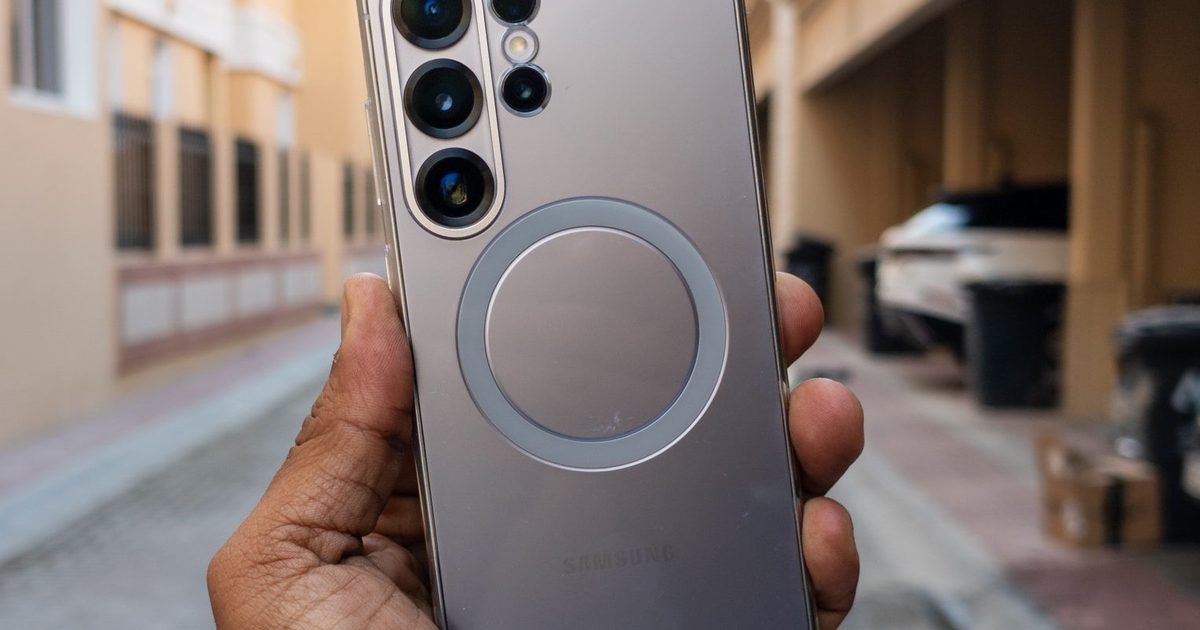
    A couple of days ago, a Dutch publication shared pictures of the first-party transparent cases for the Galaxy S26. Some of them had a magnetic ring, while the others didn’t, leading to speculation about the absence of native Qi2 wireless charging (along with the built-in magnets).

    All the smartphones in Samsung’s upcoming series are believed to be light on hardware upgrades, and among the few silver linings for buyers was magnetic wireless charging.

    I’ve confirmed from independent sources with 100% accuracy that the Galaxy S26 Ultra ultimately does not include built-in magnets inside the device. Magnetic functionality still relies on magnetic cases.

    — Ice Universe (@UniverseIce) February 5, 2026

    Tipster pours cold water on built-in magnets

    Now, renowned tipster Ice Universe (@UniverseIce) has basically confirmed the absence of “built-in magnetics inside the device.”

    The tipster seems to have confirmed from his independent sources, with no less than “100% accuracy,” that the Galaxy S26 Ultra doesn’t include a magnetic charging profile that Qi2-compliant devices have.

    This implies that users who want to use Qi2 accessories, such as wireless charging pucks, powerbanks, or wallets, will still rely on magnetic protective cases, as the company did with the Galaxy S25 series.

    Why is this disappointing, though? iPhones have had MagSafe charging for quite a while, with built-in magnets in their rear profile holding the wireless accessory in place for effective, efficient charging.

    Apple and Google surge ahead with magnetic ecosystems

    Most recently, Google also adopted the technology by integrating magnets into the chassis of its Pixel 10 series. The company calls it Pixelsnap charging, but the technology serves the same purpose: aligning the wireless charging coils with magnets.

    You see? Both the mainstream smartphone manufacturers in the United States, Apple and Google, already provide the feature on their handsets. And it’s not like Samsung doesn’t have the resources or lacks the hardware to include the technology on its smartphones.

    Even though the tipster doesn’t mention the Galaxy S26 or Galaxy S26 Plus, we’ve already seen a non-Ultra Galaxy S26 in a non-magnetic case, which eliminates any possibility of native Qi2 charging on the lineup.

    With or without Qi2 wireless charging, the Galaxy S26 series is expected to debut at the Galaxy Unpacked event on February 25, 2026, alongside the Galaxy Buds 4 and Buds 4 Pro.

  • This new WordPress plugin uses the Wayback Machine to help you see fewer dead links

    This new WordPress plugin uses the Wayback Machine to help you see fewer dead links

    The Internet Archive and Automattic have teamed up to tackle one of the web’s biggest annoyances: “link rot.” The two companies have released a new WordPress plugin called Link Fixer that automatically redirects broken links to archived versions so readers never hit a dead page.

    Link rot happens when URLs in older posts stop working because the linked pages are deleted, moved, or otherwise dissapear over time. Research shows that nearly 40% of links from just over a decade ago no longer lead anywhere, leaving old posts full of dead ends. To address this, Link Fixer scans WordPress posts for outbound links and checks The Internet Archive’s Wayback Machine to see if archived versions exist.

    If a linked page isn’t already archived, the plugin automatically creates a snapshot. Later, if the original page goes offline, visitors are redirected to the archived version so they can still access the content. This ensures that old posts and references remain useful even years after they were first published.

    Keeping links alive and accessible with the Wayback Machine

    According to TechCrunch, Link Fixer also protects the site’s own content by creating backups in the Wayback Machine. It scans links regularly and, if a previously broken link comes back online, the plugin automatically switches visitors back to the live page. WordPress users can customize the scanning frequency and other settings to fit their site’s needs.

    Automattic says the goal is to make the web more reliable and reduce the number of dead links that disrupt research, journalism, and everyday browsing. By connecting WordPress sites to the Wayback Machine, Link Fixer helps preserve content and keep it accessible. The plugin is free and open source, and WordPress users can install it right away to start protecting their links and keeping their sites more dependable for readers.