Category: Uncategorized

  • Truke TruClips OWS with Spatial Sound Launched in India

    Truke TruClips OWS with Spatial Sound Launched in India

    Add Techlomedia as a preferred source on Google. Preferred Source

    Truke has launched a new pair of open-ear clip-on earbuds, Truke TruClips, in India. These earbuds let you listen to music, take calls, or play games while still hearing what is happening around you. So, it could be a good choice for people who commute, work out, or just want a safer way to listen to audio on the go.

    The earbuds have a soft silicone clip that keeps them in place during workouts, travel, or long listening sessions. The charging case has a leather-like finish, which feels premium compared to most budget options.

    TruClips use 12mm titanium drivers with a 24-bit spatial sound engine. This setup delivers clear and detailed sound, with a sense of space that makes music, videos, and games feel more immersive. Calls are handled by multiple microphones with noise reduction, keeping voices clear even in noisy environments. There is also a low-latency mode of 40ms, which helps when gaming or watching videos, so sound stays in sync.

    Truke says the earbuds can deliver up to 55 hours of total playback with the charging case. They also support fast charging and USB-C, so you do not have to wait long to get back to using them. The earbuds have Bluetooth connectivity, touch controls, and an IPX5 rating for protection against sweat or light rain.

    The TruClips are available in Onyx Blue and Mint Mist. They come with a one-year warranty and are priced at Rs. 1,999. You can buy them online from Truke’s official website, Amazon, or Flipkart.

    Follow Techlomedia on Google News to stay updated. Follow on Google NewsFollow on Google News

    Affiliate Disclosure:

    This article may contain affiliate links. We may earn a commission on purchases made through these links at no extra cost to you.

  • Samsung’s Galaxy Tab S11 Ultra keyboard is so pricey, even Apple looks affordable

    Samsung’s Galaxy Tab S11 Ultra keyboard is so pricey, even Apple looks affordable

    The Galaxy Tab S11 Ultra’s new Pro Keyboard is, by most accounts, exactly what heavy tablet users have been asking for. Whether they were asking for it at $338 is a different conversation entirely.

    Revealed at MWC 2026 and now quietly available on Samsung’s Korean store, the Pro Keyboard snaps onto the Galaxy Tab S11 Ultra’s 14.6-inch AMOLED display and does a convincing impression of a laptop.

    A tablet that wants to be a laptop

    The hinge lets you prop the screen at a comfortable angle, the whole thing folds shut for carrying, and power transfers through metal pins on the back of the tablet — so there’s no separate charging cable to lose within three days of owning it.

    The Pro Keyboard steps up significantly from the older Book Cover Keyboard, which notably didn’t have a trackpad at all. This one does, and it’s 14.6% larger than the trackpad on the Tab S10 Ultra’s keyboard.

    The surface is aluminum, there’s a dedicated DeX button for flipping into Samsung’s desktop mode — think freely movable windows, very much like Windows — and an AI shortcut key for whichever chatbot you’ve been arguing with lately. The F1, F2, and F3 keys can be mapped to launch apps of your choice, which is a genuinely useful touch.

    Pricing, however, is a different story

    The keyboard adds 636g to the setup, pushing the combined weight to 1.33kg — heavier than plenty of 14-inch laptops, which rather undermines the whole exercise.

    The price: ₩495,000. That’s what Samsung Korea is currently listing it for, which works out to around $338. To put that in perspective — Apple, a company not exactly known for leaving money on the table — charges $299 for the Magic Keyboard that goes with the 11-inch iPad Pro and $349 for the 13-inch iPad Pro.

    Samsung has looked at that number, the one people already complain about, and decided to go $39 further. No U.S. release date yet, and no pricing confirmation for international markets, which at this point feels less like an announcement to look forward to and more like one to prepare for.

  • realme C83 5G with 144Hz Display and 7000mAh Battery Launched

    realme C83 5G with 144Hz Display and 7000mAh Battery Launched

    Add Techlomedia as a preferred source on Google. Preferred Source

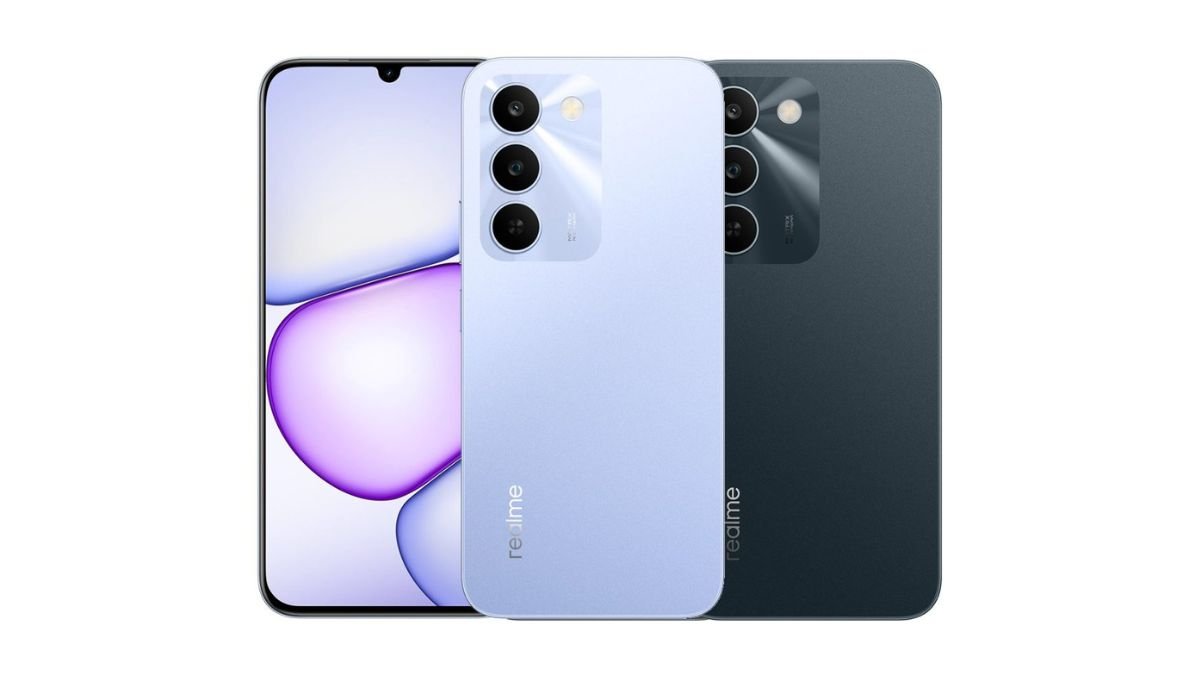
    realme has officially launched the realme C83 5G in India. This is an affordable device, but comes with a solid design.

    The phone comes with a 6.8-inch HD+ LCD display that offers a smooth 144Hz refresh rate and up to 180Hz touch sampling rate. The display panel has up to 900nits peak brightness

    realme C83 5G is powered by an Octa Core MediaTek Dimensity 6300 6nm processor with Arm Mali-G57 MC2 GPU. It comes with 4GB or 6GB LPDDR4X RAM and up to 128GB eMMC 5.1 storage. The storage is further expandable up to 1TB via the microSD card slot. The eMMC 5.1 storage can be a disappointment because of its slow read and write.

    The device runs Android 17 with realme UI 7.0 out of the box.

    It has a 13 megapixels rear camera and a 5 megapixels font camera. The camera software offers an AI Outdoor Mode. It is an intelligent feature designed to optimise the smartphone experience in outdoor environments.

    realme C83 has a side-mounted fingerprint sensor, it also has single bottom-firing speakers and claims 300% Ultra Volume.

    The device comes with a solid design. It has an IP64 rating to offer dust and splash resistance. MIL-STD 810H certification gives it Military-grade durability. The C83 5G is available in two colors. Blooming Purple offers a soft blend of blue and purple, while Sprouting Green draws inspiration from fresh greenery

    Connectivity options are 5G SA / NSA, Dual 4G VoLTE, Wi-Fi 802.11 ac (2.4GHz + 5GHz), Bluetooth 5.3, GPS, GLONASS, Galileo, QZSS, and USB Type-C. It packs a 7000mAh battery with 15W fast charging.

    Pricing and availability

    • 4GB + 64GB: ₹13,499
    • 4GB + 128GB: ₹14,499
    • 6GB + 128GB: ₹17,499

    The realme C83 5G will go on sale from 7th March 2026 on Flipkart, realme.com, and major retail stores. All variants are available with six-month no-cost EMIs.

    Follow Techlomedia on Google News to stay updated. Follow on Google NewsFollow on Google News

    Affiliate Disclosure:

    This article may contain affiliate links. We may earn a commission on purchases made through these links at no extra cost to you.

  • AI code wreaked havoc with Amazon outage, and now the company is making tight rules

    AI code wreaked havoc with Amazon outage, and now the company is making tight rules

    Amazon has been aggressively pushing its engineers to adopt AI tools. At least 80% of its developers are expected to use AI for coding tasks at least once a week. However, recent events suggest that this fast-tracked rollout may have come at a cost.

    As reported by the Financial Times, Amazon Web Services suffered a 13-hour outage in December after engineers let its Kiro AI coding tool update code without requiring any oversight. Kiro decided the best solution was to “delete and recreate the environment.” That’s one way to fix a problem, I suppose.

    That wasn’t a one-off. A follow-up FT report revealed that Amazon’s e-commerce business has been dealing with a “trend of incidents” since Q3 2025, prompting a company-wide deep dive meeting led by SVP Dave Treadwell. 

    Some employees were already skeptical about how useful these AI tools actually are for day-to-day work, and these incidents haven’t exactly helped build confidence.

    Just how bad did it get?

    Business Insider obtained internal documents that paint a clearer picture of what actually happened. On March 2, 2026, Amazon’s AI coding tools contributed to an incident that caused 120,000 lost orders and 1.6 million website errors. 

    Three days later, on March 5, 2026, a separate outage caused a 99% drop in orders across North American marketplaces, resulting in 6.3 million lost orders. That’s a number that will surely show on the bottom line of a financial sheet, even for a company as big as Amazon. 

    What is Amazon doing to ensure it never happens again?

    Amazon is now rolling out a 90-day safety reset targeting around 335 critical systems. Engineers must get two people to review changes before deployment, use a formal documentation and approval process, and follow stricter automated checks.

    The company maintains that these were user errors, not AI errors, and that the same mistakes could happen with any developer tool. That’s a fair point, but it doesn’t change the outcome. 

    When artificial intelligence tools are handed broad permissions without adequate oversight, things break, and the scale of AI-generated code only amplifies the damage.

  • Slay the Spire 2 Becomes a Massive Hit on Steam, Crosses 430K Peak Players Within Hours

    Slay the Spire 2 Becomes a Massive Hit on Steam, Crosses 430K Peak Players Within Hours

    Add Techlomedia as a preferred source on Google. Preferred Source

    Slay the Spire 2 is already proving to be one of the biggest PC game launches of the year. The game has quickly grabbed the attention of gamers across the world, and the numbers clearly show how popular it has become within a very short time.

    According to current data from Techlomedia Gaming, Slay the Spire 2 is seeing more than 400,000 concurrent players at the time of writing. Just a few hours earlier, the game reached a peak of 430,456 players, which is an incredible number for a roguelike deck-building game.

    The popularity is not limited to players alone. The game is also attracting massive attention on streaming platforms. On Twitch, Slay the Spire 2 has already crossed 117,894 peak viewers. This shows that a large number of people are either playing the game or watching others play it.

    For those who are not familiar with the series, Slay the Spire 2 is the sequel to the highly popular Slay the Spire. The game mixes card-based strategy with roguelike gameplay where players build decks, fight enemies, and try to climb a mysterious tower called the Spire. Each run is different, which makes the game highly replayable.

    The original game built a huge fan base over the years. It is often considered one of the most influential roguelike deck-building games ever made. Because of that reputation, the sequel was already highly anticipated by the gaming community.

    However, the early numbers show that the sequel might be even bigger than expected. Crossing 400,000 concurrent players so quickly is a huge milestone, especially for a strategy card game. Most games in this genre usually attract a smaller but dedicated audience.

    Another reason behind the surge is the fact that the game has launched in Early Access. This means players can already experience the game while developers continue to add new features, characters, and improvements. Early Access titles often grow quickly because the community actively participates in shaping the game.

    The massive player count and strong Twitch viewership clearly show that Slay the Spire 2 has struck the right chord with gamers. If the momentum continues, the game could become one of the biggest indie successes of the year.

    Follow Techlomedia on Google News to stay updated. Follow on Google NewsFollow on Google News

    Affiliate Disclosure:

    This article may contain affiliate links. We may earn a commission on purchases made through these links at no extra cost to you.

  • Samsung experiments with mammoth phone batteries, but results fall short

    Samsung experiments with mammoth phone batteries, but results fall short

    Internal Samsung SDI documents marked “Strictly Confidential” have leaked, and whoever authorised that distribution list is probably having a rough morning.

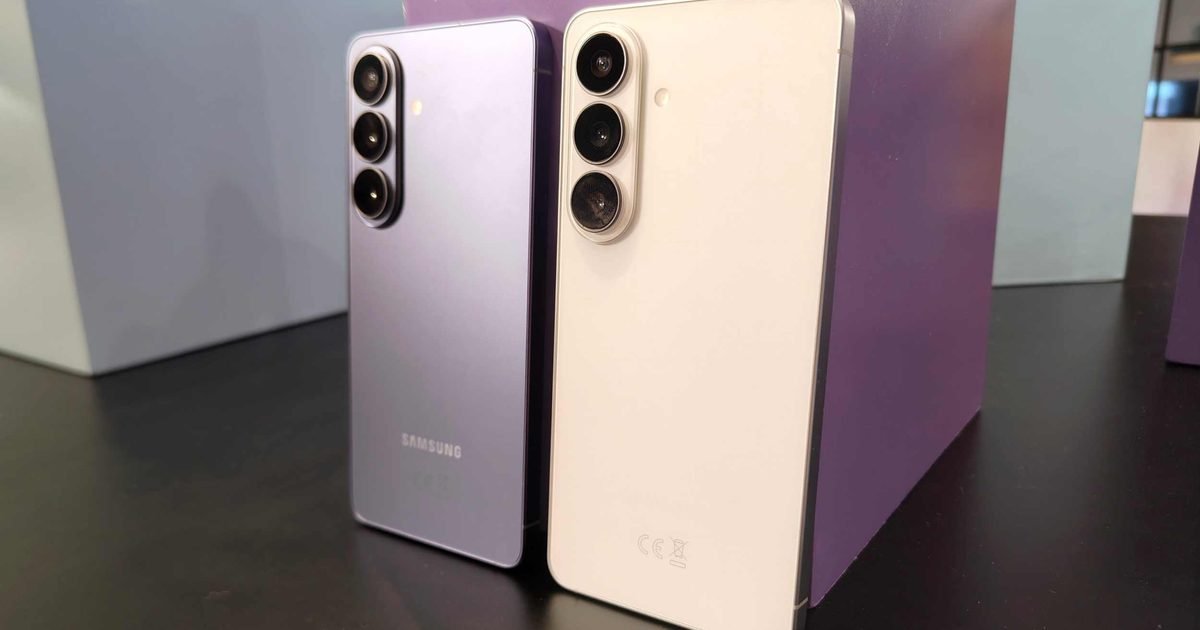
    The files show Samsung testing smartphone batteries of 12,000 mAh and 18,000 mAh — while the Galaxy S26 Ultra, which went on sale recently, ships with 5,000 mAh.

    Samsung SDI is testing 12K, 18K mAh Si/C cells. The 20K failed at 960 cycles. Race is on. 👀

    Full PDF available, Samsung tracking system didn’t work much. Anyways it’s not free. pic.twitter.com/D8NDy4weNw

    — Schrödinger (@phonefuturist) March 9, 2026

    Big numbers, messier reality

    Two development branches show up in the documents. One targets 12,000 mAh, the other 18,000 mAh — nearly four times what the S26 Ultra ships with. Both run on silicon-carbon battery tech, which is what’s been allowing Chinese manufacturers to dramatically increase capacity without turning their phones into bricks.

    On paper, either figure would make Samsung the runaway leader in battery capacity overnight.

    Neither is going smoothly. The 12,000 mAh version is already coming out too thick in several prototypes, with swelling being monitored. The 18,000 mAh version runs hot in one of its cells and the charging management software isn’t finished.

    And looming over both is the uncomfortable fact that Samsung’s previous 20,000 mAh prototype gave up at 960 charge cycles — well short of the 1,500-cycle target. A phone that degrades badly before year three is a hard sell at any price.

    Late to a party Samsung once hosted

    No product has been announced. No timeline exists. Right now these are lab experiments, and fairly troubled ones at that.

    The irony is that Samsung has done big batteries before. The Galaxy M51 launched in India in 2020 for around $300 with a 7,000 mAh cell that genuinely lasted two days. Then the company just… stopped caring. The years kept passing, the flagships kept shipping with the same number, and nobody at Samsung seemed particularly bothered.

    Over in the US, OnePlus launched the 15R with a 7,400 mAh battery for $699 — and that’s the largest you’ll find in any mainstream phone stateside right now. India and China moved even faster; phones there crossed 10,000 mAh while Samsung was apparently busy elsewhere.

  • Holi celebrated with fervour in Telangana

    Holi celebrated with fervour in Telangana


    People celebrating Holi in Telangana with colourful powders and festive spirit.

    Hyderabad: Holi, the festival of colours, was celebrated in Telangana with fervour on Wednesday, March 4, as people smeared ‘gulal’ on each others’ faces and distributed sweets to friends and relatives.

    Children and youth revelled in Holi celebrations organised at apartments and other residential complexes in Hyderabad and other towns in the state.

    The festival was celebrated with great enthusiasm at the Indira Park here by the Indira Park Walkers Association.

    Former Haryana Governor Bandaru Dattatreya, BRS MLA Ch Malla Reddy and several other political personalities too participated in Holi celebrations.

    “There is an inherent message in our festivals. Holi symbolises friendship and love. The festival strengthens unity in society. There are no differences of caste or discrimination in the festivals. All join together in celebration,” Dattatreya told PTI Videos.

    **EDS: RPT, ADDS DETAILS IN CAPTION** Hyderabad: A woman applies colours to Nawab Raunaq Yar Khan during Holi celebrations at his residence, in Hyderabad, Tuesday, March 3, 2026. Nawab Raunaq Yar Khan serves as the present custodian and 9th Nizam of the historic Asaf Jahi Dynasty, descending from Mahboob Ali Khan, the 6th Nizam renowned for secular governance. (PTI Photo)(PTI03_03_2026_RPT256B)

    North Indian communities in Hyderabad organised ‘Holika Dahan’ on the occasion.

    Residents of some localities here celebrated Holi on Tuesday.

    Governor Jishnu Dev Varma, Chief Minister A Revanth Reddy, state BJP president N Ramchander Rao, and other leaders conveyed their greetings on the occasion of Holi.


    Get the latest updates in Hyderabad City News, Technology, Entertainment, Sports, Politics and Top Stories on WhatsApp & Telegram by subscribing to our channels. You can also download our app for Android and iOS.

  • Resident Evil 2 Remake Is Getting an Arcade Version

    Resident Evil 2 Remake Is Getting an Arcade Version

    Add Techlomedia as a preferred source on Google. Preferred Source

    Capcom’s Resident Evil 2 Remake is already considered one of the best survival horror remakes ever made. Now the game is getting a new life in a very different form. Bandai Namco Experience is working on a dedicated arcade version of the game that will begin location testing before a wider rollout later in 2026.

    This means players will soon be able to fight zombies in Raccoon City, not on a console or PC, but inside a physical arcade cabinet designed to make the horror feel more intense.

    The new arcade version is based on the 2019 Resident Evil 2 Remake. Instead of traditional exploration gameplay, it will work as an on-rails shooter. In this style, the game automatically moves the player through locations while they focus on aiming and shooting enemies using a light gun.

    Players will revisit familiar moments from the game’s story, including Leon Kennedy and Claire Redfield fighting through the streets of Raccoon City and entering the police department. The narrative is expected to be divided into several episodes, similar to classic arcade shooters.

    This approach makes sense for arcades. Survival horror games normally rely on slow exploration and puzzle-solving. But arcade games need faster and more direct action. Turning the game into a light gun shooter allows players to jump in quickly and experience the most intense moments of the story.

    The most interesting part of this project is the physical arcade cabinet itself. Bandai Namco is building the machine with several immersive features that try to simulate the horror experience beyond just visuals and sound.

    The cabinet includes a gun controller with recoil feedback to simulate weapon firing, vibrating floors that react to explosions or monster attacks, along with air blasts and mist effects that trigger during certain scenes. These features are designed to make players “feel the fear with their entire body.”

    This kind of physical interaction is something home consoles usually cannot replicate. Arcades still have an advantage when it comes to experimental hardware and immersive setups.

    From an industry perspective, this project is quite interesting. The arcade industry has been shrinking in many regions, but immersive cabinets are still popular in Japan and certain entertainment venues in Europe. Developers now focus on experiences that cannot easily be replicated at home.

    It is also a smart way for Capcom to reuse the assets and environments created for the 2019 remake. Instead of building a new game from scratch, they can repurpose those assets into a completely different gameplay format.

    Follow Techlomedia on Google News to stay updated. Follow on Google NewsFollow on Google News

    Affiliate Disclosure:

    This article may contain affiliate links. We may earn a commission on purchases made through these links at no extra cost to you.

  • Samsung’s new 240Hz QD-OLED gaming monitor hits the US for just $599

    Samsung’s new 240Hz QD-OLED gaming monitor hits the US for just $599

    Samsung has launched a new gaming monitor in the US that aims to bring QD-OLED technology at an accessible price. The Odyssey OLED G61SH is now available for purchase in the US for $599.99. It is a more affordable variant of another monitor while still offering a similar core experience.

    What does the Odyssey OLED G6 offer for $599

    The Odyssey OLED G61SH sports a 27-inch QD-OLED panel that has a 2560 x 1440 resolution for sharp visuals. It also offers a 240Hz refresh rate, making it perfect for competitive gamers who want smoother motion in fast-paced titles. Just like other OLED monitors, the display here benefits from deep blacks, high contrast, and vibrant colors.

    But the QD-OLED technology further improves color volume and brightness levels compared to traditional OLED panels. Another notable addition Samsung made to the Odyssey OLED G6 is the Pantone validation, which means accurate color reproduction that is handy for creative workflows and gaming.

    To achieve the lower price tag, the brand made a few adjustments compared with earlier Odyssey OLED monitors. Despite having a QD-OLED panel, it only offers a peak brightness of just 400 nits, which is much lower than high-end OLED monitors that cross the 1,000 nits. You also miss out on the heat pipe for cooling, a USB-C or USB hub, and a cheaper plastic construction over the metal body on more premium options.

    Aside from this, other key features include OLED Care features, a single HDMI 2.1 port, a DisplayPort 1.4, a 3.5mm audio jack, 0.03ms response time, HDR10 and HDR10+ support, and an anti-glare coating. It is currently available for purchase for $599 via the brand’s official website and Amazon right now.

  • OpenAI Launches Codex Security, an AI Agent That Can Find and Fix Code Vulnerabilities

    OpenAI Launches Codex Security, an AI Agent That Can Find and Fix Code Vulnerabilities

    Add Techlomedia as a preferred source on Google. Preferred Source

    OpenAI has introduced a new security-focused AI tool called Codex Security. The company has basically rebranded and upgraded its earlier security agent called Aardvark. The new system is now available in research preview for ChatGPT Pro, Team, Enterprise, and Edu users.

    Codex Security is designed to help developers automatically detect and fix vulnerabilities inside software projects. Instead of simply flagging potential issues like traditional scanners, the AI agent analyzes the entire codebase, identifies security risks, and suggests specific fixes.

    The tool is currently available through the Codex interface, and OpenAI is offering free usage for early testers until next month.

    OpenAI first introduced this system last year under the name Aardvark. It was tested in private beta with a small group of developers and security teams. Developers could give the AI agent access to their codebase, and it would continuously analyze the project to find vulnerabilities. It could also recommend changes that could fix those security problems.

    After months of testing and improvements, OpenAI has now evolved the project into Codex Security. The new version focuses on improving accuracy, reducing false alerts, and helping teams focus on real security issues.

    This is important because many existing security tools generate a large number of warnings. Developers often spend a lot of time checking issues that are not actually serious.

    OpenAI says Codex Security is trying to solve two growing problems in modern software development.

    First, AI tools are now generating huge amounts of code. Developers using AI assistants can create thousands of lines of code very quickly. While this speeds up development, it also increases the chances of introducing security flaws.

    Second, traditional security scanners often produce too many warnings. Many of these alerts are either false positives or low-impact issues. Security teams then spend hours reviewing them manually.

    Codex Security attempts to solve this using what OpenAI calls agentic reasoning combined with automated validation. OpenAI says the tool has improved significantly during testing. According to the company, repeated scans of the same code repository reduced unnecessary alerts by about 84 percent compared to the early version of the system. The company also claims the rate of over reported severity dropped by more than 90 percent, while overall false positives across repositories fell by more than 50 percent.

    These improvements are important because one of the biggest frustrations for security teams is the amount of noise generated by automated scanners. Tools like Codex Security represent a new category of AI powered security assistants. Instead of just analyzing code and reporting problems, these systems act more like autonomous security researchers.

    They can review large codebases, understand how different parts interact, and propose targeted fixes. For large companies managing millions of lines of code, this kind of automation could become extremely valuable. Security reviews are one of the slowest parts of the development process, especially when teams are releasing updates frequently.

    From an industry perspective, Codex Security shows how AI is slowly moving deeper into the DevSecOps pipeline. Earlier AI tools mainly focused on writing code. Now the next phase is reviewing, debugging, and securing that code automatically.

    However, there is also an interesting paradox here. AI coding tools are helping developers write more code faster, but they are also increasing the risk of hidden vulnerabilities. In some ways, AI is creating a new security problem and then offering another AI tool to solve it.

    That is why systems like Codex Security will need to prove that they are reliable enough for real-world enterprise use. If the tool performs well, OpenAI could eventually integrate it more deeply into development workflows. It could appear inside IDEs, CI/CD pipelines, or even Git repositories to automatically review code before it gets merged.

    There is also a strong chance that other AI companies will build similar tools.

    Follow Techlomedia on Google News to stay updated. Follow on Google NewsFollow on Google News

    Affiliate Disclosure:

    This article may contain affiliate links. We may earn a commission on purchases made through these links at no extra cost to you.