Category: Uncategorized

  • You can finally get your hands on ASUS’ NUC 16 Pro mini PC, but it’s a mid-tier variant

    You can finally get your hands on ASUS’ NUC 16 Pro mini PC, but it’s a mid-tier variant

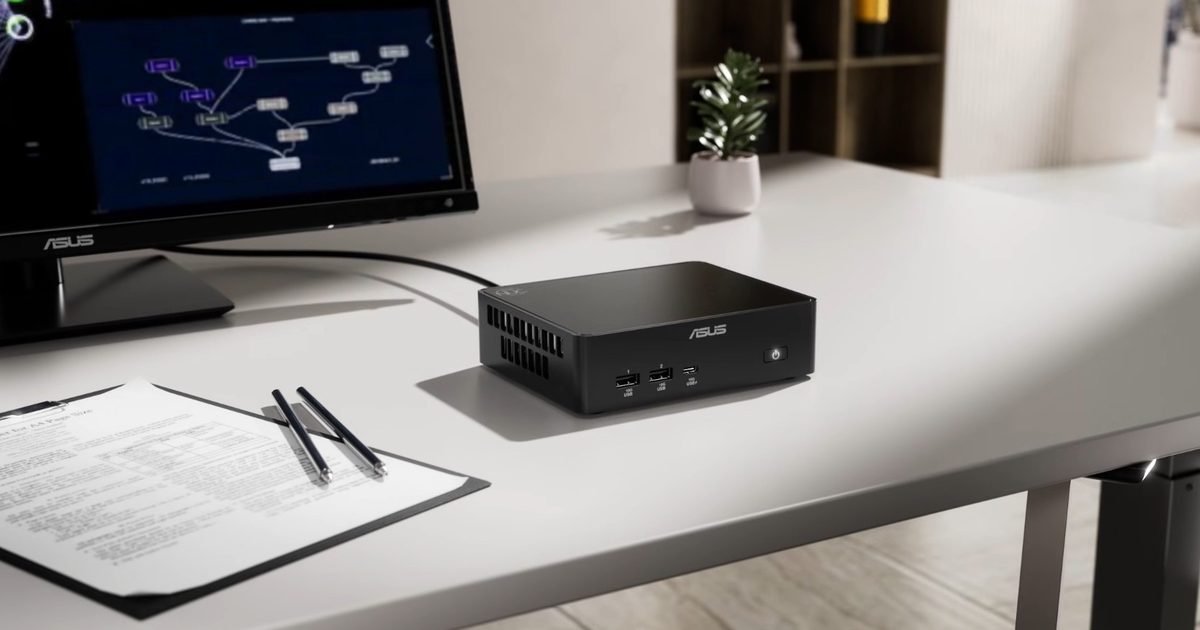
    After being unveiled earlier this year, ASUS’ NUC 16 Pro mini PC is finally hitting the shelves. One of the mid-tier configurations of the tiny system is now listed online, and it is currently available for purchase. The variant packs Intel’s Panther Lake processor, bringing a significant upgrade over the previous NUC systems.

    Serious hardware inside a tiny box

    The mini PC first made its debut at CES 2026, with powerful specs under the hood. But the model currently listed features Intel’s Core Ultra 7 365H processor. You get support for up to 128GB of DDR5 RAM across two SO-DIMM slots, which is unusually high for a system this small. Storage is also expandable, with two M.2 SSD slots allowing users to install up to 16TB of total storage.

    One slot supports PCIe Gen 5 x4 SSD, while the other uses PCIe Gen 4 4x. This chip also uses Intel Graphics Xe3 integrated graphics. Higher-end configurations featuring Intel Core Ultra X-series processors are paired with Intel Arc B390 integrated graphics. Despite the tiny form factor, the ASUS NUC 16 Pro mini PC is well-equipped in terms of connectivity.

    It includes two Thunderbolt 4 ports, dual 2.5Gb Ethernet ports, WiFi 7, Bluetooth 6, and multiple display outputs, making the compact PC suitable for productivity setups or space-saving workstation builds. Mini PCs have grown rapidly in popularity over the last couple of years, offering desktop-class performance in a tiny chassis that can fit almost anywhere. As of right now, the ASUS NUC 16 Pro is listed on Newegg for $999. Keep in mind that this is a barebone mini PC, so memory and storage are not included.

  • Dungeon Stalkers to Shut Down on June 9, Less Than a Year After Early Access Launch

    Dungeon Stalkers to Shut Down on June 9, Less Than a Year After Early Access Launch

    Add Techlomedia as a preferred source on Google. Preferred Source

    The free to play PvEvP dungeon crawler Dungeon Stalkers will shut down its servers on June 9, 2026. Developer ONEUNIVERSE confirmed the news in an official announcement. It brings the game’s short lifecycle to an end less than a year after it first entered Early Access.

    Dungeon Stalkers originally launched in Early Access for PC via Steam on August 13, 2025. The developers later pushed a full release on October 28, 2025. By the time the servers go offline in June, the game will have been live for roughly 10 months since its Early Access debut. A PlayStation 5 version was also planned, but the shutdown means that version will never see release.

    In a message to players, the development team said they tried their best to deliver a fun and stable experience but were ultimately unable to continue supporting the game.

    “Our team has done its best to provide a better environment and an enjoyable experience. However, due to internal circumstances, we have reached the difficult conclusion that we can no longer maintain satisfactory service,” the team said.

    They also apologized to players who supported the game and expressed regret over the shutdown announcement.

    The studio has already started winding down parts of the game’s monetization system. Purchases of downloadable content and in game items were suspended on March 9, 2026 at 4:00 a.m. UTC. Players who already own in game currency or items will still be able to use them until the final shutdown date. The full service termination will happen on June 9, 2026 at 4:00 a.m. UTC, after which the game will no longer be accessible.

    While the developers cited internal circumstances for the shutdown, the situation likely reflects a deeper issue that many new multiplayer games are facing today. The PvEvP dungeon crawler space has become extremely competitive, and only a few titles manage to maintain a healthy player base.
    Dungeon Stalkers tried to mix dungeon crawling with PvEvP mechanics, where players fight monsters while also competing against other players in the same dungeon. The concept sounded interesting and was often compared to the extraction style gameplay seen in titles like Dark and Darker. However, the game struggled to build momentum after launch.

    One major challenge was visibility. The PC gaming market, especially on Steam, is crowded with new multiplayer games launching every week. Without strong marketing, streamer attention, or viral traction, it becomes very difficult for a new live service game to sustain players.

    Another factor could be player retention. PvEvP games depend heavily on an active player base. If matchmaking times increase or the player count drops, the experience quickly becomes frustrating, which can push even more players away.

    The shutdown of Dungeon Stalkers also shows the harsh reality of live service gaming. Many multiplayer games launch with ambitious plans, but only a small number survive long term. Maintaining servers, content updates, and a development team requires consistent revenue and an active community.

    Recent years have seen several multiplayer titles shut down within months of launch because they failed to attract enough players. Even well-designed games can struggle if they enter an already saturated genre.

    This also raises concerns about investing time or money into live service titles that may disappear quickly. When a game shuts down, all progress and purchases are effectively lost.

    Follow Techlomedia on Google News to stay updated. Follow on Google NewsFollow on Google News

    Affiliate Disclosure:

    This article may contain affiliate links. We may earn a commission on purchases made through these links at no extra cost to you.

  • WhatsApp will now sniff and warn if a scammy link could steal your account

    WhatsApp will now sniff and warn if a scammy link could steal your account

    Meta is rolling out a new protection for WhatsApp users that could stop scammers from hijacking your account before you even realize what is happening. It is one of several new anti-scam measures the company is introducing across its platforms, and this one is particularly clever.

    So, how exactly does someone steal your WhatsApp account?

    To understand why this update matters, it helps to know how the scam works. Scammers will pose as a legitimate service, such as a talent competition or a voting campaign, and ask you to enter your phone number on a website, followed by a code sent to your WhatsApp. 

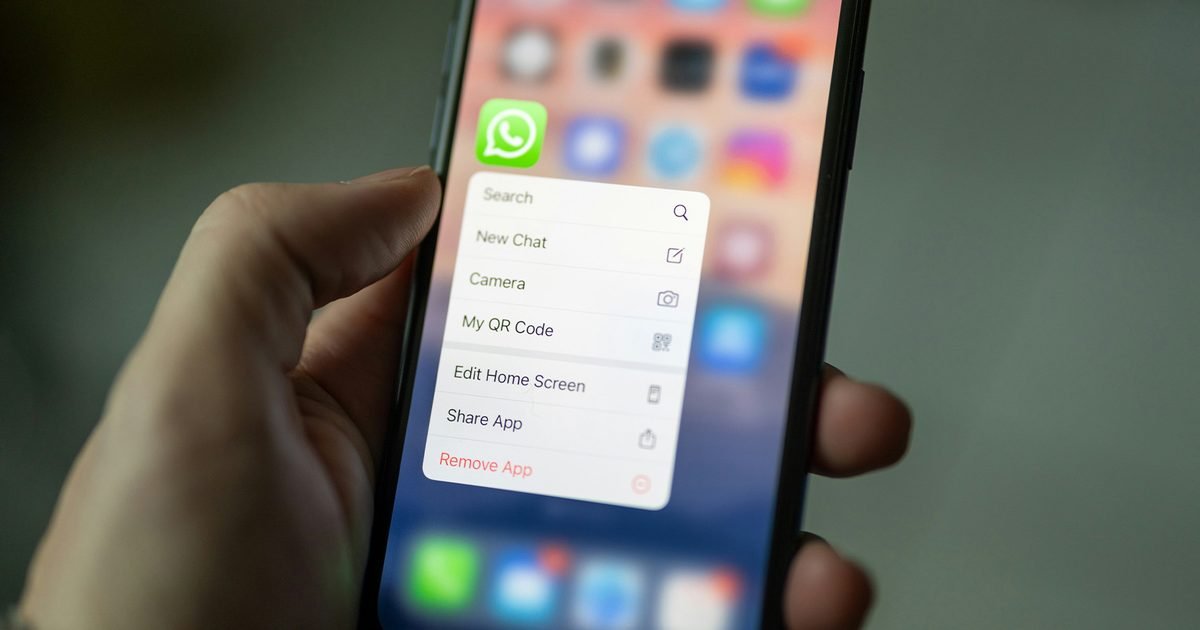
    In some cases, they will simply ask you to scan a QR code. Both methods are designed to link your WhatsApp account to a device the scammer controls, giving them full access to your messages and contacts. It is a sneaky trick, and a number of people can fall for it because there is no obvious red flag in the moment.

    How the new warning system works?

    WhatsApp holds our most personal chats, and scammers gaining access to them is anyone’s worst nightmare. Considering this, Meta is adding a new warning system to help prevent this from happening in the first place.

    WhatsApp will now analyze behavioral signals to detect when a device linking request looks suspicious. If something seems off, you will get an alert warning you that it could be a scam, giving you the chance to stop and reconsider before anything happens.

    What it means for you

    WhatsApp has over two billion users, which makes it a prime target for scammers. This new warning system will not stop every attack, but it adds a much-needed speed bump between you and a scammer trying to take over your account. If you get one of these warnings, take it seriously.

  • India post 253/7 against England, on course for T20 WC final

    India post 253/7 against England, on course for T20 WC final


    India vs England cricket match, T20 World Cup final, player in action.

    Mumbai: Sanju Samson overcame the Jofra Archer challenge through a slice of luck for his second successive fifty, firing India to a mammoth 253 for seven in the T20 World Cup semifinal against England here on Thursday.

    After single-handedly taking India to the semifinals, a supremely confident Samson (89 off 42) bludgeoned the England bowling attack including Archer, who had dominated his battle against the Indian opener in last year’s bilateral series.

    Mumbai: India’s Sanju Samson plays a shot during the ICC Men’s T20 World Cup 2026 second semifinal cricket match between India and England, at the Wankhede Stadium, in Mumbai, Maharashtra, Thursday, March 5, 2026. (PTI Photo/Ravi Choudhary) (PTI03_05_2026_000684A) *** Local Caption ***

    Having lost the toss at a ground with short boundaries, India had to put up a big total and Samson helped them do that after being dropped by Harry Brook on 15 off Archer in the third over.

    England had already removed Abhishek Sharma the over before and a Samson dismissal would have put India under pressure, but Brook dropped a sitter at mid-on, leaving Archer in disbelief.

    That was all the luck Samson need to make England pay, hammering seven sixes and eight fours in his sizzling knock.

    Mumbai: India’s Hardik Pandya plays a shot during the ICC Men’s T20 World Cup 2026 second semifinal cricket match between India and England, at the Wankhede Stadium, in Mumbai, Maharashtra, Thursday, March 5, 2026. (PTI Photo/Ravi Choudhary) (PTI03_05_2026_000698A) *** Local Caption ***

    Dismissed thrice by Archer last year when he did not have the answers for short balls into the body, Samson subdued the England pace spearhead with a flurry of pull shots.

    He picked up length quickly and was aided by a wayward Archer who was too short in his opening spell of two overs.

    His first maximum off Archer came via a pull over fine leg before the opener dispatched a slower ball off the pacer over deep mid-wicket for another maximum.

    Samson shared a 97-run stand off 45 balls with Ishan Kishan (39 off 19) who too picked up the boundaries against an erring England bowling line-up.

    India raced to 67 for one in the power play and maintained the onslaught to reach 119 for two in 10 overs.

    Shivam Dube (43 off 25) was promoted to number four to maintain the left -right combination after Kishan fell to Rashid.

    Mumbai: India’s Hardik Pandya plays a shot during the ICC Men’s T20 World Cup 2026 second semifinal cricket match between India and England, at the Wankhede Stadium, in Mumbai, Maharashtra, Thursday, March 5, 2026. (PTI Photo/Ravi Choudhary) (PTI03_05_2026_000702B) *** Local Caption ***

    Samson, at the other end, was equally menacing against the other bowlers including Sam Curran and Jamie Overton.

    Archer returned for his second spell only to get hammered by Samson again.

    The opener smashed him for a six over backward point before smoking Archer for another maximum over long-off.

    Archer ended up leaking 61 runs in four overs as Tilak Varma (21 off 7) added to his forgettable night with three sixes in the 19th over.

    England went with the off-spin of Will Jacks in the final over and Hardik Pandya (27 off 12) put him to sword with a couple of sixes.

    The last five overs yielded 76 runs, pushing India to an above par total.


    Get the latest updates in Hyderabad City News, Technology, Entertainment, Sports, Politics and Top Stories on WhatsApp & Telegram by subscribing to our channels. You can also download our app for Android and iOS.

  • POCO C85x 5G with 120Hz Display and 6300mAh Battery Launched in India Starting at Rs. 10,999

    POCO C85x 5G with 120Hz Display and 6300mAh Battery Launched in India Starting at Rs. 10,999

    Add Techlomedia as a preferred source on Google. Preferred Source

    POCO has launched the POCO C85x 5G in India as its new budget 5G smartphone. The device comes as a successor to the POCO C85 that was introduced in December last year. With this phone, POCO is focusing on a large display, long battery life, and affordable 5G connectivity.

    The POCO C85x 5G features a large 6.9-inch HD+ display with a 120Hz refresh rate. The screen also comes with triple TÜV Rheinland certifications for low blue light and flicker-free viewing. It offers up to 660 nits of typical brightness and can go up to 810 nits in high brightness mode.

    The phone is powered by the Unisoc T8300 processor, built on a 6nm process. It is paired with 4GB LPDDR4X RAM, along with support for up to 4GB virtual RAM expansion. Storage options include 64GB and 128GB, and users can expand storage up to 1TB using a microSD card.

    POCO ships the phone with Android 16-based Xiaomi HyperOS out of the box.

    The device comes with a 32MP main rear camera along with a secondary sensor. On the front, there is an 8MP camera placed inside the notch for selfies and video calls.

    The phone also includes a side-mounted fingerprint scanner, a 3.5mm headphone jack, and FM Radio, which are still useful additions in budget phones. Connectivity options include 5G, dual 4G VoLTE, Wi Fi ac, Bluetooth 5.4, and GPS.

    Also see: 7000mAh Battery Mobile Phones In India

    It packs a large 6300mAh battery, which is significantly larger than what most phones offer in this price segment. The phone supports 15W charging, and the charger is included in the box. POCO also says the battery will retain around 80 percent health even after 1000 charging cycles, which roughly translates to over three years of usage. Interestingly, the phone also supports 7.5W reverse wired charging.

    Price and availability

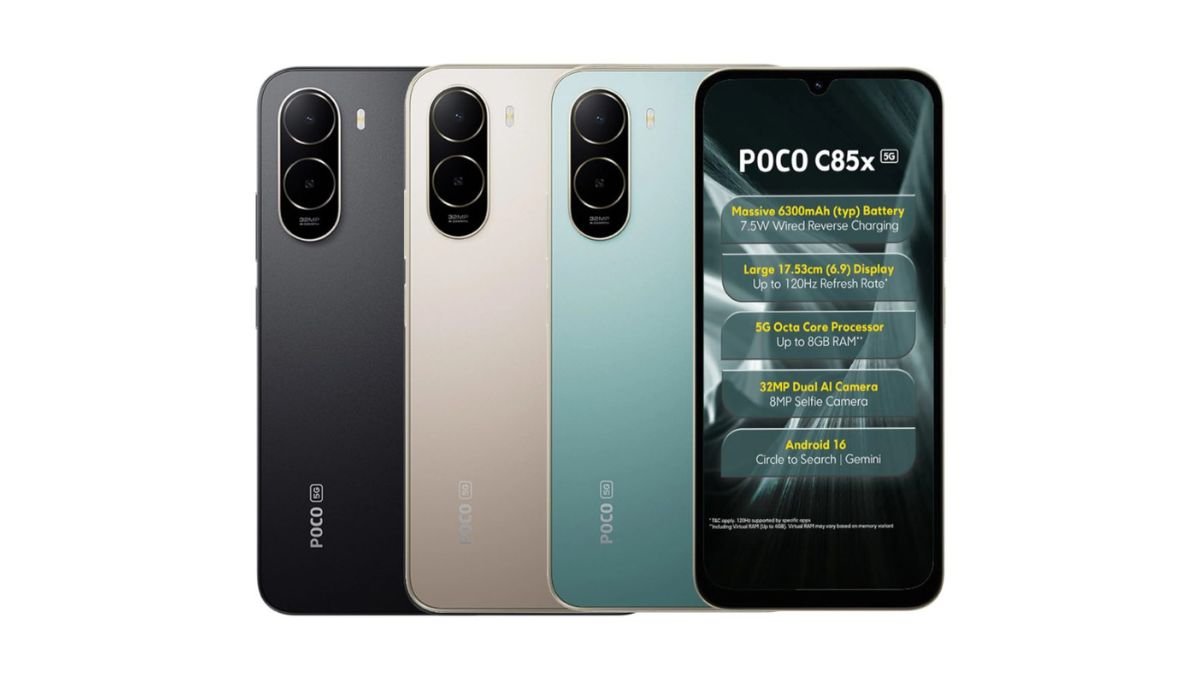
    The POCO C85x 5G comes in Black, Gold, and Green colours. The 4GB + 64GB model is priced at Rs. 10,999, while the 4GB + 128GB version costs Rs. 11,999. The smartphone will go on sale in India via Flipkart starting March 14.

    Looking at the specifications, POCO seems to be targeting users who want maximum battery life and a big screen at a low price. However, the HD+ resolution on such a large 6.9-inch display might not offer the sharpest viewing experience. The Unisoc T8300 chipset is also not known for heavy gaming performance, so this phone will likely be better suited for everyday tasks like browsing, social media, and video streaming rather than demanding games.

    Also see

    Follow Techlomedia on Google News to stay updated. Follow on Google NewsFollow on Google News

    Affiliate Disclosure:

    This article may contain affiliate links. We may earn a commission on purchases made through these links at no extra cost to you.

  • YouTube overtakes Hollywood studios, but it will show you 30-second unskippable TV ads

    YouTube overtakes Hollywood studios, but it will show you 30-second unskippable TV ads

    Those 30-second unskippable ads before your favorite creator’s video are adding up to something massive. YouTube generated $40.4 billion in advertising revenue last year, according to new estimates from media research firm MoffettNathanson, and that figure tops the combined $37.8 billion ad haul from four of Hollywood’s biggest players, Disney, NBCUniversal, Paramount Skydance, and Warner Bros. Discovery.

    The numbers mark a major shift from 2024. Back then, YouTube’s $36.1 billion still trailed that same group of traditional media companies, which pulled in $41.8 billion together. Add Fox to the mix and legacy TV still edges out YouTube at $44.8 billion, but the trajectory is clear.

    The ad money isn’t the only number that matters

    YouTube’s lead extends beyond the revenue sheets. The service captured 12.5 percent of US television viewership in January, per Nielsen data, beating the combined streaming numbers from Disney, NBCU, Paramount, and Warner Bros. Discovery. Netflix, the closest paid competitor, sat at 8.8 percent.

    The subscription business tells a similar story. YouTube brought in nearly $22 billion from its paid services in 2025, including YouTube TV, the live TV streamer, along with ad-free tiers YouTube Premium and YouTube Music. The NFL Sunday Ticket package for football fans added to that total too. Google plans to push subscription growth further this year with skinny bundles for YouTube TV, including a sports-focused option.

    What this means for your remote control

    The numbers point to a fundamental shift in how we watch. YouTube isn’t just competing with traditional TV anymore. It is traditional TV for a huge chunk of viewers, just with different economics and no scheduled programming. Those unskippable spots you tolerate fund a machine that now out-earns the companies that defined television for decades.

    The platform keeps roughly half of its ad intake, with creators taking a 55 percent cut from ads on standard videos. That arrangement fuels the endless supply of content keeping people on the site, creating a feedback loop legacy media can’t replicate. More viewers attract more creators, which brings more eyeballs and generates more ad dollars.

    What to watch next in the streaming wars

    The gap between YouTube and Hollywood will likely keep widening. MoffettNathanson projects steady advertising growth for the service, and the subscription business still has room to run. Those smaller bundles Google is testing could pull more cord-cutters into YouTube’s paid ecosystem without requiring a full cable-style package.

    For viewers, the takeaway is straightforward. The economics that bring you free videos with ads, or paid tiers without them, aren’t going anywhere. YouTube has the scale and the momentum to dictate terms. The next milestone is whether it can maintain ad growth while subscription revenue accelerates. If the research firm’s prediction holds, the site that started with grainy home videos will soon have more financial firepower than all but a handful of tech giants.

  • Xiaomi Pad 8 with 3.2K 144Hz Display and Snapdragon 8s Gen 4 Launched in India Starting at Rs. 33,999

    Xiaomi Pad 8 with 3.2K 144Hz Display and Snapdragon 8s Gen 4 Launched in India Starting at Rs. 33,999

    Add Techlomedia as a preferred source on Google. Preferred Source

    Xiaomi has launched the Xiaomi Pad 8 in India. The new tablet arrives just a day before the launch of the Xiaomi 17 series smartphones. With this device, Xiaomi is targeting users who want a powerful tablet for entertainment as well as productivity.

    The Xiaomi Pad 8 features an 11.2-inch LCD display with 3.2K resolution and a 3:2 aspect ratio. The display supports a 144Hz adaptive refresh rate and also comes with Dolby Vision and HDR10 support. Xiaomi says the display also has TÜV Rheinland certification for low blue light.

    The tablet is also available in a Nano Texture Display version. This model uses AG nano texture and AR coating to reduce reflections by up to 70 percent. This promises to make the display easier to use under bright light.

    It is powered by the Qualcomm Snapdragon 8s Gen 4 processor, paired with up to 12GB of RAM. Storage options go up to 256GB.

    Xiaomi is also focusing heavily on productivity features with the Xiaomi Pad 8. The tablet runs HyperOS 3 based on Android 16, which includes new lock screens, widgets, and wallpapers.

    The tablet supports advanced multitasking features. Users can run apps in vertical split view or horizontal split view, making it easier to work on multiple apps at the same time. The updated Workstation Mode also adds a dock that allows quick access to frequently used apps.

    Xiaomi has also added a PC level browser experience with features like right-click support and mouse hover previews. The tablet also comes with WPS Office PC integration, allowing users to create and edit documents, slides, spreadsheets, and PDFs.

    The device also supports Xiaomi HyperAI, which helps with device connectivity and task transitions across Xiaomi devices.

    For creators and professionals, Xiaomi is offering the Focus Pen Pro stylus. The stylus weighs 17.5 grams and supports pressure-sensitive input along with gesture controls like pinch and double-tap. Xiaomi has also introduced two keyboard accessories to turn the tablet into a laptop-style device.

    Xiaomi has added quad speakers with Dolby Atmos support. The tablet packs a 9200mAh battery with 45W fast charging, and the company claims it can deliver up to 9.3 hours of video playback on a single charge.

    The tablet features a 13MP rear camera and an 8MP front camera for video calls and online meetings.

    Connectivity options include Wi Fi 7, Bluetooth 5.4, USB Type C 3.2 Gen 1, Miracast, and IPv6. Sensors include fingerprint sensor, accelerometer, gyroscope, ambient light sensor, proximity sensor, hall sensor, geomagnetic sensor, and an IR sensor.

    The device packs a 9200mAh battery with 45W fast charging and also supports reverse charging.

    The Xiaomi Pad 8 comes in Titanium Blue and Graphite Grey colors. The tablet has a full metal unibody design and measures just 5.75mm in thickness.

    Price and availability

    The 8GB + 128GB model is priced at Rs. 33,999, while the 12GB + 256GB version costs Rs. 36,999. The Nano Texture Display variant with 12GB + 256GB storage costs Rs. 38,999.

    Accessories are priced separately. The Xiaomi Focus Pen Pro costs Rs. 5,999, the Pad 8 Keyboard costs Rs. 4,999, and the Focus Keyboard costs Rs. 8,999.

    The tablet will be available from Amazon, Mi.com, Xiaomi retail stores, and offline partners starting March 17.

    The Xiaomi Pad 8 looks like a strong upgrade over previous Xiaomi tablets. The Snapdragon 8s Gen 4 processor makes it one of the more powerful tablets in this price segment. The 3.2K display with 144Hz refresh rate also makes it a good option for watching videos, reading, and even gaming. The 9200mAh battery should easily last a full day for most users. Combined with quad speakers and Dolby Atmos, the tablet could also be a good choice for entertainment.
    Follow Techlomedia on Google News to stay updated. Follow on Google NewsFollow on Google News

    Affiliate Disclosure:

    This article may contain affiliate links. We may earn a commission on purchases made through these links at no extra cost to you.

  • Canva can now turn a flat AI image into a fully editable design in seconds

    Canva can now turn a flat AI image into a fully editable design in seconds

    We’ve been there. You spend twenty minutes crafting the perfect prompt, an AI spits out a gorgeous Instagram graphic — and then you realize the font is slightly off and the background color clashes with your brand. Now what? Re-prompt and pray? That’s essentially been the state of AI-generated design: beautiful outputs, zero editability.

    Canva is calling that out directly with Magic Layers, a new feature now live in beta across the U.S., U.K., Canada, and Australia.

    How does Magic Layers work?

    Here’s how it works: drop in any flat PNG or JPG, and the tool reverse-engineers it — pulling out text, objects, backgrounds, and grouped shapes into individual layers you can actually touch.

    Your locked, untouchable JPEG becomes something closer to a real working file; move things around, swap colors, fix that tagline. No starting over.

    For a solopreneur trying to spin one design into a multi-channel campaign, that’s significant. Text stays live and editable rather than baked in; layout hierarchy is preserved automatically.

    How does Canva’s new feature help day-to-day users?

    A small business can take an AI-generated promotional image and adapt it for Instagram, a flyer, and an email header — without touching Photoshop or calling a designer.

    It works best on graphic designs and illustrations; throw a photorealistic image at it and results vary, which is honestly fair enough for a beta.

    Magic Layers didn’t appear out of nowhere — it fits neatly into a string of big swings Canva has taken recently. The Canva Design Model is their own AI, trained on design logic rather than just churning out pretty pictures.

    Canva Sheets took a hard look at spreadsheets and asked, reasonably, why they have to be so miserable — wrapping data in visual layouts and AI formulas. Video 2.0 rebuilt the editor from scratch.

    Three pretty different products; one pretty obvious throughline: AI generates; Canva wants to be where you actually finish the job.

  • Snake Eater Surpasses 2 Million Sales Worldwide

    Snake Eater Surpasses 2 Million Sales Worldwide

    Add Techlomedia as a preferred source on Google. Preferred Source

    Konami has announced that Metal Gear Solid Delta: Snake Eater has crossed two million sales worldwide as of February 17. The number includes both physical copies shipped to retailers and digital downloads across all platforms.

    The game launched globally on August 28, 2025, for PlayStation 5, Xbox Series X|S, and PC via Steam. It had a strong start and crossed one million sales within the first day of release. That was enough to show strong demand for the remake of the classic stealth game.

    Metal Gear Solid Delta: Snake Eater is a remake of the 2004 game Metal Gear Solid 3: Snake Eater. The remake keeps the original story and gameplay but rebuilds the experience with modern graphics and improved audio.

    The game features new visuals and 3D audio designed to make the jungle environment more immersive. Konami has also improved character models and environmental detail to make the world feel more realistic.

    Players can also choose between modern controls or classic controls. The modern control scheme is designed for new players, while the classic option recreates the feel of the original game.

    The Metal Gear series has now crossed more than 65 million copies sold worldwide, and this remake has helped push the series to that milestone. This is also the first major Metal Gear project released by Konami in years after the departure of the series creator Hideo Kojima. Because of that history, many fans were curious to see how well a remake would perform without Kojima’s direct involvement.

    Reaching two million sales is a solid result for a remake of a 20-year-old game. However, when compared with other modern remakes like Capcom’s Resident Evil remakes that often sell several million copies quickly, the numbers show that the Metal Gear franchise is still rebuilding its momentum.

    The strong day one sales suggest that long-time fans were eager to revisit Snake Eater, but the slower growth afterward may indicate that the game did not attract as many new players outside the existing fan base.

    Even then, the remake proves that there is still strong interest in the Metal Gear franchise. If Konami continues releasing remakes or new titles with similar quality, the series could regain the popularity it once had during the PlayStation 2 and PlayStation 3 era.

    Follow Techlomedia on Google News to stay updated. Follow on Google NewsFollow on Google News

    Affiliate Disclosure:

    This article may contain affiliate links. We may earn a commission on purchases made through these links at no extra cost to you.

  • Analysts predict bloodbath coming to the price of laptops, and you must clutch your wallet

    Analysts predict bloodbath coming to the price of laptops, and you must clutch your wallet

    If you have been putting off buying a new laptop or desktop, you might want to reconsider. Prices are expected to rise by up to 35 percent this year, and the window to buy at a reasonable price is closing fast.

    The culprit? Skyrocketing RAM prices and a shortage of entry-level Intel processors. RAM prices have already increased by 2.5 to 3 times, resulting in a 10 to 12 percent rise in laptop and desktop prices. Prices are expected to rise 8 to 10 percent in March, with another 10 percent increase likely over the following months.

    Add to that the current disruption in the Strait of Hormuz, which is already pushing up crude oil prices, and energy and transportation costs are also expected to rise dramatically.

    Why are prices rising?

    A big chunk of the problem is artificial intelligence. The surge in AI infrastructure demand is pulling memory supply toward high-margin server components, leaving less supply for regular PCs and laptops. This is driving up the cost of DRAM and NAND memory globally, which will ultimately be reflected in your bill.

    According to TrendForce, memory components that once made up 15% of a laptop’s total build cost are now projected to cross 30% by early 2026, effectively doubling their share of what manufacturers pay to build your laptop.

    Analysts from IDC and Counterpoint Research don’t expect prices to ease until the second half of 2027. Thanks to the increasing cost of components and transportation, analysts expect shipments to decline by 7 to 8 percent in 2026, as rising prices start to discourage purchases.

    Should you buy a laptop or PC right now?

    Brands are trying to soften the blow with financing schemes and promotional offers, but analysts warn that these measures may not be enough to offset the rising costs. Small and large businesses are already expediting their upgrade cycle to avoid paying the RAM tax.

    If you need a new PC, the short answer is yes. With the launch of the MacBook Neo, Apple’s first-ever low-cost MacBook, and PC brands offering discounts to stay competitive amid volatile RAM prices, it is the perfect time to buy one right now. Buy now, or brace yourself for an inflated price tag later.