


Category: Uncategorized

  • West Indies beat Italy by 42 runs to enter Super 8s as group toppers

    West Indies beat Italy by 42 runs to enter Super 8s as group toppers


    Kolkata:  Shai Hope’s second consecutive fifty and a disciplined performance by bowlers powered West Indies to a comfortable 42-run victory over Italy, signing off their Group C campaign in the T20 World Cup in style, here Thursday.

    Despite a shaky batting performance, the Caribbean pace and spin attack clicked in unison, ensuring a winning momentum heading into the Super Eights.

    Set a target of 166, Italy were bowled out for 123 in 18 overs with Matthew Forde (3/19), Shamar Joseph (4/30) and Gudakesh Motie (2/24) doing the bulk of the damage with the ball for West Indies.

    Skipper Hope slammed a 46-ball 75 to guide West Indies to 165/6 after Italy opted to field.

    Hope’s fluent knock with six fours and four sixes held the innings together, but experienced spinners Ben Manenti (2/37) and Crishan Kalugamage (2/25) choked the run flow in the back end to keep the total in check.
    Kolkata: West Indies’ captain Shai Hope plays a shot during the ICC Men’s T20 World Cup 2026 cricket match between Italy and West Indies, at Eden Gardens, in Kolkata, Thursday, Feb. 19, 2026. (PTI Photo/Manvender Vashist Lav)(PTI02_19_2026_000211B)

    On a batting-friendly Eden surface with a lightning outfield, where England’s 202 was nearly chased down by Italy in the previous game, the target looked underwhelming at the innings break.

    But West Indies’ bowlers got the job done without much hassle.

    Young pace-bowling all-rounder Forde, who had conceded just 10 runs and taken a wicket against Nepal in Mumbai, set the tone in the powerplay with another tidy spell. He was exceptional with the new ball, returning figures of 2/17 in three overs.

    Forde struck in his first over as Justin Mosca was bowled for 2, done in by an inducker. He then removed Syed Naqvi with a hard-length delivery that shaped away as the batter tried to smash and was caught at mid-off.

    Shamar Joseph was the pick of the bowlers, using the short-ball strategy smartly. He ended Italy’s resistance by taking the key wicket of Grant Stewart in the 15th over, effectively sealing the contest.
    Kolkata: West Indies’ Roston Chase plays a shot during the ICC Men’s T20 World Cup 2026 cricket match between Italy and West Indies, at Eden Gardens, in Kolkata, Thursday, Feb. 19, 2026. (PTI Photo/Swapan Mahapatra)(PTI02_19_2026_000212B)

    Sherfane Rutherford (24 off 15 balls) and Matthew Forde (16 off 8 balls) played useful cameos towards the end and remained not out.

    Sri Lanka-born leg-spinner Crishan Kalugamage was the most impressive bowler for Italy, returning figures of 2/25 in four overs.
    Kolkata: Italy’s Crishan Kalugamage bowls during the ICC Men’s T20 World Cup 2026 cricket match between Italy and West Indies, at Eden Gardens, in Kolkata, Thursday, Feb. 19, 2026. (PTI Photo/Manvender Vashist Lav)(PTI02_19_2026_000243B)

    Wily left-arm spinner Motie was outstanding in the middle overs. He foxed the batters with his guile, keeping scoreboard pressure intact and removing JJ Smuts (24) and the in-form Ben (26) just when they were looking to accelerate.

    At the halfway stage, with Ben at the crease, the chase still looked possible. But Italy kept losing wickets after the early blows from Forde.

    The successive dismissals of Stewart and Manenti — who had shared a blistering 92-run stand off 48 balls against England — hurt them badly.

    Italy thus finished their campaign with one win from four matches, their lone victory coming against Nepal.

    West Indies, who had already sealed their Super Eights berth, topped the group with all wins.

    Put in, West Indies lost in-form Shimron Hetmyer (1) for a single-digit score for the first time in the World Cup, while opener Brandon King (4) also fell cheaply in the powerplay, but the Windies skipper batted effortlessly.

    Italy struck with left-arm seamer Ali Hasan removing Brandon King (4) with his first ball.

    But Hope, fresh from an unbeaten 61 against Nepal, counterattacked in style drilling a wide half-volley from fast bowler Thomas Draca through extra-cover.

    Hasan then erred in line as Hope crashed two more fours through the off side before pulling him for a six over square leg in a 14-run over.

    Hope brought up a 28-ball fifty while striking four sixes and six fours in a 46-ball knock, but Roston Chase’s sluggish 24 off 25 balls (2×4) hurt the momentum.

    It dragged the Windies innings down, and even as Hope got boundaries at will, Chase looked tentative, and struggled to rotate the strike before holing out to deep forward square.

    The pressure mounted with two quick wickets — Chase and Rovman Powell (9) — as experienced off-spinner Manenti and Sri Lanka-origin leg-spinner Kalugamage turned the tide in Italy’s favour.


    Get the latest updates in Hyderabad City News, Technology, Entertainment, Sports, Politics and Top Stories on WhatsApp & Telegram by subscribing to our channels. You can also download our app for Android and iOS.

  • Three reasons why the Pixel 10a appeals to me, even without big upgrades

    Three reasons why the Pixel 10a appeals to me, even without big upgrades

    I’ve been using Pixel smartphones for a decade now, and I’ve never seen a muted refresh as the latest Pixel-A midranger. There’s plenty of chatter in the community, and deservedly so. Google’s all-new Pixel 10a doesn’t come with the dramatic spec upgrades we’ve come to expect from annual refreshes. It even makes year-over-year iPhone upgrades feel generous.

    The phone is strikingly similar to its predecessor, retaining the same overall design and core hardware while introducing only minor tweaks. The bezel around the display is slightly narrower, the camera module sits more flush with the back panel, and under the hood, things remain largely unchanged.

    While the absence of headline-grabbing upgrades may seem underwhelming at first glance, the Pixel 10a remains a strategically sound release. Google has focused on polishing the fundamentals instead of trying to impress with big upgrades. Viewed through that lens, there are three clear reasons why the Pixel 10a still makes sense to me.

    The Pixel 10a still delivers on the core Pixel experience

    At the heart of the Pixel 10a is a commitment to the things that make Pixel phones stand out: clean software, great everyday performance, and Google’s signature computational photography. While the Tensor G4 powering the 10a doesn’t bring any performance improvements over last year’s model, it remains more than capable of handling typical daily tasks, from messaging and social media to light multitasking and media playback. Just as importantly, it delivers efficient power management that helps keep the experience smooth and consistent throughout the day.

    But it’s really the software, especially the AI-driven experiences, that truly set it apart. And these are no gimmicks, but quality features that add meaningful convenience. Real-time scam detection in calls and messages, thanks to Gemini Nano working in the background. Call Assist can filter and block spam calls by having an AI assistant take the call for you and deciding its status before showing an audio-visual alert. Call Notes enables private transcription and summarization for your calls, while Hold for Me saves you from the drudgery of staying on the line for service calls. Finally, we have Clear Calling that cleans background noise and enhances the caller’s voice.

    My favorite is the on-call translation, which even preserves the speaker’s natural voice in the translated audio. On the software front elsewhere, the Pixel 10a continues Google’s approach of bringing flagship-level AI features to a wider audience. Tools like Camera Coach, which uses AI to help you frame better shots in real time, and Auto Best Take, which intelligently selects the best expressions in group photos, show how software improvements can meaningfully enhance the camera experience without new sensor hardware.

    The device runs Android 16 out of the box, and Google has committed to seven years of OS upgrades and security updates, a promise that remains rare in the mid-range segment. That level of long-term support ensures the phone won’t feel outdated anytime soon, even if hardware changes are modest. For buyers who prioritize longevity over yearly upgrades, this is a meaningful advantage. So while the Pixel 10a doesn’t dramatically reinvent the wheel, it preserves the core strengths that have made recent Pixel A series phones some of the best mid-range devices on the market.

    A refined design and improvements that matter

    Minimalism is an afterthought in smartphone design these days, and it’s not all about making a statement, but a necessity. You can’t fit massive sensors, vapor chambers, and other top-tier goodies in a sleek phone. But not every buyer needs all that snazz and jazz. And that’s a core reason why the Pixel 10a makes sense, even if its specs aren’t entirely new, Google has clearly focused on refining areas that matter most in daily use.

    The phone’s 6.3-inch Actua pOLED display may be the same size, but its peak brightness has been increased from 2,700 nits to 3,000 nits, which should make it noticeably easier to use outdoors and under harsh lighting. That extra headroom should improve visibility when navigating maps, replying to messages, or scrolling through social feeds in direct sunlight.

    Durability has also taken a meaningful step forward. The Pixel 10a is now protected by Gorilla Glass 7i, replacing the older Gorilla Glass 3 found on its predecessor. The upgrade should offer better resistance to scratches and drops, adding an extra layer of reassurance for long-term use.

    Charging speeds have received a practical boost as well. Wired charging has increased from 23W to 30W, while wireless charging has moved up from 7.5W to 10W. These are not class-leading numbers, but they will reduce downtime and make the 5,100mAh battery easier to top up in daily use.

    Google has also introduced a new modem that enables Satellite SOS, making the Pixel 10a the first A-series device to include the feature. While it’s not something most users will rely on regularly, it adds a layer of emergency connectivity that was previously limited to higher-end models.

    Taken together, these upgrades do not radically transform the device, but they make it more practical, durable, and slightly more future-ready than before.

    Balanced features at a sensible price

    For most buyers, choosing a mid-range phone involves compromise. You typically trade flagship-level specs and features for a more affordable price, and accept that a few premium features will be left out. The Pixel 10a manages those trade-offs thoughtfully, delivering a familiar formula without raising the asking price.

    By carrying over much of the core hardware from last year’s model, Google has also avoided the pressure of rising component costs. That decision allows the company to keep the Pixel 10a competitively priced, while focusing its upgrades on areas that meaningfully improve the everyday experience.

    In the US, the Pixel 10a is available for pre-order at a starting price of $499, with introductory deals and trade-in offers helping to lower the effective cost. While it doesn’t undercut every rival in the segment, that pricing keeps it firmly within reach for buyers upgrading from a device that’s two or three generations old.

    Sure, it’s not a compelling upgrade over the Pixel 9a, but it’s worth considering for those coming from older Pixel A series devices or aging mid-range phones from Samsung, OnePlus, or Motorola. For those users, the combination of a brighter and more durable display, faster charging, a sleeker design, and seven years of software support makes it a viable choice over last year’s model.

    Paired with Google’s clean Android experience and AI features, the Pixel 10a offers a well-rounded package at a sensible price. It may not dominate the spec sheet, but it delivers where it counts, making it a solid choice for buyers who prioritize longevity, reliability, and overall value over headline-grabbing updates.

    It’s not for everyone, but it’s still worth considering

    To be fair, the reaction to the Pixel 10a has not been universally positive. The hardware changes over the Pixel 9a are minimal, leaving little reason for current owners to upgrade. Viewed strictly as a year-over-year update, that perspective is understandable.

    However, most smartphone buyers don’t upgrade every year. Many are coming from devices that are two, three, or even four years old, phones that may now struggle with performance, battery life, or ongoing software support. For those users, the Pixel 10a’s incremental improvements, combined with its long-term update commitment, are likely to feel far more meaningful than the spec sheet suggests.

  • India not just a part of AI revolution, but leading it: PM Modi

    India not just a part of AI revolution, but leading it: PM Modi


    New Delhi: Prime Minister Narendra Modi on Thursday, February 19, said artificial intelligence must be democratised and become a tool for inclusion and empowerment, particularly for the Global South.

    Addressing the India AI Impact Summit, Modi said the expo is taking place in India, which represents one sixth of humanity, a country with the world’s largest young population and a hub of the largest tech talent pool.

    “Artificial intelligence marks a transformative chapter in human history. India is not just a part of the AI revolution, but is leading and shaping it,” he said in the presence of world leaders and CEOs of leading companies at the Summit.

    **EDS: THIRD PARTY IMAGE** In this screengrab from a video posted on Feb. 19, 2026, Prime Minister Narendra Modi during the Leaders’ Plenary Session at the India AI Impact Summit 2026, in New Delhi. (@pmoindia/Yt via PTI Photo)(PTI02_19_2026_000261B)

    The prime minister said India not only builds technology but also adopts it at an unprecedented pace.

    “Some people have doubts about new technology. But the way the younger generation is embracing AI is unprecedented.There has also been tremendous enthusiasm here regarding the AI Summit exhibition,” he said.

    “In the course of human history, there have been certain turning points that shaped entire centuries. These turning points set the direction of civilisation and transform the pace of development. Artificial intelligence is one such transformation in history,” he said.

    **EDS: THIRD PARTY IMAGE** In this image received on Feb. 19, 2026, Prime Minister Narendra Modi, Brazil President Luiz Inácio Lula da Silva, France President Emmanuel Macron and other dignitaries during the India AI Impact Summit 2026, in New Delhi. (PMO via PTI Photo)(PTI02_19_2026_000213B)

    The world leaders attending the summit at the Bharat Mandapm include French President Emmanuel Macron, Brazil President Luiz Inacio Lula da Silva, Sri Lanka President Anura Kumara Disanayaka, Bhutan Prime Minister Tshering Tobgay, Mauritius Prime Minister Navinchandra Ramgoolam, Croatia Prime Minister Andrej Plenkovic, Serbia President Aleksandar Vucic, Seychelles Vice President Sebastien Pillay, Estonia President Alar Karis, and Finland Prime Minister Petteri Orpo.


    Get the latest updates in Hyderabad City News, Technology, Entertainment, Sports, Politics and Top Stories on WhatsApp & Telegram by subscribing to our channels. You can also download our app for Android and iOS.

  • Amazon brings a new Audible feature that lets you enjoy ebooks with lyrical reading

    Amazon brings a new Audible feature that lets you enjoy ebooks with lyrical reading

    If you’ve ever found yourself rewinding an audiobook because you got distracted mid-sentence, Audible has a new feature that can save you from the frustration. The platform calls it “Immersion Reading,” which is basically a fancy term for a Read & Listen mode.

    As the name suggests, the mode lets you read the text on the screen while the audiobook narration plays. It also highlights the text word-for-word, in sync with the playback. Think of it as a karaoke, but for books (of course, you don’t have to sing).

    Read and listen for a distraction-free experience

    Audible’s new feature requires both the audiobook and the ebook version of the same title. Once you have both, you’ll see the new Read & Listen button appear at the top of the playback controls or the ebook.

    Tapping it makes the experience much more immersive, as it’s harder for your brain to wander around, especially when both your eyes and ears are engaged. Whether you’re a student, language learner, or an avid listener, the feature can help you consume more content in a given time.

    You can switch back to the audio-only mode anytime without losing track of the progression, perfect for when you’re pretending to work, when you’re really trying to finish one more chapter of that interesting audiobook.

    No more app-hopping

    The platform even states that customers who listen while reading along consume “nearly twice as much content per month as audiobook-only customers.”

    Audible says that “hundreds of thousands of titles” support the new feature at launch, including those in English, German, Spanish, Italian, and French. For multitaskers or chronic re-winders, Amazon’s new feature could be a sure-shot productivity hack.

  • Watch Unitree’s G1 unleash a kung fu robot frenzy

    Watch Unitree’s G1 unleash a kung fu robot frenzy

    Chinese robotics leader Unitree took full advantage of the nation’s Lunar New Year celebrations this week to show off the impressive skills of its G1 humanoid robot.

    A video (top) of the event shows numerous G1 robots participating in what Unitree described as “the world’s first fully autonomous humanoid kung fu performance.” There’s a spot of breakdancing in there, too.

    Performing alongside kids from the Tagou Martial Arts School for the Spring Festival Gala on China Central TV, the robots displayed incredible agility and coordination, moving at around 3 meters per second while performing flips, table vaults, somersaults, and rapid formation changes, blending martial arts with robotics innovation.

    The robots were recently upgraded with improved, more dexterous hands, which during this week’s performance supported rapid switching and stable gripping of martial arts props such as nunchaku, Global Times reported.

    Unitree founder and CEO Wang Xingxing said the robots executed many of their moves while running at high speed, claiming it as a first for high-dynamic, highly coordinated cluster-control technology.

    Wang described the innovations as “very practical” and said they will “facilitate large-scale group deployment of robots in the future.”

    The 132-centimeter-tall G1 robot was unveiled in May 2024 and made available three months later for $16,000. The bipedal bot is targeted for research, education, entertainment, and light industrial applications, with researchers, students, and developers encouraged to program and customize the the robot for different tasks.

    Unitree also has a full-size humanoid robot called H1, which is about 180 centimeters tall. The H1 is more robust and powerful and is aimed at industrial deployment, while the more compact G1 prioritizes agility and affordability, and is geared more toward research and entertainment.

    Unitree is aiming to ship in the region of 20,000 humanoid robots this year, nearly four times last year’s number.

    It’s competing with a slew of robotics companies in China, the U.S., and beyond, with all of them racing to find meaningful and manageable roles for their humanoid robots in industrial settings.

    The G1 also hit the headlines earlier this month when it took on an autonomous walking challenge in deep snow and brutally cold conditions.

  • Ford wants to make EVs more affordable for you

    Ford wants to make EVs more affordable for you

    Ford is overhauling how it designs electric vehicles, shrinking battery packs and dramatically reducing wiring in an effort to bring EV prices closer to those of traditional gasoline-powered cars. The strategy marks a major shift in how the automaker approaches electrification, focusing less on maximizing battery size and more on improving overall efficiency and cost structure.

    A New EV Platform Focused on Efficiency

    For years, automakers have chased longer driving range by installing larger batteries. But battery packs can account for up to 40% of an EV’s cost and a significant portion of its weight. Ford believes simply adding more battery capacity is not the answer to making electric vehicles affordable for mainstream buyers.

    Instead, the company is developing a new Universal Electric Vehicle (UEV) platform that prioritizes efficiency at every level. Engineers are cutting thousands of feet of wiring, reducing parts count, and simplifying electrical architecture. In some cases, Ford has reduced wiring length by roughly 4,000 feet, trimming weight and material costs in the process.

    The company is also moving toward zonal electrical systems and 48-volt architectures, consolidating components and improving energy management. By improving aerodynamics and reducing overall vehicle weight, Ford says it can maintain competitive range even with smaller battery packs.

    Ford’s move comes at a critical time

    While EV adoption is growing, high upfront costs remain one of the biggest barriers to mass-market acceptance. Many consumers are hesitant to pay a premium over gasoline vehicles, especially when interest rates and economic uncertainty weigh on purchasing decisions.

    By shrinking batteries and reducing manufacturing complexity, Ford aims to lower sticker prices without sacrificing performance or usability. The company has publicly discussed targeting a mid-size electric pickup starting around $30,000 – a price point that would put it in direct competition with traditional gas-powered trucks.

    This strategy could help close the cost gap between EVs and internal combustion vehicles, accelerating adoption without relying heavily on government incentives. Smaller batteries also mean lighter vehicles, which can improve efficiency and handling while reducing strain on supply chains for critical battery materials.

    For consumers, Ford’s approach could translate into more affordable electric vehicles that still deliver practical range and everyday usability. Instead of chasing 400-mile battery capacities that many drivers rarely need, Ford is focusing on optimizing efficiency so that smaller packs go further.

    That means drivers could see EVs priced closer to comparable gas vehicles while still benefiting from lower fuel and maintenance costs over time. Reduced complexity may also improve long-term reliability and simplify repairs.

    In short, the shift is about delivering value – not just range numbers

    Ford plans to introduce its first vehicles built on the new UEV platform in 2027, beginning with a mid-size electric pickup. Additional models across different segments are expected to follow.

    If successful, this engineering rethink could reshape how the industry approaches EV design. Rather than competing on ever-larger batteries, automakers may pivot toward smarter architecture, weight reduction, and system simplification as the path to affordability.

    For Ford, the message is clear: the future of electric vehicles may not be bigger – it may be leaner, lighter, and significantly less expensive.

  • Bose, Samsung, and Sennheiser headphones found to contain toxic chemicals

    Bose, Samsung, and Sennheiser headphones found to contain toxic chemicals

    A new laboratory investigation has raised alarm over hazardous substances in headphones – including products from major brands such as Bose, Samsung and Sennheiser, according to a report by The Guardian. Every pair of the 81 models tested contained toxic chemicals linked to serious health concerns, a finding that experts warn could affect millions of users worldwide.

    All headphones tested contain harmful chemicals

    Researchers from the ToxFREE LIFE for All project, a partnership of civil society groups in Central Europe, analyzed both over-ear and in-ear headphones purchased in retail stores and online marketplaces. Laboratory tests found bisphenols such as BPA (bisphenol A) and BPS (bisphenol S) in the vast majority of samples – BPA was detected in 98% of them, and BPS in more than three-quarters. These chemicals are widely used as plastic additives but are known endocrine disruptors.

    In addition to bisphenols, the study identified phthalates (associated with reproductive toxicity), chlorinated paraffins (linked to liver and kidney damage in animal studies), and various brominated and organophosphate flame retardants. Many of these substances are associated with hormone disruption, cancer risk, and neurodevelopmental issues, raising concerns about long-term exposure.

    While many of these chemicals were found in trace amounts, experts say that prolonged contact – especially through sweat and heat during exercise – can increase migration into the skin. “Daily use – especially during exercise when heat and sweat are present – accelerates this migration directly to the skin,” said a chemical expert involved in the project.

    Headphones have evolved from occasional accessories to everyday essentials, worn for hours at work, during workouts and in relaxed settings. That extensive, often close contact with the skin has drawn scrutiny because it provides a pathway for chemical migration. Endocrine-disrupting substances like BPA mimic natural hormones and have been implicated in various health problems, including developmental disorders and cancer.

    For consumers, the finding underscores a broader concern about chemical exposure from everyday products. Bisphenols and similar plastic additives have been subjects of regulatory scrutiny for years due to their ability to leach out of materials and interact with biological systems. Although individual doses from headphone plastics may be low, scientists point out the possibility of a “cocktail effect” – where continuous exposure to multiple sources of hazardous substances over time compounds health risk.

    Brand response and public awareness

    Major audio brands named in the study did not provide immediate responses to requests for comment. The lack of transparency about the materials used in consumer electronics has drawn criticism from health advocates, who argue there is a “market-wide failure” to disclose potentially harmful substances to buyers.

    The findings add to a series of recent investigations by ToxFREE, including earlier work that detected bisphenol A in baby products and other everyday textiles. The research groups have called for broader regulation and bans on endocrine-disrupting chemicals in consumer goods to protect public health – particularly for vulnerable groups like children and teenagers who may be more susceptible to hormonal effects.

    Health experts emphasize that more research is needed to quantify real-world exposure levels and actual health impacts from chemicals in headphones. Regulators and consumer safety groups may pursue new testing standards or labeling requirements for wearables to ensure users are better informed about material contents.

    In the meantime, consumers may begin to demand greater transparency from manufacturers and push for safer materials. The study’s results spark an important conversation about the hidden chemicals in products we wear close to our bodies – and how everyday tech could have unexpected implications for long-term health.

  • A 32-inch 4K OLED 240Hz monitor for $799.98 is the kind of “finish the setup” deal that’s hard to ignore

    A 32-inch 4K OLED 240Hz monitor for $799.98 is the kind of “finish the setup” deal that’s hard to ignore

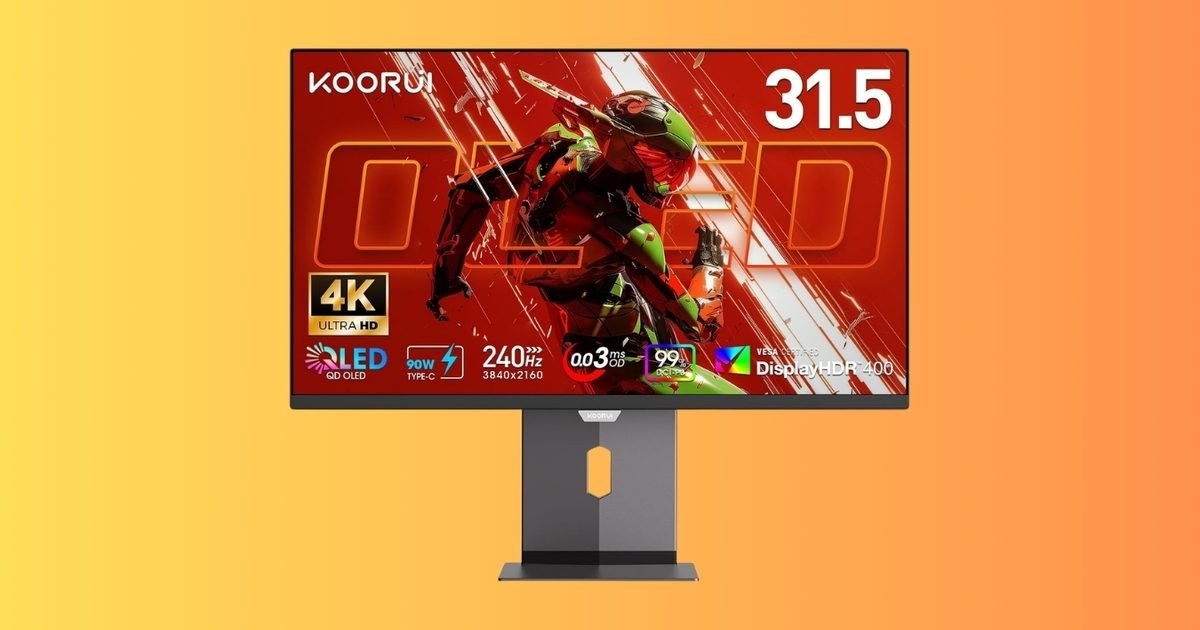
    Most monitor upgrades are incremental. This is one of the few that can make your whole PC feel new again. A 32-inch 4K OLED panel with a 240Hz refresh rate sits right at the intersection of “cinematic” and “competitive,” and that combination usually comes with a premium price tag. Right now, this KOORUI 32-inch 4K OLED gaming monitor is $799.98 for a limited time, down from $1,299.99 (38% off). If you’ve been waiting for a true flagship-style screen to anchor your desk, this discount is the main event.

    What you’re getting

    This monitor is built to cover both high-end gaming and content work:

    • 32-inch 4K UHD OLED panel for deep blacks and high contrast
    • 240Hz refresh rate and 0.03ms response time for crisp motion
    • HDR True Black 400 support
    • 99% DCI-P3 color coverage for richer, more accurate color
    • AdaptiveSync to reduce tearing and stutter
    • DisplayPort and HDMI, plus USB Type-C for cleaner single-cable setups
    • A fully adjustable stand: tilt, pivot, swivel, height
    • VESA support if you prefer an arm mount

    This is the “big screen, big clarity” size class that still feels right at a desk, especially if you split time between gaming and productivity.

    Why it’s worth it

    There are two ways people use a monitor like this, and both make sense.

    First: the “I want games to look ridiculous” crowd. OLED contrast plus 4K resolution makes textures, lighting, and dark scenes look dramatically better than most IPS panels. If you play story games, open-world titles, or anything with moody lighting, you’ll notice it immediately.

    Second: the “I want speed without compromise” crowd. 240Hz at 4K is not the common combo, and it’s ideal if you play a mix of esports and AAA games. You can enjoy high refresh in competitive titles, then switch to 4K detail when you want the eye candy.

    The bottom line

    At $799.98 for a limited time, this KOORUI 32-inch 4K OLED 240Hz monitor is a standout deal for anyone who wants a premium, do-it-all display that can handle both competitive smoothness and big-screen 4K OLED visuals. If you’ve been upgrading parts and your screen is the weak link, this is the kind of purchase that finally makes the whole setup feel cohesive.

  • Presidents’ Day is over — but this $1,000 e-bike deal is still live

    Presidents’ Day is over — but this $1,000 e-bike deal is still live

    This post is brought to you in paid partnership with Upway
    The electric bike market has matured well past the early-adopter phase. Today, an e-bike is a legitimate piece of daily infrastructure, capable of replacing a car commute or upgrading your weekend mileage. The only remaining barrier is the entry price; premium models often carry price tags that rival a used vehicle.

    If you’ve been waiting for the right moment to upgrade your transit setup, Upway is currently extending its Presidents’ Day sale. For a limited time, you can take up to $1,000 off their inventory of expertly refurbished e-bikes, bringing top-tier brands down to much more accessible prices.

    The smart way to buy premium hardware

    For the discerning buyer, purchasing tech at full retail often means eating a massive depreciation hit the moment it leaves the box. Upway operates on a model similar to certified pre-owned luxury vehicles. They source high-end e-bikes: from city commuters to aggressive mountain models, and put them through a rigorous reconditioning process.

    Every bike that enters their facility is evaluated by a team of master mechanics. They inspect the structural integrity, calibrate the electronics, and rigorously test the battery health to ensure it retains peak capacity. You get the build quality of a premium brand without the “presidential” markup, often saving up to 60% off the original retail price.

    Peak performance, guaranteed

    The hesitation with buying any pre-owned hardware is reliability. Upway removes the guesswork by backing every purchase with a comprehensive 1-year warranty. This covers the frame, the motor, the battery, and the electronic components.

    When your bike arrives, it isn’t a project; it is delivered 99% assembled and ready to ride. Whether you’re looking for a sleek urban commuter to cut through city traffic or a rugged cargo bike to haul gear, the inventory offers a curated selection of the best models on the market, restored to deliver that “new bike” feeling.

    The bottom line

    Claiming your independence from high prices doesn’t mean you have to settle for a lower-tier brand. Upway’s extended holiday sale is the ideal opportunity to secure a premium, expertly tuned e-bike while keeping your budget intact. The $1,000 discounts are live for a limited time, making this the moment to finally make the switch.

  • Presidents’ Day is over — but this $1,000 e-bike deal is still live

    Presidents’ Day is over — but this $1,000 e-bike deal is still live

    This post is brought to you in paid partnership with Upway
    The electric bike market has matured well past the early-adopter phase. Today, an e-bike is a legitimate piece of daily infrastructure, capable of replacing a car commute or upgrading your weekend mileage. The only remaining barrier is the entry price; premium models often carry price tags that rival a used vehicle.

    If you’ve been waiting for the right moment to upgrade your transit setup, Upway is currently extending its Presidents’ Day sale. For a limited time, you can take up to $1,000 off their inventory of expertly refurbished e-bikes, bringing top-tier brands down to much more accessible prices.

    The smart way to buy premium hardware

    For the discerning buyer, purchasing tech at full retail often means eating a massive depreciation hit the moment it leaves the box. Upway operates on a model similar to certified pre-owned luxury vehicles. They source high-end e-bikes: from city commuters to aggressive mountain models, and put them through a rigorous reconditioning process.

    Every bike that enters their facility is evaluated by a team of master mechanics. They inspect the structural integrity, calibrate the electronics, and rigorously test the battery health to ensure it retains peak capacity. You get the build quality of a premium brand without the “presidential” markup, often saving up to 60% off the original retail price.

    Peak performance, guaranteed

    The hesitation with buying any pre-owned hardware is reliability. Upway removes the guesswork by backing every purchase with a comprehensive 1-year warranty. This covers the frame, the motor, the battery, and the electronic components.

    When your bike arrives, it isn’t a project; it is delivered 99% assembled and ready to ride. Whether you’re looking for a sleek urban commuter to cut through city traffic or a rugged cargo bike to haul gear, the inventory offers a curated selection of the best models on the market, restored to deliver that “new bike” feeling.

    The bottom line

    Claiming your independence from high prices doesn’t mean you have to settle for a lower-tier brand. Upway’s extended holiday sale is the ideal opportunity to secure a premium, expertly tuned e-bike while keeping your budget intact. The $1,000 discounts are live for a limited time, making this the moment to finally make the switch.