
Category: Uncategorized

  • Xiaomi Launches QLED TV X Pro 75 in India with 4K Display, Dolby Vision and 120Hz Support

    Xiaomi Launches QLED TV X Pro 75 in India with 4K Display, Dolby Vision and 120Hz Support

    Add Techlomedia as a preferred source on Google. Preferred Source

    Xiaomi India has launched the Xiaomi QLED TV X Pro 75 in India. The new 75-inch model focuses on delivering a large screen viewing experience for movies, sports, gaming, and everyday entertainment at home.

    With this launch, Xiaomi is targeting consumers who prefer shared viewing experiences such as live sports screenings and movie nights. The company says the new model is designed to act as a central entertainment hub in modern homes.

    The Xiaomi QLED TV X Pro 75 features a 75-inch 4K Ultra HD display with a resolution of 3840 x 2160 pixels. It supports Dolby Vision and HDR10+, which enhance contrast, brightness, and color accuracy for more realistic visuals.
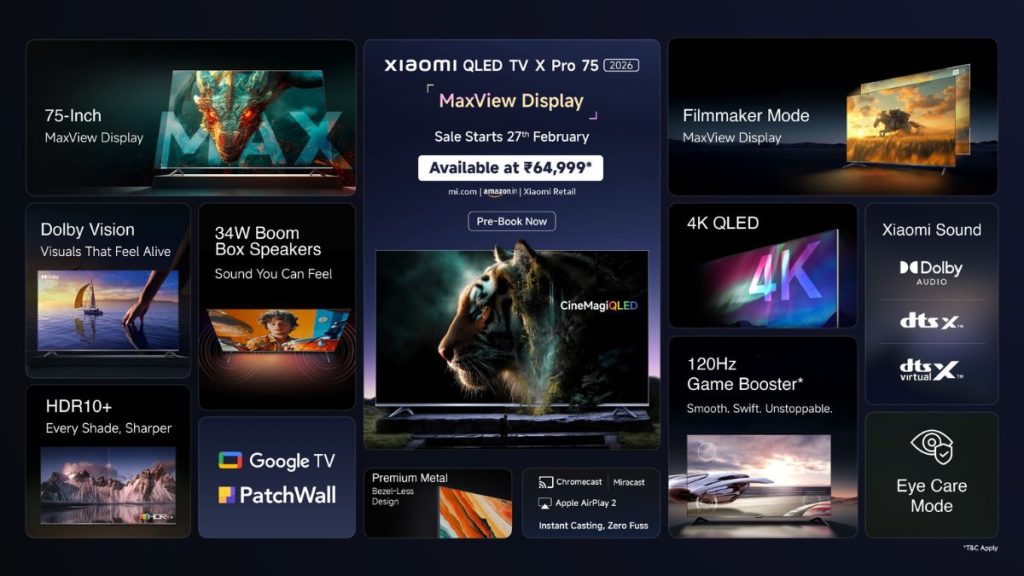
    Xiaomi QLED TV X Pro Series 2026 75" 4K TV Xiaomi QLED TV X Pro Series 2026 75" 4K TV

    The TV also includes Filmmaker Mode. This ensures that movies are displayed in their original frame rate, aspect ratio, and color profile as intended by directors. Xiaomi has also opted for a near bezel-less design with up to 97.76 percent screen-to-body ratio, offering a more immersive viewing experience.

    It also comes with DLG 120Hz support for improved motion clarity. MEMC technology is included to reduce motion blur during fast scenes such as cricket matches, football games, or racing events.

    It also supports Auto Low Latency Mode, which automatically switches to a low-latency setting when connected to a gaming console. This helps reduce input lag and improves responsiveness during gameplay.

    The television is powered by a quad-core A55 processor and comes with 32GB of internal storage. It includes three HDMI ports, including one with eARC support, two USB 2.0 ports, Ethernet, AV input, Optical port, Antenna input, and an earphone port. It also supports dual-band WiFi and Bluetooth.

    The TV is equipped with a 34W box speaker system. It supports Dolby Audio, DTS X, and DTS Virtual X technologies to deliver spatial sound and better clarity.

    Xiaomi has integrated its own sound tuning to balance vocals, bass, and overall audio output depending on the type of content. The TV also supports eARC for Dolby Atmos passthrough, allowing users to connect compatible soundbars or home theatre systems for enhanced surround sound.

    The Xiaomi QLED TV X Pro 75 runs on the latest PatchWall interface. It offers content discovery features, access to Xiaomi TV+ with free live TV channels, universal search across apps, Kids Mode with parental controls, and Language Universe for regional content.

    It comes with built-in Google Voice Assistant support for hands-free control. Users can search for content, manage settings, or control smart home devices using voice commands. For screen casting, the TV supports AirPlay 2, Google Cast, and Miracast.

    The Xiaomi QLED TV X Pro 75 is priced at ₹69,999. As part of a limited-period introductory offer, customers can avail a ₹5,000 bank discount, bringing the effective price down to ₹64,999.

    Customers who pre-book the TV will also receive a four-year complete warranty worth ₹10,999.

    Follow Techlomedia on Google News to stay updated. Follow on Google NewsFollow on Google News

    Affiliate Disclosure:

    This article may contain affiliate links. We may earn a commission on purchases made through these links at no extra cost to you.

  • vivo V70 and V70 Elite Launched in India Starting at Rs. 45,999

    vivo V70 and V70 Elite Launched in India Starting at Rs. 45,999

    Add Techlomedia as a preferred source on Google. Preferred Source

    vivo has launched the vivo V70 and vivo V70 Elite smartphones in India. The new V series phones focus on design, camera upgrades, and performance. It packs a large battery and offers flagship level features. The company is positioning the V70 series as a premium mid range offering with a slim profile.

    Both phones feature a 6.59 inch 1.5K AMOLED display with 2750 × 1260 resolution and 120Hz refresh rate. The panel supports HDR10+, 4320Hz high frequency PWM dimming, and up to 5000 nits peak brightness.

    vivo says the 6.59 inch screen follows a “Golden Grip” size approach. This makes it easier to use with one hand despite the large display. The phones use a flat edge design and come with ultra narrow 1.25mm side bezels to improve screen to body ratio.

    The frame is built using aerospace-grade metal for better durability. The phones are also rated IP68 and IP69 for dust and water resistance.

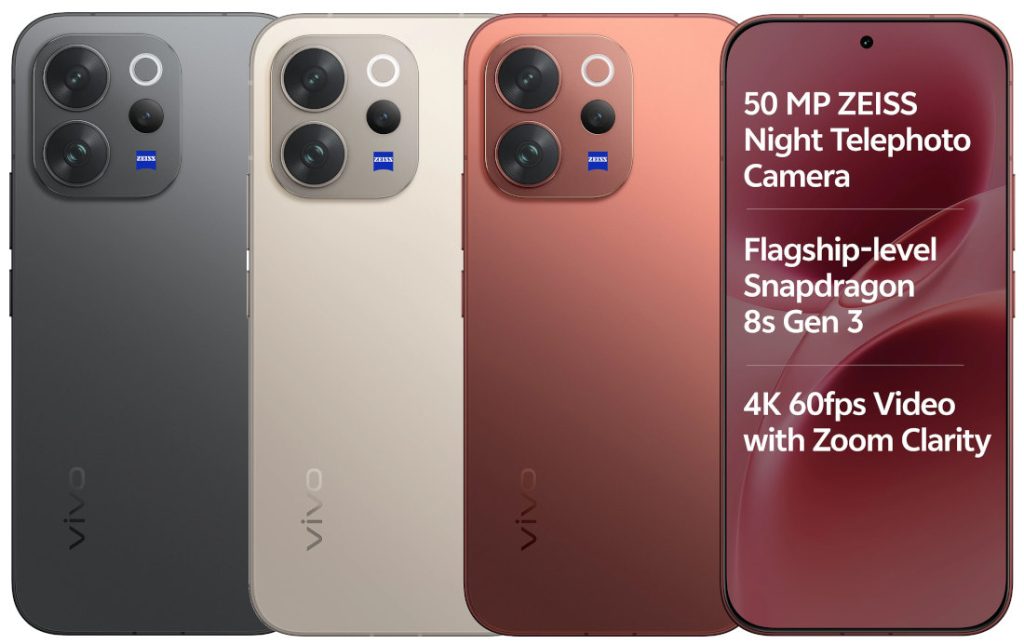
    The vivo V70 is powered by the Qualcomm Snapdragon 7 Gen 4 processor. The vivo V70 Elite steps up to the Snapdragon 8s Gen 3 mobile platform to offer higher performance for gaming and heavy tasks. Both models use LPDDR5X RAM and UFS 4.1 storage. RAM options go up to 16GB and storage up to 512GB.

    For gaming, the phones support 90fps BGMI gameplay and include a 4200mm² vapor chamber cooling system. There is also an X axis linear motor for 4D game vibration feedback.

    Vivo V70 Elite Vivo V70 Elite

    The V70 series runs on OriginOS 6 based on Android 16. vivo promises four major Android updates and six years of security updates, which is a strong commitment in this segment.

    Both models include a 50MP main camera using the Sony IMX766 sensor with OIS and f/1.88 aperture. There is also an 8MP ultra wide camera with 115 degree field of view. They also offer a 50MP ZEISS Night Telephoto camera powered by the Sony IMX882 sensor. It supports 3X optical zoom and up to 100X digital zoom. vivo says it is tuned for low light conditions such as indoor events and festivals. On the front, there is a 50MP autofocus selfie camera with 4K video support.

    The phones support 4K 60fps video recording with seamless switching between 1X, 2X, and 3X zoom levels.

    The camera system is backed by an AI Photography Suite. It includes features such as AI Magic Weather and AI Holi Portrait, which is designed specifically for Indian celebrations.

    The phones feature a 3D ultrasonic in display fingerprint scanner for faster and more secure unlocking. The devices support 5G SA and NSA, dual 4G VoLTE, Wi Fi 6, Bluetooth 5.4, and dual frequency GPS. They come with stereo speakers, Hi Res audio support, and USB Type C audio. Both phones pack a 6500mAh battery with support for 90W fast charging.

    Price and Availability

    The vivo V70 is priced at:

    • 8GB + 256GB for Rs. 45,999
    • 12GB + 256GB for Rs. 49,999

    The vivo V70 Elite is priced at:

    • 8GB + 256GB for Rs. 51,999
    • 12GB + 256GB for Rs. 56,999
    • 12GB + 512GB for Rs. 61,999

    Pre booking starts February 19 on vivo.com, Amazon, Flipkart, and offline retail stores. The phones will go on sale from February 26.

    Launch Offers

    Online buyers can get up to 10 percent instant cashback on select bank cards or opt for exchange bonus or zero down payment EMI options. There is also an assured buyback offer and discounts on V Shield protection plans.

    Offline buyers can avail up to 10 percent instant bank discount, exchange bonus, no cost EMI up to 18 months, and a free one year extended warranty. The vivo TWS 3e is also available at a discounted bundled price.

    Follow Techlomedia on Google News to stay updated. Follow on Google NewsFollow on Google News

    Affiliate Disclosure:

    This article may contain affiliate links. We may earn a commission on purchases made through these links at no extra cost to you.

  • Replaced Delayed to April 14, Will Launch Day One on Game Pass

    Replaced Delayed to April 14, Will Launch Day One on Game Pass

    Add Techlomedia as a preferred source on Google. Preferred Source

    Fans waiting for Replaced will have to wait a little longer. Sad Cat Studios has confirmed that Replaced has been delayed from its earlier March release window.

    The game was originally scheduled to launch on March 12 for PC and Xbox Series X and Series S. It will now arrive on April 14, roughly a month later than planned.

    According to the developer, the decision was made to give the team more time to polish the final build. While the game is technically complete, the studio said the last phase of development made it clear that extra refinement was needed.

    In a statement shared by the team, the developers explained that as a small studio working on their first title, they want to ensure the launch version meets player expectations. The focus now is on stability, polish, and delivering the experience they originally promised.

    When Replaced will finally arrive, it will be available as a day-one release on Xbox Game Pass. This means subscribers will be able to play the game at no additional cost from launch day.

    Follow Techlomedia on Google News to stay updated. Follow on Google NewsFollow on Google News

    Affiliate Disclosure:

    This article may contain affiliate links. We may earn a commission on purchases made through these links at no extra cost to you.

  • Space Wrath Announced for PC, Closed Beta Now Live

    Space Wrath Announced for PC, Closed Beta Now Live

    Add Techlomedia as a preferred source on Google. Preferred Source

    A new free to play multiplayer extraction game called Space Wrath has been announced for PC. The game is being published by Gaijin Entertainment and developed by Targem Games. It is set to launch in 2026 on Steam.

    If you do not want to wait, you can take part in the beta test. Invites are being sent out in phases, so selected players can try the game early and share feedback.

    Space Wrath is set in a future where Earth has been destroyed. Humanity no longer has a home. There are no governments or laws left. Only scattered survivors and debris remain in space.

    Players take on the role of Wanderers who must survive in this lawless universe. The game focuses on risk and reward. You enter a match, fight other players and AI enemies, collect resources, and then try to extract safely. If you fail to escape, you risk losing what you gathered.

    This is a multiplayer space extraction action game. Each session puts players in PvP and PvE battles where they compete for valuable loot. Players can build their own spacecraft using different modules. You can create a fast interceptor for quick strikes or a heavily armored fighter built to absorb damage. The modular system allows you to adapt your ship to your play style.

    The game also features a detailed destruction model. Every part of your ship can take damage. The outer hull absorbs the first hits, but once critical components are exposed, survival becomes much harder. This makes every fight feel tense and meaningful.

    Space Wrath will release as a free-to-play title on PC via Steam in 2026. The closed beta is currently ongoing, with invites being rolled out in waves.

    Follow Techlomedia on Google News to stay updated. Follow on Google NewsFollow on Google News

    Affiliate Disclosure:

    This article may contain affiliate links. We may earn a commission on purchases made through these links at no extra cost to you.

  • This lens breakthrough could put utterly cheap thermal cameras in phones and cars

    This lens breakthrough could put utterly cheap thermal cameras in phones and cars

    A breakthrough in lens technology could soon put powerful thermal cameras into everyday devices like smartphones and cars at a fraction of the current cost.

    According to TechXplore, scientists at Australia’s Flinders University have created a new type of infrared lens using extremely low-cost and widely available materials. These lenses could bring the expensive optics usually found only in specialist equipment to common consumer products.

    Thermal cameras work by detecting infrared light released as heat from objects. They are widely used in security systems, fire detection, industrial inspections, medical devices, and vehicle safety systems.

    Despite their usefulness, thermal cameras remain rare in consumer products because their lenses are costly and difficult to manufacture. Most infrared lenses today rely on materials like germanium or silicon.

    These materials are expensive, hard to process, and vulnerable to damage. A single lens can cost hundreds or even thousands of dollars. This has kept thermal imaging limited to professional and industrial equipment.

    A plastic-like lens that changes the cost equation

    According to the research paper, the new lens is made from a polymer created using elemental sulfur and a low-cost organic compound. Sulfur is widely available and produced in large quantities as a by-product of petroleum refining. This polymer can be shaped using molding techniques similar to those used for plastics.

    In fact, the raw material cost for a single lens can be less than one cent. These lenses can also be produced quickly, repaired if damaged, and recycled at the end of their life. Meanwhile, traditional infrared lenses are usually discarded once they crack or degrade.

    The technology opens the door to embedding thermal imaging in everyday technology. Cars could use them for improved driver assistance and night visibility. Smartphones could gain heat-sensing features for safety, diagnostics, or energy monitoring.

    The researchers are also working with partners at NASA to explore how this lens could be used in planetary science and other advanced imaging applications. If this technology reaches consumer devices, heat-sensing cameras could become as common as regular cameras in phones and cars.

    Advancements in smartphone imaging are also accelerating on other fronts, with researchers exploring radically new camera lenses that could dramatically expand what phones are able to see and detect.

  • Google Brings AI Music Generation to Gemini with Lyria 3 Model

    Google Brings AI Music Generation to Gemini with Lyria 3 Model

    Add Techlomedia as a preferred source on Google. Preferred Source

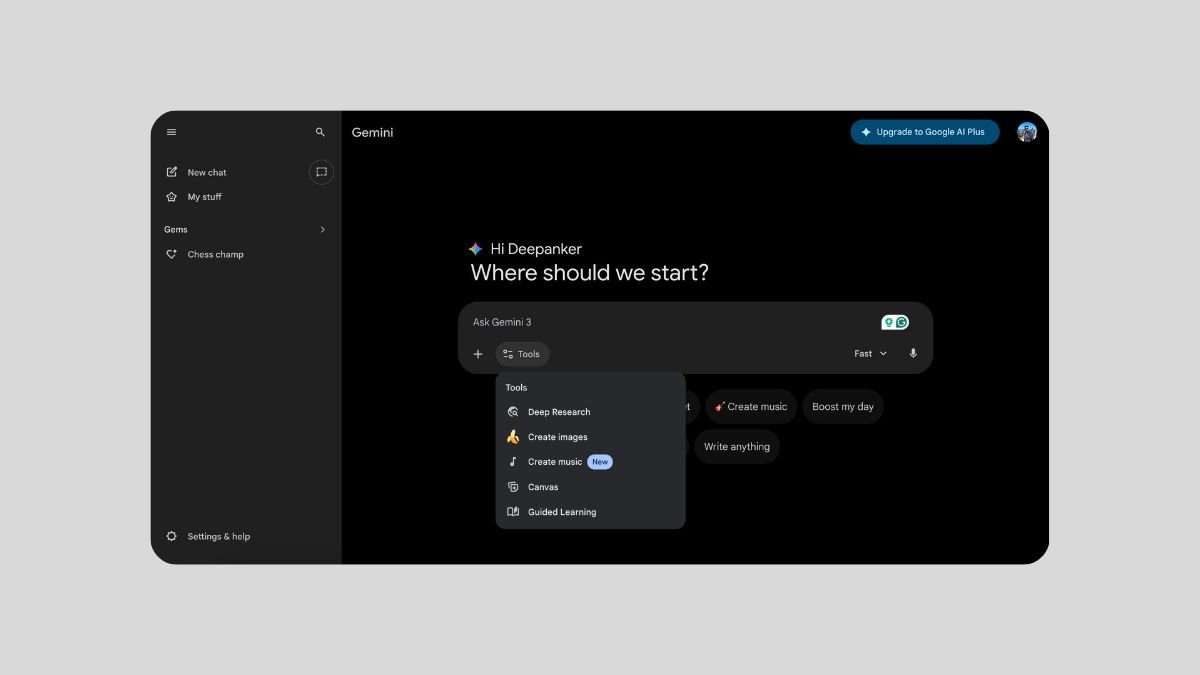
    Google has started rolling out AI-powered music generation inside the Gemini app. The new feature is powered by Lyria 3, which the company says is its most advanced music generation model so far. So, users can create a 30-second music track using simple prompts. You can type a description, upload a photo, or even add a short video. Gemini will then generate music that matches the mood and style of the input.

    The new Create Music tool is available inside the Gemini app under the Tools section. Once selected, users can describe the type of track they want. You can mention the genre, mood, instruments, and even the kind of vocals you prefer.

    Lyria 3 can generate instrumental tracks or include AI-generated lyrics with vocals. Users can also add their own lyrics if they want. The system supports a wide range of genres, including 90s rap, Latin pop, folk ballad, and R&B romance.

    The most notable thing is that it is not limited to text prompts. If you upload an image or a short video, Gemini will analyze the visual tone and create music that fits the scene. This could be useful for social media creators or short video makers who need quick background music.

    Google says the feature is rolling out broadly to all Gemini users at no cost. This makes it easy for casual users, students, and content creators to experiment with AI music without paying for a subscription.

    Lyria 3 is also being integrated into YouTube’s Dream Track feature. This will allow YouTube creators to generate short music clips directly for their videos.

    Google has added safeguards to reduce the risk of copyright issues. The system is designed to avoid directly copying or mimicking well-known artists. The company says the goal is to support creativity, not replace professional musicians.

    Another limitation is the length. Tracks are capped at 30 seconds, which shows that this tool is aimed more at short-form content rather than full-length songs.

    AI music generation is becoming more competitive with the rise of music LLMs. Suno is currently one of the most popular AI music platforms and allows users to create longer tracks of up to a few minutes. Reports also suggest that OpenAI may introduce its own AI music tools in the near future. With Lyria 3 now live inside Gemini, Google is clearly entering the race more seriously.

    Follow Techlomedia on Google News to stay updated. Follow on Google NewsFollow on Google News

    Affiliate Disclosure:

    This article may contain affiliate links. We may earn a commission on purchases made through these links at no extra cost to you.

  • Verizon hears you: phone unlocks are maddening

    Verizon hears you: phone unlocks are maddening

    If you’ve ever paid off your Verizon phone and waited what felt like forever to unlock it, you’re not alone. What’s more, Verizon now appears to agree. Following backlash over a new 35-day waiting period for unlocking fully paid-off devices, the carrier has acknowledged in a statement to Android Authority that the process is frustrating and states that relief is coming soon.

    Under Verizon’s updated unlocking policy, postpaid customers who settle a device’s balance through common channels like the My Verizon app, online my account payment, or using a Verizon gift card may face a 35-day delay before their phone can be unlocked for use on another carrier. Previous FCC rules had required automatic unlocks after 60 days, but that requirement was lifted earlier this year, giving Verizon more leeway to set its own terms.

    Verizon hears the frustration and wants to fix it

    The carrier’s device-unlocking policy defines a “secure payment method” such as paying in person at a Verizon corporate store with cash or using an EMV chip credit card or contactless wallet, as a way to get an immediate unlock after payoff. But because many customers prefer to pay off phones from home or online, the longer wait applies to a wide swath of users.

    That has led to public frustration, particularly for travelers who want to use local SIMs abroad or anyone hoping to switch carriers soon after paying off a device. Now, Verizon appears to have taken that feedback seriously. The company reportedly told outlets that it recognizes the unlock experience needs improvement and is working to eliminate or significantly reduce the 35-day waiting window “soon.”

    It’s worth noting, though, that Verizon hasn’t yet laid out a firm timeline or detailed exactly how the unlock process will change. Nonetheless, the promise of faster unlocking, including for phones paid for online or via the app, will be welcome news for customers who felt pinned down by the company’s earlier policy shift.

  • Adobe Expands Free Access to Firefly, Photoshop and Acrobat for Indian Students

    Adobe Expands Free Access to Firefly, Photoshop and Acrobat for Indian Students

    Add Techlomedia as a preferred source on Google. Preferred Source

    Adobe has announced a new initiative to provide free access to its AI-powered creative and productivity tools for students in India. The announcement was made at the India AI Impact Summit 2026, where several global technology companies showcased their AI plans for the country.

    The new program aims to help higher education institutions prepare students for AI-driven careers by giving them access to industry-standard software along with structured training and certification.

    Students will be able to use Adobe Firefly, Photoshop, and Acrobat at no cost through accredited institutions. The program also offers training modules, updated curriculum support, and certification programs.

    Adobe says the goal is to build practical AI skills among students so they are ready for careers that increasingly demand creative and technical fluency.

    Adobe plans to expand its outreach to 15,000 schools and 500 colleges through Content Creator Labs. These labs will provide access to AI-powered tools along with an industry-backed curriculum at no cost.

    Adobe India is also partnering with NASSCOM FutureSkills Prime, a digital skilling platform working in collaboration with the Ministry of Electronics and Information Technology.

    At the Summit, Adobe is also presenting Kathāvatār, a collection of five short AI driven films inspired by Indian folklore. The films have been created in collaboration with the Ministry of Information and Broadcasting and will be screened at the AI Theatre during the event.

    This demonstrates how AI tools can support storytelling and creative experimentation while staying rooted in local culture.

    Follow Techlomedia on Google News to stay updated. Follow on Google NewsFollow on Google News

    Affiliate Disclosure:

    This article may contain affiliate links. We may earn a commission on purchases made through these links at no extra cost to you.
  • A $379.99 QD-OLED monitor is a better upgrade than most PC parts

    A $379.99 QD-OLED monitor is a better upgrade than most PC parts

    If your current monitor is “fine,” an OLED deal like this is how you find out what you’ve been missing. Better contrast, cleaner motion, and that punchy look that makes games feel more alive, even before you touch a setting. Right now this AOC 27-inch QD-OLED gaming monitor is $379.99, down from a $549.99 compared value, saving you $170. For a QD-OLED panel with a 240Hz refresh rate, that’s an unusually approachable price for a screen that can genuinely change how your setup feels.

    What you’re getting

    This is a 27-inch QD-OLED monitor with a QHD (2560×1440) resolution and a 240Hz refresh rate, plus a claimed 0.03ms response time. The practical benefit of OLED is simple: you get deep blacks and high contrast, and motion looks crisp because pixels change extremely fast.

    It’s also G-Sync compatible, which helps smooth out gameplay by reducing tearing and stutter when your frame rate isn’t perfectly locked.

    In day-to-day use, 27-inch 1440p is a sweet spot. It’s sharp enough for work and browsing, and it’s a comfortable resolution for gaming without demanding the same horsepower as 4K.

    Why it’s worth it

    This is a different kind of upgrade than a new mouse or headset because you see it constantly. QD-OLED monitors tend to make everything look more dimensional, especially in darker games, sci-fi scenes, and anything with dramatic lighting. If you play a mix of competitive titles and single-player games, the combo of 240Hz and OLED response is a best-of-both-worlds setup: smoothness when you want speed, and image quality when you want immersion.

    It also makes practical sense because monitors usually outlast multiple PC upgrades. You can swap GPUs, rebuild your rig, change consoles, and the monitor still sits at the center of the experience.

    The bottom line

    At $379.99, this AOC 27-inch QD-OLED 240Hz monitor is a strong pick if you want a noticeable jump in both motion clarity and picture quality without spending flagship money. If you’ve been waiting for OLED to dip into more sensible pricing, this $170 discount is exactly the kind of deal that makes the upgrade easy to justify.

  • Frontier Legends Coming to Early Access This Spring on PC

    Frontier Legends Coming to Early Access This Spring on PC

    Add Techlomedia as a preferred source on Google. Preferred Source

    Frontier Legends is set to launch in Early Access this spring for PC. The game will be available on Steam and the Epic Games Store. Developer Neojac Entertainment confirmed the release window along with details about upcoming demos.

    Before Early Access begins, the game will be featured in Steam Horse Fest from February 19 to 23. A new demo is also scheduled to go live in March, giving players another chance to try it before launch.

    Frontier Legends is an open-world survival and crafting game set in the Wild West. Players start as a new settler trying to survive in a harsh frontier environment. You will need to manage hunger, resources, and shelter while dealing with wildlife, bandits, and changing weather. The game includes dynamic day and night cycles and weather systems that affect gameplay.

    Over time, players can build and expand their own settlement. You can recruit NPC settlers and assign them tasks such as farming, crafting, gathering, and defending the town.

    Horse taming is an important part of the game. Players can find wild horses, tame them, and train them. Each horse has different attributes, which make them useful for travel and survival. Combat and Exploration are also important parts of the experience.

    Frontier Legends includes cooperative multiplayer. Players can team up to build settlements, trade, and survive together. There is also the option to compete in seasonal challenges and community events for rewards.

    Also Read:

    Follow Techlomedia on Google News to stay updated. Follow on Google NewsFollow on Google News

    Affiliate Disclosure:

    This article may contain affiliate links. We may earn a commission on purchases made through these links at no extra cost to you.