Google is preparing a major wave of Android upgrades to roll out alongside Samsung Unpacked on February 25, introducing new AI-powered abilities designed to simplify tasks, improve search, and enhance user safety. The updates, which will debut on devices like the Samsung Galaxy S26 and Google Pixel 10, mark one of Android’s most significant ecosystem expansions this year.
Android deepens AI integration across everyday tasks
The biggest upgrade comes through Gemini, Google’s AI assistant, which can now handle complex, multi-step tasks entirely in the background. Available in beta on select devices in the U.S. and Korea, users can offload time-consuming activities – such as ordering a ride or building a grocery cart – to Gemini with a single request. As Gemini processes the task inside the relevant app, users can continue texting, browsing, or doing anything else on their phone without disruption.
Google
The feature is launching first with select food, grocery, and rideshare apps, but its design suggests broader expansion over time. It’s a strategic step toward making Android devices more autonomous, reducing the friction of juggling multiple apps and errands.
This shift matters because it hints at a future where smartphones proactively complete tasks rather than simply enabling them – an evolution that will particularly benefit users who rely heavily on phones for daily logistics.
Circle To Search gets smarter, expands visual understanding
Circle to Search, Google’s screen-based gesture tool that allows users to draw around anything to learn more about it, is also receiving a major boost. The latest update expands its search capabilities from isolated items to entire looks and full outfits, identifying clothing, shoes, accessories, and more in a single gesture.
This update makes Circle to Search substantially more useful for shopping, inspiration, and visual discovery. For users increasingly reliant on mobile search for lifestyle and style decisions, the ability to identify “the whole look” streamlines what used to be multiple searches into one.
The expanded capability begins rolling out this week for Galaxy S26 and Pixel 10 devices, reinforcing Google’s strategy of making visual search as essential as text-based queries.
Stronger scam protection arrives for calls and texts
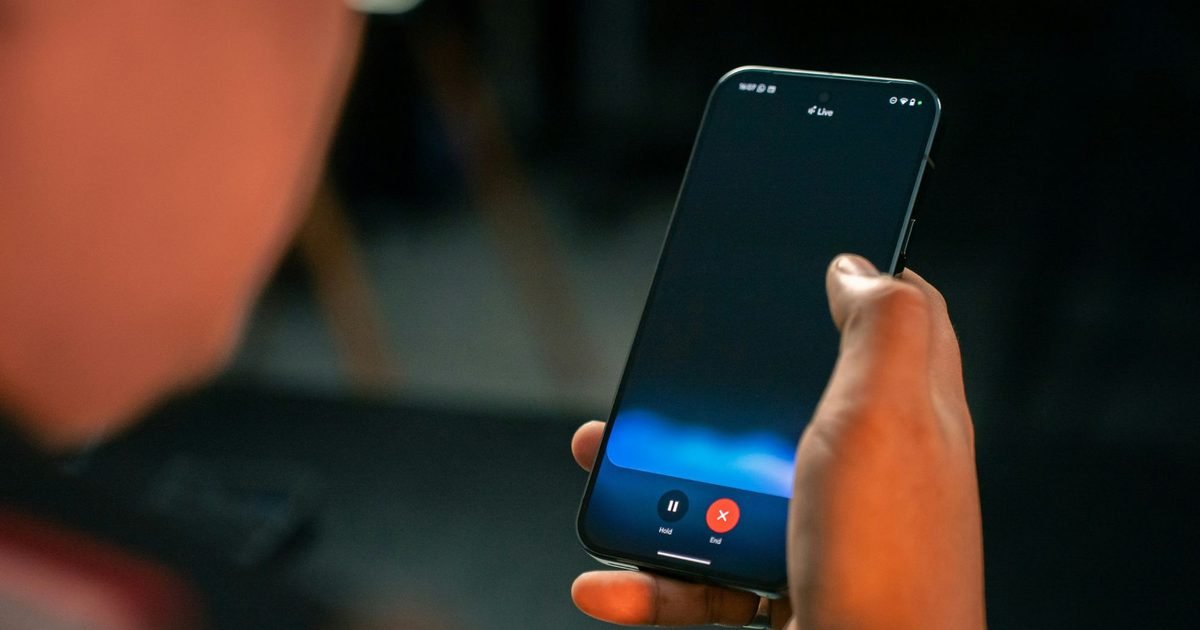
Google is also improving safety with enhanced Scam Detection, powered by the on-device Gemini model. The feature, previously limited to Google’s own apps, now arrives in the Samsung Phone app on Galaxy S26 devices in the U.S. for English-speaking users.
Google
The system listens for suspicious conversational patterns – such as urgent requests for money or impersonation tactics – and issues a warning before users can fall victim. Google Messages is also receiving improvements to its scam detection for text messages, adding another layer of protection against rising fraud attempts.
These upgrades matter because scams frequently target users through calls and texts, and on-device AI allows detection to happen in real time without sending audio or data to the cloud.
What comes next
The company is expected to expand Gemini’s background-task abilities to more apps, broaden Circle to Search support across devices, and widen scam protection to additional regions and languages.
For Android users, these updates signal a platform increasingly shaped by AI – not as a novelty, but as a practical assistant woven into the fabric of daily device use.
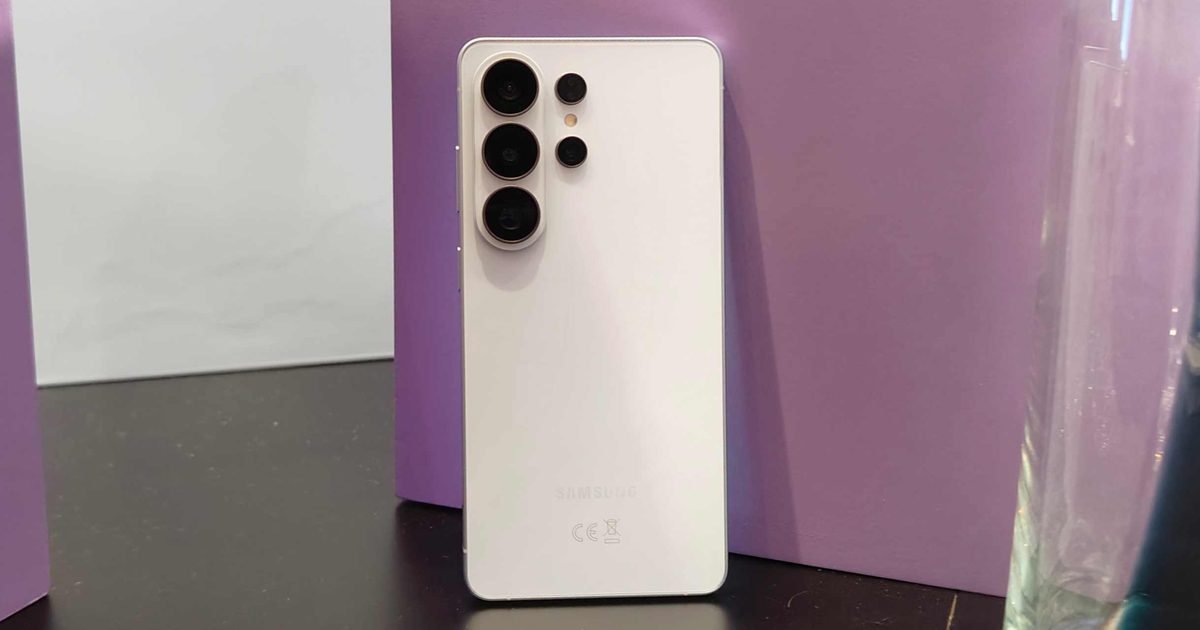
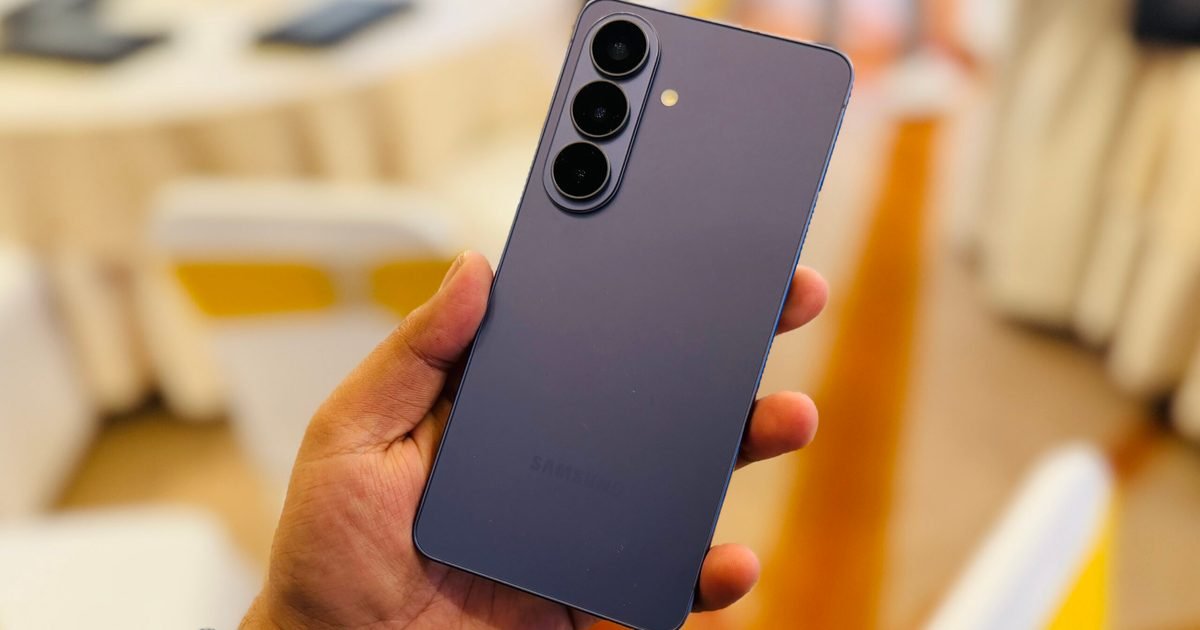
Samsung’s Galaxy S26 series is, and sitting atop the lineup is the all-new Galaxy S26 Ultra. It won’t make you gasp with excitement or throw your current phone out the window, but it will make you appreciate how Samsung has tightened every bolt it could find, while the asking price of $1,299 remains the same as its predecessor.
First up, the Galaxy S26 Ultra has a 7.9 mm side profile, making it even thinner than the 8.2 mm Galaxy S25 Ultra (not to mention it’s four grams lighter). The relatively rounder chassis houses a familiar 6.9-inch QHD+ Dynamic AMOLED 2x panel that supports the same 120Hz refresh rate.
Tom Bedford / Digital Trends
Slimmer design, same display — but a new privacy trick
What’s new, however, is the built-in Privacy Display, which offers pixel-level light dispersion control for limiting side-angle visibility on demand.
The feature works in both portrait and landscape, fires up automatically when you’re entering sensitive information (such as passwords, OTPs, or pins), and doesn’t degrade the viewing angles when disabled.
Under the hood sits a custom Snapdragon 8 Elite Gen 5 (3nm) with two 4.74 GHz prime cores and an Adreno 840 GPU. The chipset offers a 19% CPU boost, a 25% GPU improvement, and a 39% NPU jump over the Galax S25 Ultra.
Tom Bedford / Digital Trends
Snapdragon power boost fuels a smarter Galaxy AI
The last figures matter the most, because Samsung is leaning hard into the third generation of Galaxy AI, which offers features like Now Nudge, which is a fancy term for context-aware suggestions, improved Now Brief, which is more proactive and personalized than before, and upgraded Circle to Search, which can recognize multiple objects at once.
Thanks to Perplexity AI integration, Samsung’s Bixby is now more conversational and functions as a true device agent. And yes, you can select your AI agent of choice, between Google’s Gemini AI and Perplexity AI assistant, for voice interactions or handling multi-step commands.
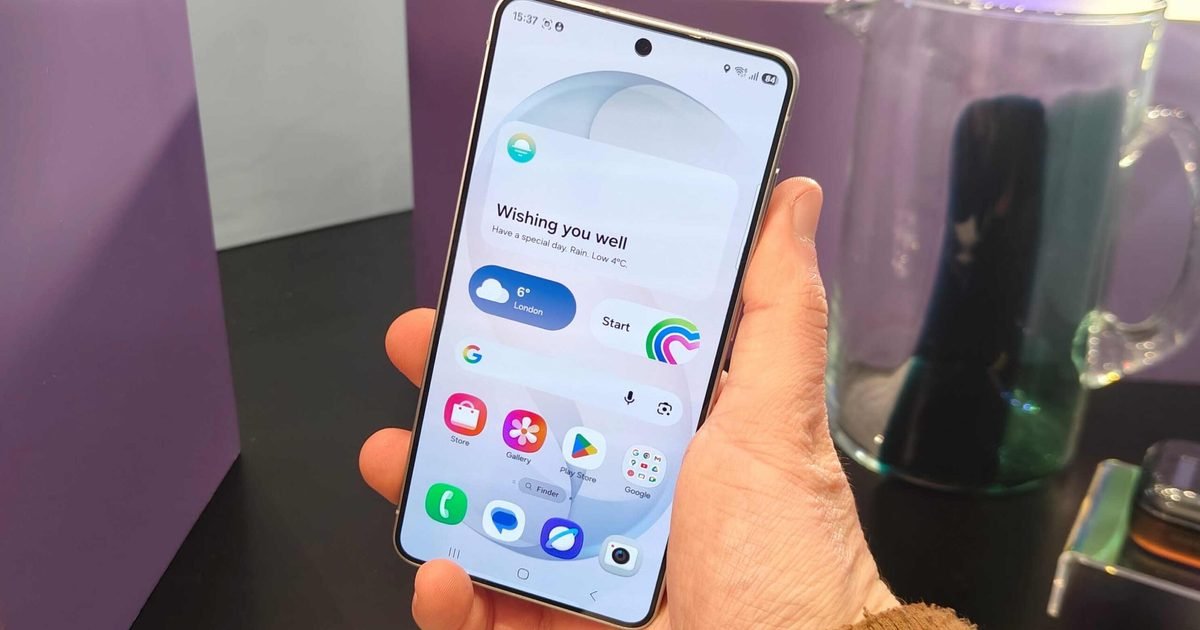
Out of the box, the Galaxy S26 Ultra runs One UI 8.5, based on Android 16.
Tom Bedford / Digital Trends
Camera tweaks focus on brighter low-light and pro video
The camera system also gets minor tweaks. The 200MP primary camera, for instance, now has a wider F1.4 aperture (F1.9) which allows 47% more light. The 50MP telephoto camera also gets a larger aperture (F2.9), which lets in 37% more light.
The sensor size, however, remains the same for both the primary and the 5x telephoto camera. Other cameras, such as the 10MP (f/2.4) for 3x optical zoom and the 50MP (f/1.9), remain exactly the same as the predecessor, and so does the 12MP (f/2.2) selfie shooter.
The phone can still record 8K videos at 30 fps, 4K videos at 120 fps, capture RAW pictures, and log videos.
The Samsung Galaxy S26 Plus, typing in a Generative Edit prompt.Tom Bedford / Digital Trends
Familiar battery, faster charging, modern connectivity
Certain software-based tweaks include enhanced Nightography Video, upgraded Super Steady mode with a new horizontal lock option, and a new APV codec, which offers professional-grade compression and virtually lossless video.
The Galaxy S26 Ultra also features a 5,000 mAh battery (same as the Galaxy S25 Ultra, same as the Galaxy S24 Ultra from the year before), which now charges up to 75% in just 30 minutes via Super Fast Charging 3.0 with a 60W adapter.
Connectivity options on the smartphone include 5G, LTE, Wi-Fi 7, Bluetooth v6.0, and a USB Type-C 3.2.
Back when I started testing tech, it felt like the big draw of each new premium phone was its new feature set – eventually that gave way to higher-res cameras, then faster charging, then other hardware specs being the main draw, but the Samsung Galaxy S26 series feels a return to the old way of doing things.
Consisting of the Samsung Galaxy S26, S26 Plus and S26 Ultra, the new trio of mobiles feels incredibly familiar – and that’s because they are. The S26 has mostly the same specs as the Galaxy S25, the S26 Plus is barely different to the Galaxy S25 Plus and the Ultra model only has a few changes over the Galaxy S25 Ultra.
What’s really new is the myriad new features and tools that Samsung has loaded into its new phones; some of them are AI-labelled ones, following on from the company’s insistence that these be named “AI phones” instead of “smart phones”, but there are plenty of lovely other little tweaks under the hood too.
Ahead of their official launch, I got to spend some time with all three members of the Samsung Galaxy S26 line, and was reassured that spec stagnation doesn’t mean these are the deja vu phones I’d been expecting.
Samsung Galaxy S26 series design looks familiar, but with some tweaks
The Samsung Galaxy S26 Plus, standing up and leaning on a wall.Tom Bedford / Digital Trends
Okay, I’ll admit: to look at them, the Samsung Galaxy S26 members don’t look overly different from their predecessors. The sizes are almost the same, the buttons and cameras are in the same configuration, and there are no brand-new colors, from what I can tell.
But there are a few tweaks. The Galaxy S26 Ultra is thinner than before, measuring just 8.3mm – it’s no S25 Edge, but it loses some heft. Similarly the base Galaxy S26 is now slightly bigger, with its screen bumped up to 6.3 inches diagonally.
For the most part, the display specs are the same too, with Samsung rocking out its good-looking displays once again. But a headline feature of the Galaxy S26 Ultra does come to the display and, in a twist, it intentionally makes the screen look worse. Or, ‘worse’.
The Samsung Galaxy S26 Ultra, angled for its Privacy Display.Tom Bedford / Digital Trends
This is Privacy Display, only available in the top-end model. It’s a built-in tool which reduces the viewing angles of the screen, so if you rotate it vertically or horizontally, it’s almost impossible to see what’s on the display – perfect to stop nosy people seeing what’s on your screen, and protecting your privacy if you’re online banking or seeing sensitive information in public.
It can be enabled via the swipe-down menu, and there’s customization too: you can choose for it to only work on certain apps, on specific parts of the display, or just for notifications.
This is more effective in real life than the pictures betray, and could be a gamechanger for business users (or really private people).
Samsung Galaxy S26 software is where the upgrades shine
The Samsung Galaxy S26 Plus, typing in a Generative Edit prompt.Tom Bedford / Digital Trends
It’s in the software and feature department, that Samsung is hoping its killer sales pitch lies. I’ve got to say, I’ve been impressed by what I’ve seen, enough that these tools are what first came to mind when I began writing this hands-on review.
My favorite tool is the upgraded Audio Eraser, which now works in third-party apps (and not just Samsung’s ones) to remove noises like wind, crowds or traffic. Useful for watching sports games, live streams or poorly-mixed videos, so you don’t get distracted by the noise.
A Samsung Galaxy S26 Ultra in a man’s handf.Tom Bedford / Digital Trends
But what else? AI is, of course, the name of the game, but for the most part it’s not auto-writing or generative slop, but organizational tools. Now Nudge can suggest actions based on context (if someone asks for another person’s phone number, it can summon it for you), Circle to Search now works for multiple circled items at once (an entire outfit, for example), Search with Finder can now scan your notifications too (great for condensing multiple group chats to find what you need) and Now Brief now takes relevant information from a range of apps (it can find dates from across your apps, not just calendar ones).
Another big tool is call screening, which builds on past iterations by getting an AI chatbot to answer your calls for you and demand responses. It seems quite cold, all things considered, but I suppose there’s no use extending courtesy to spam callers.
Samsung Galaxy S26 cameras enjoy one hardware and one software improvement
The Samsung Galaxy S26 Plus in Generative Edit mode.Tom Bedford / Digital Trends
It’s time to repeat the chorus of this song: the Samsung Galaxy S26 specs are pretty similar in the camera department, just like everywhere else. The standard and Plus models enjoy a 50MP main, 10MP telephoto and 12MP ultra-wide camera while the Ultra gets a 200MP main, 10MP and 50MP zoom cameras and 50MP ultrawide.
The apertures have seen a reshuffle, though, most notably with the main cameras now coming in at f/1.4. So they should pick up a little more light, with which to spit out brighter and more vibrant images.
There are relatively new features too, but the ones that exist have seen some upgrades. Nightography uses the bigger apertures to capture more data, thus improving its noise reduction, and Pro can now shoot in APV 8K 30fps. Auto-framing now works better to capture moving 4K images, while the steady video mode uses the accelerometer and gyrosphere to record even steadier snaps. ProScaler will upscale grubby pictures to become even clearer, and mDNIe 10-bit data processing apparently allows you to capture four times the colors.
The camera bump of the Samsung Galaxy S26 Ultra.Tom Bedford / Digital Trends
These are all features I’ll need to test out in the wild to see if they’re any good, but my most intriguing is improvements to the selfie camera. I’ve long maligned how brands have prioritized rear cameras, packing them with better ISPs and engines, and not offering this to the front camera even if the hardware is identical, but no longer. Now, the front camera will use the same enhanced AI ISP and object aware engine that the rear ones do.
Generative Edit has seen a big enhancement, and I spent quite some time playing around with this. Now, you can write prompts to the phone to edit pictures you’ve taken, from the small things (change the color of the background) to the big, which you can see in the pictures accompanying this review (add a cat to the image). It’s neat if you’re using it to make small edits and adjustments, although if you fly too close to the sun, you risk turning your own photos into AI slop.
Samsung Galaxy S26 performance enhancements are to be expected
It wouldn’t be a new generation of smartphone, if it didn’t come with a faster chipset, right?
The Samsung Galaxy S26 in Finder search.Tom Bedford / Digital Trends
In the UK, where I was briefed, the Samsung Galaxy S26 and S26 Plus will get the company’s own Exynos 2600 chipset, while the S26 Ultra will get the Snapdragon 8 Elite Gen 5. That’s right, after missing the S25 generation, the Exynos and Snapdragon split is back! Based on precedent, I’d expect buyers of the base and Plus model in the US, Canada and China to also get the Elite Gen 5.
When describing this new chip for the Ultra, Samsung said it should offer neural processing up 39%, GPU performance up 24% and CPU enhancements of 19%. How these boosts will manifest themselves in day-to-day use, or under intensive testing, is something I’ll need to check.
Tech fans might recognize Snapdragon chipsets for their ongoing overheating problems; apparently Samsung knows this, because it’s redesigned the thermal architecture for the S26 Ultra. It has a bigger vapor cooling chamber now, which the company says is 21% more efficient than before. I didn’t put it through its paces, or play any games, but none of the Ultra models I tested got particularly hot.
Samsung Galaxy S26 charging will be faster… and slower
The Samsung Galaxy S26 Ultra, faced down on a desk with its stylus out.Tom Bedford / Digital Trends
The familiar roster of specs from the S25 phones returns, and given that I only had an hour with the new mobiles, I didn’t get to test out their battery lives or charging speeds. I’m particularly interested in how Privacy Display impacts the Ultra’s lasting power. But there are a few little tweaks.
For example, the Samsung Galaxy S26 and S26 Ultra retain the 25W wired charging of their predecessors, as well as 15W wireless. However thanks to a 300mAh power pack size increase, the base model will likely charge even slower.
Samsung has upgraded the S26 Ultra’s charging speed to 60W, which is a nice solid bump that should see its 5,000mAh battery power even quicker. I’m a firm believer that premium phones need fast charging, so you can power them up quickly and start using them again, and 60W is a step in the right direction.
Samsung has officially launched the Galaxy S26, the latest addition to its flagship smartphone lineup. The new device builds on the foundation of last year’s model, bringing a series of updates across AI, performance, and software, though not much has changed in terms of looks and core hardware chops.
But let me get the bad part out first. The asking price of Galaxy S26 has climbed up to $899, while the Galaxy S26 Plus now starts at $1,099 in the US, up from the $999 retail value last year.
What’s new?
Like the previous two years, Samsung’s main focus is on adding and improving AI features. It starts with the new SoC. Samsung Galaxy S26 will be powered by the Snapdragon 8 Elite Gen 5 for Galaxy. The new chipset delivers significant performance gains, with the CPU, NPU, and GPU improving by 19%, 39%, and 24%, respectively.
Nadeem Sarwar / Digital Trends
That said, like previous years, Exynos 2600 will power the S26 in some markets, while the rest get a Qualcomm chip. Samsung has said that its Exynos silicon is no slouch and brings significant performance improvements.
The CPU is 39% faster, while a new built-in NPU should result in 113% faster AI performance. On the other hand, the included Xclipse 960 GPU delivers twice the performance compared to last year’s Xclipse 950, and 50% better ray-tracing performance.
Aside from the SoC upgrade, the phone is not so different from the outgoing Galaxy S25. The display sees a modest increase in size and now measures 6.3 inches, while battery capacity has increased by a mere 300mAh.
Nadeem Sarwar / Digital Trends
The cameras remain unchanged from previous years, so any improvements will stem from the new image engine and AI processing. Below is the full specifications list:
Rear cameras: 12MP Ultra-Wide Camera (F2.2) 50MP Wide Camera (OIS F1.8, 2x optical zoom) 10MP Telephoto Camera (3x Optical Zoom, F2.4) Front camera: 12MP, f/2.2
RAM and storage
12 + 512GB 12 + 256GB
Battery and charging
4,300 mAh Fast Wireless Charging 2.0 25W wired charging Wireless PowerShare
Operating system
One UI 8.5 based on Android 16
Network and connectivity
5G, LTE, Wi-Fi 7, Bluetooth 5.4
A generous dose of AI features
Samsung is calling the S26 the third generation of AI phones. This year, the company is focusing on features that make everyday tasks quicker and easier. Photo Assist lets you edit images by describing what you want in plain language, while Creative Studio can turn your sketches or text prompts into polished visuals.
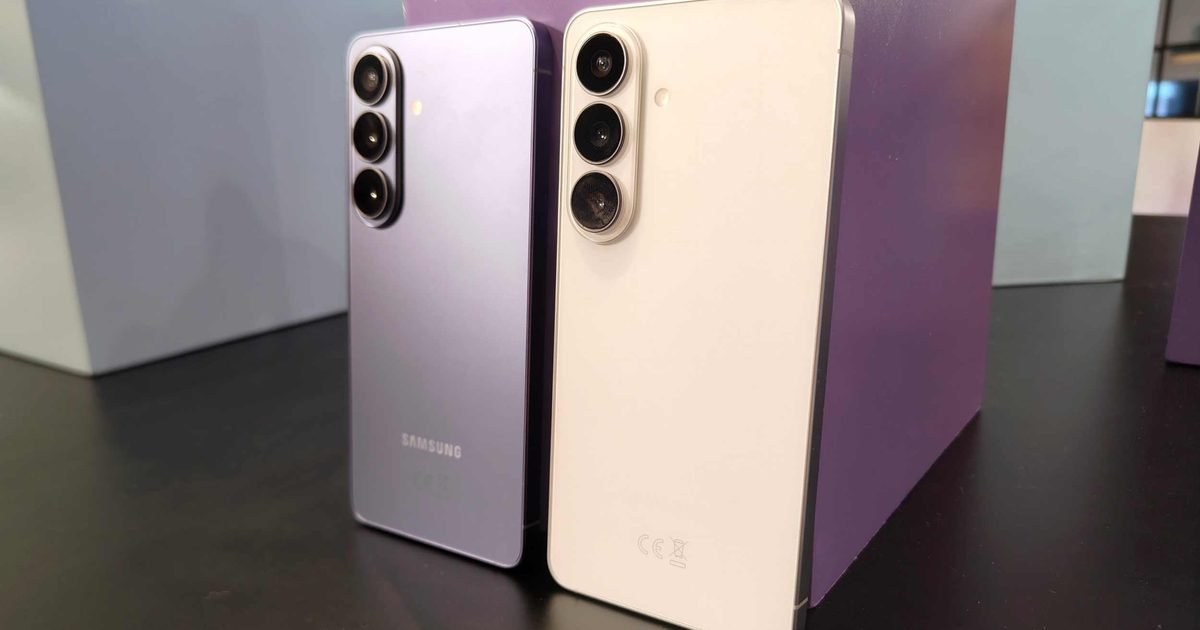
There’s an improved Bixby that should provide better multi-step performance. But if you don’t like it, you can always switch to Gemini or Perplexity thanks to their native integration. The Samsung Galaxy S26 will be available to pre-order today and will be up for grabs in Cobalt, Violet, White, Black, and Sky Blue, alongside the Samsung-exclusive Pink Gold and Silver Shadow colors.
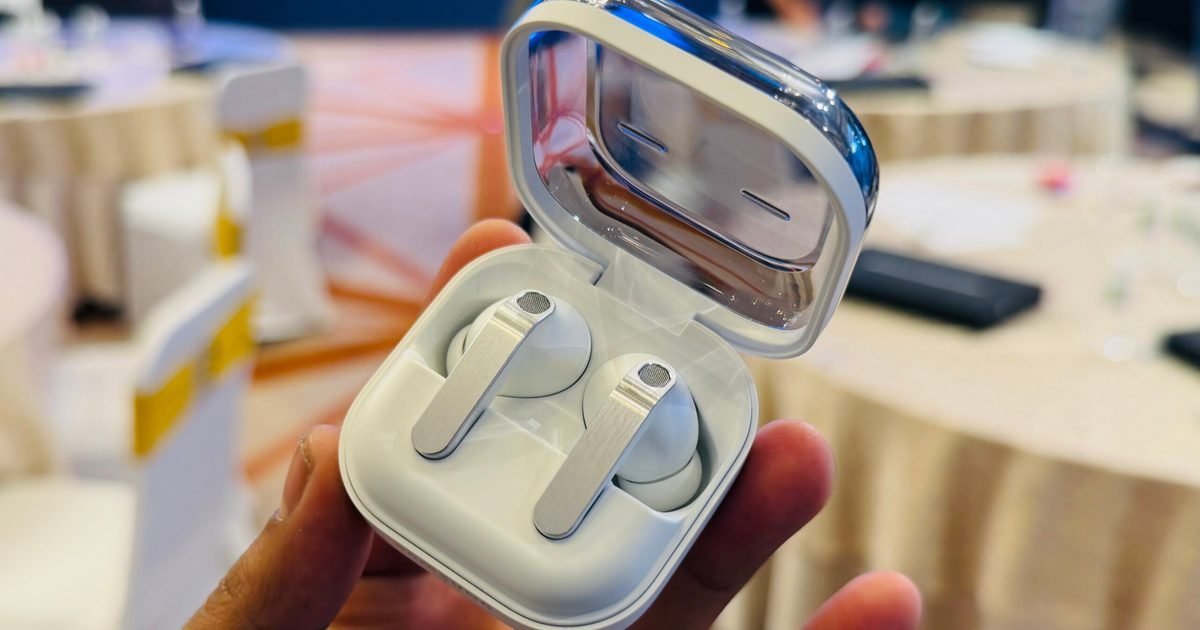
At its first Unpacked event of the year, Samsung refreshed its audio gear portfolio with the Galaxy Buds 4 series. Available in two variants — the baseline Galaxy Buds 4 and the flagship Galaxy Buds 4 Pro — they adopt a fresh design language and serve some neat new features, as well.
As far as the pricing goes, the badeline Galaxy Buds 4 come in at $179, while the Galaxy Buds 4 Pro will set you back by $249 a pop. You can pre-order both starting today, and if you pick one from Samsung’s store, you can get the Pro version in pink gold color, in addition to white and black shades.
On the surface
Samsung has redesigned the vanilla Galaxy Buds 4 with a smaller earbud head to go with its open-fit design, which is similar to the entry-level AirPods. To stand out, Samsung has flattened the stem and given it a metallic makeover, while the gesture controls have been moved to the sides.
On the Galaxy Buds 4 Pro, you get a design inspired by the AirPods Pro, thanks to their angled in-canal architecture with rubberized eartips. But once again, you get a two-tone design on these with an exposed vent and a transparent charging case that supports wireless power transfer.
Tom Bedford / Digital Trends
Another notable convenience is that you don’t have to install an app to access their core features, as long as you have a Galaxy smartphone in your hands. However, if you are pairing an Android phone from another brand or an iPhone, you will need to install the Galaxy Wearable app. The earbuds also support head gestures for handling calls and notifications, similar to the AirPods.
What’s in it for your ears?
Samsung says it has equipped the Buds 4 series with larger drivers, with the Pro model getting a wider woofer courtesy of slimmer edges on the periphery to enhance the sonic vibrations. These architectural changes open the doors for immersive 24-bit/96kHz audio transmission for hi-fidelity listening.
Tom Bedford / Digital Trends
For its latest earbuds, the company is also touting the virtues of Enhanced ANC, which should offer improved noise isolation. And to go with it, there’s a new Enhanced Adaptive ANC/EQ feature that tunes the sound output to the unique ear canal shape and sonic sensitivity of each person’s ears.
Then there’s the Super Clear Call feature, which relies on the super wideband call technology to double the bandwidth of the call signals and makes sure that the audio is clear. Samsung says the audio transmission on the Buds 4 Pro will “sound as if they were speaking face-to-face.”
Android is officially rolling out one of its most significant AI upgrades yet, launching alongside the new Samsung Galaxy S26 Series and Google Pixel 10 lineup. The update brings deeper intelligence to visual search, introduces hands-free task automation through Gemini, and strengthens scam protection – all designed to make Android devices more proactive, helpful, and secure.
This marks a clear shift in Android’s strategy: AI is no longer just assistive – it is becoming operational.
Circle To Search becomes multi-layered and more powerful
Since its debut, Circle to Search has allowed users to circle or scribble over objects on their screen to instantly learn more. With today’s launch, the feature evolves beyond identifying single objects and now understands entire scenes.
Users can circle multiple elements in an image and receive comprehensive results in one unified search. For example, spotting a vibrant underwater photo in a travel blog now lets you identify each fish species at once – along with context, scientific insights, and related resources.
Tom Bedford / Digital Trends
Fashion is where the upgrade becomes especially impactful. See an outfit on social media? Circle the entire look. Circle to Search now breaks down clothing, accessories, and shoes in one go, delivering visually similar results to help recreate the style. Instead of running separate searches for each item, everything appears together.
On the Galaxy S26 Series and Pixel 10 devices, users can even tap “Try It On” to virtually preview clothing on their body type. The integration turns visual inspiration into immediate action.
Behind the scenes, this upgrade uses advanced reasoning and visual query techniques powered by Gemini 3. The system identifies key parts of an image, runs multiple searches simultaneously, cross-references information, and compiles a cohesive response.
Gemini now handles multi-step tasks in the background
The second major launch feature introduces background task automation through Gemini. Available in beta on select Galaxy S26 Series and Pixel 10 models in the U.S. and Korea, users can now offload multi-step tasks directly to Gemini.
Need to order a ride? Reorder your usual meal? Build a grocery cart? Long-press the power button, ask Gemini, and it executes the task inside a secure virtual window of the required app – all while you continue using your phone normally.
Google emphasizes three pillars behind this rollout:
Control: Tasks begin only with your command and stop once completed.
Transparency: Live notifications allow you to monitor or interrupt progress.
Access: Gemini interacts only with the specific app required, not your entire device.
At launch, the feature supports select food, grocery, and rideshare apps, with broader expansion expected over time.
Scam Protection gets smarter with on-device Gemini AI
Security also receives a meaningful upgrade. Enhanced Scam Detection, powered by the on-device Gemini model, is now integrated directly into the Samsung Phone app on Galaxy S26 devices in the U.S. for English-speaking users.
The system analyzes conversational patterns in real time, identifying red flags such as urgent payment demands, impersonation attempts, or coercive language. If detected, Android surfaces an immediate warning before a user can fall victim.
The camera bump of the Samsung Galaxy S26 Ultra.Tom Bedford / Digital Trends
Google Messages is also receiving upgraded scam detection for text messages, strengthening protection against phishing links, fake delivery alerts, and fraudulent account messages.
Because detection happens entirely on-device, audio and message content remain private. No call recordings or messages are sent to the cloud – ensuring both immediate response and user privacy.
A clear direction for Android’s future
With this launch, Android positions the Galaxy S26 Series and Pixel 10 devices at the forefront of AI-driven mobile experiences. Visual search becomes richer. Shopping becomes immersive. Daily tasks become automated. And scam protection becomes more proactive.
Rather than adding AI as a feature, Android is embedding it deeply into how the platform works – making devices more capable without making them more complicated.
Google is making it very easy to feel like a music producer, whether you have the skills or not. The company has announced that ProducerAI, an AI-powered music-making platform, is joining Google Labs, bringing together sound generation, visuals, and video into one experimental creative tool.
ProducerAI is powered by a preview version of Lyria 3, Google’s newest music-generation model. You can describe what you want, and the AI helps you build it, whether that means crafting beats, shaping melodies, or experimenting with entirely new sounds.
ProducerAI first launched in July 2025 to let users collaborate with an AI agent to generate music, workshop lyrics, and remix tracks from text prompts. Until now, it relied on its own underlying models. Joining Google Labs gives it access to a much larger AI toolkit.
Inside Google’s AI-powered music studio
Godwin Jemegah / Unsplash
As a part of Google Labs, ProducerAI will pull from several of Google’s models. Lyria 3 handles music generation, while Gemini powers the conversational interface that guides users through ideas and edits.
Nano Banana will generate album art, and Veo will be used to create AI-generated music videos, turning a song idea into a complete audio and visual project. Google says it will also embed SynthID watermarks into ProducerAI outputs.
This flags AI-generated audio, images, video, and text, adding transparency as AI music becomes harder to distinguish from human work. But companies like Sony have already developed a tool to detect original songs used in AI-generated tracks.
The ProducerAI team has already worked with artists like The Chainsmokers, Lecrae, and Anjulie to shape the platform. Google positions ProducerAI as an experiment, not a replacement for musicians. However, this collaboration arrives at a time when AI-generated songs are topping Billboard charts, drawing scrutiny from artists and listeners alike.
Tel Aviv: Highlighting that India has also endured the pain of terrorism for a long time, Prime Minister Narendra Modi on Wednesday said that the country stands firmly with Israel with full conviction in the fight against the global menace.
“I also carry with me the deepest condolences of the people of India for every life lost and for every family whose world was shattered in the barbaric terrorist attack by Hamas on October 7. We feel your pain. We share your grief. India stands with Israel firmly, with full conviction in this moment and beyond. No cause can justify the murder of civilians. Nothing can justify terrorism. India has also endured the pain of terrorism for a long time,” PM Modi said during his historic address at the Israeli Parliament, Knesset, the first-ever by an Indian PM.
PM Modi addresses the Israeli Parliament Knesset, on Wednesday
PM Modi addresses the Israeli Parliament Knesset, on Wednesday
PM Modi addresses the Israeli Parliament Knesset, on Wednesday
In his landmark speech, which received a huge applause from the Israeli parliamentarians on a number of occasions, PM Modi said that the Gaza Peace Initiative endorsed by the UN Security Council offers a pathway.
“It is important to sustain hope. The Gaza Peace Initiative, which was endorsed by the UN Security Council, offers a pathway. India has expressed its firm support for the initiative. We believe that it holds the promise of a just and durable peace for all the people in the region, including by addressing the Palestine issue. Let all our efforts be guided by wisdom, courage, and humanity,” he said.
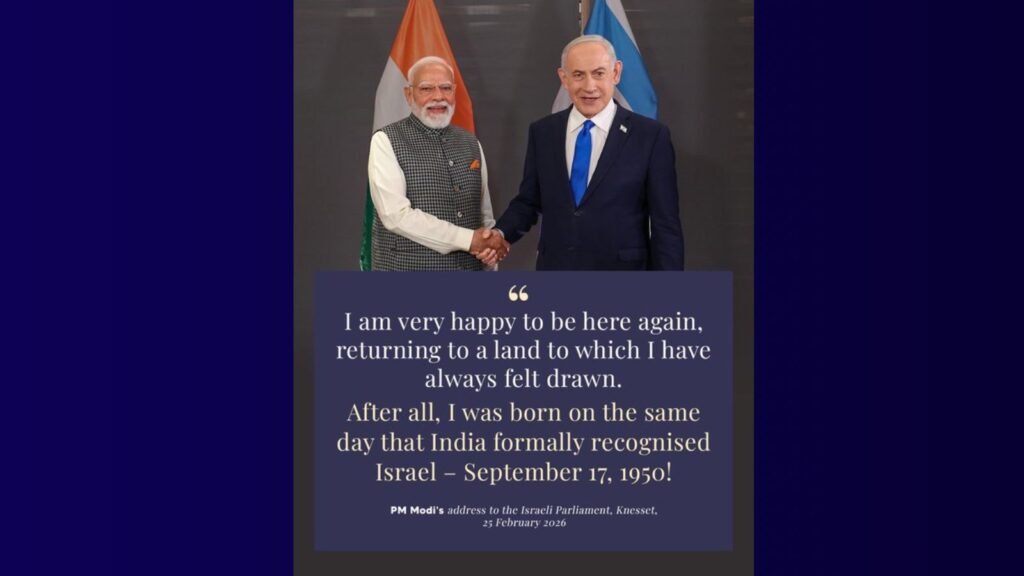
Prime Minister Modi said that he was very happy to be in Israel again, returning to the land to which he has always felt drawn.
“I bring with me the greetings of 1.4 billion Indians and a message of friendship, respect and partnership,” said PM Modi spotlighting that he was born on the same day that India formally recognised Israel – September 17, 1950.
In his address at the Knesset, PM Modi also labelled the Holocaust as one of humanity’s darkest chapters.
“Yet, even in those turbulent years, some acts of humanity stood out… The Maharaja of Nawanagar in Gujarat, also known as the Jam Saheb, offered refuge to Polish children, including Jewish children, who had nowhere else to turn,” he stated.
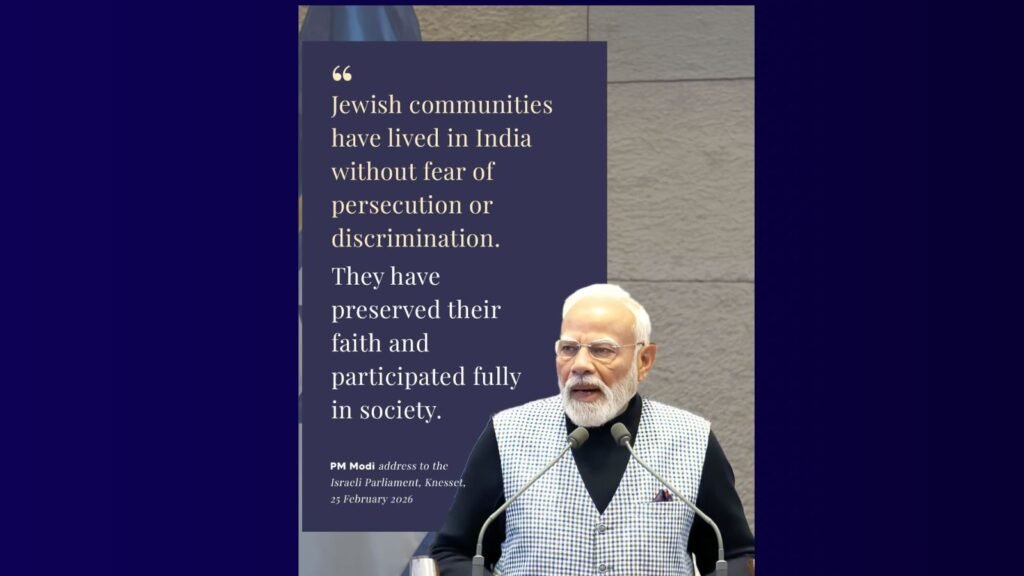
In his address at the special plenary session of the Israeli Parliament, PM Modi also mentioned that Jewish communities have lived in India without fear of persecution or discrimination.
“They have preserved their faith and participated fully in society,” he said.
Earlier, the Knesset gave a rousing welcome to PM Modi as the members stood clapping and the entire hall reverberated with chants of “Modi, Modi”.
“Mr. Prime Minister, Jerusalem me aapka swagat hai, Knesset me aapka swagat hai (Welcome to Jerusalem, Welcome to the Knesset),” Speaker Amir Ohana said in Hindi while welcoming PM Modi to the Israeli Parliament.
He also called PM Modi as the “defining statesman of our times”.
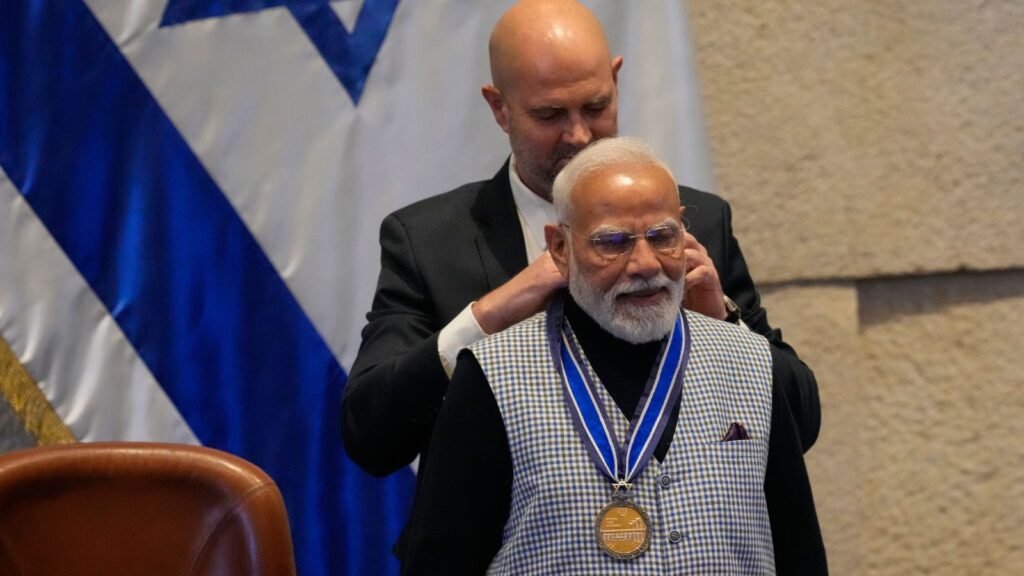
Modi conferred with Israel’s ‘Speaker of the Knesset Medal’
Prime Minister Narendra Modi was conferred with the ‘Speaker of the Knesset Medal’ in recognition of his exceptional contribution to strengthening strategic relations between India and Israel.
Israel’s Parliament Speaker Amir Ohana presents a medal to Indian Prime Minister Narendra Modi
The Indian Prime Minister is the first leader to receive this medal, which is the highest honour of the Knesset – the Israeli Parliament.
Knesset Speaker Amir Ohana conferred the award on the prime minister after his address at the Israeli Parliament.
The medal was conferred in recognition of the prime minister’s exceptional contribution – through his personal leadership – to strengthen strategic relations between India and Israel.
(With inputs from agencies)
Get the latest updates in Hyderabad City News, Technology, Entertainment, Sports, Politics and Top Stories on WhatsApp & Telegram by subscribing to our channels. You can also download our app for Android and iOS.
Sony Pictures is set to revive the Venom franchise with a bold new film. The Hollywood Reporter revealed that Sony is developing an animated film about Venom, with industry scooper Daniel Richtman later reporting on X that Sony is aiming or R-rating. The project will be directed by Zach Lipovsky and Adam B. Stein, who recently directed the hit horror film, Final Destination: Bloodlines. Like with Venom’s live-action movies, Amy Pascal, Avi Arad, and Matt Tolmach will produce this animated feature alongside Tom Hardy.
With this project, Sony continues to embrace animated Marvel movies after the success of the Spider-Verse films. Since each of these features has taken 4 to 5 years to make, it will be a while before we see the Lethal Protector back on the big screen.
It’s too early to tell whether this Venom film will succeed. Still, chances are it will triumph over live-action movies, as an R-rated animated feature would offer story and visuals that are darker, edgier, and much better suited to the character.
An R-rating could lead to a much more lethal protector
Sony Pictures / Sony Pictures
All of Tom Hardy’s Venom movies were rated PG-13, which held back much of the darkness, violence, and body horror that they could’ve drawn from the comic book source material. The films didn’t capture the true horror of an alien force infecting people’s bodies, forcing them to hurt and even eat people.
Sure, we got some shots of Venom biting people’s heads off in the films, but the character’s goofy, comedic antics made it hard for us to take him seriously. The level of horror, violence, and gore he could’ve unleashed with an R-rating would’ve helped distinguish his character from Spider-Man. It would have also been the perfect way to differentiate the Venom franchise from the milder Marvel Cinematic Universe.
Not long before Venompremiered, we saw with Deadpool and Logan that gruesome, R-rated comic book movies could win big at the box office. Though the proof was in the profits, Sony relegated the Venom franchise to a PG-13 rating, which seemed like a missed opportunity for the filmmakers to do something fresh with such a popular character.
The animation would be incredible to watch
Sony Pictures Releasing / Sony Pictures Releasing
At this point, it’s unclear what Sony’s new Venom film will look like. Given the studio’s recent slate of animated films, it will likely feature the recurring style pioneered by Spider-Man: Into the Spider-Verse. This 2018 film achieved great renown for its vibrant, comic-book-inspired visuals, which helped it win the Academy Award for Best Animated Feature. If this worked for Spidey, it would surely work for Venom.
Since live-action comic book adaptations continue to permeate pop culture, an animated Venom film should offer a fresher experience for moviegoers aching for something new. We have yet to see a bloody, brutal superhero movie presented in the Spider-Verse’s visual style.By blending this animation with Venom’s chaotic, shape-shifting action, Sony could give us an especially eye-popping movie beyond anything seen in the Spider-Verse franchise.
We could get a more comic-accurate Venom this time
Sony Interactive Entertainment / Sony Interactive Entertainment
It hasn’t been clarified whether the new Venom movie will be a part of Sony’s Spider-Man Universe. Sony revealed plans to reboot its cinematic universe after the disastrous performance of Morbius, Madame Web, and Kraven the Hunter. If the animated Venom film is part of this new status quo, we could see a more faithful adaptation of Venom’s origin story, with Spider-Man playing a significant role.
In the comics, Venom is the result of journalist Eddie Brock bonding with Spider-Man’s abandoned alien costume, creating a fearsome villain dead-set on vengeance against the hero for inadvertently getting him fired. But Hardy’s version of Venom has no connection to Spider-Man, and his alien character lacks the white spider emblem inherited from the web-slinger.
As Sony goes back to square one, the studio has the chance to return to Venom’s darker roots. However, we’ve already seen Eddie Brock become the evil Venom in Spider-Man 3, so we don’t need his origins retold on film. Like Spider-Man: Homecoming or The Fantastic Four: First Steps, we can skim the backstory and follow Eddie long after he became Venom and crossed paths with Spider-Man.
The web-slinger doesn’t need to have a huge role in the film for it to succeed. However, Sony failed to deliver a Spider-Man/Venom crossover with Hardy after years of buildup. Even when Eddie decided to go find Spider-Man, his plans were all but forgotten in Venom: The Last Dance, making it a lackluster conclusion to the franchise. To regain fans’ goodwill, Sony should deliver on its promise and finally bring Venom and Spider-Man’s stories together.
With this animated project on the way, presenting it as an R-rated picture is the perfect way for Sony to revitalize its hit Venom franchise. Audiences would see a darker, more gruesome Venom, closer to the character who won over fans in the comics. Combine that with Spider-Verse’s animation style, and we would have a unique and electrifying film. With Sony pushing the reset button on its Spider-Man Universe, this new approach could help get the Venom franchise back on track.
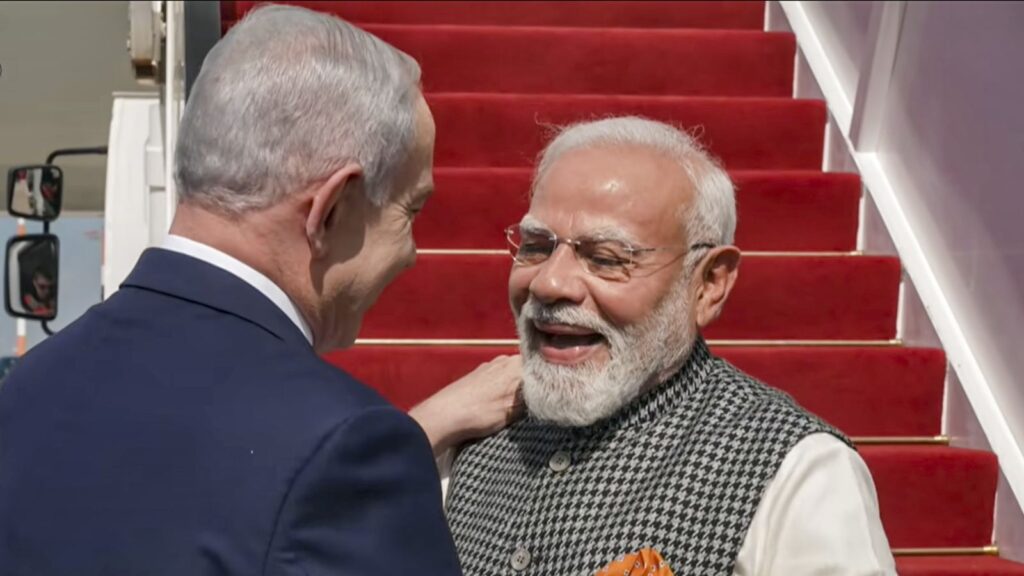
Jerusalem: Prime Minister Narendra Modi landed in Israel to a red-carpet welcome on Wednesday, with his Israeli counterpart Benjamin Netanyahu, along with wife Sara, receiving the Indian leader at the Ben Gurion airport, signalling a new momentum in bilateral ties.
It is PM Modi’s second visit to Israel in nine years. The India-Israel relationship was elevated to the level of a strategic partnership during his first visit to that country in July 2017.
“It’s a great honour to welcome you to Israel, Prime Minister Modi,” the Israeli prime minister said.
Prime Minister Narendra Modi with his Israeli counterpart Benjamin Netanyahu and his wife Sara Netanyahu
Prime Minister Narendra Modi with his Israeli counterpart Benjamin Netanyahu
AI generation disabled
Netanyahu greeted the Indian prime minister with a warm hug and a handshake, following which Modi was accorded a ceremonial welcome at the airport, located 20 kilometres southeast of Tel Aviv.
“I am extremely honoured to be received by Prime Minister Netanyahu and Mrs Netanyahu at the airport. I look forward to engaging in bilateral discussions and fruitful outcomes that strengthen the India-Israel friendship,” Modi said on social media.
PM Netanyahu said he and Modi share a “close personal relationship, speak often, and I believe that the deep friendship between us powerfully reflects on the ties between our two countries.”
“My wife Sara and I welcomed today our good friend, Prime Minister of India Narendra Modi, who has arrived for another historic visit to Israel,” the Israeli prime minister said on ‘X’.
Following the arrival ceremony, the two prime ministers held a brief one-on-one meeting.
“Had an excellent meeting with Prime Minister Netanyahu. Expressed gratitude to him for the warm welcome earlier in the day. It is a delight to be back in Israel after 9 years,” Modi said on ‘X’.
“We discussed a wide range of subjects aimed at boosting bilateral ties. Sectors such as technology, water management, agriculture, talent partnership and more offer immense scope for close collaboration. We also discussed key developments in the region,” he said.
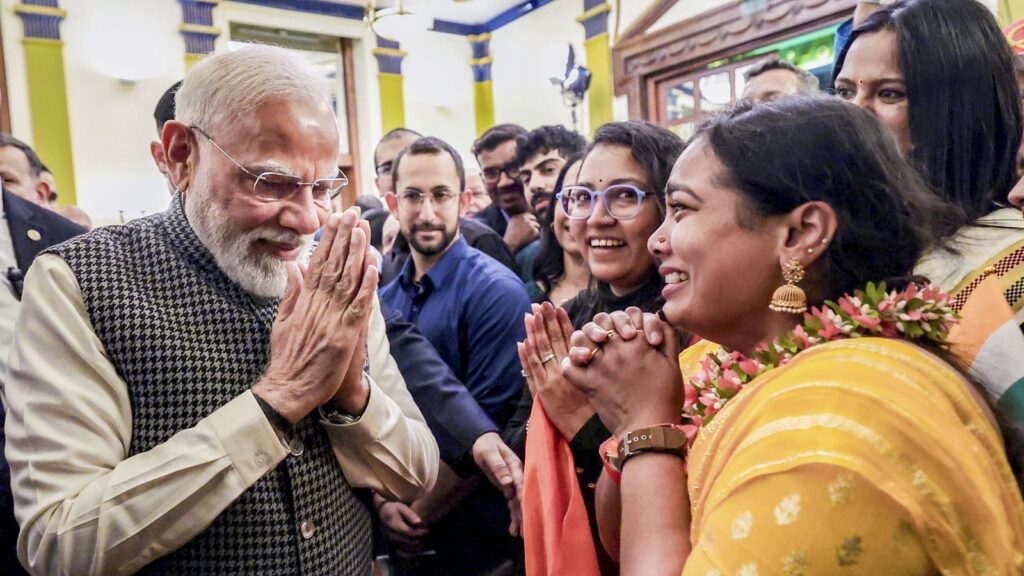
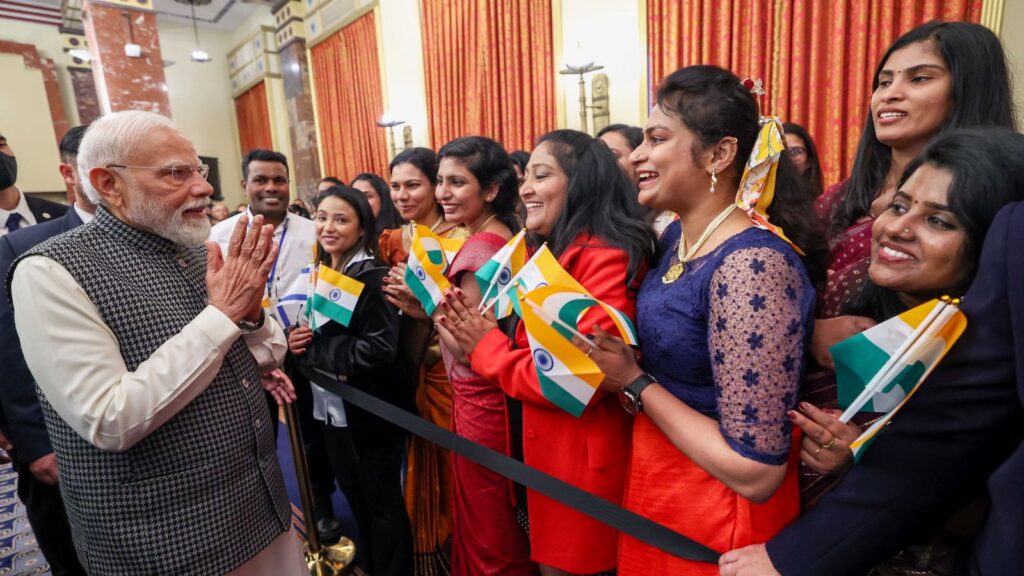
At the hotel, PM Modi was accorded a warm and enthusiastic welcome by the members of the Indian community and the representatives of the Jewish Indian diaspora.
The reception was marked by vibrant cultural performances by Indian and Israeli artistes, symbolising the enduring friendship between the two nations.
Prime Minister Narendra Modi being greeted by members of the Indian community in Tel Aviv
Prime Minister Narendra Modi being greeted by members of the Indian community in Tel Aviv
In his pre-departure statement, Modi said he was confident that the visit will further consolidate the enduring bonds between India and Israel and set new goals for the strategic partnership.”India and Israel share a robust and multifaceted strategic partnership that has witnessed remarkable growth and dynamism in recent years,” Modi said.
“I look forward to my discussions with Prime Minister Netanyahu aimed at further strengthening our cooperation across various domains, including science and technology, innovation, agriculture, water management, technology, defence and security, trade and investment, as well as people-to-people ties,” he said.
Modi said he and Netanyahu will also exchange views on regional and global issues of mutual interest.
“I am confident that my State Visit will further consolidate the enduring bonds between the two countries, set new goals for the strategic partnership, and advance our shared vision for a resilient, innovative and prosperous future,” Modi said.
The prime minister’s visit assumed greater significance as it is taking place amid the ongoing tensions in the Middle East, including deteriorating ties between the US and Iran.
There has been an upswing in India-Israel ties in the last few years, including in the areas of defence, scientific research, cybersecurity and innovation.
The defence cooperation has emerged as an important pillar of the partnership between the two sides, with Israel supplying a plethora of military platforms and weapon systems to India.
In November last, during the visit of India’s defence secretary to Israel, an important agreement on defence cooperation was signed.
As India is looking at developing an indigenous air defence shield called “Sudarshan Chakra”, it is learnt that New Delhi would like to explore the possibility of incorporating certain elements from Israel’s Iron Dome all-weather air defence system that can intercept and destroy missiles and artillery shells.
The trade and investment ties between the two sides are also witnessing steady progress.
During the visit to Israel of Commerce Minister Piyush Goyal in November, the term of reference (ToR) for the launch of Free Trade Agreement (FTA) negotiations between India and Israel was signed.
In September, the two sides had inked a Bilateral Investment Agreement (BIA) to expand economic cooperation.
The people-to-people ties between the two countries are also an important aspect of the overall relations, with over 41,000-strong Indian diaspora playing a key role in the two-way engagement.
Get the latest updates in Hyderabad City News, Technology, Entertainment, Sports, Politics and Top Stories on WhatsApp & Telegram by subscribing to our channels. You can also download our app for Android and iOS.