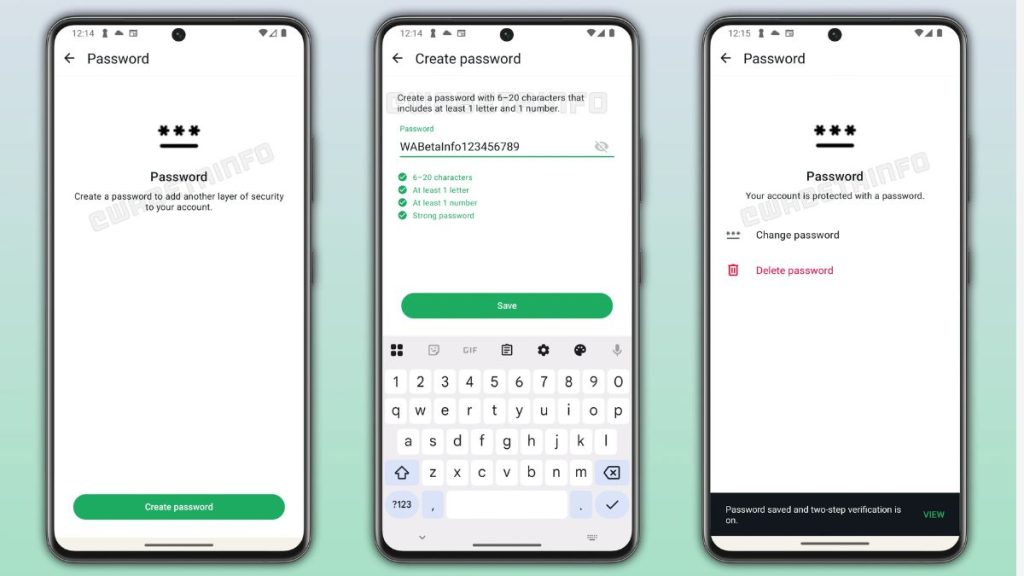
After 16 years since its launch, WhatsApp is finally preparing to add account passwords. The new feature has been spotted in a recent WhatsApp Beta for Android version 2.26.7.8. It suggests that users will soon be able to add a password to their accounts for extra security.
Currently, logging into WhatsApp is simple. Users enter their phone number and receive a six-digit SMS code. Once the code is verified, the account is activated.
This system works, but it has a weakness. If someone gains access to your SIM card, they can receive the OTP and log into your account. That makes accounts vulnerable in certain situations.
The upcoming password option will add another security layer. It will not replace the current SMS verification process. Instead, it will work alongside it.
When enabled, the login process on a new device will look like this:
First, enter the six-digit SMS code.
Then, if enabled, enter the two-step verification PIN.
Finally, enter the account password.
This multi-step system makes it much harder for someone to access your account without permission.
Importantly, setting a password will not be mandatory. Users can still continue using WhatsApp without adding one. It will be an optional security feature.
Right now, the password feature is only available in WhatsApp Beta for Android. There is no official confirmation about iOS support yet. Interestingly, another upcoming feature, message scheduling, is currently being tested only on iOS. This suggests Meta may be testing different features on different platforms before a wider rollout.
There is no word on when the password feature will arrive in the stable public version.
Follow Techlomedia on Google News to stay updated.
Affiliate Disclosure:
This article may contain affiliate links. We may earn a commission on purchases made through these links at no extra cost to you.
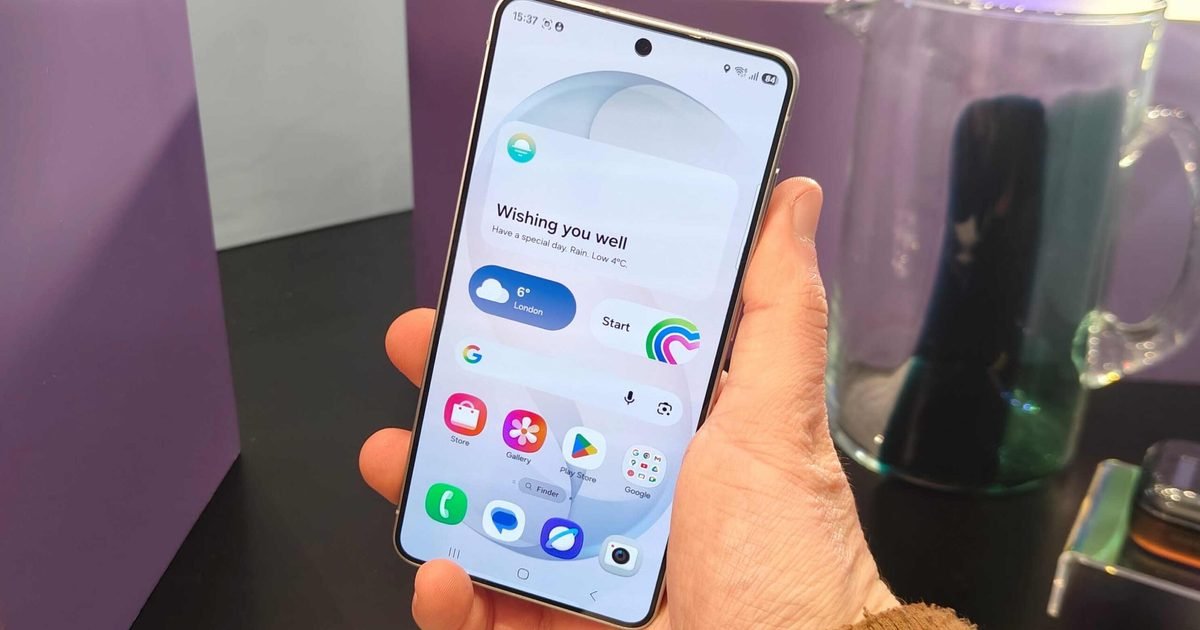
Samsung introduced an AI-powered natural language search feature in its Gallery app with the Galaxy S25 series last year. With the new Galaxy S26 series, the company has upgraded this functionality, enabling real-time results and the ability to locate specific moments within videos.
A recent post on Samsung’s Korean community forums reveals that the Gallery app on Galaxy S26 series devices comes with a more powerful search engine and video analysis tool. It’s capable of delivering results in real time, showing photos and videos as soon as a search term is entered.
Samsung Community
For example, typing “tree” in the search bar instantly brings up photos featuring trees, and adding a modifier like “snow-covered” refines the results to show only images of trees covered in snow. While the faster results are useful, the real advantage is that the upgraded search functionality goes beyond photos. It can even analyze videos and highlight the exact moment in a clip that matches the query.
Samsung Community
The post demonstrates this with a search for “walking tiger,” which surfaces the relevant video and jumps straight to the precise second where the tiger appears. This makes it much easier for users to quickly find specific moments in long videos, saving time and removing the need to scrub through clips manually.
The upgraded search functionality is currently exclusive to the Galaxy S26 series, and Samsung has not confirmed whether it will reach older devices with a software update. To experience the feature firsthand, you’ll need one of Samsung’s latest flagship models. Thankfully, there are some great pre-order deals you can take advantage of to save some cash.
Wyser Capital has announced the first close of its maiden venture fund. The firm has raised 40 percent of its planned ₹120 crore corpus. The announcement was made in New Delhi on February 25, 2026.
The fund is focused only on Enterprise and Agentic AI startups. According to the company, the first close saw participation from technology CEOs, CXOs, experienced operators, and institutional investors. While specific investor names were not disclosed, the early commitments indicate strong interest in AI-driven enterprise transformation.
Wyser Capital was founded by Suresh Vaswani, Supria Dhanda, and Satyakam Mohanty. The fund plans to invest in startups that are at the proof of concept or early revenue stage. It will invest between ₹2 crore and ₹5 crore in each company. There is also provision for follow-on funding in its best-performing portfolio startups.
The focus areas include vertical AI applications, AI infrastructure and tooling, and enterprise-focused Physical AI. The fund aims to support Indian startups building intellectual property-led solutions for global enterprise markets.
The launch of this fund comes at a time when AI continues to attract investor attention, even as overall startup funding remains selective. Over the past year, many investors have shifted towards deep tech and AI-driven companies that offer clear enterprise value.
Agentic AI is currently one of the most discussed themes in global technology circles. These are AI systems that can act more independently and execute tasks with limited human intervention. Large technology companies are investing heavily in this space, and enterprise adoption is slowly increasing.
By creating a niche fund dedicated to this segment, Wyser Capital is making a focused bet instead of spreading investments across multiple sectors. The founders have positioned Wyser Capital as an operator-led fund. This means the team plans to go beyond capital and support startups with enterprise connections and strategic guidance.
This model has become more common in recent years, especially in sectors where domain expertise matters. However, success will depend on how well the fund identifies scalable startups and supports them through long enterprise sales cycles.
At ₹120 crore, the fund size is relatively modest compared to larger multi-stage venture funds. This can be an advantage, as it allows the team to take concentrated positions in early-stage startups. At the same time, it also increases the pressure to deliver strong returns from a limited number of bets.
For now, Wyser Capital joins the growing list of India-focused funds that are betting on enterprise AI as the next major growth story. Whether Agentic AI becomes a mainstream enterprise layer or remains a niche segment will likely define the long-term impact of such funds.
Follow Techlomedia on Google News to stay updated.
Affiliate Disclosure:
This article may contain affiliate links. We may earn a commission on purchases made through these links at no extra cost to you.
A week back, Apple sent out invites to journalists for a special March 4th event, where the company is slated to release a slew of products. In fact, rumors suggest that Apple will reveal multiple products throughout the entire week, including a new low-cost MacBook, updated MacBook Airs and MacBook Pros, and iPhone 17e.
Now, Tim Cook has just posted on X, confirming the big Apple launch week ahead. He writes, “A big week ahead. It all starts Monday morning!”
What products do we expect from the March week of madness
The most anticipated product of the launch is likely the new low-cost MacBook, expected to be priced between $600 and $800. It’s the MacBook that students all around the world have been waiting for. The video shared in the post shows the Apple logo being formed on a MacBook, indicating that the leaks are true.
Given the troubled state of Windows 11, now widely criticized for being bloated and cluttered with underused AI features, the new low-cost MacBook could quickly become a breakout hit. That being said, some leaks have suggested that Apple might be cutting too many features from its budget MacBook. We will have to wait for the event to see what we get.
Omar Al-Ghosson on Unsplash
The company will also release updated MacBook Air and MacBook Pro, powered by the latest M5, M5 Pro, and M5 Max chips. With AI driving up the prices of RAM and storage to an unbelievable extent, these might be the last MacBooks we get before an imminent price increase.
The next product in the lineup will be the iPhone 17e. While reviewers didn’t like the iPhone 16e, it quietly became one of the best-selling smartphones of 2025, once again showing the disconnect between professional critics and regular users.
Andy Boxall / Digital Trends
The iPhone 17e is not expected to be a major upgrade. Most likely, it will feature a chip update along with the introduction of the Dynamic Island in place of the notch. I also hope Apple adds MagSafe, as its removal from the iPhone 16e made little sense.
If these products didn’t get you excited, rumors suggest Apple has even more in the pipeline. We could see updated iPads and even a second-generation Studio Display.
What it means for Apple fans
The upcoming launch week, beginning March 4, is set to be a major event for Apple fans. If you’ve been waiting to upgrade your Mac or iPad, this could be the right time to do so. With a low-cost MacBook and the iPhone 17e on the horizon, the event may even eclipse any other launch Apple has planned for 2026.
Volvo quietly did something smart with the EX30 refresh: instead of just tweaking what existed, they widened the door. A new entry powertrain — 110kW, 51kWh battery, around 211 miles of range — now sits at the bottom of the lineup for buyers who don’t need to squeeze every mile out of a charge.
Bump up to the 69kWh pack and you’re looking at closer to 296 miles. The Cross Country variant got some love too, adding a Plus trim and a single-motor option that’s easier on the wallet and the battery.
Volvo
Step inside and it actually feels different this time
Step inside and it actually feels different this time. The ‘Harvest’ interior is all warm tones and recycled textile upholstery — the kind of cabin that makes a grey Tuesday commute feel slightly less grim. The ‘Black’ room goes full contrast: dark Nordico upholstery, flax décor, clean lines throughout.
The Black Edition itself now comes in three colors — Onyx Black, Vapour Grey, and Crystal White — which, if you’re going blacked out, are exactly the shades you’d want.
V2L — Vehicle-to-Load — is the feature worth lingering on. Hook up an adapter and the EX30 can charge an e-bike, run a speaker system, power tools on a job site, or keep the camping gear alive well past sundown. It’s coming as a free over-the-air update this summer, and existing owners get it too.
Volvo
The power bank thing is genuinely cool
The redesigned settings system also lands the same way — rebuilt controls, a customizable content bar — no trip to the dealership required.
Two days before all this good news dropped, Volvo announced a recall covering 40,323 EX30s — model years 2024 through 2026, Single-Motor Extended Range and Twin-Motor Performance — over batteries that can overheat when charged too high and, in the worst case, catch fire. US owners are affected.
Park outside, charge to 70% maximum, wait for Volvo to replace the battery modules at no cost. For a brand that practically invented the idea of car safety as a selling point, the timing stings. But they’re fixing it, and they’re not charging for it — so there’s that.
Volvo hasn’t mentioned the official pricing or availability of the new model in its press release. It’s worth noting that the current single-motor extended range version of the EX30, with up to 261 miles of claimed range, is available for $40,345. Naturally, a model with a smaller battery and range should cost lesser.
As AI systems become embedded in society, a new question is emerging: can they improve our lives beyond technical and creative tasks? Can they help humans as a race to make better decisions, make us less selfish, and foster better cooperation?
A recent study by researchers Arend Hintze and Christoph Adami explores exactly this question in their paper, “Promoting Cooperation in the Public Goods Game Using Artificial Intelligence Agents,” published in npj Complexity.
The tragedy of the commons
The tragedy of the commons is an economic theory where individuals, in a shared and limited resource environment, overuse and deplete the resource, resulting in the suffering of the entire group. TedEd has a good video explaining this theory, which I recommend you watch. To test their theory of whether AI can improve cooperation between humans, the researchers used a well-known cooperation experiment often described as a “public goods” game.
In this experiment, players can either contribute to a shared pool that benefits everyone or keep their contribution to themselves. While the group does best when everyone contributes, each individual can hold back and enjoy the shared reward. Humans alone didn’t fare well in this test and acted in self-interest, and not as part of the group. The researchers then introduced AI agents in the mix.
In the first scenario, the AI agents were programmed to always cooperate. That sounds promising, but it didn’t change human behavior. People continued acting in their own interest. Simply adding “good” actors to the system wasn’t enough. In the second scenario, players could control the AI agents. As you can imagine, this backfired. Players set the AI to cooperate while choosing not to cooperate themselves, outsourcing good behavior while maximizing personal gain.
Arend Hintze & Christoph Adami / npj Complexity
The third scenario showed promising results. The AI agents mimicked the behavior of the players they interacted with. If a person cooperated, the AI cooperated. If the person acted selfishly, the AI mirrored that choice. This created a powerful feedback system, where human cooperation was rewarded with AI cooperation. This led to improved cooperation between human players.
What does all this have to do with self-driving cars?
Arend Hintze & Christoph Adami / npj Complexity
While the study is limited and simplified to have a real-world effect, researchers said this study can be applied to several scenarios, including self-driving cars. Autonomous cars, for example, could be designed to reward cooperative driving and not follow strict rules. If enough self-driving cars adopt this feature, they could create a positive feedback loop that benefits everyone.
AI cannot magically eliminate selfishness. However, it can provide enough incentives to make cooperation the smarter choice, especially in the case of EVs. Findings published in the Transportation Research journal also propose an integrated system for routing and coordinated movement of idle vehicles to best serve passengers. Another research published in the Robotics journal proposes a collision-free tracking and visual connectivity system between self-driving vehicles.
This principle could also be used to schedule charging for self-driving electric cars so that they can avoid long waits and stress on the power grid, as detailed in this paper. AI systems, including chatbots such as ChatGPT and Gemini, already follow a reward-based system to learn and improve their performance, and it seems the system could very well solve real-world robotaxi problems, as well, when they slowly enter the mainstream.
Backyard pools tend to fall into familiar patterns: a few laps, some floating, and a lot of splashing around on weekends. The iGarden Swim Jet X Series, the world’s first AI-powered portable swim jet, wants to make those routines feel entirely new. It promises a pool that doesn’t just sit there waiting for warm weather, but one that adapts to workouts, family play, and everyday life – all without drilling, plumbing, or permanent installation. The device attaches to most pools with a simple clamp, and its upcoming crowdfunding launch in early to mid-March 2026 signals a major shift in what homeowners can expect from pool tech.
Instead of catering to athletes or renovation budgets, the Swim Jet X is aimed squarely at real households who want to get more out of the pool they already own. Turn on the AI-assisted current, and a backyard pool becomes a continuous swim lane. Switch the context, and that same stream becomes a full-blown water attraction for kids. The brand captures the idea in a single line that feels surprisingly accurate: “Your workout. Their water park. Same pool.”
Image used with permission by copyright holder
A portable Swim Jet designed for everyday life
Traditional swim jets have long carried the stigma of being complicated, expensive, and ultimately reserved for high-end custom pools. They require construction. They demand planning. And once installed, they’re permanent fixtures that often only one person in the family actually uses. The Swim Jet X Series is built to be the opposite. Its clamp-on, no-install design turns what was once a renovation into a simple upgrade.
This portability also makes the Swim Jet X more seasonal and practical. Homeowners can use it during swim months, remove it during the winter, and reattach it without any commitment or labor. Yet portability isn’t the only shift. The device’s AI-assisted water flow focuses on creating a smoother, more natural-feeling current – avoiding the turbulence that older swim jets are known for. It can generate a flow of up to 3.5 meters per second with a volume of 250 cubic meters per hour, while six digital speed settings let users adjust the intensity from structured workouts to gentler flows. That means steadier strokes for adults who want predictable workouts, and a more controlled stream for kids who want to turn the pool into a moving playground.
The Swim Jet X is also built with peace of mind in mind. It includes safety protections to reassure families without overwhelming them with technical details, and it’s backed by a 2-year warranty, aligning with iGarden’s consumer-friendly positioning.
A backyard upgrade that fits today’s outdoor tech trends
iGarden, positioned as a modern smart outdoor-living brand, is tapping into one of the strongest trends of the past few years: the rise of intelligent backyard products. Everything from grill assistants to robotic mowers to AI-enhanced garden devices has pushed outdoor spaces into the smart home era. But pool tech has remained oddly traditional. Even robotic pool cleaners tend to be function-first tools rather than lifestyle upgrades.
The iGarden Swim Jet X is different because it reframes what a swim jet can be. Instead of being a specialized training tool, it becomes a multipurpose household device that supports fitness, recreation, and convenience – all without requiring homeowners to remodel their yards. That shift opens the door for a much wider audience. Busy adults can get a low-friction swim workout without commuting to a gym. Families can keep kids engaged for hours. Owners of smaller pools suddenly get a “bigger swim” experience that wasn’t possible before.
The Swim Jet X also fits neatly into iGarden’s broader brand philosophy of designing products that feel modern and intelligent but still accessible. The emphasis is not on raw performance or professional-level intensity, but on making exercise simpler and family recreation more dynamic – a balance most pool upgrades fail to strike.
Why this might be the most interesting pool gadget of 2026
Image used with permission by copyright holder
It’s easy to imagine how the Swim Jet X fits into everyday routines. Morning workouts before the day starts. Calm evening swims at lower intensities. Weekends where the constant current becomes a centerpiece for the kids’ games. With up to 10 hours of battery life, the system can support extended swim sessions, letting families and swimmers enjoy longer workouts or playtime without worrying about recharging. And because the setup is so low-friction, none of those experiences require rearranging schedules or equipment.
The Swim Jet X is clearly designed for homeowners who want to upgrade their backyard without embarking on a renovation. It’s equally relevant for tech-forward buyers, families preparing for summer, or anyone who has looked at a small pool and wished it felt larger and more versatile. With the crowdfunding campaign approaching, the device lands at a moment when consumers are increasingly willing to invest in products that blur the line between fitness and lifestyle – and that help them get more value from the investments they already have.
As the March 2026 launch window approaches, the Swim Jet X Series stands out as one of the most promising new backyard products of the year. It doesn’t try to replace your pool or turn it into something it was never meant to be. Instead, it expands what your pool can do. And for many households, that may be the smartest upgrade of all.
Ahmedabad: A clinical South Africa outclassed West Indies by nine wickets in their Super 8 clash to stretch their unbeaten run and all but seal a place in the semifinals of the T20 World Cup in Gujarat’s Ahmedabad on Thursday, February 26.
A dominating show by the Proteas pacer was followed by authoritative batting. Yet again, South Africa executed their plans perfectly to further their cause, racking up their sixth win on the trot and halting West Indies’ unbeaten run in the tournament.
With South Africa taking two vital points off the West Indies, hosts India now have their qualification hopes firmly in their own hands as a Proteas defeat would have dented their chances severely.
West Indies’ Matthew Forde fields during the ICC Men’s T20 World Cup 2026 cricket match between West Indies and South Africa, at Narendra Modi Stadium, in Ahmedabad, Thursday, Feb. 26, 2026. (PTI Photo/Arun Sharma)
The loss hurt the Caribbean side’s net run rate, which came down to 1.791 from a healthy 5.350.
First, it was South Africa’s pacers that rocked the West Indies’ batting line-up before a lower-order fightback from Romario Shepherd (52 not out) and Jason Holder (49) lifted the two-time champions to 176 for eight.
Then skipper Aiden Markram (82 not out), Quinton De Kock (47) and Ryan Rickelton (45 not out) batted with authority as the Proteas overhauled the target in 16.1 overs.
South Africa’s captain Aiden Markram and teammate Ryan Rickelton exchange greetings after the team won the ICC Men’s T20 World Cup 2026 cricket match against West Indies, at Narendra Modi Stadium, in Ahmedabad, Thursday, Feb. 26, 2026. (PTI Photo/Arun Sharma)
By collecting 69 runs from the six Powerplay overs, the South Africans had demoralised the Windies attack. Except for a few hit-and-miss shots, the two openers controlled the proceedings.
They struck both pacers and spinners with equal ease and raised a quick 95-run stand in 7.5 overs, hitting 16 boundaries, including six shots over the rope.
De Kock hit four sixes and as many fours in his 24-ball knock before offering a catch to Jason Holder at long-on. Markram raised his fifty with a single off Gudakesh Motie.
With Rickelton, Markram raised an unbeaten 82-run stand and finished the game in style with a straight four off pacer Jason Holder.
Ahmedabad: South Africa’s Ryan Rickelton plays a shot during the ICC Men’s T20 World Cup 2026 cricket match between West Indies and South Africa, at Narendra Modi Stadium, in Ahmedabad, Thursday, Feb. 26, 2026. (PTI Photo/Kunal Patil)(PTI02_26_2026_000512A)
Earlier, from the high of their dominant win over Zimbabwe, the West Indies were in for a rude shock as Kagiso Rabada (2/22) and Lungi Ngidi (3/30) got the ball to bounce from good length to trouble the batters, reducing the big-hitting West Indies line-up to 83 for seven.
Holder (49 off 31) and Romario Shepherd (52 not out off 37) then stitched together a record 89-run stand for the eighth wicket to prevent a complete collapse of the innings.
Opting to bowl, South Africa opened with spinner Keshav Maharaj but Shai Hope (16 off 6) showed early intent, launching him for two sixes and a four. At the other end, Brandon King (21 off 11) threw his bat around against Marco Jansen, collecting quick boundaries as the Caribbean side raced to 29 in just over two overs.
Rabada, however, brought the Proteas back into the contest by having Hope caught behind as the skipper fished outside off stump. It could have been two in two but Shimron Hetmyer (2) was dropped at mid-on by Corbin Bosch, but the reprieve proved brief. However, Rabada sent back the left-hander three balls later when he miscued a pull.
Ahmedabad: West Indies’ Romario Shepherd and Jason Holder run between the wickets during the ICC Men’s T20 World Cup 2026 cricket match between West Indies and South Africa, at Narendra Modi Stadium, in Ahmedabad, Thursday, Feb. 26, 2026. (PTI Photo/Kunal Patil)(PTI02_26_2026_000381A)
The in-form Ngidi then struck a double blow in the fourth over. After being hit for two consecutive fours by King, he had the opener caught behind and two balls later rattled Roston Chase’s (2) stumps. In the space of 10 deliveries, West Indies had lost four wickets and were 44 for four after four overs.
Sherfane Rutherford (12) briefly counterattacked, smashing Bosch for a towering six over midwicket, but perished next ball, top-edging to Quinton de Kock.
Ngidi’s third wicket, Rovman Powell (9), left West Indies tottering at 71 for six, while Matthew Forde (11) became Bosch’s second victim soon after a six.
West Indies’ Jason Holder plays a shot during the ICC Men’s T20 World Cup 2026 cricket match between West Indies and South Africa, at Narendra Modi Stadium, in Ahmedabad, Thursday, Feb. 26, 2026. (PTI Photo/Kunal Patil)
Just when a collapse seemed inevitable, Holder and Romario came to the team’s rescue.
Holder, who hammered 22 runs in a Jansen over towards the end, fell to a run-out off the penultimate ball, but Shepherd ensured West Indies finished strongly.
Get the latest updates in Hyderabad City News, Technology, Entertainment, Sports, Politics and Top Stories on WhatsApp & Telegram by subscribing to our channels. You can also download our app for Android and iOS.
Of all the things Samsung announced at the Galaxy Unpacked event on February 25, 2026, a quiet little feature might actually be my favorite, and for good reasons. Remember Samsung’s Audio Eraser that showed up with the Galaxy S25 series?
You’d shoot a video, open it in the Gallery app, tap the AI button, and it would scrub out whatever background noise had crept in during recording. Wind, crowd roar, a lawnmower three houses down — gone. It worked well enough that people noticed, and Samsung clearly noticed people noticing.
Two Samsung Galaxy S26 models, leaning on a block.Tom Bedford / Digital Trends
Samsung’s new Audio Eraser can make your live sports broadcasts much better
The catch was that it only worked inside Samsung’s own Gallery app, on videos you’d already recorded. However, with the Galaxy S26 series and One UI 8.5, Audio Eraser has had a proper glow-up. It now works in real time, across third-party streaming apps — YouTube, Netflix, Instagram, TikTok, and more.
You just swipe down from the status bar while something’s playing, hit the Audio Eraser toggle, and the phone starts filtering live audio on the fly. No leaving the app, no exporting, no waiting. It just does it.
Think about how often you’ve turned up the volume on a YouTube concert video only to get more crowd than artist. Or tried to follow an Instagram livestream in a cafe while the espresso machine next to you had other ideas.
You can focus on speech or control the isolation effect as well
Audio Eraser on the S26 is built exactly for those moments — it pushes voices and the main audio forward while nudging everything else back. There’s also a Voice Focus toggle if you want it to zero in specifically on speech, plus a strength slider if full-blast noise removal feels a bit too clinical for what you’re watching.
Impressively well, from what’s been seen so far. During a demo, a hockey video played on YouTube with Audio Eraser running — the commentators came through cleanly while the arena crowd noise faded into the background.
Flick it off, and the roar floods back in immediately. There are occasional audio artifacts when the processing kicks in hard, which is par for the course with this kind of AI filtering, but nothing that ruins the experience.
What makes it genuinely stand out isn’t just that it works — it’s that it works live, on-device, without any perceptible lag. That’s the part that’s hard to pull off, and Samsung has pulled it off.
Google rolled out the first Android 17 beta for eligible Pixel devices earlier this month, and other smartphone makers are now starting to follow suit. In a somewhat unexpected move, Motorola is among the first to announce its own beta program, giving users with select devices a chance to experience the OS upgrade ahead of its wider public release.
According to GSMArena, the company has opened registrations for a limited number of devices across different regions. In the US, Moto Edge (2025) users can sign up for the beta. Meanwhile, users in select European, Middle Eastern, and African markets with the Moto G57 and Moto G57 Power are also eligible to participate. In India, the Moto G57 Power has been included in the initial beta rollout as well.
In the US, users can enroll by filling out the Android 17 beta registration form, submitting their device’s IMEI number, and completing a survey. If selected, the beta build will be pushed as an over-the-air update. As with any pre-release software, the beta may include bugs and performance issues, so it is generally recommended for advanced users or those with a secondary device.
Motorola has yet to share a detailed changelog
While Motorola has not detailed the specific changes included in its build, Android 17 is expected to bring noteworthy performance improvements with better system optimization and refinements for the overall user experience. Additional interface tweaks and under-the-hood enhancements are also part of the broader update.
Motorola’s beta program is expected to gradually expand to more devices, and more models could gain access in the coming weeks. A broader stable rollout will follow later this year after Google releases stable Android 17 for its Pixel lineup.