Category: Uncategorized

  • RedOctane Games Announces Stage Tour, A New Rhythm Game Set for 2026

    RedOctane Games Announces Stage Tour, A New Rhythm Game Set for 2026

    Add Techlomedia as a preferred source on Google. Preferred Source

    RedOctane Games has announced a new rhythm music game called Stage Tour. The title is currently in development and is planned for release during the Holiday 2026 season.

    The studio was founded last year by veterans from the rhythm gaming space, along with hardware designers and well-known members of the community.

    The game targets players who grew up with music rhythm games, while also trying to attract a new generation. The studio is making it as a long-term platform instead of a one-time release. The developers are focusing on continued updates and community involvement. The game will support multiple input options, including instrument-style controllers and keyboards. Note charts will adapt based on the instrument or controller being used, which suggests a more tailored gameplay experience.
    The game aims to be easy for beginners but challenging for experienced players. This approach has worked well in the past for successful rhythm titles. However, long-term success will depend on music licensing, content updates, and how well the gameplay feels in practice.

    The game aims to be easy for beginners but challenging for experienced players. This approach has worked well in the past for successful rhythm titles. However, long-term success will depend on music licensing, content updates, and how well the gameplay feels in practice.

    The studio has confirmed that more gameplay details and the first content reveal will be shared in the coming months. Closed alpha testing is planned for summer 2026. A group of experienced rhythm game fans is already testing and providing feedback during development. This could help the game avoid common issues that appear in community-driven genres.

    RedOctane has also signed a multi-year partnership with Gibson. As part of the deal, real-world instrument brands such as Epiphone and Kramer will be featured in the game. This move adds authenticity and may attract players who are interested in real instruments and rock culture.

    Follow Techlomedia on Google News to stay updated. Follow on Google NewsFollow on Google News

    Affiliate Disclosure:

    This article may contain affiliate links. We may earn a commission on purchases made through these links at no extra cost to you.


  • Tim Cook Hints at a Big Week for Apple, Multiple Macs and iPads Likely

    Tim Cook Hints at a Big Week for Apple, Multiple Macs and iPads Likely

    Add Techlomedia as a preferred source on Google. Preferred Source

    Tim Cook has teased a week full of announcements from Apple. In a short video, he hinted at new products coming soon. Industry chatter suggests Apple could unveil as many as seven devices, mostly through press releases instead of a full launch event.

    One of the expected launches is the iPhone 17e. This model is likely the successor to last year’s iPhone 16e, which aimed to offer a more affordable iPhone experience. The iPhone 16e did reasonably well, especially in markets where lower-priced flagship phones from other brands were popular. It did not match sales of the main iPhone 16 lineup, but it found its audience among buyers who wanted a capable iPhone without premium pricing. If Apple keeps the balance of performance and price right with the iPhone 17e, it could build on that modest success.

    There are also rumors of a new MacBook powered by an A18 Pro chip. That would be notable because Apple generally reserves A-series chips for iPhones and basic tablets. A MacBook with this chip could be aimed at students and light users who want good battery life and everyday performance without the cost of an M-series machine.

    A refreshed base iPad with the A18 chip is also expected. The standard iPad has remained one of Apple’s steady sellers, mainly because it offers long software support at a reasonable price. An updated chip would help it stay competitive against entry-level tablets from other brands.

    More premium tablets could be on the way, too. Rumors point to new 11-inch and 13-inch iPad Air models with the M4 chip. This would blur the line between Air and Pro models even more. If Apple positions the Air as a powerful daily device, it could appeal to many users who do not need the highest-end features.

    We are also expecting 14-inch and 16-inch MacBook Pro machines with M5 Pro and M5 Max chips. These chips are likely to focus on improved performance and stronger support for AI tasks, which is increasingly important for creative and development work.

    Apple seems focused on updating chips and performance across its lineup. If prices stay stable, the new products could be well received. However, if prices rise significantly, especially for Macs, buyers may think twice. Many current users are still satisfied with M1 and M2 generation hardware.

    Follow Techlomedia on Google News to stay updated. Follow on Google NewsFollow on Google News

    Affiliate Disclosure:

    This article may contain affiliate links. We may earn a commission on purchases made through these links at no extra cost to you.
  • BGMI 4.3 Update Will Add Racing Mode With Drag Style Checkpoints

    BGMI 4.3 Update Will Add Racing Mode With Drag Style Checkpoints

    Add Techlomedia as a preferred source on Google. Preferred Source

    Battlegrounds Mobile India is getting a new Racing Mode in the upcoming 4.3 update. The update will introduce drag style checkpoints inside classic matches, changing how vehicles are used during a battle.

    Until now, vehicles in BGMI have been mainly used for rotation, escaping the blue zone, or quick repositioning. With this update, cars will become part of active mid-match objectives.

    The new Racing Mode will allow players to enter flagged race zones on the map. Once inside, they can trigger timed vehicle runs. Players must complete the race within the given time limit to earn extra loot. This adds a risk versus reward element to regular matches.

    However, these race routes will not be safe. Most of them will be placed in open areas, making players visible to enemies. This means squads must decide quickly whether the reward is worth the exposure. Teams that move fast and coordinate well may benefit the most.

    The feature is part of a larger mobility-focused approach in the 4.3 update. Instead of slowing down the pace, the racing events are designed to increase momentum. Quick driving, timed checkpoints, and vehicle-based objectives will push players to take aggressive decisions.

    Both casual players and competitive squads are expected to test these zones in different ways. Some may use them as fast loot routes early in the match. Others may use them as risky shortcuts to rotate across the map.

    Follow Techlomedia on Google News to stay updated. Follow on Google NewsFollow on Google News

    Affiliate Disclosure:

    This article may contain affiliate links. We may earn a commission on purchases made through these links at no extra cost to you.

  • Nvidia Pulls GeForce 595.59 Driver After Fan Control and Crash Reports Ahead of Resident Evil Requiem Launch

    Nvidia Pulls GeForce 595.59 Driver After Fan Control and Crash Reports Ahead of Resident Evil Requiem Launch

    Add Techlomedia as a preferred source on Google. Preferred Source

    PC players who were preparing to jump into Resident Evil Requiem at launch may have run into unexpected trouble. Nvidia has issued a warning about its latest GeForce Game Ready driver, version 595.59 WHQL, after users reported serious issues. The company has now temporarily removed the download and advised affected users to roll back.

    The 595.59 driver was released as a Game Ready update to optimize performance for Resident Evil Requiem. As usual, many players installed it immediately to ensure the best experience on day one. However, the driver appears to have introduced more problems than improvements.

    Read: Resident Evil Requiem Launch System Requirements

    According to Nvidia’s update, a bug was discovered in both the Game Ready and Studio 595.59 WHQL drivers. The company confirmed that downloads have been paused while the issue is being investigated. Users who already installed the driver and are facing problems, especially related to fan control, are being told to revert to version 591.86 WHQL.

    The most concerning reports involve GPU cooling fans. Some users claim their fans stopped spinning entirely. Others say the fans ignored preset fan curves. In certain cases, monitoring tools stopped detecting specific fans. This is not a minor glitch. If fans fail to operate correctly, it can lead to overheating and long term hardware damage.

    The issues go beyond cooling. Reports also mention boost clocks not applying properly, black screens, freezes, random restarts, and even Blue Screen of Death errors with VIDEO_TDR_FAILURE and nvlddmkm Event ID 153. Some players also noticed reduced performance in games built on Unreal Engine 5 until they rolled back the driver.

    For gamers, driver stability is critical. A Game Ready driver is meant to deliver optimized performance on launch day. When it affects core GPU functions like cooling and clock speeds, it becomes a serious concern. This is especially important during a major release like Resident Evil Requiem, where many PC players expect smooth performance.

    If you updated to 595.59 and started facing unusual behavior such as abnormal fan activity, crashes, or performance drops, rolling back to 591.86 WHQL is currently the safest option. Users of the NVIDIA App can reinstall the previous driver from the Drivers tab.

    Follow Techlomedia on Google News to stay updated. Follow on Google NewsFollow on Google News

    Affiliate Disclosure:

    This article may contain affiliate links. We may earn a commission on purchases made through these links at no extra cost to you.

  • Resident Evil Requiem Launch Numbers Smash Previous Franchise Records

    Resident Evil Requiem Launch Numbers Smash Previous Franchise Records

    Add Techlomedia as a preferred source on Google. Preferred Source

    Resident Evil Requiem has delivered the biggest PC launch in the history of the Resident Evil franchise. According to Techlomedia’s live tracking, the game crossed 267,000 peak concurrent players on Steam within hours of release. The number was still climbing as more regions came online.

    To put this in context, this is not just a strong launch. It is a franchise record on Steam.

    Previously, Resident Evil 4 held the record with a peak of around 168,000 concurrent players. Resident Evil Village had crossed roughly 100,000 at launch. Requiem has now moved far ahead of both, beating the earlier record by a massive margin.

    The momentum is not limited to players. The game is also dominating streaming platforms. On Twitch, Resident Evil Requiem reached 210,000 concurrent viewers, with nearly 5,000 active streamers broadcasting gameplay. That means more people were watching the game than playing at some points during launch day.

    For a single player horror title, this level of engagement is really important. It shows strong community interest and social buzz. Horror games benefit heavily from live reactions, jump scares, and story moments, and Requiem is clearly delivering that experience.

    There are several reasons behind this record breaking start. First, the return of Leon S. Kennedy always drives excitement. He remains one of the most popular characters in the franchise. Second, the introduction of Grace Ashcroft adds a fresh layer to the story. Her connection to earlier events expands the universe in a meaningful way. Third, the dual gameplay system is attracting both classic survival horror fans and action focused players. First person survival sections mixed with third person action segments give variety and broader appeal.

    Finally, PC optimization appears solid at launch for most users. Despite some early Nvidia driver issues reported separately, the game itself is running well across a wide range of systems, which likely helped maintain high concurrency.

    It is important to clarify that 267,000 concurrent players is not an all time Steam record. Games like Counter Strike and other major live service titles reach much higher numbers. However, within the Resident Evil franchise on PC, this is now the highest launch peak ever recorded.

    For Capcom, this signals strong brand power and successful marketing. For the horror genre, it proves that single player story driven games can still generate massive launch day attention.

    Techlomedia Gaming will continue tracking the live numbers to see where the final weekend peak settles. If momentum continues, Requiem could set an even higher benchmark for future entries in the series.

    Follow Techlomedia on Google News to stay updated. Follow on Google NewsFollow on Google News

    Affiliate Disclosure:

    This article may contain affiliate links. We may earn a commission on purchases made through these links at no extra cost to you.

  • Samsung unsure about making another Galaxy Edge to rival the iPhone Air

    Samsung unsure about making another Galaxy Edge to rival the iPhone Air

    It turns out that making a phone thinner doesn’t automatically make it more popular. Reports suggest the iPhone Air hasn’t sold well, and now it appears Samsung’s Galaxy S25 Edge, a phone launched as a direct competitor to the iPhone Air, hasn’t performed much better.

    In an interview with Bloomberg, Won-Joon Choi, chief operating officer of Samsung’s Mobile Experience Business, said that the sales for Galaxy S25 Edge were “relatively lower than other lineups.” He attributed the lower sales numbers to the small battery pack, which provides lower endurance than the company’s other offering. 

    Samsung hasn’t decided whether there will be a Galaxy S26 Edge. As Choi put it, “People have different tastes and requirements and different criteria in selecting their device,” and the sales numbers suggest that an ultra-thin phone clearly isn’t everyone’s top concern.

    Samsung’s foldable dilemma

    Recently, Samsung released its first Galaxy TriFold, an engineering marvel in itself. However, its exorbitant $2,900 price tag has kept buyers at bay. While the phone appears to have sold out on Samsung’s website, the company is unsure if it will be making another one. 

    Choi said the TriFold was initially about “creating a new category and putting all of our know-how into this.” Now, however, the company is rethinking its next move. “Now we wonder, should we develop a new one? We have not made a decision yet.”

    While we might not see another TriFold this year, we are getting a new fold design, one I am pretty excited about. We learned from the leaks that Samsung is planning to release a passport-style, wider version of its Galaxy Fold, and Choi has all but confirmed it. 

    Choi noted that user priorities vary. “All these productivity-related experiences, some people care about. And others are like ‘I want to watch Netflix or YouTube on a bigger screen,’” he said, adding, “Obviously, if you have a TriFold kind of aspect ratio, it’s optimized for that kind of experience and application.”

    With no second-generation TriFold on the roadmap, a wider Galaxy Fold feels like the obvious move for Samsung to target users who want a better media consumption experience.

    What does this mean for us

    If you’re not waiting for a foldable and were thinking about upgrading to a new Galaxy Edge, there’s little reason to hold off. The Galaxy S26 series is the safer bet right now, and the Galaxy S26 Ultra is worth it for the privacy screen alone.

    As for me, I’ll be holding out for the wider Samsung Galaxy Fold that’s all but guaranteed to arrive later this year. I loved the original Google Pixel Fold’s aspect ratio, and I’m excited to see how Samsung approaches it.

  • The scenery steals the show in this epic SpaceX rocket landing

    The scenery steals the show in this epic SpaceX rocket landing

    Well, those Falcon 9 landings never get old. Imagine, just over a decade ago the idea of being able to land a rocket upright after it’d been to space seemed crazy. And then SpaceX went and did it.

    Following its first successful touchdown in December 2015, SpaceX suffered the occasional mishap with its booster landings, but in recent years it’s well and truly nailed the process.

    The Elon Musk-led spaceflight company shared a video (below) this week of its most recent landing, with dramatic footage captured by a camera attached to the rocket showing the spectacular early-morning ride home.

    The Falcon 9’s mission started from Vandenberg Space Force Base in California, and involved the launch of 25 Starlink satellites to low-Earth orbit.

    This was the 11th flight for the first-stage booster (B1093) supporting this mission, which previously launched SDA T1TL-B, SDA T1TL-C, and now nine Starlink missions.

    As the video shows, after deploying the upper stage, the 41.2 meter-tall (about 135 feet) booster returned to Earth minutes later, landing on the Of Course I Still Love You droneship waiting in the Pacific Ocean.

    To achieve an autonomous landing like this, a Falcon 9 booster begins by performing a flip using cold gas thrusters after stage separation, sometimes followed by a boostback burn. As it descends, the booster deploys its grid fins to steer through the atmosphere before performing an entry burn to slow down. Finally, it executes a landing burn while deploying its legs for a stable touchdown.

    The landings allow SpaceX to reuse its boosters multiple times, reducing the cost of spaceflight and opening access to more companies and organizations.

    Just last weekend, another Falcon 9 booster set a new reuse record of 33 flights after launching for the first time in June 2021.

    SpaceX has applied what it’s learned from the landings to its much bigger and more powerful Starship rocket, which is expected to take its 12th test flight in March.

  • This Galaxy S26 Ultra pre-order deal is the one to beat: 512GB plus a $200 gift card

    This Galaxy S26 Ultra pre-order deal is the one to beat: 512GB plus a $200 gift card

    This is the first Galaxy S26 Ultra deal that actually feels worth talking about.

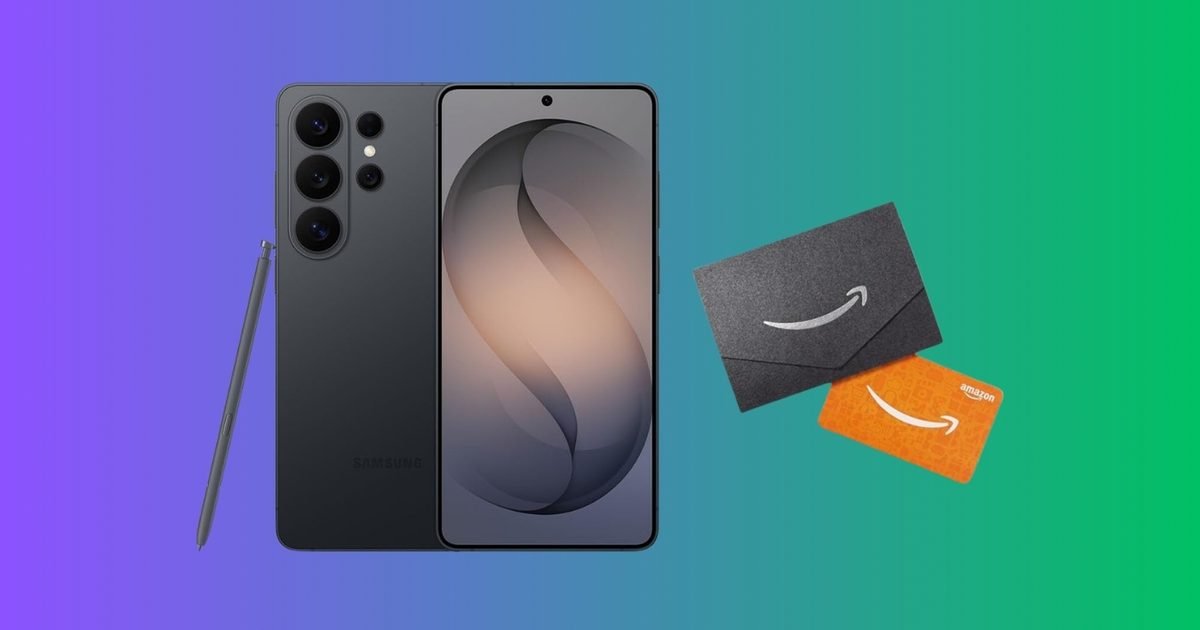
    Amazon has the Samsung Galaxy S26 Ultra 512GB pre-order bundle for $1,299.99, and it comes with a $200 Amazon gift card. That alone is a strong launch offer, but the real reason this stands out is the storage angle: this promo gives you double the storage without forcing you to pay the usual premium for it.

    That matters because flagship phone deals at launch are usually underwhelming. You might get a tiny credit, maybe a trade-in boost, and that’s it. This one is better. You’re getting the 512GB model, not the base-tier version, and Amazon is still sweetening it with store credit. If you were already planning to buy the S26 Ultra, this is the version to get.

    What you’re getting

    This bundle is for the unlocked Galaxy S26 Ultra 512GB. It’s Samsung’s newest top-end phone, so you’re getting the full flagship treatment: Privacy Display, Galaxy AI, AI camera features, Super Fast Charging 3.0, and the latest Ultra-level hardware.

    More importantly, you’re getting the storage tier most people should buy anyway. On a phone like this, 512GB just makes more sense. Cameras are better, video files are bigger, AI features are heavier, and people keep their phones longer now. The base storage option always looks fine on paper, then starts feeling tight much sooner than you expect.

    Why it’s worth it

    This is a confident, easy recommendation because it’s genuinely a good deal if you were already planning on pre-ordering the S26 Ultra.

    You aren’t just getting a bonus gift card. You’re also avoiding the usual upcharge for more storage. That means Amazon is solving the two biggest launch-day problems at once:

    • Flagship phones cost too much
    • The better storage tier usually costs even more

    Here, the 512GB model is the obvious choice, and Amazon is making that choice easy. The $200 gift card is a great addition too. If you already buy from Amazon, that’s real value back in your pocket. Put it toward accessories, earbuds, a case, chargers, or just treat it like a straight offset against the cost of the phone. Either way, it makes this launch price a lot easier to swallow.

    The bottom line

    If you want the Galaxy S26 Ultra, buy it this way. The phone is brand new, the 512GB model is the one you actually want, and Amazon is pairing it with a $200 gift card while the pre-order offer is live. That is a better-than-usual launch bundle, full stop.

  • The “acoustic” keyboard: the death of the loud click

    The “acoustic” keyboard: the death of the loud click

    I’ve been building computers and fiddling with pc parts since I was a teenager, which means I’ve lived through every era of the mechanical keyboard. For the last decade, the gaming and typing standard was the “clicky” switch (think Cherry MX Blues). It was loud, aggressive, and practically guaranteed to annoy your roommates, partners, or coworkers. But in 2026, the era of the loud click is officially dead.

    The new obsession is the “thock”: a deep, muted, and satisfying acoustic signature. This is achieved through multi-layer sound-dampening foams, silicone gaskets, and factory-lubricated linear or tactile switches. Your keyboard shouldn’t sound like a machine gun; it should sound like a premium, well-tuned instrument.

    Here are the best acoustic keyboards on the market right now that deliver that perfect, creamy sound straight out of the box.

    The quick list

    The products

    AULA — F99 Pro Wireless Mechanical Keyboard

    You used to have to spend over $200 and dedicate hours to modifying a keyboard to get a premium acoustic sound. The AULA F99 Pro changed all of that. It features a massive five-layer sound-dampening structure (including silicone pads and PORON foam) and a gasket-mounted design that eliminates any hollow, metallic “ping.”

    • Price: $75.89 (Discounted from $89.89)
    • The sound profile: Advertised specifically for its “creamy sound,” this board comes with pre-lubed switches that deliver an incredibly satisfying, muted thud with every single keystroke.

    NuPhy — Halo75 V2 Mechanical Gaming Keyboard

    NuPhy is famous for its striking aesthetics, but the Halo75 V2 is a masterclass in acoustic engineering. It packs everything into a compact 75% layout, retaining the F-row and arrow keys while saving massive amounts of desk space so your mouse has more room to breathe.

    • Price: $116.96 (Discounted from $129.95)
    • The switch: I specifically chose the configuration with the Black Raspberry switches. These are custom tactile switches designed to provide a noticeable “bump” when typing, but they are heavily factory-lubed to ensure the sound remains deep and concentrated, rather than high-pitched and clicky.

    Keychron — Q6 Max Custom Mechanical Keyboard

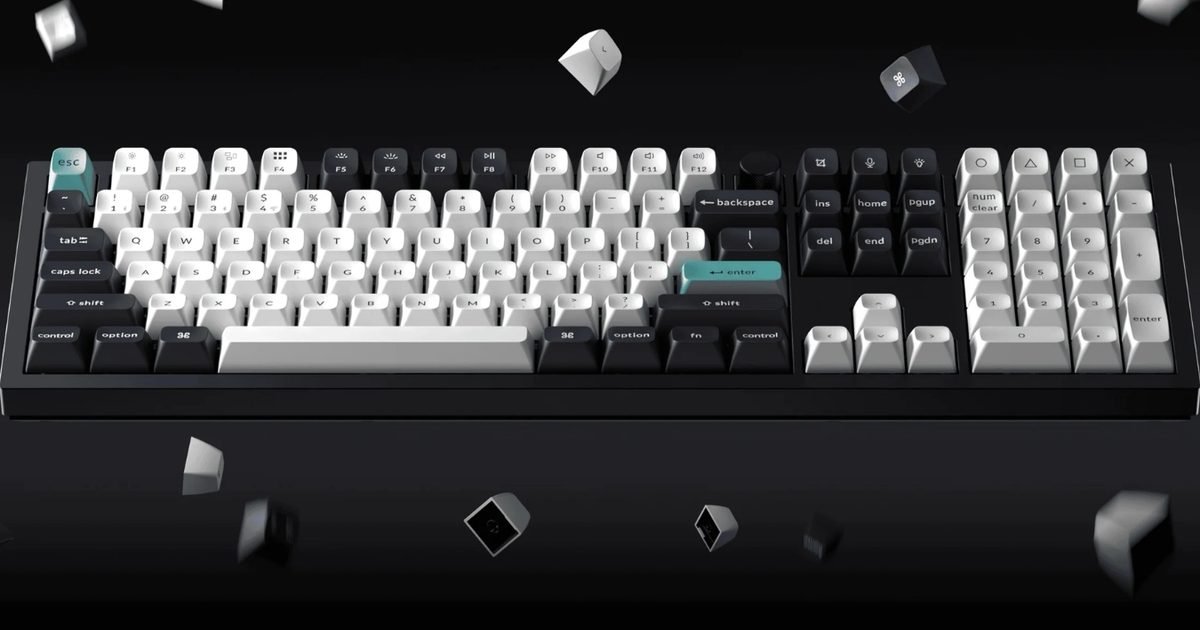
    If you refuse to give up your numpad and want a true “buy-it-for-life” piece of hardware, the Keychron Q6 Max is the gold standard. It features a fully CNC-machined aluminum body that weighs significantly more than a standard plastic keyboard. This dense metal enclosure, combined with a double-gasket design and internal acoustic foam, absorbs high-frequency noise entirely.

    • Price: $239.99
    • The switch: This specific model is equipped with Gateron Banana switches. They are highly sought-after tactile switches that offer an early, smooth tactile bump while keeping the acoustic profile rich, low-pitched, and thocky.

    The bottom line

    If you are just dipping your toes into the custom acoustic world and want a great sound without the high price tag, the AULA F99 Pro is an absolute steal right now. For a premium, space-saving design with a unique tactile feel, grab the NuPhy Halo75 V2. But if you want a massive, full-metal workstation powerhouse that sounds exactly as good as it looks, the Keychron Q6 Max with Gateron Banana switches is the ultimate 2026 upgrade.

  • Lenovo’s Legion Go Fold Concept may blur the line between handheld and PC

    Lenovo’s Legion Go Fold Concept may blur the line between handheld and PC

    Lenovo is reportedly working on a bold new spin for its Legion Go series of handheld consoles, one where it turns into a Windows tablet with a foldable screen. Portable gaming rigs have been all the rage recently, and the Chinese brand might be looking to shake things up with an innovative new concept, one that doesn’t just fit in your hands but folds out into a larger screen to double as a PC-style device.

    Blending portable handhelds with big foldable displays

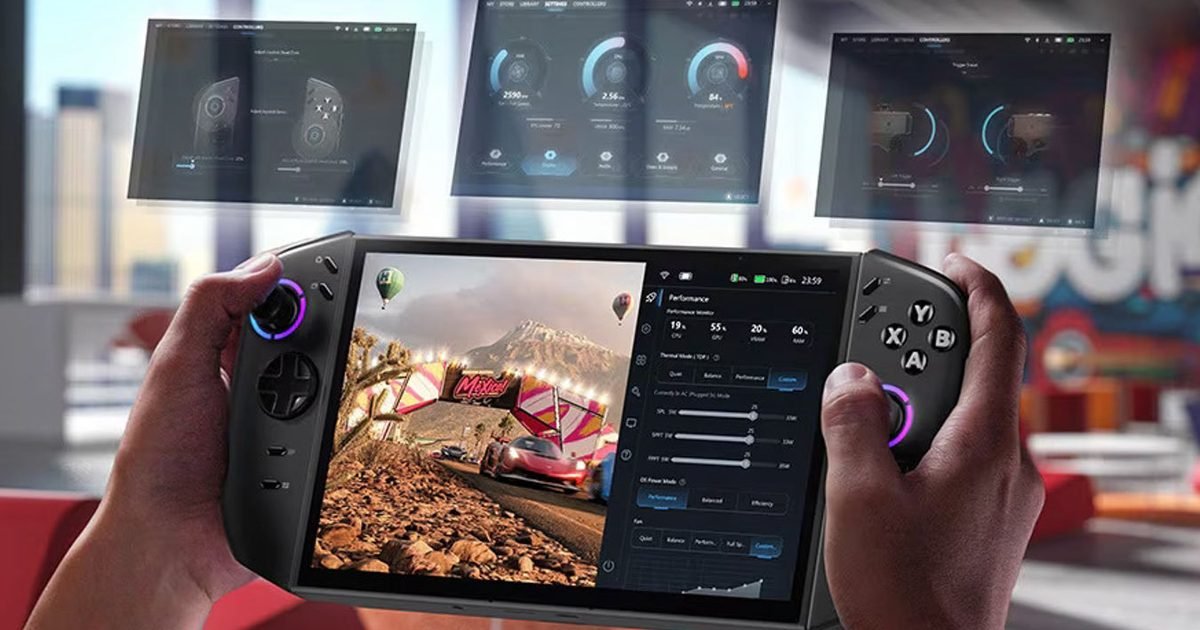
    According to leaked materials shared with WindowsLatest, Lenovo’s Legion Go Fold Concept will arrive as an 11.6-inch handheld with a foldable display that will be showcased at the major tech event in Barcelona. The highlight here is the flexible pOLED panel that expands from a compact 7.7-inch mode into a larger 11.6-inch screen. In essence, the design seems inspired by modern-day foldable smartphones. Owing to its new form factor, Lenovo’s concept could offer various modes:

    • Standard Handheld Mode: When folded, it resembles a traditional portable gaming device with detachable controllers on either side.
    • Vertical Split-Screen Mode: The screen can be split when unfolded upright that allows for gaming on one half and different tasks, like streaming or multitasking, on the other.
    • Horizon Full Screen Mode: With the display unfolded horizontally and controllers attached, you get a large-screen handheld experience that rivals tablets.
    • Expanded Desktop Mode: Pair the Legion Go Fold with a wireless keyboard to have it function as a laptop.

    What to expect under the hood

    The Legion Go Fold Concept wouldn’t just be a display showcase, as the leak suggests hardware suitable for on-the-go performance. Powering the handheld is Intel’s Core Ultra 7 258V processor (likely paired with Xe2 integrated graphics), 32GB of RAM, and a 48Wh cell. Like many Windows handhelds, battery life will be a challenge. The larger screen would burden the battery even more, but it would also offer a more immersive gameplay experience beyond what your typical handheld can deliver.

    I see the vision here

    The idea of a handheld that transforms into a desktop-like PC with expanded screen real estate is definitely compelling. You won’t be reaching for an external display, monitor, or a TV connection to enjoy your games, as Lenovo is offering versatility in how you play your games. Unfortunately, it is still just a concept at the end of the day, and we might not see a commercial release for such a hybrid handheld PC for at least another year or two.