Category: BUSINESS

  • 1K surveyors, 400 engineers to be hired for Telangana housing scheme

    1K surveyors, 400 engineers to be hired for Telangana housing scheme

    Hyderabad: Telangana revenue minister Ponguleti Srinivas Reddy has directed chief secretary A Santhi Kumari and higher officials to prepare plans for the selection of 1,000 surveyors needed for the implementation of the Indiramma Illu scheme.

    He also directed the officials to select the revenue officials to be assigned to all the villages in the state, by selecting them from VROs and VRA cadres, after conducting an exam for the purpose.

    During a review meeting held at Dr BR Ambedkar Telangana State Secretariat in Hyderabad on Friday, January 17, officials informed him that presently there were only 274 engineers with the housing corporation, and 400 more engineers were required for the implementation of Indiramma Illu.

    Hyderabad Institute of Excellence“ width=Hyderabad Institute of Excellence“ width=

    The minister directed chief secretary A Santhi Kumari to consider how the services of engineers in other government departments could be used for this purpose.

    He said that under the first phase of the scheme, priority will be given to the beneficiaries who own land. Houses will be constructed for the beneficiaries with neither land nor houses in the second phase.

    The minister directed the officials to prepare a special plan for the construction of Indiramma Illu within the limits of the Greater Hyderabad Municipal Corporation (GHMC).

  • MEA on latest US sanctions on Russian oil industry

    MEA on latest US sanctions on Russian oil industry

    New Delhi: India on Friday said it is in touch with Washington to clarify issues pertaining to the possible impact that the latest US sanctions on Russia’s energy sector could have on Indian companies.

    The Biden administration on January 10 announced additional sanctions targeting Russia’s oil industry as well as oil-carrying vessels with an aim to cut off Moscow’s energy revenue that is funding its war in Ukraine.

    “These additional sanctions that have been announced pertain to several entities and individuals in the Russian energy sector,” External Affairs Ministry spokesperson Randhir Jaiswal said.

    Hyderabad Institute of Excellence“ width=Hyderabad Institute of Excellence“ width=

    “We are in touch with the US authorities to clarify issues pertaining to the impact on Indian entities,” he said at his weekly media briefing.

    Jaiswal said the external affairs ministry is “working with all relevant departments and agencies to sensitise Indian companies on applicable provisions and also to inform them about new measures being implemented that could impact Indian companies in certain circumstances.”

    “Our oil purchases have been and always are guided by our own energy security requirements along with prevailing global circumstances and market conditions,” he said.

    India’s procurement of discounted crude oil from Russia witnessed a significant upswing after imposition of Western sanctions on Russia over its invasion of Ukraine in February 2022. India continued buying Russian crude oil even after the G7 grouping imposed punitive price cap on Russian crude oil in an attempt to limit Moscow’s ability to fund its invasion of Ukraine.

    The price cap that came into effect in December 2022 stopped countries from paying more than USD 60 a barrel to Russia for oil procurement.

    India has been vehemently defending its oil trade with Russia, saying its policy is based on national interest and energy requirement.

  • World Bank projects India’s growth to be 6.7 pc in next two fiscal years

    World Bank projects India’s growth to be 6.7 pc in next two fiscal years

    United Nations: The World Bank projects India’s economy to grow by 6.7 per cent in the next fiscal year starting in April, slightly higher than in the current fiscal year, and continuing to top the growth tally.

    The Word Bank’s Global Economic Prospects released on Thursday estimated the current fiscal year’s growth rate at 6.5 per cent, down from the 8.2 per cent in the previous period.

    But it said that “the services sector is expected to enjoy sustained expansion, and manufacturing activity will strengthen, supported by government initiatives to improve the business environment”, buoying the growth projections of 6.7 per cent for the next two fiscal years.

    Hyderabad Institute of Excellence“ width=

    With global gross domestic product growth rate stuck at 2.7 per cent since 2023 and into the projections till 2026 according to the Bank, India is the world’s fastest growing large economy.

    China follows it with a projected growth of 4.5 percent this calendar year, and slowing down to 4 percent next year.

    The world’s largest economy, the US, was estimated to have grown by 2.8 last year with the projected growth slowing down to 2.3 per cent this year and 2 per cent next year.

    The report warned about the risks to the world economy from trade tensions and tariff hikes without naming the US President-elect Donald Trump, who has threatened to upend world trade.

    “Adverse trade policy shifts in major economies” could pose a risk for India, the report said.

    The World Bank projections for India’s GDP growth hew closely to the United Nations projections released last week — 6.6 per cent for this calendar year and 6.8 per cent for next year.

    The World Bank attributed the drop in India’s growth rate from 8.2 per cent in 2023-24 to 6.5 per cent in the current fiscal year to “a slowdown in investment and weak manufacturing growth”.

  • Adani Energy stock has potential upside of 67 pc: Jefferies

    Adani Energy stock has potential upside of 67 pc: Jefferies

    New Delhi: Global brokerage Jefferies has maintained its ‘buy’ rating on the stock of Adani Energy Solutions, saying the company’s growth story remains intact.

    The brokerage has kept its target price for the stock at Rs 1,300, implying a 67 per cent upside.

    “It is a 50 per cent premium to our implied 10 times target EV/EBITDA multiple for Power Grid given the much higher growth in Adani Energy as against Power Grid’s 6-7 per cent profit after tax compounded annual growth rate in FY24-27,” said the brokerage.

    Hyderabad Institute of Excellence“ width=

    Adani Energy Solutions, in its Q3 update, highlighted that it maintained robust system availability at 99.7 per cent.

    “Company added 225 circuit kilometres (ckm) in its transmission network taking the total to 26,485 ckm. Two new projects have boosted the project pipeline to Rs 547 billion from Rs 170 billion at the start of FY25. Smart metering is a new high-growth area. Capital management program focus is on reducing volatility in interest costs through long-tenure bonds. Buy,” said Jefferies in its note.

    The Adani Group company won two transmission bids in Q3, both in Rajasthan, related to the renewable energy park.

    The company has a market share of 24 per cent in competitive bids, which is up from 17 per cent given the recent win.

    “Management indicated a robust pipeline in near-term tendering at Rs 590 billion, up 55 per cent YoY on its recent Q2 call. We believe AESL should see 16 per cent revenue CAGR and 62 per cent PAT CAGR in FY24-27E, driven by locked-in growth in both transmission and distribution business,” said the brokerage.

    Recently, Tamil Nadu scrapped an 8.2 million meter bid stating that while Adani Energy Solutions is the lowest bidder, they believe the bid price is fairly high.

    “This does not impact AESL’s current under-execution projects as they are not a part of the 22.8 mn,” the brokerage said. “In our view, the company is realising the business potential on both smart metering and distribution.”

  • Indian stock market opens lower amid weak global cues

    Indian stock market opens lower amid weak global cues

    Mumbai: The Indian stock market opened lower on Friday amid weak global cues as selling was seen in the IT and private bank sectors.

    At around 9.30 am, Sensex was trading at 76,717.03 after dropping 325.79 points or 0.42 per cent, while Nifty was trading at 23,225 after declining 86.80 points or 0.37 per cent.

    On the National Stock Exchange (NSE), 1,118 stocks were trading in green, while 1,039 stocks were in red.

    Hyderabad Institute of Excellence“ width=

    According to experts, there are two positives for the market: One, the declining trend in the dollar index and the US bond yields continue and second, the Q3 results from the big boys Reliance Industries Limited and Infosys are better-than-expected.

    “These two stocks have the potential to lead a minor recovery in the market,” they added.

    Nifty Bank was down 470.55 points or 0.95 per cent at 48,808.15. Nifty Midcap 100 index was trading at 54,275.15 after dropping 208.65 points or 0.38 per cent. Nifty Smallcap 100 index was at 17,625.10 after dropping 18.20 points or 0.10 per cent.

    Meanwhile, in the Sensex pack, Infosys, Axis Bank, TCS, HCL Tech, M&M, Kotak Mahindra Bank, Bajaj Finserv, Bajaj Finance and IndusInd Bank were the top losers. Whereas, Reliance, Zomato, L&T, Sun Pharma, Adani Ports, ITC and Tata Motors were the top gainers.

    Dow Jones declined 0.16 per cent to close at 43,153.13. The S&P 500 dropped 0.21 per cent to 5,937.34 and the Nasdaq declined 0.89 per cent to close at 19,338.29 in the last trading session.

    In the Asian markets, Seoul, Bangkok and Japan were trading in red. Whereas China, Jakarta and Hong Kong were trading in green.

    “The correction in the market has made largecap valuations reasonable. Nifty is now trading at around 19 times estimated FY 26 earnings. Therefore, long-term investors, who can ignore the volatility caused by foreign institutional investors (FIIs) selling, can use the dips to buy high quality largecaps. The bounce back of this segment is only a question of time,” said market watchers.

    In the meantime, FIIs sold equities worth Rs 4,341.95 crore on January 16, on the other hand domestic institutional bought equities worth Rs 2,928.72 crore on the same day.

  • Faulty road construction should be made non-bailable offence: Gadkari

    Faulty road construction should be made non-bailable offence: Gadkari

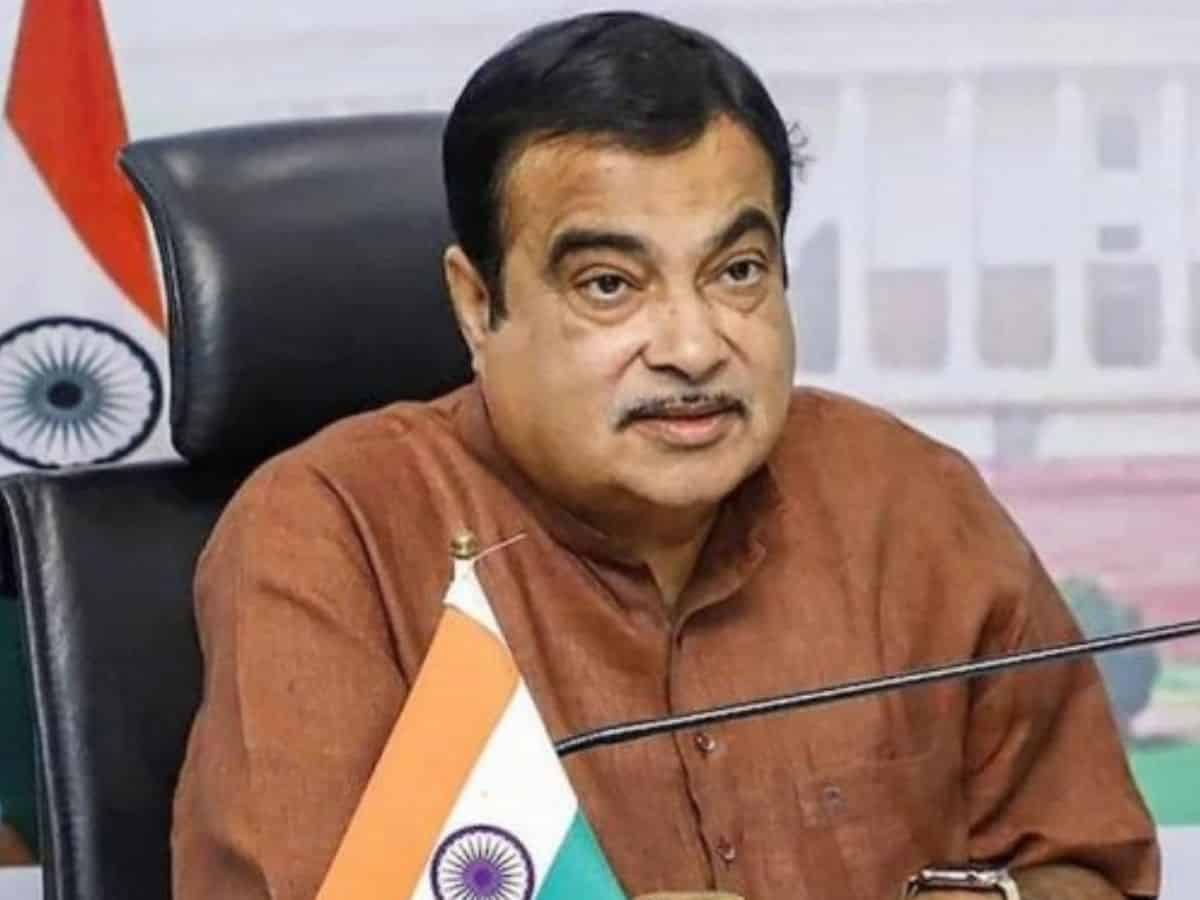
    New Delhi: Union Road Transport and Highways Minister Nitin Gadkari on Thursday said faulty road construction should be made a non-bailable offence and road contractors and engineers should be held responsible for accidents and punished.

    Addressing an event organised by industry body CII, Gadkari further said India is number one in road accidents in the world.

    “Faulty road construction should be a non-bailable offence and road contractors, concessionaires and engineers should be held responsible for accidents and sent to prison,” he said.

    The Ministry of Road Transport and Highways aims to reduce road accident fatalities to half by 2030.

    According to the minister, the ministry data of road accidents in 2023 shows five lakh mishaps in the country resulting in 1,72,000 deaths.

    “Of this, 66.4 per cent, or 1,14,000, were in the 18-45 years age bracket while 10,000 deaths were of children,” Gadkari said.

    He pointed out that 55,000 deaths were reported due to absence of helmets and 30,000 were due to non-use of seat belts.

    Gadkari also said the highways ministry is spending Rs 40,000 crore to rectify black spots on highways.

    He urged the industry and other stakeholders to partner with the government to set up driver training and fitness centres to address the acute shortage of drivers in the country.

    Gadkari also said it has been decided that trucks in India should be fitted with driver fatigue and sleep-detection devices to improve road safety.

    “In many other countries, drivers get down after driving for eight hours. Our drivers go on driving for up to 15-18 hours non-stop.

    “We need to respond to these needs and be sensitive to drivers’ fatigue for promoting road safety,” he said.

    The minister focused on the need to involve children from class 5 to class 11 in road safety promotion, and educate them, and make them road-safety ambassadors.

    “In the auto sector, we have already brought reforms from the lens of road safety. Bharat NCAP Ratings have been brought to make sure compliance on the road safety from auto sector is there,” he added.

    “Road Engineers, and Road Developers need to focus on standards of road from the lens of road safety. We need to improve DPRs from road safety perspective,” he said.

    Safe Drivers need to be incentivised, the minister said.

    “Penalising violations is only part of solution. Companies should study the pilot (project) in Nagpur on how good and safe drivers are being incentivised through goodies, discounts and coupons,” Gadkari said.

    Speaking at the event, Road Transport and Highways Secretary V Umashankar said road safety initiatives should be converted into a mass movement.

    “Each accident point has its own story to tell, each black spot has its own story. We need to sensitise people at the district level,” he said.

  • Reliance Q3 net profit rises 7.4 percent

    Reliance Q3 net profit rises 7.4 percent

    New Delhi: Reliance Industries Ltd on Thursday reported a 7.4 percent rise in its December quarter net profit, as its retail business rebounded and telecom earnings rose.

    Its consolidated net profit of Rs 18,540 crore, or Rs 13.70 per share, in October-December – the third quarter of April 2024 to March 2025 fiscal (FY25) – compared to Rs 17,265 crore, or Rs 12.76 a share, in the same period a year back, according to a stock exchange filing by the company.

    Profit was also up sequentially from Rs 16,563 crore in the July-September quarter.

    The company’s revenue from operations rose to Rs 2.43 lakh crore from Rs 2.27 lakh crore in October-December 2023.

  • Apple enters top 5 smartphone players in India for 1st time

    Apple enters top 5 smartphone players in India for 1st time

    New Delhi: Apple, with its aspirational image and rising footprint, has entered the top 5 smartphone players in India for the first time, garnering nearly 10 per cent market share by volume in the October-December quarter (Q4) of 2024, industry data showed on Thursday.

    According to Counterpoint Research, which analysed Apple‘s strategic approach, the implementation of a comprehensive three-dimensional (3D) strategy, centred around key pillars of domestic manufacturing, distribution and driving premiumisation, has helped the brand break into the top 5 smartphone players in the country.

    “This multi-faceted approach reflects Apple’s commitment to staying ahead in the market and catering to the evolving needs of consumers. There is a significant rise in the premium segment as we are witnessing incremental purchase behaviour in rising middle class in India, especially youth,” Tarun Pathak, Research Director, Mobile Devices and Ecosystems at Counterpoint Research, told IANS.

    Apple, with its aspirational image and rising footprint has become an obvious choice for young consumers in India, especially beyond tier 2 cities.

    “For Indians, the iPhone is more than a smartphone; it’s a lifestyle statement,” said Pathak.

    Driven by the government’s production-linked incentive (PLI) scheme and rising premiumisation trend, Apple reached Rs 1 lakh crore in iPhone exports from India in the calendar year 2024. According to early industry estimates, Apple exported more than $12 billion worth iPhones last year, which is more than 40 per cent growth from 2023.

    Apple’s domestic production has surged nearly 46 per cent from a year ago, as per estimates. The Cupertino (California)-based tech giant manufactured/assembled $14 billion of iPhones in India last fiscal (FY24), with exporting more than $10 billion worth of iPhones.

    Meanwhile, the Apple ecosystem has also created 1,75,000 new direct jobs in four years with “over 72 per cent women”. Apple’s strategic approach in India over the past year has resulted in significant achievements and increased market importance, according to industry experts.

    Apple’s growth in India is expected to continue with significant momentum in the coming year, driven by aggressive retail expansion, targeted marketing strategies, and a deeper penetration into the aspirational Indian market.

  • 1.59L startups, 16.6L jobs make India world’s 3rd largest ecosystem: Centre

    1.59L startups, 16.6L jobs make India world’s 3rd largest ecosystem: Centre

    New Delhi: With more than 1.59 lakh startups recognised by the Department for Promotion of Industry and Internal Trade (DPIIT) as of January 15, India has firmly established itself as the third-largest startup ecosystem in the world, the government said on Wednesday.

    From 2016 to October 31, 2024, recognised startups have reportedly created over 16.6 lakh direct jobs, significantly contributing to employment generation.

    The IT services industry leads with 2.04 lakh jobs, followed by healthcare and lifesciences with 1.47 lakh jobs, and professional and commercial services with around 94,000 jobs, the Ministry of Commerce and Industry said in a statement.

    On January 16, India marks nine years of ‘Startup India’, a transformative journey that began in 2016.

    Designated as ‘National Startup Day’, this occasion celebrates the nation’s strides in fostering a robust and inclusive entrepreneurial ecosystem.

    Major hubs like Bengaluru, Hyderabad, Mumbai, and Delhi-NCR have led this transformation, while smaller cities have increasingly contributed to the nation’s entrepreneurial momentum.

    Startups in fintech, edtech, health-tech, and e-commerce have tackled local challenges and gained global recognition.

    “The number of DPIIT-recognised startups has grown from around 500 in 2016 to 1,59,157 as of January 15, 2025. As of October 31, 2024, a total of 73,151 recognised startups include at least one woman director, showcasing the rise of women entrepreneurs in India,” according to the government data.

    The DPIIT launched the Bharat Startup Knowledge Access Registry (BHASKAR) platform in September last year.

    This cutting-edge initiative, part of the Startup India programme, aims to centralize and streamline interactions within India’s entrepreneurial ecosystem.

    ‘Startup Mahakumbh 2024’ witnessed remarkable participation, with 48,000 attendees, 1,300 exhibitors, and global delegations from 14 countries, underscoring its growing prominence in shaping India’s entrepreneurial landscape.

    The fifth edition of Startup Mahakumbh is all set to take place on March 7-8, 2025, in New Delhi, said the Ministry.

  • Plug-in hybrid electric vehicles to drive global EV growth in 2025

    Plug-in hybrid electric vehicles to drive global EV growth in 2025

    Seoul: The global market for electric vehicles (EVs) is expected to see significant growth this year driven by the plug-in hybrid electric vehicle (PHEV) segment, while the battery electric vehicle (BEV) segment may continue to face challenges, a think tank run by Hyundai Motor Group said on Wednesday.

    Yang Jin-soo, head of the mobility industry research division at Hyundai Motor Group Business Research Center, predicted the global EV market, including BEVs and PHEVs, will grow from 17.2 million units in 2024 to 20.7 million units in 2025, reports Yonhap news agency.

    While BEV sales are expected to grow 18.9 percent on-year, PHEV sales are projected to jump 23.8 per cent, offsetting the growth slowdown in the BEV segment, according to Yang.

    This trend is anticipated to be particularly pronounced in China, the largest EV market. BEV sales in China are expected to grow 13.1 per cent on-year to 6.97 million units, while PHEV sales are projected to climb 25.1 per cent to 6.4 million units.

    In the United States, BEV sales are expected to gain 18.3 per cent to 1.94 million units, though challenges such as declining profitability and new policies under the incoming second Donald Trump administration could impact the market.

    Yang projected the global automotive sales, including all fuel types, to rise 1.9 percent to 85.9 million units in 2025.

    “Interest rate cuts in major markets are likely to boost purchasing conditions, particularly in the second half of the year,” he said.

    In South Korea, however, tightened loan regulations and weakened consumer sentiment are seen as unfavourable factors, with demand predicted to rise by a modest 1.7 percent to 1.62 million units, according to Yang.