Category: BUSINESS

  • Foreign entities lead real estate institutional investments in India

    Foreign entities lead real estate institutional investments in India

    New Delhi: Foreign investors dominated institutional investments in the real estate sector in India with 54 per cent share in 2024, accounting for $3.7 billion, according to a report on Wednesday.

    Despite a reduction in share, investments increased by 36 per cent in value terms, according to a Vestian Research report.

    Domestic investors followed the same trend as their share reduced to 30 per cent in 2024 from 35 per cent in the previous year, despite an increase of 36 per cent in value terms during the same period, the report states.

    Interestingly, co-investments gained traction in 2024 as foreign investors relied on the local expertise of domestic investors amid prevailing macroeconomic uncertainty.

    Co-investment accounted for 16 per cent of the total investments received in 2024, registering a 61-fold increase in value, the report pointed out.

    Institutional investments reached $6.8 billion in 2024, registering an annual increase of 61 per cent.

    Despite significant investments in the industrial and warehousing sector, commercial assets continued to dominate with 35 per cent share.

    “As demand for GCCs is growing in India, office spaces are expected to witness renewed demand,” the report mentioned.

    On the other hand, the residential sector reported investments worth $2 billion, accounting for 30 per cent of the total investments received in 2024.

    Investments rose by 171 per cent in 2024 over the previous year. Similarly, the industrial and warehousing sector witnessed an annual increase of 203 per cent with a rise in share from 15 per cent in 2023 to 28 per cent in 2024.

    Shrinivas Rao, FRICS, CEO, Vestian said, “Despite a slow start, the real estate sector received significant institutional investments in 2024, surpassing pre-pandemic levels. However, 2025 is expected to be challenging due to increasing geopolitical friction, a slowdown in the global economy, and elevated inflation levels”.

    “On the other hand, RBI is anticipated to reduce the repo rate in 2025, providing impetus to the real estate sector. Heightened real estate activities due to low mortgage rates may attract investors,” he noted.

    Factors such as return-to-office policies, government initiatives like the Production Linked Incentive (PLI) scheme, and increased focus on affordable housing are anticipated to drive real estate demand in the coming years. This may attract investors, leading to increased investor participation, the report added.

  • Indian stock market opens higher, Nifty above 23,200

    Indian stock market opens higher, Nifty above 23,200

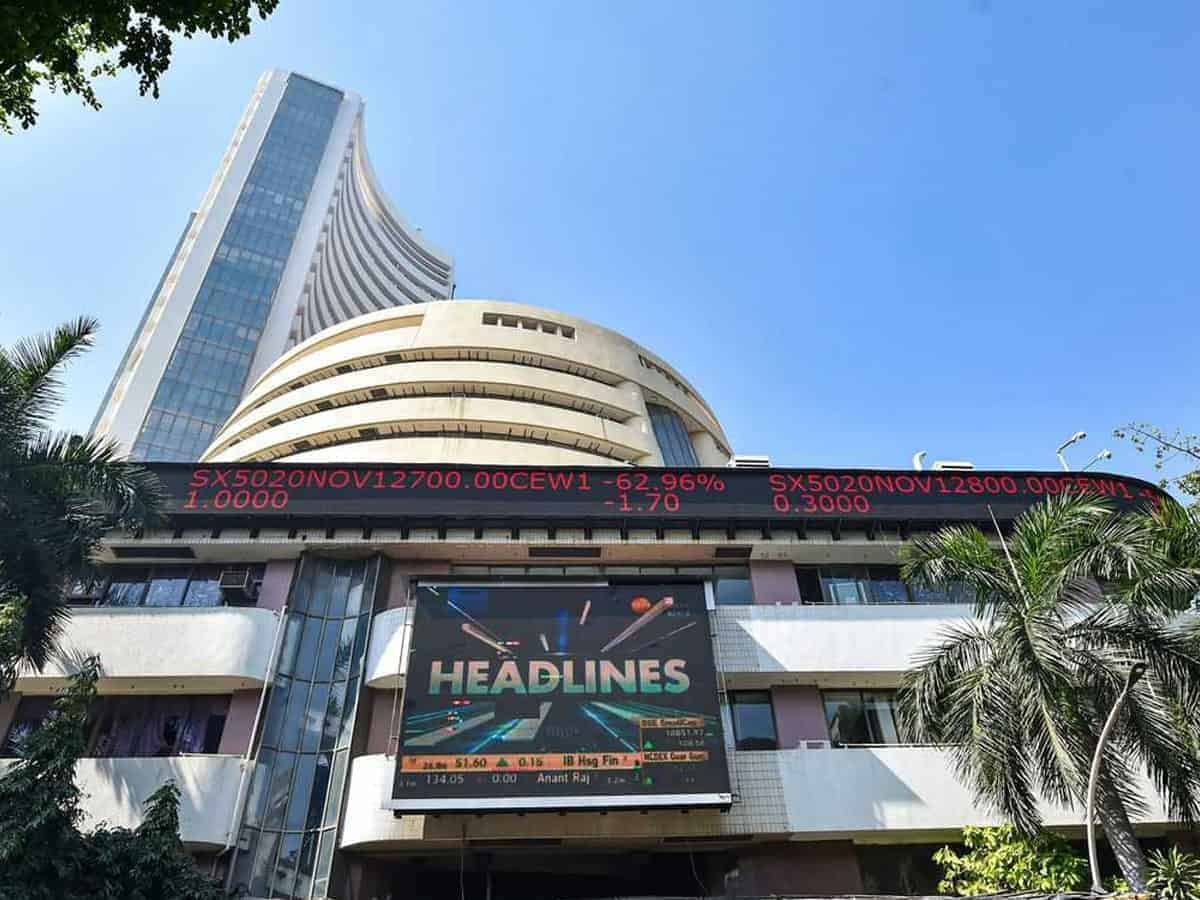
    Mumbai: The Indian stock market opened higher on Wednesday as buying was seen in the auto, IT and PSU bank sectors.

    At around 9.26 am, Sensex was trading at 76,758.37 after rising 258.74 points or 0.34 per cent, while Nifty was trading at 23,225.50 after climbing 49.45 points or 0.21 per cent.

    On the National Stock Exchange (NSE), 1,263 stocks were trading in green, while 289 stocks were in red.

    Nifty Bank was up 154.60 points or 0.32 per cent at 48,883.75. Nifty Midcap 100 index was trading at 53,846.40 after adding 169.90 points or 0.32 per cent. Nifty Smallcap 100 index was at 17,329.05 after climbing 71.25 points or 0.41 per cent.

    According to experts, market will witness lots of stock-specific action in response to the Q3 results.

    Market has been rewarding performers, delivering better-than-expected results and punishing those delivering worse-than-expected results.

    “With only five more days to go for Donald Trump’s inauguration as US President, soon there will be clarity on Trump’s actions and its likely impact on the markets. It appears that the dollar and US bond yields have peaked for now,” said market watchers.

    Meanwhile, in the Sensex pack, Maruti Suzuki, Zomato, NTPC, IndusInd Bank, Tech Mahindra, Kotak Mahindra Bank, HCL Tech, Power Grid and L&T were the top gainers. Whereas, M&M, Bajaj Finance, Bajaj Finserv, Nestle India and Axis Bank were the top losers.

    The Dow Jones climbed 0.52 per cent to close at 42,518.28. The S&P 500 raised 0.11 per cent to 5,842.91 and the Nasdaq declined 0.23 per cent to close at 19,044.39 in the last trading session.

    In the Asian markets, China and Bangkok were trading in red. Whereas Jakarta, Seoul, Hong Kong and Japan were trading in green.

    There are reports that Trump will begin with low tariff hikes putting pressure on major exporters to the US, even while leaving room for negotiations.

    If this scenario plays out, further rise in dollar and US bond yields will be arrested. Till then, the FII selling will continue, preempting any rally in the market, according to experts..

    In the meantime, foreign institutional investors (FIIs) sold equities worth Rs 8,132.26 crore on January 14, on the other hand domestic institutional bought equities worth Rs 7,901.06 crore on the same day.

  • Trump, Zelenskyy, Scholz among 60 top leaders to address WEF Davos meet

    Trump, Zelenskyy, Scholz among 60 top leaders to address WEF Davos meet

    New Delhi: US President-elect Donald Trump, German Chancellor Olaf Scholz and Ukraine President Volodymyr Zelenskyy will be among 60 top political leaders from across the world, including Germany, Switzerland, South Africa and Israel, who will address the World Economic Forum meeting in Swiss ski resort town Davos next week.

    Announcing the detailed schedule, Geneva-based WEF on Tuesday said the meeting would see participation by nearly 3,000 leaders from over 130 countries, including 350 governmental leaders. Indian participation would include five union ministers — Ashwini Vaishnaw, CR Patil, K Ram Mohan Naidu, Chirag Paswan and Jayant Chaudhary — and three chief ministers — Dharmendra Pradhan, N Chandrababu Naidu and Revant Reddy, along with other ministers from other states and over 100 CEOs.

    With the global economy undergoing a paradigm shift, the five-day meeting beginning January 20 will explore how to re-launch growth, harness new technologies and strengthen social and economic resilience, the WEF said.

    “Davos is unique in bringing together close to 3,000 decision makers from governments, business, and civil society at the beginning of the year to address the challenges of a world in deep transformation,” WEF Founder and Chairman Klaus Schwab said.

    “Despite divergent positions and great uncertainties, the Annual Meeting 2025 will foster a spirit of cooperation and constructive optimism with the objective of shaping the forthcoming Intelligent Age in a more sustainable and inclusive way,” he added.

    “The Annual Meeting comes at a moment marked by a greater level of global uncertainty than we have seen in a generation, driven by geopolitical tensions, economic fragmentation and accelerating climate change,” WEF President and CEO Borge Brende said.

    “Within this more unsettled climate, the only way to address urgent challenges and unlock new opportunities is through innovative, cooperative approaches,” he added.

    Among top political leaders, Trump will join via live video link for an interactive dialogue with participants, while those present in-person would include European Commission President Ursula von der Leyen, China’s Vice-Premier Ding Xuexiang, German Chancellor Olaf Scholz, Argentina President Javier Milei, European Parliament President Roberta Metsola, South Africa President Matamela Cyril Ramaphosa, and Spain President Pedro Sanchez.

    Swiss President Karin Keller-Sutter, Bangladesh Government’s Chief Adviser Muhammad Yunus, Iraq President Abdulatif Rashid, Israel President Isaac Herzog, Malaysia President Anwar Ibrahim, Palestinian National Authority Prime Minister Mohammed Mustafa, Singapore President Tharman Shanmugaratnam, Ukraine President Volodymyr Zelenskyy, and Viet Nam PM Pham Minh Chinh will also be there.

    Heads of international organisations taking part would include World Trade Organization’s Ngozi Okonjo-Iweala, IMF’s Kristalina Georgieva, NATO’s Mark Rutte, WHO’s Tedros Adhanom Ghebreyesus, and UNDP’s Achim Steiner.

    Over 1,600 business leaders, including more than 900 of the world’s top CEOs, will also participate, along with over 120 of which are Global Innovators, Tech Pioneers and Unicorns who are transforming industries.

    More than 170 leaders from civil society and the social sector — from labour unions, non-governmental organisations, religious and indigenous communities, as well as experts and heads of the world’s leading universities, research institutions and think tanks — will participate in the meeting.

    The 55th Annual Meeting of the World Economic Forum will convene under the theme, Collaboration for the Intelligent Age.

  • Banks hike interest rates on FDs amid fierce competition for deposits

    Banks hike interest rates on FDs amid fierce competition for deposits

    Mumbai: Banks have started offering higher returns on FDs amid fierce competition to raise more deposits. While leading banks such as SBI and HDFC were the first to raise interest rates on FDs, smaller banks such as IDBI have followed suit for fear of getting left behind in the race.

    SBI introduced a new category of super senior citizens above 80 years — who will get 10 basis points more than senior citizens. This scheme has been adopted by IDBI Bank as well.

    IDBI Bank has launched the ‘IDBI Chiranjeevi-Super Senior Citizen FD’, a fixed deposit product exclusively for individuals aged 80 years and above. The scheme offers an additional 0.65 per cent interest above the standard fixed deposit rates. The interest rates under this scheme include 8.05 per cent for a 555-day tenure, 7.9 per cent for 375 days, 8 per cent for 444 days, and 7.85 per cent for 700 days. The scheme is effective from January 13, 2025.

    As part of the new innovative savings schemes, the State Bank of India (SBI) has also introduced a ‘Har Ghar Lakhpati’ (lakhpati in every home) recurring deposit scheme. The objective of the scheme is to enable individuals to accumulate a corpus of Rs one lakh or more through small monthly savings over three to ten years.

    Individuals, including minors aged 10 and above, are eligible to open an account.

    For people under age 60, the scheme offers interest rates of 6.75 per cent for tenures of three and four years, and 6.50 per cent for tenures of five to 10 years. For those above 60, it offers 7.25 per cent for three and four years, and 7 per cent for years five to 10.

    Similarly, Bank of Baroda has rolled out liquid fixed deposits, customers can withdraw in units of Rs 1,000 after an initial deposit of Rs 5,000. Deposits exceeding Rs 5,000 must also be in multiples of Rs 1,000.

    Finance Minister Nirmala Sitharaman, at a review meeting held earlier, asked the chiefs of public sector banks to accelerate the growth rate of their deposits to match the quicker pace at which the credit is growing.

    The growth rate of deposits at the time was 3 to 4 per cent slower than the pace at which credit was growing in recent months which was seen as posing a risk of asset-liability mismatch in the banking system.

  • Global cleantech energy supply spending to reach $670 bn in 2025

    Global cleantech energy supply spending to reach $670 bn in 2025

    New Delhi: Cleantech energy supply spending is projected to reach $670 billion globally in 2025, surpassing fossil fuel investments for the first time, and India has a bright spot in it, according to a report on Tuesday.

    Solar photovoltaic (PV) is expected to account for half of all cleantech investments, according to the report by S&P Global Commodity Insights.

    “In recent years, government programmes like the US Inflation Reduction Act and India’s production-linked incentive have promoted domestic clean energy technology production to create local jobs and enhance supply chain resilience,” the report mentioned.

    The ongoing antidumping investigation in the US into cell exports from four Southeast Asian countries, which announced high preliminary tariffs on November 29, 2024, for exports from all four countries, has the potential to significantly reshape the global PV manufacturing landscape

    According to the report, India is aggressively ramping up its PV manufacturing capacity, targeting exports to the US market to take advantage of the trade tensions between the US and China.

    India’s total renewable energy installed capacity recorded a robust double-digit growth of 15.84 per cent to touch 209.44 GW, as of December 2024, from 180.80 GW in December 2023.

    The total capacity added during 2024 amounted to 28.64 GW, representing a significant year-on-year increase of 119.46 per cent compared to the 13.05 GW added in 2023, according to the latest government data.

    The data further showed that the solar power sector spearheaded this growth with the addition of 24.54 GW, reflecting a 33.47 per cent rise in its cumulative installed capacity from 73.32 GW in 2023 to 97.86 GW in 2024.

    The report mentioned that battery energy storage is becoming essential for improving project economics, especially in regions with high renewable penetration.

    “Long-duration energy storage systems are anticipated to double in installations by 2025. AI applications in renewable generation forecasting and grid planning are gaining traction, enhancing energy management and integration of renewable sources into the grid,” the report mentioned.

    Data centres are projected to source approximately 300 Terawatt hours (TWh) of clean power annually by 2030, significantly increasing their contribution to corporate clean energy procurement.

  • Hyundai, Kia’s eco-friendly car exports rise 3 pc last year

    Hyundai, Kia’s eco-friendly car exports rise 3 pc last year

    Seoul: Hyundai Motor and its affiliate Kia said on Tuesday their combined exports of environmentally friendly vehicles climbed 3 per cent in 2024 from a year earlier despite an economic slowdown.

    Hyundai and Kia shipped a total of 707,853 eco-friendly cars last year, up from 687,420 units a year ago, Hyundai Motor Group said in a press release.

    Gasoline hybrid models accounted for 56 percent of the eco-friendly car shipments, offsetting a slowing demand for electric vehicle (EV) models, it said, reports onhap news agency.

    To ride out the EV slowdown, the carmakers said they will strengthen their product lineups by adding more fuel-efficient gasoline hybrid models.

    They also plan to improve their product mix, and adjust vehicle production and inventories in the face of high interest rates, low growth, spread of protectionism and tougher competition with rivals this year.

    Hyundai and Kia together form the world’s third-largest automotive group by sales after Toyota Motor and Volkswagen AG.

    Their overall exports slightly fell to 2,180,698 units worth US$53.36 billion last year from 2,216,231 vehicles worth $54.39 billion in 2023, the release said.

    Seven out of 10 exported models were sport utility vehicles (SUVs), and the best-selling model was the Avante compact, which is sold as Elantra overseas.

    Nearly 56 pe rcent of the shipments went to North American markets, with 19 per cent shipped to Europe and the remainder to other markets.

    Meanwhile, Hyundai Motor Group has pledged to invest a record 24.3 trillion won ($16.6 billion) in South Korea this year to bolster future competitiveness amid uncertain global business environments.

    The annual investment plan represents a more than 19 percent increase from last year’s domestic investment of 20.4 trillion won, according to the group.

    The decision was made under the belief that consistent and stable investment is critical to overcoming growing uncertainties and securing future growth drivers, the group said.

  • Indian stock market opens higher, HCLTech shares tank 9 pc

    Indian stock market opens higher, HCLTech shares tank 9 pc

    Mumbai: The domestic benchmark indices opened higher on Tuesday as HCLTech’s stock tanked 9 per cent in early trade after posting Q3 results that left brokerages unimpressed.

    Brokerage firm Nuvama has downgraded HCLTech to “hold” from its earlier rating of “buy”.

    NSE Nifty 50 and BSE Sensex opened higher. As of 9:16 a.m., the Nifty 50 was 113.60 points or 0.49 per cent higher at 23,199.55, and the Sensex was 370.21 points or 0.49 per cent higher at 76,700.22.

    According to market experts, the constant refrain from many saner voices that the broader market is overpriced and may correct sharply is now playing out.

    Reversion to mean valuations are happening in large caps, too. Strengthening dollar, 10-year US bond yields rising to above 4.7 per cent, uncertainty regarding Donald Trump’s actions after January 20 — all have combined to cause this market correction, they noted.

    The Nifty tumbled 1.5 per cent on Monday, falling for the fourth straight day and for the sixth session in seven.

    “Technically speaking, the 22,830-23,000 area is notable support from here, with some near-term time cycles coming together in the January 17-23 window,” said Akshay Chinchalkar, Head of Research at Axis Securities.

    It appears that the market is a bit oversold and this favours a bounce back in the near-term.

    “But that trend, if it plays out, is unlikely to sustain. There is more pain likely in mid and small caps. The sensible option for retail investors is to buy beaten down quality large-caps and wait patiently,” said experts.

    The foreign institutional investors (FIIs) sold equities worth Rs 4,892.84 crore on January 13 and on the other hand, domestic institutional investors bought equities worth Rs 8,066 crore on the same day.

    “Given the prevailing volatility, traders are advised to exercise caution, implement strict stop-loss measures, and avoid carrying long positions overnight to manage risk effectively,” said Hardik Matalia from Choice Broking.

  • Home sales priced above Rs 1 crore up 80 pc in NCR, Rs 2-5 crore properties up 38 pc

    Home sales priced above Rs 1 crore up 80 pc in NCR, Rs 2-5 crore properties up 38 pc

    New Delhi: Amid sustained demand for spacious homes with state-of-the-art amenities, the National Capital Region (NCR) saw properties priced Rs 1 crore and above accounting for 80 per cent of the total residential units sold in 2024, a report showed on Monday.

    Within this segment, the Rs 1 crore-Rs 2 crore and Rs 2 crore-Rs 5 crore bracket saw the most significant activity, driven by affluent homebuyers prioritising quality living spaces, as per the Knight Frank India report.

    In 2024, the NCR recorded the highest sales volume in the ticket size category of Rs 2 crore-Rs 5 crore across eight markets in the country.

    With sales of 18,997 units, NCR led the sales of this ticket size segment, contributing 38 per cent of the overall volume across eight markets in the country. The Rs 2 crore-Rs 5 crore segment in NCR witnessed a significant increase of 84 per cent from the residential sales of 10,311 units in 2023, according to the data.

    “Gurugram and key locations of Noida and Greater Noida continue to draw a substantial interest among homebuyers in the higher ticket size segment,” said Mudassir Zaidi, Executive Director–North, Knight Frank India.

    The Rs 1 crore-Rs 2 crore ticket size segment recorded sales of 19,111 units, highest sales volume for any ticket size segment in NCR’s residential market. The segment has contributed over 33 per cent of the residential sales in NCR.

    The Rs 5 crore-Rs 10 crore segment saw a growth of 34.6 per cent, from 5,469 units in 2023 to 7,361 units in 2024.

    In the Rs 10 crore-Rs 20 crore segment, NCR witnessed an increase of 44 per cent in sales volume from 275 units in 2023 to 397 units in 2024.

    NCR witnessed a significant increase in the sales for the category above Rs 50 crore from six units in 2023 to 49 units in 2024, said the report.

  • Retail inflation eases to 4-month low in December

    Retail inflation eases to 4-month low in December

    New Delhi: Retail inflation slowed to a four-month low of 5.22 per cent in December compared to 5.48 pc in November, mainly due to easing of prices in food basket, according to government data released on Monday.

    The inflation based on Consumer Price Index (CPI) was 5.48 per cent in November and 5.69 per cent in December 2023.

    According to CPI data released by the National Statistics Office (NSO), the inflation in the food basked reduced to 8.39 per cent in December. It was 9.04 per cent in November and 9.53 per cent in December 2023.

    “The CPI (General) and food inflation in December 2024 is the lowest in the last four months,” the NSO said.

    Last month, the Reserve Bank of India raised the inflation projection for the current fiscal year to 4.8 per cent from 4.5 per cent. It also said the lingering food price pressures are likely to keep headline inflation elevated in the December quarter.

    The CPI-based headline inflation increased from an average of 3.6 per cent during July-August to 5.5 per cent in September and further to 6.2 per cent in October 2024.

  • Govt expenditure on big infra projects to drive growth in 2025-26: Report

    Govt expenditure on big infra projects to drive growth in 2025-26: Report

    New Delhi: The Centre’s capital expenditure in big-ticket infrastructure projects such as highways, railways and power development and investments in critical sectors such as defence are expected to propel India’s economic growth in the financial year 2025- 2026 and beyond, according to a report by financial services firm Prabhudas Lilladher (PL).

    “We are already witnessing an uptick in momentum in railways, defence, power, data Centers, etc., the execution of which will accelerate growth in FY26 and beyond,” the report states.

    The government allocated a massive Rs 11.1 lakh crore for infrastructure projects in the budget for 2024-25 and this is expected to be increased further in the forthcoming budget for 2025-26.

    The anticipated measures to pump-prime the economy could provide the much-needed push to stimulate demand and support long-term growth, the report states.

    The report states that the forthcoming budget will be instrumental in shaping the economic recovery, with expectations of a growth-driven focus aimed at boosting middle-class spending with inflation having eased.

    In addition, sectors such as healthcare, tourism, discretionary consumption, and financialisation are poised to benefit from the recovery, according to the report.

    The report’s observations on the economic revival are supported by the surge in industrial growth which touched a 6-month high of 5.2 per cent in November, up from 3.5 per cent in October of the current financial year (2024-25), according to data released by the Ministry of Statistics on Friday.

    The increase also marks a significant rise over the industrial growth of 2.5 per cent recorded a year before in November 2023.

    The growth rate of the manufacturing sector, which accounts for more than three-fourths of the index of industrial production (IIP), accelerated to 5.8 per cent during Nov 2024 from 4.1 per cent in October. This augurs well for employment generation as the sector plays a key role in providing quality jobs to the young graduates passing out from the country’s engineering institutes and universities.

    The figures on use-based classification show that the production of capital goods, which comprise machines used in factories, went up by a robust 9 per cent. This segment reflects the real investment taking place in the economy which has a multiplier effect on the creation of jobs and incomes going ahead.

    There was also a double-digit surge of 13.1 per cent in the production of consumer durables such as electronic goods, refrigerators, and TVs during November 2024 reflecting the higher consumer demand for these items amid rising incomes.