










Although Pakistan hasn’t officially explained why it issued the Notam (Notice to Airmen) for October 28–29, military experts believe it’s directly linked to India’s massive show of strength.
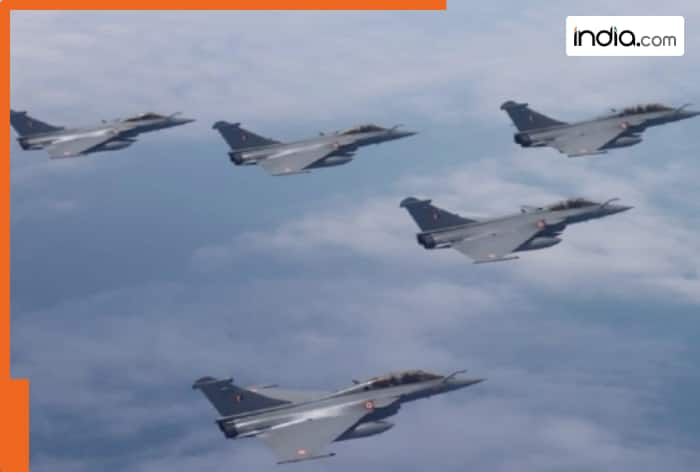
Pakistan is visibly worried. The country has just restricted several air routes across its central and southern regions, and the timing is no coincidence. India is preparing for one of its biggest military exercises in recent years—the Trishul tri-services drill—right near the Pakistan border. The message is clear, and Islamabad is watching nervously.
Although Pakistan hasn’t officially explained why it issued the Notam (Notice to Airmen) for October 28–29, military experts believe it’s directly linked to India’s massive show of strength. Some think Pakistan might be planning its own military drill or even a missile test in response. Either way, the tension is palpable.
India announced its Notam shortly before Pakistan’s move. The Trishul exercise is scheduled from October 30 to November 10 near Sir Creek, a highly sensitive border area that both countries claim as their own. This is not a routine drill. According to satellite images studied by defence analyst Damien Symon, the airspace marked for the exercise stretches up to 28,000 feet (about 8.5 kilometres or 8,500 metres high, whwrw commwrcial flights fly at 3,000 to 35,000 feet), making it one of India’s biggest joint military operations in recent years, as reported by India Today. This height shows that the exercise involves major air operations with fighter jets, drones, and missiles, not just ground or sea drills.The sheer scale and location suggest this could involve large-scale combat simulations and advanced weapon testing.
Why Sir Creek Matters

To understand why this exercise is making Pakistan so anxious, you need to know about Sir Creek. This is a 96-kilometer-long tidal estuary located in the marshy, swampy borderlands of the Rann of Kutch. On one side is India’s Gujarat state, and on the other is Pakistan’s Sindh province. The creek opens into the Arabian Sea, creating a strategic waterway that both nations desperately want to control.
The problem? India and Pakistan can’t agree on where exactly the border should be drawn. India argues that the boundary should run along the mid-channel of the creek because the waterway is navigable during high tide. According to international rules, when a waterway can carry boats, the boundary typically falls in the middle. Pakistan, however, insists the border lies along the creek’s eastern bank, giving them complete control over the water. An old 1914 Bombay Government Resolution contains conflicting descriptions, and both countries use different parts of it to support their claims.
For India, giving up Sir Creek would mean losing access to important sea routes, offshore resources, and a critical security zone. That’s why India insists the boundary must be decided through fresh surveys and negotiations, not just old colonial-era maps. The terrain is marshy, the creek’s channels shift with tides, and the geography keeps changing—so any boundary decision must reflect current realities.
What Makes Trishul So Powerful
The Defence Ministry has made it clear: Trishul is designed to showcase the combined might and perfect coordination of India’s Army, Navy, and Air Force. This isn’t just about flexing military muscle. The exercise also highlights India’s growing policy of Atmanirbharta—self-reliance. India wants to prove that its armed forces can operate independently using homegrown technologies, indigenous weapons, and Indian strategies without relying on foreign equipment.
Troops from the Southern Command will participate in these war games, testing their ability to fight in some of the toughest terrains imaginable. The exercise will include offensive operations in creek and desert regions, amphibious landings along the Saurashtra coast, and multi-domain operations combining land, sea, and air power all at once. Think of it as a full-scale rehearsal for real war.
During such exercises, the three forces practice joint operations to improve teamwork and communication. Troops go through battlefield drills—practicing attacks, defenses, and rescue missions. New weapons, missiles, drones, and defence systems are tested under realistic conditions. The Navy and Army practice amphibious operations, simulating how they would land troops and vehicles from ships onto hostile beaches during a coastal battle. Meanwhile, the Air Force provides air support, conducts strikes, and runs surveillance missions to help ground troops. Logistics teams test how quickly they can move soldiers, fuel, ammunition, and equipment to the front lines. Emergency response drills include rescuing wounded soldiers, repairing damaged systems, and reacting to surprise enemy attacks.
All of this helps India’s forces stay battle-ready, identify weaknesses, and fine-tune their coordination so they can respond swiftly and decisively to any national security threat.
Pakistan’s Nervousness Has a Reason
While military exercises are routine for any country’s armed forces, Pakistan’s decision to issue its own Notam shows how seriously it’s taking India’s activities—especially after Operation Sindoor. That operation, launched after the Pahalgam terror attack, saw Indian armed forces destroy nine terrorist camps deep inside Pakistan and strike 11 of Pakistan’s military bases and airfields. It was a bold, coordinated assault that sent shockwaves through Islamabad.
Now, with Trishul happening in the Sir Creek–Sindh–Karachi region, Pakistan fears another surprise. Just days before the exercise was announced, Defence Minister Rajnath Singh issued a stern warning while addressing troops at the Indian Air Force base in Bhuj on Dussehra. His message was unmistakable: “If Pakistan dares to act in the Sir Creek sector, the reply will be so strong that it will change both history and geography.”
That’s not just tough talk. It’s a clear signal that India is fully prepared to protect its territorial claims and will respond with overwhelming force if challenged. For Pakistan, which is already dealing with internal instability and economic troubles, the prospect of a large-scale Indian military operation near its heartland is deeply unsettling.
A New Era of Indian Military Power
The Trishul exercise represents more than just military preparedness. It’s a statement about India’s growing confidence and capability. By holding such a massive drill near a disputed border area, India is showing that it won’t back down from territorial disputes. By involving all three services and testing indigenous technologies, India is proving it can stand on its own feet without depending on foreign allies for defence equipment.
For Pakistan, the message is loud and clear: India is ready, capable, and willing to defend its interests with full force. The restricted airspace, the nervous Notam, and the heightened alertness across the border all point to one thing—Pakistan knows India means business, and it’s not taking any chances.


