










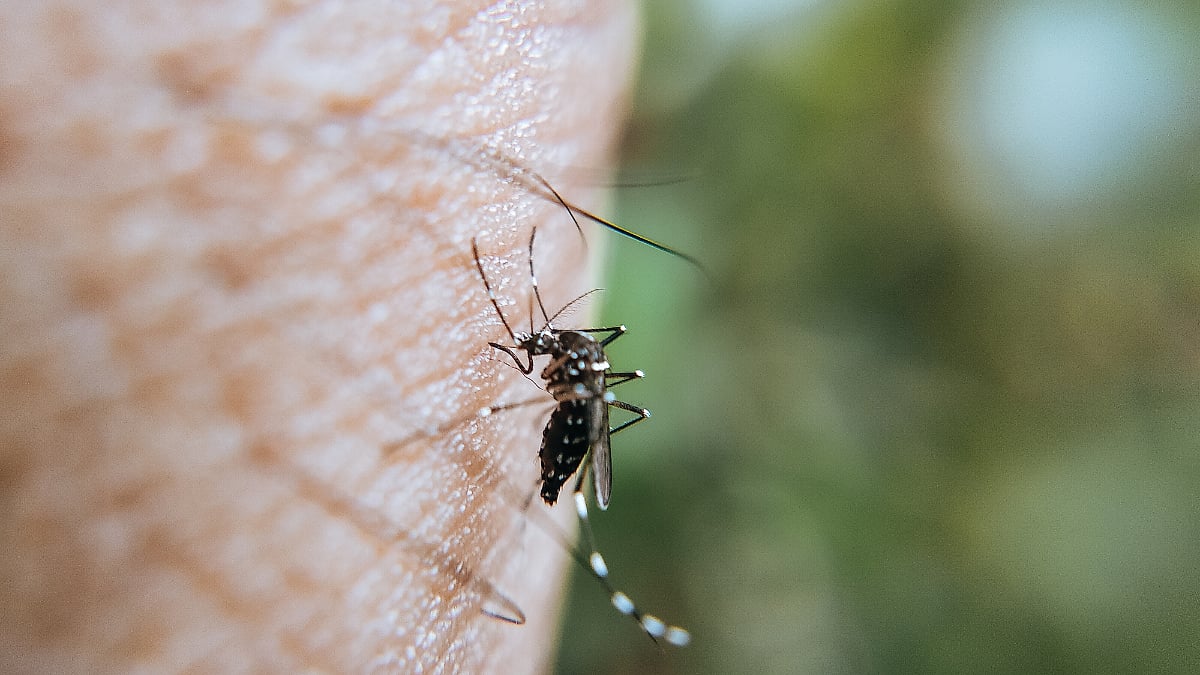
For decades, Iceland has held a rare distinction; it was one of only two places on Earth, alongside Antarctica, completely free of mosquitoes. But that remarkable status has just changed. Scientists have confirmed the presence of mosquitoes in the island nation for the first time ever, a small but striking sign of the planet’s shifting climate patterns.
Canva
Iceland records first-ever mosquitoes
According to The Guardian report, the discovery was made earlier this month by local insect enthusiast Björn Hjaltason, who spotted what he initially described as “a strange fly on a red wine ribbon” while observing moths in the glacial valley of Kjos, northwest of Reykjavik.
Hjaltason collected three specimens, two females and one male, and sent them to the Icelandic Institute of Natural History for analysis. As per the report, entomologist Matthias Alfredsson later confirmed the insects as Culiseta annulata, a cold-resistant mosquito species common across Europe and North Africa.
Until now, scientists had puzzled over Iceland’s mosquito-free status. Despite being home to other hardy insects, the nation’s triple freeze–thaw cycle made it nearly impossible for mosquito larvae to survive, disrupting their breeding patterns. Researchers also suggested that the country’s unique water chemistry and mineral-rich soil created inhospitable conditions for mosquito development.
Canva
Heat buzz in Iceland
But those natural defences are eroding fast. Media also reported that Iceland’s temperatures are rising four times faster than the northern hemisphere average, with record-breaking heat this spring reaching 26.6°C at Egilsstadir Airport, the highest May temperature ever recorded. Some regions even experienced over 10 consecutive days above 20°C, an unusually long heatwave for Iceland.
Experts warn that this discovery signals more than just a nuisance. As rising temperatures reshape Iceland’s environment, from collapsing glaciers to new marine species entering its waters, the arrival of mosquitoes marks yet another dramatic indicator of a warming world.


