










WASHINGTON — Minnesotans have been fighting President Donald Trump’s massive crackdown on undocumented immigrants in other ways besides street protests and rapid action deployments.
A major component of the Trump administration’s deportation plan has run into trouble as towns across the nation, including Woodbury and Shakopee in the Twin Cities suburbs, have pushed back against plans to purchase warehouses to store detainees.
According to a recent memo from the agency, Immigration and Customs Enforcement (ICE) hopes to implement what it calls “a new detention model” called the “ICE Detention Reengineering Initiative” by the end of the year.
According to the memo, this new model, funded by $38.3 billion the agency received from President Donald Trump’s “One Big Beautiful Bill” last year, aims to “meet the growing demand for bedspace” and speed deportations.
Related: For some in this western Minnesota city, an ICE detention center would bring economic promise — and moral compromise
To do so, the agency determined it must acquire “non-traditional facilities,” such as warehouses, to be developed into 16 new regional processing sites.
These processing centers would house a daily average of between 1,000 and 1,500 detainees for up to a week. Then detainees would be sent to one of eight large-scale centers that would hold 7,000 to 10,000 detainees and serve as the primary site for deportations.
But the plans to purchase industrial sites and convert them to hold newly apprehended immigrants has hit hurdles as communities and local politicians have opposed ICE’s plans on humanitarian and logistical grounds.
Proposals to sell industrial space to ICE have been rejected in Byhalia, Mississippi; Oklahoma City; Kansas City; and Ashland, Va. — as well as in Shakopee and Woodbury.
In Virginia, county officials cited environmental concerns and “community disruption” as reasons behind their campaign to persuade the owner of the warehouse in Ashland to back out of a deal with ICE.
In Mississippi, influential GOP Sen. Roger Wicker wrote to Secretary of Homeland Security Kristi Noem earlier this month, saying the site ICE had eyed in the tiny town of Byhalia was destined for economic development.
“The proposed conversion also raises serious feasibility concerns,” Wicker wrote. “Detention facilities impose substantial and specialized infrastructure demands — including transportation access, water, sewer and energy costs, staffing, medical care, and emergency services. … Establishing a detention center at this site would place significant strain on local resources.”
Related: Trump’s $45 billion expansion of immigrant detention sites faces pushback from communities
ICE has had better luck in other locations, successfully entering into contracts with the owners of industrial properties in Arizona, Maryland and other states.
The facility in Williamsport, Md., was purchased before local leaders and the town’s congressional representative, Rep. April McClain Delaney, D-Md., were aware that ICE had plans for the property.
“I am in contact with the Governor’s office and Team Maryland’s Congressional Delegation and local leaders to demand answers from the Department of Homeland Security,” McClain said in a statement. “Let me be clear: planning a detention facility behind closed doors is not governance – it is intimidation.”
‘They heard us loud and clear’
In Minnesota, early warning and strong opposition to the Trump administration’s plan to conduct mass deportations helped derail ICE’s plans.
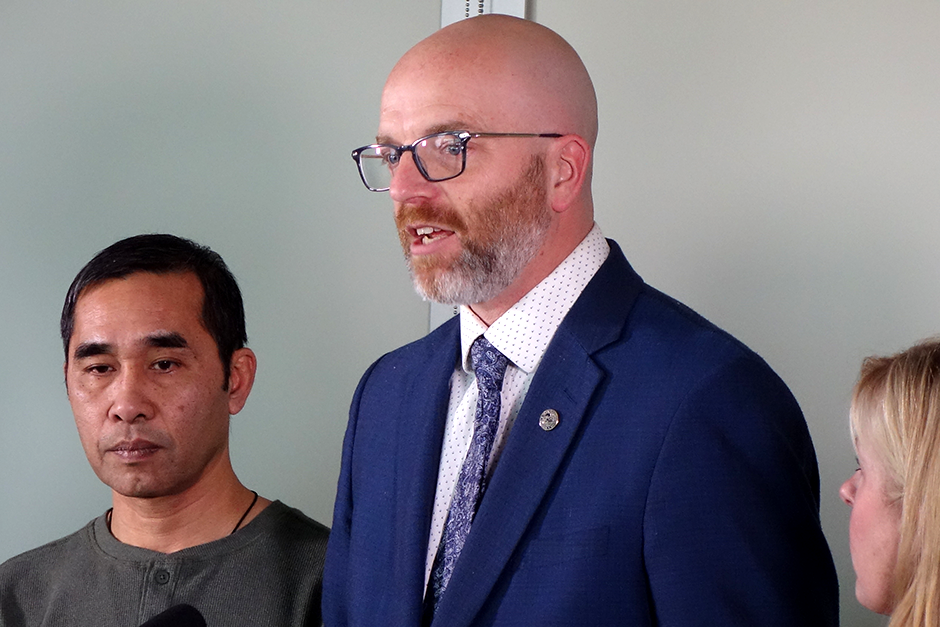
State Rep. Brad Tabke, DFL-Shakopee, said he started to mobilize to stop plans to use the warehouse in his hometown after he became aware of a document that listed it, and 15 other industrial sites across the country, as sites ICE wanted to purchase.
“We got it killed,” Tabke said. “Our community pushed back really hard.”
The property in question, a warehouse on Emery Way, is owned by Opus, a large real estate developer based in Minnetonka.
Tabke said there was an “all-out assault” that began on the morning of Jan. 22 to target Opus.
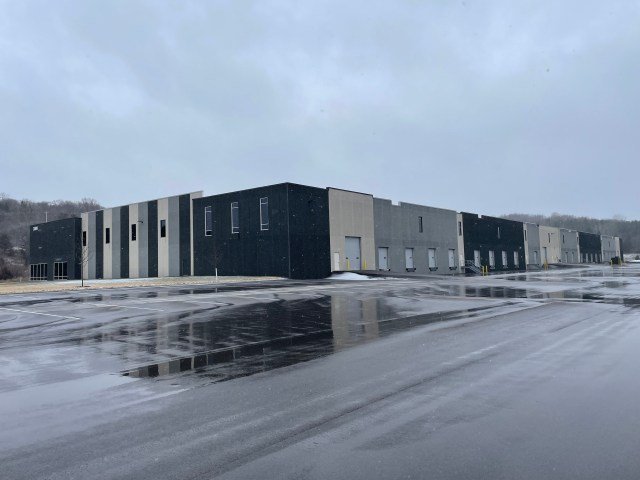
Community members burned up the developer’s phone lines and panned the proposed sale to ICE on social media. Tabke said he took to Instagram and TikTok to condemn the plan himself.
Just hours later, at about 11:30 a.m., Tabke said, Opus CEO Srini Rajamani phoned him to say the project would not move forward. “They heard us loud and clear,” Tabke said.
Opus responded to requests for comment with a statement.
“Consistent with historical business practices, Opus does not disclose details regarding prospective transactions,” the statement said. “We can confirm that we are not under contract nor are we in active negotiations concerning the sale or lease of any of our existing properties with or involving any federal agency.”
Tabke said that by purchasing the building instead of leasing it, the federal government would be exempt from all state and local ordinances.
In a letter to Noem, Rep. Angie Craig, D-2nd District, cited another reason to object to ICE’s plan.
“Given that the Trump administration has repeatedly wrongfully detained and deported legal immigrants and even U.S. citizens, I am concerned that this facility will only exacerbate fear in our communities and allow further disregard for due process,” Craig wrote.
Some of the same dynamics played out in Woodbury, where ICE sought to purchase an industrial building on Hudson Road.
After the city learned of ICE’s plans, 600 residents turned up at a Jan. 14 council meeting. Most of them protested the proposal.
“We definitely heard from our community about concerns,” said Eric Searles, Woodbury’s assistant community development director.
Meanwhile, the Washington County Board of Commissioners sought help from the state’s congressional delegation, writing to Sens. Amy Klobuchar and Tina Smith and Reps. Craig; Betty McCollum, D-4th District; and Pete Stauber, R-8th District; to list their objections.
The commissioners said that “beyond local safety and compatibility concerns, such a facility would place substantial additional strain on county services and funding, including law enforcement, public health, transportation, and other departments, at a time when resources are already stretched to meet state and federal mandates.”
The commissioners also detailed community concerns, including the reports of ICE agents detaining U.S. citizens and residents with no criminal background; alleged human, civil and constitutional rights violations by ICE and a lack of “meaningful communication from the federal government” — including communication with local law enforcement.
The proposed ICE site in Woodbury is owned by Bloomington-based NAI Legacy and several other investors.
Searles said city leaders were notified by the federal government that they “were no longer pursuing” the Woodbury option. He also said the city was notified by the building’s owners “that they were not moving forward.”
ICE has also shown an interest in Prairie Correctional Facility, a 1,600-bed private prison in Appleton in western Minnesota’s Swift County that has been shuttered since 2010, as a site that could be repurposed to hold detained immigrants.
CoreCivic, the owner of the facility, has been aggressively pursuing a contract with ICE and spent months updating the prison.
The post Why an ICE plan to turn warehouses in Shakopee and Woodbury into detention centers has failed in Minnesota — and other states appeared first on MinnPost.


