










PM Modi will visit Manipur today, his first visit to the state since violence broke out in 2023. The crucial visit will include interaction with people displaced by the unrest, laying of foundation stones for multiple projects worth Rs 8500 crore.
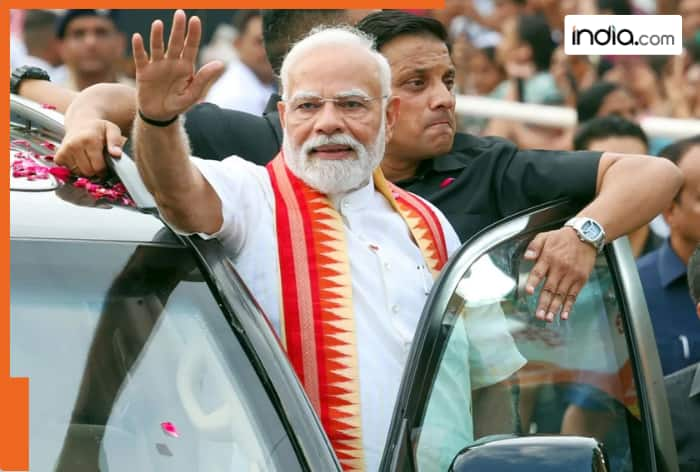
PM Modi To Visit Manipur: Prime Minister Narendra Modi is scheduled to visit Manipur on Saturday, his first visit to the state since violence erupted in 2023. PM Modi’s presence is significant as the Northeastern state has remained scarred by killings, arson, and mass migration. Thousands of people, including women and children, are still in relief camps. Manipur is under President’s Rule following the resignation of Chief Minister N. Biren Singh in February.
The Prime Minister had already talked about the Manipur violence in the Parliament. Now, he is visiting the state and expected to address the people of the state on their soil since the clashes started. However, PM Modi’s visit comes amid a mix of hope and doubts – Some see it as a long-overdue attempt to connect to the people, while others call it as merely symbolic visit
What Has PM Said Before This Visit?
In July this year, the PM, in the Upper House, violence in the state is ‘steadily declining’ and over 11,000 FIRs had been filed against culprits. He said police arrested over 500 people who were responsible for the violence. He highlighted that many schools, colleges and offices had resumed operations, and that exams were held smoothly.

What Is On The Agenda?
Informing about PM Modi’s visit, Chief Secretary Puneet Kumar Goel stated that the Prime Minister will IDPs in Churachandpur and Imphal. He will also lay a foundation stone of Rs 7,300 crore projects at Churachandpur’s Peace Ground. Notably, Churachandpur’s Peace Ground is a Kuki-majority area. Goel stated that PM Modi will also visit Kangla in Imphal, which is a Meitei-majority region. There he will inaugurate Rs 1,200 crore projects. In total, Manipur will get development works worth Rs 8,500 crore. PM Modi will also address public gatherings at both places.
How Have Other Political Parties Reacted?
Congress leader and Leader of Opposition in Lok Sabha Rahul Gandhi on Friday called the trip “no big deal.” He said that the real national issue was vote theft.
“The issue in Manipur has been ongoing for a long time. It is good that he is going there now. But the main issue in the country is that of ‘Vote Chori’. The election mandates in Haryana and Maharashtra were stolen…People everywhere are saying ‘Vote Chor’,” Rahul Gandhi said.
Congress’s Jairam Ramesh posted on X that PM Modi’s three-hour visit would be a “farce, not a force for peace.”
“So now it is official. The PM will spend less than 3 hours in Manipur tomorrow. This visit instead of providing a force for peace and harmony is actually going to be a farce,” he said.
It is worth noting that the grand old party has repeatedly argued that PM Mod’s visit comes too late, after nearly 29 months.
BJP officials, such as Sambit Patra and former chief minister N Biren Singh, have expressed support for the visit, suggesting it may pave the way for reconciliation.
What Are Manipur’s Ethnic Fault Lines?
Manipur is divided by deep-rooted ethnic divisions between its valley and hill populations. The Meiteis, who represent approx 53 percent of the state’s population, live in the Imphal Valley, 10 percent of Manipur’s total land area. Notably, majority of Meiteis are Hindus, around 8 percent are Muslims.
The Meiteis, who are better represented in education, business, and politics compared to other communities, have been demanding for their inclusion in the Scheduled Tribe list. They say that this move would safeguard their rights to land and employment.
Tribal communities make up about 40 percent of the population, with Kukis (around 25 percent) and Nagas (around 15 percent) being the main groups. They live in 90 percent of the hill districts. The Kukis, who are mostly Christians, are concentrated in Churachandpur, Kangpokpi, and Chandel, tracing their origins to migrations from Myanmar. They identify as hill people whose rights are safeguarded by the Constitution. The Nagas, who are also largely Christian, inhabit other hill districts and have their own political demands.
Historically, Kukis and Nagas also fought with each other in 1993, resulting hundreds of killings, but they share common ground in opposing Meitei community in their attempts to expand into protected tribal soil.
The outcome has created a clear divide between the valley and the hills. The Meitei community is seeking ST quota to maintain their status within the state. In contrast, the Kuki and Naga groups said that the Meiteis are already more developed and hold political power and granting them ST status could lead to increased settlement in the hills and undermine tribal protections.
Additionally, tribal organisations highlight that the Meiteis already have recognition under SC and OBC classifications.
Why Did Manipur Descend Into Violence?
In April 2023, when the Manipur High Court instructed the state government to include Meitei community in the Scheduled Tribe (ST) list. The order immediately deepened anxieties in Kuki community. They feared that it would open the protected hill areas to Meiteis.
On 3 May 2023, ATSUM organised a “Tribal Solidarity March” across the hill districts to protest against the HC’s verdict. The peaceful protest quickly turned violent in Churachandpur and spread across the state.
Hundreds of homes and villages were burned, religious places were attacked. Thousands left their homes due to the violence.
Within weeks, Manipur was divided into two zones: The valley are dominated by Meiteis and hills dominated by Kukis. These areas were separated by the central armed forces.


