










NATO chief Mark Rutte also claimed that the tariffs imposed on India by US President Trump were significantly affecting Russia, and New Delhi had reached out Moscow, with Modi asking Putin to explain his approach.
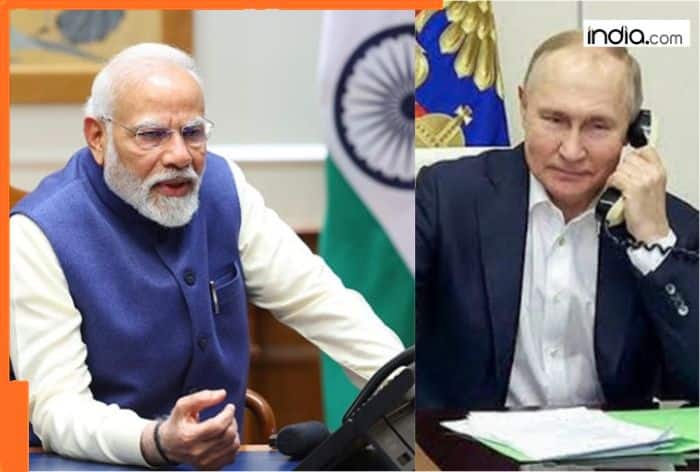
Modi-Putin phone call: India on Friday dismissed the remarks of NATO Secretary-General Mark Rutte on a purported conversation between Prime Minister Narendra Modi and Russian President Vladimir Putin as “factually incorrect and entirely baseless”, stating that no such discussion had ever taken place, while urging the NATO leadership to act with greater caution.
What MEA said on Modi-Putin phone call?
“We have seen the statement by Nato Secretary-General Mr Mark Rutte regarding a purported phone conversation between Prime Minister Narendra Modi and President Vladimir Putin. The statement is factually incorrect and entirely baseless. At no point has Prime Minister Modi spoken with President Putin in the manner suggested. No such conversation has taken place,” Ministry of External Affairs (MEA) spokesperson Randhir Jaiswal said during the weekly press briefing.
The MEA’s response came after NATO chief Mark Rutte claimed that New Delhi was in touch with Moscow, and PM Modi was asking Vladimir Putin to explain his Ukraine strategy as India was suffering due to Trump tariffs. “Delhi is on the phone with Putin, and Narendra Modi is asking him to explain his strategy on Ukraine because India is being hit with tariffs,” he told CNN.
What did NATO chief say?
Rutte also claimed that the tariffs imposed on India by US President Trump were significantly affecting Russia, and New Delhi had reached out Moscow, with Modi asking Putin to explain his approach, since the tariffs were impacting India.

However, New Delhi has strongly rejected Rutte’s claims and underscored the need for NATO’s top leadership to ensure accuracy in their public remarks. “We expect the leadership of an important institution like NATO to exercise greater responsibility and accuracy in public statements. Speculative or careless remarks that misrepresent the Prime Minister’s engagements or suggest conversations that never occurred are unacceptable,” the MEA spokesperson stressed.
Jaiswal also reiterated India’s stance on Russian oil imports, stating that India’s energy imports are aimed at ensuring predictable and affordable energy costs for its consumer, and New Delhi will continue taking all necessary measures to safeguard its national interests and economic security.
Trump tariffs on India
Last month, Donald Trump slapped 25 percent reciprocal tariffs on Indian goods and an additional 25 percent levies for New Delhi’s purchases of Russian oil, bringing the total duties imposed on India to 50 percent. The punitive tariffs came into effect from August 27, 2025
India turned to purchasing Russian oil sold at a discount after Western countries imposed sanctions on Moscow and shunned its supplies over its invasion of Ukraine in February 2022.
Defending its purchase of Russian crude oil, India has been maintaining that its energy procurement is driven by national interest and market dynamics.
(With inputs from agencies)


