










The minister also pointed out that no global body prepares official air-quality rankings. Instead, the Indian government carries out its own annual survey.
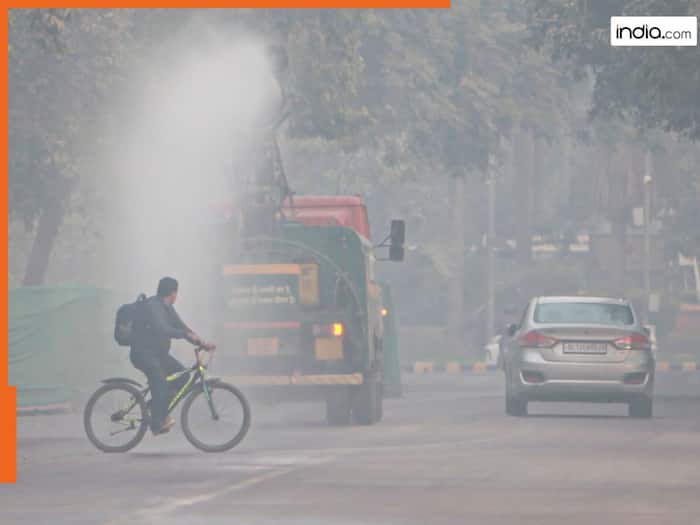
As India continues to struggle with air pollution, the Centre told Parliament that the country follows its own air-quality rules and that global rankings released by different organisations are not officially recognised. It also said the World Health Organisation’s (WHO) air-quality guidelines are only recommendations and are not compulsory for India to follow. The government’s response in the Rajya Sabha came after a question on India’s position in international lists such as IQAir’s World Air Quality Ranking, the WHO Global Air Quality Database, the Environmental Performance Index (EPI), and the Global Burden of Disease (GBD) reports.
Minister of State for Environment Kirti Vardhan Singh said the WHO’s guidelines are meant to help countries shape their own standards, keeping in mind their geography, weather and local conditions.
He said India has already set its National Ambient Air Quality Standards (NAAQS) for 12 major pollutants to protect public health and the environment.
The minister also pointed out that no global body prepares official air-quality rankings. Instead, the Indian government carries out its own annual survey—Swachh Vayu Survekshan—which ranks 130 cities under the National Clean Air Programme (NCAP) based on their efforts to improve air quality.

This clarification comes months after data from IQAir, a Swiss air-quality monitoring company, showed that India did not meet the WHO’s strict 2024 air-quality levels.
India was ranked fifth globally for smog levels
IQAir, a Swiss company that tracks air pollution, recently reported that India did not meet the WHO’s strict air-quality standards for 2024. According to the report, India was the fifth most polluted country in the world, with Byrnihat in Meghalaya listed as the most polluted city and Delhi as the most polluted capital.
On Tuesday, the Union government also told Parliament that India does not have clear, conclusive data that directly links deaths or diseases to air pollution.


