










Pakistan’s Defence Minister Khawaja has said that ‘India united only under Aurangzeb’. However, the reality is different. Scroll down to know more.
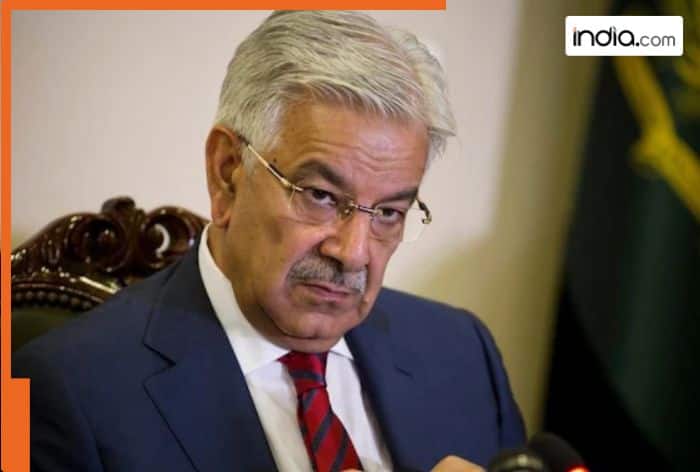
New Delhi: In a significant comment on the politics and national framework of India, Pakistan’s Defence Minister Khawaja Asif has made a baseless claim about the social and political structure of India. In the recent claim, the Pakistan minister has said that India was ‘never truly united’ except under the rule of Mughal emperor Aurangzeb. The baseless claim was made by the Pakistan’s Defence Minister Khawaja in an interview to Pakistan’s Samaa TV. Here are all the details you need to know on what Khawaja Asif has said on the impact of Mughal rule of India.
What Pakistan’s Defence Minister Khawaja said on Mughal rule in India?
“History shows that India was never one united nation, except briefly under Aurangzeb. Pakistan was created in the name of Allah. At home, we argue and compete. But in a fight with India, we come together,” Pakistan Minister Asif Khawaja Asif said in a television interview to a Pakistan news channel Samaa TV.
“I do not want escalation, but the risks are real, and I am not denying that. If it comes to war, God willing, we will achieve a better result than before,” the Pakistan Minister added in his interview.
Readers should note that while India has remained a stable democracy for the past seven decades since independence, the Islamic Republic of Pakistan has seen numerous military coups and internal divisions in the last few decades.

Was ‘India united only under Aurangzeb’?
Earlier, from 322 to 185 BCE, the Maurya Empire unified most of the Indian subcontinent into a single state, making it the largest empires in Indian history. Although there was a little political unification in the times of Aurangzeb, the rule marked by constant wars and rebellions, i.e., the Deccan campaigns, Rajput revolts, Sikh resistance, and the rise of the Marathas. Later, Samudragupta of the Gupta dynasty and Harshavardhana of the Pushyabhuti dynasty also established political unity across large parts of ancient India.


