APPLETON, Minn. — While protesters continue to raise moral objections over the pending use of a local prison to detain immigrants, public officials and residents are grappling with practical concerns related to the facility’s reopening.
They want to recoup property taxes in this western Minnesota town, build up housing stock and make sure the city reaps economic benefits associated with the Trump administration’s use of the Prairie Correctional Facility.
Jobs and revenue from the prison, which has been closed since 2010, will be a “significant benefit to our residents and local economy, both of which have faced challenges since the facility closed 16 years ago,” the city of Appleton said in a statement.
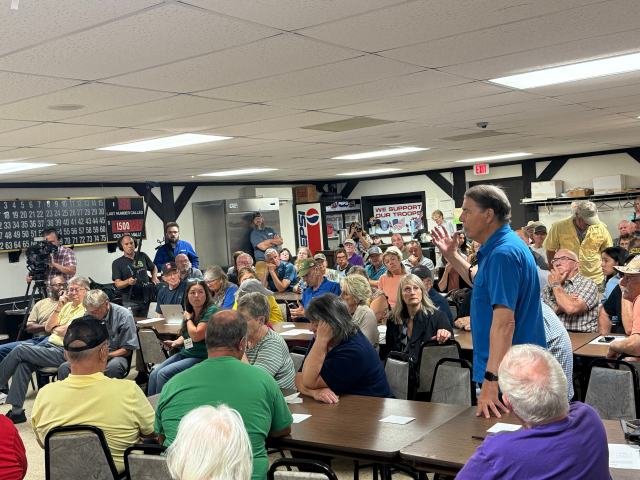
Brian Wojtalewicz heard this sentiment from elected officials in a packed town hall meeting last week at Appleton’s VFW. The local attorney thought they were overlooking something, so he stood up to ask a question.
Related: It’s official: The dormant prison in rural Appleton will become an ICE detention center
“Of course we need jobs and economic development, but there’s something seriously wrong with our immigration policy,” he said. “And it’s downright stupid to take all those workers out of their jobs and house them here using millions of dollars of our tax money. So where’s that concern?”
Although others in the crowd raised similar points, the event was focused more on logistics than values. But it raised big questions about how much of the prison’s economic promises will actually be realized in Appleton.
Here are a few of the biggest uncertainties swirling around the project:
How will the city, county and school district fill a gaping property tax hole?
CoreCivic, a private prison company, received a contract to provide immigrant detention for Immigration and Customs Enforcement (ICE) at the Appleton prison this summer. It then flipped the 1,600-bed facility to the federal government for a reported $496.6 million.
The effect of this sale is immense because the federal government isn’t subject to taxes. Appleton, Swift County and the local school district stand to lose out on revenue they would’ve been entitled to if the prison stayed under private ownership.
The city, which has about 1,400 residents, will take the biggest hit as about 30% of its budget derives from property taxes paid on the prison’s site. In all, CoreCivic’s tax payment in 2026 was about $810,000 distributed to the city, county and school district.
Local officials are negotiating with the company to mitigate the lost revenue, said Gary Hendrickx, a Swift County commissioner from Appleton. The sides haven’t reached an agreement yet.
“For the taxpayers of Swift County and Appleton, there will hopefully be something done so that we move forward without such a huge loss in property tax,” he said.
If CoreCivic doesn’t make local governments whole, the city may be forced to make cuts to stave off property tax hikes. Those considerations are on the table in city budget meetings, said Appleton’s mayor, Justin Koepp.
“This is one of the questions that we’re waiting on yet, is if there will be any type of funding available to help us out so we do not have to raise property taxes anymore,” he said.
Property tax holes will be reflected in budgets starting in 2028, giving the sides time to iron out a solution. Compared to that tangible property tax hit and timeline, however, economic benefits remain only theoretical.
State Sen. Torrey Westrom, R-Elbow Lake, feels confident the prison will bring jobs and opportunity to the community. He convened the town hall and has been a cheerleader for reopening the facility throughout his time in office.
But he acknowledged “stresses and strains” come along with the opportunity. Most people in Appleton seem to think it’s worth it, he said.
“I was eating in town and going around town some, and everybody there seems to have enthusiasm or excitement, from the workers to others that we talk to on the street, of these jobs coming back to the area and what it could mean,” he said.
Wojtalewicz suspects views on the prison fall roughly along political lines. About 63% of Appleton voters went for Trump in the 2024 election, but vocal opposition isn’t hard to find in the city and surrounding area.
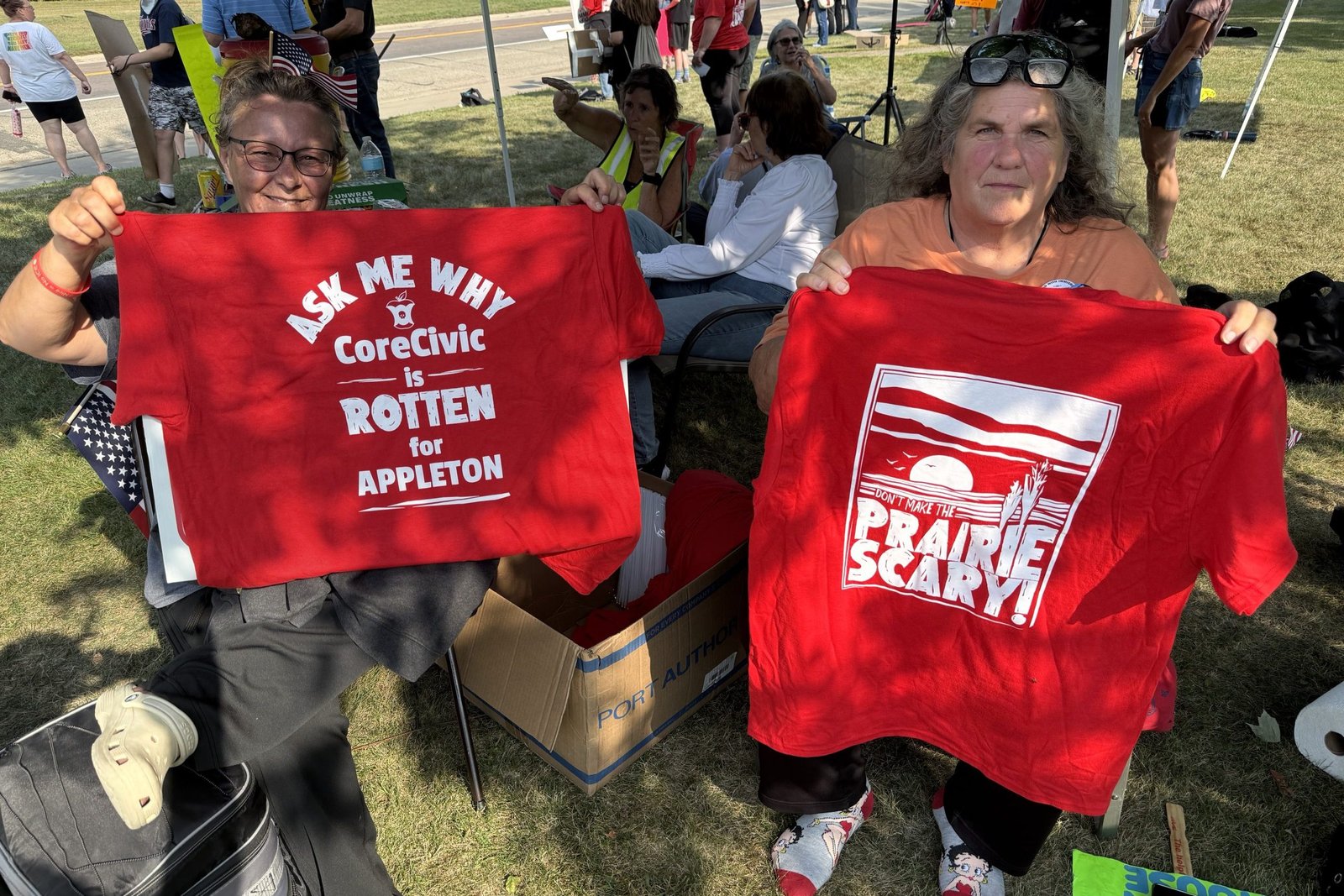
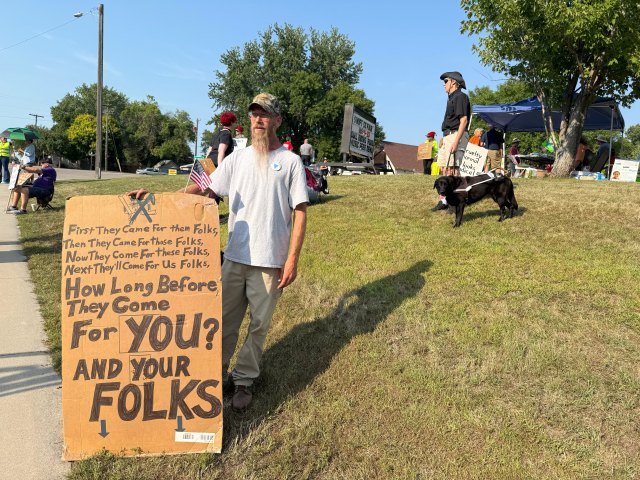
Protesting on a corner in Appleton with more than 50 others last Thursday, Nathan Compart expressed skepticism that the prison will benefit county taxpayers like himself. It won’t be worth it, he said.
“That’s not coming to this neighborhood,” he said of CoreCivic’s funding from ICE. “It’s corporate; that’s going into corporate shareholder profits … it’s going somewhere else, and they’re just using us as a tool to get it there.”
How will the prison impact the area’s job market?
Job estimates at the facility range from 450 to 525. At least some employees are likely to live in Appleton — more on that below — paying property taxes, buying gas and shopping for groceries as steady participants in the local economy.
But the area’s net job gain may not be as big as the large numbers cited at the town hall. Hendrickx pointed out that the prison could pull applicants from other businesses in the city and region, some of which would struggle to find replacements.
Let’s use health care as an example, because rural hospitals and clinics are often in great need of workers. A prison luring health workers away from hospitals and clinics would replace, rather than add, jobs while leaving a vital sector wanting for professionals.
“How are they going to fill the positions that are going to be vacant?” Hendrickx asked. “We’ll work on it, but those are things that are long-term and we have to address them, but we’re trying our best at that point.”
None of this suggests the prison won’t add more jobs than it replaces. It just won’t be a simple additive on top of the existing job market.
Where will detention center workers live?
Appleton’s housing stock got to the point that the city has had to demolish condemned homes. There simply aren’t enough homes or apartment units in the city to accommodate hundreds of workers at this point.
For that reason, many of the workers will live elsewhere, again costing the city property tax revenue. Temporary “man camp” housing came up at the town hall, although that wouldn’t help the city or county much, either.
Here’s where state programs come in, Westrom said. Local governments could use workforce housing funds to build residences, and bonding bill dollars for the infrastructure needed to facilitate more housing.
Here’s the problem: It’s hard to disentangle state funding from politics. A city’s plea for state funding to support an ICE detention facility seems unlikely to reach sympathetic ears at the Capitol as long as the DFL is in control.
And what happens if the city and county go through with major investments to accommodate the prison only for a new federal administration or Congress to curb Trump’s agenda? Appleton has a history of catering city services to the prison and then being overleveraged once the industry goes bust.
“You’re going to tell me that a new president, say a Democratic president, comes in, and all of this isn’t going to change?” asked Megan Stein, an Otter Tail County resident whose relatives live in Appleton.
Officials didn’t address her concerns, she said. She felt like they kept bringing up vague benefits that might come to fruition.
Related: ICE eyes shuttered Appleton prison as it plans massive expansion of immigrant detention centers
Town hall participants maintained that political winds, like the federal government’s decision to reopen the facility, are out of their hands. Rep. Paul Anderson, R-Starbuck, said the meeting was focused on how to move forward and achieve the best outcome for the area.
“These decisions were made far above our pay grades here, and we have to adapt and live with them, and make sure that it turns out the best way possible,” he said.
Highlighting the city’s fraught history with the facility, Dennis Kohlman took to the mic to share how he once tried to get the Vikings to build a football stadium in Appleton. Under the proposal, the city would’ve turned the prison into a casino and hotel.
“That didn’t happen,” he said. “The federal government is now taking control, so we got what we got.”
The post Taxes, jobs and housing: Appleton has some other questions about the prison reopening under federal control appeared first on MinnPost.
Leave a Reply