










India successfully tested Agni-2 on 9 August 2012. This missile is capable of nuclear attack. The missile with a range of 2500 km is enough to create fear in Pakistan and China.
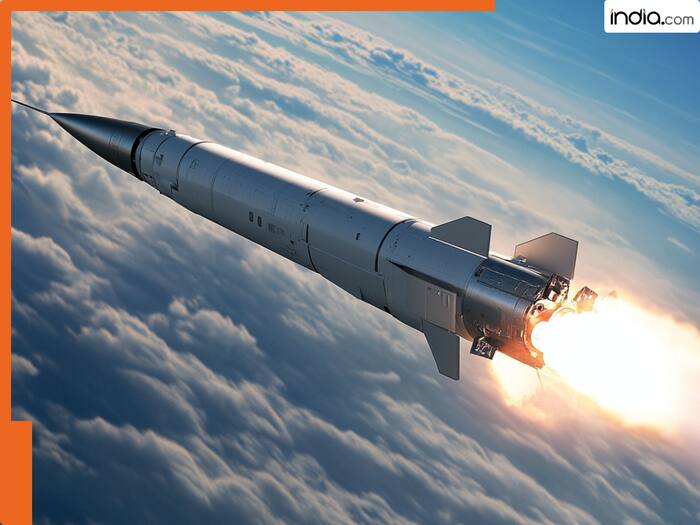
Taking a big leap in its strategic capability, India successfully tested the nuclear capable medium-range ballistic missile ‘Agni-2’ on August 9, 2012. This missile, made at a cost of about ₹125 crore, has the capability to target the enemy up to 2500 kilometers. This test was not only a technical achievement but also a strong declaration of India’s strategic autonomy and maintaining regional balance.
This historic test was conducted from Wheeler Island (now Dr. APJ Abdul Kalam Island) located off the coast of Odisha. This launch showed the world that India is not only self-reliant in its defense technology but is also capable of responding to any challenge.
Agni-2 is an important part of India’s major missile development plan (IGMDP) and has been developed by DRDO. This surface-to-surface missile has a range of 2000 to 2500 kilometers. It has the capability to carry both nuclear and conventional weapons. Technically, this missile gives India a strategic advantage. Especially against those countries which have the capability to attack from long distances.
What are its technical features?
Nearly 20 meters long and weighing 17 tonnes, Agni-2 is equipped with state-of-the-art inertial navigation system (INS) and GPS-based guided system. Due to which it can hit its target with accuracy.
While its payload capacity is 1,000 kg, its fuel system is two-stage solid fuel. The launching platform is Via mobile launcher. Its mobile launching capability makes it extremely accurate. This allows it to be quickly deployed in different areas of the country.
When was it tested?
When Agni-2 was tested on 9 August 2012, it was completely successful. The missile hit its target accurately, which was confirmed by radar and telemetry stations. This test was conducted as part of testing the operational readiness of the Indian Army. According to the Defense Ministry, this test proved that India’s missile technology and military capability is constantly getting stronger. It is capable of countering any potential threat.
What is the strategic importance?
The importance of Agni-2 lies not only in its technical capability but also in its strategic message. Its range of 2500 km means that it can reach almost every part of Pakistan and many strategic locations of China as well. Experts believe that this missile is not only a great weapon but also strengthens India’s ‘no first use’ policy. Its presence makes enemy countries think many times before taking any aggressive step.
How is India self-reliant in technology?
The success of Agni-2 also symbolises that India is rapidly becoming self-reliant in its defense technology. Its entire design and development process has been done indigenously by DRDO and Indian industries. This not only reduces foreign dependence, but also moves India towards becoming an exporter of defense technology.
What next?
Weapons like Agni-2 are the strongest part of India’s security. Subsequently, successful tests of long-range missiles like Agni-3, Agni-4 and Agni-5 have brought India to the list of select countries that have multi-level missile capability. Since the successful test of Agni-2 in 2012, India has continuously upgraded its missile technology and now it has also developed the capability to launch from different platforms.


