













The Indian Passport system is color-coded for a very intelligent reason, as each color signifies whether the traveler is a civilian, a government official, or a diplomat.
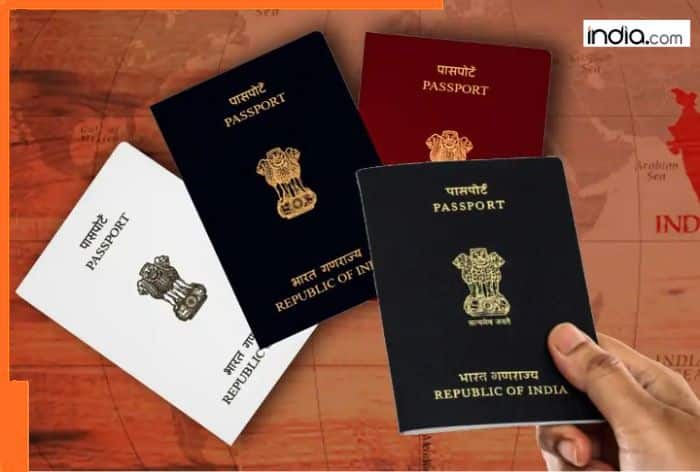
Indian Passport: Passport is one of the most important documents for the citizens of any country, serving as one of the most authentic methods of identification globally, and enabling people to travel across international borders. But have you ever wondered why Indian passports are issued in four different colors– Red, Blue, White, and Orange– and what each color signifies? Let us find out?
Why Indian Passport is issued in different colors?
The Indian Passport system is color-coded for a very intelligent reason, as each color signifies whether the traveler is a civilian, a government official, a diplomat, or entering the foreign country for work under a specific category. The passport also reveals the reason for travel, and helps immigration officers to ascertain a traveler’s identity in a single glance.
The color-coded passport system, combined with the modern biometric e-passport, which was introduced in India in recent years, makes international travel faster, safer and hassle-free for Indian citizens.
What does each color signify?
Blue Passport
The regular or blue passport, which is held by most Indian passport holders, is meant for civilians or ordinary citizens, and is issued for general travel purposes, including leisure, business, studies, or tourism.

Any Indian citizen can apply for a regular blue passport by filing the prescribed form and attaching the required documents– a birth certificate, valid photo ID (Aadhaar card or PAN card), proof of residence (electricity bill or rent agreement) and proof of citizenship (voter ID card).
The blue Indian passport can also be availed as a e-passport, with an embedded biometric chip for hassle-free identification and enhanced security.
White Passport
A White passport is issued to government officials, civil servants and military official when they travel internationally for official work. Obtaining a white passport is a stringent process, requiring permission from the Prime Minister’s Office (PMO) as well as the applicants official government ID, duty certificate from the department, and official forwarding letter.
Red passport
The red or maroon colored passport, also called the Diplomatic Passport, is only issued to diplomats, top government officials, and their family members. Akin to the white passport, red passport applicants require permission from the PMO, as well as official ID, duty certificate, and a departmental recommendation letter.
Orange Passport
The orange passport or the ECR passport is essentially a downgraded version of the regular passport, as it requires holders to undergo additional immigration checks before traveling abroad. The passport is issued to Indian citizens under the Emigration Check Required (ECR) status, including people who do not have the minimum educational qualification those traveling for work in certain countries.
HIGHLIGHTS
- The Indian Passport follows a color-coded system for convenience and hassle-free international travel.
- Each color– Red, Blue, Orange, White– signifies the category to which the traveler belongs and the nature of his trip.
- The color-coded system makes its easier for immigration officials to ascertain basic details about the traveler.
- The color-coded passport system, combined with India’s modern biometric e-passport, makes international travel faster and safer.
Notably, Indian Passport system, which comes under the Ministry of External Affairs (MEA), has undergone a major overhaul over the past 10 years, including the introduction of the e-passport facility, which strengthens security and makes foreign travel faster and more convenient.


