










Rajnath Singh referred to Advani’s writings and said that many Sindhi Hindus from that time have still not fully accepted that Sindh is no longer part of India.
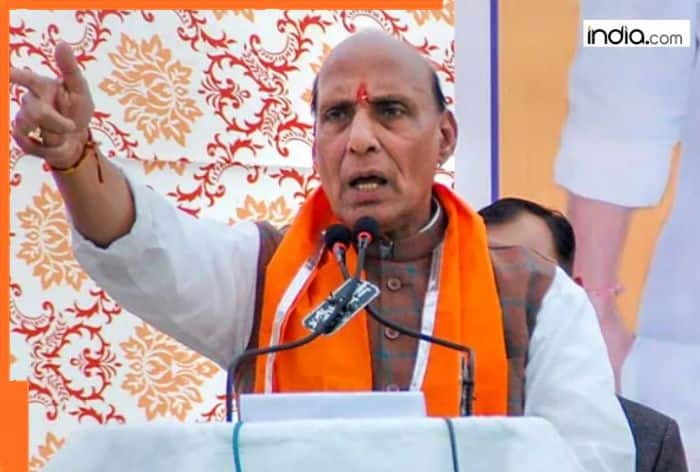
Defence Minister Rajnath Singh said on Sunday that even though Sindh is not inside India today, the region is still closely linked to India’s old cultural history. He spoke about this at an event in New Delhi. Singh said that Sindh was part of India before 1947, and after Partition it became part of Pakistan. He also said that it is possible that Sindh could come back to India in the future.
His statement comes at a time when India and Pakistan have tense relations after Operation Sindoor in May.
While speaking at the Sindhi Samaj Sammelan, Singh said that Sindh will always have a place in India’s civilisation, no matter what the present borders are. He added that country borders are not always permanent.
“Today, the land of Sindh may not be a part of India, but civilisationally, Sindh will always be a part of India. And as far as land is concerned, borders can change. Who knows, tomorrow Sindh may return to India again,” he said.

#WATCH | Delhi: Defence Minister Rajnath Singh says, “…Today, the land of Sindh may not be a part of India, but civilisationally, Sindh will always be a part of India. And as far as land is concerned, borders can change. Who knows, tomorrow Sindh may return to India again…”… pic.twitter.com/9Wp1zorTMt
— ANI (@ANI) November 23, 2025
Sindh, which is now in Pakistan, is the original homeland of the Sindhi community. Many Sindhis live in India today, and they form a large part of the population. Sindh is also where the Indus Valley Civilisation began.
At the event, Rajnath Singh spoke about senior BJP leader Lal Krishna Advani and the strong emotional link that Sindhi Hindus still feel for Sindh, even many years after Partition.
Singh referred to Advani’s writings and said that many Sindhi Hindus from that time have still not fully accepted that Sindh is no longer part of India.
He also said that both Hindus and many Muslims in Sindh had always treated the Indus River as sacred.
Singh added, “I want to mention Lal Krishna Advani here. He wrote that Sindhi Hindus of his generation still have not accepted Sindh’s separation from India. Hindus across India saw the Indus River as holy. Many Muslims in Sindh also believed that its water was as sacred as the Aab-e-Zamzam in Mecca. This is what Advani wrote.”
He repeated that the cultural link is strong and said that the people of Sindh—no matter where they live today—will always feel like family to India.
These comments are getting a lot of attention because of the current political situation, and Pakistan is expected to respond strongly in the coming days.


