










VB- G RAM G and SHANTI were among the key Bills passed during the Parliament Winter Session which concluded on Friday.
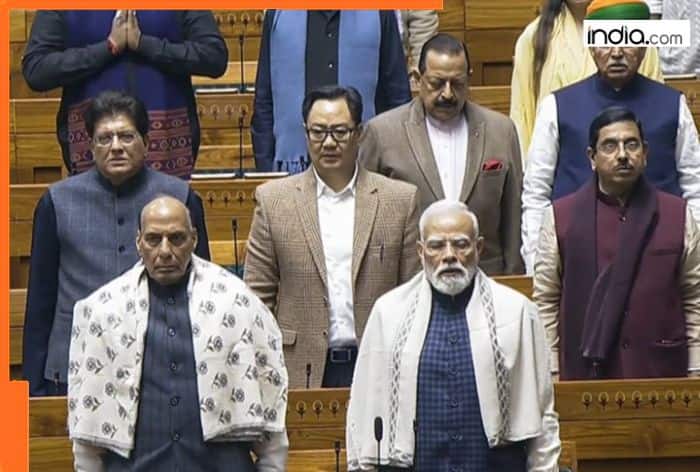
Parliament Winter Session: The Lok Sabha was adjourned sine die on Friday, drawing curtains on the 19-day-long Winter Session of Parliament, which saw the passage of crucial Bills, including one to repeal the 20-year-old MNREGA and another on opening up the civil nuclear sector for private participation.
The total sitting hours during the Winter Session was 92 hours and 25 minutes.
As soon as the House met for the day, Speaker Om Birla read out his brief valedictory address, noting that the productivity of the Lok Sabha during the session was registered at 111 per cent, with members sitting till late hours to discuss crucial legislation.
He then adjourned the House sine die (for an indefinite period), drawing curtains on the brief session that commenced on December 1.

When Birla was reading out his valedictory statement, some members were heard raising “Mahatma Gandhi ki jai” slogans.
Prime Minister Narendra Modi was present when the proceedings were adjourned.
During the 15 sittings of the Winter Session, the House took up two politically-charged debates — one on the 150 years of Vande Matram and the other on election reforms.
The prime minister had initiated a discussion to commemorate the completion of 150 years of the national song. The House discussed the subject for 11 hours and 32 minutes, during which 65 members participated.
A debate on air pollution, which was to be initiated by Congress leader Priyanka Gandhi, could not take place.
The opposition had been insisting on a debate on the Special Intensive Revision (SIR) of the voter list in 12 states and UTs, but the government made it clear that the poll panel and its functioning cannot be discussed in the House, and agreed to hold a debate on election reforms instead.
The issue was discussed for approximately 13 hours, with the participation of 63 MPs. The opposition, however, focused its attack on SIR, the new law on the appointment of the chief election commissioner and election commissioners, and the “vote chori” issue.
Eight Bills were passed during the session
- The Viksit Bharat Guarantee for Rozgar and Ajeevika Mission (Gramin) or VB-G RAM G Bill, assuring 125 days of guaranteed jobs for rural India, was passed amid opposition protests on Thursday, including tearing of papers.
- The Sustainable Harnessing and Advancement of Nuclear Energy for Transforming India (SHANTI) Bill, which seeks to open the tightly-controlled civil nuclear sector for private participation, was also passed during the session.
- The Lok Sabha also passed a Bill to raise FDI in the insurance sector to 100 per cent from the current 74 per cent, which is expected to increase insurance penetration, lower premiums, and boost job creation.
- The Sabka Bima Sabki Raksha (Amendment of Insurance Laws) Bill, 2025, was cleared by the Rajya Sabha with a voice vote, a day after it was passed by the Lok Sabha.
- The House also passed a Bill to repeal 65 amendment Acts and six principal laws, which had lost relevance.
- The Manipur Goods and Services Tax (Second Amendment) Bill, 2025; the Central Excise (Amendment) Bill, 2025 and the Health Security se National Security Cess Bill, 2025 were also among the Bills passed. The House also passed the Supplementary Demands for Grants – First Batch, 2025-26.
- A Bill to set up a higher education regulator — the Viksit Bharat Shiksha Adhisthan Bill, 2025 — was referred to a joint committee of the two Houses.
- The Bill seeks to establish an overarching higher education commission along with three councils for regulation, accreditation and ensuring academic standards for universities and higher education institutions in India.
- Another bill on the market securities code was introduced and referred to a department-related standing committee for further examination.
During the session, 300 starred questions were admitted, and 72 starred questions were answered orally. A total number of 3449 unstarred questions were admitted during the Session.
A total of 408 matters of urgent public importance were raised by the members during the Zero Hour, and a total of 372 matters were taken up under Rule 377. On 11 December 2025, 150 members raised their matters during Zero Hour in the House.
(Only the headline has been reworked by India.com staff. Copy comes from an agency feed)


