










India’s preparedness is further complicated by the need to balance multiple security challenges simultaneously.
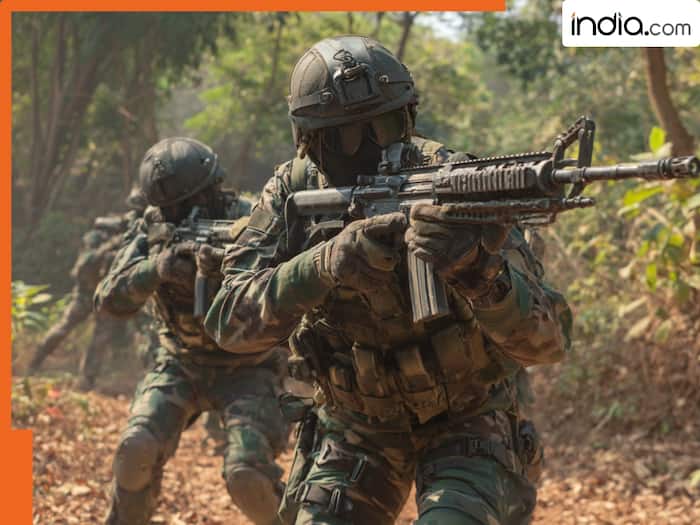
On Wednesday, India released three joint doctrines, including one for Special Forces (SF) operations.
This is seen as an important step to improve joint working and integration of the armed forces as they move towards theaterisation. The joint doctrine for Special Forces (SF) operations, released by Chief of Defence Staff General Anil Chauhan at the Ran Samwad military conclave, aims to build a common understanding, shared terms, and basic procedures.
This will help create better coordination and teamwork among the Army’s Para-SF, Navy’s MARCOS, and Air Force’s Garuds. The doctrine for Special Forces (SF) operations covers many key areas, including joint training, future weapons, operational needs, and matters of command, control, and planning.
To avoid duplication and improve effectiveness, the doctrine says Special Forces should train together in advanced skills. The existing training schools of the Army, Navy, and Air Force should be upgraded into Joint Service Training Institutes (JSTIs), with each becoming a Centre of Excellence for a specific skill. This can be done without changing the command of each service, by using current infrastructure and sharing resources from all three forces.
Focus areas include:

Training Special Forces (SF) and crews of platforms like aircraft and submarines for insertion and extraction during night or in adverse weather, using night vision and other advanced methods.
Joint training on electronic warfare systems used by the three services.
Training SF to guide precision weapons fired from aircraft, long-range artillery, and naval gun fire support (NGFS).
Special Forces (SF) provide support and extra strength to field formations and usually work under the command of regional commands.
For joint operations, the doctrine says SF can be deployed through the Headquarters Integrated Defence Staff (IDS) or future integrated structures.
When used together in joint missions, Special Forces (SF) must work at a high level of coordination. This means having common standard operating procedures (SOPs), joint training, and shared communication systems.
The doctrine stresses that joint training of the Army’s Para (SF), Navy’s MARCOS, and Air Force’s Garuds is essential to keep India’s SF capable, adaptable, and fully interoperable for tackling complex security challenges.
In his foreword, General Anil Chauhan writes that the doctrine explains a unified philosophy covering the principles, capabilities, and use of Special Forces (SF) on land, at sea, and in the air.
It is meant to serve as a basic guide for joint planning, execution, and capacity building, keeping in line with the new roles and missions of the 21st century.
The doctrine says that in the coming decade, new and revolutionary technologies could change the nature of Special Operations.
Advances in weapons, new technologies, and new ways of using them will transform the battlefield.
The second doctrine says that the success of airborne and heliborne operations in today’s and future battlefields will depend on advanced technologies, joint cooperation between services, and thorough training.
This will help in the smooth use of technology and better coordination of tactics, techniques, and procedures.
The rules and guidelines in this document will make sure that India’s airborne and heliborne forces stay a strong and quick-responding part of our military power, ready to take decisive action in all situations—from peace missions to full-scale wars, Chauhan writes in the foreword of the doctrine.
The new joint doctrine shows how India’s armed forces will work together in a unified way across land, sea, air, space, cyber and cognitive (related to mind and thinking) domains. This will strengthen teamwork and improve future readiness, the defence ministry said.
The idea of multi-domain operations can build a strong, quick and flexible force, able to use greater military power that supports the soldier in battle and also helps commanders in operation centres make better decisions, Chauhan writes in the foreword to the third doctrine.
This document is the first step by the Indian armed forces to understand a new way of operations. It explains how the Army, Navy and Air Force will organise, plan and fight to defeat the enemy in any domain and at any level of war.
Why India Should Be Ready for Another War
The release of these joint doctrines comes at a time when India faces an increasingly complex and multi-dimensional security environment. The nation’s strategic landscape is shaped by several critical factors that necessitate constant war preparedness and military readiness.
India’s geopolitical position places it at the intersection of multiple security challenges. The ongoing tensions along the Line of Actual Control with China, particularly after the Galwan Valley incident in 2020, demonstrate the persistent threat of border escalation. Similarly, the situation along the Line of Control with Pakistan remains volatile, with cross-border terrorism and proxy warfare continuing to pose significant security risks. These twin challenges require India to maintain a high state of military preparedness across multiple fronts simultaneously.
The evolving nature of modern warfare has introduced new domains of conflict that extend far beyond traditional land, sea, and air operations. Cyber warfare, space-based threats, and information warfare have emerged as critical battlegrounds that require specialized capabilities and integrated responses. The joint doctrines’ emphasis on multi-domain operations reflects this reality, acknowledging that future conflicts will be fought across interconnected domains where success depends on seamless coordination between all military branches.
Regional instability in South Asia and the broader Indo-Pacific region further amplifies the need for military readiness. The situation in Afghanistan, tensions in the South China Sea, and the complex dynamics of great power competition all have direct implications for India’s security. As a rising global power, India must be prepared to protect its interests, secure its trade routes, and maintain regional stability through credible deterrence.
The rapid advancement of military technologies, including artificial intelligence, hypersonic weapons, and autonomous systems, is reshaping the battlefield dynamics. Countries that fail to adapt to these technological changes risk falling behind in military capabilities. India’s joint doctrines recognize this challenge and emphasize the need for continuous modernization and integration of cutting-edge technologies across all services.
Is India Actually Prepared?
India’s military preparedness presents a mixed picture of significant strengths coupled with areas requiring urgent attention and improvement. The recent joint doctrines represent a crucial step forward in addressing some of the fundamental challenges that have historically plagued the Indian armed forces.
The introduction of these joint doctrines marks a paradigm shift from the traditional service-centric approach to a truly integrated military structure. The emphasis on joint training, shared resources, and common operating procedures addresses long-standing issues of coordination and communication between the Army, Navy, and Air Force. The establishment of Joint Service Training Institutes and the focus on interoperability demonstrate India’s commitment to building a cohesive military machine capable of executing complex multi-domain operations.
India’s nuclear deterrent capability remains a cornerstone of its defense strategy, providing strategic stability and deterring large-scale conventional conflicts. The country’s nuclear triad, consisting of land-based missiles, submarine-launched ballistic missiles, and air-delivered nuclear weapons, ensures a credible second-strike capability. This nuclear umbrella provides India with strategic space to develop and refine its conventional capabilities without the immediate pressure of existential threats.
The modernization of India’s military infrastructure and equipment procurement has gained momentum in recent years. Indigenous defense manufacturing initiatives, including the development of advanced fighter aircraft, missile systems, and naval platforms, are reducing dependence on foreign suppliers while building domestic capabilities. The successful testing of various missile systems, including the Agni series and BrahMos cruise missiles, demonstrates India’s growing technological prowess in critical defense sectors.
However, significant challenges remain that could impact India’s war readiness. The process of military modernization has been slower than desired, with procurement delays and bureaucratic hurdles affecting the timely acquisition of critical equipment. The armed forces continue to face shortages in various categories of weapons, ammunition, and spare parts, which could impact sustained operations during prolonged conflicts.
The transition to theaterisation and joint operations requires not just doctrinal changes but also substantial investments in training, infrastructure, and communication systems. While the joint doctrines provide the framework, their successful implementation will depend on adequate funding, political support, and organizational commitment across all levels of the military hierarchy.
India’s preparedness is further complicated by the need to balance multiple security challenges simultaneously. Unlike many other nations that can focus on a single primary threat, India must maintain capabilities to address conventional warfare, counter-insurgency operations, border management, and emerging threats in cyber and space domains. This multi-faceted requirement places enormous demands on resources and planning capabilities.
The human resource aspect of military preparedness also presents both opportunities and challenges. India’s large population provides a substantial recruitment base, but the armed forces face increasing competition from the private sector for skilled personnel, particularly in technical fields. The recently introduced Agnipath recruitment scheme aims to address some of these challenges while reducing the age profile of the forces, but its long-term impact on military effectiveness remains to be fully evaluated.
In conclusion, while India has made significant strides in military modernization and strategic thinking, as evidenced by these joint doctrines, the nation’s war preparedness remains a work in progress. The country possesses substantial strengths in terms of human resources, nuclear deterrence, and indigenous capabilities, but gaps in equipment, infrastructure, and integrated operations need continued attention. The true test of these joint doctrines will lie in their implementation and the military’s ability to adapt to the evolving security environment while maintaining readiness across multiple domains and threat scenarios.
—E.O.M
(Girish Linganna is an award-winning science communicator and a Defence, Aerospace & Geopolitical Analyst. He is the Managing Director of ADD Engineering Components India Pvt. Ltd., a subsidiary of ADD Engineering GmbH, Germany. Contact: girishlinganna@gmail.com)


