










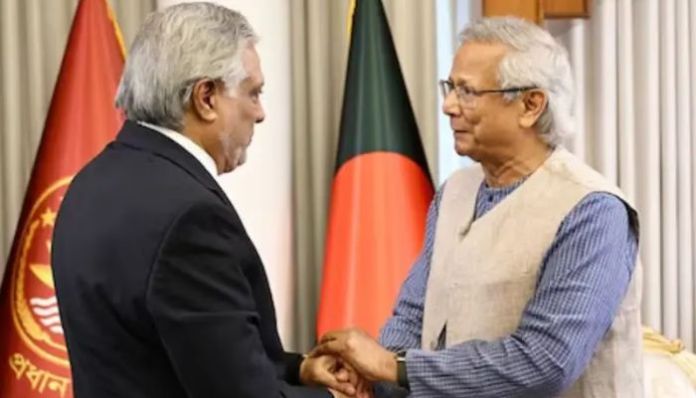
The attempts of Muhammad Yunus’ interim government in Dhaka to mend relations with Pakistan were hit by a serious setback on Sunday, 24th August. Pakistani Foreign Minister Ishaq Dar, who visited Bangladesh for two days starting Saturday, 23rd August, refused point-blank to apologize for the genocide perpetrated by Pakistani soldiers in 1971, when Bangladesh was still East Pakistan.
Dar’s take on the issue of the 1971 war
According to media reports, Dar, who visited Dhaka on Saturday, said that all problems concerning the 1971 Liberation War already had been resolved, initially in 1974, and again in 2002. He asserted that past agreements and gestures between the nations had closed the issue. His words, however, were ignored by Dhaka, which has been pursuing Pakistan relentlessly to apologize for the Pakistani Army’s mass killings and sexual atrocities committed during the war that gave birth to Bangladesh‘s independence.
Dhaka’s strong reaction
Yunus’ foreign minister in his interim government, Touhid Hossain, dismissed Dar’s statement. Dhaka requested Pakistan to apologise for the murder of hundreds of thousands of Bengali-speaking Hindu citizens and rape of countless Hindu women in East Pakistan (now Bangladesh) by the Pakistan Army and the country’s pro-government militias during 1971.
Yunus’ also requested Islamabad to pay Bangladesh its share of the pre-1971 assets of undivided Pakistan in the form of a reparation of $4.52 billion. Aside from this, Islamabad was requested to bring back the Pakistanis stranded in Bangladesh for more than half a century since 1971.
For Bangladesh, the pains of 1971 still cut deeply. The genocide perpetrated by the Pakistan Army killed hundreds of thousands and countless women were subjected to rape. The question of an official apology has been a chronic problem in Dhaka’s foreign policy, recurring every time the top leaders of both countries try to strengthen relations. Although Dar contended the issue was “historically settled,” Hossain intimated Bangladesh did not see it that way.
Agreements signed despite tensions
Despite the rift, both sides were also able to sign a number of agreements for enhancing cooperation. These involved granting exemption from the visa requirement for holders of official and diplomatic passports, Memorandums of Understanding on commerce, cooperation between their foreign service institutes, cooperation between national news agencies, and collaboration between think tanks. There was also an agreement on a cultural exchange program for the enhancement of people-to-people contacts.
#Bangladesh and #Pakistan seek stronger ties. #BangladeshForeignAdviser and #PakistanDPMandFM, in a #BilateralMeeting in #Dhaka, reaffirmed commitment for deepening cooperation. Bangladesh
— Ministry of Foreign Affairs (@BDMOFA) August 24, 2025and Pakistan
signed 6 bilateral instruments today. pic.twitter.com/gIAhSOsgVt
First senior-level visit in more than a decade
Dar’s visit was important, as it was the first by a Pakistani foreign minister to Bangladesh since Hina Rabbani Khar’s in 2012. During his visit, he also met with Yunus, leader of Bangladesh’s interim government, and engaged in talks with opposition leaders of the Bangladesh Nationalist Party (BNP) and the Jamaat-e-Islami.


