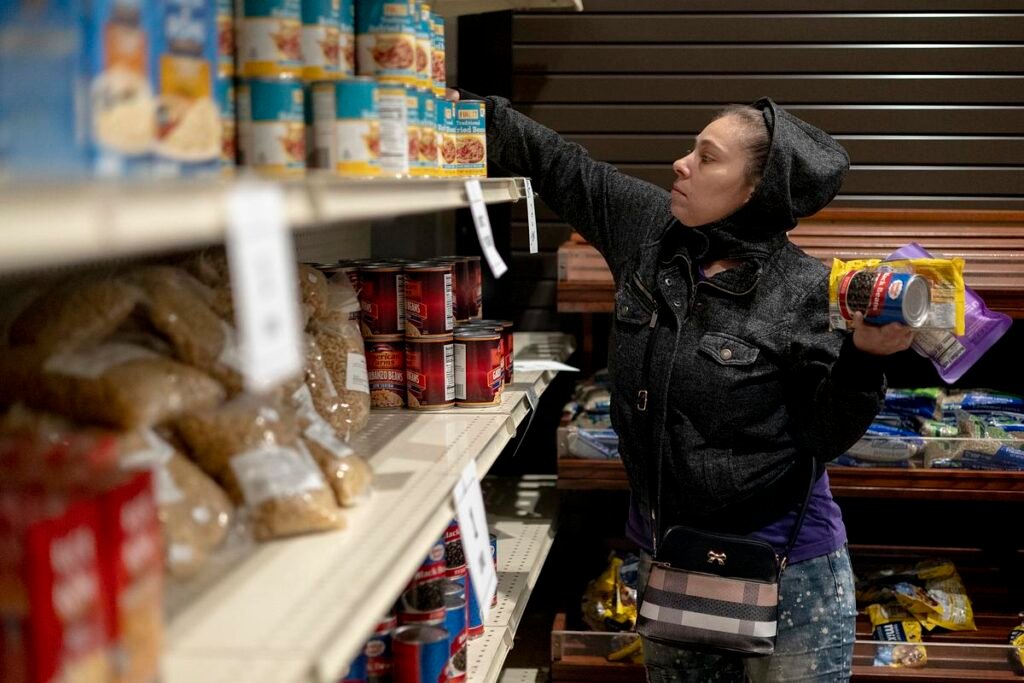
Chelsea Amber was thrilled when her eldest daughter moved in with her last month after spending most of her life living with her father.
Amber and her younger daughter were on government assistance after a family emergency caused the mother of two to lose her job this summer. But she knew if she reapplied with her updated household size, she would see a bump in the amount of aid she received from the federally funded Supplemental Nutrition Assistance Program (SNAP), informally known as food stamps.
But amid an ongoing federal government shutdown, Amber is no longer expecting an increase in November of her benefits. In fact, like 440,000 other Minnesotans, she is girding for an abrupt end to that financial lifeline starting this weekend.
Related: Minnesota, other states, sue USDA for its failure to use emergency funds to continue SNAP benefits
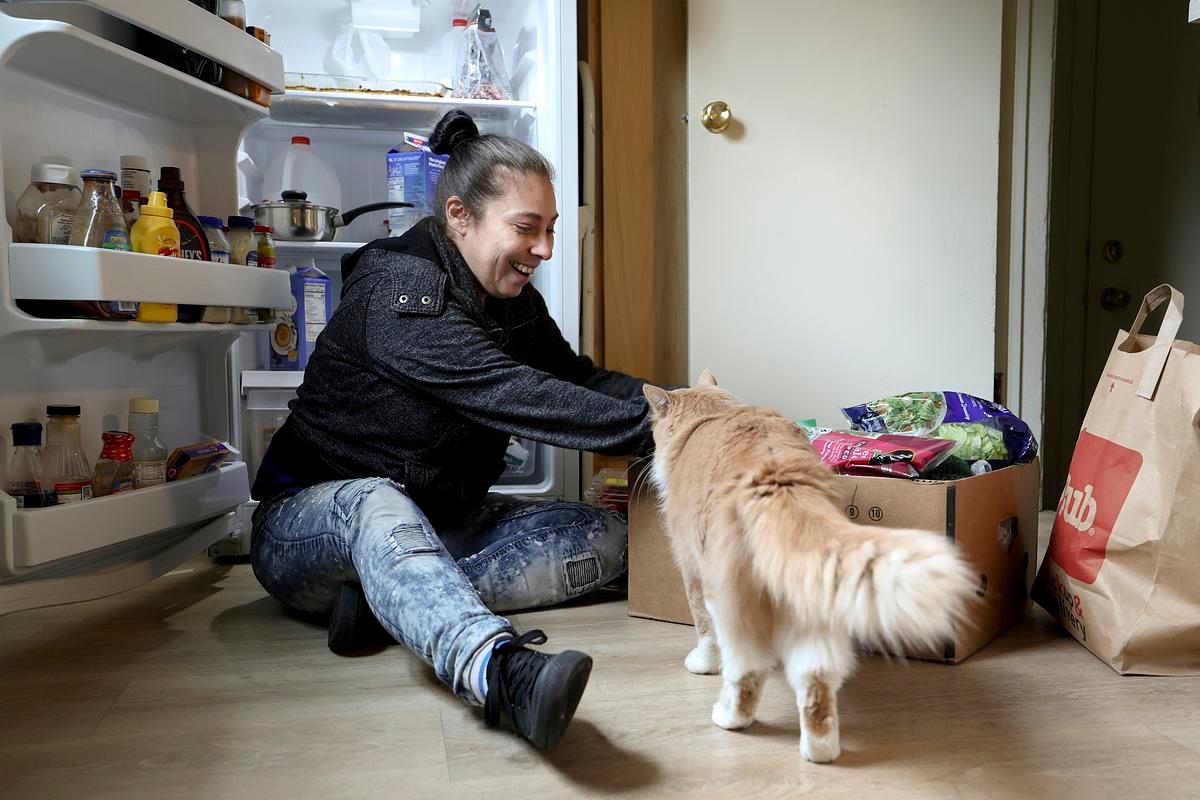
“Next month will be very different from this month. I have another person to feed, and I’ll have less money — no money, really — to feed us all,” said Amber. “Most likely, I’ll stick to grabbing a snack when I can and not much else. I’d rather they eat than I eat.”
‘Well has run dry’
The impact of the federal government shutdown that began Oct. 1 has steadily broadened, stopping paychecks for federal workers, slowing the release of critical economic data, triggering delays in air travel and broadly raising uncertainty for markets, businesses and households.
But beginning tomorrow, Nov. 1, Washington politics will be dragged right into the pantries of those who can least afford a disruption to their already-strained budgets.
“Bottom line, the well has run dry. At this time, there will be no benefits issued November 01,” a banner on the U.S. Department of Agriculture’s Food and Nutrition Service webpage reads.
While Congress has set aside a contingency fund for SNAP, estimated at between $5 billion and $6 billion, the government has refused to tap it to extend benefits into November. Nationwide, the federal government spent about $7.9 billion on the program in May, the last month for which data is available. Most of the benefits go to fund food needs for children, the elderly and the disabled, many of whom live below the federal poverty line.
A federal judge in Boston is currently hearing arguments brought by states, including Minnesota, that want to force the government to use the emergency fund to keep the program from lapsing for the first time in its history.
window.addEventListener(“message”,function(a){if(void 0!==a.data[“datawrapper-height”]){var e=document.querySelectorAll(“iframe”);for(var t in a.data[“datawrapper-height”])for(var r,i=0;r=e[i];i++)if(r.contentWindow===a.source){var d=a.data[“datawrapper-height”][t]+”px”;r.style.height=d}}});But while the courts deliberate and the politicians make speeches, Minnesotans like Amber and her children are left wondering how they will keep their stomachs full.
“I’m feeling nervous, scared, overwhelmed … my emotions are all over the place,” Amber said. “Usually, I spend close to $500 on groceries for the month when I get my benefits, and leave maybe $60 for any unexpected food expenses that might come up, or if we run low on groceries before the next payment.”
That roughly $560 monthly benefit, which Amber expected would increase in November to around $700 due to her having another dependent child living with her, has made up “100%” of Amber’s grocery budget since she lost her job at a clothing store this summer.
While there are plenty of people in a similar position, where SNAP makes up all or most of the household’s budget for food, many Minnesotans use the program to supplement what they earn from work. According to the Minnesota Department of Children, Youth and Families, more than 60,000 households receiving SNAP also have someone with a job. But if they are not earning enough from that job to meet all of their household needs, SNAP can fill the gap.
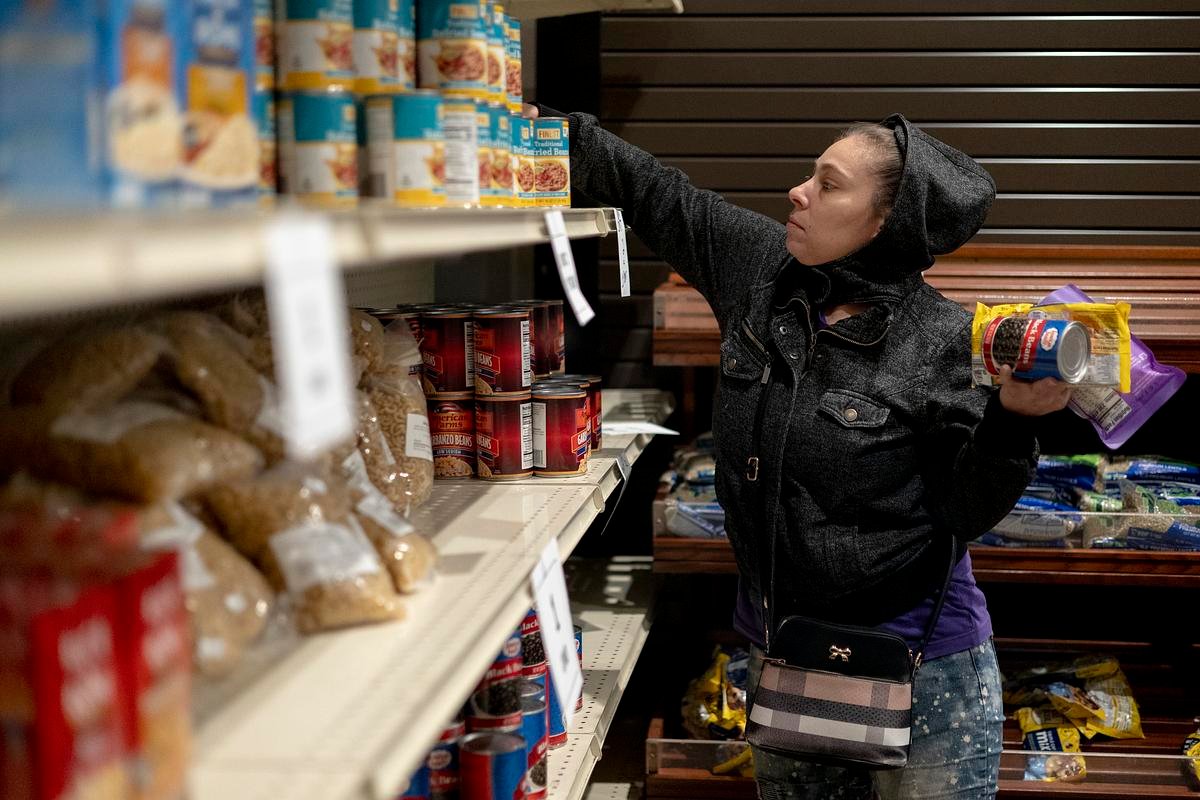
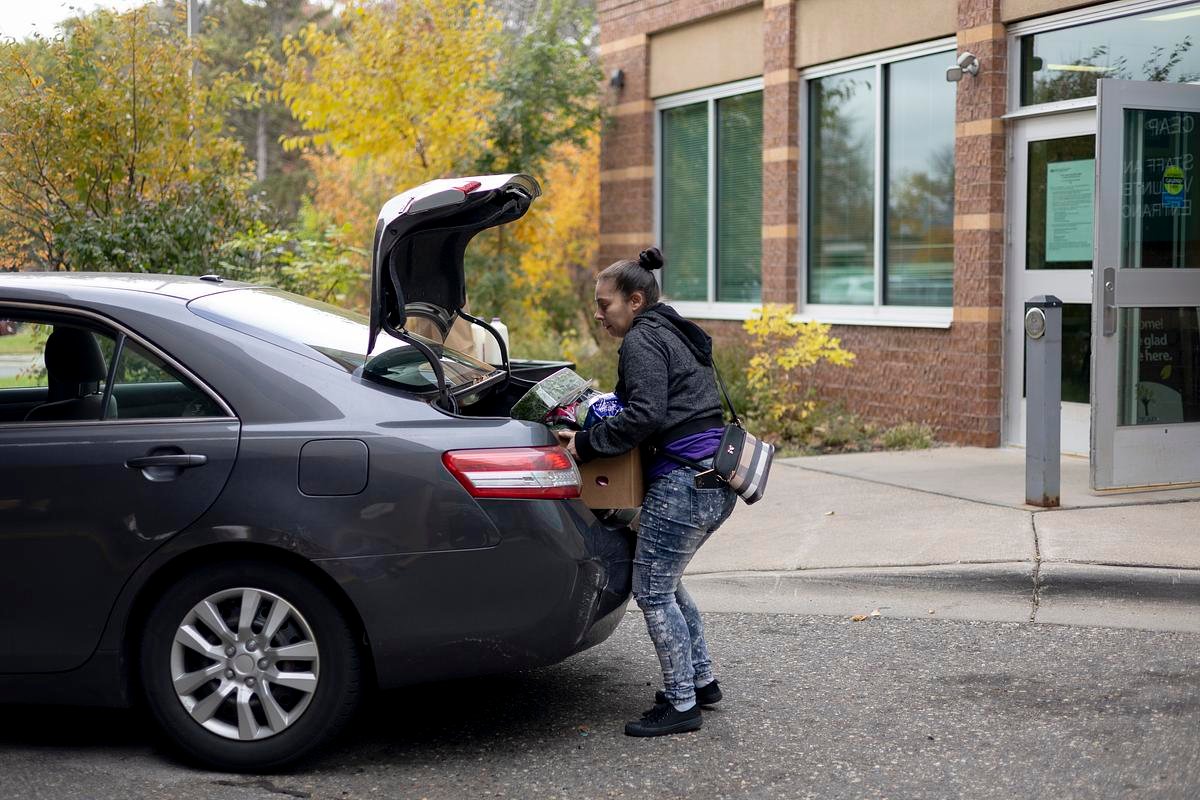
In Amber’s case, she plans to lean on food shelves run by charities and religious organizations, including some that she has been to before to supplement her SNAP groceries. But she has noticed longer lines at food shelves in the past two weeks as unpaid federal workers and SNAP recipients seek to stock up for next month.
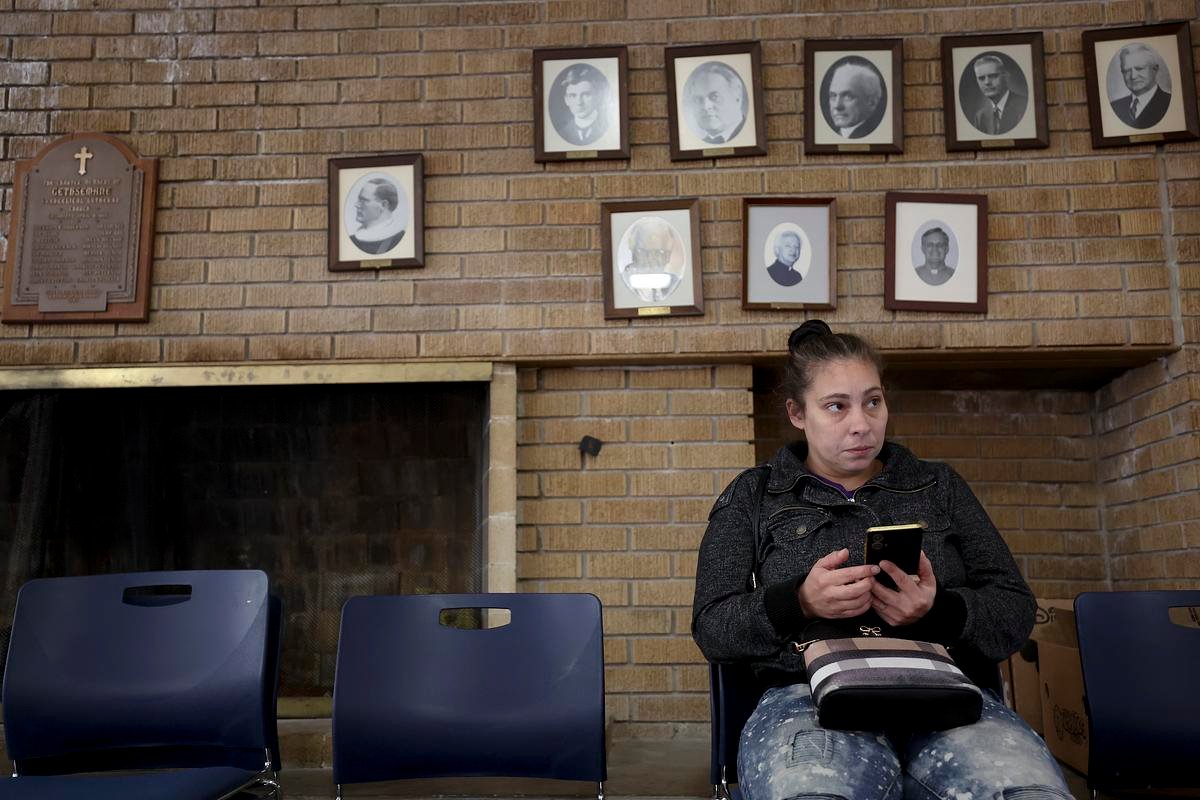
At Brooklyn Park’s Community Emergency Action Programs’ food shelf, she has to sign up for a spot in line precisely at midnight the day before she plans to go in. If she logs on too late, she’s unlikely to be able to get in. At other food shelves with in-person lines, by the time it’s her turn most usable foods have been taken and she is left to decide how long past the expiration date she’s willing to trust an item for her family.
window.addEventListener(“message”,function(a){if(void 0!==a.data[“datawrapper-height”]){var e=document.querySelectorAll(“iframe”);for(var t in a.data[“datawrapper-height”])for(var r,i=0;r=e[i];i++)if(r.contentWindow===a.source){var d=a.data[“datawrapper-height”][t]+”px”;r.style.height=d}}});Modest help
Earlier this week, Gov. Tim Walz announced $4 million in state funding to support 300 food shelves, though those funds are not expected to go very far.
Amber is waiting to hear from Twin Cities RISE, a local nonprofit, about the prospect of a paid internship until she can find a permanent job. She’s currently behind on rent and utilities, and those mounting bills, combined with the looming prospect of greater food insecurity, bring up memories of the years she spent homeless before landing an apartment in Minneapolis last year.
Related: Minnesota looks for loose change to support 440,000 residents about to lose SNAP benefits
She laments this additional stressor on top of the other struggles she’s faced, and is particularly frustrated that her crisis is not the outcome of bad luck or bad decision making on her part, but, she said, due to choices made in Washington, D.C.
“It’s just like every time I try to do something, I get smacked with something else. So it’s like I can never get up, I can never succeed the way I want to be able to because something else always ends up [happening],” she said.
“I’m already struggling trying to come up with rent. I’m already struggling trying to get a job. I’m already struggling to get things for my kids. I can’t even get them school clothes,” Amber said.
She doesn’t have much to put towards extra, non-staple items, but she was hoping to use some of her SNAP funds to celebrate her youngest daughter’s 13th birthday in November, she said.
“Now it doesn’t even seem like I’ll be able to get her a cake.”
The post Not only the elderly and disabled: A look at the Minnesotans who are about to lose their SNAP benefits appeared first on MinnPost.
Leave a Reply