

WASHINGTON – The state’s attempts to address allegations of fraud has created financial turbulence for thousands of Medicaid providers in Minnesota, some of whom have had to dig into savings or take out loans to keep their companies going.
But the people who depend on the programs — low-income seniors and disabled Minnesotans, autistic children and people in dire need of mental health and other services — are the overlooked casualties of the Minnesota Department of Human Service’s war on fraud.
Just as the providers are undergoing new scrutiny, so are the people who need their services. Some have lost those services and others face long wait times to get the help they need because of the auditing of the system.
Others are anxious they will lose a favored provider as some have decided that they can’t make ends meet because payments have been delayed. And there’s the specter of the state cutting services if the federal government continues to hold back hundreds of millions of dollars because it maintains there have been fraudulent billings.
A Bloomington family is among thousands who have relied on services that are now going through a painful scrutiny for fraud.
“It’s always been a far from perfect system, but now they have made it so much worse,” said Caroline McGuire of the new requirements placed on her family. “People with disabilities are paying the price and it’s so much worse when it’s children.”
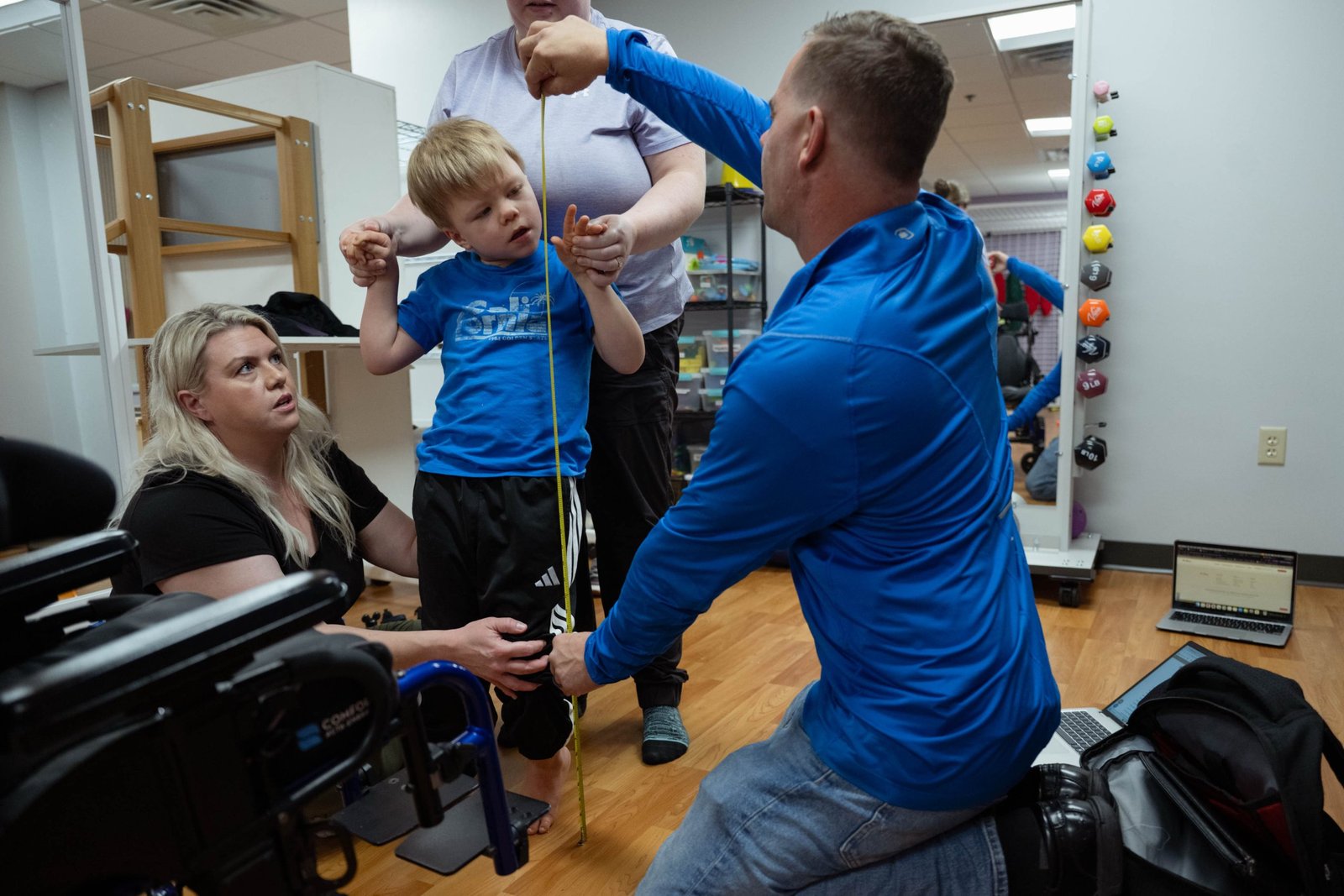
She and her husband Luke have a 6-year-old son with cerebral palsy and a 12-year-old daughter who was born with a type of chromosome damage that causes developmental delays and that is more extensive than first diagnosed.
While Madeline currently receives services from her school district and not from programs under increased scrutiny by DHS, she will likely seek their help in the coming years.
“She is going to need a lot more care in the future than we expected,” McGuire said of her daughter.
The upheaval in state programs to help the elderly and disabled has also caused uncertainty and panic. “Those who need services are frightened because you hear about clinics closing,” McGuire said.
But it’s new requirements to prove people qualify for the services and other red tape that has become the biggest obstacle to care.
McGuire’s son Colin suffered a four-month delay in physical therapy sessions, which his mother said are crucial at his young age.
She said the delay was caused by a new portal run by Acentra Health, the DHS’s third-party authorization agent. “And now we have to prove every month that Colin needs services,” McGuire said.
Authorization for a personal care assistant for Colin is also languishing because of the delays in approval of services.
Related: Why the Trump administration’s curveball on ‘medical frailty’ matters for Medicaid in Minnesota
Dr. Eric Larsson, the Chairman of the Autism Treatment Association of Minnesota, testified at a state Senate Human Services Committee earlier this month that Acentra has a tremendous backlog that has left 1,000 children waiting for care.
Paige Berland, co-owner of Minnesota Behavioralist Specialists, which is headquartered in Eagan, said her company is also feeling the impacts of an Acentra authorization backlog.
She said those authorizations, normally completed in a week, are now taking up to two months and that as many as a third of her clients have authorizations that have not been approved due to the backlog.
DHS has acknowledged a problem it has attributed to programmatic changes in programs aimed at helping autistic children and youth “and updates tied to ‘Revalidate 2026’” — the name of the anti-fraud effort — that “strengthened program‑integrity controls across Minnesota Medicaid and increased review complexity during the transition.”
Bergland’s company, which has about 55 employees, serves children in their homes and also operates a center in Bloomington. She said her company has faced new challenges since December.
One challenge is a new requirement that health claims be analyzed through a company called Optum, which is auditing billing and requires providers to submit supporting medical records.
Berland said the process delayed payments to her company so much she and her partner were forced to take out loans to continue operations.
“You do what you need to do,” she said.
Fraud and ‘bad actors’
The Affordable Care Act required Medicaid providers to be revalidated every five years to weeks out of fraud and “bad actors.”
It also created three categories for screening: low risk, moderate risk and high risk.
The Trump administration accused Minnesota’s high-risk Medicaid programs of fraud and threatened to withhold the federal government’s share of funding of the joint federal-state program.
Related: Medicaid renewal bureaucracy is overwhelming Minnesota counties
The Centers for Medicare & Medicaid Services said reimbursement claims submitted to the state by specific providers had been “identified as high-risk for fraud or aberrant billing practices based on historical billing,” so the federal government would not pay its share for those billings.
To date, the federal agency has deferred about $550 million and has threatened much more money from the state.
In response, DHS scrambled in January to conduct an off-cycle revalidation of about 5,600 providers of 13 high-risk services.
They were subject to site visits, fingerprint background investigations of all who had controlling interests in a company providing benefits and the submission of other information.
And all of this had to be done by the end of May or as much as $2 billion of federal money was at risk. The result, according to many providers and their clients, is chaos.
There were problems with the revalidations. Bergland said authorization for the in-home services her company provides came through. But the center that treated autistic kids was not revalidated due to an auditor error, preventing her company from enrolling staff and submitting applications for new clients and for those who needed services renewed.
Revalidation denials were subject to appeals but many are in limbo as DHS works through those appeals.
Helen Mader of Behavior Frontiers, a Coon Rapids-based company that serves children with autism, also appeared before the state Senate Human Services Committee. She said she has had 34 employees leave since May and has not been able to replace them because her company is pending approval.
“That has resulted in 24 children not being able to start or continue their services for us,” Mader said.
As of Sept. 8, DHS said 3,587 providers had been revalidated, 1,177 still had appeals in progress and 695 were not revalidated and did not appeal.
DHS said it don’t know how many Minnesotans lost their services because of “Revalidation 26” and its ouster of some providers from the state’s Medicaid system.
The agency said those providers “may have patients or clients who pay for their care in other ways, so we do not have an assessment at this time of how many have stopped serving clients altogether.”
Related: Trump administration defers $91M more in Minnesota Medicaid funding citing fraud vulnerabilities
Any scarcity in services is likely to be exasperated by DHS’s decision to put a freeze on the authorization of any new providers until January.
Maren Christensen, executive director of the Multicultural Autism Action Network, said “there is no concern for the people who use the services.’
“There will be people who do not survive this,” Christensen said. “And there are many states that have a lot more fraud than Minnesota.”
And far as digging up fraud, a Georgetown University study of the revalidation effort in July found that DHS had only referred providers — 1% of all those required to revalidate — to the state’s Office of Inspector General “for further review.”
But that’s not to say there isn’t fraud in Minnesota’s Medicaid system, just as there is fraud in other states which have been given two years to conduct revalidations of high-risk programs.
For instance, MPR was the first to report that the assisted living director for three group homes in the Twin Cities suburbs was recently found to be living in Liberia and serving as managing director of its National Port Authority. An investigation by the Minnesota Department of Health has questioned the billings of one of the group homes.
Revalidation 2026
Addyson Carpenter was the primary caregiver for Lydia, her 18-year-old adopted daughter who has profound autism and was born with a genetic disorder.
But in April, Carpenter, 29, was hospitalized with septic shock that caused multi-organ failure in what she calls a near-death experience.
Recovery has been slow and Carpenter still uses a feeding tube for medicines and hydration. She said she still does not have the in-home nursing care she needs and has had to be hospitalized another four times.
Meanwhile, her partner, Adam Carpenter, left his job at a tannery to become Lydia’s prime caregiver and to take care of Addyson in their home in Red Wing.
One of the high-risk Medicaid programs pays family members who are caregivers, but it took months to enroll Adam in the program.
Carpenter is a disability advocate and the chair of the Minnesota Council on Disability. She considers herself knowledgeable about disability services but doesn’t find it ironic she is struggling to get care.
And she is not blaming DHS.
“The federal government is doing everything to hurt those with disabilities,” Addyson said.
At last month’s hearing, state Medicaid director John Connolly apologized to the Medicaid providers and their clients and patients who say the revalidation process has put the most vulnerable people in Minnesota at risk.
“DHS is in a very difficult moment, as I know you are,” he said.
The post Minnesota’s most vulnerable citizens are collateral damage in federal crackdown on Medicaid program appeared first on MinnPost.
Leave a Reply