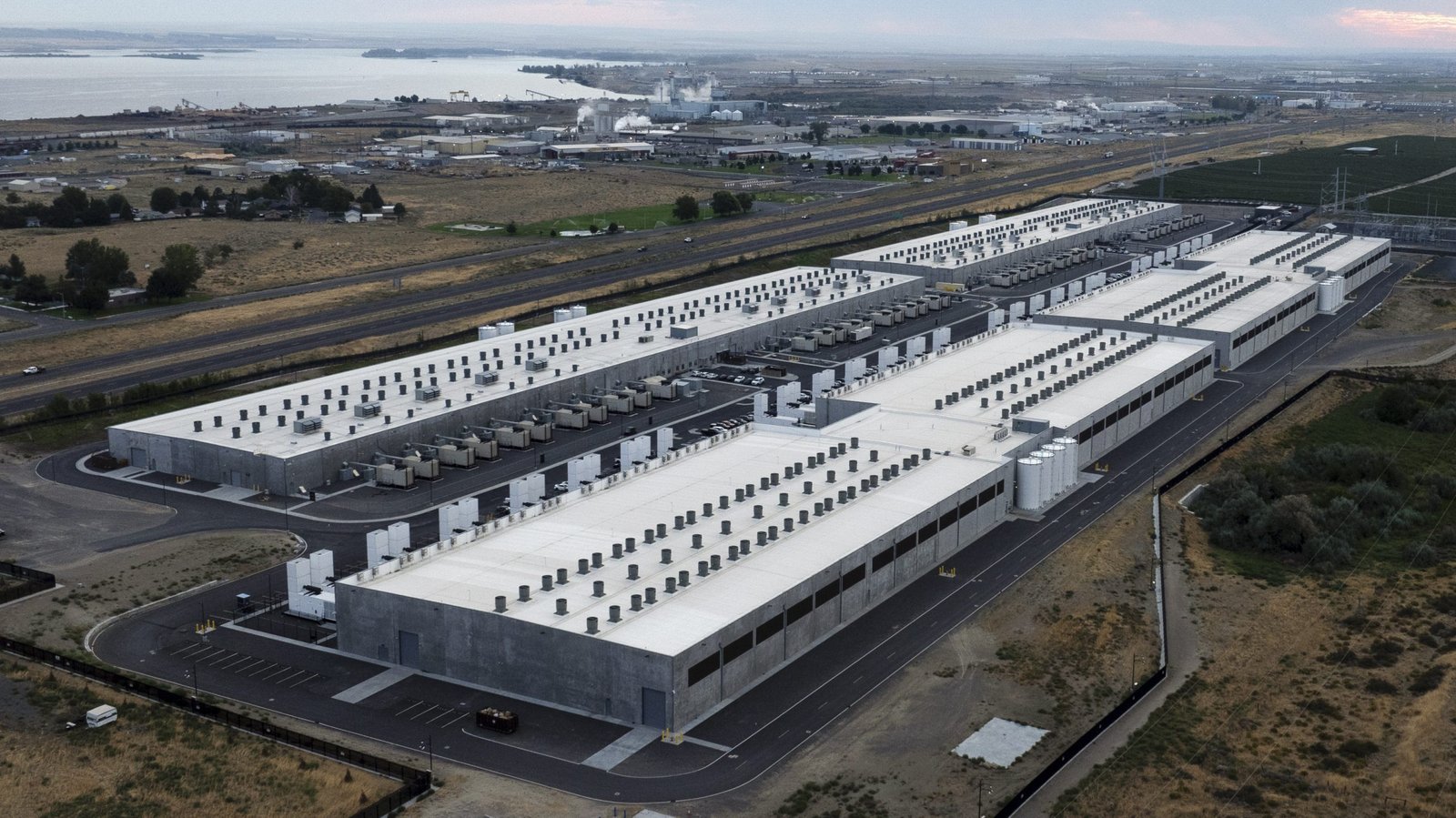
WASHINGTON – President Donald Trump’s derision of communities that oppose the construction of data centers as wanting to be “backwards and poor” has put some Minnesota Republicans in a tough spot.
Data centers have rapidly become one of the defining issues in this year’s midterm elections, with polls showing both Republican and Democratic voters rejecting these facilities that Trump maintains are job-producing boons.
A recent Economist/YouGov Poll found that more than half of those polled said data centers are “bad” while only 20% said they are a good thing. Democrats were particularly likely to view data center construction negatively with 61% saying it is bad for the country. Meanwhile, 39% of GOP respondents saw new data center construction as bad while 31% viewed it as good.
The backlash can be easily understood. Data centers consume enormous amounts of electricity and water and economists have determined that their job creation is largely limited to short-term construction jobs, which has won the support of trade unions.
Related: A data center is an odd fit for the increasingly valuable North Loop in Minneapolis
Still, Trump touted them as the “Golden Goose” in a post on Truth Social this week, seemingly because he said they are the cornerstone of the strategic AI arms race the United States has with China.
“The only reason that communities throughout the U.S.A. should not want Data Centers is if they want to end up being backwards and poor,” Trump wrote in his post.
Rep. Tom Emmer, R-6th District, immediately embraced the president’s message of support for the construction of data centers.
“President Trump is absolutely spot on,” said Emmer, a member of the U.S. House leadership, in a post on X. “Communist China and our adversaries would love it if the United States was asleep at the wheel and stopped innovating and developing AI and emerging tech. Thanks to President Trump’s work, the USA will be a digital LEADER!”
Other Minnesota Republicans have rejected Trump’s approach and are more nuanced in their position on an issue that is rising to the top of American concerns, saying communities have the right to decide whether they should host a data center.
Rep. Brad Finstad, R-1st District, said “the discussion around AI technology is one our country needs to have.”
“Data centers, like those proposed in southern Minnesota, can play an important role in our economic future and national security, but the decision about whether a data center is right for a particular community should be made by the people and local leaders who know their communities best, not handed down by Washington through a blanket, one-size-fits-all approach that treats every community the same,” he said in an emailed statement.
Finstad also said that it was important that communities have a full understanding of the energy demands, environmental impacts, job creation, and potential tax benefits of a proposed data center. He also said “the companies proposing these projects have a responsibility to be fully transparent about the scope of any short- or long-term impacts,” so local leaders and residents can make informed decisions.
Related: Data centers in Minnesota: The next big election issue
State Sen. Eric Pratt, a Republican who is running for retiring Rep. Angie Craig’s seat, also pushed back against Trump’s remarks about communities that don’t want to host data centers.
He called for a “a balanced approach to data center development that puts local communities at the center of the conversation while recognizing the growing importance of domestic technology infrastructure.”
“Data centers are becoming an important part of our economy, our technology infrastructure, and our national security,” Pratt said in a statement. “But that does not mean every proposed project belongs in every community, or that concerns from the people who live nearby should ever be brushed aside.”
Pratt also said he does not support moratoriums on the building of data centers and that “Minnesota should resist an all-or-nothing approach.”
Proposals in the GOP’s backyard
Many data center proposals in Minnesota are in Republican-held congressional districts. Pine Island, Faribault and North Mankato are in Finstad’s southern Minnesota district, Hermantown is in Rep. Pete Stauber’s 8th District and Monticello is in Emmer’s district.
Democrats running for GOP-held seats in those districts and elsewhere in the state have been planting flags and proposing and implementing moratoriums against data centers at a fast clip as November’s elections near.
Pratt’s Democratic rival, former Lakeville Mayor Matt Little, has pledged to fight for moratoriums and bans on nondisclosure agreements. Some local officials in Minnesota have signed NDAs at the behest of developers, shielding details about data centers from public scrutiny.
And Finstad’s Democratic challenger, Jake Johnson, joined a protest against a Pine Island data center in August.
“I was proud to stand with the people of Pine Island to say that we don’t want this data center here until we know for sure that it will actually benefit our people and our communities,” he said in a statement.
Johnson also released a plan for stopping data center exploitation in Minnesota.
Related: Data centers: Where projects go, local candidates follow
The demonstration in Pine Island came after Google held a community celebration for the project, promising funding for schools as part of its ongoing charm offensive in the city. The company was previously a sponsor for Pine Island’s cheese festival.
Meanwhile, Trina Swanson, a Democrat running against Stauber on the Iron Range, lives close to a proposed data center in Hermantown. She condemned the NDAs signed by Hermantown officials, lack of regulations on data center developments and heavy water use and increased energy costs.
“I want guardrails in place,” she said. “I want to understand how we’re going to prioritize our people over corporations like Google that paid zero dollars in federal taxes last year.”
Stauber’s office did not respond to a request for comment. Neither did the office of Rep. Michele Fischbach, R-7th District.
The subject of the first televised campaign ad run by Grant Hauschild, a DFL state senator representing Hermantown, focused on data centers and touted the regulations on the facilities considered by the state Legislature.
The state legislature approved a few regulations of the industry in 2025. But efforts to impose tougher rules, water permits and bans on local nondisclosure agreements failed this year after strong lobbying by industry groups and labor unions.
Still, Hauschild, in his ad, promises to continue to seek greater regulation on the industry and says, “I don’t work for data centers, I work for you.”
AdImpact, which tracks trends and effectiveness in political advertising, said there’s a “quiet boom” in data center ads. While Ad Impact says most of the money spent on these ads come from Democratic campaigns, a sizable amount 26% are run by Republicans, most of whom oppose the construction of a local data center.
The post Minnesota GOP lawmakers grapple with data centers as Republican voters turn against the projects appeared first on MinnPost.
Leave a Reply